Delay-mongers have latched on to nuclear
Australia should be at the front of the queue, positioning our nation as a renewable energy superpower and an economic powerhouse for decades to come.
The delay-mongers have latched on to nuclear power, despite the overwhelming evidence that it can only drive up energy bills, can only be more expensive, and can only take too long to build in a cost-of-living crisis.
I suspect that even those arguing for nuclear don’t believe that we’ll ever build one of these reactors in Australia, and certainly not in time to help manage the exit of coal from the system.
Matt Kean, Former NSW treasurer, 22 Oct 24, https://www.theguardian.com/australia-news/2024/oct/22/matt-kean-fantasy-coalition-energy-policy-coal-nuclear-power?fbclid=IwY2xjawGFBTtleHRuA2FlbQIxMQABHZOLw35JiI_0LOuO7ud0lCdaODH8ws-XTXtm6BjH-aQRT5FT8Ac8UKeUTQ_aem_yTUmsY_z33BOm66Ol9MkEA
Capital markets and the private sector have often been ahead of the curve in the debate over climate change.
They were prepared to discard the nonsense that action on climate change represented a choice between our environment and our economy.
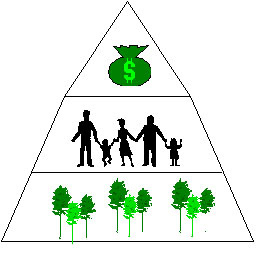
(True economics – the economy is based on a healthy environment)

(False economics – profit is the first priority – consider the environment only later)
That’s because the forces reshaping the global economy are clear, the cost of low emissions technology is coming down, and the appetite of investors to direct capital towards it is surging.
These trends are now embedded and have forever shifted the dynamics of climate policy. Consider the sheer weight of capital now pouring into the low-carbon energy transition right across the world.
It means an economic arms race to capture the next generation of investment, resource projects, exports, jobs and innovation will continue to explode right across the world.
Australia should be at the front of the queue, positioning our nation as a renewable energy superpower and an economic powerhouse for decades to come.
We should have the confidence to be bold, knowing there is a clear capacity to attract the finance for the technology and innovation needed to reduce emissions.
Our track record tells us so we have continued to build the policy architecture needed to give comfort to investors, and we can tell a story of meaningful progress against our emissions reduction goals towards a contemporary clean-energy system, and in pursuit of the next wave of ideas to sustain our success.
The integrated system plan gives us a clear national blueprint for the generation, storage and transmission infrastructure needed to sustain a reliable, secure and affordable national electricity market.
It will also depend on enabling initiatives such as the capacity investment scheme, which is revolutionising our ability to encourage new investment in dispatchable renewable energy, generation and storage.
The scale of the scheme is simply mammoth, with a target of 32 gigawatts of new capacity, comprising 23 gigawatts of renewable capacity and 9 gigawatts of clean, dispatchable capacity.
In total, it’s expected to drive $67 billion worth of investment continuing to inject renewables into the system, backed by storage and firming technology.
It is the best, most affordable way to replace capacity lost as coal-fired power stations exit the system.
That’s the advice of the CSIRO. That’s the advice of the Australian Energy Market Operator, and it’s one of the major assumptions that underpins the recently released sector pathways review produced by the Climate Change Authority, which I’m now pleased to chair.
Perhaps the biggest cost of nuclear is time.
That’s because mature and available technology allows us to step up the pace of change, by building on the rise in clean energy that has seen the transformation of our grid.
More than 40 per cent of the nation’s electricity is now generated by renewables.
We need to consider this simple fact: as renewables have poured into the system, the emissions intensity of the national electricity market, the nation’s largest grid, has dropped by more than a third, and sectoral emissions can be dramatically slashed further if we continue to invest in new solar, wind, storage and firming solutions.
We know that as much as 90 per cent of the coal-fired power that has underpinned our economy is coming to the end of its technical life by 2035. It’s an ageing technology that is already adding to price spikes and reducing reliability for households and businesses.
And if we continue to depend on it, we accelerate the rundown of the limited carbon budget available to us, we would fall behind the curve on our near-term emissions reduction targets, and we would face the prospect of irreversible damage to our environment, our economy and our way of life.
We simply can’t afford to wait and hope that bigger breakthroughs are over the horizon, and perhaps more importantly, we can’t pander to those vested interests and self-serving groups who want to delay clean and cheap energy, seemingly to benefit their own careers or their profits at the expense of the environment, the economy and our people.
Recently, for example, an illiberal drive to intervene in the market-led energy transition has been elevated from internet chat rooms and lobby groups to the national stage.
The delay-mongers have latched on to nuclear power, despite the overwhelming evidence that it can only drive up energy bills, can only be more expensive, and can only take too long to build in a cost-of-living crisis.
I suspect that even those arguing for nuclear don’t believe we’ll ever build one of these reactors in Australia, and certainly not in time to help manage the exit of coal from the system.
But they get their grabs up in the news, while the public get the growing energy bills that they can’t afford to pay.
Perhaps the biggest cost of nuclear is time. It is precious time that neither our economy nor our environment can afford, and it will once again plunge Australia back into indecision and delay.
A regime in flux lacks the stability and durability that investors need. Sensitivities will be further heightened when you add concepts that crowd out investment, forcing government-owned entities to fund, own and develop technology where Australia currently lacks capacity and that is arguably more expensive.
We don’t have the luxury of placing that bet, and that’s why, as chair of the Climate Change Authority, I will always place a premium on science, evidence, engineering and economics; that’s how we build a modern energy system.
We need to continue to give households and businesses the affordable and reliable energy they want. And it’s how we continue to harness the wall of capital washing across the world to create a clean, strong future that lifts our prosperity and protects our way of life for decades ahead.
There is a lot to do, but we can do that. We can get there and deliver cheaper, reliable energy for everyone across the country, and set our country up for a stronger and more prosperous future than any generation of Australians has ever seen. That’s the chance. Let’s grab it.
Matt Kean is the former treasurer and energy minister of NSW. He now chairs the Climate Change Authority. This is an edited extract of his speech at The Australian Financial Review’s Energy & Climate Summit.
No comments yet.
1 This month
15 April – Zoom –Nuclear Power is Not the Solution
Apr 15, 2026 01:00 AM in Canberra, Melbourne, Sydney

Join the International Physicians for the Prevention of Nuclear War (IPPNW) on Tuesday, April 14th for a timely webinar exploring the risks associated with nuclear power and challenging the myth that it offers a simple, safe, carbon-free solution to the climate crisis

of the week – Australians for War Powers Reform (AWPR)
To see nuclear-related stories in greater depth and intensity
 Antinuclear
Leave a comment