Matt Kean lambasts ‘wild fantasy’ of former Coalition colleagues to extend coal power and build nuclear plants
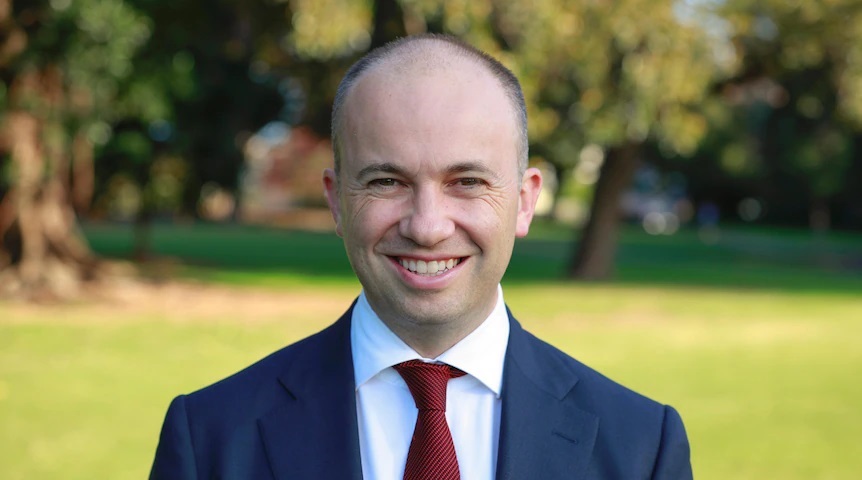
Climate Change Authority chair says Peter Dutton’s energy policy would drive up electricity bills and deter investment in renewables
Peter Hannam Economics correspondent, Guardian, 22 Oct 24
Extending the life of ageing coal-fired power stations before nuclear plants can be built is a “wild fantasy” that would deter near-term investment in renewables and push up power bills, according to Matt Kean, the Climate Change Authority chair.
The federal Coalition’s nuclear strategy was “an illiberal drive to intervene in the market-led energy transition [that had] been elevated from internet chatrooms and lobby groups to the national stage”, said Kean, a former energy minister in a Coalition government in New South Wales.
“The ‘delay-mongers’ have latched on to nuclear power despite the overwhelming evidence that it can only drive up energy bills, can only be more expensive, and can only take too long to build,” he told an AFR energy conference in Sydney on Tuesday.
“I suspect that even those arguing for nuclear don’t believe we’ll ever build one of these reactors in Australia … and certainly not in time to help manage the exit of coal from the system.”
The Albanese government appointed Kean, who has long advocated for more urgent climate action including by his then federal Liberal colleagues, to head the independent authority in June……………………………………………………… https://www.theguardian.com/australia-news/2024/oct/22/matt-kean-fantasy-coalition-energy-policy-coal-nuclear-power?fbclid=IwY2xjawGFBTtleHRuA2FlbQIxMQABHZOLw35JiI_0LOuO7ud0lCdaODH8ws-XTXtm6BjH-aQRT5FT8Ac8UKeUTQ_aem_yTUmsY_z33BOm66Ol9MkEA
Crisafulli victory sets up awkward clash over nuclear

AFR James Hall, Queensland correspondent, 28 Oct 24
Incoming Queensland premier David Crisafulli, who is now the highest-ranking conservative leader in Australia, is expected to hold firm to his repeated rejection of his federal counterpart’s nuclear energy push.
Mr Crisafulli will be sworn in as premier after securing a comfortable mandate at the weekend’s election, with his ascension compounding an awkward schism in the energy policies of the state and federal party branches.
Establishing a nuclear energy grid across the country, which includes two nuclear plants in Queensland, will form federal Opposition Leader Peter Dutton’s headline policy at the next national poll, due by May.
The Queensland-based federal leader will be eager to shore up the Coalition’s dominance in the Sunshine State, where it holds 70 per cent of the seats, but it was unlikely to secure the support for nuclear from the incoming premier.
Nationals leader David Littleproud, another Queensland figure, has in the past been infuriated by the state branch’s refusal to fall in behind the energy policy and on Sunday again said he expected all states to back nuclear if the coalition forms government…………………………………………………. more https://www.afr.com/politics/crisafulli-victory-sets-up-awkward-clash-over-nuclear-20241027-p5kloh
Coalition’s nuclear plan is ‘today’s version of a lump of coal in parliament’, inquiry told.

Renewables advocate tells parliamentary hearing that opposition’s nuclear proposal is a ‘smokescreen’ for burning coal and gas.
Graham Readfearn, 28 Oct 24, Guardian,
The Coalition did not approach Geoscience Australia to ask about the suitability of any of the seven sites where it wants to put nuclear reactors, including asking about risks from earthquakes, a parliamentary hearing was told.
The government called the parliamentary inquiry to scrutinise the Coalition’s proposals to lift the country’s ban on nuclear energy and build taxpayer-funded reactors at seven sites.
One renewables industry figure attacked the Coalition’s plans during the hearing, saying it was a “smokescreen” to continue to burn coal and gas.
During the hearing on Monday, officials from Geoscience Australia said it would probably take two years to carry out comprehensive “geohazard” assessments for each site that would look at risks including earthquakes and tsunamis, and geological formations beneath each site such as groundwater sources and caves…………………………………………..
John Grimes, the chief executive of the Smart Energy Council, an advocacy group representing clean energy businesses, told the inquiry the Coalition’s plan was “all about attacking renewables and boosting fossil fuels”.
Grimes, recalling former prime minister Scott Morrison’s 2017 parliamentary taunt, labelled the proposal “today’s version of a lump of coal in parliament”.
“The motivation [of the Coalition’s plan] is to attack renewables and hold them back,” he said. “Nothing has changed. This is a smokescreen.”
The committee is due to deliver a final report no later than 30 April 2025, which is likely to be before the next general election. https://www.theguardian.com/australia-news/2024/oct/28/peter-dutton-liberal-coalition-nuclear-plan-parliament-inquiry
Atomic power probe shows experts divided on nuclear energy
A probe into atomic power is revealing a deep divide among experts, let alone members of Opposition Leader Peter Dutton’s own party.
Jessica Wang and Joseph Olbrycht-Palmer, news.com.au, 28 Oct 24
The Coaliton’s nuclear plan is both “peak anti-science” and Australia’s only chance of reaching net-zero by 2050, experts have told a committee probing the viability of atomic power in Australia.
Critics and advocates of the Coalition’s nuclear plan made their way to Parliament House on Monday for the house select committee on nuclear energy’s second public hearing.
The Smart Energy Council, which has estimated the plan’s cost as high as $600bn, said the Coalition’s push for atomic power was driven by “anti-renewable” ideology rather than science.
The peak body’s chief executive John Grimes accused Opposition Leader Peter Dutton of trying to frame the energy debate in masculinity.
“It’s all about attacking renewables and boosting fossil fuels,” Mr Grimes told the committee.
“That’s why Mr Dutton tells us that there are two types of electrons: the strong manly man electrons from coal and gas and nuclear and the tepid, insipid, weak electrons from renewable energy.
“The only problem is an electron is an electron in physics. There is no difference at all.
“This is peak anti-science, tin foil hat brigade, poppycock.”
He said nuclear power was “a pinnacle of human engineering” but it was not “the answer for Australia”.
……………………………..Winfield said household bills were kept artificially low under the Ontario model, despite the high cost of refurbishing ageing nuclear facilities.
“There’s a legacy of that still in the system that we are effectively subsidising electricity bills to the tune of about $C7.3 billion a year out of general revenues. That constitutes most of the provincial deficit; that’s money that otherwise could be going on schools and hospitals.”
He said that it was key to decarbonisation of countries “in the extreme north or south of the globe”, but with renewables powering up to 40 per cent of Australia’s grid, changing course did not stack up.
“We’re saying that for Australia, in the Australian context … where we have the best solar and wind resources in the world, where we have so much land you can almost not give it away … renewable energy transition is the lowest cost path to getting to low power bills, a highly reliable engineering system and the right environmental outcomes in environmental outcomes that the Australian government has signed up to internationally.
“So, it is vital that renewables plus the energy storage road map not only continue but be accelerated because that is the future. That is the answer for Australia.”
………………………………………………………………. Last week, the committee heard from Australian Energy Regulator (AER) chair Clare Savage, who said “nuclear may well have a role to play” in meeting Australia’s energy needs, but it would take a long time.
Ms Savage said the red tape associated with getting nuclear off the ground could take “eight to 10 years for a regulatory framework”.
Works to build the nuclear reactors would not be able to start until that framework was in place, she said.
Build times can vary, but recent projects overseas put it at a little north of 10 years.
Ms Savage’s comments cast serious doubt on the Coalition’s claim that it could have small modular reactors up and running by 2035 or larger reactors by 2037.
One thing most experts agree on, whether they be independent or part of government agencies, is that Australia’s fleet of coal-fired power plants only have about a decade of operational life left.
DUTTON ‘RESPECTS’ ANTI-NUCLEAR LNP PREMIER
Mr Dutton said he would continue to convince “sensible premiers” on the Coalition nuclear plan, with newly installed Queensland Liberal National Party premier David Crisafulli committing to his anti-nuclear push.
Speaking on Monday, Mr Dutton appeared unfazed by the divide between the state and federal Coalition, with the election pledge to build seven reactors by 2050, including the first two to come online between 2035-37……………………………………. https://www.news.com.au/national/queensland/politics/peter-dutton-says-he-respects-new-qld-lnp-premiers-antinuclear-stance/news-story/2e6d5000a0e988ecb504f1600ff20825—
‘You couldn’t make this up’: Expert pans Ontario nuclear option

SMH, By Bianca Hall and Nick O’Malley, October 28, 2024
Ontario subsidises its citizens’ electricity power bills by $7.3 billion a year from general revenue, an international energy expert has said, contradicting the Coalition’s claim that nuclear reactors would drive power prices down in Australia.
Opposition Leader Peter Dutton has repeatedly cited the Canadian province as a model for cheaper power prices from nuclear.
“In Ontario, that family is paying half of what the family is paying here in Perth for their electricity because of nuclear power,” Dutton said in March. “Why wouldn’t we consider it as a country?”
In July, Dutton said Canadian consumers paid about one-quarter of Australian prices for electricity.
Professor Mark Winfield, an academic from York University in Canada who specialises in energy and environment, on Monday said the reaction among people in Ontario to the comparison had ranged from disbelief to “you couldn’t make this up”.
Ontario embarked on a massive building spree between the 1960s and the 1990s, Winfield told a briefing hosted by the Climate Council and the Smart Energy Council.
In the process, he said, the provincial-owned utility building the generators “effectively bankrupted itself”. About $21 billion in debt had to be stranded to render the successor organisation Ontario Power Generation economically viable.
In 2015, the Canadian government approved a plan to refurbish 10 ageing reactors, but Winfield said the refurbishment program had also been beset by cost blowouts.
“The last one, [in] Darlington, east of Toronto, was supposed to cost $C4 billion and ended up costing $C14 [billion],” Winfield said.
“And that was fairly typical of what we saw, of a cost overrun in the range of about 2.5 times over estimate.”
In Melbourne, Dutton said while he respected new Queensland Premier David Crisafulli’s opposition to nuclear, he would work with “sensible” premiers in Queensland, South Australia and NSW on his plan, if he was elected………………………………………………..
Winfield said household bills were kept artificially low under the Ontario model, despite the high cost of refurbishing ageing nuclear facilities.
“There’s a legacy of that still in the system that we are effectively subsidising electricity bills to the tune of about $C7.3 billion a year out of general revenues. That constitutes most of the provincial deficit; that’s money that otherwise could be going on schools and hospitals.”
Dutton’s comments came as a parliamentary inquiry into the suitability of nuclear power for Australia continued in Canberra. Experts provided evidence on how long it would take to build a nuclear fleet, and the potential cost and impact on energy prices compared with the government’s plan to replace the ageing coal fleet with a system of renewables backed by storage and gas peakers.
……………………………………………………….. In its annual GenCost, CSIRO estimated earlier this year that a single large-scale nuclear reactor in Australia would cost $16 billion and take nearly two decades to build, too late for it to help meet Australia’s international climate change commitments, which requires it to cut emissions 43 per cent by 2030. It found renewables to be the cheapest option for Australia.
Dutton has so far refused to be drawn on the costs of his nuclear policy. Opposition energy spokesman Ted O’Brien said the Coalition would release costings before the next federal election, which must be held by May.
O’Brien told this masthead “expert after expert” had provided evidence that nuclear energy placed downward pressure on power prices around the world. ……………. https://www.smh.com.au/environment/climate-change/you-couldn-t-make-this-up-expert-pans-ontario-nuclear-option-20241028-p5klx1.html
Ambassador John Bolton tells 7NEWS Donald Trump re-election could mean AUKUS nuclear submarines plan torn up
7 News, By David Woiwod – US Bureau Chief, 27 Oct 24
Australia’s plans to acquire a fleet of nuclear-powered submarines would be torn-up if Donald Trump is re-elected next week, according to a former top Republican party security advisor.
The AUKUS defence pact would be one of the first US alliances to undergo a major review under an incoming Trump administration – with the official warning Australia not to take the agreement “for granted”.
“I think it could be in jeopardy,” former US ambassador to the United Nations, John Bolton told 7NEWS.
“All Trump looks at is the balance sheet, and if he sees more US expenditure than those of other parties to the agreement, then I think there will be trouble.”
The defence bill that passed on Capitol Hill late last year requires the president of the day to give the final tick of approval before any US submarines are delivered to Australia.
And Ambassador Bolton is now encouraging America’s ally to immediately mount arguments in favour of the alliance if Trump wins the November poll……..
The Australian government forked out $4.5 billion dollars to help soothe US fears after lawmakers questioned America’s ability to deliver the specialised boats while meeting its own submarine production targets.
Under the first steps of the deal aimed at deterring Chinese aggression, Australia is set to receive at least three Virginia Class nuclear-powered submarines before Australian-built vessels enter service in the 2040s. https://7news.com.au/news/ambassador-john-bolton-tells-7news-donald-trump-re-election-could-mean-aukus-subs-plan-torn-up-c-16518429
1 This month
15 April – Zoom –Nuclear Power is Not the Solution
Apr 15, 2026 01:00 AM in Canberra, Melbourne, Sydney

Join the International Physicians for the Prevention of Nuclear War (IPPNW) on Tuesday, April 14th for a timely webinar exploring the risks associated with nuclear power and challenging the myth that it offers a simple, safe, carbon-free solution to the climate crisis

of the week – Australians for War Powers Reform (AWPR)
To see nuclear-related stories in greater depth and intensity
 Antinuclear