Nuclear a ‘rent-seeking parasite’ that will push up power prices: Kean
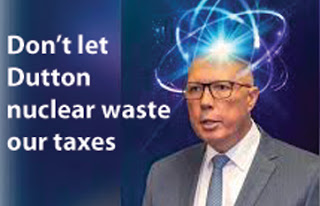
Hannah Wootton https://www.afr.com/policy/energy-and-climate/nuclear-a-rent-seeking-parasite-that-will-push-up-power-prices-kean-20241104-p5knu5—
Climate Change Authority head Matt Kean has slammed the nuclear power industry as a rent-seeking parasite, warning that developing plants in Australia would just drive up electricity bills and accusing those wanting to do so of vested interests.
The former NSW treasurer said the alternative energy source was “old outdated technology” and only “a very brave person” would bet on it, building on months of criticism of nuclear since taking the CCA job.
Mr Kean believes nuclear power will be too expensive and take too long to develop to meaningfully contribute to Australia’s energy transition. Last month, he said the opposition’s controversial plan to extend coal-fired power stations until nuclear plants could be built was a “wild fantasy”.
He said this plan and any development of a nuclear industry would stymie investment in renewables, accusing those promoting either of being “delay mongers”.
On Monday, Mr Kean told Senate estimates that those who wanted to fund nuclear plants or prolong coal-fired power stations just wanted “to pay a lot of rent to these vested interests”.
“There’s no bigger rent-seeking parasite than the nuclear industry,” he said.
“If you want to see who is trying to pull one over the eyes of the Australian public it’s the nuclear industry, who are there propping up the coal industry who want to extend their business models, squeeze out the last bits of profits at the expense of Australian consumers.
“They’re coming to the people of Australia for a handout … but here’s no business case or economic case for it.”
Dramatic reductions in the cost of batteries and energy storage also meant the business case – “not that there was one” – for Australia to invest in nuclear power was even less than it previously had been.
“Battery technology is falling so rapidly that it’s eating other technologies’ lunch – or it will certainly do so,” he said.
Mr Kean said nuclear reactors would not be built quickly enough to replace coal-fired generators anyway, and that shifting to renewables was a faster and cheaper way to decarbonise the economy.
Nationals senator Ross Cadell rejected this, despite the CSIRO and Australian Energy Market Operator both finding that renewables are much cheaper than nuclear energy.
He accused Mr Kean of failing to properly scrutinise these findings, calling for a balanced energy mix in the transition.
But Mr Kean called on the opposition to back renewables, saying nuclear power would “drive up the cost of electricity for millions of Australians across the country”.
Pushing nuclear power in Queensland would be ‘hugely messy’ for a future Dutton government, constitutional law experts say

By Matt Eaton, 30 Oct 24, https://www.abc.net.au/news/2024-10-30/nuclear-power-plebiscite-peter-dutton-david-crisafulli/104532888
A clear line in the sand divides Queensland’s new Liberal National government from the federal Coalition on the topic of nuclear power.
On Sunday, just hours after the LNP’s state election victory, federal Nationals leader David Littleproud said he expected Queensland to fall into line on nuclear power if the Coalition wins the next federal election.
The Coalition has a plan to roll out nuclear power nationwide should it win office, including two nuclear power plants in Queensland.
Asked again about nuclear power yesterday, Queensland Premier David Crisafulli held firm to the LNP’s position that it will not repeal the state’s nuclear ban.
What does the law say?
Building nuclear reactors is prohibited by the Queensland Nuclear Facilities Prohibition Act 2007.
Constitutional law experts say Queensland ultimately has no legal power to stand in the way of a federal government determined to build nuclear reactors in this state.
Section 109 of the Australian Constitution is unequivocal on such a dispute: “When a law of a State is inconsistent with a law of the Commonwealth, the latter shall prevail, and the former shall, to the extent of the inconsistency, be invalid.”
But University of Queensland electoral law expert Graeme Orr thinks having a federal government override the state in this case would be nowhere near that simple.
On the contrary, he believes it would be “hugely messy”.
“There isn’t a simple precedent for this kind of thing, let alone for it being Liberal-on-Liberal conflict,” Professor Orr said.
“First of all, if the state doesn’t want to give up Crown land, the Commonwealth have to forcibly acquire that Crown land, pay for it and transfer it.”
Professor Orr said he was not opposed to nuclear power.
“My brother is a nuclear physicist in France, there’s benefits to it. But the economics of it are going to be problematic enough.”
‘A political minefield’
Australian National University legal expert Dr Ron Levy said there would be another problem.
Queensland’s nuclear prohibition bill includes a clause that if the relevant Queensland minister believes the Commonwealth is moving to construct a “prohibited nuclear facility”, the minister must seek Queenslanders’ views on the matter.
“If the federal government builds nuclear plants in the state, the people will vote on it,” Dr Levy said.
“That would not be binding — it would, however, be a political minefield for any future Dutton government.”
Professor Orr agrees the plebiscite clause makes the issue “fascinating”.
He said this clause of the Queensland law could not be overridden by the Commonwealth.
“It would have to be undone by the Queensland government, who now have a majority,” he said.
“If the Queensland government did roll over behind the scenes … that becomes like a loss of faith, particularly for the areas that are earmarked for possible nuclear power stations.”
1 This month

of the week – Australians for War Powers Reform (AWPR)
To see nuclear-related stories in greater depth and intensity
 Antinuclear