TODAY. The Trump period and the use of language
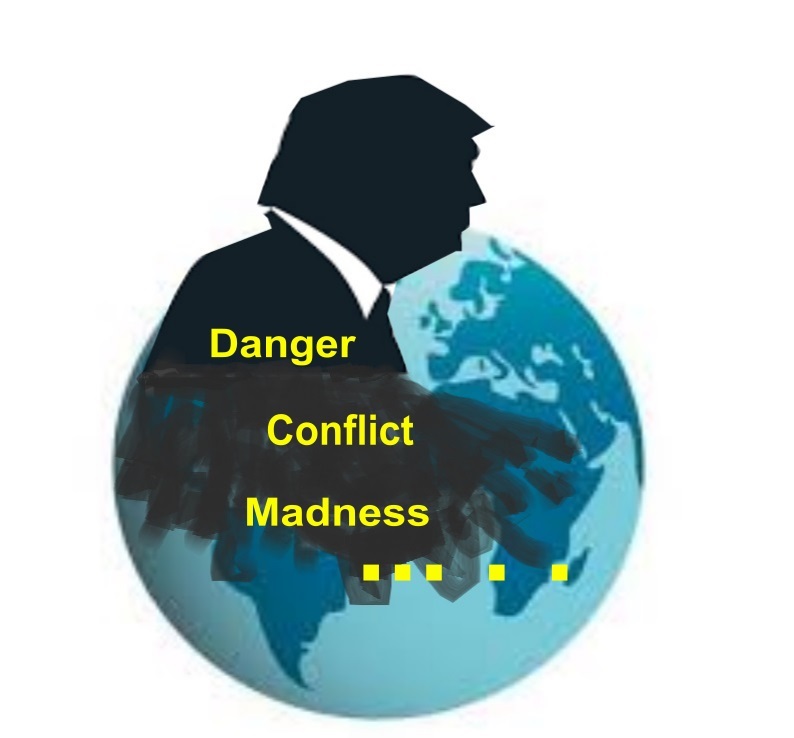
I struggle to think about what language to use.
Today, Caitlin Johnstone writes “The Evil Warmongering Zionist Won” – (No Not That One, The Other One)
I read her article, and agree with every word. But do some readers find this title a “turnoff”? I did, because I was brung up to believe that quieter, less emotive language was the way to go. Now, I’m not sure.
The people of world’s greatest power have elected a foul-mouthed, misogynist, deluded megalomaniac who is a convicted felon, strongly supported by another deluded billionaire megalomaniac the ketamine-and-Mars addled Elon Musk. Trump is surrounded by yes-mean of no integrity whatsoever, and promoted by billionaires of no integrity.
How did it happen?
How did they put it over not only the disgruntled poor of the USA, but many others – to believe that if times are bad now – this despicable sociopath could magically put things right?
By now, some of my very limited reading public will have turned away – because of my use of language. But I’m not as “bad” as Caitlin. Trouble is – we’re actually telling the truth.
It is going to be very hard now, for all of us to weave our way through all the commentaries – all made more difficult by the tsunami of social media, of the ‘respectable mainstream media’ and of AI.
I wish that I could give wonderful advice on how to assess the truth or otherwise, of what we read, see and hear. But there are people of integrity out there, and it is our job to find them and listen to them – and indeed , to avoid emotive language (when possible).
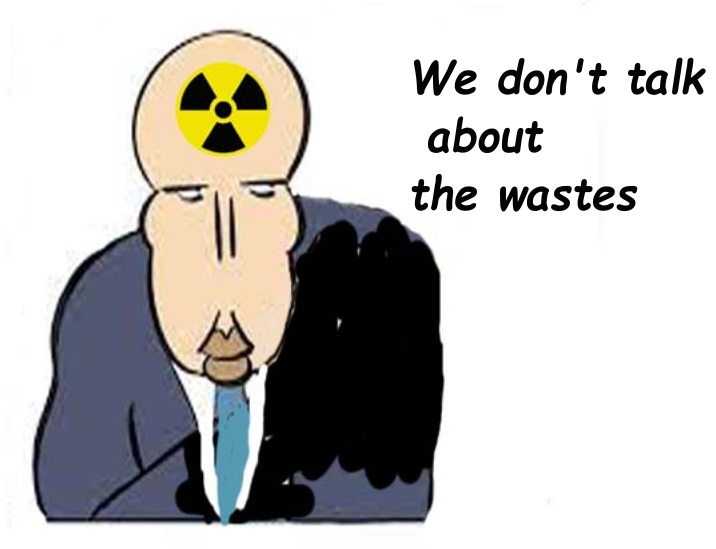
Nuclear waste could add billions to energy supply costs
Canberra Times, By Jennifer Dudley-Nicholson, November 7 2024
Handling and storing nuclear waste could add significant costs to Australia’s future energy bills, an inquiry has heard, with Canada set to spend $26 billion to safely store depleted fuel from its reactors.
The cost and time to build nuclear power plants in Australia also remained a mystery, two academics told the Nuclear Power Generation inquiry on Thursday, including the demands of small modular reactors proposed for two states.
The testimony comes on the third hearing of the nuclear energy inquiry, created in October after federal Liberal leader Peter Dutton announced plans to establish nuclear power plants in seven Australian locations after the next election.
But the details of an Australian switch from a renewable energy future to one powered by nuclear plants remain unclear, with the inquiry set to probe financial, technical, legal and environmental impacts of a change.
York University environmental studies Professor Mark Winfield told MPs the Canadian experience had been a troubling and expensive one, with its seven nuclear plants now reduced to four in operation.
Canada also faced a bill of $26 billion to handle, move and safely store wasted nuclear fuel, he said, of which the country had three million bundles and produced between 85,000 and 90,000 each year.
The bundles, he said, were about the size of a small log.
It’s physically hot when it comes to the reactor, it’s also highly radioactive when it comes out of the reactor, the swimming pools are supposed to be for the first 50 years or so, while it cools down a bit,” Prof Winfield told the committee.
“The nuclear waste management organisations planning assumption then is that long-term management or disposal would need to occur on a time frame of a million years.”
Questions also remained about the price of new-build nuclear plants, the inquiry heard, and Princeton University senior research scientist Dr Chris Greig said naming a price for small modular reactors was a tricky challenge.
Small modular reactors have been tipped for sites in South Australia and West Australia under the coalition’s proposal, with 2035 as a potential start date.
“The people who are ordering them right now, Dow being one of them and Google and Microsoft and OpenAI and Meta, they don’t know what the cost is going to be yet,” he said.
“They have targets but, frankly, none of us have any confidence in those targets.”
The time it would take to build small reactors was also challenging to estimate, he said, with the most optimistic estimates seeing plants operating in the early 2030s………………… https://www.canberratimes.com.au/story/8814018/nuclear-waste-could-add-billions-to-energy-supply-costs/
United Nations to study impact of nuclear war for first time since 1989 amid ‘elevated risk’
ABC By Lachlan Bennett, 7 Nov 24
In short:
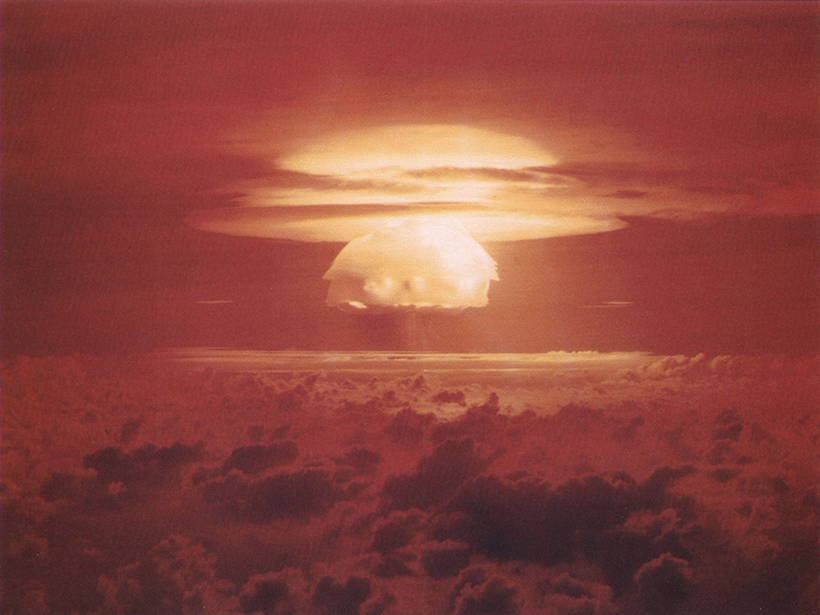
The United Nations will set up an expert panel to investigate how nuclear war would impact all facets of society.
It’s the first study of its kind since 1989 and has been prompted by concerns about geopolitical tensions.
What’s next?
The panel will deliver its final report in 2027 and make recommendations for future research.
You don’t need to watch too many apocalyptic blockbusters to realise that nuclear war would be devastating.
But when it comes to understanding the impact of a modern nuclear exchange, our data is nearly as old as The Terminator.
The last comprehensive United Nations study into nuclear war was published in 1989, back before the Soviet Union collapsed and before the first internet browser was released.
In the decades since, new nuclear powers have emerged and weapons technology has advanced.
The lack of holistic research into the consequences of nuclear conflict has the scientific community worried.
An atomic fact-finding mission
In light of these concerns, the UN First Committee last week voted to establish a panel of 21 international experts to assess how nuclear war would impact all facets of life, from public health and population to economics and agriculture.
The panel will harness the expertise of UN agencies, such as the International Atomic Energy Agency, while also soliciting data from governments and organisations like the Red Cross.
It will explore the role of new technology, such as artificial intelligence, and new risks, such as cyber-attacks.
And after consulting with “the widest range of scientists and experts”, a final report will be delivered in 2027.
Australia was one of 144 voters to support the move, while 30 abstained and three nuclear-armed nations opposed: the UK, France and Russia.
New Zealand and Ireland introduced the resolution.
“At a time of elevated risk of nuclear conflict, there is a clear need to publicly establish an accurate and up-to-date understanding of the impacts of a nuclear war,” they said.
Is nuclear war more likely today?
Nuclear war may seem a fading relic of the Cold War era, with global stockpiles declining from around 70,000 weapons in the 1980s to just over 12,000 today.
But many disarmament treaties are no longer in force, and new nuclear powers are expanding their arsenals.
Historic rivals India and Pakistan had only just established their nuclear programs when the last UN report was released.
They now have more 300 weapons between them.
……………………………………………………..Nuclear powers ‘don’t want the world to know’ the real risks
Nuclear disarmament advocates have welcomed Australia’s support for the UN study, especially given the opposition of its ally, the UK.
The UK Foreign Office told The Guardian the world did not need an independent scientific panel to know that “nuclear war would have devastating consequences”.
But Dr Hanson said the nuclear powers “don’t want the world to know just how devastating a nuclear war will be”.
“Or indeed the fact that we’ve had numerous close calls,” she said.
One of the most famous close calls occurred in 1983, when a Soviet early-warning system falsely reported missiles flying towards Russia from the US.
Despite Soviet protocol, the officer on duty did not report the false alarm to his superiors, preventing a potential retaliation.
According to the memoirs of former US Secretary of State Mike Pompeo, there was a more recent close call in 2019 when India launched strikes against militants in Pakistan following an attack in Kashmir.
Dr Hanson said the world had been “extremely lucky” to avoid a nuclear conflict.
“Our luck is not going to hold out forever,” she said.
Why do we need another study?
Various governments and institutions have studied aspects of nuclear weapons in recent decades.
But a lot of research has focused on areas of “military relevance”, according to International Campaign to Abolish Nuclear Weapons founding member Tilman Ruff.
“We really understand very little about the psychological, climatic, economic, social, political and infrastructure implications of nuclear weapons in the modern era,” he said.
Dr Ruff said the UN panel would provide authoritative and transparent research, without the “bias or needs of any particular country”.
“It gives it much more credibility and currency. Nations can’t say, ‘Oh, this doesn’t apply to us’,” he said…………………………………more https://www.abc.net.au/news/2024-11-07/un-votes-for-nuclear-weapons-scientific-panel/104564126
Australian nuclear news 4-11 November.
Headlines as they come in:
- Airstrip One: How Albanese has integrated Australia into Trump’s military machine
- Australia US Alliance: Is It Time to Rethink Our Loyalty?
- Nuclear waste management could add billions to electricity supply costs
- ‘Loophole’ in Victoria’s uranium ban allows mine to ship element to US
- 10 reasons why Donald Trump can’t derail global climate action.
- What from Trump? | The West Report https://www.youtube.com/watch?v=N4GK0sY-cgc
- Matt Kean says Australia must take ‘strong and decisive action’ on climate crisis despite Trump re-election
- Reconsider AUKUS, say former Labor foreign ministers
- Nuclear waste could add $billions to energy supply costs .
- ‘No bigger rent-seeking parasite’ than nuclear industry, Matt Kean tells former Coalition colleagues in heated debate.
- Nuclear a ‘rent-seeking parasite’ that will push up power prices: Kean .
—
1 This month

of the week – Australians for War Powers Reform (AWPR)
To see nuclear-related stories in greater depth and intensity
 Antinuclear