Australia US Alliance: Is It Time to Rethink Our Loyalty?
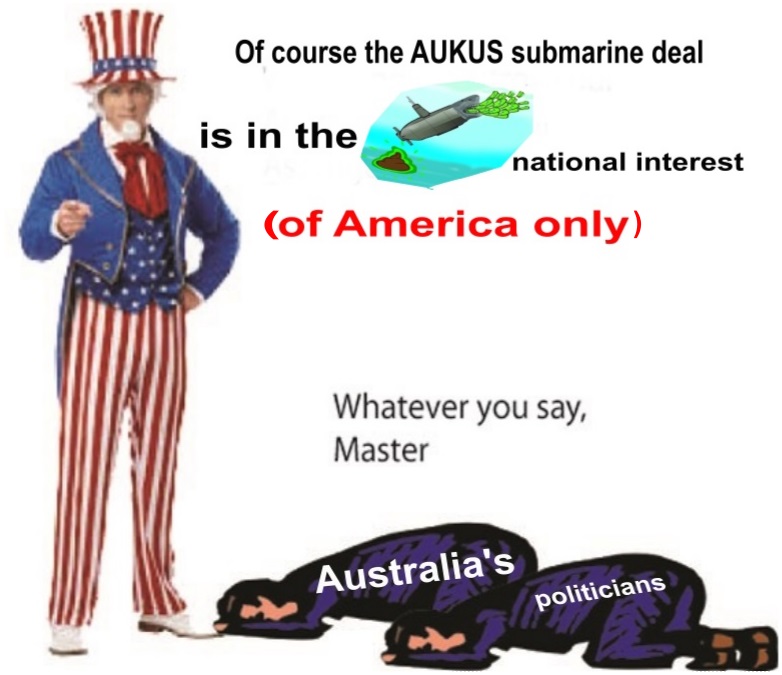
November 10, 2024, by: The AIM Network, By Denis Hay
Australia US alliance has costs. Learn how this impacts Australians and how reallocated funds could benefit citizens.
Introduction
Australia and the United States have been strategic allies for over seventy years. This Australia US alliance, often celebrated with the phrase “old allies and true friends,” is rooted in shared history and mutual defence agreements like the ANZUS Treaty.
However, many Australians are now questioning if the costs of this alliance—both in terms of military and economic impact—outweigh the benefits. This article explores the consequences of Australia’s allegiance to the U.S., the human costs of U.S. interventions, and how Australia’s financial resources might better serve its citizens’ social well-being.
1. The Costly Legacy of the Australia-U.S. Alliance
– Historical Overview: Australia US alliance began formally with the ANZUS Treaty in 1951. Through wars in Korea, Vietnam, Iraq, and Afghanistan, Australia has stood beside the U.S., incurring both financial costs and human losses.
– Casualty Estimates: The human toll of this alliance is staggering. The wars led by the U.S. have resulted in estimated casualties of over 200,000 American troops, 60,000 Australian troops, and millions of civilians globally. For instance, the Iraq War alone caused around 500,000 civilian deaths and displaced over 3 million people.
– The Refugee Crisis: The consequence of U.S.-led wars has been a refugee crisis affecting countless lives. Countries like Syria, Iraq, and Afghanistan have seen millions of citizens fleeing war zones, often with little support from Western nations. Australia’s involvement in these wars contributes to a moral responsibility for the refugee influx, yet the country struggles to support displaced persons adequately.
2. The Social Cost of Alliance-Bound Military Spending
– Military Expenditures at the Cost of Social Welfare: Australia’s defence budget has increased significantly, with estimates of $48.7 billion given in 2023. Much of this spending is tied to keeping military readiness to support the U.S. in conflicts. These funds could otherwise enhance healthcare, education, and housing for Australians.
Military funding without public transparency.
– Impact on Public Services: Redirecting even a part of the defence budget could fund initiatives like universal healthcare, improved mental health services, and housing for the homeless. For example, just 10% of the current defence budget could support building 10,000 public housing units annually or fund a significant expansion of mental health services for underserved communities.
– Consequences of Refugee and Displacement Crises: Australia’s participation in U.S.-led interventions indirectly contributes to refugee crises that strain social services and humanitarian aid. Public sentiment on immigration has also been affected, often creating divisive views within Australian society about who should be supported and who is viewed as a “burden.”
3. A Call for a More Independent and Socially Conscious Foreign Policy
Australia’s alliance with the United States has provided strategic support over the decades, yet many argue that it is time for Australia to pursue a foreign policy that is more reflective of its own interests, values, and the well-being of its citizens.
Despite growing public interest in a more independent, socially conscious approach, Australian governments have hesitated to diverge significantly from U.S.-aligned policies. This reluctance may stem from multiple factors:
1. Fear of Political and Economic Repercussions:
– Australian policymakers often cite strategic security concerns as a reason for adhering closely to U.S. foreign policy, fearing that any independence might jeopardize Australia’s access to American intelligence, technology, and defence resources.
– Economically, a close alliance with the U.S. bolsters trade relations and provides access to powerful American markets. For some politicians, the potential economic fallout of alienating a significant trading and security partner outweighs the call for a more independent stance.
2. Lack of Political Courage and Vision:
– Some critics argue that the Australian government lacks the courage to challenge established norms or take bold steps toward an independent foreign policy. This lack of vision may stem from a longstanding alignment with U.S. interests that has become entrenched in Australia’s political and diplomatic culture.
– Breaking away from such a powerful ally requires a willingness to redefine national priorities, a path that requires courage, strategic foresight, and often a willingness to face criticism from powerful interest groups invested in maintaining the alliance.
3. Disconnect from Public Opinion:
– Surveys show that Australians increasingly favour a more balanced, socially conscious approach to foreign policy, especially as they see the domestic impact of military spending and U.S.-influenced policies. However, successive Australian governments have often ignored this sentiment, raising questions about whether the government genuinely prioritizes the public’s voice in its decisions…………………………..
4. Influence of External Powers and Lobbying:
– Australian foreign policy decisions are also influenced by lobbying from powerful industries, including defence contractors and political think tanks with ties to the U.S. These entities often push for policies that favour a strong alliance with the U.S., as it aligns with their economic and strategic interests.
– The cumulative effect of these influences can stymie efforts for a more independent policy path, effectively sidelining the public’s desire for a foreign policy that prioritizes social well-being and peaceful diplomacy.
In summary, Australia’s reluctance to adopt a more independent, socially conscious foreign policy is a combination of economic dependency, political caution, and a systemic disconnect from the will of the people.
For Australia to shift toward a foreign policy that truly serves its citizens, it would require not only a realignment of political priorities but also a renewed commitment to placing the public’s interests and values at the heart of its foreign relations.
1. The Historical Basis of Australia-U.S. Relations and Its Human Cost……………………………………………….
2. Australia’s Position on U.S. Leaders and Policies
– Unquestioned Loyalty: Australian leaders often affirm support for U.S. presidents and foreign policies without critical evaluation. This approach reflects a hesitancy to challenge U.S. decisions even when they conflict with Australia’s best interests.
– Impact on Australian Sovereignty: The uncritical acceptance of Australia US alliance policies can undermine Australia’s autonomy. For example, Australia’s alignment with U.S. policies on China has strained trade relationships, affecting vital economic sectors like agriculture, tourism, and education. The result is a compromise of national interests to support a symbolic “alliance.”
3. U.S. Military Interventions, Global Casualties, and the Refugee Crisis
– Scope of U.S.-Led Wars: The U.S. has been involved in conflicts worldwide, from the Middle East to Latin America and beyond, often resulting in widespread devastation. These conflicts have had lasting impacts, including millions of civilian deaths and widespread destruction.
– The Refugee Crisis and Australia’s Responsibility: Australia’s support for U.S. interventions creates a moral obligation to help refugees from war-torn countries. However, current refugee policies fall short, leaving many displaced people without adequate support or protection. Accepting more refugees from conflict zones would reflect Australia’s commitment to international human rights and fulfill part of its alliance-driven responsibility.
4. Australia’s Role as a Supporting Partner and Its Consequences
– Participation in Conflicts and Reputational Impact: Australia’s involvement in U.S. wars affects its international reputation, often casting the country as a secondary player rather than an independent, neutral voice in global politics. This alignment can make Australia appear complicit in conflicts driven by U.S. interests, compromising its image as a peaceful nation.
– Economic and Social Impact on Australians: By aligning with U.S. defence priorities, Australia diverts significant public money to defence spending, reducing resources for vital services. Citizens bear the costs through reduced access to affordable healthcare, housing shortages, and an underfunded education system. The pressure to conform to U.S. policies, especially in the Indo-Pacific, risks escalating regional tensions that could directly affect Australians.
5. The Opportunity Cost: How Reallocating Military Spending Could Benefit Australians……………………………………………………………..
Rethinking Australia’s Foreign Policy Approach for the Future
As global dynamics shift, Australia faces a critical juncture in deciding how to position itself on the world stage. A key element of this decision lies in its relationship with China, a rapidly growing economic and political power in the Indo-Pacific region.
While the Australia US alliance has historically shaped much of Australia’s foreign policy, the rise of China presents an opportunity for Australia to pursue a balanced, independent approach that prioritizes regional stability and mutual benefit.
1. China’s Role as Australia’s Major Trading Partner:……………………………………….
2. Promoting Regional Stability and Security:
– As a dominant power in the Indo-Pacific, China’s influence on regional security is substantial. Building a constructive, diplomatic relationship with China could position Australia as a mediator and stabilizer within the region, promoting dialogue over conflict.
– With rising tensions between the U.S. and China, Australia has a unique opportunity to champion a foreign policy that values peace, cooperation, and shared interests, rather than one that escalates division. This approach would reduce the risk of Australia being drawn into potential conflicts that do not serve its national interests.
3. Economic and Diplomatic Benefits of Non-Alignment:………………………….
4. Preparing for a Multipolar World:
– The global power landscape is shifting from U.S.-led dominance to a multipolar world where countries like China, India, and emerging economies play a larger role. For Australia, recognizing and adapting to this reality is crucial for staying relevant and resilient in the international arena…………………………….
Conclusion
Australia US alliance has served strategic purposes in the past, but as global dynamics shift, it’s vital to reassess whether the benefits of this alliance outweigh the costs. The loss of lives, the displacement of millions, and the diversion of public money from critical social services highlight the urgent need for a foreign policy that prioritizes Australia’s long-term interests and humanitarian values.
By adopting a more independent stance, Australia could enhance the social well-being of its citizens and contribute to a more peaceful, stable global community. https://theaimn.com/australia-us-alliance-is-it-time-to-rethink-our-loyalty/
Nuclear waste management could add billions to electricity supply costs
Jennifer Dudley-Nicholson, Nov 8, 2024 https://reneweconomy.com.au/nuclear-waste-management-could-add-billions-to-electricity-supply-costs/
Handling and storing nuclear waste could add significant costs to Australia’s future energy bills, an inquiry has heard, with Canada set to spend $26 billion to safely store depleted fuel from its reactors.
The cost and time to build nuclear power plants in Australia also remained a mystery, two academics told the Nuclear Power Generation inquiry on Thursday, including the demands of small modular reactors proposed for two states.
The testimony comes on the third hearing of the nuclear energy inquiry, created in October after federal Liberal leader Peter Dutton announced plans to establish nuclear power plants in seven Australian locations after the next election.
But the details of an Australian switch from a renewable energy future to one powered by nuclear plants remain unclear, with the inquiry set to probe financial, technical, legal and environmental impacts of a change.
York University environmental studies Professor Mark Winfield told MPs the Canadian experience had been a troubling and expensive one, with its seven nuclear plants now reduced to four in operation.
Canada also faced a bill of $26 billion to handle, move and safely store wasted nuclear fuel, he said, of which the country had three million bundles and produced between 85,000 and 90,000 each year.
The bundles, he said, were about the size of a small log.
“It’s physically hot when it comes to the reactor, it’s also highly radioactive when it comes out of the reactor, the swimming pools are supposed to be for the first 50 years or so, while it cools down a bit,” Prof Winfield told the committee.
“The nuclear waste management organisations planning assumption then is that long-term management or disposal would need to occur on a time frame of a million years.”
Questions also remained about the price of new-build nuclear plants, the inquiry heard, and Princeton University senior research scientist Dr Chris Greig said naming a price for small modular reactors was a tricky challenge.
Small modular reactors have been tipped for sites in South Australia and West Australia under the coalition’s proposal, with 2035 as a potential start date.
“The people who are ordering them right now, Dow being one of them and Google and Microsoft and OpenAI and Meta, they don’t know what the cost is going to be yet,” he said.
“They have targets but, frankly, none of us have any confidence in those targets.”
The time it would take to build small reactors was also challenging to estimate, he said, with the most optimistic estimates seeing plants operating in the early 2030s…………………………………………………..
The nuclear power inquiry is expected to issue recommendations by April next year.
‘Loophole’ in Victoria’s uranium ban allows mine to ship element to US
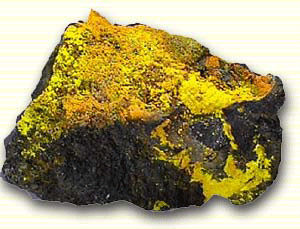
ABC News, By Emile Pavlich and Else Kenned, 8 Nov 24
In short:
Uranium mining is banned in Victoria, but a mine in the state’s west will be able to ship a rare earths concentrate to the US to be processed into commercial quantities of uranium.
The plan has sparked farmer protests, and Friends of the Earth is calling on the Victorian government to block the exports.
What’s next?
The mine is due to start producing and shipping the concentrate in 2026.
A mine in western Victoria is set to produce a commercial quantity of uranium for the first time in Victoria’s history, despite a state ban on uranium mining.
Astron Corporation’s Donald Rare Earth and Minerals Sands Project, about 75 kilometres north of Horsham, was approved by the Victorian government in 2008.
This year, the company received a $183-million funding injection from US uranium giant Energy Fuels, which it said would allow it to start production in 2026.
The company will produce a rare earths concentrate, which will be shipped to the US and refined by Energy Fuels in Utah to produce rare earths and uranium.
The uranium will be sold to US nuclear power plants to generate electricity, according to a memorandum of understanding signed between the two companies last year.
Friends of the Earth national anti-nuclear campaigner Jim Green said there was a “loophole” in Victorian legislation that allowed companies to mine uranium as a by-product of mining other minerals.
Dr Green said that created a “range of issues” around legality, economics and logistics.
“I’m really quite shocked by this proposal, I didn’t see it coming,” he said. “It is a concern and it could certainly lead to other similar proposals.”………………………………….
Nuclear industry banned since 1983
There are three operating uranium mines in Australia, according to Geoscience Australia.
None are in Victoria, where the activity has been banned since nuclear prohibition legislation was introduced in 1983.
Victoria banned uranium mining to “protect the health, welfare and safety of the people” and limit “deterioration of the environment” caused by radioactive substances and nuclear activities, according to the nuclear activities act.
A parliamentary inquiry report examining Victoria’s nuclear prohibition laws, tabled in 2020, found that groups or individuals who proposed changing the government policy did not present sufficient arguments to convince the committee.
“Any advantages are speculative in nature, and do not outweigh the identified and proven risks,” the report found.
If it goes ahead, Astron Corporation’s plan to sell rare earth concentrate to Energy Fuels for processing into uranium and other minerals would be the first example of an Australian rare earths mine producing a commercial quantity of uranium.
The ABC understands Australia’s two existing rare earths mines, Lynas Corporation’s Mount Weld Project and Northern Minerals’ Browns Range project, both in Western Australia, do not produce uranium.
But as the world looks to transition away from fossil fuels, more companies may take up the search, with company Australian Rare Earth announcing in September it would explore for uranium in South Australia.
Changing the fabric of a rural community
The Wimmera region of western Victoria is known as the state’s wheat belt due to its large production of grains and pulses, producing more than 800,000 tonnes on average per year.
In total, 428 square kilometres of land is under Astron Corporation’s mining license and the first phase of the mine, planned to start construction in 2025, covers 28 square kilometres. ……………………………………………………………………………..
………….Regulation concerns
Anti-nuclear campaigner Dr Green said he had concerns about the regulation of the nuclear industry.
“I’ve got safeguards and weapons proliferation concerns,” he said…………………
Dr Green said he also had serious concerns about the White Mesa Mill site in Utah where the uranium would be processed.
“It’s got a long history of controversy, it’s the subject of regular protests from the Ute Mountain Tribe — the local Indigenous people,” he said.
“They have had non-compliance notices from state and federal regulators [and] problems with underground pollution of aquifers.”
The Ute Mountain Ute Tribe and the Center for Disease Control (CDC) and Prevention in the United States are undertaking a study about the health impacts of this site, with results expected next year……….. https://www.abc.net.au/news/2024-11-08/victoria-uranium-mining-ban-loophole-mineral-sands/104473328
Matt Kean says Australia must take ‘strong and decisive action’ on climate crisis despite Trump re-election

Chair of Climate Change Authority says ‘climate change waits for no one’ as pressure mounts on Coalition to dump net zero commitment.
Karen Middleton and Adam Morton, Thu 7 Nov 2024
The chair of the Climate Change Authority, Matt Kean, has declared Australia must take “strong and decisive action” to address the climate crisis despite Donald Trump’s return to the White House, arguing the world needs cheap renewable energy and the country can provide it.
Kean, a former News South Wales Liberal treasurer and energy minister, told Guardian Australia there were “enormous opportunities and benefits” in taking action to cut greenhouse gas emissions, no matter who was US president.
“We don’t know exactly what Trump will do, but climate change waits for no one and will spare no one and no country. That’s why we will continue to need to act – to take strong and decisive action to address this great challenge of our times,” he said.
“The world still needs cheap renewable energy, and the products that come with that, and Australia is in a very strong position to meet the world’s needs, and in doing so create huge jobs and prosperity for our country that we’ve never seen before
Kean said past evidence, including in Trump’s first term as president, showed states, territories and the private sector would continue to act. “I have no doubt that will continue to be the case,” he said
Anthony Albanese also recommitted to the government’s existing policies …………………………….
Initial advice from the authority found a 65-75% cut below 2005 levels would be “ambitious, but could be achievable”.
The government is not keen to reactivate the climate debate in Australia because the effects of climate change continue to generate anxiety in the community and Albanese is pushing a message of optimism about the future…………..
“But doing so because we see it as necessary if you are to be credible in achieving net zero whilst protecting Australia’s industrial base in the future
The Climate Council chief executive, Amanda McKenzie, emphasised the need for Australia to stay the course on the clean energy transition.
“During his first presidency, Trump tried to withdraw the US from climate diplomacy, but state and local governments powered ahead,” McKenzie said in a statement. “Countries and US states know the Trump playbook – and they’re determined to keep driving climate action forward……………. https://www.theguardian.com/australia-news/2024/nov/07/australia-liberal-national-coalition-net-zero-2050-commitment-donald-trump-us-election?utm_term=Autofeed&CMP=soc_568&utm_medium=Social&utm_source=Twitter#Echobox=1730983193
Donald Trump can’t stop global climate action. If we stick together, it’s the US that will lose out

In Australia we’re on the frontline of climate impacts and damages. The Great Barrier Reef has suffered enormous damage with increasingly frequent bleaching. Forests in Western Australia have experienced browning and dieback at an unprecedented scale due to extended drought and heat.
The Australian government, especially given its intention to host COP31, must play a strong diplomatic role to help ensure the fallout from the second Trump presidency is limited, and that international domestic action everywhere else continues to move ahead.
Bill Hare, Guardian 7th Nov 2024, https://www.theguardian.com/commentisfree/2024/nov/07/donald-trump-cant-stop-global-climate-action-if-we-stick-together-its-the-us-that-will-lose-out
How damaging this presidency is to the planet depends very much on how other countries react. There’s no time to waste
Donald Trump’s re-election to the White House is a major setback for climate action but ultimately it’s the US that could end up losing out, as the rest of the world will move forward without it.
The US is the world’s biggest economy and its second biggest emitter. Positive US engagement on climate has been crucial to landmark leaps forward, like getting the Paris agreement over the line, and just last year committing to transitioning away from fossil fuels.
The US missing in action in the latter half of this critical decade for climate action is nobody’s idea of a good outcome.
President-elect Trump has promised to leave the Paris agreement and reports have emerged that he could be thinking of pulling out of the underlying United Nations framework treaty on climate change. But we’ve been here before and the truth is that a second Trump presidency can’t stop climate action, just like his denial of human-induced climate change won’t spare the US from its impacts.
The energy transition is now well under way. The economics of renewable technologies are so attractive that they have become an energy juggernaut. Since the Paris agreement was signed in 2015, global investment in clean energy has increased by 60%.
Nearly US$2tn a year is now invested in clean energy projects, almost double that spent on new oil, gas and coal supply. Before the pandemic, this ratio was closer to 1:1. The US added 560 gigawatts of renewable capacity in 2023. That’s about six times the size of Australia’s entire electricity capacity, added in just one year.
Domestically, Joe Biden’s Inflation Reduction Act has set wheels in motion for climate investment that will be hard, and politically unpopular, to undo. Famously, no Republicans voted for the legislation but red states have been the main beneficiaries of the money, projects and jobs it has created. House Republicans have even pushed back against their peers to protect some of the act’s clean energy tax credits.
Climate impacts are accelerating in pace and scale that is untenable to ignore. Hurricanes Helene and Milton, supercharged by climate change, are expected to cost more than US$50bn. Fires in California, heatwaves in the sunbelt states, and flooding in the US South are wreaking huge damage on Americans. Last year a poll showed a majority of them feel that climate change is already causing serious effects.
None of this stops the day Trump re-enters the White House.
Internationally, we’ve been in this position before. In 2001 George W Bush quit the 1997 Kyoto deal. Last time Trump was in power, he left the Paris agreement, albeit for a short time. I don’t want to downplay the impacts of Trump, or the Project 2025 agenda to which he has been linked, but climate action didn’t stop then and it will not stop now.
Other players, notably China, are increasingly moving into a leadership position on the issue, because of the strategic policy and economic interests it advances. The European Union is moving ahead with its green economic development agenda despite a rightward shift in the balance of power across the EU27 – with action on the climate emergency driving the economic development needed for this region of 350 million people.
The US, if Trump does enact the changes he has campaigned on, will find itself falling behind on new technologies and markets.
How damaging the second Trump presidency is to climate action depends very much on how other countries react. If many follow Trump in either rolling back – or slowing down – their action, the damage will be severe, long-lasting and difficult to overcome.
On the other hand, if countries stick together and, as they should, deepen their commitments aligning with the Paris agreement’s 1.5C limit, the damage will be significant but not severe.
In Australia we’re on the frontline of climate impacts and damages. The Great Barrier Reef has suffered enormous damage with increasingly frequent bleaching. Forests in Western Australia have experienced browning and dieback at an unprecedented scale due to extended drought and heat.
We know that the climate crisis and its impacts on our neighbours is one of our most serious security threats – although it’s not one that our government wants to particularly talk about.
The Australian government, especially given its intention to host COP31, must play a strong diplomatic role to help ensure the fallout from the second Trump presidency is limited, and that international domestic action everywhere else continues to move ahead.
This requires leadership. The government must step up and work with other like-minded countries to bring together a coalition prepared to move forward on climate. And it needs to move forward itself.
There is no time to waste on this. COP29 starts in Baku in a few days and real leadership will be needed urgently to maintain the momentum needed to get agreement on the difficult issues that need to be solved to maintain action globally.
Bill Hare, a physicist and climate scientist, is the chief executive of Climate Analytics
1 This month

of the week – Australians for War Powers Reform (AWPR)
To see nuclear-related stories in greater depth and intensity
 Antinuclear