Australian nuclear news headlines 18 – 25 November

Headlines as they come in:
- Submissions to Parliamentary Inquiry into nuclear power generation in Australia – (Part one)
- Coalition-linked nuclear expert questioned by parliament over coal industry ties
- Nuclear is not really back.
- Consultation, full disclosure, and an environmental audit: Nuclear Free Local Authorities’ triple demand of Australian government over nuke sub waste dump down under
- Trump, AUKUS and Australia’s Dim Servitors.
- Signing US/UK nuclear deal would shred Australia’s credibility: Turnbull.
- Britain’s Nuclear Bomb Scandal: Our Story review – how the UK’s atomic testing programme devastated lives.
- Australia mistakenly included on list of countries joining US-UK civil nuclear deal, British government says
- AUKUS will ‘cannibalize’ other programs with no budget boost: Former top Aussie general.
- Albanese government gives firm ‘no’ to joining UK-US agreement to advance nuclear technology
- Nuclear Propaganda Exposed.
- Big batteries and EVs to the rescue again as faults with new nuclear plant cause chaos on Nordic grids.
- David Crisafulli stares down LNP division on abortion and nuclear power
Big batteries and EVs to the rescue again as faults with new nuclear plant cause chaos on Nordic grids
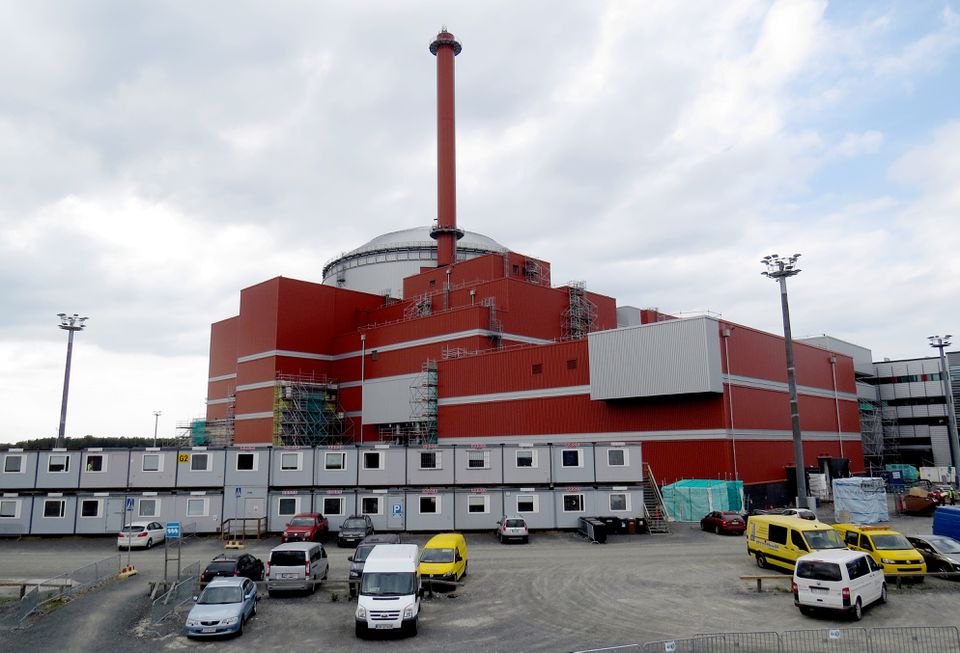
The Australian Energy Market Operator has already made clear that its biggest headache is managing the unexpected outages of big generators, such as the ageing and increasingly unreliable coal fired power stations that the federal Coalition wants to keep open while it waits for nuclear to be rolled out and commercial SMRs to be invented.
Giles Parkinson, Nov 19, 2024 https://reneweconomy.com.au/big-batteries-and-evs-to-the-rescue-again-as-faults-with-new-nuclear-plant-cause-chaos-on-nordic-grids/?fbclid=IwY2xjawGqC8xleHRuA2FlbQIxMQABHadLKvCjeIJudeDt86k27LkV53Q1FcfYmtcRSA_HGcWU1b1TmW7voTgIOA_aem_wwFpyxMordh4V_FbOJ3lfw
The newest and most powerful nuclear reactor in Europe that was delivered more than a decade late and nearly four times over budget is also proving to be a headache for grid operators now that it is finally up and running.
On Sunday, the 1,600 megawatt Olkiluoto 3 nuclear reactor tripped again, the latest in a series of faults and outages that have plagued the new facility and caused the market to reach out for back-up power to fill the gap.
Olkiluoto owner TVO says the reactor tripped on Sunday due to a turbine malfunction in the generator’s seal oil system. “The repair is taking longer than expected, and based on the current information, the plant is estimated to return to electricity production in approximately two days,” it said in a statement.
It’s not the first time the unit has failed. In October, it was forced to reduce power suddenly when one of the reactor’s control rods unexpectedly dropped into the reactor.
Its sister reactor, Olkiluoto 2, was off line for three weeks due to a faulty water-cooled rotor that had to be replaced and will run for months at reduced output because of the fear of failure.
But on Sunday, when the entire 1,600 MW capacity of Olkiluoto 3 was taken out of the system with no notice, it had a big impact on the grid, sending frequency plunging to 49.55 Hz, well outside the normal band.
“Olkiluoto is starting to compete with the Swedish nuclear power plant, Forsmark, for being the leading cause of major (loss of generation) disturbances in the Nordic power system,” writes Andreas Barnekov Thingvad, a Denmark-based trading systems director at battery company Hybrid Greentech.
He says his company contributed to the market response to stabilise frequency (see graph on original ) and the grid with its portfolio of batteries and virtual power plants, including electric vehicles.
Olkiluoto was finally connected to the grid last year, at an estimated cost of €11 billion ($18 billion) compared to the original budget of €3 billion. That cost blowout forced its developer, the French company Areva, to be bailed out by the French government.
When it did come online, nuclear boosters in Australia hailed it as being responsible for a steep fall in electricity prices. They failed to mention the fact that the reactor was more than a decade late, and Finland was forced to turn to highly expensive Russian gas in the interim to make up the shortfall.
Indeed, TVO, the reactor owner, says now that the new reactor has been commissioned, there is often too much production on the Finnish grid, and the reactor has to be dialled down, or curtailed, in much the same way that renewables often are. It is still not allowed to run at full capacity.
“The electricity system in Finland faces on an increasingly frequent basis a situation where more down-regulating production capacity is needed because there is too much production,” TVO notes.
The new reactor has also spent large periods off line (see the graph above from TVO’s most recent interim report). Its annual outage was supposed to last 37 days, but stretched to double that, to 74 days. TVO blamed “defect repairs and technical problems with inspection equipment took more time than had been planned.”
The point of this story is to highlight another bit of nonsense from the nuclear lobby, who like to claim that renewable sources such as wind and solar require back up, while nuclear does not.
That is simply not true, and the world’s big investment in pumped hydro in the 1970s and 1980s was principally designed to provide back up to nuclear reactors then in vogue. Ontario has ordered some of the world’s biggest batteries to support its nuclear fleet, most of which will be offline for several years for upgrades and maintenance.
Thingvad noted the multiple recent outages that had occurred in both the Finnish and Swedish nuclear reactors over the last few months:
- – On November 17th, at 15:25:51, Olkiluoto 3 had another turbine failure, tripping all 1600 MW of generation and causing the Nordic system frequency to drop to 49.59 Hz. The failure is expected to last several days.
- – On September 3rd, Olkiluoto 3 experienced a fault that caused it to drop 640 MW, leading the Nordic frequency to fall to 49.77 Hz.
- – On June 10th, Forsmark Block 3 experienced a reactor trip of 1172 MW, causing the Nordic system frequency to drop to 49.61 Hz.
- – On June 3rd, 2024, Olkiluoto 3, with 1600 MW, suddenly tripped due to a turbine malfunction. The Nordic system frequency dropped to 49.58 Hz.
- – On May 13, 2024, the Forsmark Block 1 nuclear power plant in Sweden, which has a capacity of 1 GW, tripped due to a grid failure. Forsmark experienced multiple outages – each of at least a gigawatt – in 2023.
- The scale of such outages would be significant in a grid like Australia, where the biggest single unit – at the Kogan Creek coal fired generator in Queensland – is 750 MW.
If, as the federal Coalition proposes, it wants to put in units sized at a gigawatt or more, then the market operator will have to invest in more standby capacity in case of the inevitable trips and outages.
The bigger the unit, the more back up power that is required. Wind and solar may be variable, but those variations are easily and reliably predicted. The sudden loss of a 1,600 MW facility is not.
The Australian Energy Market Operator has already made clear that its biggest headache is managing the unexpected outages of big generators, such as the ageing and increasingly unreliable coal fired power stations that the federal Coalition wants to keep open while it waits for nuclear to be rolled out and commercial SMRs to be invented.
“The repeated outages at Olkiluoto and Forsmark nuclear plants are a stark reminder of the critical need for grid resilience and diversification in our energy systems,” noted Eric Scheithauer-Hartmann, a German-based energy executive.
“It’s encouraging to see companies like Hybrid Greentech stepping up to support the Nordic power grid with advanced battery storage and intelligent energy solutions.
“As we continue to face challenges with traditional power generation, investing in smart grid technologies and renewable integration isn’t just beneficial—it’s essential for maintaining stability and meeting future energy demands.”
Nuclear Propaganda Exposed
At the UN COP29 climate summit in Baku, Azerbaijan a Declaration to Triple Nuclear Energy by 2050 led by the US and UK was also endorsed by 31 countries. The declaration falsely claims that nuclear power has net-zero carbon emissions while ignoring ongoing problems of radioactive waste and enviornmental impacts.
The acting Australian prime minister, Richard Marles, declined to join the pact, stating, “pursuing a path of nuclear energy would represent pursuing the single-most expensive electricity option on the planet.” Several international indigenous groups and activists protested at COP29 against the pact and nuclear greenwashing in general.
Lynda Williams, November 20, 2024, https://www.counterpunch.org/2024/11/20/nuclear-propaganda-exposed/
As a physicist and concerned citizen, I find myself outraged every time I scroll through social media and encounter tweets from the Department of Energy (DOE) and the Office of Nuclear Energy (ONE) touting nuclear power as “clean, safe, and carbon-free.” This narrative not only misrepresents the dirty reality of nuclear power but also obscures the significant environmental and health risks associated with its production and waste. It’s infuriating to see government agencies knowingly lie and promote such misleading information, while ignoring the pressing issues faced by communities affected by the toxic reality of the nuclear power industry – propaganda paid for by US taxpayers!
Oh, Canada! Leading the Charge Against Nuclear Greenwashing
Finally, someone is doing something about it—but not in the U.S., where you’d expect it. In Canada, a coalition of seven environmental organizations recently filed a formal complaint with the Competition Bureau against the Canadian Nuclear Association (CNA), accusing it of misleading the public by marketing nuclear power as “clean” and “emissions-free.” Based on Canada’s Competition Act, the complaint challenges the CNA for violating provisions related to false or misleading advertising, similar to greenwashing regulations in other countries, where deceptive environmental claims distort market competition and misinform consumers.
The complaint argues that the CNA omits critical information about the environmental damage and health risks associated with the nuclear fuel cycle, including uranium mining, radioactive waste management, and the impacts on communities near nuclear facilities. By selectively framing nuclear power as a climate solution, the CNA diverts attention and resources away from truly sustainable alternatives like solar and wind energy.
In the U.S., similar deceptive practices could be challenged under the Federal Trade Commission (FTC) Act, which includes the FTC’s Green Guides. These guidelines require that any environmental claims be substantiated, transparent, and not misleading about the overall environmental impact. Yet, industry organizations like the Nuclear Energy Institute (NEI) and the American Nuclear Society (ANS) continue to promote nuclear power as a “clean” energy solution to climate change while conveniently ignoring the lifecycle emissions, radioactive waste, and long-term environmental costs.
Leading the charge in Canada are groups such as the Canadian Environmental Law Association (CELA), Environmental Defence Canada, and the Sierra Club Canada. Here in the U.S., organizations like the Union of Concerned Scientists (UCS), Natural Resources Defense Council (NRDC) and the Sierra Club could take similar action against the NEI and ANS by leveraging the FTC’s guidelines to expose deceptive marketing practices in the nuclear sector.
Small Modular Reactors: A Costly and Dangerous Gamble
The Biden administration has funneled billions into developing Small Modular Reactors (SMRs), touting them as the future of “clean” energy. This renewed investment includes funding from the Bipartisan Infrastructure Law and the Inflation Reduction Act, which together allocate billion of dollars to accelerate the deployment of next-generation nuclear technologies which are riddled with technological problems and have no real launch date on the horizone. SMRs are still in the design and testing phase and the earliest they could come online is at least a decade away. The push for SMRs is also bolstered by private sector investments, particularly from tech companies looking to power energy-intensive AI by restarting moth balled nuclear power plants like Three Mile Island and to build future SMRs in these locations that also serve as short term storage for thousands of tons of highly radioactive nuclear fuel waste.
Global Greenwashing Nuclear at COP29
The push for nuclear expansion is a global effort led by the International Atomic Energy Agency (IAEA) one of the most powerful agencies at the United Nations whose mission is to promote nuclear power around the globe. At the UN COP29 climate summit in Baku, Azerbaijan a Declaration to Triple Nuclear Energy by 2050 led by the US and UK was also endorsed by 31 countries. The declaration falsley claims that nuclear power has net-zero carbon emissions while ignoring ongoing problems of radioactive waste and enviornmental impacts. Most climate experts agree nuclear power is not a solution to climage change due to high cost and delays. The acting Australian prime minister, Richard Marles, declined to join the pact, stating, “pursuing a path of nuclear energy would represent pursuing the single-most expensive electricity option on the planet.” Several international indigenous groups and activists protested at COP29 against the pact and nuclear greenwashing in general. According to Leona Morgan, Diné organizer with Don’t Nuke the Climate, “Nuclear is not carbon-neutral. It’s fueled by fossil fuels… they just simply don’t count the carbon footprint before the nuclear power plant or after the nuclear power plant.”
Let’s Be Real: Nuclear Power is Not Clean or Green
Sure, nuclear fission may not produce direct carbon emissions, but the nuclear fuel cycle—including uranium mining, reactor construction, radioactive waste management, and decommissioning—creates significant greenhouse gas emissions. In places like the Diné Navajo Nation, uranium mining has already caused immeasurable harm. Over 500 abandoned uranium mines and mills continue to contaminate the land and water with radioactive waste, leading to severe health problems that affect multiple generations. The DOEʻs failure to clean up abandoned mines and address these ongoing harms while simultaneously promoting the narrative of “clean, safe, carbon-free” nuclear power is not just unethical—it’s a dangerous distraction from real solutions for our energy needs and the fight against climate change.
In addition to the delayed deployment of SMRs, there are future problems with going nuclear. High grade uranium resources are finite, with estimates suggesting “peak Uranium” reserves may only last another 10 to 15 years at current consumption rates. This means that SMRs could face fuel shortages before they even become widespread. As high-grade deposits run dry, the industry may turn to in-situ leaching (ISL) methods, which pose severe environmental risks, particularly groundwater contamination. Furthermore, reprocessing nuclear waste—an extremely hazardous and costly endeavor—is not currently practiced in the U.S. due to its dangers. However, as peak uranium approaches, reprocessing may be reconsidered as a necessary evil if we rely on nuclear power as a primary source of energy.
Better Use of Funds: Investing in Renewables
Instead of funneling billions into new unproven nuclear projects, those funds should be redirected to renewable energy sources that are ready for deployment today to reduce carbon emissions. The billions allocated for SMRs could fund solar panels on rooftops for every house in a city the size of Las Vegas. Investments in wind farms and solar plants can achieve far greater reductions in CO2 emissions without the risks of radioactive waste.
Congress has the power to reprogram funds from nuclear projects to support wind, solar, and energy storage, providing immediate climate benefits.
Tim Judson, executive director of Nuclear Information and Resource Service (NIRS), told Democracy Now at COP29 that the push for nuclear power is an “elaborate greenwashing scheme.” “The nuclear industry is, pound for pound, the most subsized energy industry in history and the fact that their pumping more and more money into it as the industry is on the verge of decline is one of the most false solutions we are talking about in the climate talks. If nuclear had to stand on its own two feet, it would phase out within a decade.”
The Way Forward: Taking Action While We Can
US citizens concerned about the DOE’s misleading promotion of nuclear power and SMRs can take meaningful action by contacting the Senate Committee on Energy and Natural Resources to advocate for oversight of nuclear greenwashing and request the reprogramming of funds from SMR development to renewable energy initiatives. Individuals can file complaints with the FTC and the DOE Office of Inspector General for industry and government greenwashing. We can also support non-profit environmental groups and ask that they follow Canada’s lead to hold the nuclear industry and government agencies accountable. With the Trump administration poised to make sweeping cuts to federal agencies and roll back nuclear safety oversight and regulations, citizen advocacy is more crucial than ever before.
We don’t need to face this challenge alone. Over the past four years, several formal complaints and legal actions have been initiated against nuclear greenwashing in the Eurpoean Union, Austria, South Africa and now Canada. In confronting the extremism of the Trump administration, it’s more vital than ever to collaborate with other nations committed to challenging nuclear misinformation and demand real sustainable energy solutions that prioritize our planet over corporate interests.
Lynda Williams is a physicist and environmental activist living in Hawaii. She can be found at scientainment.com and on Bluesky @lyndalovon.bsy.social
Trump’s rapid path to dictatorship
John Quiggin writes – 20 Nov 24
We don’t need to speculate any more. Trump has announced the dictatorship, and there is no sign of effective resistance. The key elements so far include
Extremists announced for all major positions, with a demand that they be recess appointments, not subject to Senate scrutiny
A state of emergency from Day 1, with the use of the military against domestic opponents
Mass deportations, initially of non-citizens and then of “denaturalised” legal immigrants
A third term (bizarrely, the nervous laughter that greeted this led to it being reported as a joke).
A comprehensive purge of the army, FBI and civil service
It’s clear that Trump will face no resistance from the Republican party. There’s an outside chance that the Supreme Court will constrain some measures, such as outright suppression of opposition media, but that won’t make much difference.
It’s possible that Trump will overreach in some way, such as carrying out his threat to execute political opponents before the ground is fully prepared. Or, his economic policies may prove so disastrous that even rigged elections can’t be won. But there is no good reason to expect this.
I can’t give any hopeful advice to Americans. The idea of defeating Trump at the next election is an illusion. Although elections may be conducted for some time, the outcome will be predetermined. Street protest might be tolerated, as long as it is harmless, but will be suppressed brutally if it threatens the regime. Legal action will go nowhere, given that the Supreme Court has already authorised any criminal action Trump might take as president.
The models to learn from are those of dissidents in places like China and the Soviet Union. They involve cautious cultivation of an alternative, ready for the opportunity when and if it comes.
For Australia, the easy, and wrong, course of action will be to pretend that nothing has happened. But in reality, we are on our own. Trump is often described as “transactional”, but this carries the implication that having made a deal, he sticks to it. In reality, Trump reneges whenever it suits him, and sometimes just on a whim. If it suits Trump to drag us into a war with China, he will do it. Equally, if he can benefit from leaving us in the lurch, he will do that
Our correct course is to disengage slowly and focus on protecting ourselves. That means a return to the policy of balancing China and the US, now with the recognition that there is nothing to choose between the two in terms of democracy. We need to back out of AUKUS and focus on defending ourselves, with what Sam Roggeveen has called an “echidna” strategy – lots of anti-ship missiles, and the best air defences we can buy, from anyone willing to supply them.
I’ll be happy to be proved wrong on all this.
David Crisafulli stares down LNP division on abortion and nuclear power
Consternation remains in the ranks about way Queensland party handled two divisive issues, sources say
Guardian, Ben Smee 17 Nov 24,
The Queensland premier, David Crisafulli, has told Liberal National party members the party “does not exist for culture wars” in an address seeking to stare down potential division about his positions on abortion rights and nuclear power.
Crisafulli’s speech to the LNP state council meeting in Rockhampton on Sunday was his first opportunity to speak directly to the organisational wing, and party members, since last month’s state election victory.
Despite the election success, LNP sources say there remains consternation in the ranks about the way the party handled divisive issues including abortion and nuclear power, where the views of the grassroots membership – and the private views of many MPs – are at odds with Crisafulli’s promises not to change existing laws.
The premier did not directly mention either issue. But his speech to members hinted at “scare campaigns” by Labor during the election and said these would not work in four years if the party kept its word.
“One thing I can guarantee you about me … that is my word counts for something and I value a culture when you say you’re going to do something you do it, and when you say you won’t do something, you won’t do it,” Crisafulli said……………………………………. more https://www.theguardian.com/australia-news/2024/nov/17/david-crisafulli-stares-down-lnp-division-on-abortion-and-nuclear-power
1 This month
15 April – Zoom –Nuclear Power is Not the Solution
Apr 15, 2026 01:00 AM in Canberra, Melbourne, Sydney

Join the International Physicians for the Prevention of Nuclear War (IPPNW) on Tuesday, April 14th for a timely webinar exploring the risks associated with nuclear power and challenging the myth that it offers a simple, safe, carbon-free solution to the climate crisis

of the week – Australians for War Powers Reform (AWPR)
To see nuclear-related stories in greater depth and intensity
 Antinuclear