Australian nuclear news headlines 17 – 23 December.
Headlines as they come in:
- A monumental hurdle stands before Dutton’s nuclear plan
- Communities vent frustration at Coalition’s nuclear plan for their towns
- The LNP’s nuclear policy is working just fine
- The glaring gaps and unanswered questions in the Coalition’s nuclear plan and costings.
- Nationals senator says Coalition introduced nuclear as a political fix.
- Letter re: Canada selling fission Uranium to OZ.
- Power, control and symbolic masculinity: How Freud might diagnose the pro nuclear lobby
- Angus Taylor’s word salad blurs the truth about power bills under the Coalition’s $331b nuclear plan.
- Dutton’s nuclear plans need detailed timeline.
- Dutton said a reactor’s waste would fill a Coke can: Try 27,000 of them.
- Dutton’s nuclear plan a “con job” and a recipe for blackouts, says Bowen
- ‘Don’t want nuclear power’: Wild scenes as protestors storm Perth’s CBD during inquiry into nuclear energy.
- Dutton says nuclear will cost $331 billion: Chalmers adds $4 trillion to that.
- Dutton’s nuclear plan stops decarbonisation, punishes consumers and hurts the economy.
- Inquiry into Nuclear Power Generation in Australia travels to Collie for public hearing.
- The Coalition is playing voters for mugs once again with its nuclear costings.
- Coalition’s nuclear plan will hit Earth with 1.7bn extra tonnes of CO2 before 2050, experts warn .
- 6 million have solar and will vote.
Dutton’s nuclear plan stops decarbonisation, punishes consumers and hurts the economy.

Matt Kean, Climate Change Authority Chair, 17 Dec 24 https://www.theage.com.au/politics/federal/dutton-s-nuclear-plan-stops-decarbonisation-punishes-consumers-and-hurts-the-economy-20241216-p5kyru.html
Achieving net zero by 2050 is non-negotiable. Australia and our global partners have agreed to targets that limit warming and maximise the chance to avoid the worst impacts of climate change, such as more natural disasters, rising sea levels, and species and habitat loss.
But the pathway to decarbonisation matters too. Cutting greenhouse gas emissions as far and fast as possible now can reduce the amount of temperature rise experienced in the years ahead and help curb the risks to our economy, communities and way of life.
That’s one reason why accelerating work to create a new electricity network built on renewables such as wind and solar – backed by storage, firming and peaking gas – is essential.
It’s the biggest abatement opportunity available in the short term and the most cost-effective form of new energy generation needed to underpin progress on decarbonisation across the rest of the economy. And the race to pull forward investment in renewable energy generation is on because the owners of existing coal-fired power stations have begun to close them.
The first shutdown occurred at Lake Munmorah, NSW, in 2012, and more have since exited the system. It’s now expected that 90 per cent of the existing coal-fired generation capacity will depart the system by 2035.
Against this backdrop, the Climate Change Authority will undertake analysis of the Coalition’s
nuclear proposal. We want to give the Australian people an economic and science-based
understanding of the impacts on the grid, the climate and their energy bills. But at first glance,
Peter Dutton’s nuclear policy stops decarbonisation, blows the carbon budget, punishes
consumers and harms the economy.
Under any scenario contemplated, Australia will be more dependent on coal-fired power stations for longer. The CSIRO says the best case for delivery of a single new nuclear facility in Australia is 15 years. And that assumes the legislative, regulatory, workforce and other issues can be resolved – and the cost blowouts and time delays witnessed overseas aren’t repeated.
Yet to replace all of Australia’s confirmed retiring generation capacity with nuclear as a zero-emission alternative would require deploying at least 15 to 17 large-scale nuclear facilities, or more than 50 proposed small modular reactors, by 2040. In the meantime, Australia will need to depend on coal-fired power that is increasingly unreliable and the cause of price spikes and blackouts. It would be strange to subsidise the ongoing operation of plants that can’t be guaranteed to actually keep the lights on.
It also compounds the challenge of reducing our emissions in the short and long term. Relying primarily on electricity from fossil fuels for longer would also delay necessary and achievable cuts to emissions in other sectors such as transport and industry, which depend on the availability of zero emission energy for their own decarbonisation pathways
The authority has calculated that for every percentage point that Australia falls short of achieving 82 per cent by renewables by 2030, about 2 million tonnes of harmful emissions will be added to the atmosphere.
The other element the authority will consider is cost – to the economy, taxpayers and consumers. For example, the proposal doesn’t just appear to slow decarbonisation, but the economy too. Some initial forecasts have already suggested it assumes an economy 40 per cent smaller than the alternative.
Assuming there will be far less demand for electricity means assuming far fewer Australians take up EVs or electrify their homes. It means assuming fewer industrial and manufacturing businesses switch to efficient, electric production processes.
The sensitivities are heightened given the proposal involves taxpayers funding nuclear power stations, which risks sending private investment now attracted to renewables offshore in pursuit of better returns.
The CSIRO, AEMO and the authority have all also made the point – a system built on renewables will lead to lower power prices for households and businesses compared with nuclear. It would take an astonishing leap of faith to suggest otherwise, but the modelling published last week in support of nuclear seemed to take that path.
The debate over Australia’s energy transition should be based on sober analysis, rooted in economics and engineering. It’s why markets, scientists and experts keep defaulting to a system based on renewables.
Alternatives that place faith in a technology that does not exist in Australia, risks slowing our economy, undermining energy security and stalling our bid to reduce emissions deserve scrutiny. That’s what the Climate Change Authority will do.
Matt Kean is chair of the Climate Change Authority. He previously served as a NSW minister for energy.
The Coalition is playing voters for mugs once again with its nuclear costings
the Coalition documents released on Friday don’t seem to get around to mentioning is that its proposal for nuclear power involves taxpayers taking on all the massive financial risks (apart from the other sorts) and costs.
By Laura Tingle, 7.30 ABC 17 Dec 24
The August 2010 federal election campaign was conducted amid continuing shock waves from the Julia Gillard coup against Kevin Rudd a little less than two months earlier.
So, you may be forgiven for forgetting much that happened in the actual campaign, and specifically, how the federal Coalition didn’t bother releasing the costings of its election promises until just 48 hours before voters went to the polls.
It had already refused to submit the policy promises for independent analysis — which in those days was done by Treasury and the Department of Finance rather than the Parliamentary Budget Office.
That refusal might not have mattered too much to the broad sweep of history if the election result had been different. But a knife-edge result left three crossbench House of Representatives MPs to make the call on which side of politics would get their support and, therefore, be able to form government.
In making their decision the “Three Amigos” — Tony Windsor, Bob Katter and the subsequently infamously loquacious Rob Oakeshott — relied heavily on a Treasury and Finance analysis requested by them post-election.
Its findings? That the Coalition’s claimed budget savings were out by almost $11 billion. In the current age of announcements measured in the hundreds of billions of dollars, that might not sound like a lot.
But given that the claimed cost of Coalition policies was originally only $31.5 billion, that’s a rather spectacular …. miscalculation.
It felt for all the world like the work of an ill-prepared, lazy opposition that thought it could coast to office amid the chaos of a dysfunctional government. And it almost did.
A perfectly timed announcement
There’s something spookily familiar about the circumstances now, as the opposition finally unveiled its much-promised nuclear energy costings on a Friday one week before the country closes down entirely for Christmas.
There may be a lot more detailed modelling in the document prepared by Frontier Economics for the Coalition than there was in 2010.
But the modelling, and more importantly the Coalition’s political message wrapped around it, doesn’t answer the myriad of questions raised by the idea of nuclear energy. And this belated release of what we are led to believe is a signature policy for the election comes as the Coalition still hasn’t released details of most of its other key policies — from tax to immigration.
The decision to release the costing on December 13 feels like the Coalition is once again playing voters for mugs at a time when it is up against a federal government that has spent the year apparently determined to prove it is not very good at politics, or persuading voters that it knows what it is doing.
The Frontier modelling does implicitly raise important questions about the government’s own energy plans: just how much coal-fired power will the system need as we move towards a system that is dominated by renewables, and for how long?; how much gas will be needed (and is it in the right place) to be used to “firm” or underwrite the system?; how much can we really rely on battery technology that is still evolving to store renewables? and just how much transmission infrastructure do we need (and where) for a mostly renewables future?
The government has “sort of” answered these questions. Most analysts will tell you that it is almost impossible to answer them precisely because the wheel is still in spin. Prices and technologies are changing.
But, up against an opposition leader who is better at cut-through messages, it will need to do a lot better than that.
Crucial to the political debate is the fact that much of the uncertainty around these decisions arises because they are being made by individual investors who are taking on all the risks in building new energy capacity.
And this must surely be the threshold point of difference with what the federal Coalition is proposing.
For the one thing that the Coalition documents released on Friday don’t seem to get around to mentioning is that its proposal for nuclear power involves taxpayers taking on all the massive financial risks (apart from the other sorts) and costs.
The Coalition wants this big shift to be overseen by a public sector which it usually loves to point out is notoriously bad at running big projects, either directly or via massive subsidies.
The nuclear divide
The electorate is a lot more disengaged than it was in 2010, but the politically dangerous part of the nuclear policy from the government’s perspective is how it plays to regional Australia and, a bit like Brexit, likely divides the country into two very different blocks of voters.
Many regional voters, most pollsters will tell you, are worried about job losses as coal mining disappears, are unconvinced renewables offer job replacements, and are very exercised about the proliferation of wind and solar farms, and by the transmission lines to link them to the grid.
Earlier talk of small nuclear reactors has disappeared from the model set out using the Frontier modelling, and that modelling doesn’t seem to make provision for the fact that there are usually high costs for a first build, or that most expert opinion says it will take until at least 2040 to have the regulatory system and build in place for a first nuclear reactor to be functional, not 2036………………………………………………………………..
The Coalition has been pledging all year that its plans would lead to lower energy prices for stressed households.
But Peter Dutton had to sidestep on that issue on Friday because there is no clear mechanism for his plans to bring down those costs any time soon.
All the energy experts will be poring over the details for days. One could say they would be poring over them for weeks but (almost as if it was planned that way) the media coverage and the debate seem likely to come to a screeching stop in a week’s time as everything shuts down for Christmas.
Like the 2010 election costings, not many voters may remember the details of any analysis.
But the Coalition will have to be hoping there is no political equivalent of the Three Amigos to answer to this side of the 2025 election.
Laura Tingle is 7.30’s chief political correspondent. https://www.abc.net.au/news/2024-12-14/politics-dutton-release-nuclear-costings/104723416
Counteracting the nuclear-corporate- military-media complex -week to 16 December

Some bits of good news –
Women Wage Peace and Women of the Sun, have received a joint Nobel Peace Prize nomination this year. Growing Corn in the Desert,No Irrigation Required.The Benefits of Gardening Just Keep Sprouting.
TOP STORIES . Trump Transition Team Considering Strikes on Iran. Inside Israel’s opportunistic invasion of Syria. Chilling Warnings for Syria: When Foreign Interventions Go Bad. From ‘Terrorist’ to ‘Freedom Fighter’: How the West Rebranded Al-Qaeda’s Jolani as Syria’s ‘Woke’ New Leader.
Climate. Climate crisis deepens with 2024 ‘certain’ to be hottest year on record. Antarctica is in crisis and we are scrambling to understand its future.
Noel’s notes. Australia’s coming Dutton-deluge of nuclear propaganda. The legal decision on the Murdoch media – what does it mean for us?
**************************
AUSTRALIA. Solar switch off: Dutton’s nuclear plan amounts to declaration of war against household energy systems. Biggest losers from Coalition’s nuclear plan will be Australia’s 4 million solar households, industry says. The Coalition’s master plan: Bring large scale wind, solar and battery storage installations to a halt.
Dutton to reveal just how much he’s gambling on nuclear power. Peter Dutton’s nuclear plan: Mad, bad, and extremely dangerous.
How anger at Australia’s rollout of renewables is being hijacked by a new pro-nuclear network . Inquiry into nuclear power generation in Australia: Exposing Ted O’Brien’s dishonesty. Advance’s plan to destroy the Greens. Nuclear Neverland: The Lost Boys of Costings | The West Report -masse? https://www.youtube.com/watch?v=fSeaybp9oAA
Peter Dutton in his ignorance is pushing nuclear reactors in Australia – including small nuclear reactors.
Netanyahu and Australia. More Australian nuclear news at https://antinuclear.net/2024/12/13/australian-nuclear-news-10-16-december
**********************
NUCLEAR ITEMS
| ATROCITIES. Finding the Unmentionable: Amnesty International, Israel and Genocide. |
| CLIMATE. France’s New Nuclear Power Plant Is a Ticking Bomb. |
| ECONOMICS. Ed Miliband to bring more misery for Brits and send bills skyrocketing. Nuclear Stocks Were Super Hot Just A Month Ago: What’s Changed? France deal raises concerns over EDF dominance – Collective intelligence or failure? |
| EDUCATION. Congress Revives Cold War Tactics With New Anti-Communism School Curriculum |
| ENERGY. Murder, mayhem, and minerals: The price of the renewable energy revolution. A nuclear-free energy future for Hydro-Québec, says Michael Sabia. |
ENVIRONMENT.
- Radioactive contamination halts work on SSEN subsea link near Dounreay. World War II airplanes to blame for radiation halting work on SSEN cable near Dounreay.
- ‘Shambolic’ plans for Severn saltmarshes blasted. Nuclear Free Local Authorities (NFLA) make appeal over Areas of Focus in South Copeland.
- Oceans: Nuclear waste to be dumped into Cape Cod and turn ocean radioactive -ALSO AT https://nuclear-news.net/2024/12/13/2-b1-nuclear-waste-to-be-dumped-into-cape-cod-and-turn-ocean-radioactive/
| MEDIA. US mainstream media missed biggest news story of 2024 . Rupert Murdoch loses his legal battle, leaving future of media empire in the balance. Why Murdoch’s succession case could be major blow to his rightwing legacy. Book: The Scientists Who Alerted Us To The Dangers of Radiation. |
| OPPOSITION to NUCLEAR . New generation must take up fight against nuclear weapons, Nobel laureate group says. |
POLITICS.
- Syria – Winners And Losers Or Both. Taliban In Afghanistan Bad, Al-Qaeda In Syria Good.
- A promissory note to sway the vote? – Lincolnshire opts to seek nuclear waste Hosting Agreement.
- Trump and Nuclear Energy: There Are Questions. Nuclear sector’s views on second Trump administration mixed as Rogan interview raises questions.
POLITICS INTERNATIONAL and DIPLOMACY.
- The Fall of Assad & What it Means for The Middle East (w/ Alastair Crooke) | The Chris Hedges Report https://www.youtube.com/watch?v=OgEgHVtRbg4 Why is Biden cheering terrorist takeover of Syria? US, UK consider removing Hayat Tahrir al-Sham (HTS)from terror blacklist to ‘deepen contact’ with Al-Qaeda offshoot.
- US Backs Israel’s Land Grab in Syria. Canada considers financing for Polish nuclear power plant.
- Six major NATO states sign document on Ukraine’s accession plans.
- Will Donald Trump kill US-UK-Aussie sub defense deal?.
| SAFETY. Rocket fuel eating away at US, China nuclear weapons. Drone strikes UN vehicle on way to inspect Ukrainian nuclear plant. |
| SECRETS and LIES. Some Thoughts On The Mystery Drones.Anyone Can Buy Data Tracking US Soldiers and Spies to Nuclear Vaults and Brothels in Germany. |
| SPACE. EXPLORATION, WEAPONS. Remember the dark skies? |
| SPINBUSTER. Atomic revival: A new age for nuclear? |
| URANIUM. How a uranium mine became a pawn in the row between Niger and France. |
WAR and CONFLICT.
- The First Phase Of A New War Returns To Syria. US Bombs Over 75 Targets in Syria After Assad Falls.
- Why is Israel attacking Syria? Israel preparing to strike Iranian nuclear sites – media. Hitting Iran now could halt its nuclear plan – ALSO AT https://nuclear-news.net/2024/12/13/2-b1-hitting-iran-now-could-halt-its-nuclear-plan/
- “Terrorist Organization” Means Whatever The US Wants It To Mean.
- Airwars Finds Israel Killed Over 5,000 Civilians in Gaza in October 2023.
- Trump blasts Biden over long-range missile strikes into Russia . Ukraine conflict updates: Record Russian gains, Kursk encirclement and Donbass push. Biden Aims to Go Out With a Bellicose Bang.
6 million have solar and will vote
The signature [nuclear] Coalition policy for the 2025 election will be a huge government-owned energy monolith.
The overall costs will be borne by taxpayers because the publicly owned reactors will bear them. But the overall profits will be made by the private sector which will queue up for the construction contracts and whose profits will balloon as the costs of construction inevitably and uncontrollably blow out.
the real aim of the exercise is not to produce the cleanest energy at the lowest cost, but to keep the profits of the fossil industry flowing for as long as possible.
Crispin Hull, 17 Dec 24
Opposition Leader Peter Dutton’s announcement on nuclear energy last week contained a welcome development. For the first time since about 1989, the Coalition has acknowledged that only governments can do some of the really big-ticket items.
Since about 1990, the Coalition has said, Private Sector Good, Public Sector Bad. But with the program to build seven nuclear power stations, the Coalition acknowledges that only the public sector can do it.
The publication of Fightback! by then Opposition Leader John Hewson in 1992 was the touchstone of conservative policy: the private sector was more efficient and could do things quicker and better than the great big bloated public sector full of lazy, box-ticking public servants. Taxpayers and consumers would be much better off, they argued.
If you can find it in the Yellow Pages, they said, buy it there. Or these days, Google it. Don’t let the Government do it, they said. The Government is not the solution to the problem. The Government is the problem, as Ronald Reagan said. Get government out of the way, and the private sector will provide the solution.
So, what has happened now? The signature Coalition policy for the 2025 election will be a huge government-owned energy monolith.
Gulp.
That will require the unlearning of three decades of conservative policy.As it happens, though, much of that policy was a cruel hoax. Far from being cheaper and more efficient, the neo-liberal conservatives did not – to use market parlance – factor in two critical elements of private-sector contracting: fraud and profit gouging.
Since about 1990 in Australia we have seen, through privatisation, a major shift of wealth and income up to the top two percentiles at the cost of people on middle income. From employees and small business to the managers and shareholders of big business.
In the 1990s, the neo-liberals (read, the Coalition) harped on about reducing the role of government, particularly government spending. It did not happen. Government spending remained at 38 percent throughout the 1990s’ privatisations and downsizing. All that happened was that the spending went from public health, education, and welfare into subsidies and tax breaks for the fossil-fuel industry, other big corporates, and private health, education and other providers.
Public spending remained stubbornly the same.
It will be the same with the nuclear reactors. The overall costs will be borne by taxpayers because the publicly owned reactors will bear them. But the overall profits will be made by the private sector which will queue up for the construction contracts and whose profits will balloon as the costs of construction inevitably and uncontrollably blow out.
Importantly, even though the Coalition is going for a massive program of government spending and ownership for its nuclear reactors, it has relied on a private firm of economists to do the costings. Surely, if such a massive spend and risk is to be undertaken by the public sector, you would want the public sector to do the costings.
As it happens, we have that. The CSIRO has costed and re-costed nuclear energy and come up with the same result: higher electricity bills and greater dangerous carbon emissions.
The private-sector costings, on the other hand, look like an exercise in: “These are the conclusions upon which we have based our facts.”
This is because the real aim of the exercise is not to produce the cleanest energy at the lowest cost, but to keep the profits of the fossil industry flowing for as long as possible.
However, it is an electorally risky exercise. Not because a generally financially illiterate electorate will see nuclear as a white elephant, but rather because an ever-growing portion of the electorate has rooftop solar and know it pays off.
Further, in the unlikely event that nuclear goes ahead there will be times when the grid has too much power and domestic solar generators will be blocked from exporting their product to the grid because nuclear power stations cannot be turned on and off without enormous cost and difficulty.
That is going to annoy the owners of four million rooftop solar systems. It would be about as popular as taking away Medicare.
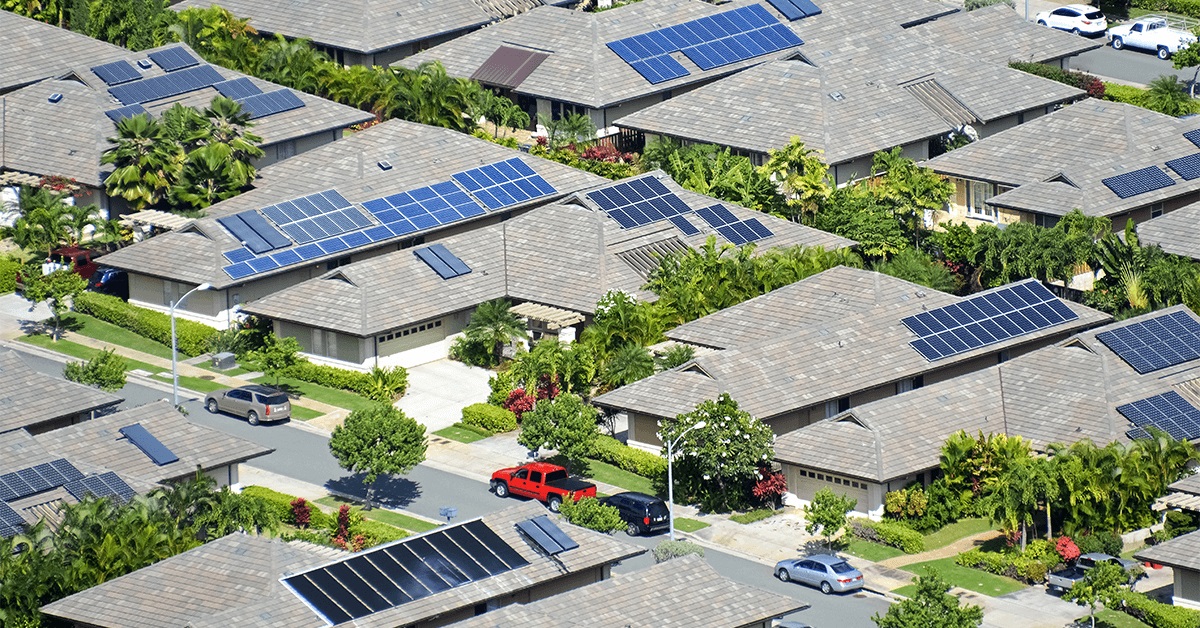
The electoral dynamics for nuclear are made worse for the Coalition because more than three million of those solar systems are on the roofs of stand-alone houses – in the very suburbs and regions which the Coalition hopes to take from Labor. That is about six million voters in an electorate of 18 million.
Moreover, those six million voters are proselytising about the value of solar, and lots of tenants and unit holders – hitherto shut out of solar – want to get a slice of the action sooner rather than later.
The big trouble with nuclear is spending vast amounts of public money with no electricity generation for at least a decade, more likely a lot more. Whereas every bit of renewable infrastructure generates from Day 1 and every battery stores from Day 1. Voters prefer the here-and-now to spending on something they might never see.
Nuclear is a matured industry. It not going to get much more efficient, if at all. Whereas the efficiency of solar, wind, and batteries continues on an upward trajectory well beyond previous expectations.
When you add electric vehicles, the renewables pay for themselves very quickly.
The task for Australia now is to reduce our reliance on our $30 billion a year of imported oil. And to reduce our reliance on $30 billion a year of thermal coal exports before the world does it for us. These are energy and national-security issues.
The Coalition’s decades-long nuclear program and Labor’s continued approval of coal mines fail to meet the urgency and magnitude of the national-security risks arising from climate change and fossil-fuel reliance.
A government’s first priority should be national security: not just from the threat of arms but the threats of disasters and supply-chain disruption.
We need politicians who think about the long-term security of their people not the short-term profits of big corporations and the donations which come from them.
1 This month
To see nuclear-related stories in greater depth and intensity
– go to https://nuclearinformation.wordpress.com/


 Antinuclear