Syria Today, Iran Tomorrow, and Inevitably China
A US-backed terrorist organization fresh from overthrowing a US-targeted nation in the Middle East now vows to target China next.
The London Telegraph in a December 13, 2024 article titled, “Uyghur fighters in Syria vow to come for China next,” claims “a Uyghur militant group that helped to topple Bashar-al Assad has vowed to take the fight to China.”
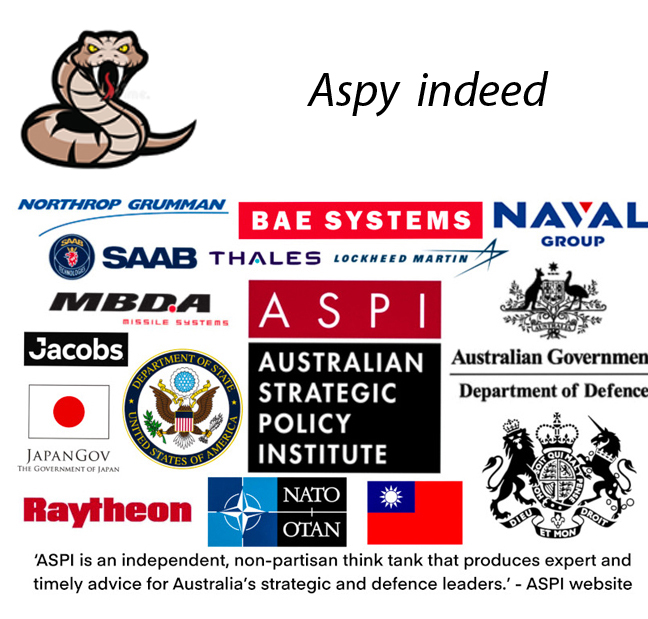
Far from an exception, virtually all reports on the subject stem from either Adrian Zenz himself or reports published by US government-funded organizations including the Australian Strategic Policy Institute
New Eastern Outlook, Brian Berletic, December 19, 2024, https://journal-neo.su/2024/12/19/syria-today-iran-tomorrow-and-inevitably-china/
The collapse of the Syrian government in mid-December 2024 represents a pivotal moment for U.S. geopolitical strategies in the Middle East and beyond.
This event aligns with longstanding objectives, including the subsequently planned disarming, division, and destruction of Iran and the toppling of the Iranian government, the possible eviction of Russian military bases in Syria, and the use of US-sponsored terrorist organizations utilized in overrunning Syria to export terrorism to other targeted nations both in the region and far abroad including both Russia and China.
Syria’s Collapse Was Long Sought After
The US has repeatedly attempted to undermine and overthrow the government of Syria since at least as early as the 1980s. This most recent attempt began preparations as early as 2007 as revealed in a New Yorker article published that year titled, “The Redirection.”
Written by legendary journalist Seymour Hersh, the article admitted:
To undermine Iran, which is predominantly Shiite, the Bush Administration has decided, in effect, to reconfigure its priorities in the Middle East. In Lebanon, the Administration has coöperated with Saudi Arabia’s government, which is Sunni, in clandestine operations that are intended to weaken Hezbollah, the Shiite organization that is backed by Iran. The U.S. has also taken part in clandestine operations aimed at Iran and its ally Syria. A by-product of these activities has been the bolstering of Sunni extremist groups that espouse a militant vision of Islam and are hostile to America and sympathetic to Al-Qaeda*.
Also that year, the US State Department had already been training, equipping, and funding opposition groups to return to their nations across the Arab World and overthrow their respective governments as part of what would later be referred to as the “Arab Spring,” the New York Times would reveal in a 2011 article titled, “U.S. Groups Helped Nurture Arab Uprisings.”
Following the initial protests of the 2011 “Arab Spring,” US-sponsored regime change quickly and deliberately turned violent before transforming into a multitude of armed conflicts – some of which involved overt US military intervention, including in Libya, Syria, and Yemen.
By 2012, a US Defense Intelligence Agency (DIA) report about US-sponsored regime change in Syria specifically, published by Judicial Watch, admitted that the so-called “Syrian” opposition consisted of Salafists, the Muslim Brotherhood, and Al-Qaeda*. The report admitted that, “the West, Gulf countries, and Turkey support the opposition,” and that “if the situation unravels there is the possibility of establishing a declared or undeclared Salafist principality,” and that “this is exactly what the supporting power of the opposition [the West, Gulf countries, and Turkey] want in order to isolate the Syrian regime.”
It is very clear that the “Salafist principality” referred to the so-called “Islamic State.” While the West posed as intervening in Syria to eliminate the “Islamic State,” it was actually supporting and using it precisely to “isolate the Syrian regime,” just as the US DIA report noted.
Through a combination of sanctions, US-Israeli military strikes, US and Turkish military occupation including of Syria’s oil and wheat fields, Syria was slowly hollowed out and, as of December 2024, with Russia and Iran overextended elsewhere, finally toppled.
Next Target: Iran
Most obviously, just as with the US-engineered overthrow of Libya in 2011, Syria will persist as a failed and divided state the US and its regional proxies used to export terrorism across the region toward what remains of Iran’s asymmetrical military power including Hezbollah in Lebanon and Iranian-backed militias across Iraq.
Syria can now also be used as a staging ground for attacks on Iran itself, including via the use of Syria’s now unprotected airspace.
One crucial obstacle eliminated with the collapse of Syria’s government was the destruction of its military hardware, including a formidable integrated air defense network. Even as US-Turkish-backed terrorists advanced on Damascus, US-armed Israeli warplanes carried out 100s of airstrikes across the country, both eliminating the abandoned air defense systems themselves and a long list of targets those air defenses had long prevented Israel from striking.
The Times of Israel itself, in an article titled, “IDF sees chance for strikes on Iran nuke sites after knocking out Syria air defenses,” connected Israel’s targeting and destruction of Syrian air defenses with plans to then carry out direct strikes on Iran.
………………………………….now the Israeli air force “can operate freely across the country’s skies,” and will likely do so both as part of shaping chaos inside Syria itself as well as amid future strikes on Iran.
Far from simply exploiting recent, unexpected developments, the elimination of Syria as an ally of Iran was a long-standing prerequisite required and planned for before moving on to toppling Iran itself.
Such plans were published by US government and arms industry-funded Brookings Institution in its 2009 paper, “Which Path to Persia? Options for a New American Strategy toward Iran,” noting specifically:
Israel may be more willing to bear the risks of Iranian retaliation and international opprobrium than the United States is, but it is not invulnerable and may request certain commitments from the United States before it is ready to strike. For instance, the Israelis may want to hold off until they have a peace deal with Syria in hand (assuming that Jerusalem believes that one is within reach), which would help them mitigate blowback from Hizballah and potentially Hamas. Consequently, they might want Washington to push hard in mediating between Jerusalem and Damascus.
Obviously, Israel’s recent war on Hezbollah and US-sponsored regime change in Syria has fulfilled this prerequisite – regime change achieved in Syria using many of the other methods listed in the 2009 Brookings paper focused on Iran including “supporting a popular uprising,” supporting [armed] minority and opposition groups,“airstrikes,” and “invasion.” In fact, such methods are used over and over again against all nations targeted by the US for coercion and eventually regime change.
US-Sponsored Terrorism Targets China and “Chinese Projects/Embassies”
In addition to targeting Iranian-backed militias, Iranian-friendly governments, and Iran itself, the US has utilized terrorist organizations now in Syria against other adversaries abroad, including China. Many signs now indicate the US could redirect these terrorist organizations back toward China once again.
This includes the so-called, “Turkestan Islamic Party” (TIP) also known as the “East Turkestan Islamic Movement” (ETIM).
What is particularly troubling about TIP/ETIM is the fact that the US disingenuously removed it from its Foreign Terrorist Organizations list in 2020 specifically to provide it with wider and more overt support. DW in its article titled, “US removes China-condemned group from terror list,” would claim TIP/ETIM was removed as a terrorist organization by the US government, “because, for more than a decade, there has been no credible evidence that ETIM continues to exist.”
This is demonstrably untrue considering the US Department of Defense admitted to having carried out airstrikes against the group in Afghanistan only 2 years prior to its delisting, NBC News would report.
Now, the organization the US government claimed no longer exists, is in Syria and reported comprising an entire military unit alongside Hayat Tahrir al-Sham* (HTS), aiding in the recent overthrow of the Syrian government. HTS* is listed by the US as a Foreign Terrorist Organization, while TIP/ETIM is listed as a terrorist organization by the UN and even Washington’s close ally, the UK.
The London Telegraph in a December 13, 2024 article titled, “Uyghur fighters in Syria vow to come for China next,” claims “a Uyghur militant group that helped to topple Bashar-al Assad has vowed to take the fight to China.”
A US-backed terrorist organization fresh from overthrowing a US-targeted nation in the Middle East now vows to target China next. The ability to do so is only possible with continued US government backing including training, weapons, and logistics via regional proxies including Türkiye, who prepared and incorporated the militants in the invasion force that toppled Syria’s government.
Short of fighting in China itself, the Telegraph in an accompanying video would note, “can TIP take the fight to China, home to the world’s largest military with 2 million active troops? It’s easier said than done. Still, TIP could target Chinese projects or embassies abroad.”
The US already backs violent terrorism attacking Chinese projects and embassies abroad, including in Baluchistan, Pakistan and Myanmar. An army of well-trained, well-armed experienced terrorists fresh from the battlefield in Syria are poised to significantly escalate what is already a US war on China by proxy along the length of Beijing’s Belt and Road Initiative (BRI) and ultimately aimed at China itself.
It should be noted that TIP/ETIM and affiliated extremists carried out years of deadly terrorism within China’s western region of Xinjiang. The BBC in a 2014 article titled, “Why is there tension between China and the Uighurs?,” proudly listed the rampant violence Beijing at the time struggled to contain. When Chinese anti-terrorism efforts finally began to work, the BBC along with the rest of the Western media omitted any mention of separatist violence and depicted Chinese efforts to uproot extremism as “human rights abuses,” “coerced labor,” and even “genocide.”
No evidence exists of any systemic abuses, including either “coerced labor” or “genocide.” Even US government-funded organizations tasked with producing reports claiming to document such abuses bury admissions of a lack of evidence in the reports themselves.
One 2020 report titled, “Coercive Labor in Xinjiang: Labor Transfer and the Mobilization of Ethnic Minorities to Pick Cotton,” written by Adrian Zenz, a member of the US government-funded “Victims of Communism Memorial Fund,” admitted in its conclusion that, “in a system where the transition between securitization and poverty alleviation is seamless, and where the threat of extralegal internment looms large, it is impossible to define where coercion ends and where local consent may begin.”
Far from an exception, virtually all reports on the subject stem from either Adrian Zenz himself or reports published by US government-funded organizations including the Australian Strategic Policy Institute (ASPI) or US NED-funded fronts like the World Uyghur Congress, Uyghur Human Rights Project, Campaign for Uyghurs, and the Uyghur Transitional Justice Database Project.
While these organizations pose as “human rights” advocates, their websites overtly refer to China’s Xinjiang region as “East Turkestan*” (sometimes spelled East Turkistan), claiming it is “occupied” by China, and openly seek separatism from China as one of their central objectives – objectives underwritten by generous funding by the US government.
In other words, the US is backing deadly violence, political movements promoting separatism, and fronts attempting to depict the Chinese government’s reaction to all of the above as “human rights abuses,” which in turn is used to justify otherwise indefensible sanctions applied to Chinese companies attempting to do business anywhere the collective West exerts influence.
Defending Against Washington’s Superweapon
While many are tempted to treat conflicts around the globe in isolation, the truth is the United States is pursuing a long-standing global policy of eliminating all rivals through persuasion, coercion, sanctions, US-sponsored sedition, terrorism, and military confrontation – by proxy and directly.
The fall of Syria and other nations like it contribute toward a more dangerous world where larger and more stable nations may be targeted, undermined, and toppled next.
The chaos that has followed US regime change in Serbia, Afghanistan, Iraq, Georgia, Libya, Ukraine, and now Syria this 21st century is just a small fraction of the instability, death, destruction, and destitution the entire globe faces should Washington continue prevailing in its geopolitical pursuits.
Among the most effective and so far unanswered weapons the United States government wields is its dominion over global information space and its global-spanning network of political interference and capture, centered around the National Endowment for Democracy and adjacent government and corporate-funded foundations.
Russian and Chinese military and economic power continues to rise, and both nations have successfully protected their respective information spaces. However, the US continues unopposed undermining nations along both Russia and China’s peripheries, successfully politically capturing nations and transforming them into political and even military battering rams against both targeted nations.
While China may have successfully uprooted US-sponsored extremism in Xinjiang, the US continues arming, backing, and promoting these same extremists out of China’s reach in recently decimated Syria. Through Washington’s control over information space outside of China, these terrorists are being presented as “freedom fighters” in much the same way the US has presented HTS despite being listed by the US State Department as actual terrorists.
Russia and China aid partner nations in the defense of their traditional national security domains – air, land, and sea – but have failed to export their own domestic success in securing a 21st century national security domain – information space. Should Russia and China succeed in doing this, Washington will be denied one of its last and most effective weapons used to sustain its global hegemony, making multipolarism inevitable rather than a mere possibility.
*-banned in Russia
Brian Berletic is a Bangkok-based geopolitical researcher and writer.
Economics of Coalition’s nuclear modelling are worth nothing
There may well still be good reasons to favour nuclear. But on the basis of this modelling, the economics isn’t one of them
Australian Financial Review, .Steven Hamilton, Columnist, 16 Dec 24
On Friday, the Coalition finally released the economic modelling underpinning its plan to produce more than a third of our electricity via nuclear by 2050.
I approached the modelling – produced pro-bono by Frontier Economics – with an open mind. I have no issue with nuclear power so long as the economics stack up. To date, I am yet to read a convincing analysis in its favour in the Australian context.
Alas, after studying the modelling very carefully, I can confirm it is worth about what the Coalition paid for it.
Most critical reporting has focused on the Coalition’s decision, bundled along with nuclear, to abandon the “step change” scenario the government is counting on, which would see significantly greater electricity generation to support widespread electrification of households, transport and business.
But this is a red herring. While the Coalition’s claim that its plan will cost 44 per cent less than the government’s plan relies on the abandonment of step change, the modelling presents both step change and the Coalition’s preferred “progressive” scenario with and without nuclear power.
Within the progressive scenario, nuclear is claimed to reduce costs by a still-substantial 28 per cent. How does the modelling reach such a conclusion? Through sleights of hand, unrealistic assumptions and sheer physical impossibilities.
The first red flag is the odd choice to conduct all cost comparisons across the entire 2025-2051 period. To understand why this matters, consider that the Coalition’s plan involves two big changes.
First, a big slowdown in the renewables rollout paired with delays to coal closures; second, the transition to nuclear of the remaining coal-fired power beginning in 2035, but mostly in the 2040s.
So the claimed cost reductions over 2025-2051 are not driven primarily by nuclear being cheaper than firmed renewables, but by already-sunk coal-fired generation being cheaper than new firmed renewables.
From 2025-2051, nuclear accounts for just 15 per cent of electricity generated; but in 2051, it accounts for 38 per cent. So while the cost difference for 2025-2051 is 28 per cent, the cost difference in 2051, when both systems are fully up and running and producing near-zero-emissions power, is just 12 per cent. And that’s the comparison that matters.
Of course, we should not pretend the decision to swap renewables for coal in the interim is costless. The modelling shows that this will generate two and a half times the emissions from electricity generation from 2025-2051 than Labor’s plan.
That represents 1 billion tonnes of emissions, and that’s ignoring additional emissions outside the electricity sector. Using the Australian Energy Regulator’s “value of emissions reductions” carbon pricing framework, that’s worth $180 billion in today’s dollars. And we can say goodbye to our Paris commitment.
far more capital investment – nuclear or renewables – will be required under the Coalition’s plan than the modelling claims.
So what is driving the claimed 12 per cent cost advantage in 2051? Two key things.
The capital cost of nuclear is assumed to be $10,000 per kilowatt, which then falls by 1 per cent per year from today despite the fact that the first nuclear plant isn’t due until 2035, and most not until the 2040s. So around $8500 per kilowatt in 2040.
But the Centre for Advanced Nuclear Energy Systems at MIT, in an independent assessment of the cost of the next AP1000 units at Vogtle, Georgia, puts the capital cost at a greenfield site at around double this, and that’s likely conservative.
Moreover, historical experience has shown that nuclear costs tend to rise, not fall, as additional units are built. This alone blows through that 12 per cent cost gap.
But there is a bigger problem. Because nuclear is so capital-intensive, the biggest economic challenge it faces is to operate at a high utilisation or “capacity factor”.
s noted by nuclear advocacy group the Nuclear Energy Agency (NEA): “At high levels of renewable generation, for example, as implied by the EU’s 30 per cent renewable penetration target, the nuclear capacity factor is reduced and the volatility of wholesale prices greatly increases whilst the average wholesale price level falls.”
“The increased penetration of intermittent renewables thereby greatly reduces the financial viability of nuclear generation in wholesale markets where intermittent renewable energy capacity is significant,” they say.
But this is completely ignored in the modelling. It assumes an extraordinarily high capacity factor for nuclear of 90 per cent despite 38 per cent of electricity coming from nuclear and 54 per cent from renewables.
This implies nuclear is prioritised to generate near maximum at all times. But then renewables must be forced to serve only residual demand regardless of whether or not the sun is shining or the wind is blowing, pushing down their capacity factor.
Yet the modelling assumes high renewables capacity factors of 26 per cent for solar and 36 per cent for wind. But the real smoking gun is the fact that these capacity factors do not change with the introduction of nuclear producing 38 per cent of generation nearly 24-7. You might imagine storage could soak up surplus energy, but the modelling assumes far less storage with nuclear but with a similar capacity factor.
In practice, one of two things has to happen. Either nuclear’s capacity factor must be reduced below 90 per cent to something closer to coal’s 60 per cent, or renewables’ capacity factor must be reduced to make room for nuclear. Either way, far more capital investment – nuclear or renewables – will be required under the Coalition’s plan than the modelling claims. Which again blows that 12 per cent gap out of the water.
In summary: there may well still be good reasons to favour nuclear. But on the basis of this modelling, the economics isn’t one of them. https://www.afr.com/policy/energy-and-climate/economics-of-coalition-s-nuclear-modelling-are-worth-nothing-20241214-p5kydg?fbclid=IwY2xjawHUWzJleHRuA2FlbQIxMQABHdLavxsUUY_GjBH3PWkhXPoaK5h50Pyy9Zu1WWEt2adqfbAkKQ9zrFsJbg_aem_kbpsngTqQ-zFGfa9cL6s4Q
Nationals senator says Coalition introduced nuclear as a political fix
ABC News, by political reporter Jake Evans, Fri 20 Dec 24
In short:
Video has emerged of a Nationals senator saying his party’s nuclear policy shows it is not serious about cheap energy, arguing if it was it would instead pursue more coal.
Separately, his Nationals colleague Keith Pitt has announced he will quit politics, citing frustrations over the Nationals’ approach to climate.
What’s next?
A new member for Hinkler in Queensland will be elected next year.
Video has emerged of Nationals senator Matt Canavan labelling his party’s nuclear policy a “political fix” and conceding it is not the cheapest form of power, as a colleague quits the party over its approach to climate change.
Senator Canavan told a podcast in August that his party was “not serious” about nuclear power being a solution to high energy costs.
“Nuclear is not going to cut it. I mean, we’re as guilty of this too — we’re not serious. We’re latching onto nuclear,” Senator Canavan told the National Conservative Institute podcast.
“I fully support getting the ban [lifted], we’ve got a bill in the Senate to get rid of it. We should build some nuclear power stations. They’ll help, they’ll help our system.
“But we’re latching on to it as a silver bullet, as a panacea because it fixes a political issue for us, that it’s low-emission and it’s reliable. But it ain’t the cheapest form of power.”
Climate Change Minister Chris Bowen leapt on the comments, saying it revealed a divide within the Coalition.
“I don’t agree with much Matt Canavan says. But I do acknowledge he’s honest on this occasion,” Mr Bowen said.
“Canavan admits the Coalition is willing to impose higher costs on Australians with the most expensive form of energy just to ‘fix a political problem’ for Peter Dutton’s divided party room.”
In a statement, Senator Canavan told the ABC he had consistently over years said that a net zero approach was “not a serious policy” for the country……………………………………………………………………………………………………………………………………………… more https://www.abc.net.au/news/2024-12-20/canavan-coalition-not-serious-nuclear-keith-pitt-quits/104749828
1 This month
7 April – WEBINAR – Australia and the Doomsday Clock – Preventing nuclear war through NoFirstUse and other policies
Online | Tuesday April 7, 4:00-5:30pm, Australian Eastern Time / 8:00-9:30am Central Europe Time
– Access the registration link
15 April – Zoom –Nuclear Power is Not the Solution
Apr 15, 2026 01:00 AM in Canberra, Melbourne, Sydney

Join the International Physicians for the Prevention of Nuclear War (IPPNW) on Tuesday, April 14th for a timely webinar exploring the risks associated with nuclear power and challenging the myth that it offers a simple, safe, carbon-free solution to the climate crisis

21 April Webinar: No Nuclear Weapons in Australia
Start: 2026-04-21 18:00:00 UTC Canberra, Melbourne, Sydney (GMT+10:00)
End: 2026-04-21 19:30:00 UTC Canberra, Melbourne, Sydney (GMT+10:00)
Event Type: Virtual
A virtual link will be communicated before the event.
Host Contact Info: australia@icanw.org

of the week – Australians for War Powers Reform (AWPR)
To see nuclear-related stories in greater depth and intensity
 Antinuclear