Australian nuclear news 24 – 30 December

Headlines as they come in:
- Where is the ‘mature debate’ about the health impacts of nuclear power?
This talk of nuclear is a waste of time: Wind, solar and firming can clearly do the job. - Dutton must face coal, hard facts. Nuclear will not work.
- Labor argues ‘economic madness’ of Coalition’s nuclear plan would cost NSW $1.4tn
- Dangerous Tribunal decision paves way for Dutton to keep nuclear blow-outs secret.
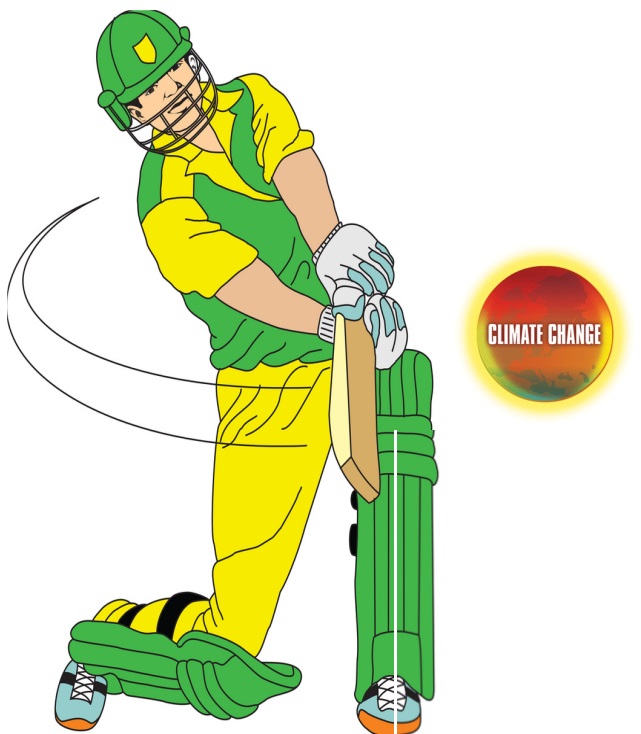
- The Australian election as a game of cricket: cost of living is the issue, but does Nature bat last?
- ? Look at the networks, not nuclear, to reduce energy bills
- Australian navy advertises nuclear submarine job with $120,000 salary and ‘no experience’ needed.
The Australian election as a game of cricket: cost of living is the issue, but does Nature bat last?
December 26, 2024 , By Noel Wauchope, https://theaimn.net/the-australian-election-as-a-game-of-cricket-cost-of-living-is-the-issue-but-does-nature-bat-last/
It is not nice to talk about politics at this happy festive time. But you can talk about cricket. Indeed, in Melbourne, it is your patriotic duty. So, I will – sort of.
A prestigious political analyst, Paul Bongiorno, writes in The Saturday Paper about the focus of campaigning for the 2025 Australian federal election. He sees both political parties emphasising the economy, and the “cost of living”. But Bongiorno warns that climate change could suddenly become once more the big factor in the political game, if summer does bring bushfires and floods.
Bongiorno argues that Dutton and the Liberal Coalition are out to stop renewable energy development:
“If the Dutton-led Coalition manages to take the treasury benches, the brakes will be dramatically applied to climate action. The energy transition would be stalled and billions of dollars of new-energy investment put in jeopardy.A key Labor strategist says… it would take only another summer of catastrophic bushfires or floods to significantly jolt public opinion.”
Bongiorno goes on to argue that “The portents here are not favourable for Dutton.” And he cites powerful arguments about “deep flaws” in Dutton’s energy plan’s economic modelling. Bongiorno draws the conclusion that if climate change extremes hit Australia, voters will recognise the value of renewable energy, and vote for the present Labor government’s policies on climate action.
If only that would be the effect of weather disasters – Australian voters embracing action on climate change – the development of renewable energy and energy conservation!
Paul Bongiorno is a much-admired and well-informed analyst. And I am presumptuous to doubt his opinion. But I do doubt it. Look what happened in 2023, with the Australian public first supporting the concept of an Aboriginal Voice to Parliament, but finally voting a resounding “No” to that plan.
How did it happen?
We are in a different era of media and opinion. We are in extraordinary times. When it comes to national elections, people still do vote according to what they see as “their best interest”. It’s just that now, due largely to the power and influence of “social” media, information about “one’s best interest” has become very confusing.
We thought that the Internet would give everyone a voice. And it did. But very soon the new information platforms found money and power could be bought by corporate interests, and indeed, that they themselves could become ultra-lucrative corporations. The media has become a smorgasbord of conflicting information, with so much of it not fact- checked. The “old” media still checks its facts (though I’m not sure about Sky News), but the old media has always been beholden to corporate influence. Even the ABC is circumspect in what it covers, and what it omits – and still makes sure to provide “balance”, even when one side is plainly unreasonable.
Anyway, for the old media to compete – the news has to be preferably exciting, dramatic, even violent. Except for sport and feel-good stuff.
In the new zeitgeist of 24 hour information barrage from so many different outlets, political news can be, and indeed is, swamped by cleverly designed brief messages, from forces like the Atlas Network, from the dominant global fossil fuel corporations. That swamping propelled many Australians to vote against the Aboriginal Voice.
In political news, media emphasis has shifted dramatically away from facts to personalities. In the USA, Donald Trump was seen as a strong, confident, interesting man, as against weak, indecisive, (and female) Kamala Harris. In Australia, there’s an obvious contrast between careful, measured, Anthony Albanese, and strong, outspoken Peter Dutton. In the USA, it didn’t matter that Trump offered few positive policies, so in Australia, the Liberal Coalition does the same.
In the USA, with a population of 334.9 million, approximately 161.42 million people were registered to vote. But only about 64% of these actually did vote in the 2024 general election. So, the majority of Americans don’t vote anyway. Trump was elected by a minority. The rest either didn’t care, or weren’t able to vote.
The Australian election system is so different. With compulsory voting, preferential voting, and the nationwide and highly reliable Australian Electoral Commission (AEC), most Australians do vote. You’d think that with factual news being provided by mainstream media, climate change information would become so important to voters, in the event of summer weather disasters. Paul Bongiorno thinks so.
I think so, too, But the advantage for Peter Dutton in the current national mood might be twofold.
First, Dutton is still that “tough, decisive person” with a tough plan, too – nuclear power instead of renewables. Secondly, the Dutton plan can so easily be marketed as the only real solution to global heating – nuclear power portrayed as “emissions free”, and “cheaper” than solar and wind power.
Never mind that there are substantial greenhouse gas emissions from the total nuclear fuel cycle. Never mind the astronomic cost. Never mind problems of radioactive wastes, safety, and weapons proliferation. The very telling point is that nuclear reactors cannot be up and running in time to have the needed effect on cutting greenhouse emissions. The time for effective action is now, not decades later.
Action on climate change is critical for Australia – and now!
But for the global nuclear lobby, getting Australia as the new poster boy for nuclear power – is critical – now!
Nuclear power should be a dying industry. There is ample evidence of this: reactors shutting down much faster than new ones are built, and of the mind-boggling cost of decommissioning and waste disposal. However, “peaceful” nuclear power is essential to the nuclear weapons industry – with the arms industry burgeoning in tandem with the increasing risk of nuclear war. It seems that the world cannot afford to weaken this war economy.
And the cost and trouble of shutting down the nuclear industry with its tentacles in so many inter-connected industries, and in the media, and in politics, is unimaginable.
The old poster boy, France, has blotted its nuclear copybook recently with its state energy company EDF deep in debt, and things rather crook with its latest nuclear station. But hey! What about Australia, a whole continent, with a national government perhaps ready to institute nuclear power as its prime energy source, and all funded by the tax-payer!
The long-promised nuclear renaissance might really come about – led by Australia, the energetic new nation, with its AUKUS nuclear submarines, with brand-new nuclear waste facilities, and kicking off this exciting new enterprise – nuclear power. This is the opportunity for a global nuclear spin machine to gear up for an onslaught on Australia. They really need the Liberal-National Coalition to win this election.
Dutton will be fed with the right phrases to regurgitate. It’ll be all about a “balanced” economy – nuclear in partnership with renewables and so on, if people have any worries about that. All the same, there are those problems of pesky independent politicians like Monique Ryan and David Pocock, and there’s still the ABC, Channel 9 TV and its print publications.
First, I’m hoping that Australia does avoid bushfires and floods this summer. And second, I’m hoping that in the event of climate disasters, Australians will choose the Labor Party with its real plan for action against climate change, and reject the Coalition with its nuclear power dream. There is a good chance of this result.
I’m hoping that Paul Bongiorno is right, if climate change does bat last in the election game, and that I am wrong about the power of personality politics + slick lies.
Energy generators poke holes in Dutton’s nuclear plan as questions over costings pile up
‘No one really has the foggiest idea of what it will cost to develop nuclear in Australia,’ one expert says
Peter Hannam Economics correspondent, Guardian 14th Dec 2024
The Coalition’s nuclear energy plan creates “a significant risk” for the stability of the nation’s grid, according to the peak body representing power generators and retailers.
Responding to the Friday release of modelling by Frontier Economics of the Coalition’s scheme to build seven nuclear power plants from the mid-2030s, the Australian Energy Council warned the estimates assumed a slower build out of renewable energy.
The council’s chief executive, Louisa Kinnear, said they were “particularly concerned about the assumed lack of investment in new and replacement generation over the next 10 years”.
Slowing investment while we assess technologies only available in the future creates a significant risk for the stability of the energy system,” she said.
Frontier Economics, a consultancy, claimed the Coalition’s plan to decarbonise Australia’s main power grid would – at $331bn by 2050 – stand at 44% less than the estimates produced by the Australian Energy Market Operator, thereby saving consumers money. The Albanese government has accepted Aemo’s projections.
“A key issue is the modelling assumes coal remains in the system for longer than asset owners have advised, which could result in reliability issues,” Kinnear said.
“The Coalition’s energy mix and approach would mark a significant departure from the current energy transition trajectory.”
What does Aemo think?
Frontier’s report prompted collective head-scratching in Aemo’s corner.
For one, Aemo’s 2023 June estimates seem to have been converted to 2024 levels using an inflation rate of 8.9%, more than double the 3.8% pace assessed by the Reserve Bank and others.
According to Aemo, there are 45 gigawatts of renewable projects in the pipeline to connect to the national energy market (NEM). By contrast, Frontier only has wind and solar generation capacity rising from 24GW to 46GW by 2051, according to its “nuclear inclusive progressive scenario”.
(Renewables already provide about 40% of the NEM’s power, but according to Frontier’s estimates that share is only projected to increase to 50% by 2051.)
Using Frontier’s progressive scenario, rooftop solar would almost double from about 23GW now to 44.5GW by mid-century. Aemo’s step change scenario, by contrast, had estimated our homes will be accommodating a hefty 110GW of solar by then.
How reliable is economic modelling?
As mortgage-holders can attest, modelling of how soon the Reserve Bank may cut interest rates fluctuates almost on a daily basis. What store to put in numbers for complex energy systems 25 years hence?
Very little. Bruce Mountain, the head of the Victoria Energy Policy Centre, said Frontier’s claims should not “be paid much mind”. Nor, for that matter, should Aemo’s, which provide the present alternative plan supported by the Albanese government.
“No one really has the foggiest idea of what it will cost to develop nuclear in Australia,” Mountain said. “So many things in the production, distribution and consumption of electricity are changing quickly and many of the factors that affect costs and implementation are simply not known.”………………………………………………………
What if companies – or states – say ‘no’?
One challenge for estimating the cost of going nuclear is landing on a price to compensate the companies that own the seven sites chosen by the Coalition to host a reactor.
Six of the seven are private, and none has shown interest in going nuclear, because of the relatively steep cost.
“That implies compulsory acquisition and government coming in over the top of the owners of those sites,” the climate change and energy minister, Chris Bowen, told journalists on Friday, with some relish.
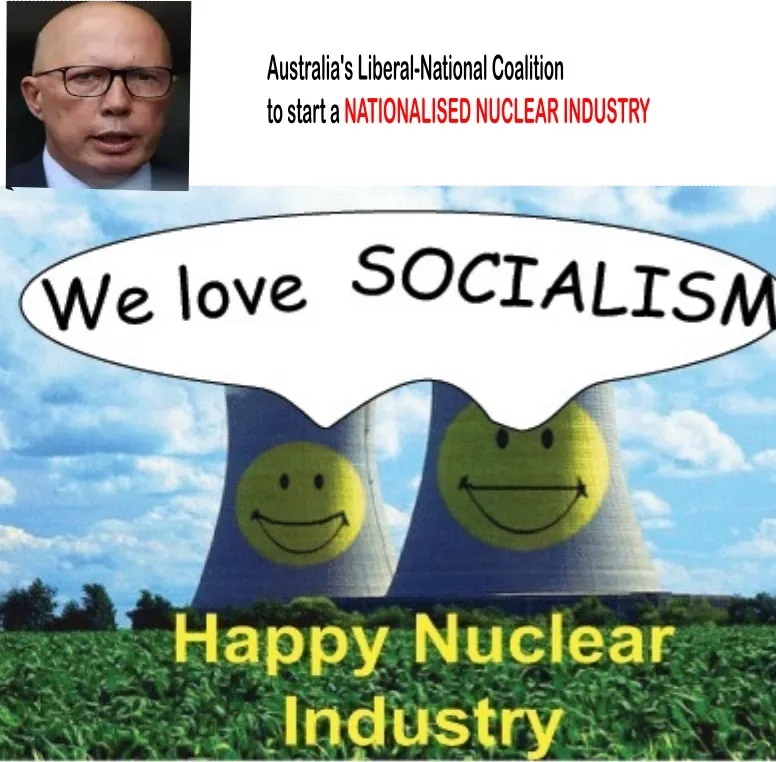
“Robert Menzies should be rolling in his grave at this stuff,” Bowen said. “If the Labor party tried this, the Liberal party would say it’s Venezuelan-style socialism.”
The Australian Energy Council, which represents energy retailers and generators, said the Coalition’s costings “raised questions on the role of the market in an energy system”.
And states that have legislated emissions targets are unlikely to take kindly to a federal government demanding they ignore their own laws………………………………………………………………………………… https://www.theguardian.com/australia-news/2024/dec/14/energy-generators-poke-holes-in-duttons-nuclear-plan-as-questions-over-costings-pile-up
1 This month
7 April – WEBINAR – Australia and the Doomsday Clock – Preventing nuclear war through NoFirstUse and other policies
Online | Tuesday April 7, 4:00-5:30pm, Australian Eastern Time / 8:00-9:30am Central Europe Time
– Access the registration link
15 April – Zoom –Nuclear Power is Not the Solution
Apr 15, 2026 01:00 AM in Canberra, Melbourne, Sydney

Join the International Physicians for the Prevention of Nuclear War (IPPNW) on Tuesday, April 14th for a timely webinar exploring the risks associated with nuclear power and challenging the myth that it offers a simple, safe, carbon-free solution to the climate crisis

21 April Webinar: No Nuclear Weapons in Australia
Start: 2026-04-21 18:00:00 UTC Canberra, Melbourne, Sydney (GMT+10:00)
End: 2026-04-21 19:30:00 UTC Canberra, Melbourne, Sydney (GMT+10:00)
Event Type: Virtual
A virtual link will be communicated before the event.
Host Contact Info: australia@icanw.org

of the week – Australians for War Powers Reform (AWPR)
To see nuclear-related stories in greater depth and intensity
 Antinuclear