This talk of nuclear is a waste of time: Wind, solar and firming can clearly do the job

RENEW ECONOMY, David Leitch, Dec 30, 2024
Australia’s economic future will be at risk if we stop the wind and solar construction to build nuclear. Big energy-intensive manufacturing industries such as aluminium smelters would likely be forced to close, and the risk of blackouts from forcing coal generators to stay on line would be huge.
Wind, solar and firming can clearly do the job. Every hurdle from reliability to inertia has been overcome. There is no need and no reason to change course. Certainly economics is not a reason.
• Makes blackouts more likely by forcing coal stations, already expensive to maintain, that require government support and are increasingly unreliable to go for much longer. The idea of replacing the coal plants with gas while we wait is likely not very realistic, largely because gas plants themselves are expensive and hard to permit and because if asked to run in shoulder mode they are not very efficient and require lots of gas. And right now we are already looking at importing LNG.
If the nuclear plants are 5, 10 or 15 years late, as is entirely possible, it would require heroic assumptions to see the coal fleet managing the gap.
More to the point it’s a completely avoidable and unnecessary risk. Australia is well set on its transition path.
There are some inevitable cost up and downs but no show stoppers have been identified. Every hurdle from reliability to inertia has been overcome. There is no need and no reason to change course. Certainly economics is not a reason.
• Increases emission costs by between A$57 and A$72 bn (NPV @ 7%) even in the very unlikely event the plants are built on time as compared to the present ISP.
• The nuclear plants stand a good chance of being well over budget and late. That’s because:
° Globally that is often but not always the case. By and large the nuclear industry is one of the most likely global industries to be late and over budget.
There is no real nuclear expertise in Australia;
° It will have to be more or less forced on an industry set on a different course;
° It will likely be government owned and developed and the record on that in Australia is poor;
° In general for most capital intensive industries there is an Australia cost premium relative to global averages. This in the end will disadvantage us compared to other countries in terms of the cost of energy.
• Likely will destroy the value of CER (consumer energy resources – rooftop solar, home batteries and EVs) in Australia.
• Will result in the temporary halt in the transition to a firmed VRE system which is already 20 years down the track with a penetration rate of say 50% within 18 months.
• Equally the LNP and by comparison Frontier don’t appear to have done the work or to understand the demand forecasts. The LNP bleat on about EVs, but the real differences are hydrogen, large industrial loads and business demand. One suspects that the aluminium industry in Australia will die if it has to wait for nuclear.
• Finally the old concept of baseload is changing, but in my opinion firming costs are cheaper the bigger the portfolio. This implies firming should sit at least with a large gentailer or possibly with a State or even Federal Govt.
The existing wind and solar build out is working, and it’s far too risky to rely on old coal plants
The biggest, by far, reason for the electricity industry to push back against the ideological LNP Nuclear plan is its far, far too risky.
Australia has a plan to decarbonise. It’s not a perfect plan, no plan survives first contact, but it’s capable of and is in fact being achieved. We are roughly already at 40% VRE. We have at least 20 years experience at developing and integrating wind, solar, behind the meter assets and batteries.
We know the issues around transmission and social license and cost and reliability. There are well developed plans for each issue and a wealth of industry finance and expertise.
The assets to take us from 40% VRE to 50% are already under construction, some are just starting to enter service.
The insurance finance to add another 12 GW of VRE and 4 GW of firming assets (essentially batteries) is already either awarded or in tender through the CIS.
The LNP wants to bring this to a crashing halt, keep our few, increasingly ageing and unreliable coal stations going for another 20 years while it starts up an industry in which Australia has zero comparative advantage and zero experience.
Only in politics could conmen say things with such a straight face. The risk of the coal stations failing is very high. Other stations like Eraring have full ash dams. Yallourn is already on Government support, Vales Point and particularly Mt Piper have coal supply issues………………………………………………………………………..
The errors and sleights of hand in Frontier’s nuclear v ISP analysis………………………………………………………………………………………………………………..
Govt funded and managed likely increases risks very significantly
As far as I know the electricity industry in Australia has expressed zero interest in nuclear and obviously some parts of the industry that are busy building wind and solar will be actively opposed. Clearly this in itself is likely to raise costs. That is, the nuclear plants will have to be forced on the industry to a greater or lesser extent.
Again although the plans are very vague the understanding is that they will Goverment funded and owned. Leaving aside all questions of ideology, in my opinion having the Goverment manage the program rather than industry means that there will be less expertise at almost every stage.
I could rant on about this, the mind truly does boggle a bit at the possible negative outcomes, but perhaps it is sufficient to say that having the Goverment step into this area where it has no expertise raises the odds of cost and delay outcome substantially…………………………………………………………………………………………………………………….. more https://reneweconomy.com.au/this-talk-of-nuclear-is-a-waste-of-time-wind-solar-and-firming-can-clearly-do-the-job/
Complex plan for dismantling UK’s 27 dead, rusting, radioactive nuclear submarines

Fife Council approve Babcock plans for Rosyth Dockyard
28th December, By Ally McRoberts
A NEW secure compound for the Submarine Dismantling Project at Rosyth Dockyard has been given the green light by Fife Council.
Babcock International had sought a certificate of lawfulness to change the use of a car park on Keith Road – with the loss of 86 spaces – and build a storage facility on it.
The much-delayed project aims to dismantle seven old nuclear subs at Rosyth, remove the radioactive waste and recycle as much of the metal as they can into “tin cans and razors”.
The new facility is needed for phases three and four and will be enclosed by three metres high walls, with new gates and drainage infrastructure.
In the application it was described as a laydown area and contractors’ compound that will be roughly 45 metres by 35 metres in size, and take up around half an acre of
land close to dry dock number three.
Swiftsure is the first vessel being disposed of at Rosyth and it’s scheduled to be recycled by 2026. In total, the project will dispose of 27 nuclear subs. Seven have been laid up at
Rosyth for decades – Dreadnought has been there so long, since 1980, that
most of the low-level radiation has “disappeared naturally” – and there are
15 at Devonport in Plymouth. Five are still in service with the Royal Navy.
The UK Government said earlier this year that the project has already
invested more than £200 million into the dockyard and the wider UK supply
chain and sustains more than 500 jobs.
Dunfermline Press 27th Dec 2024
https://www.dunfermlinepress.com/news/24820505.fife-council-approve-babcock-plans-rosyth-dockyard/
Scientists should break the ice
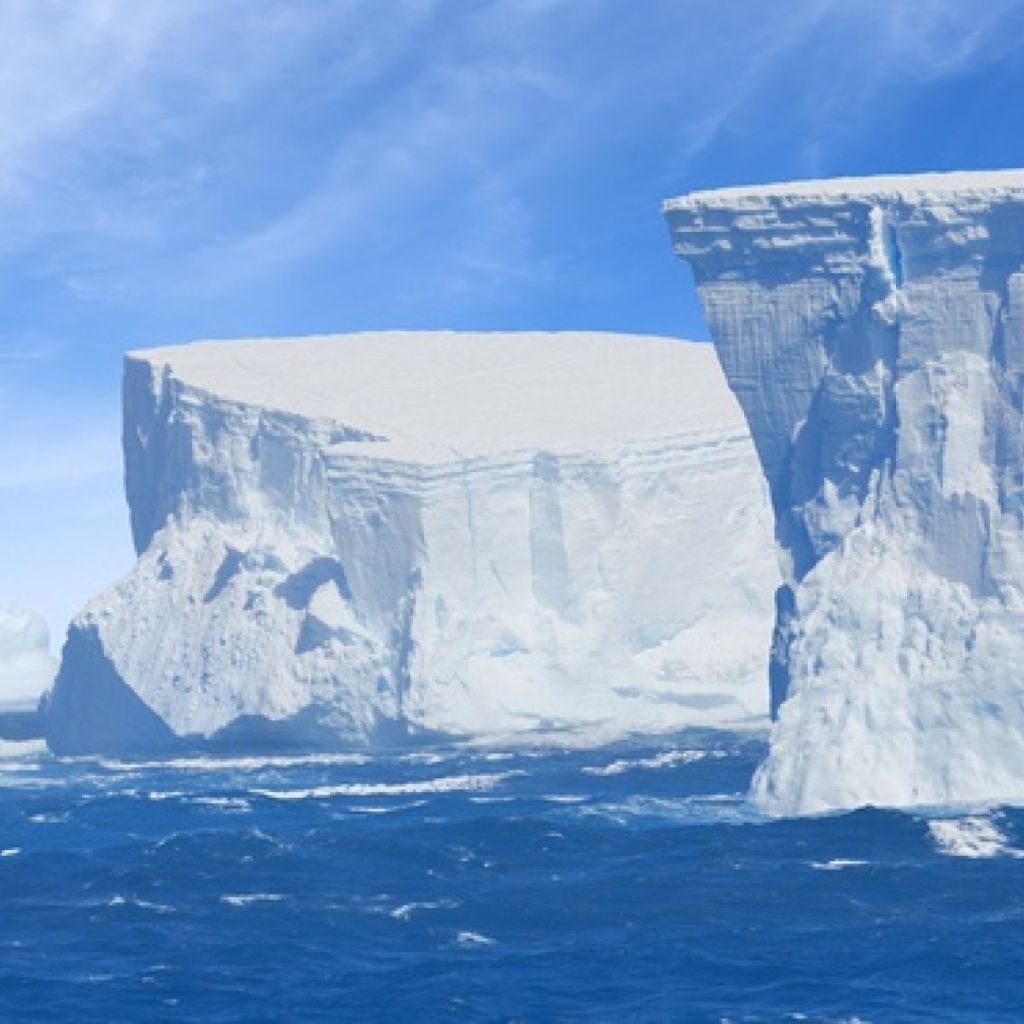
once the ice sheet slides into the ocean, there is no putting it back, even if all carbon emissions ended that day. The ice-sheet holds enough water to raise sea levels by 58 metres. Even if only half of it breaks off, it will be just a waiting game over just a few years for the ice to melt and for us to watch every coastal city on earth to be inundated. In our lifetime.
once the ice sheet slides into the ocean, there is no putting it back, even if all carbon emissions ended that day. The ice-sheet holds enough water to raise sea levels by 58 metres. Even if only half of it breaks off, it will be just a waiting game over just a few years for the ice to melt and for us to watch every coastal city on earth to be inundated. In our lifetime.
Crispin Hull, December 29, 2024
The 2024 award for the biggest disjoin between the importance of a story and the coverage it got must surely go to the science briefing on Antarctica and Sea-Level Rise published by the Australian Antarctic Program Partnership and the ARC Australian Centre for Excellence in Antarctic Science.
It came out in September. The ABC had some coverage, but it seemed to miss some essential points.
Here is what the new science tells us and how it is different from the older science.
The older science tells us that the amount of sea ice in Antarctica is shrinking, but not as badly as in the Arctic. Sea ice expands and contracts quite quickly according to air and sea temperature. So, a gradual reduction in sea ice will mean a gradual and comparatively small rise in sea levels.
This science should be moderately alarming, but the misinformationists in the fossil fuel industry can bat away public fears by saying not much is happening here and it will not happen in your lifetime, so carry on as usual.
This is standard stuff from fossil misinformationists: climate change is not happening, but if it is happening it is part of natural geologic forces and has nothing to do with human-generated carbon, and even if it is caused by human-generated carbon we can develop technologies to capture the carbon and safely store it away.
In short, they base their facts on their desired conclusion that they can continue to make profits from the emission of carbon until ecosystems and economies collapse. When it is too late.
Coming back to Antarctica, earlier science suggested that sea-ice contraction could be reversed if temperatures came down a bit. As it happens sea-ice is an important reflector of solar rays (and heat). Without the sea-ice you have dark ocean which absorbs the rays and increases the heat of the ocean. Nonetheless, it is still a probably reversible process.
Enter the new research. This is about the eastern Antarctic icesheet. Hitherto, this has given climate scientists much less cause for concern. This is because the eastern ice sheet has built up over land. It is anchored.
Unlike sea-ice it is not vulnerable to warmer water melting it.
Picture the land mass and a big thick ice sheet over it. The sea nibbles at the edge and even if the sea is a bit warmer it does not melt much ice. This is not like sea-ice where the warmer water is all around it melting it quickly. So, hitherto scientists have taken some climate solace in the fact that so much ice is safely tied up in the eastern Antarctic ice-sheet (more than 60 per cent of the world’s fresh water) and so will give us more time to slow and reverse the warming of the planet.
Enter the new research. Remove the image of a lump of land mass. Rather picture that the land mass has been forced down by the weight of the ice – heavier at the middle of the land mass and lighter at the edge.
The new science tells us that much of the eastern Antarctic ice-sheet is grounded below sea level. So, one the warmer sea waters get under it, the whole sheet becomes unstable and can slide into the ocean. And even if temperatures are made to fall, the tipping point would have been reached – the warmer sea would have run under the massive ice-sheet, undermining it and making its slide into the ocean inevitable.
And once the ice sheet slides into the ocean, there is no putting it back, even if all carbon emissions ended that day. The ice-sheet holds enough water to raise sea levels by 58 metres. Even if only half of it breaks off, it will be just a waiting game over just a few years for the ice to melt and for us to watch every coastal city on earth to be inundated. In our lifetime.
Once the ice sheet hits the ocean, it is the end of civilisation as we know it.
The ice cannot be put back.
The greater the potential damage the more you should do about it, even if you think the risk is small. This is why people go to a lot of effort to make their houses less exposed to bushfires and cyclones.
It may be that some billionaires might imagine they could set up doomsday retreats to avoid death, injury, and discomfort. They are dreaming. In those circumstances money means nothing and the profit-driven selfishness that drives unnecessarily extending the use of fossil fuel will be brushed aside by the maniac selfishness of those on a desperate if doomed survival mission.
Scientists must change stop their subdued, cautious approach to reporting climate change. It is understandable because scientists do not want to cause panic or unnecessary alarm. But the approach has just given the fossil industry endless free kicks. It is time for alarm and measured panic.
Scientists should stop being scared of publishing scary material in a scary way. It is time to tell people the reality of the biggest security, economic, and existential threat to humans on earth………………………. more http://www.crispinhull.com.au/2024/12/29/scientists-should-break-the-ice/?utm_source=mailpoet&utm_medium=email&utm_campaign=crispin-hull-column
1 This month
7 April – WEBINAR – Australia and the Doomsday Clock – Preventing nuclear war through NoFirstUse and other policies
Online | Tuesday April 7, 4:00-5:30pm, Australian Eastern Time / 8:00-9:30am Central Europe Time
– Access the registration link
15 April – Zoom –Nuclear Power is Not the Solution
Apr 15, 2026 01:00 AM in Canberra, Melbourne, Sydney

Join the International Physicians for the Prevention of Nuclear War (IPPNW) on Tuesday, April 14th for a timely webinar exploring the risks associated with nuclear power and challenging the myth that it offers a simple, safe, carbon-free solution to the climate crisis

21 April Webinar: No Nuclear Weapons in Australia
Start: 2026-04-21 18:00:00 UTC Canberra, Melbourne, Sydney (GMT+10:00)
End: 2026-04-21 19:30:00 UTC Canberra, Melbourne, Sydney (GMT+10:00)
Event Type: Virtual
A virtual link will be communicated before the event.
Host Contact Info: australia@icanw.org

of the week – Australians for War Powers Reform (AWPR)
To see nuclear-related stories in greater depth and intensity
 Antinuclear