Can true nuclear independence be achieved without ending the US Alliance?
By Donald Wilson, Jan 4, 2025, https://johnmenadue.com/can-true-nuclear-independence-be-achieved-without-ending-the-us-alliance/
Australia’s historical commitment to nuclear disarmament is facing new challenges, as critics say the nation’s alliance with the United States is leading to a conflicted stance on nuclear non-proliferation.
While Australia has actively participated in global nuclear arms control initiatives, such as the Nuclear Non-Proliferation Treaty (NPT) and the Comprehensive Nuclear-Test-Ban Treaty (CTBT), it simultaneously relies on the so-called “US nuclear umbrella” for security. This duality has led to ongoing debate about whether Australia’s security policies align with its disarmament principles.
Australia’s approach to nuclear non-proliferation has shifted over recent years. In 2016, Australia voted against a United Nations General Assembly resolution aimed at creating a legally binding instrument to prohibit nuclear weapons. The following year, it refused to join negotiations that led to the Treaty on the Prohibition of Nuclear Weapons (TPNW). As a result, Australia remains one of the few regional countries not signed onto this treaty, despite a 2018 resolution by the Australian Labor Party to consider joining under a future government.
Critics argue that if Australia were to adopt the TPNW, it would be compelled to prohibit any support for other countries’ nuclear weapons programs—potentially forcing the closure of Pine Gap, a key joint defence facility with the US. Yet government supporters claim that distancing from the US would leave Australia vulnerable, especially amid regional tensions with China.
However, questions have arisen about the reliability of this “nuclear umbrella.” Currently, US military systems, including missile defence, offer limited protection against intercontinental ballistic missiles (ICBMs). After investing over $400 billion in missile defence research and development, no system has yet achieved dependable protection against ICBMs. Critics argue this leaves Australia exposed rather than safeguarded, despite assurances from the US.
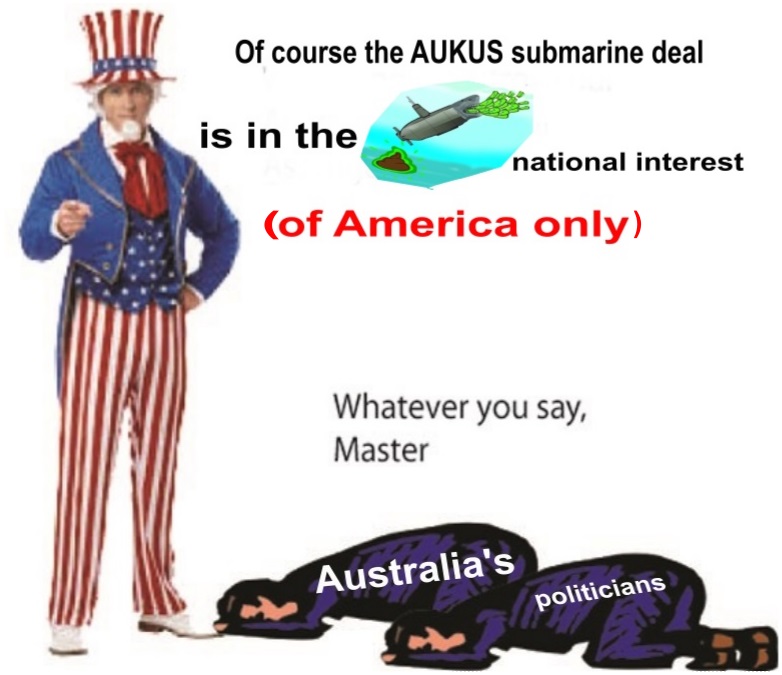
In addition, Australia’s recent defence agreements, particularly the AUKUS pact and the US-Australia Force Posture Agreement (FPA), have raised concerns over sovereignty. Signed in 2014, the FPA allows the US to store and control defence equipment on Australian soil. According to Article VII of the agreement, the US retains “exclusive control” over its prepositioned military supplies in Australia, with full ownership rights, effectively restricting Australian authority over the use of these materials.
Article XII of the FPA states that US government vehicles, aircraft, and vessels are exempt from inspection by Australian authorities without US consent. This clause has fuelled arguments that the FPA has compromised Australia’s independence by allowing the US to make defence decisions within Australian borders. For instance, US B2 bombers have launched from Australian bases in operations overseas, reportedly without consulting the Australian public.
As Australia contemplates its nuclear policy, the debate over whether it can maintain both its alliance with the United States and a commitment to nuclear non-proliferation will likely intensify. This complex question has implications not only for Australia’s defence but also for its sovereignty and international standing in the movement toward nuclear disarmament.
UK Labour donor Dale Vince urges ‘rigorous financial scrutiny’ of Sizewell C costs
Green energy entrepreneur voices concerns over project’s funding and ‘spiralling costs’ of UK’s other nuclear plants.
Michael Savage , Observer 28th Dec 2024
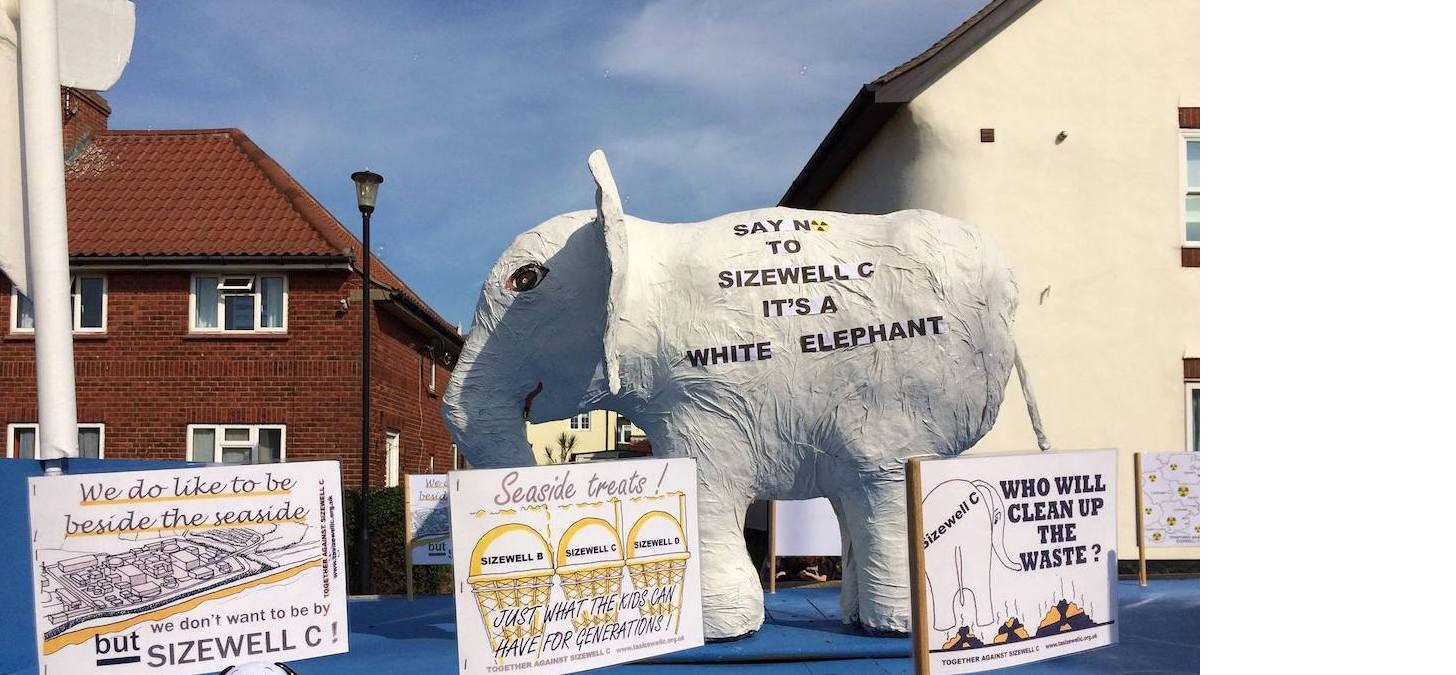
The government’s new value for money tsar has been challenged to examine the costs of a nuclear power station to be given final approval next year, as ministers attempt to shore up private investment for the project.
New nuclear plants are a key part of the government’s plan to have clean power by 2030. The Sizewell C reactor, billed as generating enough energy to power 6m homes, is expected to be given the final go ahead in June’s review of public spending. Its projected costs are in excess of £20bn.
However, Labour donor and green energy entrepreneur Dale Vince has written to the chair of the governments’ new Office for Value for Money (OVfM), David Goldstone, arguing that a nuclear plant already being built has seen spiralling costs. He also warns the construction of Sizewell C “will saddle consumers with higher bills long before it delivers a single unit of electricity”.
The government and the French state-owned company EDF will fund about 40% of the Sizewell C project, with ministers currently rounding up private investors to meet the rest of the costs. In his letter, Vince claims that billions have already been spent on the project, even “before a final investment decision has been made”. He also raises concerns about the ballooning costs and delays of Sizewell C’s sister project, Hinkley Point C, in Somerset.
“If Hinkley Point C is anything to go by, Sizewell C really should have rigorous financial scrutiny,” he writes. “Originally priced at £18bn, the cost of Hinkley has ballooned to £46bn and then there’s the delays. Back in 2007, the then EDF chief executive Vincent de Rivaz said that by Christmas 2017 we would be using electricity generated from atomic power at Hinkley. We’re now in Christmas 2024 and Hinkley isn’t due to be completed until 2031.
“Due to a novel funding method, a lengthy construction timeline for Sizewell will saddle consumers with higher bills long before it delivers a single unit of electricity at a time when there is clear evidence that we can secure a cleaner, cheaper energy future without nuclear.”
It comes after a similar warning by Citizens Advice earlier this year. The charity warned that the Suffolk project may offer “poor value for money” and called for greater clarity on its funding, in a letter to the Department for Energy Security and Net Zero. It has warned that the project’s funding model could expose households to cost overruns……………………………………… https://www.theguardian.com/business/2024/dec/28/labour-donor-dale-vince-urges-rigorous-financial-scrutiny-of-sizewell-c-costs
1 This month

of the week – Australians for War Powers Reform (AWPR)
To see nuclear-related stories in greater depth and intensity
 Antinuclear