Sovereignty not worth a nickel?
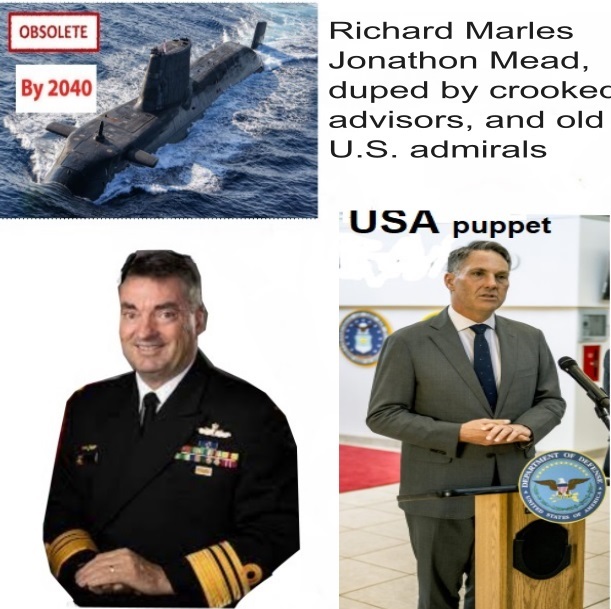
A terse exchange between Greens Senator David Shoebridge and Vice Admiral Jonathan Mead during a Senate Estimates hearing earlier this year revealed that contracts signed by the Australian government that have handed billions of taxpayer dollars to American and British shipyards, supposedly to support the faster delivery of submarines, did not include standard protective clawback provisions.
If we never see a submarine—as is possible—we don’t get any of our billions back.
In influence and dollar terms, foreign-owned companies comprise the vastly dominant proportion of the industrial base, not “part of” it. Research by the Australian Strategic Policy Institute in 2017 showed that the top 15 weapons contractors received 91 per cent of the Department’s expenditure.
A decade of spin from both sides of politics has inured Australians to the stark reality of our loss of independence inside the US alliance. At what cost?
Michelle Fahy, Jan 12, 2025, https://undueinfluence.substack.com/p/sovereignty-not-worth-a-nickel?utm_source=post-email-title&publication_id=297295&post_id=154382292&utm_campaign=email-post-title&isFreemail=true&r=1ise1&triedRedirect=true&utm_medium=emailAustralia’s independence has been dangerously compromised by Labor and Coalition governments, which have signed up to deep-rooted military agreements with the United States of America. These agreements have also underpinned the increasing militarisation of Australia: witness the 2022 speech by Labor’s Richard Marles, the newly appointed deputy prime minister, in Washington DC when he announced that Australian military forces would now become interchangeable with those of the United States.
In August, after this year’s formal annual talks with the United States, Defence Minister Marles announced that the meeting had “built on the last two in seeing a deepening of American force posture in Australia”.
He added: “American force posture now in Australia involves every domain: land, sea, air, cyber and space.”
A decade of spin from both sides of politics has inured us to the stark reality of our loss of independence. Much is made of “defence industry cooperation” with the United States, for example, but this is simply code for the expansion of the US arms industry in Australia in support of its increasing military presence on our soil.
The day before AUKUS was launched in 2021, the US State Department made plain the importance of Australia in supporting America’s military-industrial base:
Australia is one of America’s largest defence customers, supporting thousands of jobs in the United States … The United States is Australia’s defence goods and services partner of choice … the partnership is expected to deepen further over the coming decade, including in the area of defence industry cooperation.
Soon after this statement was published, Marles flew to Washington to endorse its sentiment. He reassured the Americans that when it came to arms production, “our ultimate goal is to supplement and strengthen US industry and supply chains, not compete with them”.
Meanwhile, our much-trumpeted “sovereign defence industrial base” is simply a collection of the world’s top arms multinationals, dominated by the British-owned BAE Systems, the French-owned Thales, and the American-owned Boeing.
Then there is the egregious erosion of Australia’s sovereignty contained within the little-known Force Posture Agreement (FPA) with the United States, which the Abbott Coalition government signed in 2014.
In short, the FPA permits the US to prepare for, launch and control its own military operations from Australian territory.
Yet AUKUS dominates the headlines, even though other decisions by our political leaders that have sold out the public interest have received little coverage in the mainstream media.
A terse exchange between Greens Senator David Shoebridge and Vice Admiral Jonathan Mead during a Senate Estimates hearing earlier this year revealed that contracts signed by the Australian government that have handed billions of taxpayer dollars to American and British shipyards, supposedly to support the faster delivery of submarines, did not include standard protective clawback provisions. If we never see a submarine—as is possible—we don’t get any of our billions back.
The single most important downside of the US alliance, rarely mentioned, is arguably Australia’s military dependence on a foreign power. The Australian Defence Force is critically dependent on US supply and support for the conduct of all operations except those at the lowest level and of the shortest duration.
We were warned about this substantial sacrifice of national freedom of action. In 2001, a Parliamentary Library research paper stated that “it is almost literally true that Australia cannot go to war without the consent and support of the US”.
Foreign-dominated “sovereign” defence industry
Australia’s political and defence hierarchy regularly assert the need to build “a sovereign defence industrial base”. Most people would assume this to mean Australian-owned defence companies, with profits that stay local. This is not what the Defence Department means by it.
The world’s largest weapons companies, including BAE Systems (UK), Thales (France) and US companies Boeing, Lockheed Martin, Raytheon and Northrop Grumman, dominate the local defence industry. Almost all of the top 15 weapons contractors to the Defence Department are foreign-owned. In June 2024, Deputy Secretary Christopher Deeble, the head of the Capability Acquisition and Sustainment Group—the Department’s arms-buying group—explained in a Senate Estimates hearing the government’s definition of “sovereign” in this regard. Deeble agreed with independent senator David Pocock that the local subsidiaries of foreign weapons multinationals, such as Lockheed Martin Australia, were not “sovereign” Australian companies. Nevertheless, he said, the Department considers such foreign-owned subsidiaries to be “part of the sovereign defence industry base here in Australia”.
In influence and dollar terms, foreign-owned companies comprise the vastly dominant proportion of the industrial base, not “part of” it. Research by the Australian Strategic Policy Institute in 2017 showed that the top 15 weapons contractors received 91 per cent of the Department’s expenditure.
Force Posture Agreement
The erosion of Australian sovereignty accelerated in 2011, when Labor prime minister Julia Gillard agreed that up to 2,500 US Marines could be stationed in Darwin on a permanent rotation, and that an increased number of US military aircraft, including long range B-52 bombers, could fly in and out of the Top End and use Australia’s outback bombing ranges.
This agreement was expanded dramatically a few years later by the Force Posture Agreement, which provides the legal basis for an extensive militarisation of Australia by the US, particularly across the Top End.
The tri-nation military pact AUKUS, between Australia, the United Kingdom and the United States, was later negotiated and agreed to, in secret, by the Morrison Coalition government. AUKUS gained bipartisan support within one day of it being revealed to Anthony Albanese’s Labor opposition in September 2021. Among other things, AUKUS, in conjunction with the FPA, ensures that Australia’s navy will be tightly integrated with the US navy for the purpose of fighting China, and that the two navies can operate as one from Australian ports and waters.
Two months after Labor assumed office in May 2022, Marles was in Washington DC announcing that Labor would “continue the ambitious trajectory of its force posture cooperation” with the United States. Australia’s engagement with the US military would “move beyond interoperability to interchangeability” and Australia would “ensure we have all the enablers in place to operate seamlessly together, at speed”.
Non-lethal” F-35 parts
Australia’s newest high-tech major weapons systems make us more reliant than ever on the United States. As veteran journalist Brian Toohey reported in 2020, “The US … denies Australia access to the computer source code essential to operate key electronic components in its ships, planes, missiles, sensors and so on”. This includes the F-35 fighter jets, which both Foreign Minister Penny Wong and Defence Minister Marles have noted form the largest proportion of the air force’s fast jet capacity.
When it agreed to buy Lockheed Martin’s expensive and controversial fifth generation fighter jets, Australia became one of the early members of the F-35 consortium. As part of the deal, Australia negotiated a role for local industry in the F-35 global supply chain. As of June 2024, more than 75 Australian companies had shared in $4.6 billion worth of work, according to the Defence Department.
But there’s been a significant ethical downside. Israel, also a member of the F-35 consortium, is using its F-35s in its war against Gaza. Israel stands accused in the world’s highest court of conducting a genocide in Gaza. Every F-35 built contains Australian parts and components, and for some of these Australia is the sole source.
A senior Defence Department official, Hugh Jeffrey, said in a Senate Estimates hearing in June 2024:
“We are a member of the F-35 consortium [which] exists under a memorandum of understanding … That gives the defence industry opportunity to contribute to that supply chain. It also requires Australia to provide those contributions in good faith…” [emphasis added]
Jeffrey also noted that when assessing any export permit, “we have to have high confidence that, in agreeing to the permit, it’s consistent with our national security requirements and with our international legal obligations”.
What happens if the Department perceives a conflict between Australia’s “national security requirements” and its “international legal obligations”? Is Australia “required” to continue supplying Australian-made arms “in good faith”?
In June, after nine months of spreading disinformation, the Australian government was forced to admit that Australia was still supplying parts and components to the F-35 global supply chain. At the time of writing, the government was allowing this supply to continue despite repeated calls from the UN asking nations—and multinational weapons makers—to cease supplying weapons to Israel, including parts and components, or risk being responsible under international law for serious human rights violations.
Decoded: Defence Department’s deadly deceits
Michelle Fahy, July 10, 2024
Judge Orders Britain’s Crown Prosecution Service (CPS) to Come Clean on Deleted Assange Docs
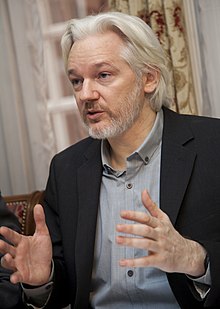
A judge in London has ruled that Britain’s Crown Prosecution Service (CPS) must explain what happened to certain documents in the Julian Assange case that it claims no longer exist, reports Joe Lauria.
By Joe Lauria, Consortium News, January 10, 2025, https://consortiumnews.com/2025/01/10/judge-orders-cps-to-come-clean-on-deleted-assange-docs/
Italian journalist Stefania Maurizi has been waging a legal battle for seven years against the Crown Prosecution Service to discover the truth about a CPS claim that it deleted a number of documents Maurizi has sought in a Freedom of Information request about the case of Julian Assange.
Now a judge on the London First-tier Tribunal has ruled that the CPS must explain to Maurizi what it knows about when, why and how the documents were allegedly destroyed. The Jan. 2 ruling was first reported by Maurizi’s newspaper il Fatto Quotidiano on Friday.
Judge Penrose Foss has given the CPS until Feb. 21 to respond or it could be held in contempt of court.
The ruling says:
The Crown Prosecution Service must, by no later than 4.00 p.m. on 21 February 2025:
- (1) Confirm to the Appellant whether it held recorded information as to when, how and why any hard or electronic copies of emails referred to in the Appellant’s request to the Crown Prosecution Service of 12 December 2019 were deleted;
- (2) If it did hold such information, either supply the information to the Appellant by 4.00 p.m. on 21 February 2025 or serve a refusal notice under section 17 of the Freedom of Information Act 2000, identifying the grounds on which the Crown Prosecution Service relies.A failure to comply with this Substituted Decision Notice could lead to contempt proceedings.”
Swedish Case
The documents Maurizi seeks were in relation to Sweden’s request to the U.K. for Assange’s extradition.
Her argument was heard before the three judges of the tribunal on Sept. 24, 2024. The allegedly deleted emails involved a CPS exchange with Sweden about a Swedish prosecutor’s attempt, beginning in 2010, to extradite the WikiLeaks publisher from Britain.
Assange was wanted at the time in Sweden for questioning during a preliminary investigation into allegations of sexual assault, which was dropped three times, definitively in 2017. He was never charged. After losing his battle against extradition to Sweden at the U.K. Supreme Court, Assange took refuge in the Ecuadorian embassy in June 2012, fearing that Sweden would send him to the United States.
Assange spent seven years in the embassy protecting himself from arrest until April 2019, when British police dragged him from the diplomatic mission and threw him into London’s maximum security Belmarsh prison.
It was only when the U.S. realized it would lose on appeal after a four-year extradition battle that the Department of Justice cut a plea deal with Assange who was released on June 24, 2024 and returned to his native Australia.
Assange had been charged in the United States under the Espionage Act for possessing and publishing defense information, which revealed evidence of U.S. war crimes. Britain took an active role in Assange’s prosecution.
In the earlier Swedish case, the CPS sought to stop Sweden from going to the embassy to question him.
Seeking to learn more about Britain’s role, Maurizi first made a Freedom of Information Act (FOIA) request in 2015 for all emails between the British and Swedish governments concerning Assange.
Some of the emails she obtained showed political motivation on the part of the lead British prosecutor, Paul Close.
One email Maurizi obtained from the Swedish Prosecution Authority (SPA) revealed that Close appeared to be pressuring Swedish prosecutors to continue seeking Assange’s extradition instead of dropping the case or questioning him at the Ecuadorian embassy, where Assange had been granted asylum.
“My earlier advice remains, that in my view it would not be prudent for the Swedish authorities to try to interview the defendant [Julian Assange] in the UK,” Close wrote to the SPA, in 2011, according to one of the emails obtained by Maurizi.
Keir Starmer, the British prime minister, was head of the CPS at this time. He led the service from 2008 to 2013, though it is unknown what role Starmer may have played in this correspondence.
“Don’t you dare get cold feet!!!,” he wrote to Marianne Ny, Sweden’s director of public prosecutions, in 2012. A year after that, Close wrote, “Please do not think this case is being dealt with as just another extradition.”
After Maurizi noticed a sizeable gap in the emails released to her she filed another FIOA seeking to obtain the missing emails.
The CPS first claimed that it had destroyed the emails. It said that when Close retired, his account along with his emails, were automatically destroyed.
But Maurizi did not buy it. She asked the court at the hearing last month to order the CPS to turn over “metadata” — data about data, such as file creation and modification dates, email sender and recipient addresses, timestamps, email routing information, keywords, and subject lines — proving the emails really were deleted and when.
“We have NO certainty whatsoever” that the emails were destroyed, Maurizi wrote in a message to Consortium News. Maurizi went to court because she believes the allegedly deleted emails could provide additional evidence of a politically motivated prosecution of Assange.
She also wants metadata on a CPS document that it says is from 2012 explaining the CPS’ email deletion policy, which was only sent to her in 2023.
The supposed 2012 policy document says that 30 days after an email account is disabled, the “email data” associated with it “will be automatically deleted and no longer accessible.”
“How is it possible that they provided this document only in 2023, after multiple requests, multiple appeals, no-one ever mentioned it or knew about it?” Maurizi told CN.
Such a policy does not explain why thousands of emails related to an ongoing case would be deleted.
Denied on the Metadata
In order to figure out whether the 2012 policy document on deletions is genuine, Maurizi requested the relevant metadata of the file. She wanted to make sure it was not created years later as an attempt at retroactively justifying the deletion of Close’s emails.
Judge Foss for the Tribunal, however, ruled against Maurizi on the release of the metadata. Foss ruled
“In our view there was nothing in the letter or spirit of the 2019 Request as to when, how and why the emails of the CPS lawyer were deleted, which required the CPS to disclose the metadata of any document which substantiated the information it provided in response to that request. […]
It would be extraordinary, in our view, if every time a public authority was presented with a request for information recorded in such a way as to have meant that the creation of that record generated metadata, the request should be taken inevitably to require the metadata behind the form of record.”
Unsatisfactory Explanations
It is simply “not credible” Maurizi’s lawyer argued during the September hearing that Close neither sent nor received emails to Swedish prosecutors when Sweden issued the arrest warrant for Assange; when Assange took refuge in the embassy; and when he was granted asylum by Ecuador.
“[I]t has never been established that there was anything untoward in those gaps, that there were emails that weren’t published,” argued Rory Dunlop KC, on behalf of the prosecution authority, during his closing remarks.
“The CPS are keen to make clear that it has never been accepted and [it has] never been established one way or another,” he insisted. Over the years, in response to FOIA requests and appeals, the CPS’ position on the deletion of Close’s account has varied.
For example, in 2017, after Maurizi challenged the gap in the emails, a CPS employee said in a witness statement that, “If there ever existed further emails they were not printed off and filed” and therefore “are no longer in the possession of the CPS.”
According to an article by Maurizi in il Fatto Quotidiano, five years later, the CPS said in response to a separate FOIA request from Labour MP John McDonnell that “deletion of an email account of a former member of staff at the time would not have led to the deletion of emails held on the case file.”
The CPS also admitted to McDonnell that they are only aware of one other case in the last decade which resulted in the premature destruction of case materials, according to Maurizi’s article.
The Sept. 24 tribunal also heard that the CPS’ Records Management Manual states that general correspondence “should be retained in the case file within five years from the date of the most recent correspondence,” which would not allow for deletion upon retirement by the prosecutor on the case.
Mohamed Elmaazi contributed to this article.
Critical Archival Encounters and the Evolving Historiography of the Dismissal of the Whitlam Government (Part 4)

COMMENT. This is heavy stuff.
I include it because it goes to explain how it came about that the USA pretty much owns Australia. USA has pretty much owned every Prime Minister since Whitlam.
Gough Whitlam had the guts to question the value of USA’s Pine Gap military intelligence hub.
So he paid the price for his courage
January 10, 2025 AIMN Editorial, By Jenny Hocking, Continued from Part 3
Kerr always claimed that the decision to dismiss the Whitlam government was his alone, that the leader of the opposition, Malcolm Fraser, did not know and that he had spoken to the High Court Chief Justice Sir Garfield Barwick only after he had reached his decision, and that the Palace was in no way involved. Sir Martin Charteris wrote on the Queen’s behalf to the Speaker, Gordon Scholes, soon after the dismissal; “The Queen has no part in the decisions which the Governor-General must take in accordance with the Constitution”.
This narrative of the Governor-General faced with an impossible decision and with no other option available but to dismiss the elected government, was well captured by the Sydney Morning Herald’s editorial the following day: “the course he [Kerr] has taken was the only course open to him”. In its recitation of Kerr’s statement of reasons, released within hours of the dismissal, the editorial makes no mention of the half-Senate election despite its pronouncement on whether other options were available to Kerr.
The invisibility of the half-Senate election is one of the notable features of much of the immediate commentary. Which is all the more puzzling since Whitlam was at Yarralumla on 11 November in order to call the half-Senate election, as Kerr well knew. Yet, in his statement of reasons, Kerr made scant reference to it and indeed misrepresented the half-Senate election in a way that then carried into much of the historical assessments to come………………………………………………………………………………………………………………….
Whitlam was due to announce the half-Senate election to the House of Representatives on the afternoon of 11 November 1975, and his signed letter to Kerr setting out the details for it was in his hand as he arrived in the Governor-General’s study. It can be found today among Kerr’s papers in the National Archives, with Kerr’s handwritten notation in the upper right corner: “the recommendation was not made”. The early histories of the dismissal were unaware of just how close Whitlam had been to calling the half-Senate election, some see it only as an option considered and not taken, while others fail to mention it at all.
………………………… The half-Senate election takes its place as a critical dismissal moment much overlooked by historical assessments, alongside the 1974 double dissolution election and the motion of no confidence in Malcolm Fraser two hours after his appointment as Prime Minister.
……………………………………………………. In a strident editorial rebuke “Sir John was wrong”, The Age alone among the immediate commentaries on Kerr’s precipitate action, which it termed his “Yarralumla coup d’etat”, implicitly invoked Hasluck’s response in 1974 of granting the election pending the passage of supply:
We are not convinced the decision he [Kerr] took was the only one open to him, or that it was necessary to take it now […] we should like to know if Sir John considered the possibility of urging Mr. Fraser to allow the Senate to pass interim Supply so that a half-Senate election could be held.
Central to the narrative of lonely inevitability, Fraser and Kerr repeatedly denied having any prior contact or warning before the dismissal,
…………………… after a decade of denial Fraser admitted his prior knowledge of the dismissal and his agreement on the terms of his appointment with Kerr. …………………..
………………………………………………………………………………It is an understatement to say that this shared agreement between the Governor-General and the soon to be appointed Prime Minister lacking the confidence of the House, regarding a policy decision directly affecting the Governor-General himself, raises serious political, ethical, and constitutional issues………………………………………………………. more https://theaimn.net/critical-archival-encounters-and-the-evolving-historiography-of-the-dismissal-of-the-whitlam-government-part-4/
Critical Archival Encounters and the Evolving Historiography of the Dismissal of the Whitlam Government (Part 5)
January 11, 2025 AIMN Editorial, By Jenny Hocking
Continued from Part 4
On the afternoon of 11 November 1975, Kerr revealed that he had secretly met with the Chief Justice of the High Court of Australia, Sir Garfield Barwick, the previous day against the express advice of the Prime Minister, Gough Whitlam. The significance of Barwick’s intervention was made clear within days, with the publication of his letter to Kerr before the dismissal affirming his view that the reserve powers are extant and Kerr’s action legally sound. Although Barwick seemed content to carry the mantle of legal eminence gris behind Kerr’s decision, only decades later did it emerge that in fact, he was not.The critical revelation in this transformational history was of the previously unknown role of then High Court justice, Sir Anthony Mason, as Kerr’s secret confidante and guide over many months, “fortifying me for the action I was to take”, as Kerr described it…………………………Mason had even drafted a letter of dismissal for Kerr which he neither divulged to his fellow High Court justices at the time, nor to our history since. Mason’s view, as he told me was, “I owe history nothing”.
The discovery of that single file, “a discovery of historical importance”, effected a seismic shift in the dismissal historiography, after which the dismissal as previously understood changed irrevocably. Kerr’s insistence that this had been a solo act, that he had neither consulted with nor revealed his intentions to others, was now a very different story of collusion and deception. The Age concluded that Mason’s statement is the final piece in the dismissal jigsaw and, rather than vindicate Sir John’s actions, it makes plain that Sir John deceived Mr Whitlam”.
The revelation of Mason’s role after nearly forty years exposed significant gaps in historical representations of the dismissal. ……………………..
The Unattainable Archive: Destroyed, Lost, and Burnt
……………………………………………. I will describe three types of archival encounters evidencing the unattainable archive and its consequences for historical inquiry: destroyed, burnt, and missing archives. Each of these constituted an evidentiary absence with varying impact on the dismissal history.
fhe Destroyed Archive: Gough Whitlam’s Australian Security Intelligence Organisation File
……………… Clearly, any file maintained by the domestic security service on Gough Whitlam would be a critically important historical record in itself………………………
……………. the Archives informed me that, having maintained this security file for nearly forty years, it had been destroyed in a routine culling, just weeks before I requested it……
……..The misplaced destruction of Whitlam’s security file compounds the unsettled history of the dismissal ………In the absence of the file itself an already clouded history becomes further compromised…………………………….. https://theaimn.net/critical-archival-encounters-and-the-evolving-historiography-of-the-dismissal-of-the-whitlam-government-part-5/
Concludes tomorrow: Part 6
This essay was originally published on Wiley Online Library.
1 This month

of the week – Australians for War Powers Reform (AWPR)
To see nuclear-related stories in greater depth and intensity
 Antinuclear