Military Spending vs Social Services: Australia’s Paradox
January 18, 2025 AIMN Editorial, By Denis Hay
Discover how Australia’s currency sovereignty allows for unlimited funding yet prioritizes military spending over essential social services.
Introduction: Australia’s Spending Paradox
Despite being a currency-sovereign nation with the ability to fund public initiatives without financial constraints, Australia’s federal government consistently prioritizes military spending and corporate welfare over social services. Why is it that when it comes to healthcare, education, and housing, the government suddenly “runs out of money”?
This article explores the reasons behind these budgetary choices, exposing how ideological biases and misinformation shape public spending priorities. By understanding currency sovereignty, we can challenge these myths and advocate for a fairer allocation of public funds.
Understanding Currency Sovereignty
What Is Currency Sovereignty?
Currency sovereignty means that a government, like Australia’s, issues its own currency and controls its supply. Unlike households or businesses, it does not rely on income to spend. Instead, it creates money through the Reserve Bank of Australia (RBA). This ability allows the government to finance any program it considers necessary.
Key takeaways:
– The government cannot run out of money.
– Taxes and borrowing are tools to regulate inflation, not fund spending.
– Spending decisions are constrained by resource availability and inflation, not cash limits……………………………..
Federal Spending Priorities
Military Spending
In recent years, Australia has committed to massive defence expenditures, including the controversial AUKUS deal. For 2023-24, defence spending surpassed $52 billion, a figure justified by “security concerns” and geopolitical alliances……………………………………………………………………………………………………………………………………..
Conclusion
Australia’s federal government has the financial ability to fully fund social services while keeping other commitments. The persistent excuse of financial constraints reflects ideological choices rather than economic realities. By understanding currency sovereignty and advocating for change, Australians can push for a fairer society……………………………. more https://theaimn.net/military-spending-vs-social-services-australias-paradox/
Peter Dutton’s nuclear energy policy is unclear policy
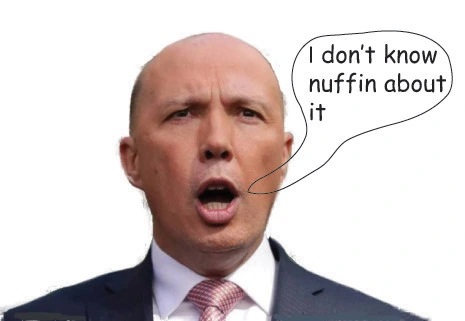
January 18, 2025 Michael Taylor, https://theaimn.net/peter-duttons-nuclear-energy-policy-is-unclear-policy/
Peter Dutton’s signature nuclear energy policy has rightly been subject to significant criticism and analysis, highlighting several key issues:
- The policy has been criticised for its potential high costs. Reputable sources suggest that nuclear energy is likely to be significantly more expensive than renewable energy alternatives. For instance, the Climate Council estimates that it could increase household electricity bills by $665 annually, and the CSIRO’s GenCost report indicates that nuclear power is at least twice as expensive as renewables.
- The timeline for establishing nuclear power in Australia is considered overly ambitious. It’s estimated that it would take at least 15 years to get reactors up and running, which means significant delays in addressing immediate energy needs. This delay could lead to continued reliance on fossil fuels, thus increasing emissions rather than reducing them.
There are substantial environmental concerns related to nuclear power, including the management of nuclear waste, the risk of accidents, and the overall environmental footprint (which the industry says is nil) when considering the lifecycle of nuclear facilities. Dutton’s policy doesn’t adequately address these risks, particularly in a country such as ours with no prior nuclear energy infrastructure.- Implementing nuclear power requires overcoming significant political and regulatory hurdles. Opposition from state governments, along with existing federal bans on nuclear energy, presents legal and political obstacles. The need for new legislation and the potential for compulsory land acquisition further complicates the policy’s execution.
- The policy could deter investment in renewable energy by creating uncertainty about the future energy landscape. Investors might be reluctant to commit to long-term renewable projects if there’s a possibility that the energy market will shift towards nuclear, potentially leading to higher energy costs and less economic growth.
There are valid doubts about public support for nuclear power in Australia, particularly given historical opposition. The proposed choice of sites for nuclear reactors raises questions about community consent.- The policy focuses on nuclear at the expense of more immediately deployable and cost-effective renewable solutions (Sydney Morning Herald, paywalled). The argument is that renewable energy can be scaled up more quickly to meet current and future energy demands without the risks associated with nuclear.
- There has been a noted absence (Sydney Morning Herald, paywalled) of comprehensive costings from the Coalition for their nuclear plan, leading to skepticism about the economic claims made by Dutton. This lack of transparency has been highlighted as a major flaw.
- In summary, the policy is economically risky, environmentally questionable, and politically contentious, potentially leading to higher energy prices, slower adoption of clean energy, and increased reliance on fossil fuels in the interim.
- It looks as though Dutton is on a loser with his nuclear energy policy. He pursues it at his political peril.
TODAY 2025 – Australia’s dangerous nuclear dance with Dutton?

20 January 2025 https://theaimn.net/2025-australias-dangerous-nuclear-dance-with-dutton/
Why I must now focus on Australia’s nuclear question.
For the past 18 years, I have been running two websites dedicated to the nuclear-free cause. I started these when John Howard was proposing nuclear power for Australia. The hazards then were obvious, environmental and health damage, further oppression of Aboriginal people, threats to civil liberties, proliferation of nuclear weapons, and more.
Over the last few years, the threat of nuclear war has increased. It’s become clear that men in power have come to believe that a nuclear war can be won, despite what the scientists tell us. The idea of nuclear disarmament has gone out the window, as ever new, cleverer, bigger nuclear weapons are devised by our fine “defenders”.
While danger has increased, knowledge and understanding of history has decreased. So we have a Western world that pays no attention to the background to the war in Ukraine, and confidently believes that it is all about one “evil” man – Putin, and nothing to do with the complex story of the Donbass region of Ukraine, and its quest for autonomy.
Meanwhile the horror of the Israeli genocide of Palestinians in Gaza continues, and the Netanyahu government’s ruthless oppression there is backed by Western weapons, and moral support, – because we “don’t want to be anti-semitic, do we?” And again, the history of the region is ignored.
These two situations could so easily tip the world over the brink – to nuclear war.
But as if that were not enough – there’s more on-the-brink background. We must now hate not only Russia, but also China, and Iran, and be ready to nuclear bomb them. We must build up more nuclear weapons, – to the gratification of those lovely armaments companies and their happy shareholders.
And if that all is not enough to have us now teetering on that brink, we have the most powerful nation in the world run by a deranged President Trump, who is supported, perhaps himself controlled, by a small group of obscenely rich men of brilliant minds but lopsided morals, including the ketamine-dependent Elon Musk.
So, to get back to the point. In this crazy new world, the new USA government will destroy or control political, judicial, educational and social institutions, with the aid of Murdoch media and social media. Misinformation and lies will be rife, and it will be a struggle to find media sources that can be trusted. But decent people, with the will for co-operation and for collective action continue – we just have to find them.
I have tried, through my websites to cover those international political issues that bring nuclear war ever closer. But now, it is just too hard.
Meanwhile, back at the ranch, here in Australia, we have the unique situation of an entire continent being taken over, militarily, by the USA. Liberal and Labor governments have let it happen. Labor Prime Ministers, terrified by what happened to the one Prime Minister, Gough Whitlam, who dared to stand up to the USA, continue to kowtow to America.
If the “tech bros” and the shadowy Atlas Foundation can play a role in bringing the chaotic Donald Trump to power in the USA, they could well do the same thing here, helping to bring Dutton’s nuclear madness to Australia. However, I must give Dutton some credit, too. He now looks likely to offer all sorts of other enticements to Australian voters, and perhaps just soft pedal on the nuclear propaganda, and hope we forget about it..
It is up to those of us who are aware, and perhaps have the time, to explore the scenario of what the nuclear industry would mean for this country.
Australia is somewhat scarred by the nuclear industry already, with the abomination of the British nuclear bombing of aboriginal land in the 1950s, and with the environmental and health destruction of uranium mining. But Australia now has this unique opportunity – to be the world leader in renewable energy, and energy conservation.
Australia does not have to be “USA’s beachfront against China” as one American politician said recently. Australia does not have to be the Southern Hemisphere base for USA’s nuclear-armed bombers, and nuclear submarines.
So, anyway, I reckon that the job for aware Australians is to keep the focus on Dutton’s nuclear nuttiness, exposing its lies. For my own part, I’m narrowing the scope of my websites and newsletter, taking them back to their original theme – for a nuclear-free world.
“
Australian nuclear news -13-20 January 2025.
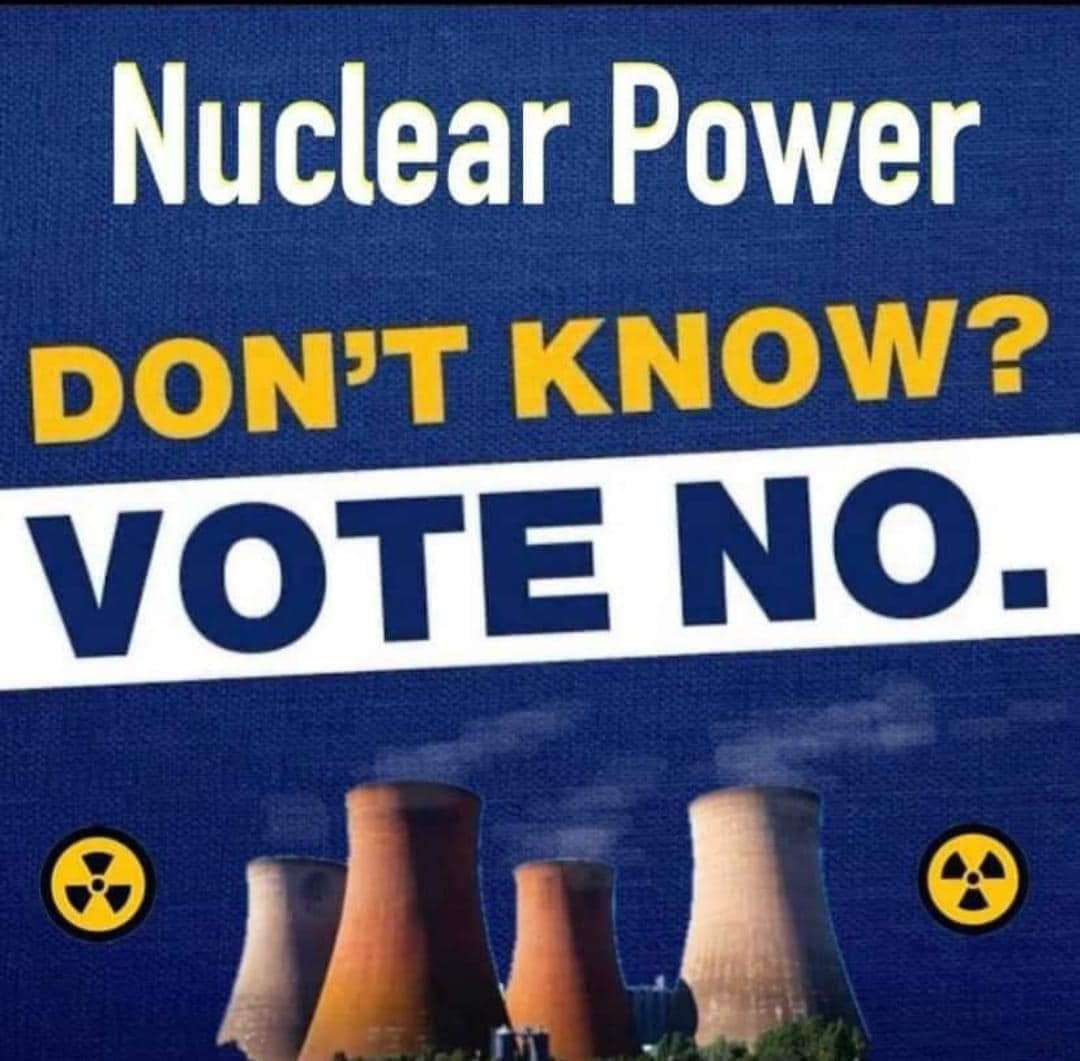
Headlines as they come in:
Dutton’s nuclear plan to wipe out Australia’s aluminium smelters .
Hey Australia, Ontario is no model for energy and climate policy.
Peter Dutton’s nuclear energy policy is unclear policy,
Lack of detail Dutton Launches Much to Do About Nothing campaign.
Peter Dutton’s “always on” nuclear power is about as reliable as wind and solar – during a renewables drought.
Dutton’s new nuclear nightmare: construction costs continue to explode.
Virginia, we have a problem.
Dutton’s nuclear plan to wipe out Australia’s aluminium smelters

Australian Financial Review, Chris BowenMinister for Climate Change and Energy, 19 Jan 25
The Coalition’s costings are predicated on large industrial facilities in the southern and eastern states of Australia halving their energy use by the end of 2030, and keeping it there.Chris BowenMinister for Climate Change and Energy
Of all the problems with Peter Dutton’s nuclear energy costings released in the dying days of 2024, probably the biggest is that the entire policy assumes much of Australian heavy industry closes over the next few years.
This is particularly ironic as Mr Dutton claims with a straight face that nuclear power is necessary for industrial growth.
The details of his so-called policy costings reveal the only way the Coalition can make nuclear energy appear cheaper than it is – even Ted O’Brien admits he’s not predicting nuclear will bring power bills down – is to assume Australia will need a lot less power.
It indicates an extraordinary degree of pessimism about Australia’s manufacturing future, specifically for electricity-hungry industries like aluminium smelting.
In releasing those figures, the Coalition has tied themselves to a future scenario predicated on large industrial facilities across the southern and eastern states of Australia halving their energy use by the end of 2030 – and keeping it there.
Specifically, the model Peter Dutton has adopted as the basis for his energy policy, shows a material drop and then permanent flatlining in industrial electricity demand for Victoria, Tasmania, Queensland and NSW.
That is, less than half the energy we need to power our biggest industrial users right now – let alone to enable growth in the future.
We need to be planning an energy system for economic growth.
Peter Dutton says he supports the aluminium industry, but his own nuclear costings rely on shutting it down.
Analysis of the timing of large loads coming off, shows it coinciding with the end dates of existing power purchase agreements for each of Australia’s four aluminium smelters across those states.
It shows a Liberal Party either cavalier about, or comfortable with Tasmania’s Bell Bay smelter closing in less than 12 months by January 2026, Portland’s smelter winding down in July 2027, plus NSW’s Tomago and Queensland’s Boyne smelter gone by July 2029…………………………………………………………………
As someone who wants to lead a country, why would Dutton be planning for an economy that’s smaller and an industrial sector that’s worse off with no growth opportunities, before he’s even begun? Why bank on job losses to bring down the cost of his electricity system?
And if you’re not planning for a contracting economy, then where’s your credible energy policy to meet growing demand in the next five, 10 and 20 years?
We need to be planning an energy system for economic growth. We need to be planning an energy system for the future, one that has bigger industry, ………………………………………………………. more https://www.afr.com/policy/energy-and-climate/dutton-s-nuclear-plan-to-wipe-out-australia-s-aluminium-smelters-20250119-p5l5l4
Hey Australia, Ontario is no model for energy and climate policy
Energy and climate strategy should prioritize options with lowest economic, environmental, technological and safety risks. Ontario’s does the opposite.
by Mark Winfield October 4, 2024,
https://policyoptions.irpp.org/magazines/october-2024/ontario-energy/
Over the past few weeks, word has begun to reach Ontario of a series of stories in the Australian media in which the province is being held up as a model for climate and energy policy Down Under.
It seems that Peter Dutton, the leader of the federal opposition Liberal (the conservative party in Australian politics), has been promoting Ontario’s nuclear heavy energy plans as a pathway for Australia.
For those in the province familiar with the ongoing saga of its energy and electricity policies, the reactions to the notion of Ontario being an example of energy and electricity policymaking have ranged from “bizarre” to “you couldn’t make this up.”
The Australian opposition leader seems to be operating on a very limited understanding of the history and current state of electricity, energy and climate policy in Ontario. A good starting point would be the delays and cost overruns flowing from the province’s initial 20-reactor nuclear construction program. Running from the 1960s through the early 1990’s, they effectively bankrupted the provincially owned utility Ontario Hydro. Its successor, Ontario Power Generation (OPG), could only be made economically viable by offloading nearly $21 billion in mostly nuclear-related debt onto electricity ratepayers.
Poor maintenance and operating practices led to the near-overnight shutdown of the province’s seven oldest reactors in 1997, leading to a dramatic rise in the role of coal-fired generation and its associated emissions of greenhouse gases (GHGs) and smog precursors. The refurbishment of the “laid-up” reactors themselves went badly. Two ended in write-offs, and the others ran billions over budget and years behind schedule, accounting for a large portion of the near doubling of electricity rates in the province between the mid-2000s and 2020.
Towards a $100-billion nuclear binge?
Only two other provinces followed Ontario’s lead on nuclear. Quebec built two reactors and New Brunswick one, each of them completed in the 1970s or the early 1980s. The Gentilly-1 facility in Quebec was barely ever operational and closed in 1977. The Gentilly-2 facility was shut down in 2012, and assessed as uneconomic, particularly in light of Ontario’s experiences in attempting to refurbish its own. The construction and then refurbishment of the Point Lepreau facility has repeatedly pushed New Brunswick Power to the brink of bankruptcy.
The current government of Ontario, led by Conservative Premier Doug Ford, has seemed determined to ignore the nuclear experiences of these provinces, and its own history of failed nuclear megaprojects. The government’s July 2023 energy plan includes the refurbishment of six reactors at the Bruce nuclear power facility (owned by OPG), and four reactors at the OPG’s Darlington facility. It subsequently added the refurbishment of four more reactors at OPG’s Pickering B facility, an option that had previously been assessed as unnecessary and uneconomic. The plant had originally been scheduled to close in 2018. There are also proposals for four new reactors totaling 4,800 MW in capacity at Bruce and four new 300MW reactors at Darlington. (The current capacity is 6,550 MW at Bruce, and 3,512 MW at Darlington.)
The total costs of these plans are unknown at this point, but an overall estimate in excess of $100 billion would not be unrealistic:
$13 billion for the refurbishment at Darlington;
approximately $20 billion for the refurbishment at Bruce;
$15 billion for Pickering B (based on Darlington costs and plant age for both this case and Bruce);
about $50 billion for the new build at Bruce, based on previous new build proposals;
and the Darlington new build (unknown, but likely $10 billion or more).
Even this 100$-billion figure would assume that things go according to plan, which rarely happens with nuclear construction and refurbishment projects.
The government’s ambitious nuclear plans have not been subject to any form of external review or regulatory oversight in terms of costs, economic and environmental rationality, or the availability of lower-cost and lower-risk pathways for meeting the province’s electricity needs. Rather, the system now runs entirely on the basis of ministerial directives that agencies in the sector, including the putative regulator, the Ontario Energy Board, are mandated to implement.
Even this 100$-billion figure would assume that things go according to plan, which rarely happens with nuclear construction and refurbishment projects.
The government’s ambitious nuclear plans have not been subject to any form of external review or regulatory oversight in terms of costs, economic and environmental rationality, or the availability of lower-cost and lower-risk pathways for meeting the province’s electricity needs. Rather, the system now runs entirely on the basis of ministerial directives that agencies in the sector, including the putative regulator, the Ontario Energy Board, are mandated to implement.
The province’s politically driven policy environment is very advantageous to nuclear proponents. When previous nuclear expansion proposals had been subject to meaningful public review, the plans collapsed in the face of soaring cost estimates and unrealistic demand projections. This was the case in the early 1980s with the Royal Commission on Electric Power Planning – aka the Porter commission, at the turn of the 1990s with the Ontario Hydro demand and supply plan environmental assessment, and in the late 2000s, with the Ontario Power Authority’s integrated power system plan review.
A halt to renewable energy
There is a second dimension to Ontario’s electricity plans that also should not be overlooked. Upon arriving in office the Ford government promptly terminated all efforts at renewable energy development, including having completed wind turbine projects quite literally ripped out of the ground at a cost of hundreds of millions of dollars. It then scrapped the province’s energy efficiency strategy for being too effective at reducing demand. Repeated offers of low-cost electricity from the hydropower-rich neighbouring province of Quebec were ignored. The results of studies by the province’s own electricity system operator on energy efficiency potential and the possible contributions of distributed generation, like building and facility-level solar photovoltaics (PV) and storage, have been largely disregarded.
These choices have left the province with no apparent option but to rely on natural gas-fired generation to replace nuclear facilities that are being refurbished or retired. With existing facilities dramatically ramping up their output, and new facilities being added, GHG and other emissions from gas-fired generation have more than tripled since 2017, and are projected to continue to increase dramatically over the next years. On its current trajectory, gas-fired generation will constitute a quarter of the province’s electricity supply, the same portion provided by coal-fired plants before their phase-out, completed in 2013. The province has recently announced a re-engagement around renewable energy, but the seriousness of this interest has been subject to considerable doubt.
Given all of this, it would be difficult to see Ontario as a model for Australia or any other jurisdiction to follow in designing its energy and climate strategy. The province has no meaningful energy planning and review process. Its current nuclear and gas-focussed pathway seems destined to embed high energy costs and high emissions for decades to come. And it will leave a growing legacy of radioactive wastes that will require management of timescales hundreds of millennia.
A rational and transparent process would prioritize the options with the lowest economic, environmental, technological and safety risks. Higher-risk options, like new nuclear, should only be considered where it can be demonstrated that the lower-risk options have been fully optimized and developed in the planning process. Ontario’s current path goes in the opposite direction. To follow its example would be a serious mistake.
‘I was exposed to evil in British nuclear tests’

Kirsteen O’Sullivan & Marcus White, 15 Jan 25, https://www.bbc.com/news/articles/cvgpp5ze28ro?fbclid=IwY2xjawH5E-JleHRuA2FlbQIxMQABHegxfVRLO66gQNKipt3Y5f9BWzRPbu0h6QWkys9CWH2yBTjZhE1YRCwhmA_aem_E7q8FCNDKoWD6DMMToVaoQ
A nuclear test veteran who witnessed the detonation of several British atomic bombs in the 1950s has said he was “exposed to evil”.
Robert James, 87, was an RAF firefighter stationed in Maralinga in Australia, where seven major UK tests took place.
Mr James, from Fordingbridge, Hampshire, said many service personnel had suffered fatal illnesses as a result and he was angry that the UK government had still not offered compensation.
The Ministry of Defence (MoD) said ministers were continuing to discuss issues with families.
Veterans’ campaign groups have said British service personnel were lined up and deliberately exposed to bomb tests to see what effect they would have.
Mr James said many of his comrades had died as a result of cancers and diseases associated with radiation exposure.
He said: “A lot of the guys suffered a lot. There’s lads dying every day… and after having long illness.
“We were exposed to evil, we were exposed to radiation. That’s pretty serious and I think that warrants compensation.
“Not only for people that are surviving like myself but the families that have suffered where their husbands or fathers died.”
In 2019, the Labour Party, then led by Jeremy Corbyn, pledged £50,000 for each surviving British nuclear test veteran.
Sir Keir Starmer met veterans in 2021, before becoming Prime Minister, but made no promises – and the 2019 offer was not in the 2024 manifesto.
However, the current Defence Secretary John Healey posted on his website in 2021: “UK remains the only nuclear power that refuses them recognition or compensation, unlike the US, France, Canada and Australia.”
Mr James said: “Don’t go back on your word, Mr Starmer… You promised us full compensation and recognition. Keep to your word.”
Lack of detail Dutton Launches Much to Do About Nothing campaign

January 17, 2025 John Lord Australian Independent Media
You might remember the relentless scrutiny that Peter Dutton applied during the Voice referendum regarding Labor’s proposal. He would challenge the Prime Minister each day, demanding more specifics when many felt the key points were already apparent. Like Tony Abbott or Donald Trump, Dutton seems poised to adopt a campaign strategy that embraces a lack of detail in the upcoming election. He plans to present broad, sweeping outlines of potential policies and actions he might pursue in office rather than delving into the intricacies and specifics many voters desire.
A prime example of the shortcomings in leadership is Peter Dutton’s vague and often frustrating approach to nuclear policy, which raises more questions than it answers. The most effective leaders possess a vast reservoir of accurate information, readily available for reference at any moment. John Howard exemplified this quality, as did Kim Beazley and Peter Costello. In recent times, however, there have been few who can match this standard. Julia Gillard stood out for her sharp insights, while Kevin Rudd’s exceptionally agile mind distinguished him from his peers. Anthony Albanese, in particular, demonstrates an extraordinary ability to recall even the slightest of details; a skill honed during his tenure as Minister for Infrastructure, where he developed an almost uncanny depth of knowledge.
It is precisely in this area that Peter Dutton is likely to struggle. During the frenetic pace of an election campaign, when rapid-fire questions bombard a candidate at their most vulnerable, his lack of depth in detail will become apparent. In politics, it is always the meticulous attention to detail that can make or break a leader…………………………………………….
Dutton emerged from a long yawn to play catch-up politics on Sunday, 12 January, to launch the Coalition’s unofficial election campaign.
During a 38-minute hastily put-together address at a rally in Melbourne, he depicted the forthcoming election as a pivotal “sliding doors moment” for the future of Australia. At this event, he unveiled the Coalition’s rallying cry, “Let’s get Australia back on track,” which resonated with the audience eager for detail. Alongside this slogan, Dutton introduced a new brochure that detailed twelve key governing priorities designed to steer the country in a different direction. In his speech, he strongly criticised the current Labor government, labelling it one of the most “incompetent governments” Australia has ever seen (after only three years, he had forgotten his own) and described the leadership of Prime Minister Anthony Albanese as among the weakest in the nation’s history……..
So, with little detail, Dutton launched his Much to Do About Nothing campaign.
Michelle Grattan wrote about Dutton’s launch:
“What it wasn’t, though, was detailed. The specifics of what a Dutton government would do, and how it would do it, remain unclear.”…… https://theaimn.net/lack-of-detail-dutton-launches-much-to-do-about-nothing-campaign/
1 This month
7 April – WEBINAR – Australia and the Doomsday Clock – Preventing nuclear war through NoFirstUse and other policies
Online | Tuesday April 7, 4:00-5:30pm, Australian Eastern Time / 8:00-9:30am Central Europe Time
– Access the registration link
15 April – Zoom –Nuclear Power is Not the Solution
Apr 15, 2026 01:00 AM in Canberra, Melbourne, Sydney

Join the International Physicians for the Prevention of Nuclear War (IPPNW) on Tuesday, April 14th for a timely webinar exploring the risks associated with nuclear power and challenging the myth that it offers a simple, safe, carbon-free solution to the climate crisis

21 April Webinar: No Nuclear Weapons in Australia
Start: 2026-04-21 18:00:00 UTC Canberra, Melbourne, Sydney (GMT+10:00)
End: 2026-04-21 19:30:00 UTC Canberra, Melbourne, Sydney (GMT+10:00)
Event Type: Virtual
A virtual link will be communicated before the event.
Host Contact Info: australia@icanw.org

of the week – Australians for War Powers Reform (AWPR)
To see nuclear-related stories in greater depth and intensity
 Antinuclear