Briefing paper from UK trip shows nuclear waste discussions held, as location for AUKUS submarine waste remains undecided
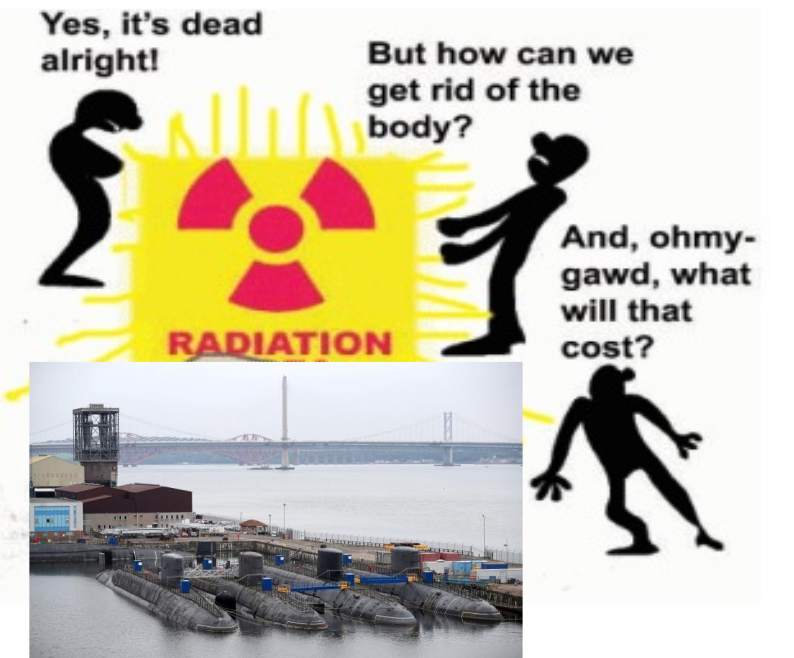
ABC News, Stateline, Leah MacLennan, 31 Jan 25
In short:
Former senator Rex Patrick says documents show SA’s Defence Industries Minister met with a defence company in the UK for the “specific purpose of being briefed” on the dismantling of nuclear reactors and the waste associated.
Mr Mullighan says those topics were not the “focus” of the discussions.
What’s next?
Legislation passed last year allowing nuclear waste to be stored at Osborne, but the government says a location for any high-level waste storage is still to be decided.
A former senator has sounded the alarm over documents he says point to government discussions about the defueling and dismantling of nuclear submarines at South Australia’s Osborne shipyards.
Rex Patrick was a Navy submariner, entered the Senate as a replacement for Nick Xenophon, and is now running for the Senate again as a Jacqui Lambie Network candidate.
He has obtained documents through freedom of information (FOI) that show South Australia’s Treasurer and Defence Industries Minister Stephen Mullighan met with defence company Babcock during a visit to the United Kingdom late last year.
“What the FOI shows is that the Treasurer Mr Mullighan met with Babcock for the specific purpose of being briefed on the dismantling of nuclear reactors and waste associated with those nuclear reactors,” Mr Patrick said.
The documents include a briefing paper for the meeting, which said the objective of the visit was to “discuss Babcock’s approach to nuclear powered submarine sustainment, defueling and disposal … seek information on Babcock’s experience in radioactive waste management/nuclear decommissioning,” and “discuss Babcock’s approach to nuclear powered submarine social license”.
Mr Patrick said the documents show the government was exploring the idea of dismantling the submarines’ nuclear reactors at Osborne.
He has called for more transparency and discussion with the public about what is being planned for the site under the AUKUS agreement.
“I’ve been looking at AUKUS and issues of nuclear waste for about three years and what I’ve found is that you really have to pull teeth to get access to information about this sort of stuff,” Mr Patrick said.
“Any decisions being made about this are not decisions that just affect this term of government or the next, they are decisions that will affect South Australians for tens of thousands of years.”…………………………………………………………………………………………………………………………………………………
Decommissioning still decades away
Australia’s first nuclear submarine will not arrive until the early 2030s, when the US plans to sell the government three Virginia Class boats.
The Virginia Class have a life span of more than 30 years, meaning their defueling and decommissioning is still decades away.
Rex Patrick argues that does not mean decisions can be delayed, because signing up to AUKUS is also signing up to a nuclear industry and dealing with the waste they will ultimately produce.
“Decisions around high-level nuclear waste are decisions that last for generations upon generations,” Mr Patrick said.
“They are not decisions that should simply be made and presented as a fait accompli by a government.”……………………………………………………………………..
Federal laws mean nuclear waste can be stored at Osborne
In October last year, legislation passed federal parliament that will allow for the storage and disposal of nuclear waste at Osborne.
The law does not define what level of waste can be stored there, but the federal government has given assurances that it will only be low-level waste.
Those assurances are not enough to allay concerns from the local community group that has branded itself ‘Port Adelaide Community Opposing Aukus’.
“One of our major concerns is that waste will be literally transported down Victoria Road, which alongside of it is a residential area,” group member Eileen Darley said.
“We’re going to be a docking point, or a gateway if you like, to some as yet unknown permanent nuclear dump somewhere.”………………………………………………
Major delays to UK decommissioning
The United Kingdom has had a fleet of nuclear submarines since the 1960s, but has faced multiple challenges decommissioning and disposing of boats that are out of service.
More than 20 decommissioned submarines are awaiting disposal at dockyards in Scotland and England, with half still waiting to be defueled.
The oldest, HMS Swiftsure, left service in 1992 and Babcock is now working with authorities to dismantle it, with an aim to be finished by the end of next year.
Overall it is a program that will cost billions of pounds. https://www.abc.net.au/news/2025-01-31/documents-show-nuclear-waste-discussions-aukus-submarines/104874852
Is the world going nuclear? The hope and hype of nuclear as a climate solution.
“The industry is having some very good rhetoric, but it’s having a very poor reality. We’ve seen 30 countries say that they will triple nuclear (power) by 2050; we’ve seen 125 say they will triple renewables by 2045.”
By political reporter Tom Lowrey, 26 Jan 25
In short:
Momentum behind nuclear power as a part of the global solution to climate change has been growing, with the technology gaining more attention and interest.
But climate advocates point out that nuclear still has a poor reputation for being delivered late and hugely over budget.
What’s next?
The Coalition will continue to point to any international shifts towards nuclear power, to make its case for Australia’s adoption of the technology.
It’s been a difficult few decades for nuclear power.
Nuclear’s share as part of the global energy mix has been falling, and incidents like the Fukushima disaster in 2011 highlighted for many the risks of the technology.
Some countries started mothballing or shutting down plants, and many new projects were plagued by cost blowouts and delays.
But in the past few years there has been a remarkable turnaround.
Countries are pledging to help triple the production of nuclear power globally, and industry advocates are a growing presence at global climate summits.
The International Atomic Energy Agency, a United Nations body that advocates for peaceful use of nuclear technology, is forecasting substantial growth in the sector over coming decades.
And Australia is about to head into a federal election with the adoption of nuclear power at the centre of the political contest.
The Coalition argues Australia risks being left behind if it doesn’t get on board.
But others point out that while there is plenty of global interest in nuclear — and the as-yet unrealised promise of new technology such as small modular reactors — there is a lot more real money flowing into renewables, which are already transforming global energy grids.
Nuclear’s big global arrival
The COP29 climate summit held in Baku, Azerbaijan late last year was ostensibly dedicated to climate financing — that is, finding the money needed to fund a massive global effort to tackle climate change.
But it made headlines for a few different reasons.
One was that for the second year running, the global climate summit was being held in a country that derives most of its wealth from oil and gas. (Last year’s summit was held in the UAE).
Another was the growing presence of nuclear power.
Six more countries signed a pledge to triple nuclear’s global production by 2050, taking the total number of countries on board to 31.
They range from relatively small countries such as Moldova, through to major Australian allies like Canada, Japan, the UK and US.
All four of those larger countries have long-established nuclear industries.
Nuclear attracted plenty of attention, including headlines labelling it a “rising star” at the climate summit.
And there was an Australian presence in Baku ready to cheer it on.
Nationals MP David Gillespie, the retiring member for the NSW North Coast seat of Lyne, travelled to the summit (with some support from Coalition-aligned environment group Coalition for Conservation).
David Gillespie has been one of nuclear power’s longest and loudest supporters, chairing the “parliamentary friends of nuclear industries”.
He acknowledges that a “big slice” of the climate summit was devoted to renewable energy, and a lot of money and ambition is flowing into solar and wind.
But he said the shift in thinking on nuclear power at a global scale was clear to see………………………………..
But other Australians at the November conference say it is important not to overstate nuclear’s presence, and its place in the global net-zero effort.
Tennant Reed is the Director of Climate Change and Energy at the Ai Group, and is a veteran of COP climate summits.
He said the arrival of nuclear energy on the climate scene had certainly been noticeable……………..
He made the point that growth in nuclear power wasn’t a feature of the main negotiations at Baku, but nor was scaling up any other particular energy source.
Mr Reed said nuclear advocates were hosting events on the sidelines — and they were sensitive to one criticism in particular
“They’re all conscious — they have to show that they can deliver new projects ‘on time and on budget’,” he said.
“I must have heard that phrase 50 times from nuclear people………………………………
Mr Reed said much of the growth in nuclear power was coming from countries with established industries, and while others were expressing interest in setting up an industry, few had recently broken ground.
He said there was a much more obvious momentum in the roll-out of renewables.
“Wind and solar deployment, and especially solar at the moment, is taking off like a rocket,” he said………….Conservationists cast doubt
Some conservation groups have sought to push back on the rising prominence of nuclear power, seeing it as a threatening distraction in efforts to combat climate change.
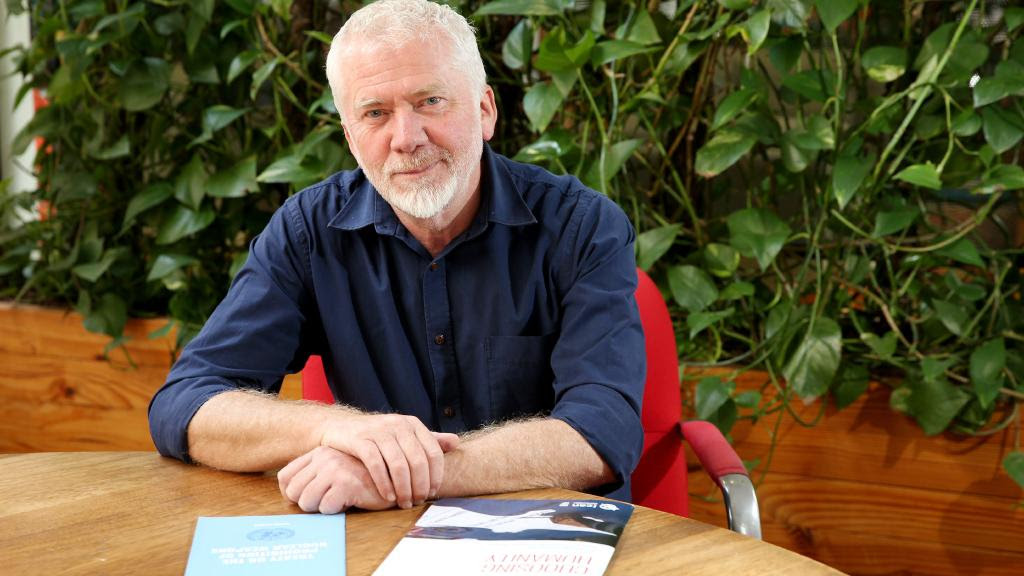
The Australian Conservation Foundation’s Dave Sweeney was also at the COP29 conference in Baku, and cast some doubt on nuclear’s future, at least compared to renewables.
“It’s one thing to have agreements and aspirations, it’s another to have projects and power,” he said.
“The industry is having some very good rhetoric, but it’s having a very poor reality. We’ve seen 30 countries say that they will triple nuclear (power) by 2050; we’ve seen 125 say they will triple renewables by 2045.”
And he argues part of the nuclear industry’s ambition is attracting public funding, in an effort to “de-risk” its projects.
“At meeting after meeting, they’ve spoken about the need for market reforms to de-risk nuclear projects,” he said.
“I think that is very bold code for ‘no-one wants to fund us, so we’re looking for the public purse’.”
https://www.abc.net.au/news/2025-01-26/is-the-world-going-nuclear-hope-or-hype/104856852
Brian Goodall slams MP over Rosyth Dockyard nuclear submarines move

“As if it’s not bad enough that there are seven of these environmental time bombs already here, some of which have now been here for decades.“
By Ally McRoberts, Dunfermline Press 25th Jan 2025
A ROSYTH SNP councillor said he was “totally outraged” at the prospect of more nuclear submarines being brought to the dockyard for dismantling.
Brian Goodall said the “environmental time bombs” should be nowhere near the town and hit out at Labour MP Graeme Downie for pushing for more of the work to be done here.
One old Royal Navy sub, HMS Swiftsure, is being cut up and the radioactive waste removed as part of an innovative recycling scheme and there are six more vessels laid up at Rosyth, and another 16 at Devonport in Plymouth.
Mr Downie – who dismissed the criticism as “scaremongering” – wants the Ministry of Defence to put up the money to deal with all of the decommissioned boats and said it would “guarantee decades of work” and bring hundreds of jobs to the dockyard.
But Cllr Goodall hopes to sink that plan and said: “I’ve been totally outraged to see that our area’s Labour MP has called for even more nuclear submarines to be dumped and broken up in Rosyth.
“Labour’s MP for Dunfermline and Dollar has asked the MoD to bring all of the UK’s decommissioned nuclear submarines to Rosyth Dockyard.
“As if it’s not bad enough that there are seven of these environmental time bombs already here, some of which have now been here for decades.”
One of the seven at the yard, HMS Dreadnought has been laid up so long – since 1980 – that much of her low-level radiation has “disappeared naturally”.
As well as dealing with the 23 vessels at Rosyth and Devonport, three more are due to come out of service.
Cllr Goodall continued: “His call runs contrary to Fife Council’s long-standing commitment as a leading nuclear free local authority and I also fear the major impact on Rosyth Dockyard’s contribution to Scotland’s green transition, and the jobs that come with that, if this change of policy was secured, and the dockyard couldn’t become de-regulated as a nuclear site in the medium term.
“Rosyth is simply not the right place for the MoD, or anyone else, to be storing radioactive materials.
“There are homes, shops and businesses within metres of the dockyard.
“There’s a Fife College campus within the dockyard and our brand-new high school is being built within a few hundred metres of the site.”………………………..
Cllr Goodall said: “The compromise that could see the submarines that are already here, dismantled at the dockyard with all radioactive substances being removed to more suitable interim storage facilities down south, is one that I can, reluctantly, agree with, but any suggestion of additional nuclear submarines being brought to Rosyth is an outrage, and would be a breach of promise from the MoD.”……………………… https://www.dunfermlinepress.com/news/24883349.brian-goodall-slams-mp-rosyth-dockyard-subs-move/
1 This month
7 April – WEBINAR – Australia and the Doomsday Clock – Preventing nuclear war through NoFirstUse and other policies
Online | Tuesday April 7, 4:00-5:30pm, Australian Eastern Time / 8:00-9:30am Central Europe Time
– Access the registration link
15 April – Zoom –Nuclear Power is Not the Solution
Apr 15, 2026 01:00 AM in Canberra, Melbourne, Sydney

Join the International Physicians for the Prevention of Nuclear War (IPPNW) on Tuesday, April 14th for a timely webinar exploring the risks associated with nuclear power and challenging the myth that it offers a simple, safe, carbon-free solution to the climate crisis

21 April Webinar: No Nuclear Weapons in Australia
Start: 2026-04-21 18:00:00 UTC Canberra, Melbourne, Sydney (GMT+10:00)
End: 2026-04-21 19:30:00 UTC Canberra, Melbourne, Sydney (GMT+10:00)
Event Type: Virtual
A virtual link will be communicated before the event.
Host Contact Info: australia@icanw.org

of the week – Australians for War Powers Reform (AWPR)
To see nuclear-related stories in greater depth and intensity
 Antinuclear