Revealed: The water supply risks posed by Dutton’s nuclear plan
The Age, By Mike Foley, February 13, 2025
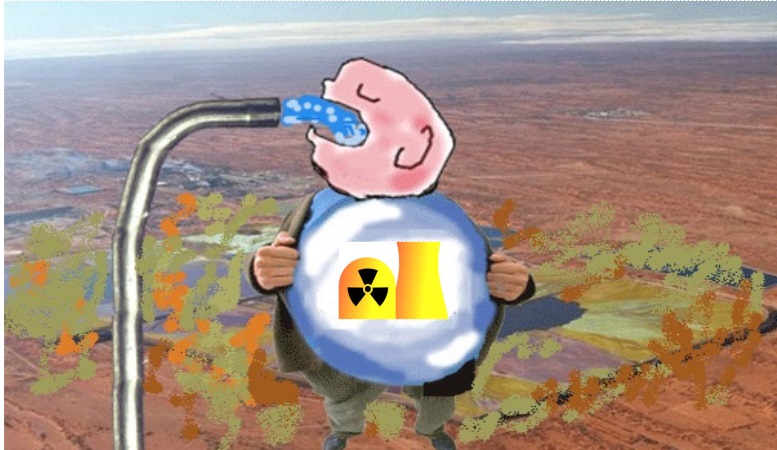
Opposition Leader Peter Dutton’s proposed nuclear plants will suck more water from nearby rivers than the coal plants they would replace, posing a challenge to maintaining drinking supply for local communities and irrigation for farms.
The federal government cites its own modelling to claim nuclear would use up to three times more water than the coal plants that are critical for the opposition’s pledge to help households with power prices and reach net zero emissions by 2050.
A secure water supply is crucial for the communities the opposition has selected as sites for the seven nuclear plants it has pledged to build if it wins the election, due by May.
There is no water to spare in the local rivers that supply the coal plants the Coalition has selected to host a nuclear reactor, where state governments issue licences to manage the competing needs of residents, farming and environmental requirements.
Greater water consumption from nuclear energy could shrink the size of the agriculture sector. Introducing a government buyer into the market would also likely raise water prices for the farmers who remain and create tension between key Coalition voter groups.
For example, Lithgow’s Mt Piper coal power station about 140 kilometres west of Sydney, a site earmarked for a nuclear plant, is located in the Macquarie water catchment where cotton, wine grapes and grains are grown.
Departmental data released by Labor on Wednesday states the opposition’s seven nuclear plants would collectively use 500 gigalitres – roughly the same volume as Sydney Harbour – to generate the amount of power they plan to supply to the grid each year.
The seven coal plants earmarked to be replaced by nuclear use 168 gigalitres a year, generating 48-terawatt hours of electricity.
Why does nuclear need more water than coal?
Coal and nuclear plants both use their heat source to boil water, make steam and spin turbines to generate electricity. This steam is cooled back to water (when most water loss occurs) and then re-used in the plant.
The opposition’s energy policy stipulates their nuclear plants would run at near full capacity every day of the year to recoup costs.
That means nuclear would need to draw on more water, far more often than some of the coal plants they replace, which run about 60 per cent of the time.
What do experts say?
The government cited an Australian National University study to make its claim that nuclear plants use 40 per cent more water than coal plants on average because their cooling processes tend to be less efficient.
ANU engineering professor Andrew Blakers said he stood by his findings.
“The key point is coal and nuclear and thermal power stations need water cooling,” Blakers said. “Solar and wind use vastly less because they don’t need any water for cooling.”…………………………………………………………..
What do farmers say?
NSW Irrigators Council chief executive Claire Miller said “water is a very scarce resource” and all the available supplies around Lithgow and the Hunter Valley are committed to existing industries.
“Governments need to consider very carefully any industries coming in that increase the competition for that resource and what the impacts would be on other water users, including farmers.” https://www.theage.com.au/politics/federal/thirsty-nuclear-plants-will-suck-crucial-water-from-farm-communities-20250212-p5lbfr.html
No comments yet.
1 This month
15 April – Zoom –Nuclear Power is Not the Solution
Apr 15, 2026 01:00 AM in Canberra, Melbourne, Sydney

Join the International Physicians for the Prevention of Nuclear War (IPPNW) on Tuesday, April 14th for a timely webinar exploring the risks associated with nuclear power and challenging the myth that it offers a simple, safe, carbon-free solution to the climate crisis

of the week – Australians for War Powers Reform (AWPR)
To see nuclear-related stories in greater depth and intensity
 Antinuclear
Leave a comment