Nuclear Gamble is an Economic Wrecking Ball
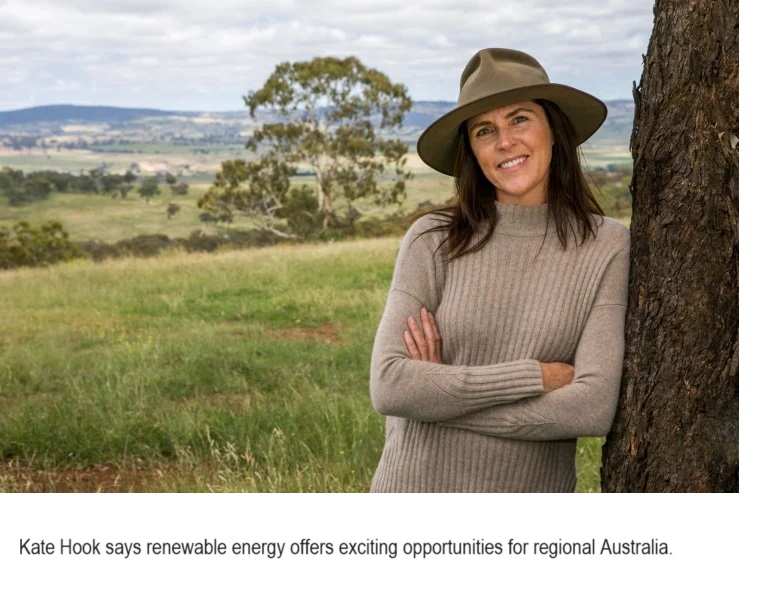
February 17, 2025 AIMN , Kate Hook
Nuclear gamble is an economic wrecking ball – Lithgow and the Central West deserve better
Independent candidate for Calare, Kate Hook, has slammed the Coalition’s nuclear proposal, calling it an economic wrecking ball that will waste billions, push up power prices, and stall job creation in regional Australia.
“Energy experts, market operators and Australia’s leading economists have been clear – Australia can achieve a secure, reliable, and affordable power system without nuclear power,” Ms. Hook said. “The Coalition’s plan is a costly distraction, and I will not support it.”
“The communities that will suffer most from this reckless policy are the very ones that need investment in real, job-creating industries right now – not in 15 or 20 years.”
Ms. Hook called out the nuclear plan for what it is – a stalling tactic to prop up fossil fuel operators, keep government subsidies flowing to outdated industries, and leave Australian taxpayers to foot the bill.
Nuclear reactors take decades to build and cost tens of billions of dollars – public money that could instead be spent on renewables, storage, and grid upgrades today. By the time nuclear power could even begin operating, Australia’s energy system will already be overwhelmingly powered by cheaper, cleaner alternatives.
“We are at 40% renewable energy now and in the last 6 years alone, we’ve already added over 46 TWh (Terra Watt hours) of annual renewable energy generation to the grid. This number might not mean much to most people but it’s huge! It’s the equivalent of six nuclear power stations. And we did it in six years – not 15 or 20 years,” Ms Hook said.
Renewables and Storage: Reliable, Affordable, and Ready Now
The Australian Energy Market Operator (AEMO) has mapped out the most efficient path forward—and nuclear isn’t part of it. The smart, cost-effective way to secure Australia’s energy future is through renewables, backed by battery storage, pumped hydro, and modern grid technology.
Big battery projects like South Australia’s Hornsdale Power Reserve are already proving their worth. Originally built with a capacity of 129 MWh – enough to power 30,000 homes for a day – it has since expanded to 194 MWh, providing power to 50,000 homes and stabilising the grid within milliseconds during sudden demand spikes.
“This fast response prevents blackouts and keeps energy prices stable—something nuclear power just can’t do,” Ms. Hook said.
Pumped hydro projects like Snowy 2.0 will ensure around-the-clock reliability. When completed, its 2.2 GW capacity will generate enough electricity to power three million homes during peak demand – like when air conditioning use surges on a hot summer evening.
With 350,000 MWh of storage, Snowy 2.0 could power 500,000 homes for an entire week or every home in Sydney for three days.
“We don’t need to waste time and money on nuclear power when we have already invested in proven, ready-to-go solutions that lower energy bills and create jobs right now,” Ms. Hook said.
Lithgow Needs Smart Investments, Not Costly Distractions
Kate Hook recognises that Lithgow has been at the heart of Australia’s energy production for generations. With coal mines closing and Mt Piper Power Station scheduled to shut in 2042, Lithgow needs a real plan for its future – not a decades-long delay.
“Lithgow deserves practical, affordable, and proven energy solutions – not a risky, drawn-out experiment that will leave taxpayers footing the bill for decades,” Ms. Hook said.
Beyond spiralling costs and construction delays, nuclear power comes with long-term risks that regional communities like Lithgow will be forced to bear. The Coalition has no plan for nuclear waste storage, no consultation with impacted communities, and no clear strategy for financing these massive projects.
……………………………………….“Nuclear is a dead-end policy – an economic wrecking ball that will drive up power prices and leave communities paying the price,” Ms. Hook said. “Instead of pouring billions into an outdated, high-risk technology, we should be investing in industries that will deliver affordable energy and secure jobs for Lithgow and all of Calare.”
A Clear Choice on Election Day
With voters in Calare facing a critical decision at the next election, Kate Hook urged the community to reject the Coalition’s nuclear “plan” and back a renewables-led future.
“This election is about who we trust to deliver cheaper energy, good jobs, and a secure future for our region,” Ms. Hook said. “Nuclear power in Australia is an expensive fantasy which is not backed by economic or energy experts – renewables are the real opportunity for Calare.”…………………………. https://theaimn.net/nuclear-gamble-is-an-economic-wrecking-ball/
A dramatic development in the Ukraine situation.
18 February 2025 https://theaimn.net/a-dramatic-development-in-the-ukraine-situation/
The shut-down Chernobyl nuclear reactor was hit by a drone on 14th February, and its outer covering was breached. The International Atomic Energy Agency (IAEA) was quick to gloss over the impact from the latest incident involving the wrecked Chernobyl nuclear reactor – ” Radiation levels inside and outside the so-called New Safe Confinement building “remain normal and stable,”….. and there are no reports of any casualties or radiation leak.”
To be fair, the IAEA did not attribute blame to Russia. Le Monde stated that the cause was a Russian Shahed drone, armed with a high-explosive warhead. So, it actually does look as if the offending drone came from Russia. But that is not certain. However, as far as the Western media goes – the issue is being covered as a deliberate attack by Russia. Youtube after Youtube video, article after article, blames Russia, and repeats Zelensky’s claims –“This is a terrorist attack for the entire world.” Zelensky spoke at the Munich Security Conference accusing Russia of a deliberate attack. Even if it was a Russian drone, there remains the possibility that this was a mistake, rater than intentional. What would Russia have to gain by this? Cui bono?
This event is significant in two ways – First – it could throw a spanner in the works of the current discussions on ending the war in Ukraine . These peace discussion are a whole nother story. Donald Trump is no doubt looking for a way for USA business interests to grab Ukraine resources as one large part of a peace deal in which Russia keeps its invaded territory. Zelensky’s presidency sort of ended on 20 May 2024 – he stays in power because it is war-time – which may well be part of his desire to keep the ear going, no matter what the cost. Zelensky seems to have cast some sort of mesmerising spell over Europe – depicting the Russian bear salivating to gobble up Europe. Good loyal Westerners seem pretty much obligated to oppose Donald Trump on all matters. However a plan to allow some concessions to Russia is a militarily reasonable way to end this war.
Secondly, it could really demonstrate the hypocrisy of the IAEA and its Director Rafael Grossi about nuclear safety

Does anyone really think that this Chernobyl incident is over? All sorted?
“Flames are still raging inside the Chernobyl nuclear station after multiple fires yesterday.” – Luke Alsford and Gergana Krasteva, Metro UK, February 16, 2025
Alsford and Krasteva set out in chilling (perhaps that’s not the right word) detail, the efforts going on, in extreme weather conditions, to prevent a disaster at the power plant, firefighters battling the blaze around the clock. The reactor’s containment shell. now has a 314 square foot gash. With the hermetic seal broken, the ventilation system is affected, and the radiation level will increase.
Those courageous workers at the wrecked Chernobyl nuclear power plant will probably get those fires out before it all gets much, much worse. And mend the hole in the containment shell. And the IAEA and everyone else will breathe sighs of relief. Until the next nuclear near-miss.
Flames are still raging inside the Chernobyl nuclear station after multiple fires yesterday.
Three smoldering fires were detected earlier this morning, forcing teams to jump into action to prevent a disaster at the power plant.
Ukraine’s state agency on exclusion zone management confirmed that no release of radioactive material has been reported yet.
The plant was hit on Friday by a drone carrying a high-explosive warhead, according to Ukraine, 38 years after the nuclear explosion at the site…..
Firefighters continue to battle the blaze round the clock in challenging weather conditions, admitted the International Atomic Energy Agency.
The plant’s fourth reactor now has a 314 square foot gash after the drone strike.
Although no rise in radiation has been reported yet, an expert issued a frightening warning about how Russia’s attack will soon affect nearby radioactivity
Dr Olga Kosharna, founder of the Anti-Crisis Expert Nuclear Centre of Ukraine, said: ‘The hermetic seal has been broken.
‘It is clear that the ventilation systems will [work] differently and the radiation level will increase.
‘But I think that it will not go beyond the industrial site and the exclusion zone.
Chernobyl’s reactors are covered by an outer dome to prevent radioactive leakage after the 1986 disaster – the world’s worst civilian nuclear accident – which sent pollution spewing across Europe.
Video footage shows how the explosion blew a hole in the dome at 1.50am on Friday, before a fire then broke out.
An open fire on the roof structure – officially called the New Safe Confinement (NSC) – was swiftly put out by first responders.
However smouldering fires remain inside the 20ft diameter hole.
The International Atomic Energy Agency [IAEA] said: ‘The ongoing efforts to put out and prevent the spread of any remaining fires – apparently fuelled by inflammable material in the roof cladding – have delayed work to start repairing the damage.’
The organisation’s director Rafael Mariano Grossi added: ‘This was clearly a very serious incident, with a drone hitting and damaging a large protective structure at a major nuclear site.
‘As I have stated repeatedly during this devastating war, attacking a nuclear facility is an absolute no-go, it should never happen.’
Grossi also warned of an ‘increase in military activity in the area around the Zaporizhzhia Nuclear Power Plant.
‘The IAEA remains committed to doing everything we can to help prevent a nuclear accident. Judging by recent events, nuclear safety remains very much under threat.’…………………………….
Zelensky spoke at the Munich Security Conference yesterday, accusing Russia of flaming the conflict with the alleged drone attack……………………………… https://metro.co.uk/2025/02/16/nuclear-expert-issues-chernobyl-update-emerges-fires-still-burning-22567966/
The four accounting tricks behind Peter Dutton’s nuclear cost claims

So according to the data within the Liberal-National Party’s costing document, Dutton’s power system underpinned by nuclear will generate electricity at 6% lower cost than one that doesn’t rely on nuclear. It leads you to wonder – how on earth did Dutton come up with it being 44% cheaper?
There are four accounting tricks behind the 44% cheaper claim which mean that, in reality, Peter Dutton’s plan is not cheaper and is far more risky.
Tristan Edis, Feb 18, 2025, https://reneweconomy.com.au/the-four-accounting-tricks-behind-peter-duttons-nuclear-cost-claims/
The Liberal-National Coalition claims it has found the solution to bring down energy bills – slow the growth of renewable energy and roll-out nuclear power.
According to Liberal Leader Peter Dutton, their plan for a power system including a significant role for nuclear will be 44% cheaper than a system relying predominantly on renewables. This claim is based on energy market economic modelling it released just before Christmas, prepared by an economic consultant – Frontier Economics.
A range of energy analysts and economists have criticised the Coalition’s claims, finding an array of problems with how this number was derived (see the list at the bottom of this article for examples). Nonetheless this hasn’t made any difference to Peter Dutton’s claims, and earlier this month he was on ABC television telling viewers that he had a plan to deliver voters 44% cheaper power bills.
However, you don’t need to be any kind of expert analyst or economist to work out that the claim nuclear will deliver you 44% lower bills is a bit like a wrinkle cream claiming it will make you look 44% younger.
And in the end, though it might not be obvious, this is really about whether Liberal-National Party have discovered a miraculous cure for aging, and quite potentially the laws of physics. It isn’t really about nuclear.
To explain this you need to do a very simple calculation:
1) Get out a basic calculator.
2) Into this calculator type in the $20.5 billion dollars that the Liberal-National Party costing says will be the annual price of their power system once all the nuclear power plants are complete in 2051 (see Figure 12 on page 38 of the consultant’s report).
3) Then divide this cost by the total amount of electricity that system will deliver in 2051 after deducting generation from energy storage, which is roughly 255 million megawatt-hours (see table 8 on page 34).
That gives you the cost of energy under their system of around $80.30 per megawatt-hour.
Now do the same thing for the power system which Dutton claims to represent Labor’s policy (by the way it’s not really Labor’s policy, it’s the Australian Energy Market Operator’s Step Change modelling scenario). So divide $28.5 billion (Figure 12 on page 38 of consultant’s report) by 333 million megawatt-hours (table 5 on page 28).
That gives a cost of energy of close to $85.50 per megawatt-hour for the so called Labor system.
So according to the data within the Liberal-National Party’s costing document, Dutton’s power system underpinned by nuclear will generate electricity at 6% lower cost than one that doesn’t rely on nuclear. It leads you to wonder – how on earth did Dutton come up with it being 44% cheaper?
There are four accounting tricks behind the 44% cheaper claim which mean that, in reality, Peter Dutton’s plan is not cheaper and is far more risky. The four tricks involve the following:
1) It doesn’t reflect the real cost of building nuclear – the Liberal Party costing assumes a cost for nuclear power plants which is around half what nuclear reactors have actually cost to build. Once you use the average construction cost and construction time of real world nuclear plants, the cost per unit of energy for the Liberal-National Party’s power system is two thirds more expensive than what is estimated for Labor’s scenario, once the system is fully built.
2) Only considers electricity costs while ignoring the cost of petrol and gas – The costing omits much of the costs of energy to heat buildings, fuel vehicles and power industry in the Liberal-National party scenario because they seem to prefer that we continue to heavily rely on petrol to fuel our cars and gas instead of electricity to heat homes and run factories.
Meanwhile, a lot of these costs are included in the scenario for Labor, where electricity has largely replaced the use of petrol and gas for fuelling our vehicles and heating buildings and industrial processes. By just accounting for the 203 billion litres of extra petrol consumption in the Liberal-National scenario the claimed 44% saving evaporates and instead you find their energy system is $80 billion more expensive that what they claim is the cost for the Labor scenario.
3) Tries to hide the cost of replacing old coal power stations with nuclear to outside the time period covered by the costing. The costing only includes costs incurred between 2025 and 2051, anything beyond that point is ignored. Under the costing of the Liberal-National Party’s scenario they’ve pushed most of the costs of replacing old coal power stations to outside the 2025-2051 time period. Meanwhile, the costing ignores the risks and potential large costs associated with extended reliance on increasingly unreliable old power stations.
4) Assumes climate change isn’t an important and urgent problem – The modelling consultant has openly acknowledged the availability of economic data that would allow them to cost the damage from carbon emissions. But instead of using this data from the Australian Energy Regulator, they instead completely ignore the damage costs from the higher emissions under the Coalition’s preferred scenario of extended reliance on coal, petrol and gas.
If the consultant had adhered to the basics of first year economics based on work published back in 1920, and placed a cost on carbon in line with AER guidance, it would add $392 billion to the Liberal-National scenario compared to just $75 billion to the Labor scenario. If you add that to the extra cost of petrol then the Liberal-National scenario is almost $400 billion more expensive than the scenario claimed to be Labor’s across 2025 to 2051. That’s even if we ignore the extra costs associated with accounting tricks 1 and 3.
Over the next few days I’ll go into each one of these four accounting tricks in more detail with an article explaining how that trick acts to mislead voters and means that energy consumers would most likely face higher, not lower energy bills.
This isn’t intended to suggest that the Australian Energy Market Operator’s Step Change scenario (said to represent Labor policy) should go unquestioned. The future is full of uncertainties and we need to examine a range of options for how we can sensibly lower emissions while maintaining reliable and affordable energy suppliers.
Unfortunately, the suggestion that Nuclear Power is the easy fix simply ignores the incredible difficulties and costs Europe, North America and Japan have experienced with Nuclear Power.
Tristan Edis is director of analysis and advisory at Green Energy Markets. Green Energy Markets provides analysis and advice to assist clients make better informed investment, trading and policy decisions in energy and carbon abatement markets.
1 This month

of the week – Australians for War Powers Reform (AWPR)
To see nuclear-related stories in greater depth and intensity
 Antinuclear