How bloated energy supply projections are usually wrong – a history of energy efficiency tells us why
As we can see, overblown energy projections are now manifesting themselves in new ways. In Australia, the Australian Energy Market Operator (AEMO) is being criticised for imagining a future natural gas supply shortage. This is despite the fact that natural gas use in Australia is declining because of increasing electrification of services (See HERE).
One problem that obscures this, and makes the energy supply lobby ignore energy efficiency, is that the electricity supply and natural gas supply interests are intertwined. AEMO in Australia feels the need to bang the drum for natural gas, even though electrification is more efficient and more sustainable than natural gas.
David Toke, Substack, Mar 23, 2025
There’s a general belief going around about surging energy demand in developed countries like the USA and the UK. Goldman Sachs, for example, has been leading the chorus proclaiming massive AI-led increases in energy demand (See HERE). But such claims are likely much exaggerated. They are the latest in a history of falsely predicted energy bubbles. These have served the interests of the big energy corporations and their bizarre demands for state funding of technologies like small modular reactors (see my post HERE). I want to discuss this history of bloated projections of future energy consumption. I want to talk about how it is that they are false prophets, both in history and now.
Yes, we need to electrify the economy to make it more energy-efficient using things like heat pumps and EVs. These technologies will increase electricity demand, but they will actually reduce overall energy demand, not increase it. The stories about ‘surging’ energy demand imply absolute increases in energy consumption, not relative shifts.
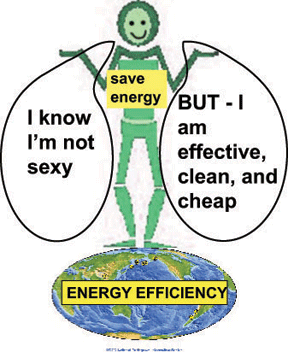
The (historical) role of bloated projections of future energy consumption has been to distract attention from energy efficiency improvements. These are important, if not the overriding, means through which the bloated energy projections are confounded. It is doubly true today when we desperately need to encourage energy efficiency through electrification. This will reduce emissions, increase energy security and create more demand for renewable energy.
A history of bloated energy projections
Bloated projections in the USA
Yes, we’ve been here before. The big energy corporations with their demands for massive investment in centralised power plant trade on the fact that the general public do not remember the past and the inaccuracy of the past claims of massive increases in energy consumption.
In the 1970s it became clear that the world could not survive unsustainable increases in energy production and pollution. This was, by the way, before climate change became a major issue even within the green movement. Amory Lovins led the way in charting a strategy based on decentralised energy consumption in a book called ‘Soft Energy Paths’. published in 1977. He noted how the US Government and its agencies were predicting a doubling of energy consumption in the year 2000 compared to 1975 (note: all energy not just electricity). They were predicting a massive increase in reliance on coal and nuclear power.
Lovins talked about what he called an alternative ‘soft energy path’ to this ‘hard energy path’. In his projection total energy projection increased by only around a third by 2000, and thereafter began to decline (pages 29 and 38 compared)1. He mused about how solar photovoltaics ‘could be used, to increase the range of functions now performed by electricity’ (page 143). Amazingly his projection of total US energy consumption by 2000 turned out to be broadly correct, even though many of his general policy rescriptions were not adopted. Energy consumption increased by only around a third compared to the confident predictions made by Government agencies and reports supported by big corporations.
Exaggeration of future energy demand is the usual practice of the Government. The US Government’s Energy Information Administration (EIA) publishes a lot of very useful data about energy. However its future energy projections are riddled with overestimations………………………………………..
I am focusing on the USA because I have more data for this discussion. The same general position holds in the UK………………………………
As we can see, overblown energy projections are now manifesting themselves in new ways. In Australia, the Australian Energy Market Operator (AEMO) is being criticised for imagining a future natural gas supply shortage. This is despite the fact that natural gas use in Australia is declining because of increasing electrification of services (See HERE).
How energy efficiency deflates bloated energy demand projections
Energy efficiency is the creeping destroyer of energy demand projections. I call it ‘creeping’ energy efficiency because this is often missed by people who are modeling projections of future energy. They simply do not know what improvements in energy efficiency there are going to be. But they do know how much is generated by power stations or supplied by gas. So they just do multiplication sums involving the supply-side data they do know about and they do not make radical enough assumptions about the development of energy efficiency.
Recently I have seen projections of the impact of AI on energy consumption derived by assuming a constant relationship between the amount of AI and data centres and energy consumption. They then multiply the expected expansion of AI by the current expected energy consumption of AI and arrive at some very large quantities. But this is stupid.
It is as if somebody in the year 1900 was projecting how much coal was going to be used in power stations in the future relying on the energy efficiency of a coal-fired power plant existing in 1900. This was around 10 percent (ie 10 percent of the coal’s energy was converted into electricity). Of course, this energy efficiency increased, ultimately to over 40 percent. So anybody doing these sums about future coal consumption would have gotten their answers absurdly wrong. Nowadays coal is on its way out, in the West, at least. But as will coal-fired power plants, the efficiencies of AI will improve. This may happen very rapidly.
Early 2025 saw the emergence of DeepSeek, an AI system that is radically cheaper than other US based systems. They, reportedly, have reduced energy consumption by around 75 per cent (see HERE), or perhaps even more according to some estimates (see HERE). Other companies will have to try to emulate their success since they will struggle to compete if they do not. According to an analysis of the company’s efforts:
‘DeepSeek’s research team disclosed that they used significantly fewer chips than their competitors to train their model. While major AI companies rely on supercomputers with 16,000+ chips, DeepSeek achieved comparable results using just 2,000. This strategic approach could mark a turning point in AI energy efficiency and resource allocation.’ (see HERE)
After the emergence of DeepSeek, much of the conversation on the energy demand from AI centres briefly paused. Then, the lessons of the example of DeepSeek apparently lost the cacophony of voices carried on from before in the vein of talking about ‘surging’ AI-related demand for energy.
So as was the case with coal-fired power plants, the efficiencies of AI will improve. This will happen very rapidly indeed if DeepSeek is anything to go by since the other AI companies will have to keep up with improving efficiencies and cutting costs if they are to keep up with the competition.
…………………. even in the case of the USA, it has all been much overblown. Certainly AI and data centers are unlikely to produce a substantial increase in energy demand in the UK. Indeed, AI is likely to induce declines in energy consumption, as I argue in an earlier post (see HERE).
Energy Efficient lighting
A good case study of how energy efficiency almost silently hacks away at energy is lighting…………………………………………………………………………….
Future energy efficiency
Often talk about likely increases in electricity consumption to power more energy-efficient technologies like EVs and heat pumps becomes confused with talk about surges in energy demand through data centres (which are overblown, as I argue). Heat pumps and EVs will reduce energy consumption overall – by pretty large amounts. Battery-electric technology will expand to all of transport (ultimately even including aircraft). Heat pumps will provide residential, commercial, and industrial space heating. The energy-saving potential is immense. Up to half of all energy consumption could be saved. Energy consumption has already stabilised in most western states – and has reduced in some such as the UK.
Conclusion
As we have seen, in the past clams of projected surges in energy demand have been undermined by greater energy efficiency. So why is it that demands for energy supply increases to meet overblown estimations of surges in energy demand receive so much more publicity than energy efficiency?
One major reason is that big corporations whose interests are concerned with building large power stations have concentrated political power. The lobby for greater energy efficiency has a much more diffuse base. But today the renewable energy lobbies and the energy efficiency lobbies should have a much keener interest in working together. To create a much bigger market for renewable electricity, electrification needs to be rapidly developed.
One problem that obscures this, and makes the energy supply lobby ignore energy efficiency, is that the electricity supply and natural gas supply interests are intertwined. AEMO in Australia feels the need to bang the drum for natural gas, even though electrification is more efficient and more sustainable than natural gas. The big energy corporations tend to sell both electricity and gas, and so they will try and promote both of them.
We need to combat the influence of the big corporations. We need to put our shoulders on the wheel in backing incentives and regulations to be shifted in favour of energy efficiency. Otherwise the energy transition will take much longer to happen.
https://davidtoke.substack.com/p/how-bloated-energy-supply-projections
No comments yet.
1 This month

of the week – Australians for War Powers Reform (AWPR)
To see nuclear-related stories in greater depth and intensity
 Antinuclear
Leave a comment