Proposed Queensland nuclear power plants risk contaminating water supplies in event of disaster, research finds
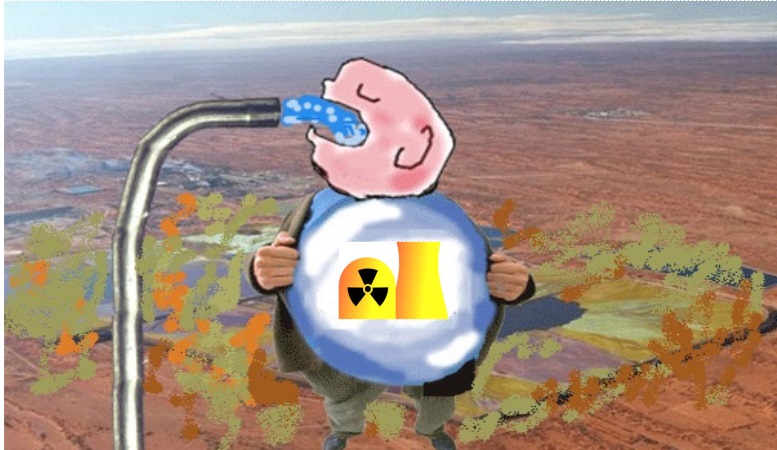
Queensland Conservation Council analysis finds reactors could strain water supplies even under normal operations.
Joe Hinchliffe, Guardian, 23 Mar 25
Proposed nuclear power plants in Queensland could strain water supplies, even under normal operations, and risk contaminating them in the event of a nuclear disaster, critics warn.
Analysis by the Queensland Conservation Council (QCC) has found that one of the two nuclear reactors proposed for the sunshine state, under the energy plan that the Coalition will take to the upcoming federal election, could require double the water currently used by the existing Callide coal-fired power station. The other, Tarong, could use 55% more water than its existing coal station.
Tarong’s primary water source is the Boondooma Dam, from which it is allocated 30,000 megalitres a year, and which also supplies drinking water for the nearby town of Kingaroy and irrigates the rich agricultural land along the Boyne River. But Tarong also has a pipeline to the Wivenhoe Dam, the main supply of water for Brisbane and Ipswich, which – due to substantial premiums – it only uses when Boondooma Dam levels are low.
The QCC report also raises concerns about additional water that would be required to prevent a meltdown in the event of disaster.
About 1.3m tonnes of seawater was required to cool Japan’s Fukushima nuclear reactors and prevent a complete meltdown in 2011 – water which has been stored on site for more than a decade and which began being gradually released into the ocean through an undersea tunnel about one kilometre long in 2023.
The report has been described as “flawed and highly politicised” by the Coalition.
But the director of QCCC, Dave Copeman, said there “simply is not enough water” available to run nuclear facilities in the proposed locations and “no plan for where to store irradiated water required for heat reduction in the case of an emergency”…………………………………….
The Callide coal-fired power plant has an annual water allocation of 20,000 ML from the Callide Dam, which is fed by the Awoonga Dam. As of Wednesday, Awoonga – which supplies the city of Gladstone’s water – was at 46% capacity, and Callide – which supplies drinking water to Biloela – was at 16.5% capacity. Callide Dam is also used to replenish aquifers that irrigate crops in the Callide Valley.
Callide would have to find an additional 27,000 ML of water to power the kind of power plants implied by the Coalition’s nuclear plan, the QCC report found – with Copeman saying there was simply “not enough water available”.
The renewable energy engineer for the QCC, Clare Silcock, who crunched the numbers on the report, said the Coalition’s nuclear proposal was scant on details. Instead she drew upon the Frontier Economic’s modelling that the opposition has relied upon to argue its nuclear vision for seven reactors across the country would be 44% cheaper than the government’s renewables-led plan.
That report models just over 100,000 gigawatt hours of nuclear electricity in the National Electricity Market (NEM) – which covers Queensland, New South Wales, the Australian Capital Territory, Victoria, Tasmania and South Australia – by 2050.
Six of the proposed nuclear sites are within the NEM, and so the QCC report assumes the generation would be spread equally across those sites.
Ian Lowe, emeritus professor at Griffith University’s school of environment and science, said that a rule of thumb was that a nuclear power station needed about 15% more water than a coal-fired power station of the same capacity.
“[But] if we were to build the amount of nuclear power proposed in the Frontier Economics report as part of the Coalition’s long-term approach for 2050 electricity, there would not be enough water for Tarong and Callide to provide the proposed share of power,” he said.
That meant that the Frontier report was “implicitly assuming that the nuclear power program would be expanded” beyond the sites already identified by the Coalition.
“So it would be reasonable to ask the question: if the much larger nuclear program proposed in the Frontier Economics report were to go ahead, where would all the extra power stations be sited?” Lowe said………………………………………..
The Coalition minister pointed to the Palo Verde Nuclear power plant in the Sonoran desert, one of the United State’s largest power producers and the only one in the world not near a large body of water as it uses treated wastewater from nearby cities.
Associate professor Martin Anda, with Murdoch University’s centre for water, energy and waste, said US comparisons were “not relevant to Australia”.
Anda said he was not “100% against nuclear” – and that it would “probably be a good solution” in the Arctic regions of the US and Europe, for example, where water abounds, renewable energy opportunities are more limited and the nuclear industry is established.
Australia, though, not only lacked for an abundance of water, but also the kind of regulatory frameworks and safeguards that could take years to establish.
https://www.theguardian.com/australia-news/2025/mar/23/proposed-queensland-nuclear-power-plants-risk-contaminating-water-supplies-in-event-of-disaster-research-finds-ntwnfb
No comments yet.
1 This month
15 April – Zoom –Nuclear Power is Not the Solution
Apr 15, 2026 01:00 AM in Canberra, Melbourne, Sydney

Join the International Physicians for the Prevention of Nuclear War (IPPNW) on Tuesday, April 14th for a timely webinar exploring the risks associated with nuclear power and challenging the myth that it offers a simple, safe, carbon-free solution to the climate crisis

of the week – Australians for War Powers Reform (AWPR)
To see nuclear-related stories in greater depth and intensity
 Antinuclear
Leave a comment