What if a Fukushima-sized nuclear accident happened near you?
On March 11 we commemorated 14 years since the terrible nuclear disaster in Fukushima. The impacts of this event are felt to this day with tens of thousands of people still displaced and tens of thousands of tonnes of contaminated liquid being routinely dumped in the Pacific.
Japan is a rich, technically sophisticated and modern country with high safety standards., In these ways it is comparable to Australia – except that unlike Australia Japan has decades of nuclear experience. If the Coalition’s nuclear power proposal were to go ahead, the risk of a nuclear accident is always present. It is simply not worth the risk.
The interactive map at nuclearplume.au uses a directo overlay of the Fukushima radiation plume, based on research originally peer reviewed and published by the European Geosciences Union. It shows the deposition of radioactive caesium-137 from the Fukushima disaster as of July 2011. The darker the shading, the higher the level of radioactive contamination and the higher the radiation exposures for people in those areas. At distances far from the Fukushima plant, radiation exposures were low but even low radiation doses can cause negative health impacts including fatal cancers and cardiovascular disease.
Not enough water available for Coalition’s nuclear proposal to run safely, report finds
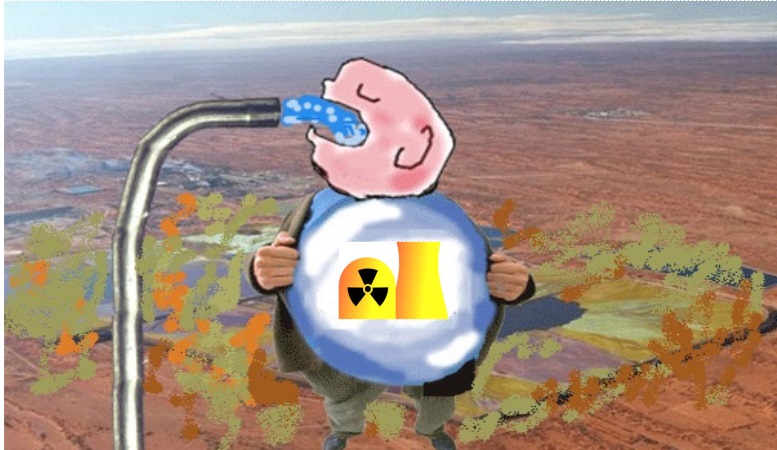
Analyst says nuclear is the ‘thirstiest’ energy source, as report commissioned by Liberal supporters throws doubt on plan’s feasibility.
Guardian, Petra Stock, 9 Apr 25
About 90% of the nuclear generation capacity the Coalition proposes to build would not have access to enough water to run safely, according to a report commissioned by Liberals Against Nuclear.
The report authored by Prof Andrew Campbell, a visiting fellow at the Australian National University, assessed nuclear energy’s water needs and the available supply across the seven sites where the Coalition has proposed new reactors.
Campbell found replacing coal generation with “off the shelf” nuclear technology as proposed by the Coalition would require 200 gigalitres of water annually.
He found half of the proposed nuclear capacity was already unfeasible given insufficient water, while a further 40% of the capacity would need to be curtailed during dry seasons.
“At Loy Yang in Victoria, Mt Piper in NSW and Muja in Western Australia, existing water availability is already so constrained that new nuclear power stations of the capacities proposed would lack sufficient cooling water to provide reliable power now, let alone for 80 years into the future, even if the majority of existing irrigation water entitlements were acquired,” the report said.
The volumes required at Callide in Queensland and Liddell in New South Wales would be so significant the demands could place pressure on other water users, including agriculture, industry, urban residents and the environment.
Dave Sweeney, a nuclear policy analyst at the Australian Conservation Foundation, described nuclear energy as the “thirstiest of the energy sources”, which required reliable access to large volumes of water for steam to drive a turbine as well as to cool the reactor core.
On a per-kilowatt hour basis, nuclear power used more water than coal, and “massively more than renewables”, he said……………………………………
Dr Mark Diesendorf, an expert in sustainable energy at the University of NSW, said nuclear power stations were typically larger than coal generators and used more water as a result. “In comparison, solar and wind don’t use any water during operation at all,” he said.
“Australia is the driest continent in the world, apart from Antarctica,” he noted. That meant water use was an important issue, alongside other concerns such as the proliferation of nuclear weapons, the difficulty and expense of managing radioactive waste and the danger of low-level radiation as well as accidents…………………………………………………………….
Andrew Gregson, the spokesperson for Liberals Against Nuclear and a former state director of the Liberal party in Tasmania, said the nuclear water grab threatened to “sever the trust between the Coalition and agricultural communities permanently”.
“We’ve spent decades building our reputation as champions of farmers’ rights – particularly water access. Why would we throw away that political capital for nuclear plants that most Australians don’t want?” https://www.theguardian.com/environment/2025/apr/09/not-enough-water-available-for-coalitions-nuclear-proposal-to-run-safely-report-finds?fbclid=IwY2xjawJj08VleHRuA2FlbQIxMQABHsr4gCWoCyIIPdf_Pd5L89YMaJnymCsNl3F3wcT-YgT7oP1C5Bl9U_fpxYsf_aem_RVvJw4Qzs8w3lNw7HHFP9g
1 This month

of the week – Australians for War Powers Reform (AWPR)
To see nuclear-related stories in greater depth and intensity
 Antinuclear