Dutton’s nuclear push will cost renewable jobs
by Charlie Joyce, https://australiainstitute.org.au/post/duttons-nuclear-push-will-cost-renewable-jobs/
As Australia’s federal election campaign has finally begun, opposition leader Peter Dutton’s proposal to spend hundreds of billions in public money to build seven nuclear power plants across the country has been carefully scrutinized.
The technological unfeasibility, staggering cost, and scant detail of the Coalition’s nuclear proposal have brought criticism from federal and state governments, the CSIRO, the Climate Council, the Electrical Trade Union (ETU), the Climate Change Authority, the Australia Institute, and independent energy experts.
The CSIRO, among others, has refuted the Coalition’s claim that nuclear will be cheaper than renewables; instead, they have shown the energy produced by Australian reactors would cost approximately eight times more than the same amount of energy produced by renewables. If this cost is passed on to consumers, the average household would pay $590 per year more on their power bill. Unsurprisingly, Australia Institute polling has found that fewer than one in twenty Australians (4%) are prepared to pay this nuclear premium.
The cost alone should be enough to bury this nuclear proposal. But it is also important to recognise how the Coalition’s plan will impact – and fail – workers.
False promises
The Coalition has proposed that large nuclear reactors would be built on the sites of five operational or recently decommissioned coal fired power stations: Liddell and Mount Piper in New South Wales, Tarong and Callide in Queensland, and Loy Yang in Victoria. In doing so, the Coalition has promised that nuclear energy would be a source of stable and plentiful work for the communities where coal-fired power plants are phasing down.
This is a false promise. Six coal fired power stations have already closed in the past decade, with 90% of Australia’s remaining coal-fired power stations set to close in the next decade. These communities are already undergoing structural adjustment, and they need new sources of employment now. But this is not what the Coalition’s plan delivers. The Coalition outlines that the first two nuclear reactors would not come online until the mid-2030s – more than a decade from now – while the remainder would be completed by 2050.
And energy and technology experts agree that even this timeline is impossible. On average, a nuclear reactor takes 9.4 years just to build in countries with established and capable nuclear industries. Former Australian Chief Scientist Alan Finkel has estimated that it would take until the mid-2040s at the earliest for Australia to build an operational nuclear reactor. Moreover, analysis from the Institute for Energy, Economic & Financial Analysis (IEEFA) has found that, in economies comparable to Australia’s, every single nuclear reactor project experienced multi-year delays and cost blowouts of up to three and a half times over budget. It is hard to see how Australia, which lacks the experienced workforce, training and research base, or regulatory framework, would buck this trend.
Lost jobs
While the Coalition’s nuclear plan would not bring jobs to the communities that need them, it might have the real effect of depressing investment in renewables.
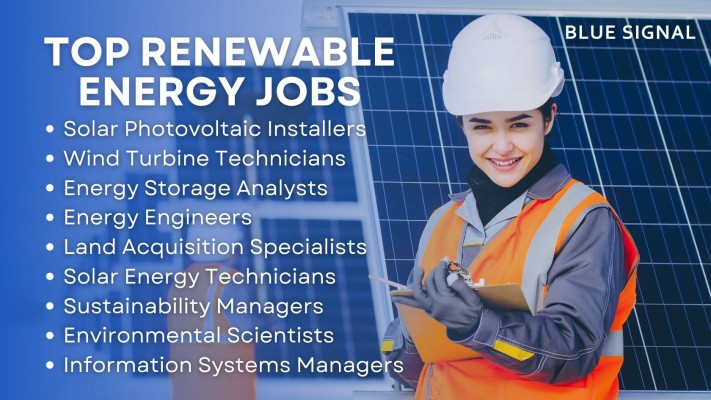
Renewable energy already generates approximately 40% of Australia’s energy and is by far the cheapest form of electricity. Renewable energy industries already account for the employment of tens of thousands of workers, and Jobs and Skills Australia estimates that approximately 240,000 new workers will be required in industries associated with clean energy by 2030.
But this requires ongoing and expanding investment in renewables, which the Coalition’s nuclear policy is likely to derail. The Clean Energy Council has estimated that by capping renewable energy to 54% of total use (as the Coalition’s modelling has assumed), 29GW of renewable energy generation projects would not be built – squandering an expected 37,700 full-time-equivalent construction jobs and 5,000 ongoing jobs in operations and maintenance. By limiting renewables investment, prolonging fossil fuel usage, and diverting investment towards nuclear energy, the full employment opportunities of the renewable energy transition are lost.
Scarce and dangerous work
If the Coalition’s nuclear plan does come to fruition it will hardly create any ongoing jobs for the communities that have undergone structural readjustment. According to analysis from the Nuclear Energy Agency, while the peak period of construction of the average 1GW nuclear power plant can demand up to 3,500 workers, ongoing operations and maintenance will only require about 400 workers – with only a quarter of these being onsite blue-collar jobs that might provide work for the people who will have lost jobs with the closure of coal-fired power stations. Most jobs will be in administration, regulatory compliance, energy, marketing, sales, science and emergency personnel – and many of them are likely to be located away from the nuclear facility itself.
Disturbingly, any jobs on-site may put the health of workers at risk. Recent analysis of multiple studies of the health impacts of nuclear power plant employment across multiple countries found that workers have a significantly higher risk of mesothelioma and circulatory disease due to exposure to radiation. Nearby residents also exhibit a significantly higher risks of cancer, with children under the age of five at particular risk. And this does not even factor in the risk of sudden plant failure and reactor meltdown on workers and communities – a risk sharpened by the Coalition’s plan for these reactors to be built on geological fault lines with heightened earthquake risk.
Australian workers have much to gain from the renewable energy transition, including cheaper power, new clean technology industries, and hundreds of thousands of new jobs. The Coalition’s nuclear plan only brings false promises, lost jobs, and – if the plan comes to fruition – few jobs and potentially dangerous work.
Coalition’s nuclear power pitch falling flat with some voters, Vote Compass data suggests

ABC By Vote Compass reporter Isabella Higgins and Claudia Williams, Topic:Australian Federal Elections, Sat 12 Apr 25 [excellent tables]
The Coalition’s pitch for nuclear power in Australia appears to be struggling for support among some key voters, as the nation prepares to vote on its energy future.
New data from the ABC’s Vote Compass survey shows respondents are divided on nuclear energy, while support for climate change action appears to have softened.
About 47 per cent of ABC Vote Compass respondents said they strongly disagreed or somewhat disagreed with building nuclear power plants, while 38 per cent were somewhat or strongly supportive.
Perth local Gabriel Maddock said she’s made up her mind on nuclear energy, and it is a decision she is making with her young children in mind.
“I don’t think it will be better for the environment, it’s going to be hugely expensive, and I think there’s serious safety risks,” the 35-year-old told the ABC.
ABC Vote Compass found views towards nuclear were split along party lines, while men were more supportive, and those over 65 were the age group most likely to be unsupportive.
According to Vote Compass data, 29 per cent of males strongly disagree with the plan while 41.9 per cent of females disagree.
However, the data shows strong support from those who intend to vote for the Coalition with 44 per cent saying they agree Australia should build nuclear power plants.
This contrasts with those who plan to vote for independents, Labor and the Greens — with just 7, 5, and 4 per cent respectively in strong agreement.
This data comes from a sample of more than 270,000 and has been demographically weighted…………………………………………………………………………………………………
The Coalition is promising by 2050 Australia will get 38 per cent of its power from nuclear energy, 54 per cent from renewables, and 8 per cent from storage and gas.
Some experts have questioned the projected cost and timelines of the Coalition’s nuclear plan.
Meanwhile, Labor plans to have a grid almost totally powered by renewable energy, with the target of reaching 82 per cent of renewable energy by 2030 and fully renewable by 2050.
Ms Maddock is concerned that a switch to nuclear power would lead to more carbon emissions in the shorter term.
“From a climate perspective, it seems like it’s solving one environmental issue with another, because nuclear waste is a very difficult thing to deal with,” she said.
“Why would we do that when we could continue developing our renewable power, something Australia is really in a position to be a leader in.”……………………………………………………………………………
Vote Compass is an educational tool designed to promote electoral literacy and civic engagement. While not a conventional public opinion poll, Vote Compass responses can be analysed using statistical methods similar to those used in polling to try to adjust for sampling bias.
Responses have been weighted by gender, age, education, language, religion, place of residence and past vote to account for the selection effects of the sample, enabling us to make statistical inferences about the Australian population.
1 This month

of the week – Australians for War Powers Reform (AWPR)
To see nuclear-related stories in greater depth and intensity
 Antinuclear