Dutton’s ‘independent’ nuclear modelling was created by a pro-nuclear think tank
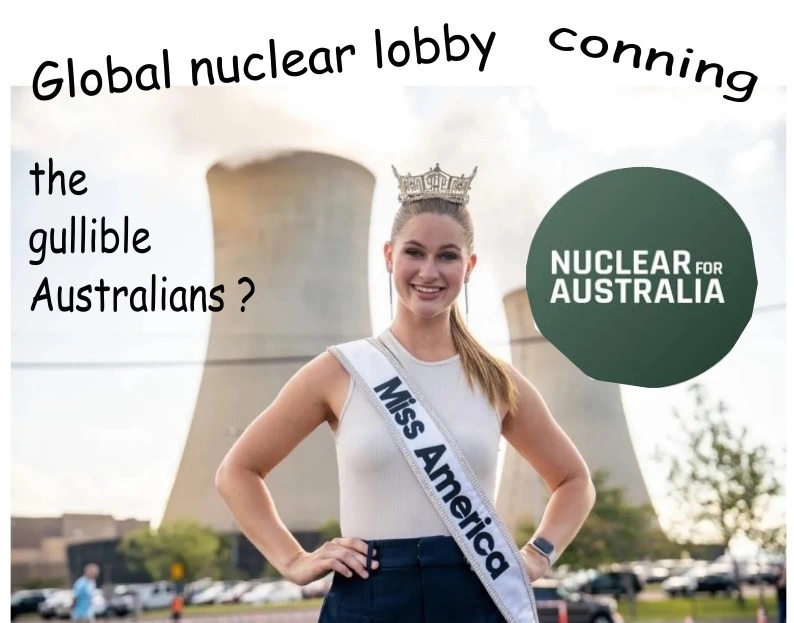
The Coalition has been plugging its nuclear modelling over the course of the election campaign — but was the advice actually as independent as it claims?
Crikey, Daanyal Saeed, May 2, 2025
The Coalition’s much-vaunted nuclear modelling was — despite Opposition Leader Peter Dutton’s insistence it was “independent” analysis — created by a pro-nuclear think tank that has a cosy relationship with Nuclear for Australia, a lobby group with its own links to the Liberal Party.
Frontier Economics was the economic advisory firm responsible for the Coalition’s nuclear modelling and projected that the policy would cost an estimated $331 billion and involve the commissioning of seven nuclear reactors.
While Dutton said that Frontier “refused to take any money” when asked to model the plan by the Coalition, and Frontier in the report states that it was funded and directed solely by Frontier Economics, the issue of whether the work constitutes a “gift”, and the actual independence of the work, is still live.
In January this year, Frontier managing director Danny Price gave an extended interview to pro-nuclear lobby group Nuclear for Australia, where Frontier is described as a “non-partisan” and “pro-nuclear” organisation.
Nuclear for Australia has recently been reminded by the Australian Electoral Commission (AEC) of its legal obligations to authorise its electoral material after running thousands of dollars worth of online advertising in support of policies promoted by the Coalition. Teenage founder Will Shackel has previously denied that the Liberal Party is backing the group, despite a number of reported links to the organisation.
Crikey contacted the Coalition, Frontier Economics and the AEC about the status of the work as a gift and whether the work had been disclosed.
The AEC said it had nothing to add to the answers given in front of Senate estimates in late February, where Greens Senator for Queensland Larissa Waters raised the issue of whether the work constituted a donation to the Liberal Party’s campaign in the finance and public administration legislation committee.
“Disclosures for the 2024-25 financial year will be published in February,” a spokesperson for the commission said.
In estimates, Waters asked the acting electoral commissioner Jeff Pope whether the advice constituted an “in-kind” donation of the type normally required to be disclosed by political parties to the Electoral Commission.
Pope said that “subject to the circumstances, [the modelling] may well be a gift that needs to be disclosed at the appropriate time”, but stressed that it “really does depend on the circumstances, what the legal advice or advice is being procured for and who has obtained the advice”.
“A political party has to disclose all gifts,” he said.
Neither the Coalition nor Frontier Economics responded for comment.
The specifics of the modelling (in particular the assumptions it rests on) have been criticised since it was released in December 2024. However, the issue of the actual independence of the advice has not been raised, except by Senator Waters in front of Senate estimates.
Waters told Crikey she would be “very interested to know if the LNP has declared this modelling, from a firm with links to a pro-nuclear lobby, as an in-kind gift”.
“However, the lag in donation disclosure means we won’t know until next year.
“If this modelling is a Coalition policy costing, it should have been done by the independent Parliamentary Budget Office,” she said…………………. https://www.crikey.com.au/2025/05/02/peter-dutton-nuclear-power-modelling-election-2025-coalition/
Australians’ support for nuclear power ban rises despite Dutton’s best efforts to sell atomic future, survey finds

Only one in two Liberal party voters are in favour of lifting the national ban, according to the National Climate Action Survey.
Graham Readfearn Environment and climate correspondent. https://www.theguardian.com/australia-news/2025/may/01/australians-support-for-nuclear-power-ban-rises-despite-duttons-best-efforts-to-sell-atomic-future-survey-finds?fbclid=IwY2xjawKCE0ZleHRuA2FlbQIxMQBicmlkETFuSzNVZjdBUVlpaW9NUG41AR7HpN9FsEa4TXvZNvDnumjh3yUamClCltX2hRWi5NHKnYMed5Ju6qvo8drWaQ_aem_ewH1Tx1SHOHJtlwOSZIC2gThu 1 May 2025
Support for Australia’s ongoing ban on nuclear energy has risen sharply since Peter Dutton made the issue a central plank of Coalition energy policy, according to the country’s largest independent survey on climate change and energy.
The survey also found fewer people thought any benefits of nuclear power outweighed the risks compared with the previous year.
Even among people intending to vote Liberal, support for nuclear power was not overwhelming, with only 53% in favour of the party’s intention to lift the national ban if elected.
“These results clearly show that for any political party, proposing nuclear as a solution to Australia’s energy challenges is a very difficult task,” said Assoc Prof Kerrie Foxwell-Norton of Griffith University
Foxwell-Norton said the survey showed “the logic of investment and risk in nuclear power is not passing most Australians’ pub tests”.
The National Climate Action Survey, in its fourth year, is carried out by Griffith University and Monash University. The annual survey will be released in full in September and includes both new respondents and individuals whose views are tracked over time.
About new 2,500 respondents were surveyed in the last quarter of 2023 and again in 2024. The Guardian has previously reported other results from the survey, which showed Australians view solar and wind power more favourably than nuclear.
In 2023, the survey showed 51% of people supported Australia’s ban on nuclear energy. But in 2024 that rose to 59%.
That increase in support coincided with Dutton’s campaign to end the national ban on nuclear energy and build reactors at seven sites around the country.
More than a third of people intending to vote for the Liberal party had either an unfavourable view on nuclear electricity or no view at all, the survey found.
“That’s a lot of supporters who are not backing [the Liberal party’s] central energy policy,” said Foxwell-Norton.https://interactive.guim.co.uk/datawrapper/embed/Pxhwl/2/?dark=false
A majority of Nationals voters (54%) supported keeping the national nuclear energy ban. Only 18% of Labor voters opposed maintaining the ban.
When asked if they held any concerns about personally living within 50km of a proposed nuclear plant, 22% of Liberal voters said they were “extremely concerned” while 22% had no concerns at all.https://interactive.guim.co.uk/datawrapper/embed/pwiWR/1/?dark=false
Elsewhere in the survey, 81% of people supported assisting coal communities in the transition away from fossil fuels, and 84% would back financial incentives for rural landowners to host clean energy.
Foxwell-Norton said: “The oft cited divide between urban centre and regional and rural areas where these coalmines are located is politically expedient, wedge politics. It is politics that overlooks Australians and their relationship between places.
“Regional voters are more supportive of climate action because it is literally their everyday experience.”
This story was amended on 1 May 2025. An earlier version incorrectly said 28% of Liberal voters said they were “extremely concerned”, while 9% had no concerns at all, when asked if they held any concerns about personally living within 50km of a proposed nuclear plant. The correct numbers are 22% and 22% respectively.
Australia’s arms escalation is in the interest of no one but death
Independent Australia, By Bronwyn Kelly | 2 May 2025,
Instead of arguing about whether Australia needs more submarines, we would be better off working towards a world where no one needs them. Bronwyn Kelly reports.
THOSE WHO HAVE HAD the patience to listen to the full day of speeches and questions at the recent Sovereignty and Security forum held at the National Press Club have been given a unique insight.
The event, organised by former Prime Minister Malcolm Turnbull, shed light on what happens when members of an elite defence establishment attempt to set Australia’s strategic direction. They jockey for money for an industry of death.
Usually, they jockey quietly, but this particular forum allowed several to display how much of their thinking is motivated by money and is therefore fixated on militarism – as though peace and disarmament were not a prospect to be contemplated at all in Canberra.
Turnbull kicked off the day’s discussion by asserting that Trump’s America is now a country whose values are “aligned to a might is right world” and that, as such, it no longer shares Australia’s values. He made little, if any, reference to what Australia’s national values might be. Presumably, we were simply meant to infer that Australia should no longer aspire to emulate America, at least in its “might is right” approach to economic and military strategy.
As the day moved on, no one demurred from this description of America. They took it largely as a fact and mostly as one that would be long-lived rather than short-lived. There was general agreement that America has changed with the rise of Trump and that this has implications for our choices in defence, diplomacy, trade and international relations. Accordingly, they set about the laudable exercise of discussing how Australia should “recalibrate”.
But it was those with a vested and sometimes even nakedly pecuniary interest in defence industries that proved themselves to be among the most unwilling in the room to recalibrate. Instead they used the day wherever they could to argue for massive expansion of defence industries and weapons exports and also for increasing what they called a “deterrent” capability – shorthand for building a defence force and armaments at such a large scale that any adversary, no matter how much bigger their military capability might be than Australia’s, would calculate that an attack on Australia would not be worth the cost. At least that’s the theory.
Someone should tell them that deterrence doesn’t actually work when there is a large and insurmountable imbalance of power as there is in the case of Australia vis-a-vis China, Russia and the US. It’s a lot of money for nothing in our case, and our adoption of deterrence as an overriding posture in the most recent National Defence Strategy simply makes matters worse by forcing others to distrust us more and arm themselves. But that’s another article. Suffice to say here that those championing more investment in defence seemed unable to contemplate anything other than arms escalation.
Perhaps the most disheartening feature of the discussion, however, was that at no time did those advocating for arms escalation ask whether expansion of defence and defence industries was in Australia’s interest or show how it would be. They bypassed the questions of what is in our interest and what Australians might value and be prepared to defend militarily, and instead jumped straight to the issue of how much more funding they needed for the defence industry. The clamour for a greater share of GDP to be spent on defence activities swamped voices such as those of former foreign minister Gareth Evans and former chief of defence Chris Barrie — both of whom attempted to argue that the whole debate should be reframed so that we decide what is in our interest first, before we design a strategy to protect it in defence and foreign policy………………………………………………………………………….
At the very least Australia’s alliance with the U.S., especially if it continues to take a military form, is very likely to defeat other attempts to engage more positively with the rest of the world and particularly with Asia. The need for greater engagement with Asia was something that most speakers agreed on at the forum – and yet the prevailing impression was that most could not bring themselves to think of abandoning the alliance, even as an option.
This reluctance begs the question of how far the prevailing regime in America diverges from our “values” before we say it’s behaving in a manner that is so contrary to our interests that we must detach ourselves from it? How many more regime changes, brutal incursions and even genocides fostered by the U.S. will it take? How much more destabilisation of other economies? How much lower should America sink into autocratic behaviours, threats to allies and obliteration of human rights within its own territory, before we detach ourselves? How much more ugly must America become?
…………………….Given that Australians don’t want their economy and well-being disrupted by war, they’d be far more likely to want to concentrate on strategies that reduce or prevent the need for military expenditures. This is not what those attached to defence industries want to hear, but if they are asking Australians to sacrifice all their well-being and place themselves unnecessarily at dire risk of attack, they should be prepared for justifiable pushback.
The next time Mr Turnbull hosts a forum for these elites, everyone will be better off if he frames the occasion so that they stop arguing about whether we need submarines and start working towards a world where no one needs them. Arms escalation is in the interest of no one but the merchants of death. So if elites are invited again to ponder a “recalibration”, a plan for eventual disarmament should be acknowledged as a necessary permanent feature of a viable defence strategy. Nothing else is in our interest.
Dr Bronwyn Kelly is the Founder of Australian Community Futures Planning (ACFP). She specialises in long-term integrated planning for Australia’s society, environment, economy and democracy, and in systems of governance for nation-states.
Aboriginal group from Port Augusta joins experts in explaining the impact of the nuclear industry

Philip White, 1 May 25
I’ve just returned from a powerful community meeting where a group of Aboriginal people came down from Port Augusta to tell people in the marginal SA electorate of Sturt about their opposition to the Coalition’s plans to build a nuclear reactor in their town.
Clinton (Stano) Dadleh, Aunty June Lennon, Aunty Vivienne McKenzie, Uncle Lindsay Thomas, Glen Wingfield (via Zoom) and Rhenee Lester gave moving accounts of their lived experience of Port Augusta and the impact of the nuclear industry on their families, while Dr Kate Wylie (Doctors for the Environment) and Dr Jim Green (Friends of the Earth) critiqued the Coalition’s nuclear plan in detail.
For those who couldn’t make it, the meeting was live streamed and can now be viewed on the following link:
The meeting begins at the 29 minute mark of the recording and the presentations begin at the 37 minute mark.
Why Military Neutrality is a Must for Australia
Embrace military neutrality. Australia faces a choice: join declining empires or lead in peace. Discover why neutrality is the way forward in a multipolar world.
April 30, 2025 , By Denis Hay, Australian Independent Media
Introduction: A Nation at the Crossroads
Picture this: It’s 2030. Australian submarines sail under U.S. command in the Taiwan Strait. Canberra receives intelligence briefings written in Washington. The media frames any dissent as disloyalty. Ordinary Australians ask: “How did we get dragged into another war we never voted for?”
Rewind to 2025: our foreign policy is shaped not by peace or diplomacy, but by deals like AUKUS, designed to entrench Australia within the military-industrial interests of a declining superpower. Meanwhile, the world is shifting. BRICS is rising. The U.S. is losing credibility. And Australia must decide: Will we continue to act as a pawn, or will we embrace military neutrality and sovereignty through peace?
The Global Realignment: The World Beyond the U.S.
U.S. Decline and the Rise of Multipolarity
In 2015, analysts inside global financial circles began quietly withdrawing from the U.S. The reasons were clear:
• America’s fertility rate had fallen to 1.8 (below replacement).
• Civil unrest, mass shootings, and institutional collapse painted a picture of chaos.
• Trust in government and media plummeted (Edelman Trust Barometer, 2021).
Meanwhile, the BRICS+ bloc was expanding rapidly. By 2024, Saudi Arabia, UAE, and Iran had joined, and member nations began transacting in local currencies. The world was no longer unipolar—and Australia must adapt.
The BRICS+ Bloc and the Global South
The global South is now:
• Home to the largest youth populations (India, Nigeria, Indonesia)
• Receiving billions in tech investment (e.g., Microsoft’s $1B in African AI infrastructure)
• Transitioning to local currency trade
Australia can no longer afford to cling to outdated alliances that tie us to declining powers.
Why Australia Must Reassess Its Strategic Alliances
The Cost of U.S. Dependence
Our military is deeply entwined with U.S. command structures:
• AUKUS submarine deal: $368 billion to be tied into U.S. war planning
• Hosting U.S. troops, ships, and bombers in the Northern Territory
The Failure of U.S. Militarism
• Iraq and Afghanistan: trillions spent, no peace achieved
• Ukraine: Proxy war fuelled by NATO expansion and U.S. arms interests
Quote from the video: “America is being phased out… not because they hate it, but because it’s obsolete.”
What the OCGFC Knows – And Why We Should Listen
The Owners and Controllers of Global Financial Capital (OCGFC) have already moved on from America. They’re investing in the South. Australia should follow their strategy—but for peace, not profit.
The Case for Military Neutrality
What Is Military Neutrality?
Military neutrality means:
• No participation in military blocs
• No hosting of foreign military bases
• No involvement in foreign wars
Example of military neutrality: Switzerland has remained neutral for over 200 years. Reference: https://worldpopulationreview.com/country-rankings/neutral-countries
Benefits of Military Neutrality for Australia
• Enhanced sovereignty: Canberra decides, not Washington
• Improved regional trust
• Reduced risk of becoming a target in U.S.-China conflict
Strategic Independence……………………………………………………………………………….
Australia is now home to:
The Pine Gap spy base, integral to U.S. drone warfare and nuclear targeting
Rotational deployments of U.S. marines and bombers in the Northern Territory
Massive investment under AUKUS, where Australia receives nuclear-powered submarines it will not command independently
Growing integration into U.S. war planning around China and the South China Sea
The Quiet Absorption of Sovereignty
These developments raise serious questions:
If we cannot deny access to foreign troops on our soil, are we still sovereign?
If our military relies on foreign command systems, do we retain independent defence?
This is not a conspiracy theory. This is creeping dependency. Sovereignty is rarely lost overnight. It is eroded decision by decision, treaty by treaty, base by base—until there is nothing left to reclaim.
The Choice Before Us
We must confront an uncomfortable possibility: Australia is at risk of becoming a de facto 51st state – not through constitutional change, but through military submission.
The warning signs are clear. If we continue down this path unquestionably, we may find ourselves unable to make decisions without a nod from Washington.
Neutrality offers a way out. …………………………………………………………………………………………………… https://theaimn.net/why-military-neutrality-is-a-must-for-australia/
Traditional owner says “over my dead body” to the Coalition’s nuclear policy
The scars of Australia’s nuclear past stain Coalition proposal for First Nations voters
The Age, By the Indigenous affairs team’s Kirstie Wellauer, Mon 28 Apr 25
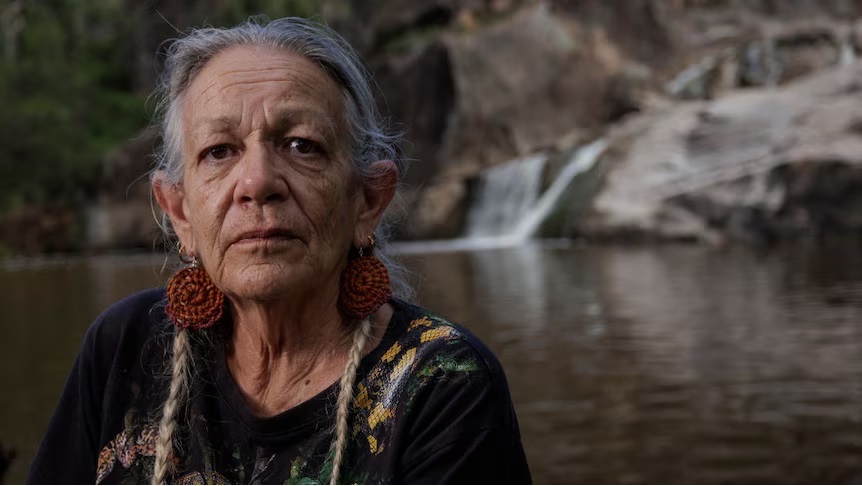
In the 70s, Aunty Janine Smith protested against nuclear power on foreign shores.
“The contamination and the consequences of the bombings in Hiroshima, and then the Vietnam War and chemical warfare. There were always meltdowns somewhere,” she said.
“You know, it just reaffirmed my opinion of the safety of [nuclear] and the effectiveness of it.”
Today she is prepared to once again fight that battle, but now it’s at home on her own traditional lands — the site of one of the Coalition’s proposed nuclear power plants.
The Bujiebara traditional owner is worried the proposed plant at Tarong, north-west of Brisbane, could impact on culturally significant sites that lie only 4 kilometres away.
“Bujiebara were makers of stone axes and there is a large sandstone rock in the Tarong precinct that was used to grind the edge of these axes, that is our culturally significant site.”
She also holds concerns about the lack of water resources in the town given nuclear plants require more water than any other power source aside from hydropower.
“Because of the water limitations here, we just can’t. We haven’t got access to that kind of water,” she said.
“There is not enough water in the South Burnett to even supply all the towns with water.”
At the recent leaders’ debate hosted by the ABC, Peter Dutton insisted there was enough water for all seven of the proposed nuclear plants.
This claim was contradicted by one of his own senior frontbenchers, Nationals MP Darren Chester, who said the question of water requirements needed further scientific assessment that could take up to two and a half years.
Queensland Premier David Crisafulli is opposed to the Coalition’s nuclear policy. Mr Dutton will also need to overturn a federal parliament ban on nuclear power if he wins the election.
Aunty Janine Smith said she won’t ever give consent for nuclear power on her country.
“They want to try nuclear, then they’ll have to go over my dead body.”
The scars of Maralinga
For many First Nations people, anti-nuclear sentiment runs deep.
Passed down generation to generation, the enduring impacts of nuclear testing in the South Australian outback are front of mind for second-generation survivor Karina Lester this election.
Her late father, Yami Lester, was just 10 years old when he watched the British government drop an atomic bomb on his traditional country in 1953.
“Dad’s witness account [was] of the black mist rolling, and the ground shaking over his Walyatjatjara country,” said the Yankunytjatjara-Anangu woman.
“Four years after that test, my late father’s own world turned into complete darkness.”
Just a teenager, he went blind.
But loss of eyesight wasn’t the only impact worn by the Anangu people after the radioactive dust settled.
“Anangu died after those tests. Anangu still feel the effects of it through autoimmune diseases, through health issues, respiratory skin rashes, eye infections. The list goes on,” she said.
The Anangu people were not adequately warned about the test’s dangers.
It has taken decades and millions of dollars to clean up the radioactive fallout from the nuclear bombs, and tests show the contamination of the land remains highly active.
Ms Lester is now an ambassador for the International Campaign to Abolish Nuclear Weapons.
As the proposed rollout of nuclear power stations remains a cornerstone of the Coalition’s energy policy this election, she wants Australians to remember the lived experiences of her people when they head to the polls.
“We have the heavy burden of having to remind fellow Australians that this is not the way to go for nuclear power. We are standing up for our people and country.”
Proposed nuclear sites on Aboriginal land
The Coalition’s proposal has identified seven locations around the country for nuclear plants, all on the sites of current or former coal-fired power plants……………………………………………………………………………
Concerns for storage of nuclear waste
For both Karina Lester and Janine Smith, the issue of where the nuclear waste from these seven sites would be stored is also of major concern.
Under the Coalition’s plan, the radioactive waste generated by the power plants would be stored on site. At the end of each plant’s life the waste would be moved to a permanent home, yet to be established.
Over the decades, successive governments have attempted to establish a national nuclear waste repository — all have failed.
And part of that failing has been over a lack of consultation with relevant traditional owners.
Nuclear support falls since becoming Coalition policy

By Caitlin Fitzsimmons, https://www.smh.com.au/politics/federal/federal-election-2025-live-updates-dutton-pledges-40b-debt-cut-albanese-campaigns-in-perth-20250430-p5lvjh.html?post=p58kxt#p58kxtx
Public support for nuclear power has fallen since Dutton announced his nuclear policy in 2024.
That’s according to the latest National Climate Action Survey, an annual poll of 4000 people run by Monash and Griffith universities.
Key initial findings include:
The proportion of Australians who want to maintain the existing ban on nuclear power rose from 51 per cent in 2023 to 59 per cent in 2024. Those who wanted to ditch the ban fell from 34 to 30 per cent.
Two out of three women want to keep the ban on nuclear, compared with one in two men. Twice as many men as women want to lift the ban – 35.9 versus 18 per cent.
Those who said the risks of nuclear power far outweighed the benefits rose from 21.9 to 26 per cent, and those who said the benefits far outweighed the risks fell from 24.5 to 22 per cent.
Only 11 per cent of respondents would be comfortable with a nuclear power station nearby, and 54.8 per cent would be very or extremely concerned about it. Even fewer (10.8 per cent) said they would be happy to have a coal mine nearby. However, more than half had no concerns about nearby wind farms and almost two-thirds were fine with solar farms.
The survey asks a wide range of questions to gauge attitudes to climate change, extreme weather and different energy options. The full results for 2024 will be out in September.
The methodology is the same each year to ensure the results are comparable over time.
1 This month
15 April – Zoom –Nuclear Power is Not the Solution
Apr 15, 2026 01:00 AM in Canberra, Melbourne, Sydney

Join the International Physicians for the Prevention of Nuclear War (IPPNW) on Tuesday, April 14th for a timely webinar exploring the risks associated with nuclear power and challenging the myth that it offers a simple, safe, carbon-free solution to the climate crisis

of the week – Australians for War Powers Reform (AWPR)
To see nuclear-related stories in greater depth and intensity
 Antinuclear