Nuclear free voices have an important role to play in the days following the federal election

Dave Sweeney, 3 May 25
We need to share the message that the Australian people have clearly rejected the nuclear option and that as a nation it’s time to stop playing politics over nuclear distractions and delays and get on with the clean energy transition, effective climate action and building an energy future that is renewable, not radioactive.
Key messages:
- The Australian people want swift and effective action to address climate and energy challenges. They have rejected domestic nuclear power and that door is now not just closed – it is welded shut.
- Australian’s understand that nuclear is too slow, too risky and too costly – in every way – and have said no. Nuclear is not fit for purpose and is now off the table in Australia.
- The economic, environmental and community advantages of renewables have been embraced by Australians. Today we are nearly halfway there with around 45% of Australia’s electricity coming from renewables. Our job – and the governments mandate – is to now advance the renewable energy future speedily, sensibly and sustainably.
Note * the federal prohibitionS on domestic nuclear energy are outlined in Section 140A of the Environment Protection and Biodiversity Conservation Act 1999 (EPBC) and Section 10 of the Australian Radiation Protection and Nuclear Safety Act 1999.
Nuclear power is shaping up as an election loser, and the Murdoch media is not happy

RenewEconomy, Jim Green, May 2, 2025
Whatever happens on election day, it’s certain that the Coalition’s promotion of nuclear power will cost it votes. It will probably cost the Coalition seats. It may cost the Coalition the election. And if the Coalition does unexpectedly well, it will be despite and not because of the nuclear policy.
The Murdoch press released polling results on April 19 showing that Labor’s campaign against the Coalition’s nuclear power policy is “driving a collapse in the Coalition’s primary vote in marginal seats across Australia.”
The RedBridge-Accent poll of 20 marginal seats found that Labor’s opposition to the Coalition’s nuclear plan is “a clear winner with a ‘net agree’ rating of 43.” Fifty-six per cent of poll respondents agreed with Labor’s claim that the Coalition’s plan will cost $600 billion and require spending cuts to pay for it, while only 13 per cent disagreed.
The Murdoch press reported on May 1 that 41 per cent of 1011 respondents to a Redbridge-Accent national poll ranked concerns that Peter Dutton’s nuclear plan will cost $600 billion and will require cuts to pay for it among their top five reasons for deciding to oppose a particular party.
Only one issue topped nuclear power as a vote-changing turn-off. The article was titled ‘Where the Libs went off track: Inside the Coalition’s disastrous campaign’ and it ran alongside another titled ‘Coalition nuked by nervous electors.’
In March 2024, James Campbell warned that the Coalition’s nuclear power policy is “stark raving mad.” In the same month, Tony Barry described the nuclear policy as “the longest suicide note in Australian political history.”
Meanwhile, the Coalition’s attempt to go quiet on its unpopular nuclear policy has only drawn further attention to it.
Costings
The Coalition’s decision not to release nuclear costings until December left a void which Labor filled with the $600 billion figure. Furious responses to the $600 billion figure have only served to focus attention on the expansive cost of Dutton’s taxpayer-funded nuclear frolic.
Just in the past couple of days, the Sky News Youtube channel has featured these videos:
‘Don’t listen to their lies’: Barnaby Joyce slams Labor’s nuclear costings
Labor’s $600 billion anti-nuclear lie given them lots of ‘traction’ in the election
‘Absolute balderdash’: Labor clings to ‘fictitious numbers’ of Coalition’s nuclear pricings
Labor’s anti-nuclear and power bill lies a ‘low point’ for Australia
A frustrated Barnaby Joyce told Andrew Bolt on Sky News:
“What they’ve done, ladies and gentlemen, is they’ve come up with this fantastic number. … The nuclear power stations are going to cost $600 billion. It’s like Dr Evil off one of those movies, you know coming out and saying ‘Oh you know 600 billion dollars’. BS. What they did, ladies and gentlemen, it’s like they got a turbo-charged Porsche and multiplied it by seven and said that is the price of every car in Australia.”
None of which comports with reality. Multiply the Coalition’s nuclear cost estimate by 2.5 and you’ll get the actual cost of recent reactor construction projects in the US, the UK and France. The Coalition assumes that reactors can be built in Australia for less than half the cost of recent projects in countries with vastly more experience and expertise. And much more quickly.
Liberals Against Nuclear
Polling commissioned by the Liberals Against Nuclear group provides further evidence of the political poison of the Coalition’s nuclear policy. The group said in an April 28 media release:
“A new uComms poll shows leading Liberal frontbencher Michael Sukkar could lose his seat at the coming election if the Party persists with its unpopular nuclear plan.
“The poll, commissioned by Liberals Against Nuclear, shows Labor and the Coalition tied at 50-50 in two-party preferred terms in Deakin. However, the same polling reveals that if the Liberals dumped their nuclear policy, they would surge to a commanding 53-47 lead.
“The polling follows a broader survey across 12 marginal seats that showed the Liberal Party would gain 2.8 percentage points in primary vote if it abandoned the nuclear energy policy.
“An earlier poll in the seat of Brisbane found the nuclear policy was a significant drag on Liberal candidate Trevor Evans’ support.
“The Deakin polling showed women voters are particularly opposed to the nuclear policy, with 53.2% of women saying it makes them less likely to vote Liberal compared to 41.3% of men. Overall, 47.5% of Deakin voters are less likely to support the Coalition because of the nuclear policy.
“The data also revealed that 56.1% of respondents don’t support nuclear power at all, with concerns about renewable energy investment reductions (19.0%), nuclear waste management (15.9%), and high build costs (13.0%) being the primary objections.
“In the crucial 35-50 age demographic that makes up many families in Deakin, 48.4% are less likely to vote Liberal due to the nuclear policy.”
Another UComms poll found that Dutton could be vulnerable in the seat of Dickson because of the nuclear policy. Forty-six per cent of those surveyed said they were less likely to vote for Dutton because of the policy.
National Climate Action Survey
The latest National Climate Action Survey of more than 4,000 respondents conducted by Griffith University’s Climate Action Beacon in partnership with the Monash Climate Change Communication Research Hub found that support for nuclear power has fallen since the Coalition announced some details of its policy in June 2024.
The survey found that:
* 59 percent of respondents wanted to keep a legal ban on nuclear power in 2024 (up from 51 percent in 2023), while the number opposing the ban fell from 34 percent in 2023 to 30 percent in 2024.
* Only 18 percent of women were in favour of lifting the ban compared to 36 per cent of men. Two-thirds (66 per cent) of women want the ban to stay, 51 per cent of men want it to stay.
* Those who said the benefits of nuclear power far outweighed the risks fell from 24.5 per cent support in 2023 to 22 per cent in 2024. Those who said the risks of nuclear power far outweighed the benefits rose from 21.9 per cent in 2023 to 26 per cent in 2024.
* 54.8 per cent of respondents would be very or extremely concerned if a nuclear power plant was built near them while only 11 percent would be comfortable.
Local opposition
The Coalition claims to have a social licence to build nuclear power reactors in the seven selected regions, and uses that as an excuse for the paucity of visits to those regions during the election campaign – by Peter Dutton in particular.
But polling in March 2025 by research firm 89 Degrees East for the Renew Australia for All campaign found just 27 per cent support for “developing large-scale nuclear energy infrastructure” in Gladstone, 24 per cent in the rest of Central Queensland, 24 per cent in Bunbury, 22 per cent in Central West NSW which includes Lithgow, 32 per cent in Hunter, and 31 per cent in Gippsland.
The poll also found that just 13 per cent of people polled thought nuclear reactors would bring down their bills the fastest compared to 72 per cent for renewables.
RE-Alliance National Director Andrew Bray said: …………………………………………………………………………………. https://reneweconomy.com.au/nuclear-power-is-shaping-up-as-an-election-loser-and-the-murdoch-media-is-not-happy/
As Dutton champions nuclear power, Indigenous artists recall the profound loss of land and life that came from it
Josephine Goldman, Sessional Academic, School of Languages and Cultures, Discipline of French and Francophone Studies, University of Sydney May 2, 2025 https://theconversation.com/as-dutton-champions-nuclear-power-indigenous-artists-recall-the-profound-loss-of-land-and-life-that-came-from-it-249371
Opposition Leader Peter Dutton’s promise to power Australia with nuclear energy has been described by experts as a costly “mirage” that risks postponing the clean energy transition.
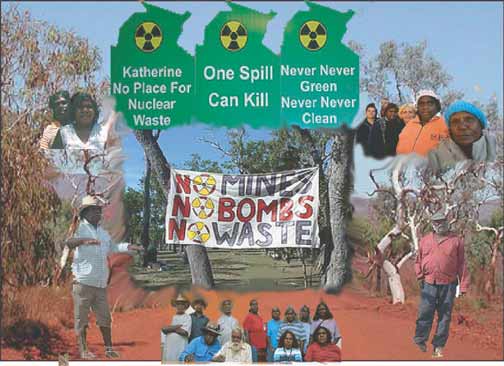
Beyond this, however, the Coalition’s nuclear policy has, for many First Nations peoples, raised the spectre of the last time the atomic industry came to Australia.
Indigenous peoples across Oceania share memories of violent histories of nuclear bomb testing, uranium mining and waste dumping – all of which disproportionately affected them and/or their ancestors.
Two sides of the same coin
While it may be tempting to separate them, the links between military and civilian nuclear industries – that is, between nuclear weapons and nuclear energy plants – are well established. According to a 2021 paper by energy economists Lars Sorge and Anne Neumann: “In part, the global civilian nuclear industry was established to legitimatise the development of nuclear weapons.”
The causative links between military and civilian uses of nuclear power flow in both directions.
As Sorge and Neumann write, many technologies and skills developed for use in nuclear bombs and submarines end up being used in nuclear power generation. Another expert analysis suggests countries that receive peaceful nuclear assistance, in the form of nuclear technology, materials or skills, are more likely to initiate nuclear weapons programs.
Since the first atomic bombing of Hiroshima in 1945, Indigenous peoples across the Pacific have been singing, writing and talking about nuclear colonialism. Some were told the sacrifice of their lands and lifeways was “for the good of mankind”.
Today, they continue to use their bodies and voices to push back against the promise of a benevolent nuclear future – a vision that has often been used justify their and their ancestors’ suffering and displacement.
Black mist and brittle landscapes
In 2023, Bangarra Dance Company produced Yuldea. This performance centres on the Yooldil Kapi, a permanent desert waterhole.
For millennia, this water source sustained the Aṉangu and Nunga peoples and a multitude of other plant and animal life across the Great Victorian Desert and far-west South Australia.
In 1933, Yuldea became the site of the Ooldea Mission. Then, in 1953, when the British began testing nuclear bombs at nearby Emu Field (1953) and Maralinga (1956–57), the local Aṉangu Pila Nguru were displaced from their land to the mission.
Directed by Wirangu and Mirning woman Frances Rings, Yuldea tells the story of this Country in four acts: act one, Supernova; act two, Kapi (Water); act three, Empire; and act four, Ooldea Spirit.
The impacts of nuclear testing are directly confronted in a section titled Black Mist (in act three, Empire). Dancers’ bodies twist and spasm as a black mist falls from the sky, representing the fog of radioactive particles that resulted from weapons testing. In reality, this fog could cause lifelong injuries when inhaled or ingested, including blindness.
But Yuldea is more than just a story of destruction. By exploring Aṉangu and Nunga relationships with Country before and after nuclear testing, it affirms their enduring presence in the region. This is captured in the opening prose:
We are memory.
Glimpsed through shimmering light on water.
A story place where black oaks stand watch.
Carved into trees and painted on rocks.
North – South – East – West.
A brittle landscape of life and loss.
To acknowledge is to remember
The podcast Nu/clear Stories (2023-), created by Mā’ohi (Tahitian) women Mililani Ganivet and Marie-Hélène Villierme, uses storytelling to grapple with the consequences of colonial nuclear testing.
Ganivet and Villierme address the memories of French nuclear testing on the islands of Moruroa and Fangataufa in Mā’ohi Nui (French Polynesia) from 1963 to 1996.
Rather than using a linear understanding of time, which keeps the past in the past and idealises a future of “progress”, Nu/clear Stories draws on Indigenous philosophies of cyclical or spiral time to insist that by turning to the past, we can understand how history shapes the present and future.
As Ganivet says when introducing the first episode, Silences and Questions:
We are part of a long genealogy of people who found the courage to speak before us. […] To acknowledge them here is to remember that without them we would not be able to speak today. And so today, we stand on their shoulders, with the face firmly turned towards the past, but with our eyes gazing deep into the future.
Stories in the Tomb
In her 2018 poem video Anointed, Part III of the series Dome, Marshall Islander woman Kathy Jetn̄il-Kijiner pays homage to Runit Island. This island in the Enewetak Atoll was transformed into a dumping site for waste from US nuclear bomb tests between 1946 and 1958.
A huge concrete dome was built on Runit Island in the 1970s to cover about 85,000 cubic metres of radioactive waste. The island became known as “the Tomb” to the Enewetak people – a tomb that still leaks nuclear radiation into the ocean today.
However, like the creators behind Yuldea and Nu/clear Stories, Jetn̄il-Kijiner refuses to remember Runit Island as only a nuclear graveyard. Instead, she approaches it like a long-lost family member or ancestor who she hopes will be full of stories.
Jetn̄il-Kijiner speaks to the island through her poem, drawing a devastating contrast between what it once was and what it is now:
You were a whole island, once. You were breadfruit trees heavy with green globes of fruit whispering promises of massive canoes. Crabs dusted with white sand scuttled through pandanus roots. Beneath looming coconut trees beds of ripe watermelon slept still, swollen with juice. And you were protected by powerful irooj, chiefs birthed from women who could swim pregnant for miles beneath a full moon.
Then you became testing ground. Nine nuclear weapons consumed you, one by one by one, engulfed in an inferno of blazing heat. You became crater, an empty belly. Plutonium ground into a concrete slurry filled your hollow cavern. You became tomb. You became concrete shell. You became solidified history, immoveable, unforgettable.
While Jetn̄il-Kijiner describes herself as “a crater empty of stories”, she continues to find stories in the Tomb: namely, the legend of Letao, the son of a turtle goddess who turned himself into fire and, in the hands of a small boy, nearly burned a village to the ground.
Juxtaposing this fire with the US’s nuclear bombs, she ends her poem with “questions, hard as concrete”:
Who gave them this power?
Who anointed them with the power to burn?The link between past and future
In their book Living in a nuclear world: From Fukushima to Hiroshima (2022), Bernadette Bensaude-Vincent and others explore how “nuclear actors” frame nuclear technology as “indispensable”, “mundane” and “safe” by neatly severing nuclear energy from nuclear history.
This framing helps nuclear actors avoid answering concrete questions. It also helps to hides the colonial history of nuclear technologies – histories which leak into the present. But not everyone accepts this framing.
Indigenous artists remind us the nuclear past must be front-of-mind as we look to shape the future.
1 This month
15 April – Zoom –Nuclear Power is Not the Solution
Apr 15, 2026 01:00 AM in Canberra, Melbourne, Sydney

Join the International Physicians for the Prevention of Nuclear War (IPPNW) on Tuesday, April 14th for a timely webinar exploring the risks associated with nuclear power and challenging the myth that it offers a simple, safe, carbon-free solution to the climate crisis

of the week – Australians for War Powers Reform (AWPR)
To see nuclear-related stories in greater depth and intensity
 Antinuclear
