Want to know how the world really ends? Look to TV show Families Like Ours
John Harris, 1 May 25
The Danish drama is piercing in its ordinariness. In the real world, the climate crisis worsens and authoritarians take charge as we calmly look awaySun 11 May 2025 21.35 AESTShare649
The climate crisis has taken a new and frightening turn, and in the expectation of disastrous flooding, the entire landmass of Denmark is about to be evacuated. Effectively, the country will be shutting itself down and sending its 6 million people abroad, where they will have to cope as best they can. Huge numbers of northern Europeans are therefore being turned into refugees: a few might have the wealth and connections to ease their passage from one life to another, but most are about to face the kind of precarious, nightmarish future they always thought of as other people’s burden.
Don’t panic: this is not a news story – or not yet, anyway. It’s the premise of an addictive new drama series titled Families Like Ours, acquired by the BBC and available on iPlayer. I have seen two episodes so far, and been struck by the very incisive way it satirises European attitudes to the politics of asylum. But what has also hit me is its portrayal of something just as modern: how it shows disaster unfolding in the midst of everyday life. At first, watching it brings on a sense of impatience. Why are most of the characters so calm? Where are the apocalyptic floods, wildfires and mass social breakdown? At times, it verges on boring. But then you realise the very clever conceit that defines every moment: it is really a story about how we all live, and what might happen tomorrow, or the day after.
The writer and journalist Dorian Lynskey’s brilliant book Everything Must Go is about the various ways that human beings have imagined the end of the world. “Compared to nuclear war,” he writes, “the climate emergency deprives popular storytellers of their usual toolkit. Global warming may move too fast for the planet but it is too slow for catastrophe fiction.” Even when the worst finally happens, most of us may respond with the kind of quiet mental contortions that are probably better suited to literature than the screen. Making that point, Lynskey quotes a character in Margaret Atwood’s novel The Year of the Flood: “Nobody admitted to knowing. If other people began to discuss it, you tuned them out, because what they were saying was both so obvious and so unthinkable.”
These days, that kind of thinking reflects how people deal with just about every aspect of our ever-more troubled world: if we can avert our eyes from ecological breakdown, then everything else can be either underestimated or ignored. There is a kind of moment, I would wager, that now happens to all of us. We glance at our phones or switch on the radio and are assailed by the awful gravity of everything, and then somehow manage to instantly find our way back to calm and normality. This, of course, is how human beings have always managed to cope, as a matter of basic mental wiring. But in its 21st-century form, it also has very modern elements. Our news feeds reduce everything to white noise and trivia: the result is that developments that ought to be vivid and alarming become so dulled that they look unremarkable.
Where this is leading politically is now as clear as day. In the New Yorker, Andrew Marantz wrote, in the wake of Trump’s re-election, about how democracies slide into authoritarianism. “In a Hollywood disaster movie,” he writes, “when the big one arrives, the characters don’t have to waste time debating whether it’s happening. There is an abrupt, cataclysmic tremor, a deafening roar … In the real world, though, the cataclysm can come in on little cat feet. The tremors can be so muffled and distant that people continually adapt, explaining away the anomalies.” That is true of how we normalise the climate crisis; it also applies to the way that Trump and his fellow authoritarians have successfully normalised their politics.
Marantz goes to Budapest, and meets a Hungarian academic, who marvels at the political feats pulled off by the country’s prime minister, Viktor Orbán. “Before it starts, you say to yourself: ‘I will leave this country immediately if they ever do this or that horrible thing,’” he says. “And then they do that thing, and you stay. Things that would have seemed impossible 10 years ago, five years ago, you may not even notice.” The fact that populists are usually climate deniers is perfect: just as searingly hot summers become mundane, so do the increasingly ambitious plans of would-be dictators – particularly in the absence of jackboots, goose-stepping and so many other old-fashioned accoutrements. Put simply, Orbán/Trump politics is purposely designed to fit with its time – and to most of its supporters (and plenty of onlookers), it looks a lot less terrifying than it actually is.
Much the same story is starting to happen in the UK. On the night of last week’s local elections, I found myself in the thoroughly ordinary environs of Grimsby town hall, watching the victory speech given by Reform UK’s Andrea Jenkyns, who had just been elected as the first mayor of Greater Lincolnshire. For some reason, she wore a spangly outfit that made her look as if she was on her way to a 1970s-themed fancy dress party, which raised a few mirthless laughs. She said it was time for an end to “soft-touch Britain”, and suddenly called for asylum seekers to be forced to live in tents. That is the kind of thing that only fascists used to say, but it now lands in our political discourse with not much more than a faint thump.
Meanwhile, life has to go on. About 20 years ago, I went to an exhibition of works by the French photographer Henri Cartier-Bresson – one of which was of a family of four adults picnicking by the Marne, with their food and wine scattered around them, and a rowing-boat moored to the riverbank. When I first looked at it, I wondered what its significance was. But then I saw the date on the adjacent plaque: “1936-38.” We break bread, get drunk and tune out the noise until carrying on like that ceases to be an option: as Families Like Ours suggests, that point may arrive sooner than we think.
This week – not-the-corporate nuclear news

Some bits of good news: Sustainable Ocean Action: A Global Stocktake of the Our Ocean Conference
How Pakistan pulled off one of the fastest solar revolutions in the world – a “bottom up” revolution.
TOP STORIES Why Is US Congress Silent on the Manmade Nightmare It Is Enabling in Gaza? -Bernie Sanders. Expulsion and Occupation: Israel’s Proposed Gaza Plan.
Resuscitation at Zaporizhzhia?
From the archives. Conflicts of interest in the Trump group’s push to sell nuclear reactors to Saudi Arabia.
Climate. I just returned from Antarctica: climate change isn’t some far-off problem – it’s here and hitting hard.
‘Sitting ducks’: the cities most vulnerable to climate disasters -ALSO AT https://nuclear-news.net/2025/05/07/2-b1-sitting-ducks-the-cities-most-vulnerable-to-climate-disasters/
How ‘out of touch’ Tony Blair became a serious threat to climate action. Two-thirds of global heating caused by richest 10%, study suggests.
5 huge climate opportunities await the next Australian parliament – and it has the numbers to deliver.
Noel’s notes The pro-nuclear drive and Zionism are intertwined.
AUSTRALIA.
- Business as usual: Labor stalls on Defence reform as AUKUS woes grow.
- If the Coalition sticks with nuclear, the fallout will be toxic. Will the Coalition ditch its nuclear power policy? Coalition bombs itself with nuclear energy policy. Australians choose batteries over nuclear after election fought on energy. Scrap nuclear: Key Liberal senator wants radioactive energy plan buried.
- Poison in the Heart-The Nuclear Wasting of South Australia.
- Who’s afraid of big, bad China?
- Front groups working with Zionist actors are promoting Islamophobia.
- The dark cloud of Murdoch has no silver lining.
NUCLEAR ITEMS.
| ECONOMICS. Ontario’s Darlington SMR project to cost nearly $21-billion, significantly higher than expected. Google agrees to fund the development of three new nuclear sites. How Miliband can make renewables cheaper – but there is really no alternative to renewables. |
| ENERGY. Rooftop solar can be torn out of capital’s hands. |
| ENVIRONMENT. Sellafield’s massive water abstraction plan for its new construction work has no environmental impact assessment and inadequate monitoring. Ohio EPA launches limited Luckey water testing after independent report shows high radiation in wells. |
| HISTORY. 80 years on US still embattled in senseless Cold War with Russia.The Anglo-Nazi Global Empire That Almost Was. |
| LEGAL. Lawsuit Compels Nationwide Public Review of Plutonium Bomb Core Production. |
| MEDIA. Israel Will Even Persecute Palestinians For Simply Talking To Journalists. |
| POLITICS. Durbin successor must not be co opted by the Israel Lobby. [SMRs] Trump wants to speed up construction of more NPP, bypass safety regulations- ALSO AT https://nuclear-news.net/2025/05/12/2-b1-draft-executive-orders-aim-to-speed-construction-of-nuclear-plants/. Trump administration considers orders expediting nuclear plant construction, NYT reports. US Administration’s initial proposal sees cuts to nuclear energy budget. |
| POLITICS INTERNATIONAL and DIPLOMACY. Iran calls latest nuclear talks with US ‘difficult’ but both sides agree negotiations will continue. The Stakes of Donald Trump’s Negotiations with the Islamic Republic of Iran. Trump’s trip to Saudi Arabia raises the prospect of US nuclear cooperation with the kingdom. Non Proliferation Preparatory Committee concludes; Treaty on the Prohibition of Nuclear Weapons states point way forward. |
SAFETY.
- The Challenge to Japan’s Nuclear Restart.
- Starmer ignored nuclear watchdog when he blamed regulations for delays. Improvement notice issued at Dounreay nuclear power plant.
- Chernobyl shelter’s drone damage includes 330 openings in outer cladding. Russian drone strike caused tens of millions worth of damage to Chornobyl.
- Zaporizhzhia: Hurdle or catalyst for a peace deal in Ukraine
- Trump tightens control of independent agency overseeing nuclear safety. Trump considers weakening nuclear safety agency in bid for more power plants- ALSO AT https://nuclear-news.net/2025/05/12/1-b1-trump-considers-weakening-nuclear-agency-in-bid-for-more-power-plants/
| SECRETS and LIES. The Deep State & the Death of Democracy. ‘It’s deceitful’: Critics slam owners of TMI Unit 2 for not reporting fire at plant. |
| SPINBUSTER. Who are Britain Remade? Atomic lobby seizes on Spanish blackout .Google tries to greenwash massive AI energy consumption with another vague nuclear deal. |
| TECHNOLOGY. Westinghouse drops out of UK SMR competition. |
| URANIUM. Depleted Uranium by Lynda Williams 2025- https://www.youtube.com/watch?v=4_BXI5wVhKU |
| WAR and CONFLICT. Too Cruel to Even Imagine—Nuclear War in Densely Populated Areas Close the US military bases in Asia! Nuclear war has never been more likely – Here’s what it would look like now. |
| WEAPONS and WEAPONS SALES. Nuclear threat is more real than at any time since second World War. Starmer prepares for attack by Russia. |
Coalition bombs itself with nuclear energy policy
By Dave Sweeney | 12 May 2025
While the Coalition was determined to switch Australia over to nuclear energy, voters had another opinion and overwhelmingly rejected the LNP’s energy policy, writes Dave Sweeney.
WHEN HE UNVEILED the Coalition’s nuclear energy ambitions last June, outgoing Opposition Leader Peter Dutton said:
“I’m very happy for the Election to be a referendum on energy, on nuclear.”
As the adage says, be careful what you wish for. The election result was a resounding rejection of the high-cost, high-risk nuclear option.
The Coalition’s intention to build nuclear reactors at seven sites in regional Australia was the biggest policy difference between the major parties ahead of the Election.
The nuclear push was heavy on headlines and assurances, but very light on details and evidence.
Despite numerous requests, the Coalition’s nuclear promoters failed to visit the reactor sites or answer fundamental questions, including where the required water would come from and where the resultant radioactive waste would go.
Other unanswered questions overflowed the Coalition’s too-hard basket.
What would the impact on employment and output be from Australia’s rapidly growing renewable energy sector? What sort of reactors were planned and how many? What would fill the electricity shortfall between the certain closure of coal and the uncertain start of nuclear? Would taxpayers bear the increased cost of nuclear in our tax bills, our power bills, or both? Who would operate and regulate the Coalition’s nuclear plants?
As the scrutiny and uncertainty grew, so did the community concerns and the considered critiques.
The Climate Change Authority warned the Coalition’s nuclear policy would add huge amounts of extra climate pollution to the atmosphere and make it “virtually impossible” for Australia to reach net zero by 2050.
The interim report by a parliamentary committee inquiring into nuclear energy found – like so many inquiries before it have found – that nuclear energy was not right for Australia.
While Australia’s energy utilities made it clear they did not support or see a future in nuclear, Australia’s insurance sector confirmed that its policies do not cover nuclear accidents.
Shadow climate and energy spokesperson Ted O’Brien might have been convinced nuclear is as safe as houses, but Australian insurance providers did not share that view.
The concern was widespread, but most obvious in Australian women’s scepticism about nuclear. They didn’t want to hear about it and when the issue was raised with Dutton, he didn’t want to talk about it.
When the Coalition pushes nuclear, Australia pushes back. In 2007, John Howard took nuclear to an election where he lost government and his own seat. In 2025, Peter Dutton said nuclear and Australia said no — and goodbye.
Polling by the Liberals Against Nuclear group demonstrated the nuclear policy’s drag on the Coalition’s vote in marginal seats and across the nation, while 46 per cent of voters in Dutton’s electorate of Dickson said they were less likely to vote for Mr Dutton because of the nuclear power policy.
In front of shellshocked Coalition politicians on election night, senior press gallery journalist Mark Riley summed up the Coalition’s problem:
“The party that chose nuclear energy as its policy has exploded in a nuclear bomb set on them by voters tonight.”
The idea of domestic nuclear power is over.
It’s time to draw a line under this unproductive distraction and get on with real action to meet our nation’s climate and energy challenges.
Liberal Senator Maria Kovacic has called on her party to “immediately scrap the nuclear energy plan and back the private market’s investment in renewable energy”.
Her call echoes that of the South Australian Liberals, which have already dropped plans for another inquiry into nuclear power, with State Leader Vincent Tarzia declaring that nuclear has been “comprehensively rejected” by the electorate.
Defeated Tasmanian MP Bridget Archer says the nuclear push was “not the policy position I would have taken” and she would rather “let the market decide”.
The Federal Coalition must ditch any lingering nuclear ambitions and join every other major political player in backing a renewable energy future for our nation.
Australians have overwhelmingly voted for positive solutions, real action and respect — for each other and our environment.
It’s time to stop playing politics with nuclear distractions and delays. It’s time to get on with the clean energy transition, effective climate action and building an energy future that is renewable, not radioactive.
Australians choose batteries over nuclear after election fought on energy
By climate reporters Jess Davis and Jo Lauder, ABC News, 6 May
When Peter Dutton unveiled his party’s nuclear energy plan last year, it opened up a seismic difference between the two major parties.
It offered a real choice for Australian voters over the future of the country’s energy policy.
“I’m very happy for the election to be a referendum on energy, on nuclear, on power prices, on lights going out, on who has a sustainable pathway for our country going forward,” he said.
Taken on those terms, Saturday’s election outcome was an endorsement of renewable energy over nuclear.
“It’s clearly a referendum on energy policy, given the prominence of energy throughout the entire election campaign,” Clean Energy Council CEO Kane Thornton said.
“I think it’s an emphatic victory for Australia’s transition to clean energy.”
At a household level, Labor offered a significant discount on home batteries to accompany the booming solar on rooftops all across the country, aiming to get 1 million batteries installed under the scheme by 2030.
The last election saw a new generation of independents join the parliament, riding a wave of climate concern. Any expectation that the “teals” were a single-election trend has been dispelled, with most of them set to be returned, and new ones joining their ranks.
While the Greens have an anxious wait ahead to see how many lower seats they’ll win, they recorded their highest-ever primary vote and will hold the balance of power in the Senate with 11 senators.
After losing the Liberal heartland to the teals in the last election, the Coalition decided to pitch instead to the outer suburbs.
But the decision to campaign against renewables, and scrap climate policies such as the EV tax breaks, seems to mismatch the views of middle Australia.
Outer suburbs embrace solar power
Dutton set out to make up gains in the outer suburbs by offering a discount on the fuel excise. But the data for solar uptake and electric cars paints a very different picture to the caricature of solar and batteries as a plaything for the inner city.
While energy may not have been a top concern for voters, it’s the outer suburbs where our love for rooftop solar is at its highest, especially in Queensland and Western Australia.
In Dutton’s former electorate of Dickson, some 60 per cent of households have a solar system, double the national average, according to data from the Clean Energy Regulator……………………………………………… https://www.abc.net.au/news/2025-05-06/federal-election-shows-voters-support-renewables-over-nuclear/105252888
I would’ve led a very ‘aggressive campaign’ says Tim Wilson as he backs nuclear

Sumeyya Ilanbey, AFR, 7 May 25
Tim Wilson says he defied political gravity to wrest back the Melbourne electorate of Goldstein from teal independent MP Zoe Daniel in a victory speech in which he flagged an intention to return to the Liberal frontbench and backed nuclear energy.
As of Wednesday, Wilson had finished ahead of Daniel by 0.47 per cent – or 980 votes – on a two-candidate count and his lead was growing as more postal votes were counted…………………………………………………….
Wilson refused to be drawn on whether he had Liberal leadership aspirations or who he would back to lead the party that has been reduced to about 40 seats in the lower house. But he said there was a lot of work the opposition needed to do to rebuild.
……………………………………………………………………………. Wilson refused to be drawn on whether he had Liberal leadership aspirations or who he would back to lead the party that has been reduced to about 40 seats in the lower house. But he said there was a lot of work the opposition needed to do to rebuild…………..
While some of his colleagues have called for the Coalition to scrap nuclear energy as part of its policy offering, Wilson, a former minister for climate change and energy, said nuclear was part of “building the future industrial base of the country”. The comment drew loud cheers and applause from his supporters…………https://www.afr.com/politics/federal/triumphant-wilson-backs-nuclear-power-and-has-some-notes-for-dutton-20250507-p5lx7x
Business as usual: Labor stalls on Defence reform as AUKUS woes grow

Defence spending is lagging, AUKUS is stalling, and systemic mismanagement persists as Labor avoids hard structural reform.
Bernard Keane, May 11, 2025, https://www.themandarin.com.au/291901-business-as-usual-labor-stalls-on-defence-reform-as-aukus-woes-grow/
Having managed to get through an election campaign barely mentioning defence — despite the opposition trying to make it a late-stage vote winner — the newly expanded Labor government still faces a number of big challenges in the defence portfolio, and no easy answers.
The two big ones are well-known: the replacement of the US security guarantee with Trumpian chaos, which means Australia will have to strengthen its defence capability so that it has to rely less on the US, and the profound problems of AUKUS.
Despite some budget sleight of hand purporting to show an acceleration in defence spending, the government remains committed to increasing defence spending to just 2.33% of GDP — not merely well below the Trump administration’s demand for 3%, but below the Coalition’s planned increase to 2.5% and the calls from defence and security experts, as well as Labor luminaries like Kim Beazley, for a significant increase.
But the ability of the Department of Defence to handle any increase in spending — or even competently spend what it currently receives — is openly questioned even by hawks. Average major project slippage time, already alarming when the Coalition was last in power, noticeably deteriorated in Labor’s first term. The response of Defence appeared to try to hide embarrassing data from the Auditor-General under the pretence of national security.
Also characterising Labor’s first term was the admission of failure of departmental process, to the very highest echelons of Defence, in relation to the Hunter-class frigate project and the shocking audit of Defence’s dealings with Thales on munitions manufacturing (the second part of which is yet to arrive from the auditor-general).
With both defence minister Richard Marles’ track record in Labor first term, and his general insouciance toward revelations such as the Thales debacle — which included the revelation that the department had actively misled predecessor ministers — it seems unlikely Defence will face any real pressure to improve the incompetence and, quite possibly, corruption that marks its management of major procurement processes. A defence minister like Andrew Hastie, far more credentialed in military matters than most within the department, could have driven the kind of reform that would have gotten Defence backs up, and led to copious leaking against him, but improved the reliability and integrity of the department’s procurement processes. Instead, we’ll have to hope that a Labor government with a big majority and more confidence will be more willing to take on the fundamental problems in the portfolio.
A similar business-as-usual approach will likely characterise the unfolding disaster that is AUKUS. The grim reality is that US submarine construction rates are slowing, not accelerating as they need to if the US is to provide three Virginia-class nuclear submarines to Australia from 2030. In early April, the US Navy admitted to Congress significant delays in constructing its new Columbia-class ballistic missile submarine, which shares some components with the Virginia class. While the builders of the Virginia-class boats are talking bravely of demand signals and additional investment, the build rate for the subs late last year was barely above half that required by AUKUS.
None of this, apparently, is of interest to the bureaucrats charged with overseeing AUKUS. The Mandarin applied under Freedom of Information laws to the Australian Submarine Agency to see what briefing it was providing to ministers on the problems in submarine construction in the US and the UK. No such documents, came back the answer. Blind faith that the US can double the rate of submarine construction in a couple of years is one thing, but remaining ignorant of how badly off track AUKUS is? That’s quite another.
One of the key problems of the Virginia-class boats for Australia is that they require huge crews — 135 sailors, compared to just 58 for Australia’s current submarines. That brings into focus a persistent and worsening problem — our inability to attract and retain ADF members. Last year the Navy was short around 900 people. The Army was short around 5000; only the RAAF is around its mandated strength. A change of recruitment agency for the ADF proved a disaster, with portfolio minister Matt Keogh expressing his “deep disappointment” with the provider’s “wholly deficient” performance. Critics say the problem is with the ADF itself, which is “too slow and too picky”. The government announced in mid-2024 the brilliant idea of opening up the ADF to personnel from Five Eyes. countries. Only problem is, they’re all suffering the same problems with defence recruitment. In fact, armies, navies and air forces around the world are suffering ongoing recruitment problems and have done so for years — even the People’s Liberation Army is struggling to attract Chinese youth to its ranks.
In each of these areas, clearly, business as usual won’t cut it. But that is what Defence is very good at, and its ministers are very bad at preventing. To prevent it, only structural arrangements that disrupt Defence’s normal processes will achieve results. The royal commission into ADF member and veteran suicide had the right idea — and the government rightly took its lead from the commission in its response. The commission recommended a new independent statutory body to oversee reform across the whole Defence/Veterans Affairs portfolio, not a new area of Defence. And it urged, and the government agreed, that central agencies be charged with implementing the commission’s recommendations: the result was a Prime Minister and Cabinet taskforce to start implementing reforms, with the help of external expertise.
An independent agency, and a PM&C-led implementation taskforce, was what was needed to ensure Defence didn’t simply default back to business as usual when it came to the mental health of its members and veterans. Only the oversight and interference of high-powered external bodies will compel Defence to change its culture.
And it’s the only thing that will enable the government to seriously tackle the biggest challenges in the portfolio over the coming years.
Bernard Keane
Bernard Keane is a columnist for The Mandarin. He was a Canberra press gallery correspondent covering politics, national security and economics, and a public servant and speechwriter in transport and communications. He is co-author of A Short History Of Stupid, which covers the decline of reason and issues with public debate.
Who’s afraid of big, bad China?
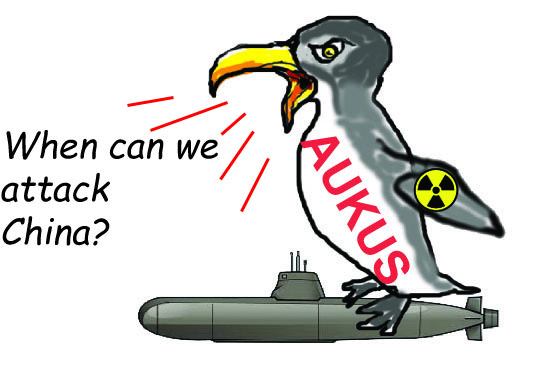
Neither side wanted to bring China into the debate, and neither side wanted to discuss AUKUS, which is based on a perceived need to take military action against that country.
In the recent Australian election, Neither side wanted to bring China into the debate, and neither side wanted to discuss AUKUS, which is based on a perceived need to take military action against that country.
Jocelyn Chey, May 7, 2025 , https://johnmenadue.com/post/2025/05/whos-afraid-of-big-bad-china/
Be afraid, be very afraid. But not of China. To the contrary, the proper management of co-operative relations with China is essential to Australia’s future.
Finally, the election process is over and done with and the results are in. We look forward to news bulletins not dominated by party spokespeople spruiking how they will deal with the cost of living. Rents, health and transport costs are all important, but the big issues that will make or break their social policies are all global, and the real question is how we can front up to them and hopefully turn them to our benefit. If the world goes into recession, which is a very real possibility, we will all be affected. The cost of living will go up. Cuts to social services will be inevitable.
Why did the candidates not admit this? Do they have contingency plans and, if so, what are they? What are they afraid of? Were they scared that if they mentioned China, the US or Russia, they would lose votes, or be backed into election promises that they could not keep? Or were there structural weaknesses in their policies that they did not wish to expose to scrutiny?
In previous election campaigns, the candidates were not so hesitant to pronounce on international affairs. The 2001 election was dominated by immigration issues and the terrorist attack on the Twin Towers in New York. It was the first “khaki election” since the Vietnam War. In the 2022 election, the Morrison Government tried to repeat their 2001 success by promoting fear of Chinese invasions, both military or cultural, but their attempt failed. This time around, both sides of politics have been careful about their choice of language and avoided difficult topics.
Insofar as national security featured at all in the elections, Labor and the Liberals competed to portray themselves as the better party to protect Australia’s international relationships, particularly in the Pacific. Penny Wong accused the Liberals of leaving a “vacuum” that China was ready to fill, but she did not directly accuse Beijing. The one attempt to whip up fear of an invasion was pinned onto Moscow, rather than Beijing, when news broke of a possible deal between Russia and Indonesia about developing a military airbase in West Papua.
Neither side wanted to bring China into the debate, and neither side wanted to discuss AUKUS, which is based on a perceived need to take military action against that country. Labor and Liberal both promised to increase defence spending, one side to 2.3% of GDP, and the other side to 3% over 10 years. Neither mentioned the reasons for such an increase, or where the money would be found. AUKUS is already absorbing all the increases announced by the last government and affecting other procurement needs. AUKUS spending over the next five years is estimated to reach $18 billion and ultimately will total $368 billion, not including the cost of new infrastructure such as a dedicated naval base at HMAS Stirling. The rationale for nuclear-powered vessels is not the defence of our coasts, but the perceived need to attack distant targets, and that target is China.
China has been progressively opening to the world since the 1980s. It is a permanent member of the UN Security Council and an active member of many multilateral organisations. With Australian encouragement, it has engaged with the multilateral trade system, joined APEC and the World Trade Organisation. The domestic economy has flourished in this open environment and in a region that has not seen armed conflict since the end of the Vietnam War. Maintaining strong growth and raising living standards have been the main pillars of Chinese domestic policies.
Economic development has not always been smooth, and recently new problems have emerged on the international front. China trusted the established international governance system to support and regulate its growth, but, as the country grew stronger, it became evident that the US did not return that trust. Its rapid rise and increasing global presence changed the regional and global balance and generated a geopolitical response that was perhaps predictable.
In 2025, the Trump administration has not yet clarified its policy for handling the relationship with China. Tariffs have been imposed, increased and decreased, and threats and hints have been made by the White House. All is chaos. The only thing that is certain is that Trump will challenge China in a more transactional and unpredictable way, will intensify trade confrontations and sanction Chinese companies in his goal to achieve greater self-sufficiency in the US.
In Beijing, Xi Jinping’s response has been measured and consistent. Official statements emphasise that China supports international rules and regulations and the multilateral system. During the National People’s Congress in March, Foreign Minister Wang Yi in a briefing to the international press presented China as a responsible and stable global power and, without explicitly saying so, drew comparisons with Trump’s America and its chaotic pronouncements.
He said: “We will provide certainty to this uncertain world. … We will be a staunch force defending our national interests. … We will be a just and righteous force for world peace and stability. … We will be a progressive force for international fairness and justice. We will be a constructive force for common development of the world.”
The contrast with Trump’s Tweets could not be more striking.
China is now truly integrated into the global economy. National policy has determined this, and, in any case, it would have been inevitable, given the development of advanced technologies and information and communication systems, all requiring international engagement. China, above all, wants stability and security in international relations to underpin its economic growth. In the future, the major challenges that the world will face are global. Climate change cannot be tackled without international co-operation. Australia needs more than ever to understand China and its domestic and foreign policies.
Co-operation with China is not easy. To borrow Trump’s words, “They hold the cards”. Australia, however, is not alone, and the best response to China is to consult and co-ordinate with neighbouring countries who also regularly interact with the rising superpower. Singapore, Thailand, Vietnam, Malaysia, all have important trade and diplomatic ties with China and have much experience to share about how to manage a relationship with China, a regional power and a global superpower. Australia should be able to manage relations with China. If we respect Beijing’s legitimate rights, Beijing will respect ours
It is possible. China has no history of annexing other countries as Russia annexed Crimea. It respects other countries’ autonomy more than Trump respects the sovereignty of Mexico, Canada or Greenland. It has claims over a large part of the South China Sea that on the surface suggest aggressive intent, but this is not a new claim. The “nine dash line” outlining its territorial claim was first proposed by the then Nationalist government in 1948, and the government of Taiwan still maintains this position. Considering that China is surrounded by a string of US bases along the “first island chain” from Japan to the Philippines, amid that Camp Humphreys, near Seoul in South Korea, the largest US overseas military base, is just 549 kms from the city of Dalian in northeast China, it is not surprising that China should wish to limit further US advances.
As for the other superpower, in the first 100 days of the Trump regime, he has attempted to use the legal system to carry out his personal vendettas. He has shut down many government departments. He has attacked scientific research and the universities and disregarded statistical evidence, particularly in medical science and climate science. He is prejudiced against immigrants. He dismisses the most basic ideas of trade and economics. He prefers to deal with other autocrats like Vladimir Putin and has turned his back on international agreements and treaties.
Be afraid, be very afraid. But not of China.
(This is a summary of a talk given at the Festival of Wild Ideas, St Paul’s Burwood, on 4 May 2025)
1 This month
7 April – WEBINAR – Australia and the Doomsday Clock – Preventing nuclear war through NoFirstUse and other policies
Online | Tuesday April 7, 4:00-5:30pm, Australian Eastern Time / 8:00-9:30am Central Europe Time
– Access the registration link
15 April – Zoom –Nuclear Power is Not the Solution
Apr 15, 2026 01:00 AM in Canberra, Melbourne, Sydney

Join the International Physicians for the Prevention of Nuclear War (IPPNW) on Tuesday, April 14th for a timely webinar exploring the risks associated with nuclear power and challenging the myth that it offers a simple, safe, carbon-free solution to the climate crisis

21 April Webinar: No Nuclear Weapons in Australia
Start: 2026-04-21 18:00:00 UTC Canberra, Melbourne, Sydney (GMT+10:00)
End: 2026-04-21 19:30:00 UTC Canberra, Melbourne, Sydney (GMT+10:00)
Event Type: Virtual
A virtual link will be communicated before the event.
Host Contact Info: australia@icanw.org

of the week – Australians for War Powers Reform (AWPR)
To see nuclear-related stories in greater depth and intensity
 Antinuclear