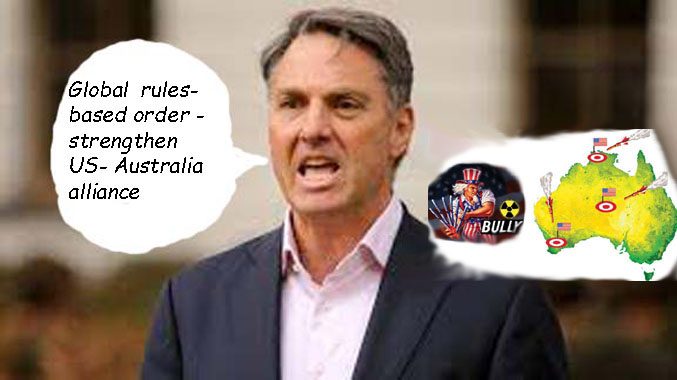
Why Voters Reject Richard Marles US War
27 June 2025 AIMN Editorial By Denis Hay
Description
Richard Marles US war has anti-war voters turning against him. Learn why peace, sovereignty, and democracy are at stake in 2028.
Introduction
Darwin, 4:42 a.m., June 2025. KC-46 tankers lift off from RAAF Base Darwin, refuelling U.S. bombers returning from a strike on Iranian nuclear sites. Veteran Ron McKinnon, 71, stares from his porch. “Here we go again,” he mutters, haunted by his service in Iraq.
Just hours later, Defence Minister Richard Marles appears on ABC News: “Australia stands shoulder to shoulder with our ally.” Foreign Minister Penny Wong echoes him. But the public mood is shifting fast, as concerns over the Richard Marles US war agenda grow louder.
Agitate: The Iran strike has deepened fears of entanglement in endless U.S. wars.
Solution: Voters now demand a sovereign, peaceful defence policy – and they’re ready to make it an election issue.
PROBLEM – Public Trust Collapse Over U.S. Military Alignment
1. Polls Signal a Sea Change
• 40% of Australians now believe we should distance ourselves from the U.S. (Lowy Institute, 2025)
• Only 26% say we should follow the U.S. into military conflicts.
• 74% oppose involvement in a future war with Iran or China, reflecting a growing rejection of the Richard Marles US war direction.
2. The Trigger: Iran Strike
Australia’s support for the June 2025 U.S. strike on Iran shocked many voters. While the government called it a “measured response,” Australians viewed it as another unjustified conflict.
3. Personal Voices
Ella Tait, an ICU nurse from Newcastle, recalls messaging her brother at RAAF Tindal: “Are you being deployed?” He didn’t reply for hours. Online, #MarlesWarMachine trended as thousands shared anti-war posts.
“We save lives in hospitals, not bomb people across the world,” Ella said.
4. Strategic Concerns
• Pine Gap may have been used to assist the Iran targeting
• Darwin and Tindal bases make Australia a first-strike target in future retaliations
• Experts warn Australia’s role in U.S. wars increases – not decreases – our risk
Consequences of Following the U.S. War Machine
1. Economic Trade-Offs
• AUKUS subs will cost taxpayers $368 billion over 30 years
• Meanwhile, public housing, health, and disaster funding suffer under the financial burden of the Richard Marles US war priorities.
• Australia’s dollar sovereignty means we don’t need to choose war over welfare, but our leaders are
2. Voter Backlash
• Greens, Teals, and Independents have made “Peace Vote” pledges
• In 18 marginal electorates, candidates are calling for War Powers reform
• Many voters say: “If Marles won’t represent peace, we’ll find someone who will”, a clear repudiation of the Richard Marles US war stance.
3. Moral Injury
Every new conflict escalates demand for veterans’ services.
• Defence-linked trauma spikes 19% during combat support operations
• Public sympathy for veterans turns into public anger at those who sent them
“It’s not anti-troop to be anti-war,” says veteran Ron. “It’s anti-stupidity.”
A Peace-First Defence Strategy
1. Use Australia’s Monetary Power for Peace
As a sovereign currency issuer, Australia can fund:
• Fire & flood resilience
• National mental health services
• Cyber defence and coastal radar
No foreign wars required.
2. Model Countries
• Costa Rica abolished its military in 1948 and outperforms neighbours on education & health
• Austria maintains military neutrality and invests heavily in civil defence
• Ireland avoids entangling alliances yet contributes to UN peacekeeping missions, offering a powerful contrast to Richard Marles US war framework.
3. A Legislative Blueprint
A new, independent body could investigate and publicly review Pine Gap’s involvement in past conflicts such as the Iraq and Iran strikes, both tied to Richard Marles US war alignment.
Peace Policy Roadmap: A legislative alternative to Richard Marles US war approach, focused on sovereignty, diplomacy, and the public good.
• Defence of Australia Act – Bans combat beyond 1,000 nm (1,852 km) without a referendum
• War Powers Tribunal – Reviews Pine Gap’s role in Iraq & Iran
• Universal Housing & Health Fund – Redirect defence funds toward social programs
• Pacific Peace Office – Expands diplomacy and soft power in the region
Voter Toolkit
TheyVoteForYou.org.au – Track MPs’ war‑powers votes…………………………………………………………………https://theaimn.net/why-voters-reject-richard-marles-us-war/
No comments yet.
1 This month
7 April – WEBINAR – Australia and the Doomsday Clock – Preventing nuclear war through NoFirstUse and other policies
Online | Tuesday April 7, 4:00-5:30pm, Australian Eastern Time / 8:00-9:30am Central Europe Time
– Access the registration link
15 April – Zoom –Nuclear Power is Not the Solution
Apr 15, 2026 01:00 AM in Canberra, Melbourne, Sydney

Join the International Physicians for the Prevention of Nuclear War (IPPNW) on Tuesday, April 14th for a timely webinar exploring the risks associated with nuclear power and challenging the myth that it offers a simple, safe, carbon-free solution to the climate crisis

21 April Webinar: No Nuclear Weapons in Australia
Start: 2026-04-21 18:00:00 UTC Canberra, Melbourne, Sydney (GMT+10:00)
End: 2026-04-21 19:30:00 UTC Canberra, Melbourne, Sydney (GMT+10:00)
Event Type: Virtual
A virtual link will be communicated before the event.
Host Contact Info: australia@icanw.org

of the week – Australians for War Powers Reform (AWPR)
To see nuclear-related stories in greater depth and intensity
 Antinuclear
Leave a comment