Global report confirms and details nuclear power’s stagnation: Someone needs to tell the Coalition.

Small modular reactors
Dan Tehan told Sky News he planned to visit Idaho to investigate developments relating to small modular reactors (SMRs). But the only significant recent SMR ‘development’ in Idaho was the 2023 cancellation of NuScale’s flagship project after cost estimates rose to a prohibitive A$31 billion per GW.
The NuScale fiasco led the Coalition to abandon its SMR-only policy and to fall in love with large, conventional reactors despite previously giving them a “definite no”.
SMR wannabes and startups continue to collapse on a regular basis. WNISR-2025 reports that two of the largest European nuclear startups Newcleo (cash shortage) and Naarea (insolvent) are in serious financial trouble.
Ultra Safe Nuclear Corporation filed for bankruptcy protection in the US last year – just a year after a company representative falsely told an Australian Senate inquiry that it was constructing reactors in North America. The Nuward project was suspended in France last year following previous decisions to abandon four other SMR projects in France.
Jim Green, Sep 23, 2025, https://reneweconomy.com.au/global-report-confirms-and-details-nuclear-powers-stagnation-someone-needs-to-tell-the-coalition/
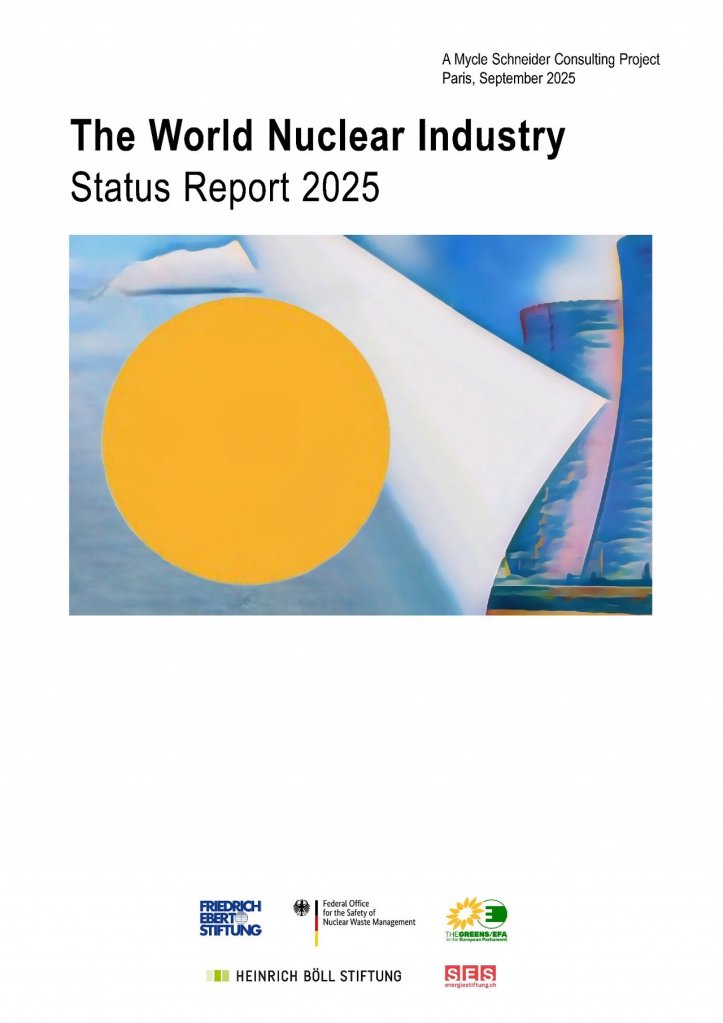
The latest edition of the World Nuclear Industry Status Report paints a glum picture for the nuclear power industry — the number of countries building reactors has plummeted from 16 to 11 over the past two years — and gives the lie to claims by the Coalition that Australia risks being ‘left behind’ and ‘stranded’ if we don’t jump on board.
That appears to be news to new Coalition energy spokesman Dan Tehan, who has taken over the portfolio from Ted O’Brien, the chief architect of the nuclear power policy that cost the Coalition around 11 seats in the May 2025 election.
Speaking to Sky News from the US, where he says he is on a nuclear “fact-finding” mission, Tehan said Sky News that “every major industrialised country, apart from Australia, is either seriously considering nuclear or is adopting nuclear technology at pace”.
Continuing with the theme, Tehan said: “Australia is going to be completely and utterly left behind, because we have a nuclear ban at the moment in place, and if we’re not careful, the rest of the world is going to move and we are going to be left stranded.”
The simple fact is, however, that there isn’t a single power reactor under construction in the 35 countries on the American continent; and the number of countries building reactors has plummeted from 16 to 11 over the past two years.
World Nuclear Industry Status Report
Tehan could — but won’t — read the latest edition of the World Nuclear Industry Status Report (WNISR-2025), released on Monday. For three decades, these annual reports have tracked the stagnation and decline of the nuclear industry.
There are two related factoids that nuclear enthusiasts can latch onto among the 589 pages of bad news in WNISR-2025: record global nuclear power generation of 2,677 terawatt-hours in 2024 and record capacity of 369.4 gigawatts (GW) as of December 2024. But they are pyrrhic wins. Both records are less than one percent higher than the previous records and they mask the industry’s underlying malaise.
Nuclear power generation has been stagnant for 20 years. Then, a relatively young reactor fleet was generating a similar amount of electricity. Now, it’s an ageing fleet. WNISR-2025 notes that the average age of the 408 operating power reactors has been increasing since 1984 and stands at 32.4 years as of mid-2025.
For the 28 reactors permanently shut down from 2020-24, the average age at closure was 43.2 years. With the ageing of the global reactor fleet and the closure of more and more ageing reactors, the industry will have to work harder and harder just to maintain the long pattern of stagnation let alone achieve any growth. Incremental growth is within the bounds of possibility; rapid growth is not.
Further, the global figures mask a striking distinction between China and the rest of the word. WNISR-2025 notes that in the 20 years from 2005 to 2024, there were 104 reactor startups and 101 closures worldwide. Of these, there were 51 startups and no closures in China. In the rest of the world, there was a net decline of 48 reactors and a capacity decline of 27 GW. So much for Tehan’s idiotic claim that Australia risks being “left behind” and “stranded”.
Even in China, nuclear power is little more than an afterthought. Nuclear’s share of total electricity generation in China fell for the third year in a row in 2024, to 4.5 percent. Nuclear capacity grew by 3.5 GW, while solar capacity grew by 278 GW. Solar and wind together generated about four times more electricity than nuclear reactors.
Since 2010, the output of solar increased by a factor of over 800, wind by a factor of 20, and nuclear by a factor of six. Renewables, including hydro, increased from 18.7 percent of China’s electricity generation in 2010 to 33.7 percent in 2024 (7.5 times higher than nuclear’s share), while coal peaked in 2007 at 81 percent and declined to 57.8 percent in 2024.
Global data
In 2024, there were seven reactor startups worldwide — three in China and one each in France, India, the UAE and the US. There were four permanent reactor closures in 2024 — two in Canada and one each in Russia and Taiwan. The 2025 figures are even more underwhelming: one reactor startup so far and two permanent closures.
As of mid-2025, 408 reactors were operating worldwide, the same number as a year earlier and 30 below the 2002 peak of 438.
Nuclear’s share of total electricity generation fell marginally in 2024. Its share of 9.0 percent is barely half its historic peak of 17.5 percent in 1996.
The number of countries building power reactors has fallen sharply from 16 in mid-2023 to 13 in mid-2024 and just 11 in mid-2025. Only four countries — China, India, Russia, and South Korea — have construction ongoing at more than one site.
As of mid-2025, 63 reactors were under construction, four more than a year earlier but six fewer than in 2013. Of those 63 projects, more than half (32) are in China.
As of mid-2025, 31 countries were operating nuclear power plants worldwide, one fewer than a year earlier as Taiwan closed its last reactor in May 2025. Taiwan is the fifth country to abandon its nuclear power program following Italy (1990), Kazakhstan (1999), Lithuania (2009) and Germany (2023).
Nuclear newcomers
Only three potential newcomer countries are building their first nuclear power plants — Bangladesh, Egypt and Turkiye. All of those projects are being built by Russia’s Rosatom with significant financial assistance from the Russian state.
(According to the World Nuclear Association, only one additional country — Poland — is likely to join the nuclear power club over the next 15 years.)
The number of countries operating power reactors reached 32 in the mid-1990s. Since then it has fallen to 31. That pattern is likely to continue in the coming decades: a trickle of newcomers more-or-less matched by a trickle of exits.
Russia is by far the dominant supplier on the international market, with 20 reactors under construction in seven countries (and another seven under construction in Russia). Apart from Russia, only France’s EDF (two reactors in the UK) and China’s CNNC (one reactor in Pakistan) are building reactors abroad.
WNISR-2025 notes that it remains uncertain to what extent Russia’s projects abroad have been or will be impacted by sanctions imposed on Russia following its invasion of Ukraine. Sanctions — including those on the banking system — have clearly delayed some projects.
Construction of nine reactors began in 2024: six in China, one in Russia, one Chinese-led project in Pakistan, and one Russian-led project in Egypt.
Chinese and Russian government-controlled companies implemented 44 of 45 reactor construction starts globally from January 2020 through mid-2025, either domestically or abroad. The one exception is a domestic construction start in South Korea.
Small modular reactors
Dan Tehan told Sky News he planned to visit Idaho to investigate developments relating to small modular reactors (SMRs). But the only significant recent SMR ‘development’ in Idaho was the 2023 cancellation of NuScale’s flagship project after cost estimates rose to a prohibitive A$31 billion per GW.
The NuScale fiasco led the Coalition to abandon its SMR-only policy and to fall in love with large, conventional reactors despite previously giving them a “definite no”.
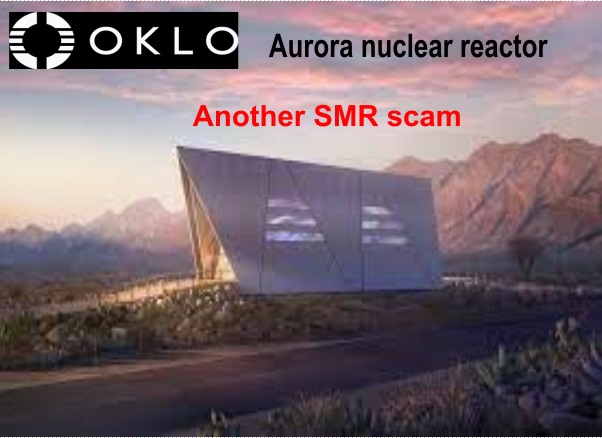
Or perhaps Tehan was at Oklo’s SMR ‘groundbreaking ceremony’ in Idaho on Monday. Oklo doesn’t have sufficient funding to build an SMR plant, or the necessary licences, but evidently the company found a shovel for a ‘pre-construction’ ceremony and photo-op.
Worldwide, there are only two operating SMRs plants: one each in Russia and China. Neither of the plants meet a strict definition of SMRs (modular factory construction of reactor components). Both were long delayed and hopelessly over-budget, and both have badly underperformed since they began operating with load factors well under 50 percent.
WNISR-2025 notes that there are no SMRs under construction in the West. Pre-construction activity has begun at Darlington in Canada. But as CSIRO found in its latest GenCost report, even if there are no cost overruns in Canada, the levelised cost of electricity will far exceed the cost of firmed renewables in Australia.
Argentina began planning an SMR in the 1980s and construction began in 2014, but it was never completed and the project was abandoned last year.
SMR wannabes and startups continue to collapse on a regular basis. WNISR-2025 reports that two of the largest European nuclear startups Newcleo (cash shortage) and Naarea (insolvent) are in serious financial trouble.
Ultra Safe Nuclear Corporation filed for bankruptcy protection in the US last year – just a year after a company representative falsely told an Australian Senate inquiry that it was constructing reactors in North America. The Nuward project was suspended in France last year following previous decisions to abandon four other SMR projects in France.
Nuclear vs. renewables
For two decades, global investments in renewable power generation have exceeded those in nuclear energy and are now 21 times higher.
Total investment in non-hydro renewables in 2024 was estimated at US$728 billion, up eight percent compared to the previous year.
In 2024, solar and wind capacity grew by 452 GW and 113 GW, respectively, with the combined total of 565 GW over 100 times greater than the 5.4 GW of net nuclear capacity additions.
In 2021, the combined output of solar and wind plants surpassed nuclear power generation for the first time. In 2024, wind and solar facilities generated over 70 percent more electricity than nuclear plants.
In April 2025, global solar electricity generation exceeded monthly nuclear power generation for the first time and kept doing so in May and June 2025. In 2024, wind power generation grew by 8 percent, getting close to nuclear generation.
Renewables (including hydro) account for over 30 percent of global electricity generation and the International Energy Agency expects renewables to reach 46 percent in 2030. Nuclear’s share is certain to continue to decline from its current 9 percent.
WNISR-2025 concludes: “2024 has seen an unprecedented boost in solar and battery capacity expansion driven by continuous significant cost decline. As energy markets are rapidly evolving, there are no signs of vigorous nuclear construction and the slow decline of nuclear power’s role in electricity generation continues.”
Dr. Jim Green is the national nuclear campaigner with Friends of the Earth Australia and a member of the Nuclear Consulting Group.
1 This month
7 April – WEBINAR – Australia and the Doomsday Clock – Preventing nuclear war through NoFirstUse and other policies
Online | Tuesday April 7, 4:00-5:30pm, Australian Eastern Time / 8:00-9:30am Central Europe Time
– Access the registration link
15 April – Zoom –Nuclear Power is Not the Solution
Apr 15, 2026 01:00 AM in Canberra, Melbourne, Sydney

Join the International Physicians for the Prevention of Nuclear War (IPPNW) on Tuesday, April 14th for a timely webinar exploring the risks associated with nuclear power and challenging the myth that it offers a simple, safe, carbon-free solution to the climate crisis

21 April Webinar: No Nuclear Weapons in Australia
Start: 2026-04-21 18:00:00 UTC Canberra, Melbourne, Sydney (GMT+10:00)
End: 2026-04-21 19:30:00 UTC Canberra, Melbourne, Sydney (GMT+10:00)
Event Type: Virtual
A virtual link will be communicated before the event.
Host Contact Info: australia@icanw.org

of the week – Australians for War Powers Reform (AWPR)
To see nuclear-related stories in greater depth and intensity
 Antinuclear