AUKUS: Revolving door, spiralling down
Ahead of the launch of a new database on the Australian military-industrial complex, we document the farce that AUKUS has become
Michelle Fahy, Undue Influence, Oct 20, 2025
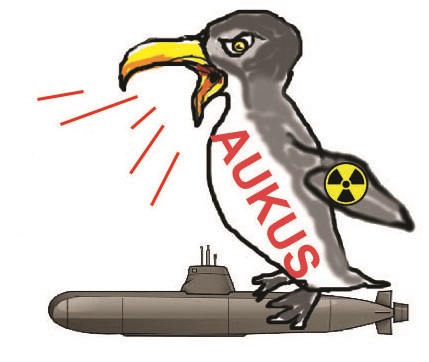
It is clear to many that AUKUS, in particular its early fulfilment stages, is becoming a debacle. In February, Defence Minister Richard Marles lauded as a ‘very unique’ arrangement Australia’s gift to the United States of $4.7 billion to bolster America’s struggling submarine output, highlighting that such an arrangement hasn’t been seen in other defence pacts globally.
Of course such an arrangement hasn’t been seen elsewhere! Most other countries wouldn’t agree to hand over this massive sum without ensuring there were provisions for a refund should the promised submarines fail to arrive.
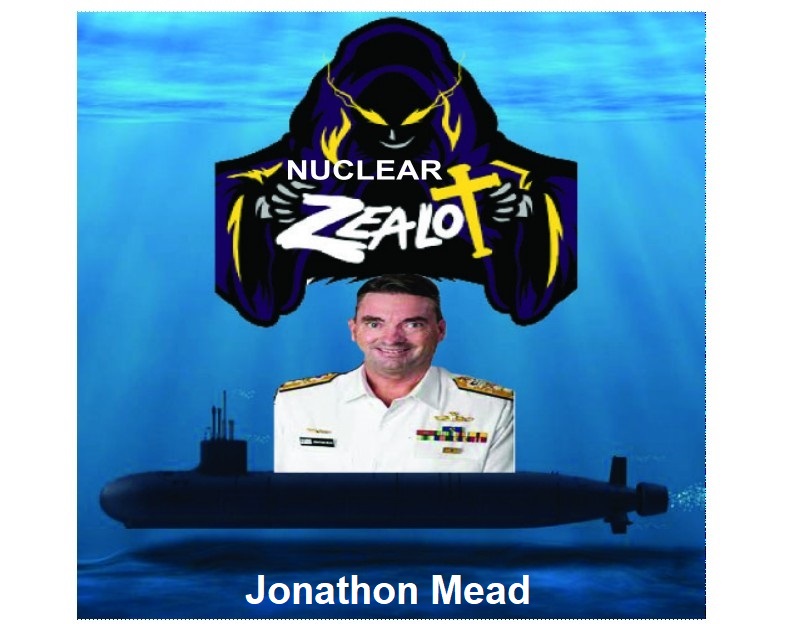
In an inept performance in Senate Estimates in June 2024, Vice Admiral Jonathan Mead, head of the Australian Submarine Agency, woodenly refused to answer a straightforward question from Greens’ Senator David Shoebridge about whether the agreement Australia has struck with the US contains a clawback provision should the promised submarines fail to be supplied.
Mead’s performance, as recorded in Hansard, is mordantly comical:
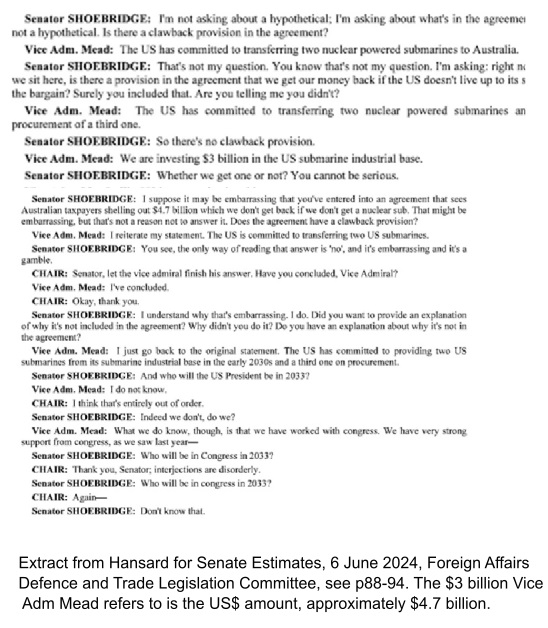
It is thus obvious that Australia has no contractual way of recovering its money should the current or a future US President block the transfer of the submarines, as the US President is entitled to do under US legislation.
Australia is certainly ‘very unique’ in its willingness to part with almost $10 billion (the UK is getting a similar amount) in public funds with no strings attached.
Australia made the first payment of $800 million to the US in February and quietly transferred the second payment, a further $800 million, in July. It has committed to paying a total of US$2 billion ($3 billion) by the end of 2025, with the remainder to be paid over the decade to 2035‒36.
Under the AUKUS deal, both major political parties have committed to spending vast public resources with no consultation and minimal transparency and accountability.
Even though the Australian National Audit Office has exposed, in report after report, serious probity breaches in defence procurement, including unethical conduct between global weapons companies and the Australian government, these transgressions are routinely ignored. The weapons deals continue regardless.
The big winners from AUKUS so far have been nuclear submarine manufacturers in the United States and the United Kingdom. Australia has committed to providing almost $10 billion to boost the output of these companies, helping secure jobs for workers in America and the United Kingdom.
As there are no clawback provisions in either of these agreements, should President Trump ditch AUKUS, or if the submarine manufacturing capacity in the US and UK doesn’t sufficiently increase, Australian taxpayers will be picking up another multibillion-dollar defence tab with nothing to show for it. We’ve already shelled out $3.4 billion for no submarines, following former PM Scott Morrison’s shredding of the pre-AUKUS French submarine contract.
This is far from the only example of waste, misdirection and incompetence in Australia’s dealings with the global arms industry. Take the Albanese government’s engagement with global arms giant Thales. In October last year, the government signed up Thales to a further munitions manufacturing contract and a ‘strategic partnership’ in the new domestic missile-making endeavour, the Guided Weapons and Explosive Ordnance (GWEO) enterprise.
The new deal with Thales was struck despite the fact that Thales is currently being investigated by four countries for widespread criminal activity in three separate corruption probes. …………………….https://undueinfluence.substack.com/p/nothing-to-see-here-says-australia………………………………………… The Thales example illustrates how a key democratic accountability mechanism, the National Audit Office and its reports, is routinely ignored.
…………………………………………………How is it that such imbroglios occur again and again? Australian governments are highly susceptible to the ‘revolving door’ process in which politicians, the military and public servants move effortlessly between government, lobbying and the industry itself.
In what follows, no suggestion is being made of unlawful activity by any person named, nor that any of the appointments noted was unlawful.
The problem for Australia is not one of legality but of the perfectly legal influence of industry insiders within government, the lack of transparency, and the absence of management of the ‘revolving door’.
The revolving door
The ‘revolving door’ describes the movement of public officials into related private roles, and industry executives into related public roles. It is a widespread problem that undermines democracy, yet in Australia it remains unmonitored and unpoliced.
A large number of Australia’s senior government ministers and their staffers, military officers, and defence department officials move through the revolving door into paid roles with the weapons industry. Such moves are not illegal but they require a robust management framework—with rules that are enforced—to mitigate the inherent conflicts of interest. Australia’s feeble attempts at managing the revolving door have been completely ineffective
……………………………………………………………………………………………………………..In the lobby
Numerous former senior politicians are now working as lobbyists for the weapons industry. Examples include: Liberals Christopher Pyne (Pyne and Partners), Joe Hockey (Bondi Partners), Arthur Sinodinos (The Asia Group) and David Johnston (TG Public Affairs); and Labor’s Kim Beazley (TG Public Affairs), Joel Fitzgibbon (CMAX Advisory), Stephen Conroy (TG Public Affairs) and Mark McGowan (Bondi Partners).
There are also plenty of former senior military officers pulling strings on behalf of weapons companies too. Examples are listed below.
The federal register of lobbyists provides some transparency, but does not cover the majority of people who lobby politicians. The register applies only to third-party lobbyists. These people operate as paid professionals, either individually or as an employee of a lobbying firm, on behalf of clients. Third party lobbyists make up just 20% of all lobbyists. The remaining 80% include, amongst others, company CEOs and people employed by corporations as ‘government relations’ advisers. This enables employees of major weapons companies to lobby politicians easily and legally, with zero transparency.
Reverse cycle: private to public
The government’s engagement with UK weapons giant BAE Systems’ local subsidiary best illustrates how this works.
The government gave former senior BAE Systems executives influential behind-the-scenes roles both before and during the tender process for Australia’s largest ever surface warship procurement, the $46 billion Hunter class frigates, a contract BAE went on to win. Few of these roles were publicly acknowledged. https://undueinfluence.substack.com/p/sinking-billions-revolving-doors
BAE Systems was awarded the frigates contract by the Turnbull government in mid-2018. The names of the people appointed to an expert advisory panel to oversee the tender evaluation process were not made public. Here’s why: serious conflicts of interest…………………………………………………………………………………………………..
Lockheed Martin locks on target
Israel’s genocidal war on Gaza has put the issue of the extensive influence on the Australian government of Lockheed Martin—the world’s largest arms manufacturer—under the spotlight…………https://undueinfluence.substack.com/p/buck-passing-inside-the-murky-arms
Lockheed Martin utilises the revolving door heavily in the US. Until recently, it had openly adopted the same strategy in Australia. From October 2013 until the end of 2021, the board of Lockheed Martin Australia boasted multiple former senior Australian public officials: at least two at any one time, more often three, and even four during one 20-month period.
They included a roll call of defence heavies from past decades,………………………………………………………………………………………
The UN Special Rapporteur on the occupied Palestinian territory, Francesca Albanese, released a report in July addressing the ‘economy of genocide’ in which she makes special note of Lockheed Martin’s F-35 program…………………………….
Australia’s refusal to cease the supply of parts and components into Lockheed Martin’s F-35 global supply chain places the nation at risk of being found complicit in Israel’s genocide.
Complicity in the world’s worst international crime is just one of the democracy-undermining consequences of Australia’s deep enmeshment in the US and broader Western military industrial complex.
This feature article started life as a talk to Australia’s Online Quaker Meeting mid-year. I later expanded it for ARENA Quarterly’s Spring 2025 issue, which was delivered to bookshops last week ($20). It is also online at Arena. https://undueinfluence.substack.com/p/aukus-revolving-door-spiralling-down?utm_source=post-email-title&publication_id=297295&post_id=176534719&utm_campaign=email-post-title&isFreemail=true&r=1ise1&triedRedirect=true&utm_medium=email
1 This month
7 April – WEBINAR – Australia and the Doomsday Clock – Preventing nuclear war through NoFirstUse and other policies
Online | Tuesday April 7, 4:00-5:30pm, Australian Eastern Time / 8:00-9:30am Central Europe Time
– Access the registration link
15 April – Zoom –Nuclear Power is Not the Solution
Apr 15, 2026 01:00 AM in Canberra, Melbourne, Sydney

Join the International Physicians for the Prevention of Nuclear War (IPPNW) on Tuesday, April 14th for a timely webinar exploring the risks associated with nuclear power and challenging the myth that it offers a simple, safe, carbon-free solution to the climate crisis

21 April Webinar: No Nuclear Weapons in Australia
Start: 2026-04-21 18:00:00 UTC Canberra, Melbourne, Sydney (GMT+10:00)
End: 2026-04-21 19:30:00 UTC Canberra, Melbourne, Sydney (GMT+10:00)
Event Type: Virtual
A virtual link will be communicated before the event.
Host Contact Info: australia@icanw.org

of the week – Australians for War Powers Reform (AWPR)
To see nuclear-related stories in greater depth and intensity
 Antinuclear