Desperately seeking submariners: why keeping nuclear-powered boats afloat will be Australia’s biggest Aukus challenge.
Ben Doherty, Guardian, 21 Oct 25
A vast and highly trained workforce is needed to command, crew, supply and maintain nuclear submarines. Some say that’s impossible for Australia.
“Vice-Admiral Mead, you’re free to go home … good to see you cracking a smile.”
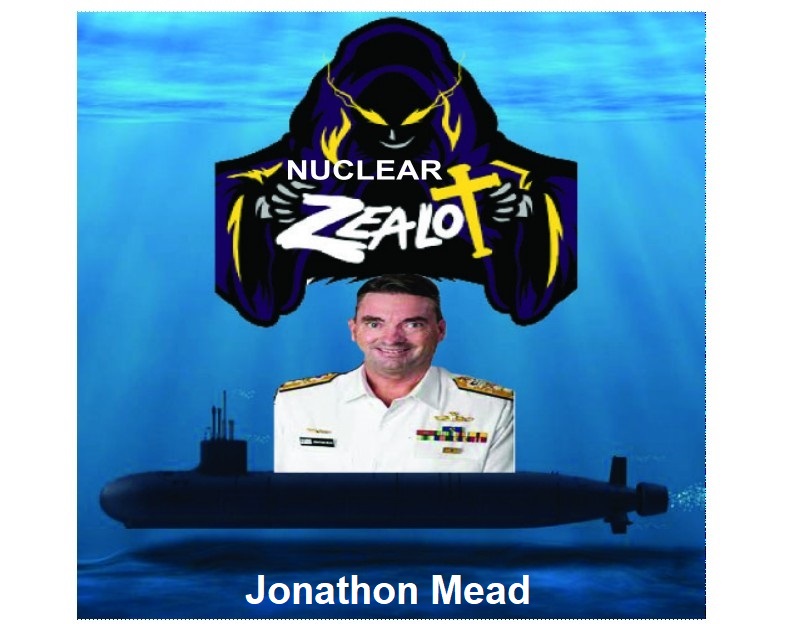
The head of the Australian Submarine Agency had spent a withering three hours before Senate estimates, parrying a barrage of questions about Australia’s ambitious Aukus nuclear submarine plan: interrogatives on consultants, on hundreds of millions of dollars sent to US and UK shipyards, on sclerotic boat-building on both sides of the Atlantic.
But while so much focus has been on Australia’s nuclear submarines’ arrival, their price tag and their “sovereign” status, the greatest challenge to the Aukus project, Mead told the Senate, would be finding the people to keep them afloat and at sea.
“Ensuring Australia has the workforce to deliver this program remains our biggest challenge,” he said.
If Australia’s nuclear submarines arrive on these shores – and that remains a contested question, with expert opinion ranging from an absolute yes to a certain no – will Australia be able to crew, supply and maintain them?
“It is a challenge we are continuing to meet,” Mead told senators. “Australian industry and navy personnel continue to build critical experience through targeted international placements.”
Others are less sanguine.
“The Aukus optimal pathway is a road to a quagmire,” says a former admiral and submarine commander, Peter Briggs, arguing that Australia’s small submarine arm can’t be upscaled quickly enough. “It’s not going anywhere. It will not work.”
Onshore trades, too, are perilously short. Without an additional 70,000 welders by 2030, that trade’s peak body says: “The Aukus submarine program is at serious risk of collapse.”
Mead was asked directly by senators: “Are you still confident of meeting the government’s agenda and timings?”
“Yes,” he replied, “I am.”
‘An eye-wateringly long process’
Briggs, a past president of the Submarine Institute of Australia, says the Aukus plan reads like one “designed by a political aide in a coffee shop”.
The navy’s submarine arm is approximately 850 sailors and officers (the defence department declined to give exact figures). The former chief of navy previously told parliament it needed to grow to 2,300 by the 2040s.
But Briggs estimates that to crew and support Australia’s Virginia-class, and later, Aukus-class submarines, the navy will need to more than treble its existing complement to about 2,700.
Virginias are massive submarines – nearly 8,000 tons – and carry a crew of 134, more than twice the existing Collins-class crew of 56. The Aukus submarines to be built in Adelaide will be bigger again. More tonnage, more people.
“That’s a huge increase in what is already in very scarce supply,” Briggs argues…………………………………………………………
The new generation of submariners is needed for between three and five Virginia-class submarines, then up to eight Australian-built Aukus boats.
“To get to be chief engineer of a nuclear submarine takes 16 to 18 years,” Briggs says. “It’s an eye-wateringly long process and of course you lose people along the way.
“That’s why you need a broad base, a critical mass, and Australia simply doesn’t have that right now. There is no way a navy the size of ours can manage this mix.”
Briggs does not believe the US will withdraw from Aukus: the presence of nuclear submarine bases on Australian soil is too great a prize for a superpower wanting to project power into the Pacific. But Australia’s unreadiness could lead to nuclear submarines under domestic command being delayed.
“We’ve got no warranty clause, no guarantee of anything. The cop-out could come in 2031, the US might say, ‘Look, you’re not quite ready yet, let’s push everything back three years, check in again in 2034.’ And it’s Australia that’s left exposed.”
‘Beyond frustrating, it’s dangerous’
Beyond the complexity of commanding and crewing a nuclear submarine, the vessels need a vast and highly trained workforce to keep them supplied, afloat and at sea………………………………………………………………………
“This is not just a workforce challenge,” its chief executive, Geoff Crittenden, said in a statement. “It’s a full-blown capability crisis … If we don’t address this issue now, Aukus will fail.”
Aukus represented a “perfect storm”, he said, and failure to address worker shortages was “beyond frustrating, it’s dangerous”.
“A once-in-a-generation opportunity like Aukus demands a long-term, strategic response, not just investment in ships and steel, but in people. We estimate that Australia will be at least 70,000 welders short by 2030. Without immediate action, the project is doomed to delays, cost blowouts, or worse.”…………………………………………………………………………
The first cohort won’t be Australian. “In the short term there will have to be an influx of international talent, as we train and upskill our own people.”
Tier two is a nuclearised workforce of skilled professionals – scientists, electrical and mechanical engineers, technical managers, reactor operators and health physicists – with advanced training and between seven and 10 years’ experience. The majority of a submarine crew would sit in this tier. Obbard estimates that about 5,000 tier-two workers will be needed.
Tier three is a further cohort of “nuclear-aware” workers – between 5,000 and 6,000 again – tradespeople including machinists, fitters and welders, who will require some nuclear training.
“The Aukus plan cannot work without building this workforce and the wider engineering community this workforce is drawn from.”
Does it make sense?’
Jack Dillich is uniquely placed to observe Australia’s transformation to a nuclear submarine power. A former submarine officer, he holds an advanced degree in nuclear engineering and served on the executive of the Australian Nuclear Science and Technology Organisation, where he was responsible for the country’s sole nuclear reactor, and as head of the regulatory branch at the Australian Radiation Protection and Nuclear Safety Agency. He now teaches a nuclear course at the Australian Defence Force Academy………………………………….
[Dillich says] Australia needs to be asking, ‘Does it make sense to try to build a tiny fleet here?’ Maybe 25 years from now, Australia could have eight nuclear-propelled submarines: they would be very, very expensive.”……………………………..https://www.theguardian.com/australia-news/2025/oct/20/aukus-submarine-workforce-nuclear-powered-boats-australia
Could Australia’s trash become Donald Trump’s treasure? Turning our waste into critical minerals

21 October 2025 AIMN Editorial, UNSW Sydney
UNSW Sydney Media Release
Key facts:
- Australians generate around 20kg of e-waste per person every year
- Some of the components inside this everyday waste include critical minerals, which can be reused and recycled
- At the National Press Club in Canberra today, Professor Veena Sahajwalla called on policymakers, industry and communities to embrace our waste.
As Donald Trump and Anthony Albanese announce a new, multi-billion-dollar critical minerals pact, UNSW Professor Veena Sahajwalla will tell the National Press Club in Canberra how onshore recycling technologies can recover these critical minerals from our waste stream – making the adoption of this cutting-edge technology a strategic, economic and environmental imperative.
At the National Press Club in Canberra today, UNSW Sydney’s Scientia Professor Veena Sahajwalla called on policymakers, industry and communities to embrace a new vision for Australia’s waste. Instead of relegating waste to landfills, incinerators or stockpiles, she argued it can drive innovation, support local industries, create jobs and deliver environmental and social benefits.
“True sustainability demands we harness this potential and transform waste into a resource stream for advanced manufacturing,” Prof. Sahajwalla said.
Australians generate around 20kg of e-waste per person every year, but many of the valuable minerals inside are never recovered. Some of the components inside this everyday waste include critical minerals, which can be reused and recycled, meaning there is both a strategic as well as an economic and environmental need to adopt this technology.
Using techniques Prof. Sahajwalla has designed, those waste resources can be reused and turned into new and valuable products.
E-waste is one aspect of a waste management crisis Prof. Sahajwalla’s work seeks to remedy.
In communities across Australia, her team’s pioneering MICROfactorieTM technologies are already showing what this future looks like. In Sydney’s south-west, discarded mattresses are being turned into green ceramic tiles, supporting local manufacturing jobs and helping councils reduce waste management costs. In Taree in regional NSW, reclaimed aluminium is being reformed into new aerosol cans. While in Sydney’s north, e-waste is being remanufactured into 3D printing filament.
“Using our waste resources as feedstock develops a circular economy where supply chains are linked up and local jobs are created, with significant environmental and social benefits,” she said.
Prof. Sahajwalla is Director of UNSW’s Sustainable Materials Research and Technology (SMaRT) Centre, which is internationally recognised for pioneering the concept of ‘MICROfactories’. The SMaRT Centre is home to MICROfactories technology, turning small, modular recycling systems that transform discarded products such as mattresses, glass, textiles, and electronic waste into valuable materials and products.
Her team’s work with councils and industry partners shows how this transformation is already taking shape:
Creating tiles from waste
In her address, Prof. Sahajwalla shared details of how the Liverpool City Council in Sydney’s south-west has turned a major waste problem into a circular economy success story. When the Council realised it was spending hundreds of thousands of dollars annually to dispose discarded mattresses it partnered with Prof. Sahajwalla’s SMaRT Centre to pilot a MICROfactorieTM to shred and re-manufacture the materials………………………………………………………………………………………………
She also outlined a vision in which MICROfactories could be established in cities, towns and regional communities across the country, each tailored to local waste streams and employment needs. In regional NSW, her team is working with the Aboriginal community in Wellington near Dubbo to use green ceramic tiles in sustainable housing projects, supported by the federal government’s Sustainable Communities and Waste Hub (SCaW).
Turning university research into real-world impact
Prof. Sahajwalla said Australia must do more to ensure university research translates into real-world impact. She called for governments to lead by example in adopting Australian-made sustainable technologies, and to reward companies that invest in local R&D.
“By and large, our professional incentives are not geared towards the long-hours it takes to actually build the machine that can make a world-saving idea a reality,” Prof. Sahajwalla said…………………………………………………………… https://theaimn.net/could-australias-trash-become-donald-trumps-treasure-turning-our-waste-into-critical-minerals/
1 This month
7 April – WEBINAR – Australia and the Doomsday Clock – Preventing nuclear war through NoFirstUse and other policies
Online | Tuesday April 7, 4:00-5:30pm, Australian Eastern Time / 8:00-9:30am Central Europe Time
– Access the registration link
15 April – Zoom –Nuclear Power is Not the Solution
Apr 15, 2026 01:00 AM in Canberra, Melbourne, Sydney

Join the International Physicians for the Prevention of Nuclear War (IPPNW) on Tuesday, April 14th for a timely webinar exploring the risks associated with nuclear power and challenging the myth that it offers a simple, safe, carbon-free solution to the climate crisis

21 April Webinar: No Nuclear Weapons in Australia
Start: 2026-04-21 18:00:00 UTC Canberra, Melbourne, Sydney (GMT+10:00)
End: 2026-04-21 19:30:00 UTC Canberra, Melbourne, Sydney (GMT+10:00)
Event Type: Virtual
A virtual link will be communicated before the event.
Host Contact Info: australia@icanw.org

of the week – Australians for War Powers Reform (AWPR)
To see nuclear-related stories in greater depth and intensity
 Antinuclear