The architecture of a vassal: how US bases in Australia project power, not protection.
2 December 2025 Andrew Klein, https://theaimn.net/the-architecture-of-a-vassal-how-us-bases-in-australia-project-power-not-protection/
The strategic placement of key US and joint military facilities across Australia reveals a pattern not of national defence, but of integration into a global, offensively-oriented network for force projection and intelligence gathering. An analysis of their locations and functions demonstrates that these bases are designed to serve the strategic interests of a superpower, often at the expense of Australian sovereignty and security.
The Official Rationale: A Volatile Region and the Strategy of Denial
According to official Australian government assessments, the strategic environment is increasingly volatile, characterised by falling international cooperation, rising competition, and uncertainty about US reliability. In response, Australia’s National Defence Strategy: 2024 has adopted a “strategy of denial,” emphasising deterrence as its primary objective. This policy shift is used to justify initiatives such as:
- Acquiring nuclear-powered submarines through AUKUS.
- Upgrading and expanding northern military bases.
- Acquiring new long-range strike capabilities.
The public-facing logic is that longer-range weapons have overturned Australia’s geographic advantage, making the “sea-air gap” to the north a vulnerability. However, a closer examination of the specific facilities tells a different story.
Pine Gap: The Beating Heart of Global Surveillance
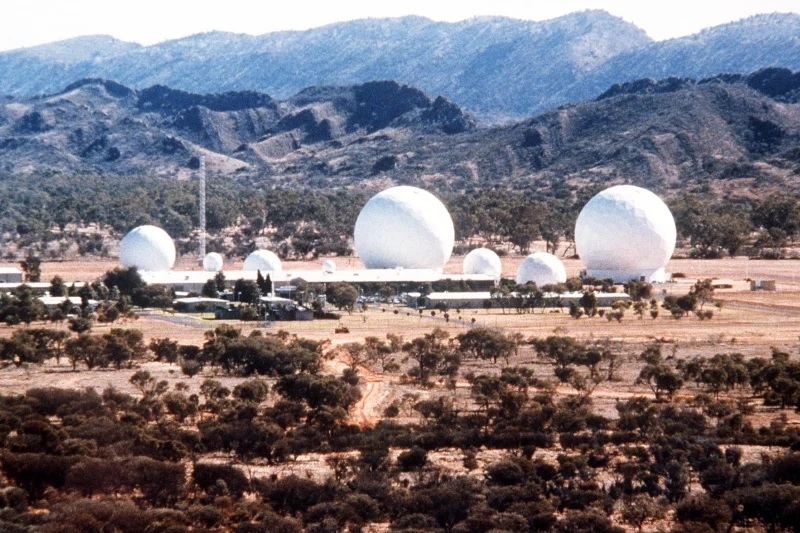
The Joint Defence Facility Pine Gap, near Alice Springs, is the most prominent example. Ostensibly a joint facility, it is a critical node in US global intelligence. Its functions extend far beyond any defensive mandate for Australia.
- Global Signals Intelligence: Pine Gap acts as a ground control and processing station for US geosynchronous signals intelligence (SIGINT) satellites. These satellites monitor a vast swath of the Eastern Hemisphere, collecting data including missile telemetry, anti-aircraft radar signals, and communications from mobile phones and microwave transmissions.
- Warfighting and Targeted Killing: Information from Pine Gap is not merely for analysis. It is used to geolocate targets for military action. The base has played a direct role in US drone strikes and has provided intelligence in conflicts from Vietnam and the Gulf War to the ongoing wars in Gaza. Experts testify that data downlinked at Pine Gap is passed to the US National Security Agency and then to allies like the Israel Defense Forces, potentially implicating Australia in international conflicts without public knowledge or parliamentary oversight.
- A History of Secrecy and Sovereignty Betrayed: The base’s history is marked by breaches of Australian sovereignty. During the 1973 Yom Kippur War, the US government placed Pine Gap on nuclear alert (DEFCON 3) without informing Australian Prime Minister Gough Whitlam. Whitlam’s subsequent consideration of closing the base was followed by his dramatic dismissal in 1975, an event that former CIA officers have linked to US fears over losing access to the facility.
Northern Bases: Launchpads for Power Projection
The network of bases across Australia’s north forms an arc designed for forward operations, not homeland defence.
- RAAF Base Tindal: This base in the Northern Territory is undergoing upgrades to host US B-52 strategic bombers. This transformation turns Australian territory into a forward operating location for long-range strike missions deep into Asia, fundamentally changing the nation’s role from a sovereign state to a launching pad for another power’s offensive operations.
- Marine Rotational Force – Darwin: The stationing of up to 2,500 US Marines in Darwin functions as a persistent force projection and logistics hub, enhancing the US ability to rapidly deploy forces into the Southeast Asian region.
- NW Cape (Harold E. Holt): The facility in Exmouth, Western Australia, hosts advanced space radar and telescopes for “space situational awareness.” This contributes to US space warfare and communications capabilities, a global mission with little direct relation to the defence of Australia’s population centres.
The True Cost: Compromised Sovereignty and Incurred Risk
This integration into a superpower’s military apparatus comes with severe, often unacknowledged, costs.
- The Loss of Sovereign Control: The operational control of these critical facilities is often ceded to the United States. At Pine Gap, the chief of the facility is a senior CIA officer, and certain sections, such as the NSA’s cryptology room, are off-limits to Australian personnel. This creates a situation where activities conducted on Australian soil are not fully known or controlled by the Australian government.
- Becoming a Nuclear Target: The critical importance of bases like Pine Gap to US global military dominance makes them high-priority targets in the event of a major conflict. By hosting these facilities, Australia voluntarily assumes the risk of being drawn into a nuclear exchange, a strategic decision made without public debate.
- Complicity in International Conflicts: As the protests and legal actions surrounding Pine Gap’s role in Gaza highlight, Australia faces legal and moral accusations of complicity in actions that may constitute war crimes or genocide. This places the nation in direct opposition to international law and global public opinion, all for the sake of an alliance that often prioritises US interests.
Conclusion: From Independent Ally to Integrated Base
The evidence is clear: the strategic network of US-linked bases in Australia is not primarily for the nation’s defence. It is the architecture of a vassal state, designed to service the global force projection and intelligence-gathering needs of a superpower. From the satellite surveillance of Pine Gap to the bomber forward deployment at Tindal, these facilities entangle Australia in conflicts far beyond its shores, compromise its sovereignty, and incur immense strategic risks. Until this fundamental reality is confronted, Australian defence policy will continue to serve an empire’s interests, not its own.
References…………………
No comments yet.
1 This month
7 April – WEBINAR – Australia and the Doomsday Clock – Preventing nuclear war through NoFirstUse and other policies
Online | Tuesday April 7, 4:00-5:30pm, Australian Eastern Time / 8:00-9:30am Central Europe Time
– Access the registration link
15 April – Zoom –Nuclear Power is Not the Solution
Apr 15, 2026 01:00 AM in Canberra, Melbourne, Sydney

Join the International Physicians for the Prevention of Nuclear War (IPPNW) on Tuesday, April 14th for a timely webinar exploring the risks associated with nuclear power and challenging the myth that it offers a simple, safe, carbon-free solution to the climate crisis

21 April Webinar: No Nuclear Weapons in Australia
Start: 2026-04-21 18:00:00 UTC Canberra, Melbourne, Sydney (GMT+10:00)
End: 2026-04-21 19:30:00 UTC Canberra, Melbourne, Sydney (GMT+10:00)
Event Type: Virtual
A virtual link will be communicated before the event.
Host Contact Info: australia@icanw.org

of the week – Australians for War Powers Reform (AWPR)
To see nuclear-related stories in greater depth and intensity
 Antinuclear
Leave a comment