Marles’ new Defence agency – rearranging deck chairs on the HMAS Titanic
Look how much taxpayers’ money is gobbled up by weaponry, compared to all other services
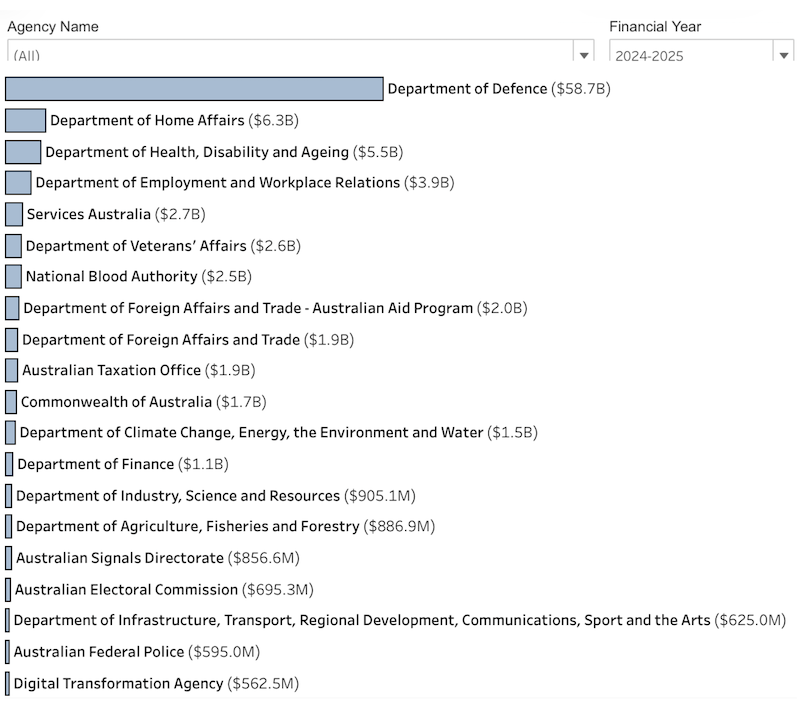
Earlier this week Defence Minister Richard Marles announced a big reform in Defence Procurement. Except it wasn’t a big reform, rather a rearranging of deck chairs. Former senator Rex Patrick reports.
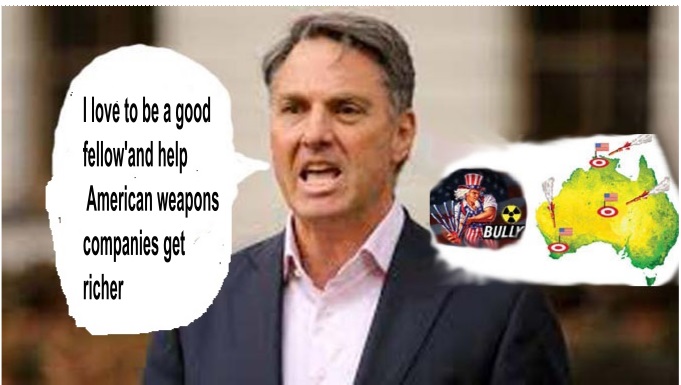
by Rex Patrick | Dec 7, 2025 https://michaelwest.com.au/marles-new-defence-agency-rearranging-deck-chairs/
And the needle returns to the start of the song …
On 22 June 2000, then Minister for Defence John Moore approved the establishment of the Defence Materiel Organisation (DMO), a single organisation that was to be charged with the responsibility of acquisition and through life support of equipment and systems used by the Australian Defence Force.
But the DMO didn’t work.
On 01 April 2015, then Minister for Defence Kevin Andrews announced that he had accepted the recommendations of a Defence First Principles Review and that the DMO would be disbanded – it wasn’t working – and that its functions would be transferred to a new Capability Acquisition and Sustainment Group (CASG).
But the CASG didn’t work.
On 01 December the Defence Minister, Richard Marles, announced he was merging CASG, Defence’s Guided Weapons and Explosives Ordinance Group and the Naval Shipbuilding & Sustainment Group into a single organisation to be called the Defence Delivery Agency (DDA).
DDA won’t work
Rearranging deck chairs
During the week Marles sought to assure that there would be no job losses as a result of his reforms and, in an absolute admission that all he was doing was rearranging the deck chairs, he advised that existing public servants who worked for Defence would simply be transferred over to the new agency.
The biggest problem that Defence has, and which Marles doesn’t have the ability to solve, is the fact that the very senior uniformed people who are running Defence acquisition, while undoubtedly being good war-fighters, don’t have the experience in project management to understand that it is risk that brings down projects.
You would not take an experienced project manager and assigned them command responsibility of a warship, and you should not take a warship captain and assign them responsibility for a large project. But the latter is exactly what happens inside Defence.
Political risk (political change), economic risk (pressure on budgets), management risk (inexperience) and technical risk (novelty, uncertainty and complexity) – that’s what causes projects to go off the rails.
Changing the label on the front door of the equipment procurement office won’t do a thing to get better value-for-money or reliable capable equipment for our defence force.
E.G. AUKUS
AUKUS is classical Defence risk taking.
It’s not a hidden fact that the United States is not building enough Virginia class submarines to meet US Navy needs, let alone supply the Royal Australian Navy with some. The US Government’s AUKUS review report is now with the Australian Government. The Minister is talking up the contents, albeit in very general detail.
“If the US were honest, they’d tell us to do something different.”
But with $1.6 billion already paid to the US Department of War and another billion dollars set to be gifted to the US in the next couple of weeks, the temptation would be difficult.
Senate Estimates this week was instructive. When Senator David Shoebridge read from the evidence given by Lord Case, the Chair of ‘Team Barrow’ (the organisation entrusted with ensuring the town of Barrow is able to support the UK’s and AUKUS submarine build needs) telling the UK Parliament he was not happy with his team’s progress, Vice Admiral Jonathon Mead indicated he did not know about it.
Experienced project managers spend their time looking for bad news – looking for risk that is materialising. That doesn’t seem to be happening. ‘Talking’ AUKUS is the order of the day, not ‘walking’.
Real change
If Marles knew what he was doing he would look to the culture in Defence procurements.
“No more ‘special’ or ‘expensive monolithic’ projects.“
Defence needs to develop a force optimised first for Defence-of-Australia and second for near regional security (and conduct other work from that order-of-battle). It needs to focus on proven designs/capabilities when fulfilling Defence Force needs.
This is something that has been recommended to Defence in the past, in the 2003 Kinnaird Review and the 2008 Mortimer Review. They are not new ideas; they are old ideas ignored.
Even those not currently interested in Defence need to be a little bit interested. Putting national security imperatives to one side, so much public money is spent on Defence.
One of the most telling signals that nothing substantive will come from Minister Marles’ announced changes came when Senator Shoebridge asked the question of Defence Secretary Greg Moriarty will the new ‘National Armament Director’ come from outside the current organisations?
There was no way Moriarty was going to answer that question. He employed bureaucratic doublespeak and avoided a direct answer. The secretary is an experienced public service hand, and will want someone in the seat that he can ‘guide’.
Marles needn’t worry too much though. He has what he needs – a dodge over failing projects for the rest of the parliamentary term, and possibly the next as well. “All those problems were caused by the old system,” Marles will say.
Segal Secrets: docs reveal Antisemitism Envoy’s big pay day
by Stephanie Tran | Dec 9, 2025, https://michaelwest.com.au/segal-secrets-docs-reveal-antisemitism-envoys-big-pay-day/
Jillian Segal, Australia’s controversial Antisemitism Czar and Israel lobbyist, procured an extra $12.9m funding from PM Anthony Albanese, heavily redacted FOI documents show. Stephanie Tran reports.
The Albanese government has blocked key details about the appointment of Jillian Segal as Australia’s special envoy for antisemitism, with freedom of information documents (FOI) revealing a process almost entirely obscured by redactions.
The documents, released by the Department of Home Affairs in response to an FOI request, show the government relied on wide-ranging secrecy exemptions to withhold internal briefings, candidate assessments, deliberative advice to ministers, and all correspondence between Segal and the Prime Minister’s Office.
Beyond a set of boilerplate terms of reference, the documents shed little light on why Segal was chosen. What’s deliberately missing, however, is the real story.
Selection process almost entirely redacted
One of the key questions the FOI sought to answer was how Segal came to be selected. In correspondence to staff in March 2024, Home Affairs officials described an intention to provide the Prime Minister with “up to 6 candidates” reflecting “the demography of Australia”, diverse identities and gender, and “trusted relationships” in their communities.
But every document detailing assessments or the rationale for selection was either heavily redacted or withheld in full, primarily under the FOI Act’s deliberative processes exemption under s47C.
The Information Officer’s decision letter notes that Home Affairs undertook “extremely thorough” searches, but still located no resume, no risk assessments and no evaluation criteria.
The Department’s claim that it could not locate a copy of Jillian Segal’s CV appears to be at odds with the government’s own records. In a June 2024 letter to the Prime Minister, Immigration Minister Andrew Giles explicitly stated that Segal’s “Curriculum Vitae, Private Interest Declaration and Appointments Details pro-forma are at Attachment D.”
(Original article copiously shows the government documents)
Urgency and budget blowouts
What survives the redactions paints a picture of a high-speed, politically sensitive process.
The documents reveal the existence of an “Israel Hamas Social Cohesion Taskforce” within Home Affairs, headed by Giles.
In February 2024, Giles wrote to Anthony Albanese seeking “urgent agreement” to appoint envoys to combat Antisemitism and Islamophobia, citing the “immediate and significant rise in Antisemitism and Islamophobia … exacerbated by the 7 October 2023 Hamas terrorist attacks on Israel [and] the ongoing conflict and the dire humanitarian situation in Gaza.”
On 21 June 2024, Giles personally recommended Segal as the preferred candidate for the Special Envoy to Combat Antisemitism.
In a letter dated 25 June 2024, Albanese agreed to Segal’s appointment. Albanese also approved an additional $12.9 million of funding for the two envoy roles.
“The 2024-25 Budget provided $4.0 million over two years from 2023-24 for the appointment of the Special Envoys, as a decision taken but not yet announced. Noting the appointments will now be for three years instead of one and additional support staff may be required, I agree to provide up to an additional $12.9 million in total over three years from 2024-25 for up to 12 staff, with offsets to be agreed in the 2024-25 Mid-Year Economic and Fiscal Outlook (MYEFO) context, subject to agreement with the Department of Finance.”
Public interest outweighed by need for secrecy
In its decision, Home Affairs argued that releasing deliberative material would hinder officials’ ability to provide “full and frank advice” on future appointments, and that releasing names or details of candidates would be an unreasonable breach of personal privacy.
The Department explicitly acknowledged that disclosure would “promote the objects of the FOI Act” and “inform debate on a matter of public importance” but still maintained the public interest favoured secrecy, particularly to avoid “prejudicing” internal government processes.
The information officer stated the following:
“I consider that the public interest in protecting the process of the provision of free and honest confidential advice by a Department to its Minister has, on balance, more weight, than the public interest that might exist in disclosing the deliberative matter. Endangering the proper working relationship that a Department has with its Minster and its ability to provide its Minister with honest advice confidentially would be contrary to the public interest.”
The Colby Review, AUKUS and Lopsided Commitments
9 December 2025 Dr Binoy Kampmark, https://theaimn.net/the-colby-review-aukus-and-lopsided-commitments/
In one of his many cutting observations about the fallibility of politicians, H. L. Mencken had this to say about the practical sort: “It is his business to convince the mob (a) that it is confronted by some grave danger, some dreadful menace to its peace and security, and (b) that he can save it.” Regarding Australia’s often provincial politicians, that grave danger remains the Yellow Peril, albeit it one garbed in communist party colours, while the quackery they continue to practise involves the notion the United States will act as shield bearer and saviour in any future conflict.
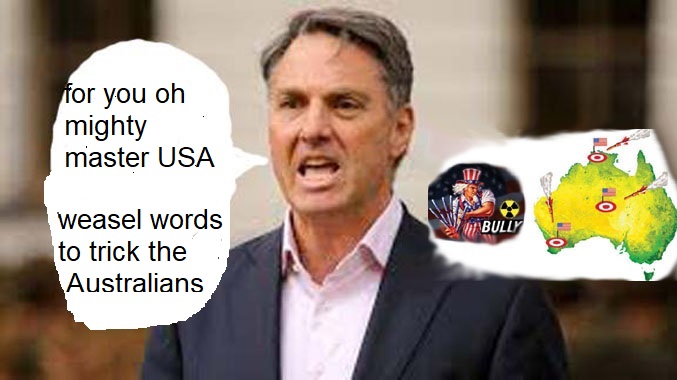
The AUKUS trilateral security pact between Australia, the United Kingdom and the United States has turned the first of these countries into an expectant vassal state, mindful of security guarantees it does not need from a power that can, and would at a moment’s notice, abandon it. But more dangerously, the expectation here is that Canberra, awaiting Virginia Class (SSN-774) nuclear-powered submarines from the US, will offer unconditional succour, resources and promises to the projection of Washington’s power in the Indo-Pacific. Without any guarantee of such submarines, Australian money is underwriting US submarine production, which remains consistently tardy. (Currently, 1.3 boats are being produced annually, when 2.3 are needed.)
The 2023 National Defense Authorization Act makes it irrefutably clear that Congress shall be notified that any transfer of boats “will not degrade the United States underseas capabilities.” Pursuing AUKUS still entailed “sufficient submarine production and maintenance investments” on the part of the US to meet undersea capabilities, with Australia advancing “appropriate funds and support for the additional capacity required to meet the requirements” along with Canberra’s “capability to host and fully operate the vessels authorized to be transferred.”
This true steal for US diplomacy, and sad tribute to Homo boobiens on the part of the Australians, has continued with the review of AUKUS conducted by Undersecretary of Defense Policy Eldridge Colby. The review is not available for public eyes, but Colby had previously released smoke signals that the AUKUS pact would only “lead to more submarines collectively in 10, 15, 20 years, which is way beyond the window of maximum danger, which is really this decade.”

The Australian Defence Minister Richard Marles told reporters on December 4 that the review had been received. “We’re working through the AUKUS review, and we very much thank the United States for providing it to us.” (Surely that’s the least they could have done.) He had identified unwavering support for the pact. Pentagon spokesman Sean Parnell also released a statement to the media expressing enthusiasm. “Consistent with President Trump’s guidance that AUKUS should move ‘full steam ahead,’ the review identified opportunities to put AUKUS on the strongest possible footing.” No doubt opportunities have been identified, but these are likely to be consistent with the lopsided arrangements Australia has had with the US to date.
Australia has so far provided A$1.6 billion in funding to the US submarine base, with the promise of more. What remains unclear is how much of this is also going into training Australian personnel to operate and maintain the vessels. “There’s a schedule of payments to be made,” explained Australian Prime Minister Anthony Albanese in July. “We have an agreement with the United States as well as with the United Kingdom. It is about increasing their capacity, their industrial capacity.” As part of such arrangements, “we have Australians on the ground, learning those skills.”
The joint fact sheet on the 2025 Australia-US Ministerial Consultations (AUSMIN), held between US Secretary of State Marco Rubio, US Secretary of War Pete Hegseth and their Australian counterparts Penny Wong and Marles in Washington, makes one reference to AUKUS and nothing in terms of substance to Colby’s recommendations. There is, however, this bit of unpardonable gibberish: “In line with President Trump and Prime Minister Albanese’s direction to move ‘full steam ahead’ on AUKUS, the [ministers] recognised the work underway to deliver priority infrastructure works and workforce uplift plan in support of an enhanced trilateral submarine industrial base.”
Given such statements, it is hard to see what opportunities identified in the Colby report could possibly be advantageous to Australia, a mere annexure of the US imperium. There is bound to be continued pressure on Australia to increase its defence spending. There are also unaddressed concerns about how sovereign the SSNs in Australian hands are going to be when and if they ever make it across the Pacific. In a conflict involving the United States, notably in the Indo-Pacific, Canberra will be expected to rush in with that mindless enthusiasm that has seen Australian soldiers die in theatres they would struggle to name for causes they could barely articulate.
Even the confident opinion of Joe Courtney, a Democrat member of the House Armed Services Committee and representative of Groton, Connecticut (the “Submarine Capital of the World”), should be viewed warily. “The statutory authority enacted by Congress in 2023 will remain intact, including the sale of three Virginia-class submarines starting in 2032,”comes his beaming assessment. The Colby review “correctly determined that there are critical deadlines that all three countries have to meet. Therefore, maintaining disciplined adherence to schedule is paramount.” That degree of discipline and adherence to schedules is unlikely to be an equal one. It is bound to favour, first and foremost, Washington’s own single perspective.
Nuclear Kills Kids

most significant of all there is now solid evidence of increased rates of leukaemia in children living close to nuclear power plants.
Tony Webb | April 28, 2025, https://www.fabians.org.au/nuclear_kills_kids
One moment from my work in the USA in the early 1980s stands out in my memory. I’d driven from Chicago to Cleveland at the invitation of the Health and Safety Officer of the US Boilermakers Union. The purpose was to speak to the members meeting held on the night ahead of the recruitment of members for work on the annual ‘clean-up’ of the local Nuclear Power plant. The hired workers would be ‘radiation sponges’ – short-term casuals recruited for the ‘dirty jobs’ that would result in significant radiation exposures sometimes up to the permitted annual exposure limit and ‘let go’ if they reached that limit. The practice offered some protection to the company’s full -time employees whose skills would be needed on an ongoing basis and whose exposures needed to be kept below the limit. The meeting was well attended , rowdy, with a lot of questions and discussion which spilled over into the carpark after the meeting closed. I noticed one man hanging back from the circle and invited him to join and share his thoughts. As I recall them the essence was:
“I will be going in to apply for work tomorrow. I understand what you shared about the risks . . . no safe level of exposure and chance of getting cancer perhaps 20 years from now . . . It will put a roof over my family’s heads and food on the table . . . BUT my wife and I have had all the family we want. If we hadn’t, what you shared about the genetic risks, the damage to our children and future generations . . . no I wouldn’t be going . . . “
It is a sad fact that workers, both men and women will choose, often from necessity, to put their health at risk from the work environment. What is however consistent in my experience of working on radiation and other occupational health and safety issues is that they are far more concerned, cautious and likely to prioritise safety when it comes to risks to their children.
We now have solid evidence(1) that workers in nuclear power plants routinely exposed to radiation face significantly increased cancer risks, risks of cardiovascular disease including heart attacks and strokes, dementia and potentially other health effects. There is also an increased risk of genetic damage that can be passed on to their children and future generations. But perhaps most significant of all there is now solid evidence of increased rates of leukaemia in children living close to nuclear power plants.
To put it simply and in language that will resonate with workers and their families in the communities around the seven nuclear power plant sites the federal Liberal-National Coalition proposes to build if elected to government, nuclear kills kids. It matters little whether or not these nuclear plants can be built on time, within budget, make a contribution to climate change, reduce electricity prices, or secure a long-term energy future; these nuclear power plants will likely kill kids who live close by. They cannot operate without routine releases of radioactive material into the environment and our young will be exposed and are particularly susceptible to any exposure that results.
Now add to that if you care that women are more susceptible than men; that workers in these plants face greater exposure and health risks than adults in the community; that nuclear plants have and will continue to have both major accidents and less major ‘incidents’ resulting in radiation releases, community exposures and health damage. Add also that quite apart from the workers and others exposed when these plants need to be decommissioned, the radioactive wastes resulting from perhaps 30-50 years life will need to be safely stored and kept isolated from human contact for many thousands of years longer than our recorded human history. And, again if you care, also add in the concerns around proliferation of nuclear weapons which historically has occurred on the back of, enabled by and sometimes concealed by countries’ developing so called peaceful nuclear power.
All these arguments add weight to the absurdity of Australia starting and the world continuing down this nuclear power path. But if we want a single issue that strikes at the heart of human concerns it is this – and forgive me saying it again, it needs to be repeated many times until the electorate in Australia hears it loud and clear – Nuclear Kills Kids.
SOURCES……………………………………………………………………………………………………
The people and environment of South Australia must be protected from Federal imposed storage of AUKUS High-Level nuclear waste:
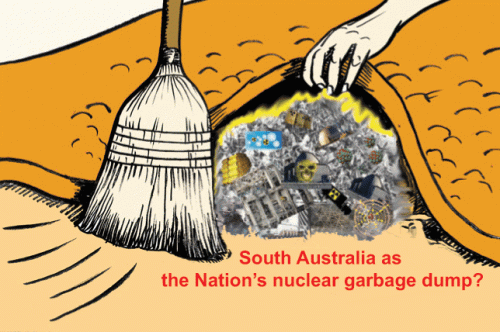
by David Noonan Independent Environment Campaigner 10 Nov 2025.
South Australians have a Right to Say No to undemocratic Federal imposed storage of AUKUS
High Level nuclear waste in our State. All Federal MPs & Senators from SA, Members of the SA
Parliament and candidates for the SA State Election on 21st March should declare their position:
Q: Will you accept or reject Federal imposed storage of AUKUS nuclear waste in SA?
The Federal Government quietly took up new AUKUS Regulations (2 Oct) as powers to impose
AUKUS wastes by override of State laws that prohibit nuclear waste storage in SA, NT and WA.
AUKUS Regulation 111 “State and Territory laws that do not apply in relation to a regulated
activity” names and prescribes our SA Nuclear Waste Storage (Prohibition) Act 2000. The
Objects of this key SA Law set out what is at stake: “To protect the health, safety and welfare
of the people of SA, and the environment in which they live” from nuclear waste storage.
Federal Labor’s draconian powers to compromise public health, safety and welfare protections
in SA Law, lacks social licence, are an affront to civil society, and damages trust in governance.
This is also a threat to Indigenous People with a cultural responsibility to protect their country.
Community expects our State Labor Government to give a clear State Election commitment to
protect SA from the risks and impacts of untenable and illegal AUKUS High Level nuclear waste
storage, see “The lethal legacy of Aukus nuclear submarines will remain for millennia – and
there’s no plan to deal with it” (The Guardian, 10 August 2025, interview with Prof Ian Lowe).
Labor has a further key leadership test ahead of our Election: to commit to support Indigenous
People’s human rights, set out in the United Nations Declaration on the Rights of Indigenous
Peoples Article 29 (UNDRIP 2007), to “Free, Prior and Informed Consent” over storage of
hazardous materials on their lands. AUKUS wastes absolutely are hazardous materials!
a Question for Premier Peter Malinauskas: Will you respect and support Indigenous Peoples
Rights to Say No to Federal siting of AUKUS nuclear waste storage on their country in SA?
Call for full disclosure on a N-waste siting process after Labor breaks its commitment:
The public has a Right to Know what regions are being targeted for storage of High-Level
nuclear wastes. A secretive ongoing Defence review “to identify potential nuclear waste
disposal sites” (ABC News March 2023) must be made public ahead of the SA State Election.
AUKUS Minister Marles has broken his commitment to announce a process by early 2024 to
identify a site to dispose of AUKUS High-Level nuclear wastes. The failure by Defence to set out
any process – other than to take up powers to impose nuclear wastes – is unacceptable.
REPORTER: Is a high-level nuclear waste dump the price that South Australia will have to pay
for the jobs that go to the state? (Minister Marles Press Conference 14 March 2023)
MARLES: Well, as I indicated there will be a process that we will determine within the next 12
months for how the site will be identified. You’ve made a leap there, which we’re not going to
make for some time. It will be a while before a site is ultimately identified. But we will within the
next 12 months establish a process for how we walk down that path.
It is now over 4 years since Federal Labor agreed with Morrison’s AUKUS nuclear sub agenda.
SA Labor to let ‘national security interests’ decide siting for AUKUS nuclear waste?
National press reported the Woomera Area to be a ‘favoured location’ for storage and disposal
of nuclear sub wastes back in August 2023 (“Woomera looms as national nuclear waste dump
site including for AUKUS submarine high-level waste afr.com). WA, Qld and Vic political leaders
have rejected a High-Level nuclear waste disposal site in their States, with WA suggesting the
Woomera Prohibited Area in SA: “would be one obvious location within the Defence estate,
however, we will await the outcomes of the federal review” (SMH 15 March 2023).
Premier Malinauskas has so far only said AUKUS nuclear waste should go to a ‘remote’ location
in the “national security interest” (see “Site for high-level nuclear waste dump under AUKUS
deal must be in national interest, SA premier says” ABC News 15 March 2023).
The Premier’s “Office for AUKUS” (Letter, 7 Oct 2025) accepts “safe and secure disposal” of
High-Level nuclear waste, including spent fuel, produced when subs are decommissioned. The
Office says no decision has been made on a location but declines to reveal what is underway,
expresses no concerns over unprecedented nuclear waste storage or ‘social license’, and
expects “community acceptance” (in SA?) for a nuclear ‘disposal solution’:
“I can confirm that no decision has been made on a location within Australia for the
disposal of intermediate, or high-level radioactive waste from nuclear-powered
submarines. Determining suitable locations and methods for safe and secure disposal
will take time, but Australia will do so in a manner that sets the highest standards … and
which builds community acceptance for a disposal solution.”
SA is left in the dark, without a say, as an ongoing target for an AUKUS nuclear waste dump.
AUKUS is to store US origin nuclear wastes from 2nd hand Virginia Class subs in Australia:
AUKUS aims Australia take on second-hand US Virginia Class nuclear powered subs in the early
2030’s loaded with up to a dozen years of US origin military High-Level nuclear waste and fissile
Atomic-Bomb fuel accrued in operations of US Navy High Enriched Uranium nuclear reactors.
Swapping an Australian flag onto this US military nuclear reactor waste places an untenable ‘for
ever’ burden on all future generations to have to cope these US nuclear wastes.
Scenario: an AUKUS nuclear dump imposed on SA, High-Level military waste shipped into
Whyalla Port to go north, nuclear subs to be ‘decommissioned’ at Osborne Port Adelaide.
Whyalla Port is back on a nuclear waste target range. How else could AUKUS nuclear waste get
to a storage site in north SA? The Woomera Area is expected to be on a regional short list for an
AUKUS dump, requiring nuclear waste transport routes across SA. Port Adelaide community has
a Right to Say No to nuclear decommissioning plans for expanded Osborne submarine yards.
SA politicians must protect SA and rule out both an untenable AUKUS nuclear dump and
decommissioning nuclear subs and nuclear reactors at Osborne or else-where in SA.
SA must respect Traditional Owners Human Rights to Say No to imposition of nuclear wastes.
The SA public have Rights to full disclosure and for politicians to have to declare their positions,
We need an informed public debate ahead of our State Election. Silence by our political leaders, while a path is paved toward nuclear decisions, makes a nuclear waste dump future more likely.
Info: see Rex Patrick & “AUKUS waste in perpetuity”, and David Noonan in Pearls and Irritations
1 This month

of the week – Australians for War Powers Reform (AWPR)
To see nuclear-related stories in greater depth and intensity
 Antinuclear