When grief becomes a weapon: The Bondi massacre and the politics of blame
John Howard’s sudden concern about religious hatred would be comic if it were not obscene. This is the same leader who weaponised fear of Muslims during the Tampa crisis, who lied about desperate refugees throwing their children into the ocean, who used the Bali bombings to justify laws that disproportionately targeted Muslim communities.
20 December 2025 David Tyler, https://theaimn.net/when-grief-becomes-a-weapon-the-bondi-massacre-and-the-politics-of-blame/
Part I
The Lie Built on Graves
On Sunday evening, December 15, fifteen people celebrating Hanukkah at Sydney’s Bondi Beach were murdered in an ISIS inspired terrorist attack. The victims ranged from a ten-year-old girl to an 87-year-old Holocaust survivor. Also slain, is Rabbi Eli Schlanger, who organised the Chabad community event.
By Wednesday morning, Naveed Akram, 24, had been charged with 59 offences, including 15 counts of murder and terrorism. His father Sajid Akram, 50, who carried out the attack alongside him, was shot dead at the scene. Police later confirmed that Islamic State flags had been found in their vehicle.
It is worth being precise about what followed. Rabbi Schlanger was farewelled at a funeral held at the Chabad of Bondi synagogue, attended by NSW Premier Chris Minns and former prime minister Scott Morrison. The Prime Minister was not invited. Separately, a broader community and interfaith memorial was held in Bondi, to which Albanese was also not invited. He later attended a distinct interfaith service where he spoke alongside religious leaders. These distinctions matter, because the political narrative was constructed not around absence, but around the deliberate staging of presence.
Before the first funerals were held, senior Coalition figures began laying responsibility for the massacre at the feet of Prime Minister Anthony Albanese. John Howard, pioneer of modern Australian dog whistle politics, emerged to lecture the nation on racial hatred. Scott Morrison appeared at memorial events, solemn and conspicuous. Opposition Leader Sussan Ley spoke darkly of government failure.
But it was former treasurer Josh Frydenberg who delivered the most incendiary line, declaring at a Bondi memorial gathering:
“It is time for him to accept personal responsibility for the death of 15 innocent people, including a 10-year-old child.”
This was not grief speaking. It was strategy.
The claim being advanced was simple and brutal. Had Albanese acted differently on antisemitism, had he implemented the full agenda of the government’s antisemitism envoy, these murders would not have occurred. Therefore, the blood was on his hands. Murdoch outlets amplified the message with enthusiasm.
This deserves to be called what it is: an outrageous lie wrapped in mourning clothes.
A timeline that refuses to cooperate
Sajid Akram arrived in Australia from India in 1998 on a student visa, during John Howard’s prime ministership. He later transitioned to a partner visa; then resident return visas. His son, Naveed, was born in Australia. Neither were on a terror watch list. Police confirm the pair travelled to the Philippines in November, raising serious questions about radicalisation pathways and intelligence blind spots.
The path that led to Bondi did not begin with Albanese. It began decades earlier, across a series of governments, and culminated in a catastrophic failure of detection and disruption by the very institutions designed to prevent mass casualty attacks.
That reality is inconvenient, because it demands scrutiny of intelligence agencies, policing systems, gun licensing regimes and online radicalisation ecosystems. So instead we are offered theatre.
Morrison attended Rabbi Schlanger’s funeral. Albanese was not invited. The message was clear enough for any political operative to decode. Judgment had been passed. Labor stood accused.
Albanese’s actual constraints
The PM’s response has been criticised as timid. In truth, it reflects the constitutional reality of the office.
Many of the measures being demanded by his critics are not merely controversial. Jillian Segal’s are constitutionally impossible without eviscerating principles of institutional independence and freedom of expression. Defunding universities for failing to meet a politicised definition of antisemitism, inserting an envoy into the oversight of public broadcasters, compelling ideological training of judges, are authoritarian measures dressed up as protection.
What Albanese has done is cherry-pick what is implementable while rejecting what is not. Segal attends education consultations but wields no defunding power. A Gonski led taskforce has been established to examine antisemitism across education sectors. Security funding for Jewish community sites has been extended. SBS will receive additional resources for social cohesion programming.
On the legal front, the government is pursuing hate crime reforms including enhanced penalties for threats and violence, national vilification consistency, and expanded capacity to list extremist organisations.
What none of these addresses is the central failure that made Bondi possible.
The questions that matter
How did two radicalised men amass multiple firearms legally? Why did a person previously investigated by ASIO retain access to long guns? How did the Akrams’ travel and online activity fail to trigger intervention? Why was a neo-Nazi rally approved outside Parliament weeks earlier, while resources for deradicalisation or advance protection of the Bondi Hanukah celebration remain threadbare?
These questions demand an inquiry. A royal commission into intelligence and security failures is not a political indulgence. It is the only serious response.
As Bernard Keane has argued, slogans about ideology do nothing to fix broken systems. Frydenberg’s line that “radical Islamist ideology pulled the trigger” is clever but empty. Ideology does not operate in a vacuum. It spreads through algorithmic amplification, grievance communities, and institutional neglect.
A deeper category error lies here. It matters. Increasingly, researchers and prevention agencies argue that violent extremism behaves less like a debate to be “won” and more like a social contagion that spreads through environments of grievance, isolation, algorithmic reinforcement and access to means.
In other words, it is not only a policing problem. It is a prevention problem, best tackled with the same logic public health uses for violence more broadly: early intervention, risk and protective factors, and harm reduction. The CDC’s public health approach to violence prevention offers the basic prevention framework, while work explicitly applying that lens to countering violent extremism is now mainstreamed in policy and research, from the U.S. National Institute of Justice to analyses of “complex contagion” dynamics in extremist spread.
But here? Crickets. And clearly, the opposition has little interest in examining these failures, because they implicate Coalition governments at both state and federal levels.
A serious response would look like this
- A royal commission into intelligence and security failures, examining why ASIO’s investigation of Naveed Akram failed to prevent the attack, how licensing systems allowed a person under intelligence scrutiny to legally acquire multiple firearms, and why coordination failed between federal and state agencies.
- An independent review of online radicalisation pathways, examining how ISIS and other extremist content bypasses platform moderation, how algorithms amplify radicalising material, and what regulatory frameworks could disrupt these pipelines without creating Orwellian surveillance.
- A genuine public health approach to deradicalisation, learning from programs in Europe and Southeast Asia that intervene with at risk individuals before violence occurs, providing alternative narratives and exit pathways from extremism.
- Honest engagement with the drivers of both antisemitism and Islamophobia in Australia, recognising that the same Coalition figures now demanding action on antisemitism spent years using anti-Muslim dog whistles for electoral advantage, teaching a generation of Australians that scapegoating religious minorities is politically acceptable.
But we are not getting any of this. Instead, we are getting partisan point scoring, with Howard blazing away.
A familiar political pattern
John Howard’s sudden concern about religious hatred would be comic if it were not obscene. This is the same leader who weaponised fear of Muslims during the Tampa crisis, who lied about desperate refugees throwing their children into the ocean, who used the Bali bombings to justify laws that disproportionately targeted Muslim communities.
Those instincts did not vanish. They normalised the idea that religious minorities could be treated as electoral threats. They taught Australians that scapegoating worked.
The Akrams did not emerge from nowhere. They were radicalised in a country where anti-Muslim rhetoric has been rendered politically acceptable over decades. That cultural groundwork is precisely what ISIS propaganda exploits.
For Howard to now pose as an elder statesman while ignoring his own role in cultivating grievance requires an astonishing capacity for self-delusion.
Bondi should have triggered a national reckoning about institutional failure. Instead, it has been repurposed as a weapon.
But that is only half the story.
Because alongside the blame game sits a second, more dangerous manoeuvre. The attempt to redefine antisemitism itself in ways that risk making Jewish Australians less safe, not more.
That is the argument you are not supposed to have.
The Australian Israel Lobby Is Flat-Out Saying They Want A Ban On Criticism Of Israel
Caitlin Johnstone, Dec 19, 2025, https://www.caitlinjohnst.one/p/the-australian-israel-lobby-is-flat?utm_source=post-email-title&publication_id=82124&post_id=182048888&utm_campaign=email-post-title&isFreemail=true&r=1ise1&triedRedirect=true&utm_medium=email
Australians everywhere should be made acutely aware that the Australian Israel lobby is now explicitly advocating a ban on criticism of the state of Israel.
Not just hate speech against Jews. Criticism of a foreign state. They’re coming right out and saying it.
During a recent public video conference with the American Jewish Committee on the topic of the Bondi Beach shooting, the Executive Manager of the Australia/Israel & Jewish Affairs Council (AIJAC) explicitly says he wants pro-Palestine protests to be banned by the Australian government, and that addressing the problem of antisemitic hate speech in Australia necessarily means stopping opposition to Israel’s actions.
About 40 minutes into the American Jewish Committee’s YouTube video of the conference, AIJAC Executive Manager Joel Burnie demands that the Australian government take much stronger action to regulate freedom of expression regarding Israel and Zionism in Australia, saying the following:
“They need to act swiftly. They need to go to their own arms and their own institutions: no longer can you refuse service to a Zionist. We are going to prosecute people that spew hate speech against your people, and we’re not going to tip toe around the fact that the central problem here is Israel. I for one as Jewish leader will no long talk about antisemitism in isolation from Israel, because it’s the rhetoric and language on Israel that motivates the people to come and kill us. Those two terrorists were motivated by what was going on in Israel, and that’s what motivated them to come and kill us. So if they had Israel on their minds why are we acting as though it has nothing to do with the vitriolic binary nature of the pro-Palestinian advocacy movement?”
Burnie goes on to say that he wants a complete government ban on protests against Israel’s abuses throughout the nation:
“So overnight what we want immediately if you ask any Jew, what do you want, what do you want? No more protests! No more protests! No more no-go zones for Jews. I can’t, for two years, cannot take my kids to downtown Melbourne for two years on a Sunday, because of the pro-Palestinian marches, because of the violent nature of them. No more! Because that is an acceptance of the connection between the two. And until the prime minister is willing to do that, this is gonna happen again.”
Burnie is lying here, for the record. Anyone who has gone to the pro-Palestine demonstrations in Melbourne as I have will tell you that the protests are not even slightly violent in nature, and that there are Jews among the demonstrators who actively make their presence known. Those demonstrations have never been “no-go zones for Jews”; Joel Burnie doesn’t want to take his kids to downtown Melbourne on a Sunday because he doesn’t want to expose them to ideas and information which reveal the depravity of his Israel-supporting worldview.
Australians would probably benefit from watching the entire hour-long video of the conference, whose contents I first saw spotlighted on Twitter by Information Liberation’s Chris Menahan.
Some other highlights:
At 4:20 Burnie says that part of his role at AIJAC is “to take non-Jewish politicians and journalists and diplomats and other Australian officials to Israel.”
At 14:00 Nick Aronson, who is Chief of Staff to Australia’s so-called “antisemitism envoy” Jillian Segal, regurgitates the bogus propaganda line we’ve been hearing nonstop from Israel apologists throughout the western political/media class, “the words globalise the intifada actually mean globalise the intifada; it means kill Jews wherever they are”. Pro-Israel spinmeisters have been spouting this line with creepy uniformity ever since the Bondi shooting in order to justify government crackdowns on freedom of speech and assembly to protect Israeli information interests.
At 15:00 Burnie says “the gloves are off now” with regard to stomping out free speech in Australia, saying Jews need stop saying “not all pro-Palestinian supporters are antisemitic”, saying “The pro-Palestinian movement, or the things within the pro-Palestinian movement that we all are exposed to in the public, is too binary: you’re pro-Palestinian so you need to be viciously anti-Israel.”
At 16:20 Burnie claims the Bondi shooting “happened because of the protest movements on the streets”, citing no evidence.
At 17:30 Burnie again makes his “no more protests” demand, saying “If I could ask for one thing of the government today: no more protests. If they cannot utilise language that is not inciting violence, that does not marginalise and dehumanise Jews, they have no right to be on the streets.”
At 21:10 Burnie complains that there haven’t been any prosecutions and arrests for antisemitic speech.
At 33:30 Burnie singles out Australian Muslims, saying “there needs to be more monitoring and surveillance of Islamic hate preachers” and an auditing of their education syllabus because of an “antisemitism problem amongst the Australian Muslim community.”
At 36:25 Burnie says Jillian Segal’s notorious speech-suppressing plan for fighting antisemitism in Australia “wasn’t about quashing debate on Israel, it just happens to be that language on Israel invading all of our social spaces in Australia have made this country a very unsafe space and place for Jews.”
At 46:00 Aronson says “there’s absolutely no doubt that people need to go to jail” for antisemitic hate speech in Australia, but says that won’t be enough to fix the problem because “we can always arrest more people, make no mistake, but you can never arrest enough, to be honest.”
At 54:00 Aronson speaks of the need for regulating online speech, complaining that “a number of the online platforms pride themselves on what they call free speech — obviously we would disagree; we would call it hate speech.” At 56:00 he says “we need to continue to put pressure on these platforms to understand the role they have to play in social cohesion, and how far short they are falling of community standards.”
This comes as the Australian government announces plans to ramp up its war on free speech in the wake of the Bondi Beach attack. We can be sure to see more authoritarian measures rolled out in the weeks to come as Israel’s supporters seize on this opportunity to advance the information interests of a genocidal apartheid state.
The incoherent mix in Australian defence policy
Defence policy should be about defending Australia, and nothing else
John Quiggin’s Blogstack, 19 Dec 25
Discussions of defence policy in Australia typically start from two underlying presumptions. The first is that the protection of our freedom and sovereignty from foreign conquest is too fundamental to be subject to the kind of cost- benefit analysis that is, or ought to be, normally applied to public expenditure. The second is that defence policy can be used to promote a wide variety of goals, such as projecting power and influence through peacekeeping and disaster relief.
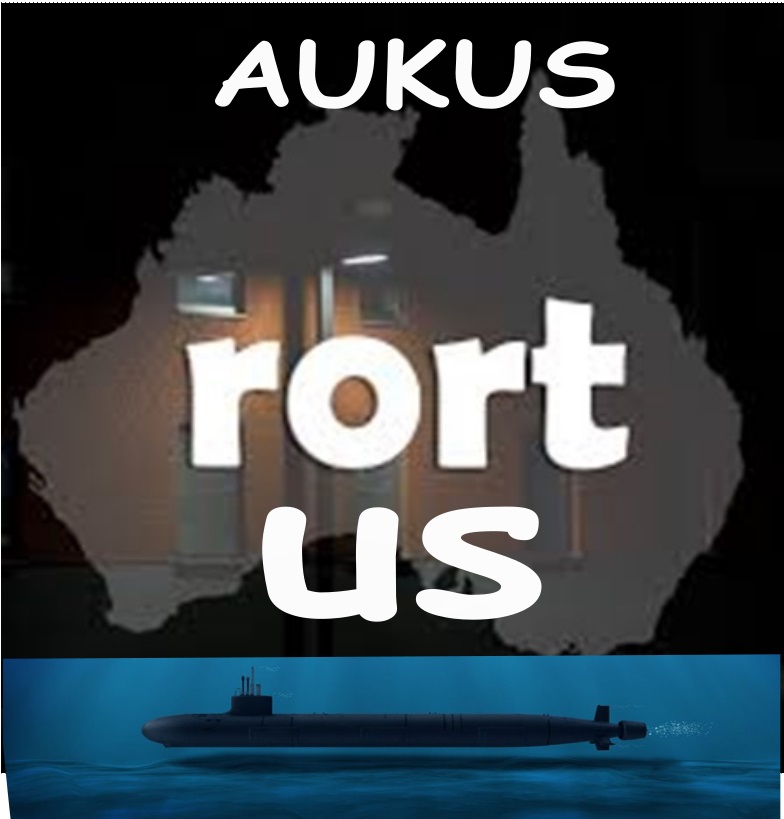
Unfortunately, these presumptions are mutually inconsistent, and lead to incoherent policy responses. This is most evident in the case of AUKUS, the largest single defence purchase in Australian history, and a major change in policy with the shift to nuclear-powered submarines. There has been no explanation of the strategic rationale for AUKUS, let alone any attempt to weigh costs and benefits. Yet there has been extensive discussion of the potential for increased employment of skilled trades workers. Given the expenditure involved and the relatively modest numbers of workers required, this ought to be a third-order consideration, yet it appears to have had a significant influence on the design of the program.
As the case of AUKUS suggests, the interaction between defence and industry policy is a tangled one. In particular, the strong political demand from South Australia for manufacturing industries to replace motor vehicle building has weighed heavily on policy choices, effectively ruling out “off-the-shelf” purchases of submarines, and placing a high premium on including some Australian contribution to production of such high-cost items.
A Future Made in Australia ?
Given that the stated aim of policy is “A Future Made in Australia” , a more rational policy approach would provide direct subsidies to manufacturing of all kinds, while leaving open the option of off-the-shelf purchases of defence equipment. Paying higher costs to encourage a domestic armaments industry entails the opportunity cost of forgoing assistance that might be provide to other industries with greater social and economic benefits.
There is a defence rationale for maintaining a capacity to produce some armaments. In the event of a long conventional war, Australia might be unable to import crucial supplies. Hence, it would make sense to seek some degree of self- reliance in this respect.
However, the goals of industry policy and defence self- reliance are often poorly aligned. Large-scale procurement projects such as AUKUS and the F-35 program often involve some element of local production and assembly, but the resulting capacity would not necessarily be of value in the event of a conflict in which Australia was isolated from allied support
……………………………. the claimed industrial benefits of AUKUS involve integration into United Kingdom and United States supply chains. This is consistent with an industry policy goal of increasing exports of elaborately transformed manufactures. But it is directly contrary to the defence goal of enhancing our independent capacity to protect ourselves in an emergency. In the event of a conflict that cut off international supply chains, we would be unable to secure parts and repair services except for the subset that happened to be allocated to Australia.In many cases, the appropriate response to the possibility of supply disruptions will be a combination of stockpiles and (for items with civilian use, such as fuel) rationing, rather than the maintenance of high-cost production capacity.
The Grey Zone
Lying between policies designed for national defence and those aimed at delivering non-defence benefits is the aptly named “grey zone” . As the name implies, this term is poorly defined and covers a wide range of hostile actions by other nation states and non-state actors, ranging from aggressive disputes over maritime boundaries to cyber-attacks and election disinformation. Crucially, the term is used almost entirely in the context of defence policy, and to support the implication that a military response of some kind is appropriate.
In general, however, the capabilities required to address grey zone problems will bear little relationship to those required to defend Australia against invasion. For example, the resolution of maritime disputes might involve the deployment of patrol boats and coast guard vessels. But, despite a long history of such disputes, dating back to the “Cod Wars” between the UK and Iceland, serious armed conflict remains vanishingly rare. Moreover, the possession of more powerful naval forces is of little value, as the failure of the Royal Navy in three successive “wars” over fishing rights indicates.
An incoherent mix of objectives
……………………………………………………………………………………………………………………………………………….. As political scientist Daniel Drezner has observed, if everything is a national security issue, nothing is. Rather than expanding the role of the defence forces, while exempting defence expenditure from normal assessments of costs and benefits, we should begin by building a force capable of protecting Australia against any plausibly possible threat of attack or invasion (bearing in mind, the impossibility of protecting ourselves against nuclear missiles). Having done that, any expansion of the mission should be tested both for cost-effectiveness and for consistency with our broader policy objectives. https://johnquigginblog.substack.com/p/the-incoherent-mix-in-australian?utm_source=post-email-title&publication_id=806934&post_id=182047815&utm_campaign=email-post-title&isFreemail=true&r=1ise1&triedRedirect=true&utm_medium=email
1 This month
7 April – WEBINAR – Australia and the Doomsday Clock – Preventing nuclear war through NoFirstUse and other policies
Online | Tuesday April 7, 4:00-5:30pm, Australian Eastern Time / 8:00-9:30am Central Europe Time
– Access the registration link
15 April – Zoom –Nuclear Power is Not the Solution
Apr 15, 2026 01:00 AM in Canberra, Melbourne, Sydney

Join the International Physicians for the Prevention of Nuclear War (IPPNW) on Tuesday, April 14th for a timely webinar exploring the risks associated with nuclear power and challenging the myth that it offers a simple, safe, carbon-free solution to the climate crisis

21 April Webinar: No Nuclear Weapons in Australia
Start: 2026-04-21 18:00:00 UTC Canberra, Melbourne, Sydney (GMT+10:00)
End: 2026-04-21 19:30:00 UTC Canberra, Melbourne, Sydney (GMT+10:00)
Event Type: Virtual
A virtual link will be communicated before the event.
Host Contact Info: australia@icanw.org

of the week – Australians for War Powers Reform (AWPR)
To see nuclear-related stories in greater depth and intensity
 Antinuclear