What Australians have NOT been told about the $368billion AUKUS nuclear submarine deal.

‘We will undoubtedly be a nuclear target,’ ‘I don’t think many of the people living in Perth realise that, if they weren’t a nuclear target before, they certainly will be when all these… submarines start arriving.
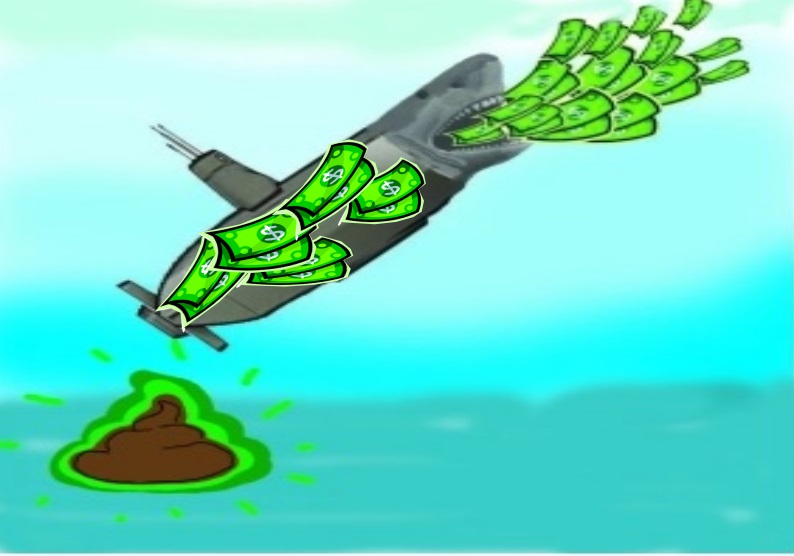
‘I would bet an awful lot of money that the AUKUS subs will be duds by the time they get here, if they ever do,’
‘They’ll probably be redundant because there’s been revolutions in drone technology which will be able to detect submarines more easily.
‘I would bet an awful lot of money that the AUKUS subs will be duds by the time they get here, if they ever do,’
By CAITLIN POWELL – NEWS REPORTER, 29 December 2025
An AUKUS critic has shed light on the fundamental dangers of the military deal, including the threat of Australia being a nuclear target, as the security pact receives support from Donald Trump – and a rising number of Australians.

Earlier this month, US Secretary of State Marco Rubio confirmed that AUKUS was going ‘full steam ahead’ after questions were raised when the Trump administration earlier announced it would review the deal.
The agreement, which would see Australia acquire nuclear-powered submarines, is expected to cost the country up to $368billion over three decades.
Just a few weeks before Rubio’s thumbs up, an Australia-wide survey of 2,045 people by the University of Technology Sydney (UTS) found support for the policy had increased.
The number of people who agreed that the trilateral deal with the US and UK could help keep Australia secure from a military threat from China surged compared to last year.
While 48 per cent agreed in 2024, that rose to 50 per cent in the 2025 survey. The poll also found that over two thirds (68 per cent) supported using AUKUS to deepen Australia’s cooperation with the US and UK on advanced technologies.
This included hopes for technology in cyber, AI and quantum computing.
But AUKUS critic and adjunct professor at the Australia-China Relations Institute, Mark Beeson, has said there are some major issues with the deal which most Australians are missing.
A major component of AUKUS will be a facility at the Australian Navy’s HMAS Stirling base in Perth’s south from 2027.
Up to 1,200 UK and US personnel, their families, and five nuclear-powered submarines will be stationed there.
‘We will undoubtedly be a nuclear target,’ Beeson said of the facility. ‘I don’t think many of the people living in Perth realise that, if they weren’t a nuclear target before, they certainly will be when all these… submarines start arriving.
‘This will be a sort of launch pad for whatever American strategic adventure they decide to take on next.’
The use of the area as base also raised another key issue for Professor Beeson: Australia’s sovereignty.
‘I think there are questions about the historical relationship we have with America,’ he said, referencing the poll.
The survey revealed that a growing trend among Australians is that they want Canberra to make foreign policy decisions without the US and UK.
Among those surveyed, 77 per cent said Australia should make its China foreign policy decisions independently, even when they differ from US preferences.
‘Australia would make absolutely no difference whatsoever to the outcome of any conflict or strategic stand-off between the United States and China – with or without four or five submarines,’ he said.
‘If the Chinese aren’t deterred by America’s overwhelming military power, they’re not going to be deterred by anything we can do.
‘We’re just a convenient piece of real estate in the southern hemisphere that they can use as sort of launching pad for whatever they decide to do next.
‘There are major implications for our independence and sovereignty.’
‘Australia would make absolutely no difference whatsoever to the outcome of any conflict or strategic stand-off between the United States and China – with or without four or five submarines,’ he said.
‘If the Chinese aren’t deterred by America’s overwhelming military power, they’re not going to be deterred by anything we can do.
‘We’re just a convenient piece of real estate in the southern hemisphere that they can use as sort of launching pad for whatever they decide to do next.
‘There are major implications for our independence and sovereignty.’
The reasoning for this, he said, is that by having the presence of American and British military on Australian soil, Canberra is no longer solely acting on behalf of Australians.
‘It limits the options available to Australian policymakers to make independent decisions that are in the national interest,’ he said.
‘Rather (we follow) some supposed mutual interest of Australia, Britain and the US.’
Professor Beeson highlighted that the poll displayed different views among Australians, with support for AUKUS but a desire for independence on policy.
‘I wasn’t surprised that there were a few contradictory sort of views amongst all that, because it is a complex set of issues,’ he said.
‘But some of it displays quite an encouraging degree of sophistication and not just wild panic about China, which is good.’
A final issue Professor Beeson raised was the capacity and timeline of the submarines promised to Australia.
‘I would bet an awful lot of money that the AUKUS subs will be duds by the time they get here, if they ever do,’ he said.
‘They’ll probably be redundant because there’s been revolutions in drone technology which will be able to detect submarines more easily.
‘It’s just such a ludicrous long term investment of a lot of money we don’t really have, and we could use on much better things.’
1 This month

of the week – Australians for War Powers Reform (AWPR)
To see nuclear-related stories in greater depth and intensity
 Antinuclear