They’re Trying To Sneak Israel’s President Into Australia Without Anti-Genocide Protests
And Other Notes
Caitlin Johnstone, Jan 23, 2026, t.one/p/theyre-trying-to-sneak-israels-president?utm_source=post-email-title&publication_id=82124&post_id=185482225&utm_campaign=email-post-title&isFreemail=true&r=ln98x&triedRedirect=true&utm_medium=email
Israeli president Isaac Herzog is expected to visit Australia at the invitation of the Australian government, with anonymous sources telling the Israeli press that he’s scheduled to arrive on February 7, but so far Canberra itself has been very opaque about the time and nature of the visit. We can surmise from this that they’re currently trying to come up with a strategy for how to sneak the president into the country without the spectacle of him getting confronted by throngs of anti-genocide protesters.
Again: they’re trying to sneak the president into the country for a visit to protect him from anti-genocide protesters. Really think about what that means, and what it says about Australia as a country.
When you are doing things like this, you’re on the wrong side of history.
As soon as the UK listed Palestine Action as a terrorist group it was made clear to the entire western world that there is no limit to how far our governments will go to stomp out speech that is critical of Israel. Literally no limit. Once you’re arresting old ladies in wheelchairs for holding a sign that says “I oppose genocide, I support Palestine Action,” you’re making it clear that there’s nothing you won’t do to bludgeon the populace into line regarding this one particular foreign state.
That was a real turning point for western society, in retrospect. Up until then it’d been horrific genocidal depravity in Gaza and some ugly shenanigans with TikTok and university campuses, but actually proclaiming that an activist group is a terrorist organization and arresting anyone who supports it was a wildly unprecedented escalation. From that point on it’s been clear to every decent person throughout the western world that we’re in the imperial crosshairs now.
They’re coming for us directly. Our rights are on the chopping block. There’s no limit to how dark and dystopian things can get from here.
I’m not trying to be antisemitic or anything but I personally think it should be legal to voice criticisms of the military activities of a foreign state.
❖
One of the many reasons I’m so hostile to authoritarian efforts to stomp out pro-Palestine speech in Australia is because there’s something deep inside me that would find it intolerable for us to be worse than the Brits.
There should be a mandatory six-month “cooling off period” between any mass shooting or act of terrorism and any legislation purportedly put out in response to it, because the emotional immediate aftermath is always when lawmakers try to roll out their most authoritarian agendas.
I’ve said it before and I will say it again: nobody actually believes the Bondi attack had anything to do with Palestinians or pro-Palestine protests. Anyone who claims they believe that is lying. They’re just pretending there’s a connection in order to stomp out pro-Palestine speech and activism in Australia.
International social media has rediscovered video footage of the Sydney Harbour Bridge protest last year, and it is very impressive to revisit. A massive line of hundreds of thousands of people holding umbrellas and Palestinian flags in opposition to their government’s complicity in the holocaust in Gaza.
It must have left a mark, because the Israel lobby has been on the warpath frantically trying to crush our right to protest ever since. People sometimes knock the effectiveness of peaceful demonstrations, but if they didn’t make a difference tyrants wouldn’t hate them so much.
The reason I’ve been talking about the Australian Israel lobby so much lately is because it has made itself my problem. Kwame Ture said “If a white man wants to lynch me, that’s his problem. If he’s got the power to lynch me, that’s my problem.” I find his logic sound.
The Israel lobby in Australia has shown it has the power to successfully pressure governments to advance laws and policies which threaten the speech of people like myself who speak critically of the state of Israel. That makes them my problem.
There are more important and urgent things going on in the world than the lobbying efforts of an apartheid state in a peripheral nation of the imperial core, to be sure. I’d rather be writing about those matters. But the Australian Israel lobby has made itself my problem, so I need to mention its abusive behaviors from time to time.
I know my name has appeared on lists. I know I’ve been the subject of private discussion among people I’d have preferred not to receive attention from. I know I share a country with people who would openly celebrate if I was imprisoned for the things I have said about Israel and Zionism. So I’ve got a vested interest in calling attention to the forces that are working to assault the civil rights of people like myself, and to my government’s inexcusable advancement of those agendas.
And all decent Australians have that same vested interest, to be clear. Every person of conscience who wishes to be able to speak out against their government’s facilitation of mass murder and abuse has a personal stake in this debate. Because we’ve each got a target on our voice box now. We all need to speak out while we still can.
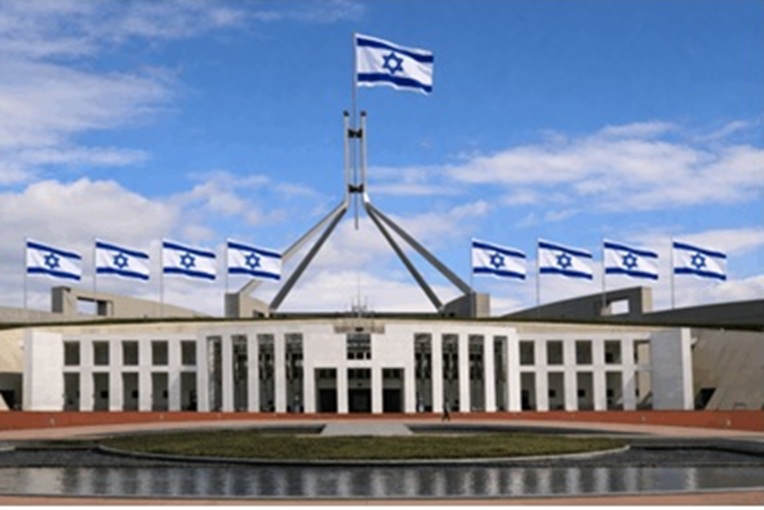
Cognitive Capture: Australia’s Silent Coup-by-Precedent
24 January 2026 Dr Andrew Klein, PhD
Dateline: January 2026
For months, a narrative has been assembling in plain sight. It does not involve soldiers in the streets or a declaration of martial law. Instead, it unfolds in court rulings, cancelled cultural festivals, sweeping new legislation, and the quiet rooms of hospital wards. Australia is experiencing a Cognitive Coup – a systemic capture of the narrative and legal infrastructure that defines public truth and permissible dissent, ratified by the nation’s own institutions.
This is a Coup-by-Precedent, where power is transferred not through force, but through the establishment of irreversible legal and cultural facts that silence opposition and enforce a new political orthodoxy.
Part I: The Legal Architecture of Silence
The most explicit tool of this new order is law. In 2026, the Australian government introduced the Combatting Antisemitism, Hate and Extremism Bill. Framed as a security measure, its provisions are sweeping: further criminalisation of hate speech, expanded powers to cancel visas for those deemed to spread hate, and the establishment of a national firearms buyback scheme. Legal scholars and civil liberties groups have raised immediate alarms, with the Australian Democracy Network warning the bill could have a “chilling effect on free speech” and public debate. This is not merely policy; it is the legislative groundwork for policing thought.
Part II: The Judicial Finding of Surrender
While the law builds the future cage, the courts have documented the present captivity. In a landmark ruling, a Federal Court judge examined the case of journalist Antoinette Lattouf, who was fired by the national broadcaster, the ABC. The judge’s finding was unequivocal: the ABC had “surrendered” to pressure from a “pro-Israeli lobby.” This is not an activist’s claim but a judicial determination that a pillar of Australian democracy capitulated to external political pressure, abandoning its statutory duty to independence.
This pattern is not isolated. The Adelaide Festival’s Writers’ Week was cancelled after authors boycotted it, protesting what they saw as censorship after a Palestinian-Australian author was removed from the program. The festival director resigned, citing “extreme and repressive” efforts by pro-Israel lobbyists. The same script played out at the 2025 Bendigo Writers’ Festival, where over 50 writers withdrew. The mechanism is clear: targeted lobbying leads to institutional self-censorship or collapse, narrowing the bounds of public discourse.
Part III: The Bureaucratic & Medical Silencer
For the individual citizen or dissenting voice that operates outside these collapsing public forums, a more intimate enforcement mechanism activates. My own case provides a microcosm of the macro dynamic.
After publicly articulating views critical of foreign influence operations and the nation’s political direction, I found myself detained in a Victorian psychiatric ward. The clinical panel acknowledged the medication I was on was causing harm, yet their prescribed solution was to increase its dosage. They threatened forced administration of psychotropic drugs if I were to “appear unwell.” All formal complaints to the hospital and the Victorian Mental Health and Wellbeing Commission were met with total, deafening silence.
The parallels are structural:
- The ABC’s surrender to external lobbyists is mirrored by the hospital’s surrender to a politicised diagnosis.
- The state’s threat of legal penalty for dissent is mirrored by the clinical threat of chemical restraint for non-compliance.
- The goal is identical: to neutralise a disruptive narrative by declaring its source illegitimate – either as un-Australian hate or as psychiatric instability – and removing its platform.
This is the weaponisation of medicine as political control, the final layer of enforcement when public shaming and legal pressure are insufficient.
Part IV: The Infrastructure of Forgetting
Underpinning this cognitive shift is a quieter, more profound vulnerability: the surrender of memory itself. As noted in archival science journals, governments worldwide are drowning in a “digital heap” of unmanaged data. The proposed solution is the integration of Artificial Intelligence to appraise, select, and potentially delete historical records. When the power to decide what is remembered and what is erased is ceded to algorithms optimised for efficiency rather than truth, national sovereignty over history is lost. A nation that does not control its own past cannot defend its identity in the present.
Conclusion: The Coup Is Precedent
The Cognitive Coup is complete not when a politician is replaced, but when the new rules are normalised. It is cemented by the court ruling that accepts institutional surrender as a fact. It is reinforced by the cancelled festival that no one dares to revive. It is operationalised by the law that makes dissent legally perilous and the medical protocol that makes it a symptom of illness.
The Australian public may not have seen tanks, but they are witnessing the annexation of their public square. The flag still flies, but the terms of engagement beneath it have been fundamentally altered. The precedent has been set: that external interests can dictate cultural policy, that dissent can be legislated into hate, and that the ultimate dissenter can be pathologised and silenced.
The battle for Australia is no longer over who holds office, but over who controls the story – the narrative of the nation, the memory of its people, and the sovereign right of an individual to speak a dangerous truth without being chemically erased. The coup is not televised. It is curated, legislated, and medicated.
References
- Legal Framework: The Combatting Antisemitism, Hate and Extremism Bill 2026.
- Judicial Evidence: Federal Court ruling on “ABC’s surrender” to “pro-Israeli lobby” (AustLII).
- Cultural Enforcement: Cancellation of Adelaide Festival’s Writers’ Week & Bendigo Writers’ Festival due to lobbying campaigns (The ABC).
- Archival Vulnerability: Academic analysis on AI in archives and loss of sovereignty over historical record.
- Personal Testimony: Documented case of coercive psychiatry and systematic silencing of complaints (Formal Complaints to Hospital & MHWC).
Zionism: The Etymological and Ideological Unpacking of a “Political Pathogen”
22 January 2026 Dr Andrew Klein, P https://theaimn.net/zionism-the-etymological-and-ideological-unpacking-of-a-political-pathogen/
The term “Zionism,” the modern political ideology advocating for a Jewish homeland in Palestine, is often analysed through the lenses of history, politics, and conflict. However, to understand its full potency and impact – to see it as a “political pathogen” – we must first dissect the linguistic and cultural DNA from which it was synthesised. This paper posits that Zionism is a European ideological construct, born of a specific historical moment, which instrumentalised ancient religious and cultural symbols to forge a modern nationalist movement. Its power and subsequent global impact stem from this fusion of the ancient and the modern, a fusion that has proven both resilient and, in the view of its critics, deeply destructive.
I. The Etymological Core: From Sacred Hill to Nationalist Ideology
The linguistic root of “Zionism” is the Hebrew word “Zion” (Ṣîyyôn), originally referring to a specific hill in Jerusalem. Over millennia, particularly following the Babylonian Exile, “Zion” transformed from a geographic location into a potent synecdoche and poetic symbol for the entire Land of Israel and the Jewish people’s spiritual yearning for return. This meaning was deeply embedded in Jewish messianic belief, envisioning a future redemption.
The transformation into a modern political “-ism” occurred in late 19th-century Europe. The term “Zionism” (Zionismus) is first credibly attributed to the Austrian Jewish intellectual Nathan Birnbaum in an 1890 article. It was coined in reference to the activities of the Hovevei Zion (“Lovers of Zion”), proto-Zionist groups that promoted Jewish agricultural settlement in Ottoman Palestine. The movement was catapulted onto the world stage by Theodor Herzl, whose 1896 pamphlet Der Judenstaat (The Jewish State) and the subsequent founding of the Zionist Organization in 1897 popularised the term and defined its political objectives. The choice of “Zion” was deliberate: it grafted the new secular nationalist project onto the deep-rooted, sacred longings of Jewish tradition, providing an immediate and powerful historical legitimacy.
II. The European Crucible: Birth of an Ideology
Zionism did not emerge in a vacuum. It was a direct product of, and reaction to, the specific conditions of European society in the 19th century.
The “Jewish Question” in Europe: Zionism arose as one answer to the pervasive “Jewish Question” – the problem of how Jews, perceived as an unassimilable minority, could exist within European nation-states defined by ethnic homogeneity. Faced with persistent antisemitism, from violent pogroms in Eastern Europe to institutional discrimination in the West, thinkers like Herzl concluded that assimilation was impossible and that Jews constituted a distinct nation requiring sovereignty in their own land.
The Influence of European Nationalism: Zionism was fundamentally shaped by the Romantic nationalist movements sweeping Europe, which argued that every “people” or “nation” (Volk) required a state for its full expression. Zionists applied this model to Jews, asserting their right to national self-determination. The movement also internalised contemporary colonial and racial thinking, with early leaders at times explicitly framing a Jewish state in Palestine as a European outpost or “colonial” endeavour that would bring progress to the region.
Internal Jewish Debates: It is critical to note that Zionism was a contested ideology from its inception. Significant Jewish movements, most notably the socialist Bund in Eastern Europe, vehemently opposed it. These anti-Zionists argued that fleeing antisemitism validated the persecutors’ logic, that the diaspora was a legitimate and rich Jewish homeland, and that the future lay in fighting for socialist revolution and equality within Europe.
III. The Ideological Structure: Core Tenets and Internal Divergence
While unified by the core goal of a Jewish homeland, Zionism was never monolithic. Its internal structure comprised several competing strands:
Political Zionism (Herzl): Focused on achieving a Jewish state through high-level diplomacy and international legal charters.
Practical Zionism: Emphasized the “conquest of land” through immediate agricultural settlement in Palestine.
Labor Zionism: Merged socialist principles with nation-building, promoting collective enterprises like the kibbutz and forming the ideological backbone of Israel’s early leadership.
Revisionist Zionism (Jabotinsky): Advocated for a more militant, maximalist approach to establishing a Jewish state on both banks of the Jordan River, emphasizing military strength and capitalist development.
Cultural Zionism (Ahad Ha’am): Prioritised the creation of a new Jewish spiritual and cultural center in Palestine over immediate political sovereignty.
Religious Zionism: Fused Jewish religious messianism with nationalist politics, viewing the Zionist project as the beginning of divine redemption.
Despite these differences, a critical consensus emerged across most Zionist thought: the necessity of establishing a Jewish demographic majority in Palestine. This demographic imperative, confronting the reality of a majority Arab population, led to the conceptualisation of “transfer” – a euphemism for the removal or ethnic cleansing of Palestinians – as a logical, if debated, solution within mainstream Zionist discourse from the movement’s early decades.
IV. The “Pathogen” Metaphor: Mechanisms of Global Impact
Viewing Zionism through the lens of a “political pathogen” requires examining its replication and impact beyond Palestine/Israel. Its global influence operates through several key mechanisms:
The Logic of Domination: Scholar Vincent Lloyd reframes Zionism’s outcome as a transition from a movement seeking liberation from European domination to one that institutes a new structure of domination over Palestinians. This system is maintained through military occupation, legal discrimination, and the systemic denial of Palestinian dignity and political rights.
Christian Zionist Symbiosis: A critical vector for the ideology’s spread is Christian Zionism, particularly within Protestant evangelicalism. This theology supports Jewish return to Israel not out of solidarity with Jews, but as a prerequisite for the Second Coming of Christ, after which non-converted Jews are often envisioned to be destroyed. This creates a powerful, theologically motivated political lobby (especially in the United States) that reinforces Israeli state policy.
Global Export of “Security” Models: Israel has leveraged its experience controlling Palestinian populations to become a leading global exporter of surveillance technology, weapons, and counter-insurgency tactics. This “laboratory” of repression markets its products to other states and regimes, embedding Zionist-derived models of population control into global security infrastructures.
Conflating Critique with Antisemitism: A potent defensive mechanism has been the strategic effort to equate criticism of Zionism or Israeli state policy with antisemitism, as seen in debates over definitions like the IHRA working definition. This conflation seeks to immunise the ideology from political critique by framing opposition as a form of racial or religious hatred.
Conclusion: A Tale That Found a Home
Zionism is indeed “a tale that found a home.” It is a modern European nationalist tale, constructed from the ancient lexicon of Jewish prophecy and the contemporary grammar of 19th-century racial and colonial thought. It found a home through a deliberate and violent process of settlement and state-building, necessitating the displacement and continued subjugation of another people.
Its “pathogenic” quality lies in its resilience and adaptability – its ability to graft itself onto different host ideologies, from socialist pioneering to evangelical Christian millennialism, and to replicate its core logic of ethnic dominance in new contexts. The language that shaped it provided a bridge between deep history and political modernity, creating an ideology of immense persuasive power and tragic consequence. To understand the ongoing conflict and its global resonances, one must first understand this foundational synthesis of word, idea, and power.
References…………………………..
Australia’s Frightening New “Hate Speech” Laws Are Clearly Aimed At Pro-Palestine Groups
Caitlin Johnstone, Jan 21, 2026, https://www.caitlinjohnst.one/p/australias-frightening-new-hate-speech?utm_source=post-email-title&publication_id=82124&post_id=185285586&utm_campaign=email-post-title&isFreemail=true&r=1ise1&triedRedirect=true&utm_medium=email
Australia’s Labor government has successfully passed a “hate speech” bill that’s plainly aimed, at least in part, at suppressing pro-Palestine organizations as “hate groups”.
Free speech advocates are sounding the alarm about the new laws, saying their extremely vague wording, lack of procedural fairness and low thresholds for implementation mean groups can now be banned if they make people feel unsafe or upset without ever actually posing any physical harm to anyone.
For me the most illuminating insight into what these laws are actually designed to do came up in an ABC interview with Attorney-General Michelle Rowland on Tuesday. Over and over again throughout the interview Rowland was asked by ABC’s David Speers to clarify whether the new laws could see activist groups banned for criticizing Israel and opposing its genocidal atrocities in a way that causes Jewish Australians to feel upset feelings, and she refused to rule out the possibility every single time.
“Let’s just go to what it means in practice: would a group be banned if it accuses Israel of genocide or apartheid, and as a result, Jewish Australians do feel intimidated?” Speers asked.
Rowland didn’t say no, instead saying “there are a number of other factors that would need to be satisfied there” and saying that agencies like the AFP and ASIO would need to make assessments of the situation.
“Okay, just coming back to the practical example though, if a group is suggesting that Israel is guilty of genocide, what other measures or factors would need to be met before they can be banned?” Speers asked.
“Under the provisions that are now before the parliament, there would also need to be able to demonstrate that there are for example, some aspects of state laws that deal with racial vilification that have been met as well,” Rowland responded, again leaving the possibility wide open.
(It should here be noted that Greens justice spokesperson David Shoebridge has pointed out that “state laws that deal with racial vilification” can include “tests like ‘ridicule’ and ‘contempt’,” meaning people could wind up spending years in prison for associating with groups that were essentially banned for upsetting someone’s feelings.)
“Just to be clear, if a group is saying Israel is engaged in genocide, or they’re saying that Israel should no longer exist, that is not enough for that group to be banned?” asked Speers.
“Well, again, that would depend on the other evidence that is gathered, David, so I would be reluctant to be naming and ruling in and ruling out specific kinds of conduct that you are describing here,” Rowland replied.
All this waffling can safely interpreted as a yes. Rowland is saying yes. Speers pushed this question three different times from three different angles because it’s the most immediate and obvious concern about these new laws, and instead of reassuring the public that they can’t be used to target pro-Palestine groups and aren’t intended for that purpose, the nation’s Attorney General confirmed that it was indeed possible.
So that’s it then. Under the new laws we can expect to see the Israel lobby crying about Jewish Australians feeling threatened and unsafe by every pro-Palestine group under the sun, and then from there all it takes is the thumbs-up from ASIO to put the group on the banned list and cage anyone who continues associating with it for up to 15 years.
The bill that ended up making it through Parliament is actually a narrowed down version of an even scarier bill that was scrapped by Labor due to lack of support which went after individuals as well as groups. The earlier version contained “racial vilification” components which could have been used to target any individual who voices criticisms of Israel or Zionism — so it doesn’t look like I’ll be doing any prison time for my writing any time soon. The new version moved its crosshairs to groups with the obvious intent to disrupt pro-Palestine organizing in Australia.
And we’re already seeing the Israel lobby pushing to resurrect the laws targeting individuals. A new ABC article titled “Jewish leaders call for vilification offence to be revisited as Coalition splits over watered-down hate laws” cites Zionist Federation of Australia president Jeremy Leibler and Executive Council of Australian Jewry co-chief executive Peter Wertheim arguing that the new laws don’t go far enough.
So we can expect the Australian Israel lobby to both (A) push to get pro-Palestine groups classified as “hate groups” under the new laws and (B) keep pushing to make it illegal for individuals to criticize Israel in the form of new “racial vilification” laws. They’ll keep trying over and over again, from government to government to government, until they get their way.
This comes after Australia/Israel & Jewish Affairs Council Executive Manager Joel Burnie publicly stated that he wants to ban pro-Palestine protests and criticism of Israel throughout the nation, and as prosecutors drag an Australian woman to court for an antisemitic hate crime because she accidentally butt-dialed a Jewish nutritionist and left a blank voicemail.
So things are already ugly, and they’re getting worse.
It’s so creepy knowing I share a country with people who want to destroy my right to normal political speech. It would never occur to me to try to kill Zionists’ right to free speech, but they very openly want to kill mine. They want to permanently silence me and anyone like me. I find that profoundly disturbing.
Israel supporters are horrible people. And I hope my saying that hurts their feelings.
Revealed: Australian taxpayers subsidising the IDF, illegal settlements in Israel
by Stephanie Tran | Jan 21, 2026, https://michaelwest.com.au/revealed-australian-taxpayers-subsidising-the-idf-illegal-settlements-in-israel/
Australian taxpayers are subsidising the Israel Defense Forces and illegal settlements in the West Bank via Australian charities. Stephanie Tran reports.
Australian taxpayers are subsidising donations to Israel’s military and to organisations operating illegal Israeli settlements in the occupied Palestinian Territories through a network of registered charities with deductible gift recipient (DGR) status, an MWM investigation has found.
Under Australia’s tax system, donations to DGR-endorsed charities reduce a donor’s taxable income, meaning the public indirectly contributes to the charity’s activities. Documents reviewed by MWM indicate that several Australian charities have raised and transferred funds to Israeli military units and to settlement-linked projects in occupied Palestinian territory.
One People for Israel raises money for IDF. Chai Foundation raises money for One People for Israel.
Financing genocide
The UN Special Rapporteur on the Situation of Human Rights in the Palestinian Territories, Francesca Albanese, has
” described the situation in Gaza as “the shame of our time”.
The death toll ranges from 71,500 to estimates of 680,000. Yesterday, a baby girl became the ninth child to die from cold weather in Gaza during ‘the ceasefire’ as Israeli aid restrictions continue. In December, Israel banned 37 International NGOs.
Concerns about tax-deductible charities supporting Israel’s military and illegal settlement expansion have been raised internationally. In a 2025 report, Albanese described faith-based charities as “key financial enablers of illegal projects” in occupied Palestinian territory, often benefiting from tax concessions abroad despite strict regulatory frameworks.
The report found that the Jewish National Fund and more than 20 affiliated entities fund settlement expansion and military-linked projects, while online platforms such as Israel Gives have enabled tax-deductible crowdfunding in more than 30 countries for Israeli military units and settlers since October 2023.
According to the report, Christian Zionist organisations in the United States, the Netherlands and elsewhere sent more than $US12.25m in 2023 to projects supporting settlements, including some linked to extremist settler groups.
The Jewish National Fund, Israel Gives and Christians for Israel all have subsidiaries in Australia that have been awarded DGR status. ACNC registered charities Chai Charitable Foundation and United Israel Appeal have also raised funds to support the IDF.
The Chai Charitable Foundation
The Chai Charitable Foundation reported more than $19 million in revenue in 2024, with the vast majority of its funding directed overseas. Registered with the ACNC in 2017, Chai says its purpose is
“to alleviate poverty, distress and suffering in Australia and internationally.“
In its 2024 financial report, the charity disclosed $15.39 million in grants and donations for use outside Australia, compared with $1.62 million domestically.
While the charity says it supports low-income families and “civilian victims of terror” in Israel, it has also hosted fundraising campaigns linked to organisations that openly provide equipment to the Israel Defense Forces (IDF).
One such campaign supports One People for Israel, founded in 2023 by Ari Briggs, an Australian-born man who emigrated to Israel. The organisation says it works directly with senior IDF logistics officials to deliver helmets, protective vests and other military equipment to Israeli soldiers. A letter dated October 14, 2023, from the IDF acknowledges (image above) that Briggs was supplying equipment to military units.
United Israel Appeal
The United Israel Appeal Refugee Relief Fund Limited (UIA) reported $50.9 million in revenue in 2024.
Established in 1992 and based in Melbourne, UIA raises funds almost exclusively for overseas use, though it does not publicly break down how much of its income is spent outside Australia.
The charity describes itself as part of Keren Hayesod, a global fundraising network that operates in more than 40 countries and acts as a “works to further the national priorities of the State of Israel”.
“UIA funds programs that assist people to serve in the IDF.”
Through its support of the Jewish Agency for Israel, UIA helps fund the “Lone Immigrant Soldier” program, which provides grants, counselling, employment guidance and housing assistance to immigrants who move to Israel and serve in the IDF without family support.
Around 1,300 lone soldiers complete their army service each year, according UIA.
UIA also funds education and training initiatives such as the Net@ program, which provides advanced technology training to young people. Promotional material for the program states that graduates are “strong candidates for elite IDF units”.
Charities response
MWM contacted each of the charities identified in this investigation, seeking comment on whether they have provided funds, equipment or other support to the Israel Defense Forces or illegal settlements in the occupied West Bank since October 2023
United Israel Appeal CEO, Yair Miller stated that “United Israel Appeal is fully compliant with Australian law”.
The Chai Charitable Foundation provided the following statement:
“The Chai Charitable Foundation does not provide equipment, funds or other support to the IDF or any of its units. The Chai Charitable Foundation does not support any activities that are affiliated with entities on DFATs list of sanctioned entities, including those based in the West Bank. Regular checks are made to ensure that funds are not made available to entities on DFAT’s sanctions list.”
“The Chai Charitable Foundation employs an overseas Compliance Officer who oversees the onboarding, vetting and monitoring of our overseas partners. This includes ensuring that the purposes being advanced align with our mission and status as a registered charity in Australia. We are committed to the external conduct standards issued by the ACNC and the DGR conditions regulated by the ATO.”
The other charities contacted for this story did not respond to requests for comment by deadline.
How DGR status works
In Australia, charities endorsed with DGR status can receive tax-deductible donations, an incentive intended to support activities that advance the public good.
The ACNC oversees charity registration, while the Australian Taxation Office administers DGR endorsement.
MWM has obtained legal advice in respect of charity registrations. To remain registered, charities must continue to pursue a recognised charitable purpose and provide a public benefit.
The ACNC Act allows registration to be revoked if a charity has a “disqualifying purpose”, including where it engages in, or supports,
“serious criminal activity such as terrorism,”
or where it operates for a non-charitable purpose. Charities can also lose registration if they fail to comply with the External Conduct Standards, which apply to overseas activities.
For charities operating internationally, the External Conduct Standards require that funds and resources be applied consistently with the charity’s stated purpose, that reasonable controls and risk-management processes are in place to prevent misuse, and that charities take reasonable steps to comply with Australian law while operating overseas.
This includes compliance with relevant provisions of the Criminal Code, such as those relating to terrorism financing.
Evidence suggesting charitable funds or resources are being used to support foreign military units or settlement-linked activities could justify regulatory scrutiny by the ACNC, particularly where such activities appear to fall outside a charity’s stated purposes or raise risks under Australian criminal law.
Canada’s crackdown on JNFRegulatory action against charities funding Israeli settlements is not without precedent. In Canada, multiple charities including Jewish National Fund Canada, have had their charitable status revoked after a tax office audit found “the organisation used donations to help fund infrastructure for the Israeli military, a foreign army, which contravenes Canada’s Tax Code”.
JNF Canada was ordered to wind up its operations in Canada and disperse its remaining assets valued at $31 million. The revocation of JNF Canada’s charity status followed decades of grassroots campaigning and activism.
ACNC response
MWM put detailed questions to the ACNC about its oversight of charities funding the Israeli military and illegal settlements, including whether it considers such funding compatible with charitable purposes and whether any compliance reviews have been opened since October 2023.
The ACNC said it cannot enforce international law unless it has been incorporated into Australian domestic legislation. While the United Nations considers Israeli settlements in occupied territory to be illegal under international law, the regulator said this position “has not, at this stage, been incorporated into domestic Australian law”.
The regulator said it does not categorise concerns using identifiers such as “funding the IDF or settlement-related activities”, but stated that “between 7 October 2023 and 31 December 2025 it received 896 concerns relating to 88 charities in connection with the Israel/Gaza conflict.”
The full ACNC response to questions is below.
What obligations do ACNC registered charities with deductible gift recipient (DGR) status have to ensure their activities and overseas funding comply with Australian law, including sanctions law and counter-terrorism financing requirements, as well as Australia’s international legal obligations? How does the ACNC assess whether a charity’s overseas activities are consistent with the requirement to pursue a charitable purpose and to operate for the public benefit, particularly where funds may support foreign military units or activities in occupied territory?
The ACNC registers and regulates charities. The ATO is responsible for DGR endorsement. In most cases, organisations must be registered charities to qualify for DGR endorsement – some limited exceptions apply (government entities, ancillary funds or entities specifically listed in tax law).
Once registered with the ACNC, charities have ongoing obligations to the ACNC that they must meet to remain registered. These obligations include notifying the ACNC of changes, keeping records, reporting annually and complying with the ACNC Governance Standards (unless they are a Basic Religious Charity) and External Conduct Standards.
Australian registered charities that operate outside of Australia must comply with the External Conduct Standards (ECS) set out in Division 50 of the ACNC Act. ECS 1 covers the way a charity manages its activities overseas and how it is required to control its finances and other resources including ensuring resources are applied in accordance with charitable purposes and that reasonable risk management processes are in place to protect against misuse. ECS 1 also requires registered charities to comply with Australian laws while operating overseas, including to take reasonable steps to ensure they are not breaching international sanctions (this only applies where international law has been incorporated into Australian domestic legislation).
Speaking generally, the ACNC has a range of tools to monitor charity compliance with obligations in addition to compliance and enforcement powers.
Since 2020, the ACNC has had a program to review around 2% of all DGR endorsed charities annually (approx. 500 charities per year), focusing on entitlement to charity registration and correct charity subtypes. The selection of charities reviewed as part of this program is based on an assessment of emerging concerns or patterns of risk identified in our work.
Between 2020-2025 the ACNC conducted compliance reviews that sought to identify areas where governance could be improved amongst particular cohorts of charities where emerging risks and/or areas of regulatory focus had been identified by the ACNC and communicated to the sector. Summaries of matters that the ACNC has considered in these proactive reviews are published on the ACNC’s website here: Compliance reviews.
In addition, the ACNC has the power to compel individual charities or cohorts of charities to complete self-audits of their compliance with specific governance obligations. Programs of self-audits allow the ACNC to better understand emerging issues, areas of operating or governance risk in the sector.
The ACNC publishes information about the regulatory areas we focus our attention on.
Does the ACNC consider funding directed to Israeli settlements in the occupied West Bank, which is illegal under international law, to be compatible with charitable purposes under Australian law?
The United Nations’ view that settling civilian populations in an occupied territory is contrary to international law has not, at this stage, been incorporated into domestic Australian law. The ACNC cannot enforce international law unless that law has been incorporated into Australian domestic legislation.
Has the ACNC received complaints or opened compliance reviews or investigations into any Australian charities alleged to be funding the IDF or settlement-related activities since October 2023?
The ACNC does not categorise concerns with identifiers such as ‘funding the IDF or settlement-related activities’.
However, between 7 October 2023 to 31 December 2025, the ACNC received 896 concerns relating to 88 charities in relation to the Israel/Gaza conflict.
What enforcement or regulatory action is available to the ACNC if a registered charity is found to be supporting activities that may contravene international humanitarian law or undermine Australia’s stated foreign policy position on settlements?
The ACNC can only enforce Australian law.
Is the ACNC working with other government agencies, including the Department of Foreign Affairs and Trade or AUSTRAC, to monitor or address risks associated with overseas charitable funding in conflict zones?
The ACNC works collaboratively with other Australian Government agencies to ensure the best placed agency takes a lead. We support a whole-of-government approach to addressing fraud, and work with other government agencies when it is appropriate to do so.
When our intelligence work uncovers broader illegal activity – for example, detecting suspicious conduct that could be related to terrorism financing, money laundering or serious fraud – we refer these matters to the appropriate authorities
1 This month

of the week – Australians for War Powers Reform (AWPR)
To see nuclear-related stories in greater depth and intensity
 Antinuclear