The Afterlife of Failed Prime Ministers
30 January 2026 Roswell , https://theaimn.net/the-afterlife-of-failed-prime-ministers/
There is a curious phenomenon in modern politics whereby leaders rejected by voters at home are reborn as sages abroad. It is a kind of political reincarnation, except instead of coming back as something wiser, they come back with a microphone, an expense account, and a suspiciously friendly audience.
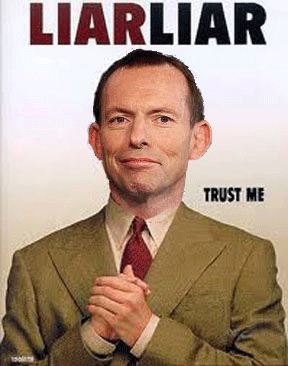
Take Tony Abbott and Scott Morrison. Two of the most out-of-their-depth, ineffectual, policy-light and spectacularly uninspiring Australian prime ministers of the past 50 years. Governments so underwhelming that voters didn’t merely change their minds – they slammed the door, locked it, and put the furniture up against it.
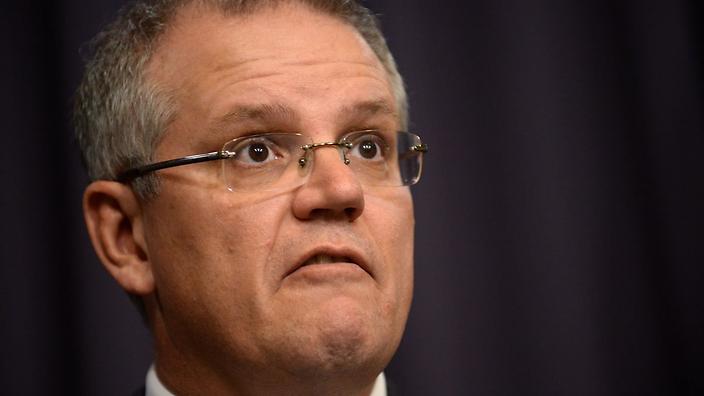
This is surprising, because while neither man excelled at governing Australia, they have since been warmly embraced on the international speaking circuit – mainly by right-wing conferences, “freedom” forums, and governments that find Western accents useful when saying deeply illiberal things.
Tony Abbott, whose prime ministership was defined by instability, internal warfare and three-word slogans that passed for policy, is now invited to explain leadership. Abbott struggled to explain his own government to his own party room, but apparently this has not deterred organisers elsewhere.
Scott Morrison’s record is fresher – and stranger. A prime minister who treated government as a branding exercise, communicated almost exclusively through slogans, and managed crises with photo opportunities rather than competence. A man so committed to secrecy that, in his final months in office, he quietly appointed himself to five ministries without telling the ministers involved.
Ironically, since leaving office, Morrison appears to have lost the ability to keep secrets altogether.
The man who secretly ran half the government now speaks endlessly. Panels, conferences, fireside chats. There is no shortage of words – just an ongoing shortage of insight. Morrison’s speeches are long on grievance, heavy on culture-war talking points, and light on anything resembling reflection or accountability.
One might reasonably ask: who is paying to hear this?
The answer is not “the public.” These are not broad, curious audiences wondering what went wrong. They are curated rooms. Friendly rooms. Rooms where applause is guaranteed and difficult questions are optional. Rooms where electoral defeat is reframed as martyrdom and democratic accountability as persecution.
Failure, it seems, has become a credential.
In a healthy democracy, losing office used to mean something. It was feedback. A verdict. An instruction to step aside. Now it is merely the start of a second career – one in which rejection at home is marketed overseas as proof of courage.
None of this is illegal. None of it is particularly new. But it is revealing.
If Abbott and Morrison had left office respected, effective, and admired, their global speaking careers would make sense. Instead, they left behind governments remembered largely for chaos, secrecy, and exhaustion. And yet, somewhere overseas, there is always a stage, a lectern, and an audience eager not to ask why.
No comments yet.
1 This month
7 April – WEBINAR – Australia and the Doomsday Clock – Preventing nuclear war through NoFirstUse and other policies
Online | Tuesday April 7, 4:00-5:30pm, Australian Eastern Time / 8:00-9:30am Central Europe Time
– Access the registration link
15 April – Zoom –Nuclear Power is Not the Solution
Apr 15, 2026 01:00 AM in Canberra, Melbourne, Sydney

Join the International Physicians for the Prevention of Nuclear War (IPPNW) on Tuesday, April 14th for a timely webinar exploring the risks associated with nuclear power and challenging the myth that it offers a simple, safe, carbon-free solution to the climate crisis

21 April Webinar: No Nuclear Weapons in Australia
Start: 2026-04-21 18:00:00 UTC Canberra, Melbourne, Sydney (GMT+10:00)
End: 2026-04-21 19:30:00 UTC Canberra, Melbourne, Sydney (GMT+10:00)
Event Type: Virtual
A virtual link will be communicated before the event.
Host Contact Info: australia@icanw.org

of the week – Australians for War Powers Reform (AWPR)
To see nuclear-related stories in greater depth and intensity
 Antinuclear
Leave a comment