The Australian prime minister, Anthony Albanese, gave Donald Trump a gift of a model nuclear submarine with golden plates and finishes, internal documents reveal, during his visit to the White House last year which sealed the president’s support for the Aukus pact.
The prime minister also presented the US first lady, Melania Trump, with a A$3,000 Paspaley pearl pendant.
The information, obtained by Guardian Australia from the Department of Prime Minister and Cabinet after a four-month freedom of information process, revealed more about the delicate diplomatic planning and charm offensive that went into Albanese’s long-awaited first face-to-face meeting with Trump.
“Gift form” documents from the department reveal Albanese came to the White House bearing a two-foot-long model Virginia-class submarine, mounted on a base with gold plates, and a pearl necklace from one of Australia’s most famous jewellers.
Albanese had previously stated he’d given the Trumps a model submarine and jewellery, but at the time neither Albanese’s office nor his department would reveal any further information about the gifts.
The decision by Adelaide University to withdraw a venue booking for an event featuring a leading United Nations human rights expert has ignited a fierce debate about academic freedom and censorship in South Australia.
The controversy surrounds a panel discussion titled “Settler Colonialism: What It Can Tell Us About the Conflict in Israel/Palestine,” which was scheduled to be held at the university’s Elder Hall. The event is part of the Constellations: Not Writers Week, a breakout festival created in response to the recent cancellation of the official Adelaide Writers’ Week.
The panel features Francesca Albanese, the United Nations Special Rapporteur on the Occupied Palestinian Territories, who was to appear via video link, alongside esteemed historian Henry Reynolds and UNSW academic Lana Tatour.
According to event moderator Chris Sidoti, Elder Hall had been booked a month in advance. However, on Tuesday, the university informed organisers that the booking was being revoked, citing “health and safety” concerns.
In a statement, an Adelaide University spokesperson defended the decision, stating they were only made aware of the external event the previous Friday. The university claimed it could not accept the booking because it:
“… did not go through the required review and approval process in accordance with the required policy and procedure.”
The spokesperson added that the university could not “ensure the safety, respect and comfort of those attending” and suggested an alternative venue – the National Wine Centre – at a significantly higher cost of $23,500, compared to the $750 fee for the university hall.
This explanation has done little to quell the criticism. Mr. Sidoti described the move as a “sad reflection on the state of Adelaide University today,” arguing that the institution’s core role is precisely “to provide forums for these kinds of discussions – and it’s failing in that.”
The cancellation has drawn sharp rebukes from political figures, who see it as part of a worrying trend of silencing dissenting voices.
Democracy education resources
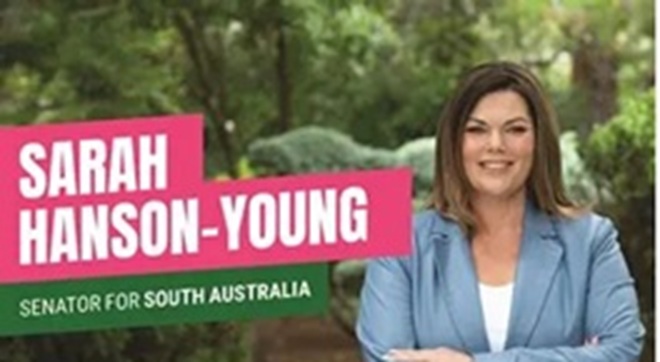
Greens Senator for South Australia, Sarah Hanson-Young, demanded the university explain its actions, calling the reports “concerning.” She linked the decision to the earlier controversies surrounding Writers’ Week, suggesting a broader “culture of fear infecting our institutions.”
“You cannot cancel curiosity, you cannot cancel compassion, and you cannot silence a city that believes in the exchange of ideas and freedom of expression,” Senator Hanson-Young said. She accused the university of capitulating to external pressure, stating that “seeking to silence a distinguished international human rights expert undermines academic freedom, weakens intellectual integrity, and contradicts the very principles universities are meant to uphold.”
The event is part of the Constellations festival, which was formed after the official Adelaide Writers’ Week was cancelled this year. That decision followed the withdrawal of hundreds of authors protesting the treatment of Palestinian-Australian writer Randa Abdel-Fattah, who was controversially uninvited from the original lineup.
When questioned directly about whether concerns regarding Ms. Albanese’s appearance – particularly in light of past criticism and US sanctions – influenced the decision, the university spokesperson did not provide a direct answer. They reiterated that the institution prides itself on being a place for the free exchange of ideas.
Event to Proceed at New Venue
Despite the university’s withdrawal, the discussion will go ahead. Organisers have secured the Norwood Concert Hall in Adelaide’s eastern suburbs for Thursday evening, where a sold-out crowd is expected to attend.
Senator Hanson-Young highlighted the public response as a rebuke to the university’s decision:
“Thankfully the event will go ahead… showing that South Australian audiences aren’t as fearful as these institutions,” she said.




 Antinuclear