How climate and renewables “disinformation networks” are fuelling a major national security threat
Rachel Williamson, Mar 24, 2026, https://reneweconomy.com.au/how-climate-and-renewables-disinformation-networks-are-fuelling-a-major-national-security-threat/
Climate information wars and fossil fuel dependency are national security threats that are undermining Australia’s ability to respond to crises like the Iran war, a new report says.
This battleground is actively undermining the country’s ability to reach energy sovereignty and protect Australians from external threats, says retired Australian Defence Force (ADF) admiral Chris Barrie.
“There has been a failure to understand how energy dependence on fossil fuels will cause both economic disruption and more perilous physical conditions for Australians,” Barrie said in a statement accompanying a new report outlining the scale of the threat.
“Now the two issues are colliding.
“We are facing an unprecedented energy crisis much worse by the world’s failure to face its fossil fuel addiction. Layered on top is a climate disinformation war globally and in Australia that is actively undermining the capacity to build a renewable, clean-energy future and curb coal and gas exports.”
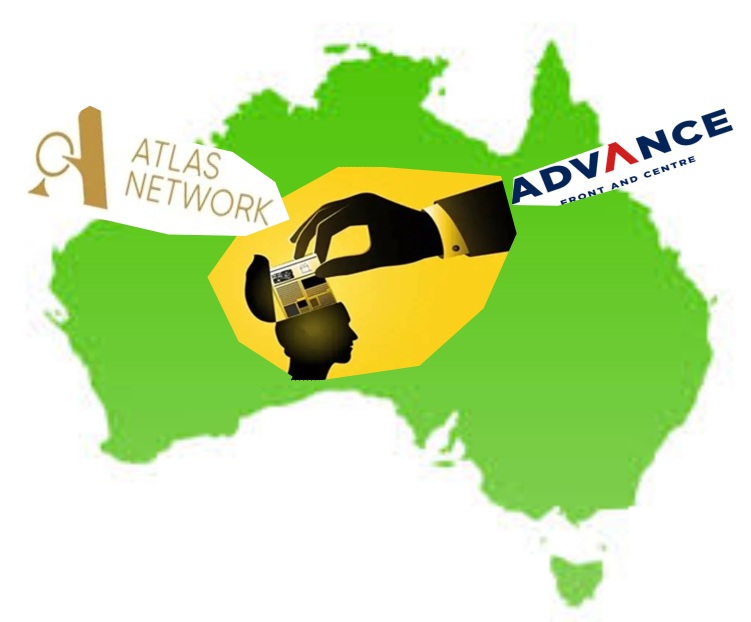
The Climate Disinformation War report says Australia, and the world, have been engaged in an information war over climate change for at least two decades, as “anti-climate propaganda and disinformation networks” grew into multi-billion dollar permanent campaigns.
Today, power comes from dominating the information space and Australians’ perpception of the world is now warped by mis- and disinformation, says The Climate Disinformation War report author, intelligence analyst Anastasia Kapetas.
“This is no longer just a communications issue,” she said in a statement.
“It is a national security threat with consequences for Australia’s sovereignty, economic resilience, disaster preparedness, institutional trust and strategic autonomy. We are already seeing a drift toward authoritarian politics linked to climate denial.”
Responding to the scale of climate disinformation requires coordination across civil society and industry, and across security, economic, and governance institutions, Kapetas says in the report.
It calls for comprehensive anti-trust architecture, such as the current European Union Digital Markets Act, to stop tech platforms that amplify disinformation from becoming too powerful to regulate.
It also wants digital regulation that requires companies to take responsibility for online disinformation and other harms, and “urgent, enforceable” regulation of generative AI that can rapidly scale disinformation.
Marketing group Clean Creatives last year estimated the top 29 oil majors spent $US6.97 billion ($A9.9 billion) in 2024 on media management and PR.
Some of that was funnelled into astroturfing campaigns and monitoring environmental activists, as FTI Consulting was unveiled as doing in the US and as Coalition pollster Freshwater Strategy was exposed for last year by creating a so-called grassroots gas support group, or funding climate deniers.
In Australia, fossil fuel interests spent $7 million backing conservative politicians in the 2025 federal election, and links have been made between conservative think tanks espousing anti-renewable energy ideas with local and US-based fossil fuel donors.
They’ve created “a tidal wave of hostile messaging”, said California Energy Commission chair David Hochschild in Sydney this month.
Sadly, one of the culprits is Australia’s own Liberal and National parties, whose energy policies for two decades and claims of what renewable energy could, or would do despite evidence to the contrary, allowed disinformation and misinformation to flourish.
The impact of this wave of money and propaganda on Australians was made clear last year, when a Senate committee inquiry exposed just how deeply mis- and dis-information is now entrenched in this country, and how badly its damaging Aussie communities.
As Renew Economy managing editor Giles Parkinson put it, the Senate committee unearthed “harrowing evidence of abuse, threats, and intimidation – much of it driven by fear and loathing inspired by deliberate campaigns to demonise renewables”.
The media regulator has no powers to direct platforms or media outlets to take down inaccurate information, and community groups are being hit by coordinated and sophisticated social media attacks.
The anti-renewables “outrage machine” is even having a real impact on attitudes to Australia’s favourite technology, rooftop solar and home batteries, as noted by Populares boss Ed Coper at the EN26 conference last week.
Energy security starts at home
While some media commentators still scoff at the idea that renewables offer energy independence, governments and companies are taking note.
Last week, the UK fast-tracked balcony solar rules specifically to beef up energy security, and Australian electricity retailer Discover Energy finished a pivot that started after the 2020 Ukraine War-coal price spike to dump its gas licence to focus on solar-batteries and virtual power plants.
Nepal, Cuba and Pakistan are all deeply advanced in their own transitions, after country-specific crises over the years gave them few other choices.
Indeed, “homegrown” energy sources are now equated with security, says International Energy Agency (IEA) chief Fatih Birol.
“We have seen, in Europe since 2022, the phenomenal growth of renewables mainly driven by security concerns,” Birol said.
“We have more options to deal with [this] crisis [than during the 1970s oil price shocks].
“Renewables have come to maturity… batteries, these will be a big game changer in terms of solar and wind becoming an even bigger part of the energy sector.”
In a blow to latent hopes in conservative circles, Birol doesn’t believe the way out for Australia is nuclear – even though he is a big fan of the technology and it’s rising again after the last shock in 2022.
He urges Australians to be “very, very proud” of what the country has achieved with solar and home batteries as “not every country needs to be nuclear power”.
Rachel Williamson is a science and business journalist, who focuses on climate change-related health and environmental issues.
1 This month

of the week – Australians for War Powers Reform (AWPR)
To see nuclear-related stories in greater depth and intensity
 Antinuclear