Climate-conscious investors put nuclear dead last on list of desirable Australian ventures
Fewer than one in 10 investors exploring new investments in the technology, with most preferring renewables
Guardian, Paul Karp Chief political correspondent, 25 Mar 24
Nuclear energy ranks last on the list of climate technologies that big institutional investors want exposure to, according to a survey of climate conscious investors with $37tn under management.
Fewer than one in 10 investors were exploring new investments in nuclear technology in the survey of the Investor Group on Climate Change, whose 100 members include super funds and asset managers looking after the funds of 15 million Australians.
The survey found a rebound in confidence in Australia’s climate policy but a growing appetite for clear timelines for the phase-out of coal, oil and gas.
The opposition, led by Peter Dutton, plans to propose locating nuclear power plants on the site of retiring coal power plants, claiming that this would save having to build new transmission infrastructure for renewables.
But the plan has been widely panned. The energy department has estimated it would cost $387bn to go nuclear, and Dutton faces opposition from his own state colleagues.
Australia’s big private electricity generators have dismissed nuclear energy as a viable source of power for their customers for at least another decade, and likely more.
In the yearly survey by the Investor Group on Climate Change investors were asked which energy and climate solutions they believed had good long-term returns. Nuclear energy was ranked last of 14 possible responses, along with sustainable oceans.
“This is due to nuclear energy’s very high cost, and the lack of maturity and deployment in next generation technologies,” a policy brief on the survey said, citing the CSIRO’s gencost report.
The five most popular options were: renewable energy (backed by 47% of respondents); nature solutions, including biodiversity or nature capital (34%); energy storage (32%); low carbon transport (32%); and industry/materials, including critical minerals (32%).
In 2021 about 70% of investors cited policy and regulatory uncertainty as a barrier to investing in climate solutions, a figure that dropped to 40% in the 2023 data released on Monday.
Asked to nominate the policies they wanted the government to prioritise, most investors (56%) called for sector-by-sector decarbonisation plans to keep global heating under the 1.5C threshold.
There was also majority support for improved carbon pricing through the safeguard mechanism (54%), funding support for new technology (53%), and phasing out fossil fuel subsidies (51%).
The policy brief said “emerging priorities” included mandatory climate-related disclosures, timelines for the phase-out of coal, oil and gas, and clear policies to build resilience and adapt to the physical damages of climate change.
Erwin Jackson, Investor Group on Climate Change’s managing director of policy, said: “Investors have given the government a pretty good report card………………………………………………….more https://www.theguardian.com/australia-news/2024/mar/25/climate-conscious-investors-put-nuclear-dead-last-on-list-of-desirable-australian-ventures
Man blames nuclear meltdown for deformities in city more radioactive than Chernobyl

Ozersk – code named City 40 – was the birthplace of the Soviet nuclear weapons programme, now it’s one of the most contaminated places on the planet with residents exposed to high radiation levels.
By Kelly Williams, Assistant News Editor (Live) https://www.dailystar.co.uk/news/world-news/man-blames-nuclear-meltdown-deformities-32405120
A man living in a secret city five times more radioactive than Chernobyl has been left with facial deformities he blames on huge nuclear meltdowns.
Vakil Batirshin has massively swollen lymph nodes said to be caused by radiation-related illness. He lives in Ozersk – code named City 40 in Russia – which was built in total secrecy around the huge Mayak nuclear power plant by the Soviets in 1946.
For the first eight years after City 40 was built, Ozersk residents were forbidden from communicating with the outside world. Like Chernobyl, it was designed as a place to house the scientists working at the plant who – unbeknownst to the world – were leading the Soviet Union’s nuclear weapons programme during the Cold War era.
Locals were told they were “the nuclear shield and saviours of the world,” and everyone on the outside was an enemy.
They also kept it a secret that the extreme exposure to radiation was affecting the health of the city’s inhabitants. They started to get sick and die and the authorities were clandestine about the mortality rate.
However, the city’s graveyard with all its young victims tells the story.
Ozersk, nicknamed “The graveyard of the Earth,” was surrounded by guarded gates and barbed wire fences and did not appear on any maps.
Its inhabitants’ identities were also erased from the Soviet census to guard their secret.
The Mayak nuclear plant went through Russia’s biggest nuclear disaster when the facility allegedly dumped 200million curies worth of radioactive material into the environment around Ozersk.
The residents also suffered the Kyshtym disaster in 1957, the worst nuclear disaster the world had seen before Chernobyl.
Radiation bathed the city when a cooling system exploded at Mayak with the force of 100 tons of dynamite.
One of the nearby lakes has been so heavily contaminated by plutonium that locals have renamed it the “Lake of Death” or “Plutonium Lake”.
In an interview which resurfaced earlier this week on X (formerly Twitter), Vakil Batirshin struggles to speak, his neck is painfully swollen from lymph nodes that have grown to triple their normal size.
His exact diagnosis remains steeped in mystery as doctors say it can be hard to trace any one condition to radiation.
But asked if he has any doubt his symptoms are related to radioactivity, he said: “Well, when I lived in my home village, I didn’t have anything. Everything was great.
“When I came here, it all started.”
Another resident, Gilani Dambaev is riddled with diseases doctors think are linked to a lifetime’s exposure to excessive radiation. He and his family have government-issued cards identifying them as residents of radiation-tainted territory.
He said: “Sometimes they would put up signs warning us not to swim in the river, but they never said why. After work, we would go swimming in the river. The kids would too.”
Although the secret is now out and Ozyorsk resembles “a suburban 1950s American town” according to The Guardian, residents know their water is contaminated, their crops are poisoned, and their children may be sick.
Half a million people in Ozersk and its surrounding area are said to have been exposed to five times as much radiation as those living in the areas of Ukraine affected by the Chernobyl nuclear accident.
But most refused to leave, because while the Soviet population were suffering from famine and living in extreme poverty, the city was regarded as a paradise as authorities gave them private apartments, plenty of food, good schools and healthcare, and a plethora of entertainment and cultural activities.
Even still, residents opt against leaving. The Guardian reported that “it is prestigious to live in Ozersk.”
Residents describe it as a town of “intellectuals”, where they are used to getting “the best of everything for free”.
Living in Mayak’s nuclear shadow and resigned to her fate, one said: “I don’t hope for anything anymore. If we get sick, we get sick.”
Some locals, however, claim that long term dumping by the nuclear plant’s management continues today.
The government has started resettling residents to new homes away from the river, but the process only began in 2008.

TODAY. UK High Court caving in before USA’s power, leaving decision on Julian Assange’s future up to USA’s “kindness”?

Well, well, what better example of America’s dominance over the anglophone world could you find?
The UK High Court was charged with making a decision on whether or not Julian Assange could appeal against the British government’s decision to extradite him to the USA on charges of ” complicity in illegal acts to obtain or receive voluminous databases of classified information and for agreeing and attempting to obtain classified information through computer hacking”, under the rarely used Espionage Act of 1917
This High Court case is the latest in the series of legal cases around the issue of extradition.
Julian Assange has languished for almost five years, in solitary confinement, in the notorious Belmarsh prison, Britain’s “Guantanamo Bay” for the worst criminals. Now he has to endure this for more weeks. Talk about death by a thousand cuts. ( Perhaps Russia is kinder – they just poison their problem people, or crash them in a plane – it’s quicker)
All this because Assange revealed and published the truth about America’s military atrocities.
So – now we know.
If a journalist anywhere in the world should have the temerity to reveal inconvenient facts about the USA military, then look out!
Not only are the Western political leaders, and especially in the anglophone countries, subservient to their master – the USA, but now we know that even their legal systems are subservient too.
Dame Victoria Sharp, took 66 pages to explain why the High Court couldn’t actually make a decision, without the blessing of the USA government.
So – the High Court will reconvene in three weeks, after receiving “assurances” from the USA government – about no death penalty (on the present charges, they could make new ones?), that he is permitted to rely on the First Amendment, – he is not ‘prejudiced at trial’ .
Of course the USA government will come up with kindly phrases – not worth the paper they are written on.
It’s a sad day for justice.
UK Court to Decide Tuesday If Julian Assange Can Appeal Extradition
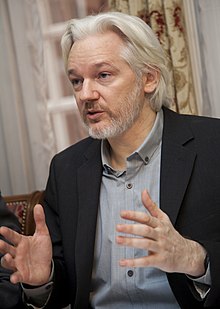
The decision will be issued at 10:30 am London time
by Dave DeCamp March 25, 2024, https://news.antiwar.com/2024/03/25/uk-court-to-decide-if-julian-assange-can-appeal-extradition/
London’s High Court will rule on Tuesday whether WikiLeaks founder Julian Assange can appeal his extradition to the United States, where he would face trial for exposing US war crimes.
According to WikiLeaks, the written ruling is due to be delivered by 10:30 am London time.
Last month, Assange’s legal team presented its case for the appeal. His lawyers also introduced new evidence, including a bombshell report from Yahoo News that revealed the CIA in 2017, under Mike Pompeo at the time, considered kidnapping and even discussed assassinating Assange over WikiLeaks publishing detailed the CIA’s hacking tools, known as Vault 7.
Assange did not attend the two-day hearing due to his poor health, and he remains in London’s Belmarsh Prison, where he’s been held since 2019. Assange’s family and legal team believe he will die if extradited to the US.
The news of the High Court’s impending decision comes after The Wall Street Journal reported that the US was considering offering a plea deal to Assange and that Justice Department officials had preliminary talks with his legal team. However, Assange’s lawyer, Barry Pollack, said in response to the report that the US has “given no indication” that the US will take a deal.
Assange faces 17 counts under the Espionage Act and one charge for conspiracy to commit a computer intrusion for obtaining and publishing documents from a source, a standard journalistic practice. If Assange is convicted, it would set a grave precedent for press freedom in the US and around the world. A plea deal that criminalizes the journalist-source relationship could also set a dangerous precedent.
WikiLeaks has been asking Americans to put pressure on the Biden administration to stop its pursuit of Assange by contacting their House representatives and telling them to support H.Res.934, a bill introduced by Rep. Paul Gosar (R-AZ) that calls for the US to drop the charges against Assange.
UN Security Council ceasefire resolution a turning point in Gaza war
March 26, 2024, by: The AIM Network, m https://theaimn.com/un-security-council-ceasefire-resolution-a-turning-point-in-gaza-war/
Australian Council for International Development Media Release
Australia’s peak body for international humanitarian organisations welcomes the United Nations Security Council’s resolution calling for an immediate ceasefire in Gaza and release of all hostages as a crucial turning point in the war.
Australian Council for International Development (ACFID) CEO Marc Purcell said it marked a significant breakthrough despite the United States’ decision to abstain from voting.
“This passage of this binding resolution, following four failed attempts since the start of the war, shows global leaders are no longer willing to accept the deaths of tens of thousands of civilians, many of them children, as collateral,” he said.
“The US’ decision to abstain is disappointing, particularly since it put forward its own failed proposal for a ceasefire just days ago. It is essential the US use its influence and relationship with Israel to obtain a permanent ceasefire.
“We are hopeful the passage of this resolution overnight marks a crucial turning point in the war that has killed nearly 32,000 civilians through bombing, starvation and dehydration.
“It is vital that both the state of Israel and militant groups immediately lay down arms to allow for the passage of humanitarian assistance, which is still being blocked from entry into Gaza, and the release of all hostages.”
ACFID is urging the Australian government to commit additional and ongoing funding for the humanitarian response in Gaza and the West bank, including for Australian non-government organisations providing lifesaving assistance.
BASE study: Alternative reactor concepts do not solve the repository problem

A new scientific study commissioned by the Federal Office for the Safety of Nuclear Waste Management (BASE) indicates that the market launch of alternative reactor concepts (also known as “Generation IV”) is currently not on the horizon.
“Despite some intensive advertising by manufacturers, we currently see no development that would make the construction of alternative reactor types on a large scale likely in the coming years. On the contrary: “From a safety perspective, we should expect the potential advantages of these reactor concepts to be outweighed by the disadvantages and the questions that remain unresolved,” says BASE President Christian Kühn, and emphasises that “The concepts solve neither the need to find a repository for radio-active waste nor the pressing issues of climate protection.”
The alternative reactor concepts, which include SMRs, are also often linked to the hope that they can minimise or even resolve the safety risks and disposal problems associated with nuclear power. To examine these claims, BASE commissioned the “Analysis and evaluation of the development status, the safety and the regulatory framework for so-called novel reactor concepts” study. The scientific work was carried out by the Öko-Institut, the Technical University of Berlin and the Physikerbüro Bremen.
“No alternative reactor type would make a repository superfluous”
The study analysed seven technology lines for alternative reactor concepts, which have been discussed internationally for many years, and are sometimes referred to as “fourth-generation reactors”. These include, for example, so-called lead and gas-cooled reactors, molten salt reactors and accelerator-driven systems. “Anyone who is euphoric about alternative reactor concepts today is ignoring unanswered questions and safety risks. As far as the safety of nuclear waste management is concerned, one thing is clear: no alternative reactor type makes the construction of a repository superfluous,” thus BASE President Kühn.
According to their developers, the reactors of the generation IV reactors will offer advantages over today’s nuclear power plants in terms of fuel utilisation, safety and reliability, economic efficiency and nuclear non-proliferation. Another advantage is said to be that less high-level radioactive waste is produced or that even existing waste can be disposed of with the help of these reactors.
The study compared the reactor concepts in terms of their safety, efficiency, proliferation resistance and fuel consumption.
“Individual technology lines could – with a systematic design – achieve potential advantages over today’s light water reactors regarding some of the criteria. However, none of the technology lines can be expected to have an overall advantage; in some areas, disadvantages compared to today’s light water reactors are also possible,” says Christoph Pistner of the Öko-Institut.
An analysis of six countries revealed as follows: “Even in an international context, alternative reactor concepts neither call into question the current trend towards light water reactors, nor do they represent a feasible, economical option for future energy supply,” says Christian von Hirschhausen of TU Berlin. “The study explains this on the basis of six detailed country studies (USA, Russia, China, South Korea, Poland, Belgium). Especially the United States, who are often the subject of public discussion, have not achieved any breakthroughs in the development of non-light water reactors, and have even cancelled previously announced inventions (“travelling wave reactor”).”
Findings of the study
The BASE-funded research project draws the following conclusions:
- State of development: All the concepts that are currently being discussed as belonging to the term “Generation IV” have been under development for decades, in some cases since the 1950s, and have not yet reached market maturity. There is still a considerable need for research and development. If the technical hurdles and safety issues can be resolved, further development would most likely take several decades. Against this background, we cannot assume that such reactor concepts will be used on a relevant scale by the middle of this century. In particular, individual country studies show that a system change from light water reactors to alternative reactor concepts ready for series production is not in sight.
- Waste generation: The alternative reactors would still generate high-level radioactive waste, some of which would be very different to the waste from light water reactors, for example because it would not be present as solid fuel elements but as molten salt. This would make waste treatment much more difficult, as current repository plans are generally not designed for this kind of waste. The volume of high-level radioactive waste could be reduced in conjunction with reprocessing technologies, but the volume of intermediate and low-level radioactive waste would increase significantly.
Transmutation properties: Some of the reactor concepts studied could, in theory, be used to split (transmute) individual parts of the existing high-level radioactive waste. This would involve a great deal of effort over a long period of time. However, the foreseeable effect of these measures would only make a comparatively small contribution to reducing the space requirements of a repository and to its long-term safety. This is due, in particular, to the fact that the substances with the greatest impact on safety (long-lived fission products) are difficult to transmute, and are therefore not intended for this purpose.- Regulations: The regulations of international organisations (e.g. IAEA) and national regulations (USA, Canada and the UK) examined in this study sometimes make very detailed, technology-specific provisions based on decades of operating experience with light water reactors. These regulations are, therefore, not directly applicable to the alternative reactor concepts studied. Revisions are currently underway, but due to a significantly lower level of operating experience, the time required to produce a similarly well-founded set of rules is likely to be very long.
Transmutation properties: Some of the reactor concepts studied could, in theory, be used to split (transmute) individual parts of the existing high-level radioactive waste. This would involve a great deal of effort over a long period of time. However, the foreseeable effect of these measures would only make a comparatively small contribution to reducing the space requirements of a repository and to its long-term safety. This is due, in particular, to the fact that the substances with the greatest impact on safety (long-lived fission products) are difficult to transmute, and are therefore not intended for this purpose.- Regulations: The regulations of international organisations (e.g. IAEA) and national regulations (USA, Canada and the UK) examined in this study sometimes make very detailed, technology-specific provisions based on decades of operating experience with light water reactors. These regulations are, therefore, not directly applicable to the alternative reactor concepts studied. Revisions are currently underway, but due to a significantly lower level of operating experience, the time required to produce a similarly well-founded set of rules is likely to be very long.
Conclusion: The expectation expressed both in public debate and by developers that the alternative reactor concepts can make a significant contribution to solving today’s problems in nuclear technology cannot be considered realistic in view of the current state of development of these systems and the actually proven and expected advantages and disadvantages of the individual technology lines.
The summary of the study results (in German only)
Conclusion: The expectation expressed both in public debate and by developers that the alternative reactor concepts can make a significant contribution to solving today’s problems in nuclear technology cannot be considered realistic in view of the current state of development of these systems and the actually proven and expected advantages and disadvantages of the individual technology lines
AUKUS: Red flag for arms industry corruption

There has been almost no public commentary about the likely influence of the arms industry in the secretive AUKUS deal.
MICHELLE FAHY, MAR 22, 2024, https://undueinfluence.substack.com/p/aukus-red-flag-for-arms-industry?utm_source=post-email-title&publication_id=297295&post_id=142851171&utm_campaign=email-post-title&isFreemail=true&r=1ise1&triedRedirect=true&utm_medium=email
The arms trade is known for being one of the most corrupt of all legal international trades.
UK research shows that this corruption drives and distorts arms procurement decisions. Arms purchases that were not previously being considered can suddenly appear on the agenda.
Before delving into AUKUS, an egregious distortion in Australian defence procurement, I’ll briefly revisit the original French submarine contract.
The research shows that submarines, in particular, are a procurement area where a very high proportion of the small overall number of deals involve major corruption.
French multinational Naval Group had been wrangling with Malcolm Turnbull’s government for almost two years trying to get the formal contract signed.
In August 2018, Scott Morrison became PM.
Soon after, Naval Group hired David Gazard, well-connected lobbyist, former Liberal candidate, and close friend of Scott Morrison, to help them get the deal over the line.
Within months, the Morrison government had signed the contract.
In early 2019, the ABC reported, ‘Naval Group confirmed the arrangement but did not disclose how much Mr Gazard’s company was being paid for its lobbying services’.
Mr Gazard’s company, DPG Advisory Solutions, declined to comment to the ABC about its role. I sent similar questions to Mr Gazard this week and received no response by deadline.
At the time Australia put Naval Group on the shortlist, the company was under investigation for corruption in three other arms deals: two for submarines (Pakistan and Malaysia) and one for frigates (Taiwan). The Abbott government would have known this.
These were not minor corruption cases: all involved murder.
French authorities commenced another corruption investigation into Naval Group (submarines; Brazil) in late 2016, after Australia had awarded Naval Group the deal, but before we signed the contract.
How did the Abbott, Turnbull and Morrison governments shortlist, select, and then sign a contract with a company being investigated in four separate corruption cases?
Murder, corruption, bombings – the company at centre of Australia’s submarine deal
Naval Group was selected by the Australian government to build its new fleet of submarines while at the centre of a deadly criminal saga and numerous global corruption scandals. How did this happen? MICHELLE FAHY, OCT 24, 2020
AUKUS submarines

BAE Systems Australia is Defence’s largest contractor and has been for six of the past eight years.
BAE Systems is set to be a significant beneficiary of AUKUS.
Six months ago, the UK Government awarded the company a £3.95 billion (A$7.5 billion) contract for the detailed design phase of the AUKUS submarines.
On Friday, Defence Minister Richard Marles announced that Australia will send $4.6 billion (£2.4 billion) to the UK. Australia’s money will contribute to BAE’s detailed design phase of the AUKUS submarines and will also help clear bottlenecks in the Rolls Royce nuclear reactor production line.
This $4.6 billion expenditure is in addition to the $3 billion of Australian money already committed to support US naval shipyards.
The UK’s current submarine programs (managed by BAE) are running well behind schedule raising questions about whether BAE can deliver on the AUKUS agreement.
BAE Systems also provides perhaps the best-known example of systematic high-level arms industry corruption.
Britain’s series of arms deals with Saudi Arabia was, and remains, its biggest ever arms deal. It earned BAE Systems at least £43 billion in revenue between 1985 and 2007, with further deals still ongoing. The deal included £6 billion pounds in ‘commissions’ (bribes), paid to the Saudis.
In addition, during the 1990s and 2000s, in ‘a deliberate choice that came from the top’, BAE Systems maintained a shell company registered in the Cayman Islands called Red Diamond Trading. This vehicle channelled hundreds of millions of pounds of bribes around the globe to key decision makers in a succession of arms deals.
The Guardian’s BAE Files contain 15 years of reporting on this subject.
Sinking billions: Undergunned and overpriced. Missing records, billions in over-runs, conflicts of interest, and flawed ships. How the Defence Department’s new frigates project is a boondoggle for a British weapons-maker. MICHELLE FAHY, JUL 03, 2023
It has also been revealed that BAE Systems was given the Hunter class frigate contract despite ‘long-running concerns’ inside Defence about BAE’s alleged inflation of invoices by tens of millions of dollars on the earlier Adelaide class of frigates.
Detailed allegations of fraud in the Adelaide-class contracts, including by Thales Australia, were published in three separate articles by The Weekend Australian in May 2019.
A Defence internal audit had reportedly found that BAE’s contract was ‘riddled with cost overruns, with the British company consistently invoicing questionable charges’.
Defence launched a second investigation.
18 months later, I asked Defence about the outcome of its second investigation. This was their response:
An independent internal review of this matter found no evidence of inappropriate excess charges by BAE and Thales. The investigation did find some minor administrative issues which have been subsequently addressed through additional training. This training is now part of the normal cycle and is routinely refreshed.
The ‘independent’ review was conducted in secret by an existing defence contractor. His report was not made public.
Defence said ‘no evidence’ was found of inappropriate excess charges. Yet the allegations were apparently so serious they were referred to Defence’s assistant secretary of fraud control who then referred several matters to the Independent Assurance Business Analysis and Reform Branch of Defence.
Recently, I have been collaborating with UK colleagues trying to uncover more about the Adelaide-class contracts. Freedom of Information requests have been lodged. Defence has blocked them, refusing to release a single page.
An appeal was submitted, Defence blocked that too. We have now appealed to the Information Commissioner.
If this was merely ‘a minor administrative issue’ that has been resolved by ‘additional training’, why the aggressive blocking of any release of information through FoI?
Undue influence and the revolving door
I will finish by outlining a mini case study of undue influence and the revolving door – that of former CEO of BAE Systems Australia, Jim McDowell.
I am not implying any illegality on the part of Mr McDowell. I am simply laying out an array of his government appointments – not all of them – to highlight the extensive influence that just one person can have.
Jim McDowell had a 17-year career with BAE Systems including a decade as its chief executive in Australia, then two years running its lucrative Saudi Arabian business. He resigned from BAE in Saudi Arabia in December 2013.
In 2014, McDowell was appointed by the Coalition to a four-person panel undertaking the First Principles Review of Defence. This Review recommended sweeping reforms to the Defence Department, including its procurement processes, which have largely benefited major arms companies.
In 2015, the Coalition appointed McDowell to a 4-person expert advisory panel overseeing the tender process for the original submarine contract. When he announced McDowell as being part of this panel, Defence Minister Kevin Andrews didn’t mention McDowell’s long history with BAE Systems, which had ended only 18 months earlier. It was highly relevant, as BAE designs and manufactures Britain’s submarines.
In late 2016, then-defence industry minister Christopher Pyne hired McDowell as his adviser to develop the Naval Shipbuilding Plan. The appointment was not announced publicly. At that time, McDowell was also on the board of Australian shipbuilder Austal.
Under the shipbuilding plan, Austal subsequently won a contract to build six more Cape-class patrol boats while BAE Systems won the biggest prize, the Hunter-class frigate contract.
After the frigate deal was announced, South Australian premier Steve Marshall hired McDowell to head his Department of Premier and Cabinet. SA was the state that gained most from the shipbuilding plan.
In 2020, McDowell left the South Australian public service to become CEO of Nova Systems, a key defence contractor.
Last year, McDowell moved back through the revolving door into a senior role with the Defence Department. He is now Deputy Secretary for Naval Shipbuilding and Sustainment, reporting directly to defence secretary Greg Moriarty.
When appointed, McDowell said his new role was an opportunity he couldn’t turn down because it ‘provides the ability for me to shape the future of Australia’s shipbuilding and sustainment’.
In my view, McDowell’s long list of sensitive senior appointments should not have been possible. He cannot be the only person in the country qualified to undertake each of these roles.
This was a brief discussion of some aspects of the undue influence of the arms industry in Australia. I raise these issues in this AUKUS context because there has been almost no public commentary about the likely influence of the arms industry in the AUKUS deal.
This is an edited and updated version of a speech given on 12.3.24 at the Independent & Peaceful Australia Network (IPAN) forum, ‘AUKUS and Military Escalation: Who Pays and Who Benefits?’. The other speakers were Allan Behm, Dr Sue Wareham and Professor Hugh White. Speeches can be viewed here.
Report: Justice Department Considering Plea Deal for Assange

While such a deal could potentially secure Assange’s freedom, it could still set a dangerous precedent since it would criminalize the relationship between a journalist and his source.
the US could have leaked the talk of a plea deal to the press to portray Assange as unreasonable if he didn’t take it.
A plea deal could free Assange from prison
by Dave DeCamp March 20, 2024 https://news.antiwar.com/2024/03/20/report-justice-department-considering-plea-deal-for-assange/
The Justice Department is considering whether to offer WikiLeaks founder Julian Assange the opportunity to plead guilty to a reduced charge of mishandling classified information, The Wall Street Journal reported on Wednesday, citing people familiar with the matter.
The report said DOJ officials and Assange’s legal team have already had preliminary talks on what a plea deal might look like. However, Barry Pollack, a lawyer for Assange, said he has been given no indication that the department will take a deal.
“It is inappropriate for Mr. Assange’s lawyers to comment while his case is before the UK High Court other than to say we have been given no indication that the Department of Justice intends to resolve the case and the United States is continuing with as much determination as ever to seek his extradition on all 18 charges, exposing him to 175 years in prison,” Pollack said in a statement.
Consortium News reported later in the day that it had previously learned of the talks between the US and Assange’s legal team on a potential deal, but the information was given off the record, so the outlet did not publicize it.
Under the DOJ’s indictment against Assange, he could face up to 175 years in prison under the Espionage Act for exposing US war crimes by publishing classified documents leaked to WikiLeaks by former Army Private Chelsea Manning in 2010.
If Assange is convicted, it would set a dangerous precedent for press freedom since publishing information obtained by a source is a standard journalistic practice, whether classified or not.
The Journal report said that if the DOJ offers a deal for Assange to plead guilty to a lesser charge of mishandling classified information, it would be a misdemeanor, and he could potentially enter the plea remotely without going to the US. His time in London’s Belmarsh Prison, where he’s been held since April 2019, would count toward his sentence, and Assange could be free shortly after reaching the deal.
While such a deal could potentially secure Assange’s freedom, it could still set a dangerous precedent since it would criminalize the relationship between a journalist and his source.
Kevin Gostzola, author of the book “Guilty of Journalism: The Political Case Against Julian Assange,” suggested the US could have leaked the talk of a plea deal to the press to portray Assange as unreasonable if he didn’t take it.
“Basically, US officials chat to the press about some possible plea deal for Assange when he isn’t guilty of any crime. If Assange’s team signals it would never be acceptable, then it is Assange’s fault that he remains in prison. Officials can say he wants to martyr himself,” Gostzola wrote on X.
Last month, Assange’s legal team presented its case for an appeal to the UK home secretary’s decision to extradite Assange to the US, and a decision on whether or not he can appeal is expected to happen soon.
The Australian government has been calling on President Biden to drop the charges against Assange, who is an Australian citizen. Some members of Congress have also been calling for an end to the persecution of the WikiLeaks founder, including Rep. Thomas Massie (R-KY), who brought Assange’s brother, Gabriel Shipton, to President Biden’s State of the Union.
WikiLeaks and Assange supporters are asking Americans to add to the pressure by contacting Congress. Americans can call their House representatives to support H.Res.934, a bill introduced by Rep. Paul Gosar (R-AZ) that calls for the US to drop the charges against Assange.
Click here to find your representative, or call the House switchboard operator at (202) 224-3121. Tell them to support the resolution to protect the First Amendment and press freedom.
Not in my backyard: Liberals, Nationals go cold on nuclear

James Massola, Mike Foley and Olivia Ireland, March 25, 2024
It has not yet announced potential locations for nuclear sites but has signalled its intention to place them near existing retired coal power stations so they could be more easily plugged into the grid.
Nationals leader David Littleproud has already said he would welcome a nuclear power plant in his south-west Queensland seat of Maranoa. His predecessor, Barnaby Joyce, said he would do the same in his northern NSW electorate of New England. But another dozen Coalition MPs approached by this masthead on Sunday were unwilling to publicly welcome a nuclear power plant in their own electorate, though all said they supported their party’s position.
Opposition climate change and energy spokesman Ted O’Brien, who has played a key role in designing the forthcoming policy and who backs nuclear power to ensure Australia meets its emissions-reduction targets, has repeatedly stopped short of endorsing a power station in his Sunshine Coast seat of Fairfax.
He said last week that three criteria had to be satisfied before a nuclear site was selected: technical feasibility, financial feasibility and acceptance from the community.
“That criteria should apply everywhere,” he said, including his electorate.
The opposition’s energy affordability spokeswoman, Melissa McIntosh, said her suburban Sydney seat of Lindsay would not host a reactor.
“There are no coal-fired power stations, certainly in my electorate and not at all in western Sydney,” she said.
This masthead spoke to 10 more Coalition MPs – Queenslanders Warren Entsch, Llew O’Brien, Colin Boyce, Michelle Landry and Keith Pitt, West Australian Ian Goodenough, Victorians Sam Birrell and Keith Wolahan, NSW MP Jenny Ware and Senator Dave Sharma about whether they supported the nuclear power policy and whether they would be comfortable hosting a power station in their seat or local area.
The nuclear policy of the Peter Dutton-led opposition has met with cool responses from Liberal and National leaders in state parliaments. Victorian Liberal leader John Pesutto last week told ABC radio he did not support building a nuclear power station in the La Trobe Valley where coal-fired power stations are located, Queensland LNP leader David Crisafulli has said “no one will invest in it unless both sides agree to it”, while NSW opposition leader Mark Speakman has said he is awaiting the details of the federal proposal and that “at the end of the day we have to have energy sources that are clean, cheap and reliable”.
Energy experts have questioned whether nuclear power is feasible for Australia, with the CSIRO’s recent GenCost report showing that renewables such as solar and wind are cheaper than coal or nuclear power.
Dutton claims nuclear is a more reliable source of clean energy and that adopting nuclear power would bring Australia in line with other G20 nations. He has committed to soon revealing the proposed locations for six nuclear power plants.
Every federal Coalition MP approached by this masthead supported the policy of lifting the moratorium on nuclear power and potentially introducing the technology to Australia but, like Ted O’Brien and McIntosh, all of them also were cautious or non-committal about it being in their seat and emphasised the need for their constituents to be on board first…………………………………………………………………………
Littleproud said last week that “if the Australian people vote for us that’s a fair indication to premiers that they should get out of the way and let the adults in the room get on with the job”.
Those comments placed him at odds with a trio of state party leaders and underscored divisions within the party. https://www.theage.com.au/politics/federal/not-in-my-backyard-liberals-nationals-go-cold-on-nuclear-20240322-p5feko.html
Murder, corruption, bombings – the company at centre of Australia’s submarine deal

|
Murder, corruption, bombings – the company at centre of Australia’s submarine deal Michael West Media by Michelle Fahy | Oct 24, 2020 The arms company at the centre of a deadly criminal saga and numerous global corruption scandals, Naval Group, was selected by the Australian government to build our new fleet of submarines – a deal heralded as ‘one of the world’s most lucrative defence contracts‘. How did this happen? In this special investigation Michelle Fahy discovers significant gaps in anti-bribery and corruption measures on this massive procurement project. The message communicated far and wide is that our standards are lax; grey areas are tolerated; and we’ll bend the rules and look the other way.…………In June this year, 18 years later, a Paris court secured the first convictions in the case. Six men were found guilty of charges involving kickbacks on deals signed in 1994 for the sale of submarines to Pakistan and frigates to Saudi Arabia. They include three former French government officials and the former head of the International Division of Naval Group.
Investigations into arms trade corruption take years, often more than a decade, due to multiple countries being involved, layers of offshore shell companies hiding the money trail, and the senior people implicated. Court cases and convictions are rare. The Karachi Affair resonates in Australia today because despite this high-profile and deadly criminal saga – and two other corruption scandals, in Taiwan and Malaysia, which also involved murder – the company at the centre of all three, Naval Group, was still selected by the Australian government in 2016 to build our new fleet of submarines. A deal heralded as “one of the world’s most lucrative defence contracts”. Naval Group is 62.25% owned by the French government and 35% by French multinational Thales (a global top 10 weapons-maker). The French case continues. In January, the former French prime minister Edouard Balladur and his defence minister will stand trial. It is alleged the kickbacks helped fund the PM’s failed 1995 presidential bid. Both men deny any wrongdoing. Meanwhile, in Australia, the submarine deal continues. In February last year, after two years of negotiations, the government signed a ‘strategic partnership agreement’ with Naval Group. The signing took place despite the emergence of two more investigations into Naval, including alleged corruption on a 2009 submarine deal with Brazil and a significant security breach where complete plans of the new Scorpène submarines Naval had provided to India were apparently leaked from within Naval. ………………….Strong anti-corruption measures essentialVast amounts of Australian taxpayers’ money are being handed to military industrial companies, including Naval Group, in contracts. Yet the perennial lack of transparency in defence procurement, blanket secrecy surrounding Australian weapons exports, and a pervasive “culture of cosiness” between government and industry all continue. “Big money attracts greedy people and firms,” wrote a 31-year veteran of financial crime investigation for the Australian Federal Police, Christopher Douglas, in 2018. “New defence programs… also attract foreign intelligence interest.” This is already occurring in Australia, and Douglas says there will be more than one country spying. He says there is a “symbiotic relationship” between successful intelligence gathering operations and corruption. The corruption risk has only compounded since 2018. In June, the federal government further increased its projected military spend, from $195 billion to $270 billion. Tufts University in America researches arms trade corruption. It says there is an assumption by governments, barely questioned in defence and security circles, “that maintaining an advanced domestic arms industry is an unquestioned good, and essential to national security and influence. In all too many cases, this goal has therefore been placed above anti-corruption objectives.” (Emphasis added.) In Australia, developing a domestic arms industry is being accorded a high priority, but this should be accompanied by an increase in anti-corruption protections. The facts show nothing could be further from the truth. ‘Perfect bribe vehicles’Many of the world’s corrupt arms deals involve submarines. “They are perfect bribe vehicles,” says Tufts University, because “submarines are hugely expensive, and not many countries actually need them.” Australia is in a minority of countries that can argue it needs submarines. But do we need to spend quite so much money? Of the options available, the government selected the most risky one: the largest, most expensive, never-before-built, and thus completely untested, option. Chris Douglas, now director of Malkara Consulting, has written a report questioning Australia’s anti-corruption due diligence on the Future Submarine program. He has since used Freedom of Information requests to try to find out more about Defence’s anti-corruption framework in the program and has uncovered what appear to be significant gaps, discussed below. The international standard for anti-bribery measures is ISO 37001. It was introduced in 2016. Anyone serious about managing bribery and corruption requires a system that meets this international standard. ‘Come-from-behind victory’It was called “a remarkable come-from-behind victory” for DCNS, as Naval Group was then known, as it beat the respected German bid and former prime minister Tony Abbott’s favoured Japanese bid, to win Australia’s huge submarine contract in April 2016. How did DCNS do it? A history of the procurement is here, but we’ll probably never know the telling background details……………
Quite the opposite. Costello told the ABC’s Lateline, “The probity of me working for DCNS was checked and agreed with the government and all stakeholders in the program.” Costello didn’t elaborate on – or the ABC didn’t air – who in “government” signed off on it, nor who “all” the stakeholders were…………… Well-connected intermediaryIt was revealed in February 2019 that Naval Group had “recently” hired David Gazard to help “improve a rocky relationship with the Defence Department and to secure a crucial Strategic Partnering Agreement (SPA)”. A Liberal Party insider, David Gazard is well connected with the highest levels of the party. He was an adviser to John Howard, Peter Costello and Tony Abbott, in the lobbying business with Peter Costello for a time, and is also reportedly a member of prime minister Scott Morrison’s inner circle. In the 2010 federal election, Gazard stood for the Liberals in Eden-Monaro. After two years of negotiations marked by tension and sometimes bad-tempered wrangling, in December 2018 the government announced that negotiations had concluded. In February 2019, the ‘contract of the century’ was signed. Gazard and Naval Group declined to provide details on his role or the amount his lobbying firm, ECG Advisory Solutions, was paid. Sole FoI document suppressedEarly this year, Chris Douglas lodged an FoI request with Defence about anti-corruption measures on the submarine program. He asked for: …….[documents about anti-corruption measures]……. Douglas submitted another more general request to find out what, if any, ABC planning Defence had done. One document was identified, which Defence said was prepared by EY as part of its comprehensive advisory role (discussed above) and which included opinions and recommendations regarding the business affairs of Naval Group. As the document mentioned ‘third parties’, Defence said it needed to consult with them before it could be released. Douglas outlined his concern that entities involved in corruption often hid their activities and identities by claiming information was commercially sensitive. Nevertheless, Defence consulted the third parties. On 8 May, Defence told Douglas it was declining his request to release the document. Among other things, it said it had consulted EY, which had advised that the document was a very specific aspect of its comprehensive advisory role which, if read out of context, would not be in the public interest and could reasonably be expected to harm the professional reputation of EY. Defence also said it was “aware of allegations in connection with then-DCNS. In relation to these allegations, there have been no formal adverse findings against Naval Group.” (Emphasis added.) A month after this correspondence, the Paris court recorded the conviction against a former senior executive of then-DCN, now Naval Group, on charges relating to the kickback scandal. As noted earlier, given the paucity of cases to ever reach court in this industry, it is alarming that the Defence Department seems to require a “formal adverse finding” before it will give weight to corruption concerns. When it comes to managing corruption risk, is the Defence Department saying it is content to set the lowest possible bar for its contractors to clear? Government collusionThere is no better example of the collusion between governments and industry to ensure arms trade corruption cases rarely make it to court than the UK’s protection of BAE Systems, as described by Tufts University:…… If the multinational, majority French-government-owned Naval Group’s business and professional affairs are such that they would or could be adversely affected by the release of a risk assessment document evaluating its suitability to undertake the largest defence procurement program in Australian history, we might wonder, why was it selected? https://www.michaelwest.com.au/murder-corruption-bombings-the-company-at-centre-of-australias-submarine-deal/ |
|
ERA applies to extend lease on Jabiluka uranium mine against traditional owners’ wishes

ABC Rural / By Daniel Fitzgerald, Thu 21 Mar 2024
- In short: Mining company ERA has applied to extend its lease on the Jabiluka uranium deposit for another 10 years.
- Mirarr traditional owners are fiercely opposed to the lease extension and any mining at Jabiluka.
- What’s next? ERA’s lease application will be assessed by the NT government and the company needs to spend at least $2.4 billion to rehabilitate the former Ranger uranium mine.
A mining company has lodged an application to renew its lease on a uranium deposit surrounded by Kakadu National Park, against the wishes of Indigenous traditional owners.
Energy Resources Australia (ERA) operated the Ranger uranium mine, 250 kilometres east of Darwin, from 1981 to 2021, and is now rehabilitating the mine, at a cost of over $2.4 billion.
Since 1991, the company has also had a the lease on the nearby Jabiluka site — which is one of the world’s largest and richest uranium deposits.
ERA had approval to mine Jabiluka but faced significant opposition from Mirarr traditional owners, which led to a blockade of the mine site by 5,000 people in 1998 and the company’s eventual decision to stop the mine’s development. …………………………………………….
Traditional owners oppose plans
Mirarr traditional owners rejected ERA’s claims that it was in their best interests for the Jabiluka lease to be extended.
Corben Mudjandi said his people were opposed to ERA renewing its lease and had no confidence in the company.
“ERA has a very big problem at Ranger, and this application isn’t helping with that,” Mr Mudjandi said.
“ERA says it wants to protect our cultural heritage at Jabiluka. The best way of doing that is to include it in the World Heritage listed Kakadu National Park where it belongs.”
In 2022, the Mirarr said they were “appalled” an independent report commissioned by ERA suggested traditional owners might reverse their opposition to mining Jabiluka.
ERA to raise funds for Ranger clean-up
Last week, ERA reported a net loss after tax of $1.38 billion in 2023, which included an increase to its rehabilitation provision for Ranger.
ERA had total cash resources of $726 million at the end of 2023 and flagged an equity raise later this year to fund further rehabilitation at Ranger.
“What guarantee is there that this company will be operating in 12 months’ time?” Mr Mudjandi said.
“[Applying to extend Jabiluka] is big talk from a company that is $2 billion short of rehabilitation at Ranger.”
Gundjeihmi Aboriginal Corporation, which represents the Mirarr, said it would seek formal protection of Jabiluka’s cultural heritage through the NT Sacred Sites Act and the Commonwealth Aboriginal and Torres Strait Islander Heritage Protection Act.
“We’ve heard very encouraging words from this company when they assured us Ranger would be cleaned up by January 2026 and look how wrong that turned out to be,” Gundjeihmi chief executive Thalia van den Boogaard said. …………. https://www.abc.net.au/news/2024-03-21/era-lodges-application-to-extend-jabiluka-uranium-lease-nt/103613966
Peter Dutton in standoff with state Liberal leaders over federal Coalition’s nuclear plan
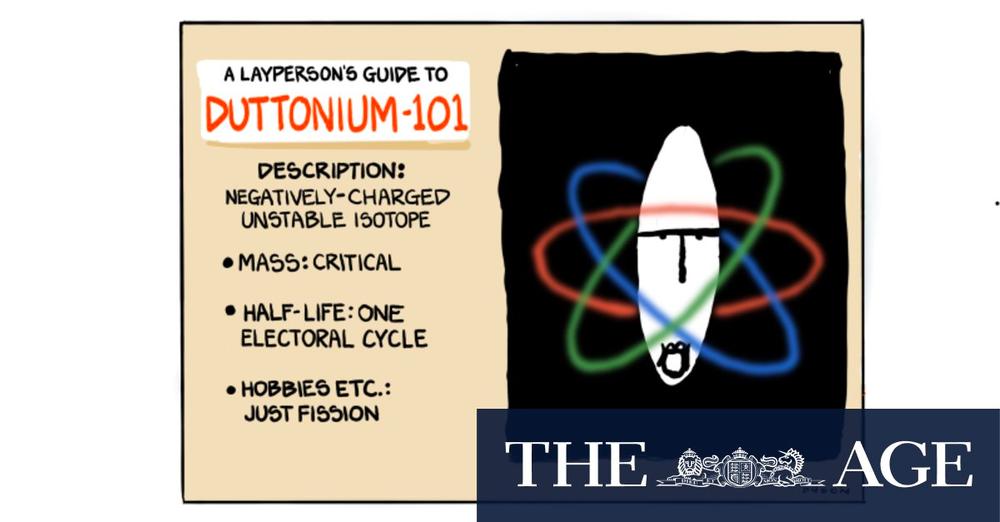
The federal opposition leader’s calls to include nuclear power in Australia’s energy mix has so far failed to win support from his state colleagues
Guardian, Tamsin Rose, Catie McLeod and Tory Shepherd, Sun 24 Mar 2024
The federal Coalition faces a battle with the states on its proposal for nuclear power stations at the sites of decommissioned coal power plants, with state premiers and opposition leaders alike largely against Peter Dutton’s proposal.
Labor governments and Coalition oppositions in Queensland, New South Wales, Victoria and South Australia are either outright opposed to the plan or have failed to endorse it.
Most of those states have their own bans on nuclear that would need to be lifted in addition to the federal ban if Dutton’s plan were to progress.
Despite this, the federal opposition leader has repeatedly called for nuclear to be considered as part of the future energy mix for Australia.
Here’s how the debate is playing out around Australia.
Queensland
It is illegal to run any forms of nuclear facilities in Queensland, including power stations and radioactive waste dumps. Any change to this would need to be passed by parliament.
David Crisafulli, the Liberal National party leader, is the bluntest in his opposition to Dutton’s plan.
When asked if he supported the federal Liberal leader and fellow Queenslander’s energy campaign earlier in the week, the opposition leader said: “No, we don’t.”
“Until both sides of Canberra agree, that will never happen because there won’t be investment,” Crisafulli said.
The state’s deputy opposition leader, Jarrod Bleijie, said debate was “many years” away and the party was focused on the cost of living in the immediate future.
“People are hurting, they need to see their electricity bills reduced now and that has to be our priority,” he told Sky News.
New South Wales
Similarly, in NSW there is a ban on uranium mining and nuclear power for electricity generation.
The state’s shadow energy minister, James Griffin, said he supported a “rational discussion about nuclear energy” but stopped short of endorsing the federal Coalition’s proposal……………………………….
The premier, Chris Minns, has dismissed any nuclear energy strategy that uses modular reactors for NSW………………………………………
Victoria
A number of nuclear-related activities, including exploration for uranium and construction or operation of a nuclear reactor, are banned in Victoria.
Like its northern counterparts, the Victorian opposition has failed to endorse the federal Coalition’s nuclear plans.
The shadow energy minister, David Davis, said “the Victorian Liberals and Nationals support a commonsense transition to renewables that ensures affordability and security of supply”.
South Australia
There are no state-level bans on nuclear power in place in South Australia and the premier, Peter Malinauskas, has repeatedly said he is open to or neutral towards the idea of nuclear power, but that the economics do not stack up.
SA is something of a nuclear state thanks to uranium mining and the prospect of building nuclear submarines, but Malinauskas does not think nuclear should be part of the power mix, not least because he has pledged that SA’s power will be fully sourced from renewables by 2027.
The energy minister, Tom Koutsantonis, said: “While we have nothing in principle against nuclear power, this current debate is nothing but a distraction because it is not economically feasible or viable for Australia.”
The opposition leader, David Speirs, said “all options should be on the table in the pursuit of an affordable, reliable and clean energy future”.
“That includes looking at new generation nuclear energy as a possible addition to our energy mix,” he said.
Coalition yet to produce costed nuclear energy policy
Last week, Dutton claimed the annual report from science agency CSIRO that had included estimates of costs for small modular reactors – which are not yet available commercially – was “discredited” because it “doesn’t take into account some of the transmission costs, the costs around subsidies for the renewables”.
CSIRO rejected Dutton’s claim that its estimates were unreliable, with its chief executive, Douglas Hilton, warning that maintaining trust “requires our political leaders to resist the temptation to disparage science”.
The most recent GenCost report estimates a theoretical small modular reactor built in 2030 would cost $382 to $636 per MWh. It says this is much more expensive than solar and wind, which it puts at between $91 and $130 per MWh even once integration costs are included.
The federal Coalition is yet to produce a costed energy policy, despite arguing for a lift to Australia’s ban on nuclear energy and suggesting it will nominate six potential sites for nuclear reactors around Australia – likely to be close to current or retiring coal-fired power stations.
With additional reporting by Benita Kolovos, Paul Karp, Graham Readfearn and Andrew Messenger https://amp.theguardian.com/australia-news/2024/mar/24/peter-dutton-liberal-leaders-nuclear-power-ban
Financiers shun nuclear, upbeat on climate investment
By Marion Rae, March 25 2024 https://www.canberratimes.com.au/story/8566564/financiers-shun-nuclear-upbeat-on-climate-investment/
Nuclear energy is last on the list of technologies that investors want exposure to, according to a survey of big institutions.
The vast majority of investors do not see nuclear power as a good investment, with less than one in 10 exploring this technology, the survey released on Monday found.
Opposition Leader Peter Dutton is spruiking nuclear reactors as an option for Australia’s future low-carbon economy although the energy source is illegal under existing laws and Labor has ruled it out.
Renewable energy is tipped to deliver the best long-term financial returns, with half the investors surveyed exploring opportunities to invest.
Investors have also become more confident about Australian climate policy under the Albanese government, according to the survey by the Investor Group on Climate Change.
“Investors have given the government a pretty good report card,” the group’s policy chief Erwin Jackson said.
But Australia will need globally competitive, targeted incentives to suit the nation’s economic strengths and values to stop “ongoing capital flight” to the United States and Europe where there are more generous tax breaks.
Clear timelines for the phase-out of fossil fuels by 2050 would also help investors manage transition risks and remain invested in the Australian economy, according to the group.
This year’s data includes 63 superannuation funds as well as other asset owners and managers, with more than $37 trillion in assets under management globally. Their beneficiaries include more than 15 million Australians.
Emerging priorities include clear timelines for phasing out coal, oil and gas and clear policies to build resilience and adapt to physical damage from climate change.
Opinions citing policy and regulatory uncertainty as a barrier to clean economy investment in Australia have changed dramatically, supported by four out of 10 investors compared with 7 out of 10 in 2021.
Renewable energy (47 per cent) was picked as the best option for long-term climate solutions, followed by nature-based schemes including biodiversity projects (34 per cent).
But investors are still in the dark on the federal government’s sector-by-sector decarbonisation plans for heavy polluters such as the energy, transport, agriculture and resources industries – and on the scope of the 2035 emissions reduction target.
“Credible and clear sector by sector decarbonisation plans to achieve a 2035 target with the highest possible level of ambition are critical for investment and it is critical to build on the steps already taken,” Mr Jackson said.
Climate Change and Energy Minister Chris Bowen has said the 2035 target will be “ambitious and achievable”, with advice to come from Australia’s recently beefed-up Climate Change Authority.
The sectoral review by the authority has an August 1 deadline, and will be released shortly afterwards.
Australian Associated Press
Sinking billions: undergunned and overpriced

Missing records, billions in over-runs, conflicts of interest, and flawed ships. How the Defence Department’s new frigates project is a boondoggle for a British weapons-maker.
MICHELLE FAHY, JUL 3, 2023, https://undueinfluence.substack.com/p/sinking-billions-undergunned-and?utm_source=post-email-title&publication_id=297295&post_id=132705738&isFreemail=true&utm_medium=email
Part one of a two-part series.
In this two-part investigation, Declassified Australia examines the flawed contracting process that led to a $46 billion naval ship-building deal that has been found to be suffering what an investigative audit described as ‘corruption vulnerabilities’.
The company at the centre of the scandal, UK arms giant BAE Systems, is revealed to have lied to Australia’s Defence Department about the planned ship’s design.
Crucial departmental records of key decision-making meetings have gone missing, while no overall assessment of whether the selected BAE design was value for money was ever made.
The Australian National Audit Office (ANAO) reported in May its findings on the multi-billion dollar contract Australia signed in December 2018 with BAE Systems to build nine Hunter-class frigates.
The ANAO found that BAE had overstated – bureaucratic language for lied – the level of development of the frigate’s design, which meant cost inflation and schedule slippage were severely under-estimated.
BAE exaggerated the maturity of its design to get around a key government objective requiring the ship to be based on an existing military-off-the-shelf design with a minimum level of change.
Defence selected the BAE Systems frigate even though the two other ships on its shortlist were considered the two most viable designs.
Business as usual
Conflicts of interest, secret consulting deals, and revolving door appointments all undermine democracy, yet this is business-as-usual at the Defence Department, the nation’s biggest procurement agency.
Former senior BAE executives have been placed at the heart of Australia’s naval procurement. They have helped write government shipbuilding policy, overseen the navy’s largest tenders, and have even been hired by the government to negotiate on its behalf with their former employer on a deal now found to be riddled with probity concerns.
Granting preferential access to certain arms industry insiders escalated under previous Liberal-National coalition governments and since 2022 has continued under the Albanese Labor government, making this a story about state capture as well, when a corporation has the power to bend governments to its will.
When combined with departmental corruption or incompetence, or both, the result is defence procurement projects that are billions of dollars over budget and running years late. As a result, the navy is facing massive capability gaps.
Continue reading this story at Declassified Australia…
1 This month
25 October – Film –Britain’s Nuclear Bomb Scandal: Our Story – part of the Adelaide Film Festival,
Screening and Conversation
A screening of Britain’s Nuclear Bomb Scandal: Our Story (2024) followed by a talk with 2026 Bettison and James Awardee and Tradtional Owner Karina Lester in conversation with Simone Tur.
When: Sun 25 Oct, 12:00pm-Screening, 1:15pm-Talk
Where: The Mercury
Free admission, register below by clicking on BUY TICKETS and select free event tickets, at end of web page:
https://www.adelaidefilmfestival.org/program/2026/britains-nuclear-bomb-scandal-our-story
.

Australians deserve the truth
about
AUKUS – https://aukuspublicinquiry.com/

PETITION – To: Prime Minister Anthony Albanese and the Australian Labor Government

of the week – Australians for War Powers Reform (AWPR)
To see nuclear-related stories in greater depth and intensity

