South Australia unveils first auction as world’s most advanced renewables grid seeks long duration storage

The South Australia state government has appointed ASL to run its first
auction for long duration storage, as the world’s most advanced wind and
solar grid seeks around 700 MW of new firm capacity over the next six
years.
South Australia leads the world in the uptake of wind and solar –
which together accounted for 75 per cent of its local electricity demand
over the last 12 months – and has set a world-leading target of reaching
100 per cent “net” renewables by the end of 2027. It already has seven
big battery projects operating in the state, and another dozen under
construction or contracted, but it is now seeking longer duration storage
through the Firm Energy Reliability Mechanism (FERM) that it announced
earlier this year.
Renew Economy 8th Oct 2025,
https://reneweconomy.com.au/south-australia-unveils-first-auction-as-worlds-most-advanced-renewables-grid-seeks-long-duration-storage/
A crack in the AUKUS public relations pressure hull!
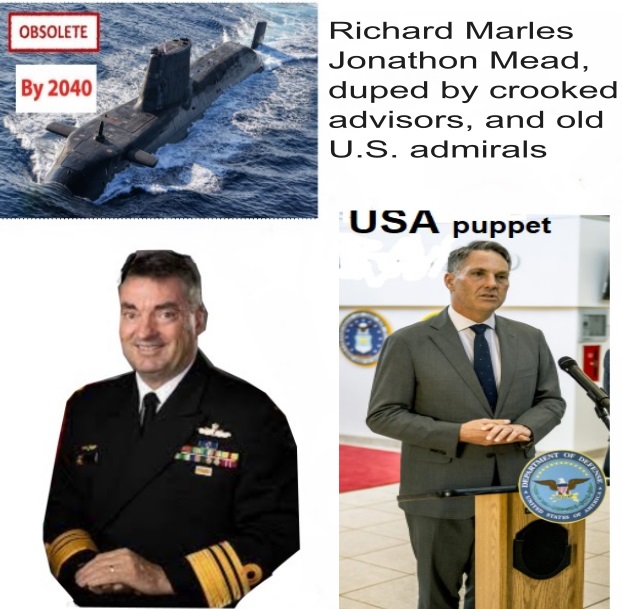
by Rex Patrick | Oct 5, 2025 , https://michaelwest.com.au/a-crack-in-the-aukus-pr-pressure-hull/
AUKUS is a hugely expensive Defence project facing considerable and, many argue, insurmountable hurdles. But does Defence have a Plan B? Rex Patrick reveals a crack in Defence PR’s high tensile pressure hull steel.
There has to be an AUKUS Plan B, surely. So MWM FOI’ed the Australian Submarine Agency (ASA) to find out.
Hit ‘em with your Talking Points.
In response, the ASA partially released one document showing ‘talking points’ that had been given to the Project lead, Vice Admiral Jonathon Mead, in case he was asked about the US’s AUKUS review.
At first glance, MWM thought that the ASA’s back-up plan to defend the Nation was to
“roll out some talking points to fire at an approaching enemy.“
roll out some talking points to fire at an approaching enemy.
But a closer look revealed more.
A Crack in the Submarine Pressure Hull
The talking points weren’t the only documents.
Despite the public bravado, the FOI decision shows that there is some discussion going on behind the scenes.
There were three more documents that met the terms of MWM’s request. The decision letter reveals that the Government has been discussing with our AUKUS partners, and internally, on what to do if it all goes to hell in a nuclear handbasket.
Self-confidence Bluster Exposed
The ASA has claimed the documents are sensitive (something we’ll push back on with an appeal), and so we can’t see the exact details of what’s being said.
But we know there are conversations taking place.
“That’s a good thing.“
1×1515
1:36 / 2:23
Listen to this story
2 min
AUKUS is a hugely expensive Defence project facing considerable and, many argue, insurmountable hurdles. But does Defence have a Plan B? Rex Patrick reveals a crack in Defence PR’s high tensile pressure hull steel.
There has to be an AUKUS Plan B, surely. So MWM FOI’ed the Australian Submarine Agency (ASA) to find out.
FOI Asking about a Plan B
Hit ‘em with your Talking Points.
In response, the ASA partially released one document showing ‘talking points’ that had been given to the Project lead, Vice Admiral Jonathon Mead, in case he was asked about the US’s AUKUS review.
US AUKUS Review talking Points (Source: Defence)
At first glance, MWM thought that the ASA’s back-up plan to defend the Nation was to
roll out some talking points to fire at an approaching enemy.
But a closer look revealed more.
A Crack in the Submarine Pressure Hull
The talking points weren’t the only documents.
Despite the public bravado, the FOI decision shows that there is some discussion going on behind the scenes.
More Documents about Plan B (Source: Defence)
There were three more documents that met the terms of MWM’s request. The decision letter reveals that the Government has been discussing with our AUKUS partners, and internally, on what to do if it all goes to hell in a nuclear handbasket.
Plan B Talk Going On (Source: Defence)
Self-confidence Bluster Exposed
The ASA has claimed the documents are sensitive (something we’ll push back on with an appeal), and so we can’t see the exact details of what’s being said.
But we know there are conversations taking place.
That’s a good thing.
Greens Senator David Shoebridge, commenting on the FOI decision, said, “Labor has managed to combine two of their worst behaviours in one go here, using exemptions in FOI to refuse to release documents while secretly doubling down on a plan B for AUKUS. I don’t think treating the Australian public like mushrooms is a viable long-term political strategy for Albanese”.
It’s Senate Estimates this coming week. The Coalition is a unity cheer squad with Labor when it comes to AUKUS, so we won’t see them probing hard on a Plan B. Hopefully, Shoebridge will squeeze some more out of Defence, at least until MWM’s FOI appeal is finalised.
For now, at least, we now know the ASA’s public AUKUS bluster is a deception. They’re not so confident after all.
Rex PatrickRex Patrick is a former Senator for South Australia and, earlier, a submariner in the armed forces. Best known as an anti-corruption and transparency crusader, Rex is also known as the “Transparency Warrior.”
View from The Hill: Two years of a distant war have brought much damage to Australian society
The Conversation, October 7, 2025, Michelle Grattan, Professorial Fellow, University of Canberra
Two years ago, who would have imagined the police and the Palestine Action Group (PAG) would be fighting in court over whether demonstrators should be allowed to rally outside the Sydney Opera House?
Indeed, 24 months ago, who would have thought we’d have (or need) designated “envoys” to combat antisemitism and Islamophobia in Australia?
On Tuesday’s second anniversary of the Hamas atrocities in Israel, it is sobering to reflect how much damage this horrific Middle East conflict, which has cost tens of thousands of lives, most of them Palestinian, has done to Australia’s own society.
In Fitzroy in Melbourne, pro-Palestinian graffiti appeared to mark the anniversary: “Glory to Hamas”, “Oct 7, do it again”, “Glory to the martyrs”.
Prime Minister Anthony Albanese described this as “terrorist propaganda” that was “abhorrent,” saying those responsible “must face the full force of the law”.
On Wednesday, the issue of Sunday’s proposed protest outside the Opera House will be back in court. The police don’t want the protesters’ march to be allowed to end in the tight space at the Opera House, citing dangers to safety.
The lawyer for the PAG said on Tuesday: “If the police application is conceded to, the ramifications for the right to protest in Australia will not be confined to the Opera House, but for a wide variety of protest activities”. The group argues the issue is a constitutional one.
In the past two years, this faraway conflict has done substantial harm to Australia’s social cohesion, raised questions about the future of multiculturalism, and produced serious divisions about where lines should be drawn on limiting free speech and the right to protest. The response of institutions, universities in particular, has been tested and in some cases found wanting.
NSW Labor Premier Chris Minns gave a flavour of the cross pressures when speaking on Sydney radio on Tuesday.
“We’ve moved significant changes to hate speech laws in New South Wales and we’ve done it because we recognise we live in a multicultural community and yes, you’ve got a right to freedom of speech but someone else has a right not to be vilified or hated on the basis of their race or religion. All of those laws are currently being challenged in the High Court because of the implied freedom of political communication.”…………………………
The conflict has fractured the Australia-Israel relationship, with the Albanese government increasingly critical of Israel’s unrelenting prosecution of the war, and the Netanyahu government turning on Australia.
This culminated with Australia’s recognition of a Palestinian state at the United Nations during the prime minister’s recent trip. The recognition was the end of Labor’s internal journey, which commenced many years before this war began.
The Greens Party has been at the left edge of the political spectrum.
The Australian community was divided about Palestinian recognition: an Essential poll published in late September showed 34% in favour, and 30% against.
The conflict has shattered what used to be a bipartisan Middle East policy, when both main parties strongly supported Israel and also backed a two-state solution for a long-term Middle East settlement.
Over the past two years, the Coalition has been strongly pro-Israel, accusing the Labor government of deserting an ally and failing to deal robustly with antisemitism in this country.
Opposition leader Sussan Ley used her parliamentary speech on Tuesday’s anniversary to home in on the government’s policy towards Israel.
“To our great shame, under the leadership of the Albanese Labor government, Australia has not stood with the people of Israel, nor with the United States, as they have sought to dismantle Hamas and establish the conditions for peace”.
The local rifts that have come to the surface in Australia were there well before October 7 2023. The war caused them to widen dramatically and explode.
Even if, and when, this conflict subsides, it will leave fractures, anger, bitterness and fear within sections of the Australian community.
Whatever healing takes place almost certainly won’t be complete. For governments, federal and state, intractable policy challenges will remain. https://theconversation.com/view-from-the-hill-two-years-of-a-distant-war-have-brought-much-damage-to-australian-society-265858?utm_medium=email&utm_campaign=Latest%20from%20The%20Conversation%20for%20October%208%202025%20-%203541836106&utm_content=Latest%20from%20The%20Conversation%20for%20October%208%202025%20-%203541836106+CID_fb6124771c1b55570097f86c7e58b5ee&utm_source=campaign_monitor&utm_term=View%20from%20The%20Hill%20Two%20years%20of%20a%20distant%20war%20have%20brought%20much%20damage%20to%20Australian%20society
The People versus Murdoch: the rise of independent media

Independent media has profoundly reshaped modern communication, much to the chagrin of traditional print media. The MSM often dismisses us as falling below their standards, but I disagree. Today’s news stories are frequently little more than opinion pieces, unchallenged and unaccountable. Citizen journalists, however, hold the MSM to account – a role that sits uneasily with the media establishment.
The MSM [Main Stream Media] claimed, “The great thing about newspapers is that, love us or hate us, we’re the voice of the people. We represent the community, their views, their aspirations, and their hopes.” Represent the community? Don’t they mean control the community?
8 October 2025 Michael Taylor, https://theaimn.net/the-people-versus-murdoch-the-rise-of-independent-media/
Over a decade ago, I wrote about a subject that remains as relevant today as ever. For nearly twenty years, I’ve been hammering away at the keyboard – a space where I could speak freely, defy control, and fight for democracy and truth. It was a place to be heard. But it wasn’t always this way. Before the rise of bloggers and independent media, we were limited to listening to those who controlled the narrative.
Let’s revisit the days when we found our voice, thanks to the emergence of bloggers, citizen journalists and independent media.
Plato (428–348 BC) opposed the written word, arguing it would erode memory. He believed people would stop memorising facts or stories, and that spreading words indiscriminately was wasteful and untrustworthy. How prophetic. Spoken over two millennia ago, his words feel strikingly contemporary. Consider today’s mainstream media (MSM), which claims its journalists are reliable, truthful, and objective. Who do you believe – them or Plato?
In recent decades, the MSM has leaned toward stories that are trivial, narrow, shallow, and sensationalist – often at the expense of truth. As Plato might have lamented, the MSM spreads words indiscriminately, wastefully, and with questionable trustworthiness. Truth, it seems, doesn’t sell newspapers.
Some bloggers echoed Plato’s concerns, prompting a fierce backlash from the MSM. I recall reading articles from the Murdoch press that unleashed a near-xenophobic hatred toward the blogosphere, attacking it with more zeal than they ever directed at incompetent politicians. One such critique described the blogosphere as:
A small, incestuous clique of self-identified lefties, with readerships composed mostly of themselves… Naivety and self-righteousness define the vast majority of the Australian blogosphere, along with whining conspiracy theories. Those who hide under the veil of anonymity, taking cheap shots to satisfy their trendy social agenda.
The MSM claimed, “The great thing about newspapers is that, love us or hate us, we’re the voice of the people. We represent the community, their views, their aspirations, and their hopes.” Represent the community? Don’t they mean control the community?
Independent media has profoundly reshaped modern communication, much to the chagrin of traditional print media. The MSM often dismisses us as falling below their standards, but I disagree. Today’s news stories are frequently little more than opinion pieces, unchallenged and unaccountable. Citizen journalists, however, hold the MSM to account – a role that sits uneasily with the media establishment.
Many citizen journalists possess a natural gift for taking the day’s main story, transforming it into something worth reading, and fostering a range of opinions that the MSM often ignores. In just a few years, blogging – in particular- became a global phenomenon, reshaping journalism and unlocking publishing opportunities previously unimaginable. To me, blogging is journalism. While individual blogs may have limited readership, sites with aligned agendas often link together to amplify their impact. In contrast, MSM blog platforms typically filter out contributions that don’t fit their narrative, rendering them inaccessible to dissenting voices.
So, what impact have independent sites had? Their influence has been most profound in the political sphere.
In a March 2010 essay titled The Influence of Political Blog Sites on Democratic Participation, ShariVari wrote:
A computer-mediated environment makes it easier for citizens to express their feelings about political candidates and speak more candidly than in face-to-face settings. The internet’s diversity provides access to a wide range of opinions and information, potentially shaping or changing individuals’ political views. By disregarding blog sites with corporate or agenda-driven motives, political bloggers can foster peer-to-peer discussions of personal viewpoints.
This perspective was heartening for a then-blogger like me, who had lost faith in the MSM. It affirmed that independent voices could have an impact, however small at the time. If Australia followed the U.S. trend, a thriving blogging industry might one day emerge.
ShariVari concluded:
All research shows that increased opportunities for participation encourage democracy… Citizens are increasingly turning to and trusting the internet for accurate information, using it as a platform for participatory democracy, and becoming more knowledgeable about politics in the process. A Spiral of Silence – where people self-censor due to perceived minority views – is less likely in an online environment where citizens evaluate each other’s opinions without status cues like gender, race, or socioeconomic status. Blog sites are undeniably expanding the ways citizens participate in democracy.
Fifteen years ago, those in democratic societies seeking to share their ideas faced editorial gatekeepers whose policies often reflected their own ideologies or market-driven priorities. Today, this control is crumbling in the face of participatory media. Audiences no longer want to be passive consumers – they want to comment on and even create the news.
Citizen journalists believe they are better equipped to provide the diversity that modern democracies need, a diversity often ignored by traditional media. Independent platforms allow them to expose doctored or omitted facts, highlight biases, and give voice to alternate perspectives. These sites encourage readers to think critically, ask probing questions, and challenge the MSM’s hidden agendas. Independent media is awash with objective, fact-based analysis that counters the narratives of established outlets.
The explosion of independent sites isn’t merely an echo of dissenting voices – it’s a response to the MSM’s failure to provide objective, impartial reporting. If the MSM were truly committed to quality journalism, there might be no need for the millions of blogs and independent platforms that exist today to fill the gaps they’ve left.
In essence, it’s the People versus Murdoch… then and now.
Vladimir Putin and a world without Russia

7 Oct Noel Wauchope, https://theaimn.net/vladimir-putin-and-a-world-without-russia/
He’s supposed to have said it as a joke.
In a 2018 comment, Mr Putin talked about destroying the world in a nuclear holocaust because “what is a world without Russia good for?”
OK. perhaps it was a joke. But –many a true word is spoken in jest.
And here is where I run into trouble, because I am known to have a very sympathetic attitude towards Russia.
I think that Volodymyr Zelensky should have kept to the pledge on which he was elected as Ukrainian President in April 2019. Zelensky promised to honour the Minsk agreements of 2014-15 – to accept the Donbass having a limited autonomy within Ukraine, and to end the years of war between the Ukrainian government and the Donbass. But In an interview with the German daily Der Spiegel, published on February 9, 2023, Zelensky made it clear that he intentionally chose to sabotage Minsk.
Even in subsequent negotiations with Russia, in April 2022, Zelensky’s government came close to a peace agreement with Russia, acknowledging the Donbass autonomy, and rejecting Ukraine membership of NATO. Zelensky quickly scuttled that deal.
That is the background to Putin’s decision to start a Special Military Operation in support of the Donbass – ending the 8 years of civil war in Ukraine, but starting what soon became a full scale war against Ukraine. Some commentators see this as Putin having been provoked into war by the Russia-hating West. Others say that it is Putin’s first step to invading Europe.
Anyway, the Western politics and media have indeed swallowed wholesale the story that Putin wants to take over Europe into a grand Russian empire.
I don’t think that the facts on Russia’s economic and military power actually stack up on that interpretation. And I don’t think that Putin is stupid enough to bring the whole might of the USA and Europe down on Russia. It is more reasonable to consider that many NATO states are uncomfortably close to Russia, – indeed on Russia’s border. Ukraine is the largest European state on that border, and for Ukraine to join NATO would mean that Russia would be almost surrounded by hostile states. If the USA had Canada as a hostile state, that would make USA politicians anxious. So Putin’s resistance to Ukraine being a NATO state is understandable. It comes from fear, rather than part of a grand desire to take over Europe.
In a brief, but telling article, Walt Zlotow has argued that now, 80 years after Russia was our major ally, defeating Nazism in 1945, it is time to stop hating Russia. Zlotow also pointed out that “Russia had neither the desire nor the capability to attack America without suffering its utter destruction from an overwhelming American nuclear capability”.
That last point is an important one. Individual persons matter. Why we haven’t had nuclear war for all these decades, is partly because we haven’t had leaders who were willing to press the button for humanity’s annihilation. Not even the bravado of Kim Yong Un, the pomposity of a Macron, the dogged war-making of successive American presidents – has led to that fatal decision.
Vladimir Putin is intelligent, and he has, in my opinion anyway, some reason and logic in his initial attack on Ukraine, and in his conditions for peace, especially regarding NATO membership for Ukraine. Putin has consistently spoken clearly and reasonably about the possible terms for a peace settlement. Meanwhile Zelensky and the West seem implacably bound to the position of demanding unconditional surrender by Russia as their term for a peace agreement.
So the West is all go for “Whatever It Takes”. The problem that I see, is that despite Putin’s quite admirable diplomatic restraint, and clear argument, he is still the one leader who actually is prepared to launch Armageddon – “what is a world without Russia good for?”
I do put up pro-Russian arguments, mainly because somebody has to counter the prevailing Russiaphobia which swamps us all the time in the media. That does not mean that I think that Putin is a nice guy. I think he’s a ruthless tyrant. But he should be taken seriously, and treated reasonably- not just seen as an excuse to continue this mindless hatred of Russia. Putin is an exceptionally dangerous leader, and we may all pay the ultimate price for our stupidity.
Coalition committed to nuclear

By PHILIP HOPKINS, Latrobe Valley Express, 7 October 25
THE Coalition has reaffirmed that nuclear power will be a part of its energy platform at the next federal election.
The Leader of the Nationals, David Littleproud, said after the last election, the National Party left the Coalition until there was certainty over a technology agnostic approach to the energy grid that includes nuclear energy.
“It’s as simple as that. It will be in some form part of the grid that we will take to the next election. And you can’t run an economy of the scale, size of Australia on an all-renewables approach,” he told Sky News in an interview…………………………….
“The government’s not prepared to tell us what this all-renewable madness will be…. we are deindustrialising our country.
“And unless the adults take back ownership and get some baseload power back into the grid where the rest of the world is following particularly with nuclear energy, we’re going to be left behind and we’re going to be poorer for it. “
While the Liberals seem to have come on board with nuclear, he indicated the Coalition had not settled on net zero. Mr Littleproud said he would like to settle the position sooner rather than later.
“Net zero isn’t the only way in which to reduce emissions. This Labor net zero is destroying our country. And net zero has become more about trying to achieve the impossible rather than doing what’s sensible,” he said.
“What’s sensible is not going down an all-renewables path to give us baseload power, to understand that we can’t mitigate reduction of emissions across the globe when we’re only a bit over one per cent. And when the rest of the world isn’t doing the heavy lifting, particularly China, the United States and India, our country is being pegged and disadvantaged by a pledge that is deindustrialising our country and without any common sense. “
Mr Littleproud said The Nationals would finalise their position.
“(Senator) Matt Canavan is working through those processes for us now in terms of making sure that we have the real data, and then we’ll work in with the Liberals and hopefully get them to a position that they can settle sooner rather than later. But part of that will have to be a sensible energy policy that includes nuclear energy,” he said. https://latrobevalleyexpress.com.au/news/2025/10/07/coalition-committed-to-nuclear/
8 October – Webinar – Submarine Dreams

Register here https://us02web.zoom.us/webinar/register/7217592925374/WN_zx8-oMVtSQKxUXw8to9fkA#/registration
‘Folly’ of nuclear submarines plan floated
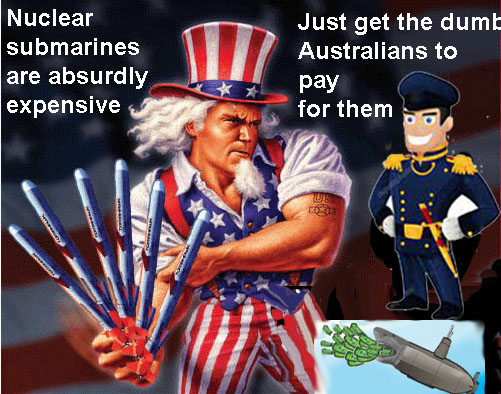
A former navy chief warns outsourcing nuclear subs is risky, raising questions about AUKUS, sovereign capacity and local industry.
Callum Godde, Grace Crivellaro, The Mandarin, 3 Oct 25
The former head of Australia’s submarine squadron has urged Australia against outsourcing boat construction overseas, as bureaucrats express confidence that the US won’t scuttle AUKUS.
A parliamentary inquiry on Thursday ran the ruler over the Geelong treaty, a 50-year AUKUS co-operation agreement between Australia and the UK signed in July.
Under AUKUS, the US has promised to sell at least three Virginia-class nuclear-powered submarines to Australia from the early 2030s.
A submarine solution closer to home should be examined instead, retired navy rear admiral Peter Briggs argued.
“Depending on an overseas supply chain for such a critical capability as our submarines is a folly,” he told the inquiry.
Briggs had serious concerns with the plan, including its potential to limit Australia’s commercial interests. He suggested that the nation should build more submarines, as it had previously done with the diesel-electric Collins class.
“There is no minimum protection in the treaty for a guaranteed work share for genuine Australian industry,” he said.
“The Collins project has established a viable submarine supply chain within Australia.
“We should build on this, not sign a treaty mandating it out of existence.”
Briggs cast doubt on Australia receiving submarines from the US on time, pointing to its falling behind in building its fleet.
Bernard Philip from the Department of Defence said advice was being provided to the federal government on extending the life of Australia’s ageing Collins-class fleet.
The Pentagon has been investigating the AUKUS pact to ensure it aligns with President Donald Trump’s “America-first” agenda.
The review by Under Secretary of War for Policy Elbridge Colby sparked speculation that Trump could walk away from the deal, which is estimated to cost up to $368 billion across 30 years.
Nikkei Asia on Tuesday reported the US would not make changes, with an unnamed member country official declaring AUKUS was “safe”.
Mikaela James from the Australian Submarine Agency strongly hinted that the US would not walk away from the deal.
“(We’re) obviously aware of the US review that is underway, and we are confident the US will continue to find that the program is in line with its interests,” she told the committee.
The review is expected to finish before Prime Minister Anthony Albanese’s visit to the White House on October 20.
Tim Deere-Jones, who has 40 years of experience researching the UK government’s system for monitoring marine radioactivity, said managing nuclear waste was expensive and caused environmental issues.
“You’ve got to build the facilities to remove it from the boats,” he said.
“Then you’ve got to be looking for a long-term, hopefully perpetual dump site for it, none of which we’ve managed to do in the UK despite having many decades of nuclear submarines.”
It was inevitable some waste would be discharged into the ocean, he said.
Nationals MP Alison Penfold said such concerns had the potential to undermine public confidence in AUKUS………………………………………………………………….https://www.themandarin.com.au/300512-folly-of-nuclear-submarines-plan-floated/
The case for some non-nuclear subs
by Lieutenant Commander Jim Halsell, U.S. Navy*, Australian Naval Institute, 5 Oct 25
The United States will require more than its existing inventory of nuclear-powered submarines to ensure victory in a conflict with China. The Navy should augment its existing submarine force with a fleet of conventionally powered submarines capable of launching cruise missiles.
By producing smaller, more cost-efficient submarines with the help of allies, the U.S. submarine force could mitigate the relatively low number of nuclear-powered submarines available for a conflict. …………………………………………………………………………………………………………………………….
The problem with the makeup of today’s submarine force is that these deep-diving, fast-driving, nuclear-powered submarines are expensive. These ships are both too expensive to build in sufficient quantity to meet operational requirements and too costly, in terms of dollars and capabilities, to risk losing in combat.
The cost per hull of a new Virginia-class SSN was originally $2.8 billion, but following the incorporation of the Virginia Payload Module in the USS Arizona (SSN-803) and follow-on Block V boats, that cost now exceeds $4 billion.4 In comparison, Japan spent an estimated $536 million per hull for its Sōryū-class submarines, which feature air-independent propulsion (AIP), allowing them to operate for weeks without snorkeling.5 Japan’s newer Taigei-class submarines are being built at an even cheaper $473 million per hull.6
…………………………………………………………………………………………………………….Much of the disparity stems from the prohibitive cost of nuclear propulsion systems. Conventional submarines are cheaper not only to build, but also to maintain, benefiting from simpler refueling logistics and a dramatically lower cost threshold.
………………………………………………………………………………………………………… Allied Collaboration
One of the most compelling opportunities presented by the development of a U.S. conventionally powered submarine would be the chance to design and build it in partnership with key Indo-Pacific allies. Japan, South Korea, and Australia have decades of experience operating and constructing nonnuclear-powered submarines, and they are getting better with each iteration. ……………………………………………………………. https://navalinstitute.com.au/the-case-for-some-non-nuclear-subs/
The National Press Club of Australia, Caving to the Israel Lobby, Cancels My Talk on Our Betrayal of Palestinian Journalists.

By Chris Hedges / ScheerPost, October 4, 2025 https://scheerpost.com/2025/10/04/chris-hedges-the-national-press-club-of-australia-caving-to-the-israel-lobby-cancels-my-talk-on-our-betrayal-of-palestinian-journalists/
I was scheduled to give a talk at the National Press Club of Australia on October 20 called “The Betrayal of Palestinian Journalists.” It was to focus on the amplification of Israeli lies in the press, which most reporters know are lies, betraying Palestinian colleagues who are slandered, targeted and killed by Israel. But, perhaps inadvertently proving my point, the chief executive of the press club, Maurice Reilly, cancelled the event. The announcement of my talk disappeared from the web site. Reilly said “that in the interest of balancing out our program we will withdraw our offer.”
The Israeli Ambassador, retired Lt. Colonel Amir Maimon, who spent 14 years in the Israeli military, is reportedly being considered to speak.
It is true that I know only one side of the picture from the seven years I spent covering Gaza. I was on the receiving end of Israeli attacks, including being bombed by its air force and fired upon by its snipers, one of whom killed a young man a few feet away from me at the Netzarim Junction. We lifted him up, each person taking hold of an arm or a leg, and lumbered up the road as his body swayed like a heavy sack. I saw small boys baited and shot by Israeli soldiers in the Gaza refugee camp of Khan Younis. The soldiers swore at the boys in Arabic over the loudspeakers of their armored jeep. The boys, about 10 years old, then threw stones at an Israeli vehicle and the soldiers opened fire, killing some, wounding others.
I was present more than once as Israeli troops shot Palestinian children. Such incidents, in the Israeli lexicon, become children caught in crossfire. I was in Gaza when F-16 attack jets bombed overcrowded hovels in Gaza City. I saw the corpses of the victims, including children. This became a surgical strike on a bomb-making factory. I have watched Israel demolish homes and entire apartment blocks to create wide buffer zones between the Palestinians and the Israeli troops that ring Gaza. I have interviewed the destitute and homeless families, some camped out in crude shelters erected in the rubble. The destruction becomes the demolition of the homes of terrorists. I have stood in the gutted remains of schools as well as medical clinics and mosques and counted the bodies. I have heard Israel claim that errant rockets or mortar fire from the Palestinians caused these and other deaths, or that the buildings were being used as arms depots or launching sites.
I, along with every other reporter I know who has worked in Gaza, including the over 278 Palestinians journalists and media workers who have been killed by Israel since the start of the genocide, many in targeted assassinations, have reported a reality in Gaza that bears no resemblance to how it is portrayed by Israeli politicians, its military and many media outlets that serve as Israel’s echo chamber.
Lt. Colonel Maimon can obviously, if he chooses, enlighten us about the artificial intelligence-based program known as “Lavender” and how it selects people, along with their families, in Gaza for assassination.

He can explain how Israel determines the quotas of civilian dead, how soldiers are permitted to kill as many as 20 civilians in order to target a Palestinian fighter and hundreds for a Hamas commander. He can let us know why Israel continues the mass slaughter when an internal Israeli intelligence database indicates that at least 83 percent of Palestinians killed are civilians. He can tell us how Palestinian civilians are abducted, dressed in Israeli army uniforms, have their hands tied, and are then forced to walk as human shields in front of Israeli troops into buildings and underground tunnels that are potentially booby-trapped. He can explain how the special unit called the “Legitimization Cell” carries out propaganda campaigns to portray Palestinian journalists as Hamas operatives to justify their assassinations. He can detail the targeting, bombing and controlled demolitions that have damaged or destroyed 97 percent of Gaza’s educational system, including every university and nearly all its hospitals. He can explain how, after Israel blocked all humanitarian aid on March 2 to starve the Palestinians in Gaza, Israeli officials set up the so-called Gaza Humanitarian Foundation to lure emaciated and malnourished Palestinians to four aid hubs in the south — aid hubs with little food and which Human Rights Watch calls “death traps” and Doctors Without Borders calls “orchestrated killing.” These hubs, open only an hour, usually at 2:00 am, ensure a chaotic scramble for scraps of food. Israeli soldiers, along with U.S. mercenaries, who include members of the Infidels Motorcycle Club, a self-professed anti-“radical jihadist” biker group that counts members with Crusader tattoos among its ranks, fire live rounds into the crowds killing over 1,400 Palestinians and injuring thousands more in and around the hubs since May. He can lay out the plans for the concentration camps in southern Gaza and the efforts to ultimately expel the Palestinians from Gaza and repopulate it with Jewish colonists. He can explain why Israel abandoned its own hostages, why it fired on vehicles headed into the Gaza strip on October 7 carrying Israeli captives and why it used Hellfire missiles to obliterate the Erez Crossing installation when it was seized by Palestinian fighters knowing that dozens of Israeli soldiers were inside.
If Lt. Colonel Maimon spoke with this honesty and candor we could call this balance. It would fill in a side of the equation I glimpse from the outside. It would complete the circle. It would match truth with truth.
But Lt. Colonel Maimon, I see from his past statements, will spew out the mendacious narratives used by Israel to justify genocide — Hamas uses Palestinians as human shields, it operates command centers in hospitals, it sexually assaulted Israeli women on October 7 and beheaded babies. He will make the spurious claim that Israel “has the right to defend itself,” ignoring the fact that Hamas and other Palestinian resistance groups, which lack an air force, mechanized units, artillery, a navy, fleets of militarized drones and missiles, pose no existential threat to Israel. More important, he will not address Israel’s flagrant violation of international law by occupying and settling colonists on Palestinian land and carrying out a livestreamed genocide.
This is not balance, unless we accept a world where truth is balanced by lies. It is an abandonment of the fundamental mission of journalists — to hold power accountable. But most egregiously, it is a terrible betrayal of our colleagues in Gaza who have been killed for chronicling the daily savagery in Gaza, for doing their job.
No doubt, the corporate sponsors and wealthy donors of the press club are pleased. No doubt, the club is able to slither away from its journalistic integrity. No doubt, it is spared the attacks that would come from allowing me to speak.
But please, have the decency to remove the word press from your club.
Another ageing Royal Navy nuclear-armed submarine completes a 200-day patrol amid fears absence of replacements will make epic voyages ‘the new normal’


COMMENT. Doesn’t look as if the UK (or the USA) are going to have any decent nuclear submarines to spare for Australia.
Daily Mail, By BY MARK NICOL DEFENCE EDITOR, 3 October 2025
An ageing Royal Navy nuclear submarine has completed a 200-day patrol amid fears of shortages of alternative vessels.
The Vanguard class submarine was welcomed back to port with her hull covered in slime and barnacles.
The marine growth indicated how long the submarine – which carries the UK’s nuclear deterrent – had spent submerged.
Nuclear submarines remain undetected by spending the majority of their time on patrol at very slow speed. This is to minimise their noise signature.
Biofouling as it is also known, can also indicate a submarine has been operating in either shallower or warmer waters.
Nuclear submarine patrols are being extended as Navy chiefs await new vessels.
This submarine was understood to have spent 203 days at sea. Earlier this year another spent 204 days at sea.
While only last year another Vanguard-class submarine broke the 200 day barrier for the first time. At least ten patrols are understood to have exceeded five months.
The trend for extended patrols is dangerous according to Admiral Sir Tony Radakin, the recently retired former Chief of the Defence Staff (CDS).
In his final speech he decried the decrepit state of the Royal Navy’s subsurface fleet at a time when the world is getting more dangerous.
In September Admiral Sir Tony said: ‘Our armed forces are not as strong as we would wish. There is something wrong when governments profess the nuclear deterrent at sea is our highest priority but our sailors are having to put to sea for extraordinarily long patrols in some of the most complex machines on the planet that are beyond their original design life.’……………………….
The oldest of the Vanguard class submarines first put to sea 33 years ago. The vessels have a recommended service life of 25 years.
The physical strain on the Vanguard class submarines is mirrored by the psychological effects on their crews of spending six months and longer at sea.
Each submarine has a crew of around 130 sailors and officers
Experts have also warned of the growing risk of a catastrophic accident as parts are being cannabalised from other submarines which are more than 30 years old…………………………….
The shortage of submarines is also compounded by the length of time it takes to conduct repairs.
The Vanguards will be replaced by Dreadnought submarines – but these are not expected to enter service before the early 2030s……………………… https://www.dailymail.co.uk/news/article-15159175/Another-ageing-Royal-Navy-nuclear-armed-submarine-completes-200-day-patrol-amid-fears-absence-replacements-make-epic-voyages-new-normal.html
A big week in the non-corporate nuclear news

Some bits of good news –UNESCO Adds an Area the Size of Bolivia to Reserves That Protect 5%of the World’s Land.Marshall Islands Experience Explosion of Wildlife One Year After Invasive Rats Were Removed.
Thousands–Including Many Visitors– Volunteer in Taiwan to Help Flood Victims Following Typhoon.
Swiping less, living more. How to take control of your digital life.
TOP STORIES The U.S. is now a fascist state. What Trump’s new order on domestic terrorism really means – https://www.youtube.com/watch?v=hKvBzvVYlKw
Theatre of the absurd – https://www.youtube.com/watch?v=hlXPfKAAnUo
A breakdown of Tony Blair’s bizarre proposal to run Gaza. Israeli Defense Minister says half a million Palestinians in Gaza City will be considered ‘terrorists’ if they don’t evacuate.
Trump says Israel can ‘finish the job’ in Gaza if Hamas rejects latest ceasefire plan.
“Arrest the War Criminal”: Thousands Protest Netanyahu in NYC as He Addresses U.N –https://www.youtube.com/watch?v=jVY7eY12voI
The New Nuclear Fever, Debunked.
From the archives. Leah McGrath Goodman, Tony Blair and issues on torture (with added radiation)
Climate. Small or big, new nuclear reactors are not climate solutions. Does the fight against climate change need nuclear power?
AUSTRALIA. Dan Tehan fails to grasp difference between baseload and firming as he spouts nonsense on nuclear. Nuclear energy sank the Coalition at the election — can it power their comeback? Coalition in ‘overwhelming agreement’ on nuclear future, energy spokesman says. Nuclear energy to remain a central focus for Coalition. Deputy leader Ted O’Brien confident nuclear will be part of Coalition’s energy policy.
NUCLEAR ITEMS
CIVIL LIBERTIES. Under Trump, Criticism Is Now Criminal.
Israel Raids Global Sumud Flotilla, Abducts Over 400 Volunteers, Group Says.
| CLIMATE. Does the fight against climate change need nuclear power? Wildfires are getting deadlier and costing more. Experts warn they’re becoming unstoppable.. |
| ECONOMICS. A hungrier, poorer and more anxious Iran awaits ‘snapback’ of UN sanctions over its nuclear program. Wall Street Warns of Nuclear Tech Bubble. Newcleo, Europe’s largest nuclear startup in financial difficulty-ALSO AT https://nuclear-news.net/2025/09/29/4-a-newcleo-europes-largest-nuclear-startup-in-financial-difficulty/ |
| ENERGY. We don’t need gas or nuclear to power data centres, says Octopus Energy boss. Solar becomes main source of electricity in the EU for first time. Here comes the sun! –The solar energy revolution – podcast . Renewables blow past nuclear when it comes to cheap datacenter juice |
| ETHICS and RELIGION. ‘Listen to the cry of the Earth’: Pope Leo takes aim at climate change sceptics.. |
| EVENTS. 10 October – 18 October – Peace Camp: Salir de Casa por Gaza. |
| HISTORY. 80 years demonizing Russia long enough…time for détente |
| LEGAL US Military Doctrine – Goodbye to Geneva . .Starmer’s new nukes break Non-Proliferation Treaty, legal experts say. |
| MEDIA. How the media tears up its own rulebook to hide Israel’s atrocities. When Palestinians in Israeli Captivity, US Media Almost Never Take Note. The War Department’s War on Media. Book Review: A Call to Arms About the Threat of Anti-Science. |
| OPPOSITION to NUCLEAR . No to nuclear in the Llynfi valley – Community campaign resists reactors built for data centres. Powering forward the Transatlantic Nuclear Free Alliance. |
| PERSONAL STORIES. Jane Goodall, the Gentle Disrupter Whose Research on Chimpanzees Redefined What It Meant To Be Human. Time to stop propping up mentally and physically disintegrating president. |
| PLUTONIUM. U.S. to gift Plutonium-239 to private nuclear industry. |
| POLITICS. ‘Deeply Un-American’: Trump Tells Generals to Use US Cities as Military ‘Training Grounds’ Theatre of the absurd https://www.youtube.com/watch?v=hlXPfKAAnUo The Ultimate Test of Allegiance. Changing the rules: Ministers may scrap nuke dump Test of Public Support. |
| POLITICS INTERNATIONAL and DIPLOMACY. UN Nuclear Ban Treaty Gets Majority of States on Board Following Kyrgyzstan’s Signing. A Serious Proposal: Russia and China Call for Global Strategic Stability. Will Tony Blair rule over Gaza? Palestinian Subordination: Donald Trump’s Gaza Peace Plan. Trump’s 20-Point Gamble: A bold bid to end the Gaza War – or a recipe for stalemate? Israel’s Netanyahu addresses Empty UN Chamber with Genocidal Claims after Mass Walkout. Steve Witkoff’s Latest ‘Peace Plan’ Is A Scam. Iran won’t risk Russia, China’s ire by quitting nuclear treaty, expert says. Iran angry as sweeping UN sanctions take effect after failure of nuclear talks. UN sanctions reimposed on Iran over alleged nuclear deal violation. UN Security Council rejects Russia and China’s last-ditch effort to delay sanctions on Iran |
| SAFETY.Russian nuclear submarine surfaces near UK territory in ‘explosive hazard’ Russian nuclear submarine: Fears as K-159 nuke vessel, that sank over 20 years ago, rusty and resting on seabed with highly radioactive fuel. Flamanville fiasco: EDF blamed by the Nuclear Safety Authority- ALSO AT https://nuclear-news.net/2025/09/29/4-b1-flamanville-fiasco-edf-blamed-by-the-nuclear-safety-authority/Danger déjà vu. Power fully restored to Chernobyl site. The 750 kV power line at Zaporizhzhya Nuclear Power Plant shows no signs of major damage: new satellite investigation by Greenpeace. IAEA Races to Restore Power at Besieged Zaporizhzhya Nuclear Plant. IAEA issues fresh warning over drones near nuclear plants. Suffolk County Council has no evacuation plan in case of a RAF Lakenheath nukes incident Money to oversee nuclear weapons safety will start running low after 8 days, US Energy secretary says. |
| SPINBUSTER. The ‘Golden Age of nuclear’ deal is all a veneer . . Paper reactors and paper tigers. Britain remade – with a lot of nuclear? Expect A Huge Fuss About The October 7 Anniversary As The World Turns Against Israel. |
| TECHNOLOGY. Are We Waking Up Fast Enough to the Dangers of AI Militarism? |
| WASTES. DOE can’t pin down costs, schedules for nuclear cleanups — audit. Nuclear waste in a landfill? Decommissioning. Nuclear reactor Tihange 1 to cease operations after fifty years.Secrets of the deep, deep tunnels where nuclear waste is buried -ALSO AT https://nuclear-news.net/2025/09/30/5-b1-secrets-of-the-deep-deep-tunnels-where-nuclear-waste-is-buried/ UK Government names six decommissioning sites being considered for new nuclear. |
| WAR and CONFLICT .Hamas Agrees to Release Hostages, Trump Calls on Israel to Stop Bombing- https://www.youtube.com/watch?v=w1Tnl8etV9A After Bombing Boats, Trump Tells Congress US Is in ‘Armed Conflict’ With Drug Cartels. As UN Turns 80, Trump Continues US Violation of Charter’s Limits on Use of Force. Israel Launches Major Airstrikes on Yemeni Capital, Killing at Least Nine. Trump says Hamas ‘ready for peace’, tells Israel to stop bombing Gaza. Netanyahu’s General Assembly Tirade Telegraphs A Resumption of Israel’s War On Iran. Nuclear Testing Threats are Returning & Saber Rattling is Getting Louder, warns UN Chief.Can Warriors Stop Endless Wars? |
| WEAPONS and WEAPONS SALES. Exposing JFK Airport’s hidden arms pipeline to Israel. |
Nuclear energy sank the Coalition at the election — can it power their comeback?

2 October 2025, By Catriona Stirrat, https://www.sbs.com.au/news/podcast-episode/nuclear-energy-sank-the-coalition-at-the-election-can-it-power-their-comeback/eqd6mzqsd
The coalition are revamping their proposal for nuclear energy, despite suffering an election loss with this policy. The details are yet to be confirmed, but the Opposition Energy Minister says they will adapt their plan to meet developments in the space.
The Coalition’s nuclear policy didn’t secure the party a win in the May federal election.
But that’s not stopping the Opposition Minister for Energy and Emissions Reduction:
“I have a very, very strong view that nuclear has to be part of our energy mix here in Australia, if we are going to be serious about reducing emissions.”
That was Dan Tehan speaking on ABC’s 730 program, following a trip to the United States which has inspired this latest revival of a Coalition nuclear energy policy.
Speaking on ABC Radio, Mr Tehan praised US advancements in the space.
“There’s basically a nuclear renaissance taking place in the US. There’s huge investment going into nuclear, there’s huge developments that are taking place. And everyone that I spoke to are incredibly confident given the use of AI, given the use of quantum, that they will continue to make rapid developments with nuclear technology.”
While avoiding detail, he did admit the policy would be adapted from their pre-election pitch to respond to rapid developments in the area.
But Mr Tehan is confident Australia should be influenced by the US model.
“The amount of investment, the amount of technological know-how going into nuclear, and the breakthroughs when it comes to small modular reactors, or micro-reactors, has to be seen to be believed. And the capital which is flowing into these developments, especially by the large tech companies in the US, is leading to developments which are occurring on a daily basis. And I have a very, very strong view that nuclear has to be part of our energy mix in Australia if we are to be serious about reducing emissions.”
While details of the policy remain unclear, the Opposition has already committed to some form of nuclear energy as part of a deal with the Nationals to prevent another coalition splinter.
Coalition frontbencher Bridget McKenzie insists the policy wouldn’t be in the top five reasons the coalition suffered a heavy loss in the May federal election.
She’s told Sky News the nuclear debate has to be viewed in the broader view of climate and energy policy.
She says the government is flagging poor policies to try and get Australia to emissions reduction targets, pointing to their efforts to encourage a switch to electric vehicles within a short time frame.
“Once again, we’re seeing the Labor Party pulling one lever for a policy solution, whilst making opposing decisions that aren’t good for the country. We know they aren’t going to meet their emissions reduction target, so they’ve doubled down on that and produced this transport sector plan for 2035 that’s going to see Australian motorists really do the heavy lifting and pay the costs of emissions reduction.”
Labor has long criticised the coalition’s nuclear energy plan – arguing the nation’s energy needs can be met with a mix of renewables and gas.
Addressing National Press Club following his election win, Prime Minister Anthony Albanese called the coalition’s nuclear policy a ‘last desperate attempt to delay action on climate change’.
He outlined his reasons for opposing the policy in a social media address in December last year.
“Here’s the lowdown on nuclear power – it will add $1200 to your power bills, it will take decades to build, it will block cheaper renewable energy. Energy experts at the CSIRO and the Australian Energy Market Operator have made that clear. Still, Peter Dutton is asking Australians to pay the price for his nuclear power scheme. Never before has so much taxpayer money delivered so little to so few Australians.”
The government is yet to respond to the coalition’s latest comments promoting nuclear energy and slamming Labor’s emissions reduction policy.
Coalition in ‘overwhelming agreement’ on nuclear future, energy spokesman says
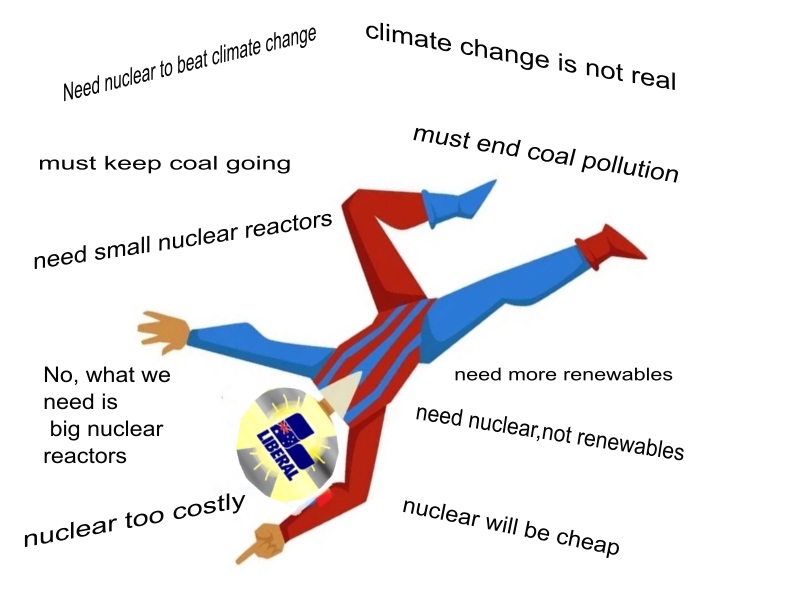
The Coalition has given its biggest clue yet on what its post-election policy will be.
Joseph Olbrycht-Palmer, 2 Oct 25. news.com.au
Opposition energy spokesman Dan Tehan has returned from a lengthy fact-finding mission to the US starry-eyed about a “nuclear renaissance taking place”.
Mr Tehan spent much of September touring facilities and meeting with nuclear heavyweights in the US.
His trip overlapped with the release of Australia’s first-ever climate risk assessment and Labor government’s 2035 emissions reduction targets.
His absence drew some criticism but, fronting media for the first time since landing back in the country, Mr Tehan said the knowledge he gained was worth it.
“What I learned was that there is basically a nuclear renaissance taking place in the US,” he told the ABC on Thursday.
There is huge investment going into nuclear.
“There are huge developments that are taking place.
“And everyone that I spoke to was incredibly confident, given the use of AI, given the use of quantum, that they will continue to make rapid developments with nuclear technology which will enable not only the US, but the globe, to provide abundant energy in a form which is emissions neutral.”
He was particularly struck by micro reactors, which are transportable nuclear power sources that typically generate between 1-20MW – or enough energy to power a small community, a military base or an industrial facility………………………………………………………
Mr Tehan’s comments are the strongest indication to date that the opposition may stick to its guns on nuclear despite its heavy defeat at the federal election in May.
The absence of an energy policy has sparked severe tensions within the Coalition and was key to the Nationals’ brief split from the Liberals.
Mr Tehan said he had discussed his findings with his colleagues and that “there is overwhelming agreement on the Coalition side that nuclear needs to be part of our energy mix”. https://www.news.com.au/national/politics/coalition-in-overwhelming-agreement-on-nuclear-future-energy-spokesman-says/news-story/00ba65f8cb559f8fcd0e886a783f4703
Nuclear energy to remain a central focus for Coalition
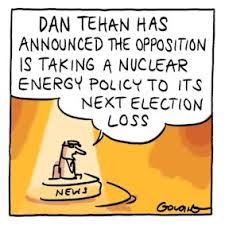
By Kye Halford • 3 October 2025, https://www.thesaturdaypaper.com.au/post/2025/10/03/nuclear-energy-remain-central-focus-coalition
Nuclear technology will be a key aspect of the Coalition’s energy policy heading into the next election, as opposition energy spokesman Dan Tehan argues it is essential to modernise the electricity grid.
Tehan told ABC radio on Thursday: “There is overwhelming agreement on the Coalition side that nuclear needs to be part of our energy mix” (SMH).
“I have no doubt that my colleagues, like I do, see very much a future for nuclear as part of our energy mix here in Australia,” he said.
Tehan has recently returned from a study tour in the United States, where he reportedly toured facilities and spoke with nuclear experts about how the energy source could be used in Australia (Yahoo News).
Nuclear energy was a key proposal for former opposition leader Peter Dutton during his lost election campaign earlier this year, despite voter scepticism regarding its viability (The Saturday Paper).
1 This month
15 April – Zoom –Nuclear Power is Not the Solution
Apr 15, 2026 01:00 AM in Canberra, Melbourne, Sydney

Join the International Physicians for the Prevention of Nuclear War (IPPNW) on Tuesday, April 14th for a timely webinar exploring the risks associated with nuclear power and challenging the myth that it offers a simple, safe, carbon-free solution to the climate crisis

of the week – Australians for War Powers Reform (AWPR)
To see nuclear-related stories in greater depth and intensity
 Antinuclear