Nuclear off table as states seek power fix
Alex Mitchel, AAP December 5, 2022 https://www.perthnow.com.au/news/world/nuclear-off-table-as-states-seek-power-fix-c-9061484 Prime Minister Anthony Albanese and Environment Minister Tanya Plibersek were quick to shoot their Labor colleague down, each pointing out nuclear energy wouldn’t work out financially.
The discussion comes as Australia desperately seeks a fix for soaring power bills, the PM labelling talk around nuclear energy as a distraction.
“I have a great deal of respect for ‘Mali’, but everyone’s entitled to get things wrong,” he told FiveAA radio.
“Every five years or so we have economic analysis of whether nuclear power stacks up and every time it’s rejected.”
Ms Plibersek was similarly strong, saying nuclear power was “slow to build and really expensive”.
“All this nonsense about small-scale nuclear reactors in every suburb, I don’t know if there’s people up your street who want a nuclear reactor in the local park … I really don’t think that’s the case,” she told Seven.
Adelaide is expected to build at least eight submarines under the AUKUS arrangement, which Mr Malinauskas said would show safety concerns around nuclear energy were misplaced.
“In respect of my position on nuclear power for civil consumption, or use, I’ve always thought the ideological opposition that exists in some quarters to nuclear power is ill-founded,” he told News Corp.
“Nuclear power is a source of baseload energy with zero carbon emissions. For someone like myself, who is dedicated to a decarbonisation effort, we should be open-minded to those technologies and it would be foolhardy to have a different approach.”
The PM will meet with state premiers at national cabinet on Wednesday, with a cap on coal and gas prices expected to be a priority agenda item in an attempt to get power bills down.
It is important that the price of gas is reasonable and can make a profit, but the idea that you have super profits being made at the same time as businesses going out of business … is not on,” Mr Albanese said.
“We will act before Christmas and I don’t think there is a premier or chief minister who will sit back and say ‘yep this is all ok’ as prices continue to rise.”
Deputy Liberal leader Sussan Ley said Labor’s “messy” power fix was coming too late.
You can’t just clumsily wade in and put price caps in place when you don’t understand the commercial realities, the investment horizons of the companies that are onshore producing the gas, as well as the international agreements they’ve made,” she told 2GB.
“We have the state governments saying, ‘well this looks like a good idea, but the Commonwealth, you will have to stump up billions of dollars in compensation because we’re certainly not going to’.”
Albanese, Malinauskas split over nuclear power
https://www.afr.com/politics/federal/albanese-malinauskas-split-over-nuclear-power-20221205-p5c3vu?fbclid=IwAR1-4LuwNOztVd72JUm4cyf8MTysX1reDHooPxW-1Np1pG3zpyzGOYmT-Ec Phillip Coorey 5 Dec 222
Prime Minister Anthony Albanese has clashed with South Australian Labor Premier Peter Malinauskas, who wants to explore nuclear power for his state amid the nation’s energy crisis.
Mr Malinauskas had argued that the possible assembly of nuclear submarines in Adelaide was an opportunity for Labor, especially those in Mr Albanese’s Left faction, to rethink its opposition to nuclear power.
But Mr Albanese, who inspected flood preparations in Renmark on Saturday with the premier, gave that short shrift.
“I have a great deal of respect for Mali, but everyone’s entitled to get one or two things wrong,” Mr Albanese told Five AA radio.
“I haven’t changed my view that it’s a huge distraction from what we need to do. It just doesn’t add up. That’s essentially the problem.
“Every five years or so we have this economic analysis of whether nuclear power stacks up and every time it’s rejected.
“I think you’ve got the issue of waste and you’ve got where it goes. So I think it’s a distraction from what we need to do. That’s my position, and it hasn’t changed.”
The popular Mr Malinauskas argued the planned construction of nuclear-powered submarines in Adelaide should ease public concern over nuclear energy. Under that proposal the reactors will be built overseas and delivered to Adelaide fully sealed for incorporation into the front part of the submarine hull.
“In respect of my position on nuclear power for civil consumption, or use, I’ve always thought the ideological opposition that exists in some quarters to nuclear power is ill-founded,” Mr Malinauskas told News Corp.
“Nuclear power is a source of baseload energy with zero carbon emissions. For someone like myself, who is dedicated to a decarbonisation effort, we should be open-minded to those technologies and it would be foolhardy to have a different approach.”
Federal shadow energy minister Ted O’Brien, who is exploring a nuclear power policy option for the Coalition, applauded the premier.
“The premier’s commonsense approach is in stark contrast to Prime Minister Albanese’s irrational refusal to engage in a mature conversation about the possible role of advanced nuclear technology in Australia.”
UK Tories getting nervous about nuclear power plans?
Conservative Home, Sanjay Sen 7 Dec 22
Fears that Jeremy Hunt’s Autumn Statement would see Sizewell C cancelled proved unfounded. The 3.3 giga-watt nuclear mega-project is now set to get under way on the Suffolk coast with a price tag of £20 billion.
Or maybe £30 billion. If the track record of its French design is anything to go by, things might not go exactly to plan.
Nick Clegg famously dismissed nuclear power because it takes a decade to come on-line. That was a decade ago, and we could really do with some extra power right now.
today’s Government has big ambitions: eight sign-offs by 2030 with nuclear supplying 25 per cent of our power by 2050. As long as no-one gets cold feet and cancels all that.
Net Zero enthusiasts and climate sceptics alike see a major role for nuclear. But is Sizewell C best way to deliver it? How did we get where we are now? And what can we learn from our French neighbours, the world’s biggest nuclear enthusiasts?
………… Meanwhile, our current nuclear fleet is fast depleting. Despite generous life extensions, all but one of the UK’s nine remaining reactors will be retired by 2030. That means Sizewell C will mostly be plugging the gap left behind, not creating extra capacity. To compound matters, our ability to import electricity could be impacted by the challenges facing the French nuclear industry.
Is Sizewell C our best option – or was it our only option?
Sizewell C is a tweaked version of Hinkley Point C which is (still) under construction. Whilst its third-generation EPR technology is intended to deliver improved efficiency and safety, it hasn’t exactly performed flawlessly to date. Operational plants at Olkiluoto (Finland) and Taishan 1 and 2 (China) have proven problematic so far. Those under construction, Flamanville 3 (France) and our very own Hinkley, continue to incur delays and cost over-runs.
Whilst engineers will recognise the technology, much differs below the surface. Hinkley is 80 per cent French (EDF) and 20 per cent Chinese (CGN). But with EDF financially constrained and relations now strained with Beijing, Sizewell ownership will be 20 per cent EDF, 20 per cent UK Government, with the remainder from infrastructure investors and pension funds.
Contracts for Difference have also been ditched. Not only blamed for Hinkley’s giant cost, they are also held responsible for scaring off other would-be nuclear investors: Hitachi Wylfa (North Wales) and Toshiba Moorside (Cumbria). Instead, Sizewell will use the Regulated Asset Base model which shares costs (and risks) with consumers from day one…………………………. https://conservativehome.com/2022/12/07/sanjoy-sen-nuclear-is-the-best-path-to-a-greener-cheaper-and-more-secure-energy-supply/
‘New’ Nuclear Reactors Will Make Us a Guinea Pig Nation
“The central issue,……“is that the NRC is accepting on faith that these new reactors are going to be safer and wants to adjust its regulations accordingly, to make them less stringent—on faith.”
Federal officials want to gut safety measures to pave the way for untested new facilities—maybe in your neighborhood.
https://progressive.org/latest/%E2%80%98new%E2%80%99-nuclear-reactors-guinea-pig-nation-grossman-61222/ BY KARL GROSSMAN , DECEMBER 6, 2022
“Guinea Pig Nation: How the NRC’s new licensing rules could turn communities into test beds for risky, experimental nuclear plants,” is what physicist Edwin Lyman, director of nuclear power safety with the Union of Concerned Scientists, titled his presentation on November 17.
The “Night with the Experts” online session, organized by the Nuclear Energy Information Service, focused on how the U.S. Nuclear Regulatory Commission (NRC) is involved in a major change of its rules and guidance to gut government regulations to pave the way for what the nuclear industry calls “advanced” nuclear power plants.
Already, Lyman said, the NRC has moved to allow the construction of nuclear power plants in thickly populated areas. This “change in policy” was approved in a vote by NRC commissioners in late July.
For more than a half-century, the NRC and its predecessor agency, the U.S. Atomic Energy Commission, sought to have nuclear power plants built in “low population zones”—because of the threat of a major nuclear plant accident. But this year the NRC substantially altered this policy.
The lone NRC vote against the change came from Commissioner Jeff Baran, who in casting his ‘no’ vote wrote, “Multiple, independent layers of protection against potential radiological exposure are necessary because we do not have perfect knowledge of new reactor technologies and their unique potential accident scenarios . . . . Unlike light-water reactors, new advanced reactor designs do not have decades of operating experience; in many cases, the new designs have never been built or operated before.”
He cited the NRC criteria, which declare that the agency “has a longstanding policy of siting nuclear reactors away from densely populated centers and preferring areas of low population density.” Under the new policy, he noted, a “reactor could be sited within a town of 25,000 people and right next to a large city.”
That is just one of the many reductions proposed in safety standards.
“The central issue,” says Lyman in an interview following his presentation, “is that the NRC is accepting on faith that these new reactors are going to be safer and wants to adjust its regulations accordingly, to make them less stringent—on faith.”
The industry’s new line of smaller nuclear power plants—including what it calls the “small modular nuclear reactor”—are much more expensive than existing light-water nuclear power plants. The older, more common nuclear power plants are large and cooled by plain water, whereas the new “advanced” plants are more costly, in part because they are cooled by various other substances.
Weakening safety standards will, of course, make it easier to build and cheaper to operate these pricey reactors. The proposed changes are a demonstration of one of the NRC’s nicknames—the “Nuclear Rubberstamp Commission.”
A list of the NRC’s proposed safety reductions was included in Lyman’s presentation, quoted here with my commentary:
- Allowing nuclear power plants to have a “small containment—or no physical containment at all.” Containments are the domes over nuclear plants to try to contain radioactive releases in an accident.
- “No offsite emergency planning requirements.” The NRC has been requiring emergency planning including the designation of a ten-mile evacuation zone around a nuclear power plant.
- “Fewer or even zero operators.” The nuclear industry would like advanced nuclear plants to operate “autonomously.”
- Letting the plants have “fewer” NRC “inspections and weaker enforcement.”
- Reduced equipment reliability reporting.
- “Applications” for an advanced reactor “should contain minimal information.”
- The NRC’s review standards should be lenient.
- Letting the plants have “fewer inspections and weaker enforcement.”
- Fewer back-up safety systems.
- Regulatory requirements should be few in number and vague.
- “Zero” armed security personnel to try to protect an advanced nuclear power plant from terrorists.
The “NRC is willing to twist and contort even reasonable safety regulations in ways that cater to nuclear industry desires to a degree that would rival a toy balloon-dog at a children’s party,” Nuclear Energy Information Service director David Kraft tells The Progressive. “It is this kind of almost institutionalized acquiescence to industry wants that has led many to believe that NRC stands for Not Really Concerned.”
In his talk, Lyman referenced a 140-page report for the Union of Concerned Scientists which he authored, issued in March 2021, titled “ ‘Advanced’ Isn’t Always Better, Assessing the Safety, Security, and Environmental Impacts of Non-Light-Water Nuclear Reactors.”
The report states: “Almost all nuclear power reactors operating and under construction today are LWRs, so called because they use ordinary water to cool their hot, highly radioactive cores. Some observers believe that the LWR [light-water reactor], the industry workhorse, has inherent flaws that are inhibiting nuclear power’s growth,” he writes. “In response, the U.S. Department of Energy’s national laboratories, universities, and numerous private vendors—from large established companies to small startups—are pursuing the development of reactors that differ fundamentally from LWRs. These non-light-water reactors (NLWRs) are cooled not by water, but by other substances, such as liquid sodium, helium gas, or even molten salts.”
Though these are called “advanced” reactors, the report continues, most of them are modeled on decades-old designs.
“In part,” he notes, “the nuclear industry’s push to commercialize NLWRs is driven by its desire to show the public and policymakers that there is a high-tech alternative to the static, LWR-dominated status quo: a new generation of ‘advanced’ reactors. But a fundamental question remains: Is different actually better? The short answer is no. Nearly all of the NLWRs currently on the drawing board fail to provide significant enough improvements over LWRs to justify their considerable risks.”
“Make no mistake about it—while NRC is doing its part to serve nuclear industry needs, we should not lose sight of the fact that it is the aggressive pro-nuclear agenda of the Biden Administration that has unleashed a juggernaut of financial and PR support for new nuclear reactors,” Kraft says “Everything from the tens of billions of dollars allocated for new nuclear in the Infrastructure Act and the IRA [Inflation Reduction Act, which establishes a nuclear power production tax credit], to the national dog-and-pony show [the recent U.S. tour promoting nuclear power] of Energy Secretary Jennifer Granholm, demonstrates the Administration’s intentions to run roughshod over the objections of the public. We have a hard fight ahead of us.”
The NRC is not currently accepting comments on its plan for changes to its regulations for “advanced” reactors, according to Lyman. But he encouraged the public to weigh in on NRC actions via public meetings and email. The Nuclear Energy Information service plans to post his talk on its website.
Editor’s Note: A version of this article originally appeared in CounterPunch and is reprinted with perm
Europe accuses US of profiting from war

EU officials attack Joe Biden over sky-high gas prices, weapons sales and trade as Vladimir Putin’s war threatens to destroy Western unity.
BY BARBARA MOENS, JAKOB HANKE VELA AND JACOPO BARIGAZZI, NOVEMBER 24, 2022 “………………….. Top European officials are furious with Joe Biden’s administration and now accuse the Americans of making a fortune from the war, while EU countries suffer.
“The fact is, if you look at it soberly, the country that is most profiting from this war is the U.S. because they are selling more gas and at higher prices, and because they are selling more weapons,” one senior official told POLITICO.
The explosive comments — backed in public and private by officials, diplomats and ministers elsewhere — follow mounting anger in Europe over American subsidies that threaten to wreck European industry. The Kremlin is likely to welcome the poisoning of the atmosphere among Western allies.
“We are really at a historic juncture,” the senior EU official said, arguing that the double hit of trade disruption from U.S. subsidies and high energy prices risks turning public opinion against both the war effort and the transatlantic alliance. “America needs to realize that public opinion is shifting in many EU countries.”………………………..
As they attempt to reduce their reliance on Russian energy, EU countries are turning to gas from the U.S. instead — but the price Europeans pay is almost four times as high as the same fuel costs in America. Then there’s the likely surge in orders for American-made military kit as European armies run short after sending weapons to Ukraine. ……………………….
Officials on both sides of the Atlantic recognize the risks that the increasingly toxic atmosphere will have for the Western alliance. The bickering is exactly what Putin would wish for, EU and U.S. diplomats agreed.
The growing dispute over Biden’s Inflation Reduction Act (IRA) — a huge tax, climate and health care package — has put fears over a transatlantic trade war high on the political agenda again. EU trade ministers are due to discuss their response on Friday as officials in Brussels draw up plans for an emergency war chest of subsidies to save European industries from collapse.
“The Inflation Reduction Act is very worrying,” said Dutch Trade Minister Liesje Schreinemacher. “The potential impact on the European economy is very big.”
“The U.S. is following a domestic agenda, which is regrettably protectionist and discriminates against U.S. allies,” said Tonino Picula, the European Parliament’s lead person on the transatlantic relationship…………………………
Behind the scenes, there is also growing irritation about the money flowing into the American defense sector.
The U.S. has by far been the largest provider of military aid to Ukraine, supplying more than $15.2 billion in weapons and equipment since the start of the war. The EU has so far provided about €8 billion of military equipment to Ukraine, according to Borrell.
According to one senior official from a European capital, restocking of some sophisticated weapons may take “years” because of problems in the supply chain and the production of chips. This has fueled fears that the U.S. defense industry can profit even more from the war.
The Pentagon is already developing a roadmap to speed up arms sales, as the pressure from allies to respond to greater demands for weapons and equipment grows. ……………………… more https://www.politico.eu/article/vladimir-putin-war-europe-ukraine-gas-inflation-reduction-act-ira-joe-biden-rift-west-eu-accuses-us-of-profiting-from-war/
Missouri Community and Its Children Grappling With Exposure to Nuclear Waste

In the 2022 report, BCDC took 32 soil, dust, and plant samples throughout the school buildings and campus. Using x-ray to analyze the samples BCDC found more than 22 times more lead-210 than the estimated exposure levels for the average US elementary school in the Jana Elementary playground alone. There were also more than 12 times the lead-210 expected exposure in the topsoil of the basketball courts alone.
Radioactive isotopes of polonium-210, radium-266, thorium-230, and other toxicants were also found in the library, kitchen, ventilation system, classroom surfaces, surface soil and even soil as far as six feet below the surface.
https://blog.ucsusa.org/chanese-forte/missouri-community-and-its-children-grappling-with-exposure-to-nuclear-waste/ Chanese Forte, December 8, 2022
The families, students, and school officials in Florissant, Missouri have been living a modern nightmare for the past several weeks, learning that Jana Elementary school and the surrounding region has high levels of radiation, a problem caused decades ago by the production of nuclear weapons
Radiation exposure can damage the DNA in cells leading to a host of health problems including cancer and auto-immune disorders. What’s more troubling is that the Centers for Disease Control reports that children and young adults, especially girls and women, are more sensitive to the effects of radiation.
Jana Elementary school has 400 students and a predominantly (82.9%) Black student body. Unfortunately, the United States has a long history of environmental racism which results in harming Black, Indigenous and Brown communities much more in the process of creating and maintaining nuclear weapons.
When science cannot agree, the community suffers
The suburban school north of St. Louis, Missouri, was thought to be safe for students based on research completed in 2000 by the Army Corps of Engineers (USACE).
Specifically, USACE has been in the Coldwater Creek region for the last 20 years attempting to remediate radioactive waste associated with the creek (which does not include Jana Elementary).
Toward the start of the 2022 semester, as part of an ongoing lawsuit in the region the Boston Chemical Data Corp (BCDC), an environmental consulting group, reported the elementary school as having radioactive waste levels far above the estimated national levels.
These radioactive waste exposures—like lead-210—are associated with decreased cognition, brain defects, thyroid disease, and cancer, and can accumulate in the body over time.
Following the BCDC report, all Jana Elementary students were sent home for the rest of the semester in hopes their homes were less toxic.
By the Thanksgiving holiday break, the USACE returned to test inside and on the playground of the school and found no radiation on the campus, news which many community members and organizers unsurprisingly expressed as suspicious.
The School Board then hired SCI Engineering, a private engineering firm, to sample Jana Elementary who came to a similar conclusion as USACE.
Now returning to classes from Thanksgiving break, many wary students joined classes at new schools in the area per the school board’s decision related to BCDC’s radiation exposure assessment. Many parents also expressed to National Public Radio they felt left out of discussions for decisions being made.
How did radioactive waste end up in Florissant, MO?
The region near Jana Elementary was first contaminated by the US Department of Energy’s decision to make St. Louis one of the processing sites for uranium during the Manhattan Engineering District project. These nuclear weapons were built through World War II and originally stored at the St. Louis Lambert International Airport.
Unfortunately, the waste was later illegally dumped in 1973 at the West Lake Landfill in Bridgeton, MO, which lies about 10 miles Southwest of Jana Elementary. The West Lake Landfill is located near the Mallinckrodt Chemical Works Company which regularly floods, causing these harmful chemicals to be carried away by nearby water ways like Coldwater Creek.
Coldwater Creek runs for 19 miles throughout the area and flows directly into the Missouri River. Jana Elementary, just North of St. Louis, is bordered by the creek on two sides but has to date not been included in any clean-up efforts by the US Army Corps of Engineers (USACE).
US Army Corps of Engineers initially didn’t sample inside or outside of Jana Elementary
Prior to the Boston Chem Data Corp 2022 report, the USACE did not take any samples within 300 feet of the school building in their 2017 assessment. According to BCDC’s report, this doesn’t follow US Agency for Toxic Substances Disease Registry (ATSDR) standards for radioactive sampling.
In fact, it ignores the conclusion ATSDR made that most exposures in the region will be indoors and just outdoors of buildings.
Indoor samples from creek-facing homes in the same neighborhood as Jana Elementary had similar radioactive waste both indoors and outdoors. ATSDR also noted in a 2019 report that radioactive wastes are routinely moved from Coldwater Creek into homes due to flooding. The region floods frequently which is only increasing due to climate change in the region.
New radioactive sampling methods used to understand student exposure
In the 2022 report, BCDC took 32 soil, dust, and plant samples throughout the school buildings and campus. Using x-ray to analyze the samples BCDC found more than 22 times more lead-210 than the estimated exposure levels for the average US elementary school in the Jana Elementary playground alone. There were also more than 12 times the lead-210 expected exposure in the topsoil of the basketball courts alone.
Radioactive isotopes of polonium-210, radium-266, thorium-230, and other toxicants were also found in the library, kitchen, ventilation system, classroom surfaces, surface soil and even soil as far as six feet below the surface.
Marco Kaltofen, an environmental engineer who is leading the BCDC team, collected roughly 1,000 samples from across the region as a part of law suit efforts. There are several businesses and homes also indicated as exposed in the lawsuit as well.
Overall, Kaltofen suggests that BCDC’s unprecedented x-ray method better picks up the microscopic radioactive materials. However, he also asserts both studies are essentially saying the same thing, which is of course confusing for many community members.
Community organizers fight for testing and clean-up
Just Moms STL activist Dawn Chapman has worked tirelessly since 2014 to get the federal government to test for radioactive material in more regions where the creek floods.
The co-founder of Just Moms STL, Karen Nickel, also attended Jana Elementary School and has reported currently living with several autoimmune disorders. She uses her experience and love of the area to battle these exposure injustices.
In a 2017 Nation Public Radio report, Ms. Chapman says,
“They [The US Government] fought us for years. Finally, they [tested] parks that had flooded, and found [radioactive waste]. They started testing some backyards and found it. We pushed for Jana Elementary, because it is the closest school to the creek.” Just Moms STL activist, Dawn Chapman
We reached out to Just Moms STL to understand what the next steps are. Just Moms STL Recommends:
- The sites in St. Louis should be expeditiously cleaned up.
Unfortunately, Jana Elementary School is not the only place to be concerned about near St. Louis.- Since remediation of nuclear weapons waste in the area has already taken decades, many of these students will likely age out of Jana Elementary School before there is full remediation of radioactive waste in the St. Louis area.
While there is guidance on defining “safe” or acceptable radioactive exposure levels as it relates to human health, scientists also calculate “expected” levels from the Earth naturally (like radon in sediment).
Unacceptable levels are frequently defined as radiation exposure above natural levels by communities.
- However, legally the Army Corps is allowed to leave some radioactive residue above naturally occurring levels, and Just Moms STL would like this to no longer be the case.
- Residents near nuclear weapon processing sites like the St. Louis area should be included in federal radiation compensation programs, such as the Radiation Exposure Compensation Act (RECA). UCS also suggests consideration of St. Louis in the Energy Employees Occupational Illness Program Act (EEOICPA), and other forms of compensation as well.
Expanding radiation compensation programs is complicated because the list of communities that want to be included who currently qualify is long. Moreover, Just Moms STL says the RECA program needs to be expanded to include processing sites like St. Louis, which has previously only applied to nuclear testing exposure sites and uranium workers, or EEOICPA, which has only covered nuclear site workers, but not surrounding communities.
There are currently two bills being proposed to the House and Senate to extend and strengthen RECA. Just Moms STL is working to get Missouri elected officials to help sponsor and carry RECA as well. And your representatives may also be interested in supporting adjustments to RECA or the EEOICPA.
‘Humanity has become a weapon of mass extinction’
‘Humanity has become a weapon of mass extinction’: As COP15 talks kick
off, calls mount for ambitious outcome. UN Secretary General warns
humanity’s current treatment of nature amounts to a suicide mission, as
first day of critical nature talks opens in Quebec capital.
Business Green 7th Dec 2022
to 6 December – Australian nuclear news, and more

Some bits of good news : Greece says its entire electrical grid ran on 100% renewables for the first time. Efforts to Save Endangered Blue Butterfly Quadruples its Population–but Also Saves a Lupine from extinction.
Coronavirus. (COVID-19): Weekly Epidemiological Update.
Climate. Nature needs $384 billion a year, and other climate change stories you need to read this week.
Climate techno-fixes keep planet on ‘palliative care’.
Nuclear. I’ve been a bit obsessed with Australia this week. The probable nuclearisation of my country could proceed so fast, – with the enthusiasm of Australian war-mongers, to embrace our role in American plans for a war on China, enthusiasm of American firms to sell nuclear-capable aircraft to us, and News Corpse and the noisy minority extreme Right touting for small nuclear reactors.
Japan is the country often forgotten in the Anglophone media. Our website www.nuclear-news.net keeps news on Japan up to date, because our amazing contributor, dunrenard, provides thorough information translated from the Japanese originals.
AUSTRALIA.
- Australian PM Anthony Albanese urges US government to end pursuit of Julian Assange. Julian Assange and Albanese’s Intervention.
- Albo nukes nuclear energy idea. MP Ted O’Brien’s “grassroots” survey linked to a firm that promotes NuScam’s small nuclear reactors. South Australian Premier and Opposition leader enthuse about nuclear military submarines, and nuclear power, except for the costs.
- U.S. weapons firm Northrop Grumman no doubt salivating as Australia looks to buy its nuclear-capable B-21 stealth bomber.
- Mining lobby tricks government with its big taxpayer fairytale.
*******************************************************************
CLIMATE. Climate change brings risk of flooding to the multi billion pound nuclear project Sizewell C.
ECONOMICS.
- UK government desperate for investors in its Sizewell C nuclear project, as it pays out the Chinese company previously involved. Sizewll C nuclear white elephant could cost up to £43 billion. Eco-Unfriendly White Elephant? Stop Sizewell C’s Alison Downes vs. EDF’s Prof Michael Fitzpatrick https://www.youtube.com/watch?v=qXouiZv_DRU
- Marketing. Emmanuel Macron picks a bad time to promote France’s nuclear nuclear technology in a marketing tour to USA. Macron pushes a “renaissance” while French nuclear flops.
ENERGY. Warning of power cuts for France, as nuclear reactors are working at half capacity. Potential for ‘worrying’ Hinkley Point C delay highlights need for renewables. Europe, weaning off fossil fuels from Russia, but still dependent on Russia for nuclear fuel.
ENVIRONMENT. UK govt goes ahead, with Sizewell nuclear project, despite strong objections on environmental grounds, especially about water use.
LEGAL. Pursuing Assange in a US court could cause even more embarrassment than the WikiLeaks’ publications. European General Court refuses Austria’s appeal against the Commission’s decision to support 2 nuclear reactors for Hungary.
Japan. A book titled “Fukushima Daiichi NPP Accident Nakadori Litigation” (published by Sakuhinsha, Inc.) The compensation standards for voluntary evacuees from the Fukushima nuclear power plant accident will finally be reviewed on May 5, and there are concerns about whether the standards will be commensurate with the actual situation.
MEDIA. NATO Narratives and Corporate Media Are Leading to ‘Doorstep of Doom’
NUCLEAR TECHNOLOGY. Ukraine’s nuclear plants
USA trying to use Philippines as a guinea pig for its unviable small nuclear reactors – and for military purposes. No legitimate reason to support the
controversial nuclear technology planned for New Brunswick. Talking
football pitches but not in Qatar.
OPPOSITION TO NUCLEAR. No place for nuclear in NY’s clean energy future. 140,000 signatures of “opposition” to extension of operation period and reconstruction of nuclear power plants Submitted to the government “Reduction of dependence is the voice of the people”.
POLITICS.
- Britain may be scaling back its nuclear plans.. UK Funding subsidy to French firm EDF, for the £26bn Hinkley Point C nuclear plant even if it does not start operating until 2036. UK’s £26bn Hinkley Point C nuclear station now faces 11 year delay.
- UK government to take 50% stake in the French development of Sizewell C nuclear station.
- Small modular reactor plans to be blocked by the Scottish government.
- ‘A form of self-destruction’: Japan weighs up plan to expand nuclear power. Japan’s Ministry’s action plan drops nuclear policies set after 3/11. Japanese plaintiffs against Onagawa NPP claim that the wide-area evacuation plan is ineffective.
- Iran increasing its nuclear power.
- The complicated politics of nuclear power.
POLITICS INTERNATIONAL and DIPLOMACY.
- UK Taxpayers to hand China millions of pounds to quit Sizewell nuclear plant.
- Vladimir Putin open to talks on Ukraine if West accepts Moscow’s demands.
- NATO Exists To Solve The Problems Created By NATO’s Existence. NATO Expands but Original Anti-Russia Mission Is Static 73 Years On. U.S. to use “all tools” to evict Russia from Abkhazia, S. Ossetia, thus paving way for Georgia’s NATO membership
- Why a new convention to protect nuclear installations in war is a bad idea.
SAFETY.
- ‘Guinea Pig Nation’– Lax rules for new reactors deliberately endanger communities.
- War and Nuclear Power: Stakes Are High for People, Environment, and Industry. Situation at Ukrainian nuclear plants worrying as shelling and power cuts threaten containment. UN votes to press countries to stop terrorists from getting nuclear weapons. IAEA hoping to get a protection zone at the Zaporizhzia nuclear power plant.
- ‘A form of self-destruction’: Japan weighs up plan to expand nuclear power. Concrete melted off ‘pedestal’ for damaged reactor in Fukushima. Evacuation of Iitate Village’s Nagadori District, Fukushima Prefecture, to be lifted in May.
- Workers at hazardous nuclear waste site test positive for drugs.
SECRETS and LIES. Stolen cryptocurrency has fuelled North Korea’s nuclear program. Could it collapse amid market turmoil? UK government may be covering up the extent of its involvement in the arrest and incarceration of Julian Assange.
SPINBUSTER. China keeps aggressively surrounding itself with US bases. Expert panel full of proponents of nuclear power plants to discuss direction on March 28th, extending operation period and developing next-generation models, rushing to conclusion on “Prime Minister’s directive.
WASTES. Nuclear Free Local Authorities call for Community Partnerships to include critics of the UK undersea Geological Disposal Facility plan. Misleading claims about the supposed recycling of nuclear wastes.
WAR and CONFLICT. Explosion at Nuclear Airbase Just 150 Miles From Moscow Opens Stunning New Phase of War https://www.youtube.com/watch?v=UFug2Wf3DcU Britain’s bunkers offer little chance of survival after a nuclear attack. Imperialist wars—and what could be done about them — IPPNW peace and health blog.
WEAPONS and WEAPONS SALES.
- Broken promises: how nuclear armed states are failing on their commitments to disarm.
- Secrecy on USA’s new nuclear stealth bomber, and of course, secrecy on its cost to taxpayers.
- Thousands rally in Rome against arming Ukraine. Weapons company Raytheon continues to be the winner in the Ukraine war, with new $1.2 billion surface-to-air missile contract . Blinken: NATO nations have provided $40 billion in weapons to Ukraine, more on way.
- Kim Jong Un wants North Korea to be a nuclear superpower – the real risk is a regional arms race.
- ‘Deliberate ambiguity’: Israel’s nuclear weapons are greatest threat to Middle East.
WORLD CRISES. The Guardian view on biodiversity collapse: the crisis humanity can no longer ignore.
Parking Lot B-52: does the escalation of US troops and installations make Australia a bigger target?
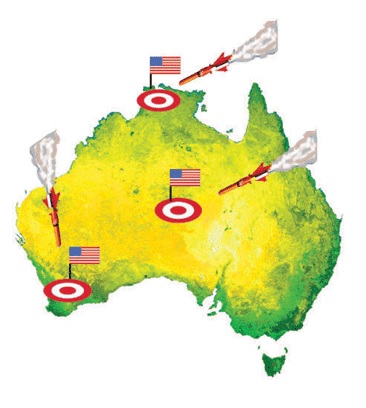
we are particularly concerned about what’s going on now and the speed with what’s going on now. As well as about how little we know or are being told.”
Then there is the matter of what is a base, when is a base a base, and whether Australian authorities are kept in the dark about what their US allies are doing.
“If our objective is to be a deputy sheriff to the US, as the 51st state of the Union, then eight nuclear submarines is the answer.”
Michael West Media, by Callum Foote | Dec 5, 2022
The Department of Defence is refusing to confirm how many American troops are stationed in Australia, who pays for it, or even why. The rising deployment of troops and B-52 bombers however, and Pine Gap, make Australia a target in event of war between China and the US. Callum Foote reports.
The Department of Defence has refused to reply to inquiries into how many US military personnel are currently stationed in Australia. It’s not just soldiers, it’s weapons too.
An ABC Four Corners investigation recently revealed that the US is preparing to develop the Tindal air base near Katherine, 320kms south of Darwin, to host up to six nuclear-capable B-52 bombers. Today it was revealed the US is trying to sell Australia the latest American bomber, the B-21 Raider, and rotate the aircraft through Australia.
Experts fear that the stockpiling of US weaponry in the Northern Territory would make Australia a target in the event of war between China and the US.
Despite the escalating presence of US troops and military hardware on Australian soil however, the Department of Defence has refused to reply to inquiries into how many US military personnel are currently stationed in Australia. Refused to reply full-stop.
We don’t even know who is funding it.
And as Chinese satellites could pick up the deployment of troops and US military installations, the secrecy is unwarranted.
B-52s here for the long haul
According to independent think tank Lowy Institute, B-52s have been deployed in the Northern Territory since at least the 1970s and military personnel training regularly in Australia since 2005.
The federal government has yet been unclear about the purpose of the deployment of the bombers in Australia. However, experts believe that the rising tensions between China and the US in the South China Sea is cause for alarm.
Alison Broinowski, the president of Australians for War Powers Reform, an anti-war advocacy group, says her network is concerned about the rising militarisation of the Northern Territory.
“We’re all very concerned about this,’’ Broinowski told MWM. ‘’It’s not new of course – the signs of it being planned go back for years. But we are particularly concerned about what’s going on now and the speed with what’s going on now. As well as about how little we know or are being told.”
Broinowski is a former diplomat, academic and author. A significant amount of her opposition to the militarisation of the NT comes down to secrecy.
“The very fact that it was undertaken in secret and would remain secret were it not for revelations from journalists we still wouldn’t know because they are doing this in secret,’’ Broinowski said.
Political commentator and former diplomat Bruce Haigh suspects the oft-cited number of 2500 rotating US troops stationed in Australia doesn’t paint the full picture.
“They give the official figure at 2500 and say that they rotate but I understood that those troops are becoming more permanent.”
To the purpose of the thousands of US marines stationed in Darwin, Haigh says, officially, it’s for joint training exercises with the Australian Defence Force but we don’t know”.
“A lot of money being spent on upgrading these bases hasn’t yet gone through the parliamentary committee system so we don’t know where in the Defence budget this money is coming from.”
Between Pine Gap, Tindal Air Force Base and thousands of US marines deployed in Darwin the exact figure is unknown. The US also has access to almost all Australian military bases with US naval personnel also coming in and out of the Stirling Naval Base in Fremantle, according to Haigh.
Then there is the matter of what is a base, when is a base a base, and whether Australian authorities are kept in the dark about what their US allies are doing.
Broinowski says the government has little oversight of many of the facilities that the US has interested in “although we call them Australia joint facilities they are for all intents and purposes American bases. About which our government knows as little as it used to know in the olden days about Pine Gap”……………………………
According to former submariner and senator, Rex Patrick, government is captured by the Defence Department which is in turn captured by the US. The post-AUKUS treaty decision to jettison the French submarine deal and agree to a bigger program to buy submarines from the US or UK reflects an Australian subsidy for the struggling submarine industries in those countries.
“If our objective is to be a deputy sheriff to the US, as the 51st state of the Union, then eight nuclear submarines is the answer. “If our objective is ‘‘defence of Australia’’, with the ability to forward deploy boats to operating bases in Singapore, Malaysia, Guam or Japan, in support of our allies and friends, then 20 AIP boats is the answer.” https://michaelwest.com.au/b-52s-in-australia-unknown-american-troops/
U.S. weapons firm Northrop Grumman no doubt salivating as Australia looks to buy its nuclear-capable B-21 stealth bomber

“I’m pretty sure you will see Australia ask for the B-21, and the United States I can tell you, is very interested in selling them to Australia,”
RAAF Chief Robert Chipman’s visit to United States sparks renewed speculation Australia could purchase nuclear-capable B-21 Raiders ABC News, 6 Dec 22
Regular rotations of America’s newest nuclear-capable stealth bomber, and even a possible future Australian purchase of the B-21 aircraft, are expected to be discussed during high level talks between both nations this week.
Key points:
- The Defence Department hasn’t confirmed whether US officials have discussed deploying their new stealth bomber to Australia
- Defence Minister Richard Marles and Foreign Minister Penny Wong will meet with their US counterparts this week
- The US Air Force plans to build 100 of the B-21 raiders to replace their aging fleet
At a tightly controlled ceremony in California on Friday, the United States Air Force publicly unveiled the B-21 Raider, in front of an audience that included the Chief of the Royal Australian Air Force (RAAF).
The B-21 Raider is the first new American bomber aircraft in more than 30 years, designed to carry both conventional and nuclear weapons, with each plane believed to cost around $1 billion (AUD).
Specific details of the in-development aircraft remain shrouded in secrecy with six currently being produced by US arms company Northrop Grumman and the first flight expected to take place next year…………………………………..
The Defence Department is yet to confirm whether Air Marshal Chipman discussed future deployments of the B-21 to Australia with American officials while in the United States, or an eventual purchase of the long-range aircraft by the RAAF.
Defence Minister Richard Marles, who has previously suggested the B-21 is being examined by Australia in the Defence Strategic Review, has just arrived in the United States for talks with Secretary Austin……………………..
“I’m pretty sure you will see Australia ask for the B-21, and the United States I can tell you, is very interested in selling them to Australia,” says Sydney-based American military author Colin Clark, who writes for the Breaking Defense publication.
“Regardless of whether they are armed with nuclear weapons or are under Australian command, I am almost certain, emphasis on almost, that B-21s will at least rotate regularly through Australia and they may well be based here permanently.”
Retired Air Commodore John Oddie, a former RAAF director-general of aerospace development, also believes the B-21 is eventually destined for Australia……….
The US Air Force plans to build 100 of the B-21 Raiders which will replace the ageing B-1 and B-2 aircraft, and could eventually be used with or without a human crew.
Both the US Air Force and Northrop Gruman have heralded the Raider’s relatively quick development, progressing from contract award to public debut in seven years. https://www.abc.net.au/news/2022-12-06/b21-nuclear-stealth-bomber-australian-military/101735190—
Albo nukes nuclear energy idea

Crikey, 6 Dec 22 Anthony Albanese says nuclear energy is off the table……
Prime Minister Anthony Albanese has said SA Premier Peter Malinauskas is wrong to argue in favour of nuclear energy. Labor right-leaning Malinauskas said the eight AUKUS nuclear submarines expected to be built in his state should open our minds to the “zero carbon emissions” power source — Albo was like, I respect you, Mali, but everyone can get “one or two things wrong” sometimes.
The PM countered that the economic analysis of nuclear energy has proven it a dead end, time and time again. Why? Nuclear reactors take ages to build, they’re really bloody expensive, and where would we put the waste? Albanese asked. It comes as Coalition MP Ted O’Brien is running a “grassroots” survey facilitated by a company that works with nuclear projects in the US, Guardian Australia reports. Consulting company Helixos developed O’Brien’s website, but the MP says he paid for the grassroots community campaign himself. https://www.crikey.com.au/2022/12/06/nuclear-albanese-malinauskas/
MP Ted O’Brien’s “grassroots” survey linked to a firm that promotes NuScam’s small nuclear reactors
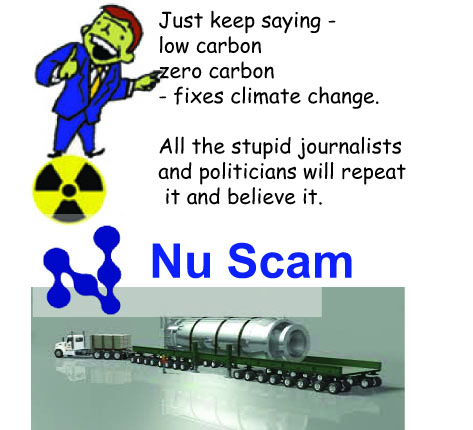
Coalition MP’s ‘grassroots’ nuclear power survey linked to consulting firm: Ted O’Brien’s Time to Talk Nuclear website was registered by business that helps US reactor company, Guardian, Daniel Hurst, 4 Dec 22,
A Coalition frontbencher conducting a “grassroots” survey about nuclear power is using a website registered by a business that helps an American small modular reactor company, records reveal.
Ted O’Brien, the shadow minister for climate change and energy, issued a statement on Friday saying he was “launching a grassroots community engagement program” under the banner “Time to Talk Nuclear”.
He urged Australians to “join the conversation” by completing a short survey on the website, with the first question being: “What do you think could be the benefits of nuclear energy in Australia?”
Guardian Australia can reveal the web domain was registered by Helixos Pty Ltd, a Sydney-based consulting company whose projects include “supporting the commercialisation of new nuclear energy technology”.
Helixos lists the US company NuScale Power as one of its clients.
Helixos says on its own website that NuScale Power “is reinventing nuclear energy and Helixos is helping them bring it to market”. It adds: “Helixos also provides training for employees to become technology ambassadors and engage with stakeholders and the public.”
A search of domain records for O’Brien’s website shows the contact name for the domain registration is Lenka Kollar, a nuclear engineer who co-founded Helixos in 2020. She previously held the role of director of strategy and external relations for NuScale Power.
In that previous role, Kollar was “working to bring NuScale’s small modular reactor to market through business plan development and clean energy outreach”, according to a profile published in 2017.
Kollar addressed a Global Uranium Conference in Adelaide last month on the topic “reaching net zero with nuclear energy”.
In tweets summarising her speech, Kollar said: “The time is now for Australians to have a conversation on nuclear energy and potentially overturn the ban.”…………………………………………..
Helixos’s projects are listed openly on its own website.
It works with the Energy Policy Institute of Australia “on editing public policy papers to promote progressive, technology-inclusive energy policy”, including one focusing on “the ability of small modular reactors (SMRs) to support a ‘just transition’ for coal communities in Australia”.
Helixos states it worked with SMR Nuclear Technology Pty Ltd “to develop a proactive stakeholder engagement strategy” to “help achieve the main goal of having nuclear energy considered as part of Australia’s future energy mix”.
Robert Pritchard, who is both chair of SMR Nuclear Technology and executive director of the Energy Policy Institute of Australia, declined to comment…………………………….
The survey has only three mandatory questions, starting with views on the benefits of nuclear energy in Australia.
It then asks what concerns, if any, the participant holds about nuclear energy, followed by any questions they might have. There is an optional section to “stay informed” by submitting an email address and postcode to O’Brien’s team.
O’Brien’s website also sets out frequently asked questions such as: “Is nuclear energy clean?”
The answer states: “Yes! Nuclear power’s total life-cycle carbon emissions and raw material requirements are the lowest among other energy sources, even lower than wind and solar.”
The climate change and energy minister, Chris Bowen, has previously accused the Coalition of pushing the nuclear debate as a “rearguard attempt to undermine and deny the transition to renewables”……………. https://www.theguardian.com/australia-news/2022/dec/04/coalition-mps-grassroots-nuclear-power-survey-linked-to-consulting-firm
Explosion at Nuclear Airbase Just 150 Miles From Moscow Opens Stunning New Phase of War
https://ca.news.yahoo.com/explosion-nuclear-airbase-just-150-140030278.html?guce_referrer=aHR0cHM6Ly90LmNvLw&guce_referrer_sig=AQAAAIWRLNCeuWf8zLbyAHudpa3-bw-9tdVPGXTQGuuwYFES0ZvZ9vMH_T1ReFWPUewV2havE1HXpw2FLwviHZMwGaYPc6rE-9JqITke2F7EAKhtWHW-TatTTOYz7jqucsL3elDM0XtRqojhS65XvYofjN94JeobcwQfwI1UM-q-1mBv Barbie Latza Nadeau, Tue, December 6, 2022
Two explosions at major Russian military bases, including the Dyagilevo base near Ryazan just 150 miles from Moscow, mean the war in Ukraine has come right to Vladimir Putin’s doorstep.
The explosions—which were unmanned drone strikes, a senior Ukrainian official told The New York Times—suggest Ukraine wanted to strike fear right in the heart of Russia.
The second explosion struck the Engels-2 base, from which Tu-95 bombers have been pummeling Ukraine’s infrastructure over the last month.
Engels and Ryazan are around 300 to 450 miles from the Ukrainian border, which is beyond the range of any known missiles in Ukraine’s possession, the Times reported.
A fuel truck explosion at the base near Ryazan killed at least three and wounded half a dozen, and damaged Tu-95 bombers and Tu-22M long-range missile bombers, which have nuclear capability.
Video posted on social media suggests that the telltale whistle of a fighter jet or missile can be heard just before the Saratov base explosion, according to the Guardian.
Monday afternoon, several people in Crimea reported hearing explosions there, suggesting a coordinated effort.
Kremlin spokesman Dmitry Peskov initially confirmed that Putin had been advised of the “situation” but did not speculate on who might be behind it, saying quite unbelievably that he had only “read about it” in the media, according to reporters at a briefing Monday.
The Kremlin later said its forces intercepted the drones, confirming the deaths of three servicemen and damage to two planes in the resulting “fall and explosion of the wreckage.”
Almost immediately after reports, air raid sirens across Ukraine heralded a barrage of missile strikes, with many targeting Zaporizhzhia, where at least two people were reported to have been killed after missiles destroyed several residential blocks. Several cities reported having no electricity or water after Russian strikes.
Roman Busargin, governor of the Saratov region where the Engels-2 base is housed, wrote on Telegram that law enforcement agencies were chasing “information about incidents at military facilities,” adding that, “No emergencies have occurred in the city’s residential areas.”
Ukraine’s interior minister Anton Gerashchenko posted images of the explosions on Telegram, suggesting they were watching closely. “Some sources report that this morning planes based on Engels and Ryazan airfields were scheduled to bomb Ukrainian energy infrastructure yet again,” Gerashchenko wrote Monday morning.
Other officials mused that Russia’s compounding losses are Ukraine’s gain. “The Earth is round—discovery made by Galileo. Astronomy was not studied in Kremlin, giving preference to court astrologers,” Volodymyr Zelensky adviser Mykhailo Podolyak wrote on Telegram Monday. “If it was, they would know: if something is launched into other countries’ airspace, sooner or later unknown flying objects will return to departure point.”
Thousands rally in Rome against arming Ukraine
Trade unionists and leftists marched after the new government promised more arms for Kiev next year
https://www.rt.com/news/567650-italy-ukraine-weapons-protest/ 5 Dec 22,
Left-wing demonstrators took to the streets in Rome on Saturday, demanding higher wages and condemning the Italian government for renewing a decree allowing it to send weapons to Ukraine until 2024.
Organized by Italy’s USB trade union and backed by a number of leftist political factions, the protest saw thousands of people assemble at the Piazza della Repubblica and march behind a banner reading “guns down, wages up.”
“The Meloni government is dragging us further and further into a spiral of war with unpredictable outcomes,” the USB wrote prior to the protest. “Italy is evidently a belligerent and active country in the conflict, despite the fact that the great majority of the population is against the war and the consequent sharp increase in military spending.”
Italy’s new prime minister, Giorgia Meloni, issued a decree on Thursday allowing her cabinet to continue sending weapons to Ukraine until the end of 2023 without seeking the formal approval of parliament. Her predecessor, Mario Draghi, was a staunch supporter of Kiev and lost power after a disagreement over arms shipments split the largest party in his coalition government, the Five Star Movement.
The Italian public is split too, with 49% opposing sending weapons to Kiev and 38% in favor, according to a poll taken by EuroWeek News last month. Additionally, 49% of Italians believe that Ukraine needs to make concessions to Russia in the ongoing conflict to speed up the peace process, while only 36% want Kiev to keep fighting.
Last month, another rally in Rome calling for a peace deal to end the Ukrainian conflict drew 100,000 people, organizers said.
‘A form of self-destruction’: Japan weighs up plan to expand nuclear power
Japan’s prime minister is pushing for as many as 17 nuclear reactors to be switched back on, more than a decade on from the meltdown at Fukushima
Guardian, Justin McCurry in Onagawa, 30 Nov 22,
“…………………………………. In a sweeping change to the country’s energy policy, the prime minister, Fumio Kishida, has announced plans to build next-generation reactors and restart those left idle after the 2011 triple meltdown, in an attempt to end Japan’s dependence on imported fossil fuels and help meet its net zero target by 2050.
Kishida’s “green transformation”, which could include extending the lifespan of existing reactors beyond the current maximum of 60 years, underlines Japan’s struggle to secure an affordable energy supply as a result of the war in Ukraine and a power crunch that has triggered warnings of potential blackouts in Tokyo during this summer’s heatwave.
Most of Japan’s nuclear power plants have remained offline since the Fukushima meltdown, and previous governments indicated they would not build new reactors or replace ageing ones, fearing a backlash from a shaken and sceptical public.
Japan plans for nuclear to account for 20-22% of its electricity supply in 2030, compared with about a third before Fukushima. In 2020 the figure was less than 5%. Just 10 nuclear reactors among more than 30 have been restarted since the post-Fukushima introduction of stricter safety standards.
If Kishida gets his way though, seven additional reactors will be restarted after next summer, including the No. 2 unit at Onagawa, which sustained structural damage from the 2011 earthquake and tsunami but escaped a catastrophic meltdown despite being the closest atomic plant to the quake’s epicentre.
‘A threat to the safety of local people’
The restart has been approved by Japan’s nuclear watchdog and given “local consent” by Yoshihiro Murai, the governor of Miyagi – the prefecture where Onagawa is located.
But many residents argue that contingency plans for potential accidents would put lives at risk.
“The evacuation plans won’t work … they are a threat to the safety of local people,” says Masami Hino, one of 17 residents living within 30km of the plant who last year launched a legal action to block the restart, now scheduled for early 2024.
In the event of a serious accident, 1,000 residents living within 5km of the plant would leave immediately, while 190,000 people within a 30km radius would evacuate in stages, according to the official blueprint.
But many residents argue that contingency plans for potential accidents would put lives at risk.
“The evacuation plans won’t work … they are a threat to the safety of local people,” says Masami Hino, one of 17 residents living within 30km of the plant who last year launched a legal action to block the restart, now scheduled for early 2024.
In the event of a serious accident, 1,000 residents living within 5km of the plant would leave immediately, while 190,000 people within a 30km radius would evacuate in stages, according to the official blueprint.
“How can Tohoku Electric and the prefecture guarantee that an evacuation would go smoothly after something like a major earthquake? It’s impossible,” says Mikiko Abe, an independent member of the Onagawa town assembly who has spent 40 years campaigning for the plant’s closure.
“Instead of planning for an evacuation, wouldn’t it be better to live safely in a place where there’s no need to even think about fleeing our homes?”………………………………………….
While pro-nuclear members of the Miyagi prefectural assembly have helped resist calls for a referendum, a poll in April by the local Kahoku Shinpo newspaper found that 56% of residents were “strongly” or “somewhat” opposed the restart.
“All of Japan’s nuclear power plants are on the coast … and this is a country that has earthquakes, tsunamis and volcanoes,” says Tsuyoshi Suda, a member of local anti-nuclear group Kaze no Kai, as he looked at the plant – complete with a newly built 29-metre high seawall – from a nearby beach.
“For Japan to keep putting its faith in nuclear power plants is like a form of self-destruction.”
1 This month


Help Aunty Sue Protect Her Land and Sacred Sites From Destructive Rocket Testing.
.

Australians deserve the truth
about
AUKUS – https://aukuspublicinquiry.com/

PETITION – To: Prime Minister Anthony Albanese and the Australian Labor Government

of the week – Australians for War Powers Reform (AWPR)
To see nuclear-related stories in greater depth and intensity

