Nuclear Guinea Pigs: NRC’s Licensing of Experimental Nuclear Plants


“Dr. Lyman warns us all once again how largely beholden to the nuclear industry the NRC is. NRC is willing to twist and contort even reasonable safety regulations in ways that cater to nuclear industry desires to a degree that would rival a toy balloon-dog at a children’s party. It is this kind of almost institutionalized acquiescence to industry wants that has led many to believe that NRC stands for Not Really Concerned.”
https://www.counterpunch.org/2022/11/22/nuclear-guinea-pigs-nrcs-licensing-of-experimental-nuclear-plants/ BY KARL GROSSMAN 22 Nov 22,
“Guinea Pig Nation: How the NRC’s new licensing rules could turn communities into test beds for risky, experimental nuclear plants,” is what physicist Dr. Edwin Lyman, Director of Nuclear Power Safety with the Union of Concerned Scientists (UCS), titled his presentation last week.
The talk was about how the U.S. Nuclear Regulatory Commission is involved in a major change of its “rules” and “guidance” to reduce government regulations for what the nuclear industry calls “advanced” nuclear power plants.
Already, Lyman said, at a “Night with the Experts” online session organized by the Nuclear Energy Information Service, the NRC has moved to allow nuclear power plants to be built in thickly populated areas. This “change in policy” was approved in a vote by NRC commissioners in July.
For a more than a half-century, the NRC and its predecessor agency, the U.S. Atomic Energy Commission, sought to have nuclear power plants sited in areas of “low population density”—because of the threat of a major nuclear plant accident.
But, said Lyman, who specializes in nuclear power safety, nuclear proliferation and nuclear terrorism, the NRC in a decision titled “Population-Related Siting Considerations for Advanced Reactors,” substantially altered this policy.
The lone NRC vote against the change came from Commissioner Jeffery Baran who in casting his ‘no’ vote wrote “Multiple, independent layers of protection against potential radiological exposure are necessary because we do not have perfect knowledge of new reactor technologies and their unique potential accident scenarios….Unlike light-water reactors, new advanced reactor designs do not have decades of operating experience; in many cases, the new designs have never been built or operated before.”
He noted a NRC “criteria” document which declared that the agency “has a longstanding policy of siting nuclear reactors away from densely populated centers and preferring areas of low population density.”
But, said Baran, under the new policy, a “reactor could be sited within a town of 25,000 people and right next to a large city. For reactor designs that have not been deployed before and do not have operating experience, that approach may be insufficiently protective of public health and safety…And it would not maintain the key defense-in-depth principle of having prudent siting limitations regardless of the features of a particular reactor design—a principle that has been a bedrock of nuclear safety.”
That is just one of the many reductions proposed in safety standards.
“The central issue,” commented Lyman in an interview following his November 17th presentation, “is that the NRC is accepting on faith that these new reactors are going to be safer and wants to adjust its regulations accordingly, to make them less stringent—on faith.”
The key motivation, he said, behind the nuclear industry’s push to significantly weaken safety standards is that the line of smaller nuclear power plants the nuclear industry is now pushing—including what it calls the “small modular nuclear reactor”—is that they are going to be “much more expensive” than the existing light-water nuclear power plants, the most common type of nuclear power plant which are large and are cooled by plain water. Thus, he said, these “advanced” nuclear plants would be more costly to operate than using energy alternatives, “certainly wind and solar.”
And the NRC is complying with the nuclear industry.
It’s a demonstration of one of the alternatives for the acronym for the NRC—Nuclear Rubberstamp Commission.
The list of proposed safety reductions in the PowerPoint portion of Lyman’s presentation under “Cutting corners on safety and security to cut costs,” and what the nuclear industry “wants” in what the NRC calls its “Part 53” assemblage of changes, included, in addition to the already completed alteration of siting criteria:
+ Allowing nuclear power plants to have a “small containment—or no physical containment at all.” Containments are the domes over nuclear plants to try to contain radioactive releases in an accident.
+ “No offsite emergency planning requirements.” The NRC has been requiring emergency planning including the designation of a 10-mile evacuation zone around a nuclear power plant.
+ “Fewer or even zero operators.” The nuclear industry would like advanced nuclear plants to operate “autonomously.”
+ Letting the plants have “fewer” NRC “inspections and weaker enforcement.”
+ “Reduced equipment reliability reporting.”
+ “Applications” for an advanced reactor “should contain minimal information.”
+ “The NRC’s review standards should be lenient.’
+ Letting the plants have “fewer inspections and weaker enforcement.”
+ “Fewer back-up safety systems.”
+ “Regulatory requirements should be few in number and vague.”
+ “Zero” armed security personnel to try to protect an advanced nuclear power plant from terrorists.
Lyman commented: “I could go on and on.”
The Nuclear Energy Information Service’s summary of his presentation stated: “Under
the direction of Congress, the NRC is developing new regulations to facilitate licensing of experimental reactors by relaxing safety security standards and by relying on safety demonstrations that utilize computer simulations rather than experimental data. The major focus of this effort, known as ‘Part 53,’ is being written with an unprecedented level of industry involvement. If ‘Part 53’ is enacted, first-of-a kind reactors would be located in densely populated urban areas without any promise for emergency evacuation, planning, without security forces to protect against terrorist attack, and without highly trained operators—and all without meaningful opportunities for public input”.
In his talk, Lyman referenced a 140-page report of the Union of Concerned Scientists which he authored, issued last year, titled “Advanced” Isn’t Always Better, Assessing the Safety, Security, and Environmental Impacts of Non-Light-Water Nuclear Reactors.
The report states: “Almost all nuclear power reactors operating and under construction today are LWRs, so called because they use ordinary water to cool their hot, highly radioactive cores. Some observers believe that the LWR, the industry workhorse, has inherent flaws that are inhibiting nuclear power’s growth….In response, the US Department of Energy’s national laboratories, universities, and numerous private vendors—from large established companies to small startups—are pursuing the development of reactors that differ fundamentally from LWRs. These non-light-water reactors are cooled not by water, but by other substances, such as liquid sodium, helium gas, or even molten salts.”
These “are sometimes referred to as ‘advanced reactors.’ However, that is a misnomer for most designs being pursued today…largely descend from those proposed many decades ago,” the report continued.
“In part,” it went on, “the nuclear industry’s push to commercialize NLWRs is driven by its desire to show the public and policymakers that there is a high-tech alternative to the static, LWR-dominated status quo: a new generation of ‘advanced’ reactors. But a fundamental question remains: Is different actually better? The short answer is no. Nearly all of the NLWRs currently on the drawing board fail to provide significant enough improvements over LWRs to justify their considerable risks.”
In the report, Lyman extensively examines issues involving each of the NLWR (Non Light Water Reactors) or “advanced” reactors.
David Kraft, director of the Chicago-based Nuclear Energy Information Service, after Lyman’s talk said in an interview: “Dr. Lyman warns us all once again how largely beholden to the nuclear industry the NRC is. NRC is willing to twist and contort even reasonable safety regulations in ways that cater to nuclear industry desires to a degree that would rival a toy balloon-dog at a children’s party. It is this kind of almost institutionalized acquiescence to industry wants that has led many to believe that NRC stands for Not Really Concerned.”

Kraft continued: “Make no mistake about it—while NRC is doing its part to serve nuclear industry needs, we should not lose sight of the fact that it is the aggressive pro-nuclear agenda of the Biden Administration that has unleashed a juggernaut of financial and PR support for new nuclear reactors. Everything from the tens of billions of dollars allocated for new nuclear in the Infrastructure Act and the IRA [Inflation Reduction Act, which establishes a nuclear power production tax credit], to the national dog-and-pony show [the recent U.S. tour promoting nuclear power] of Energy Secretary Jennifer Granholm, demonstrates the administration’s intentions to run roughshod over the objections of the public. We have a hard fight ahead of us.”
The Nuclear Energy Information Service is among the safe-energy, anti-nuclear organizations that are challenging the NRC’s effort to change its “rules” and “guidance” to boost “advanced” nuclear plants. Founded in 1981, its website is neis.org. It plans to soon post through its website a recording of Lyman’s Zoom presentation.
Lyman’s PowerPoint included a slide saying the “NRC is not currently” accepting comments on its plan for changes in its regulations for “advanced” reactors. But, it said, “the public is always free to weigh in” on NRC actions and recommended people attend any public meetings held on the issue.
Lyman joined the Union of Concerned Scientists in 2003 and is based in its Washington, D.C. office. Previously, he was president of the Nuclear Control Institute in Washington. Before that he was a postdoctoral research associate at Princeton University’s Center for Energy and Environmental Studies, now the Science and Global Security Program. He earned a doctorate in physics from Cornell University in 1992. He is a co-author of the book Fukushima: The Story of a Nuclear Disaster.
Karl Grossman, professor of journalism at State University of New York/College at Old Westbury, and is the author of the book, The Wrong Stuff: The Space’s Program’s Nuclear Threat to Our Planet, and the Beyond Nuclear handbook, The U.S. Space Force and the dangers of nuclear power and nuclear war in space. Grossman is an associate of the media watch group Fairness and Accuracy in Reporting (FAIR). He is a contributor to Hopeless: Barack Obama and the Politics of Illusion.
Costs of NuScam’s Small Modular Nuclear Reactors revised upwards – yet again!

According to industry reports the builders of the NuScale small modular reactor (SMR) project recently submitted revised cost estimates to their muni and co-op partners. Initial cost estimates were for power to be produced at about $58/MWh. This figure was recently revised upwards to roughly $90-$100/Mwh, a projected price increase of 60-70%.
The causes cited by management for these price increases were twofold: inflation (in material costs, i.e. steel) and higher interest rates. This initial NuScale project located at the federal government’s Idaho National Laboratories in Idaho Falls would consist of six 77 MW reactors with the units slated to enter commercial service in 2029-2030. These estimates of per KWH cost are significantly above those we have seen recently for renewables plus storage.
Oil Price 21st Nov 2022
Protecting kids from electromagnetic radiation in school and at home

EWG Nov 22
EWG’s big picture recommendations for wireless devices
- Default to airplane mode.
- Increase distance from devices.
- Turn off when not in use.
- Used wired devices if possible.
Children are almost constantly exposed to wireless [electromagnetic] radiation, starting as early as the first weeks of life. As they get older, that exposure grows every day, thanks to the widespread use of smartphones, laptops and other wireless devices in the classroom and at home.
Wireless devices radiate radiofrequency electromagnetic fields. Research has raised concerns about the health risks of exposure to this radiation, including harm to the nervous and reproductive systems, and higher risk of cancer. Cell phone radiation was classified a “possible carcinogen” in 2011 by the International Agency for Research on Cancer, part of the World Health Organization. The agency said human epidemiological studies showed a link between higher risk of a type of malignant brain cancer and cell phone use.
At home
Parents and caregivers can exert more control over their kids’ wireless radiation exposure at home than at school, and have more latitude to try new ways of using devices.
Getting started
To begin, inventory your home’s electronic devices. ………………………………………….
At night
- Strongly encourage your child not to sleep near their wireless gadgets. If this isn’t possible – and let’s face it, with teenagers, you may not succeed at wresting the phone or tablet away – try to convince them to place it away from their head instead of under a pillow.
- Even better, keep electronics out of bedrooms as much as possible, or at least away from beds. This includes TV screens and audio speakers.
- Use an old-fashioned electric or battery alarm clock that doesn’t connect to Wi-Fi. And get one for your children if they claim to need their cell phone so they can get up in the morning.
- Move beds away from utility meters or large appliances, which also emit radiation, even if they’re on the other side of a wall.
……………………. Studying, playing and communicating
- Experts recommend starting a child’s cell phone use as late as practical, considering the family and educational context and needs of each child. The younger kids are, the more vulnerable their bodies are to potentially harmful effects of wireless radiation exposure.
At school……………………………….
For more information
To find additional resources, advocacy guidance, tip sheets and other useful suggestions, consult the websites of one of these organizations:
- The Environmental Health Trust’s “Wi-Fi in Schools Toolkit” offers a wealth of resources, including fact sheets and tip sheets, background on the science of EMF exposure, and guidance for parents, teachers and schools. It also has more than a dozen downloadable and printable posters on exposure and sleep, children’s development, and the effects of EMF exposure on breast cancer risk and male reproductive health.
- An Environmental Health in Nursing textbook downloadable chapter on EMF, courtesy of the Alliance of Nurses for Healthy Environments, contains useful information, like a detailed explanation of the health impacts of EMF exposure, advocate organizations’ tip sheets, and other valuable resources.
- The American Academy of Pediatrics issued recommendations about EMF exposure.
- The Massachusetts Breast Cancer Coalition offers a downloadable backgrounder for students and educators on “Cell Phones, Wireless and Your Health,” which includes suggested activities to use in the classroom and as homework. It includes a list of additional websites you may choose to consult. https://www.ewg.org/news-insights/news/2022/11/protecting-kids-wireless-radiation-school-and-home
Nuclear power no solution for Canada’s North West Territory
Nuclear power no solution for the N.W.T., some experts suggest, Liny Lamberink · CBC News · Nov 23, 2022
When it comes to reducing greenhouse gas emissions — nuclear power is a divisive option.
But for Canada’s North, two academics on different sides of the debate agree: small modular reactors, called SMRs, are not an economically feasible way of getting remote northern communities off of diesel-generated power.
Since 2017, the N.W.T. government has been part of a working group looking at the possibility of SMRs.
John Richards, a fellow at the C.D. Howe Institute, co-authored a paper published last week that said Canada needs to embrace small modular reactors in order to meet its greenhouse gas reduction goals.
In a transition to cleaner forms of energy, Richards says Canada can’t entirely rely on solar and wind power because it’s intermittent. He said nuclear power can be used in conjunction with those forms of renewable energy to provide a constant supply of energy — when there’s no wind or no sunlight.
But, he said, he sees it as an option in Saskatchewan or Manitoba — where there isn’t much more potential for hydro. In the small remote communities in the North, he said, small modular reactors would be too expensive.
Who will build them?
Small modular reactors are nuclear reactors that use fission to produce energy, similar to existing large reactors, but with smaller power capacity. They’re “modular” because they’re designed to be assembled in a factory, transported by flatbed trucks or trains, and installed where needed. The International Atomic Energy Agency defines reactors as “small” if their output is under 300 megawatts.
Small modular reactors are still in the prototype phase now. Even if they can be built small enough so as not to massively over-supply power in a small remote community, M.V. Ramana — a professor at the School of Public Policy and Global Affairs at the University of British Columbia and a critic of nuclear power — doubts a private sector manufacturer will do so.
Ramana said a manufacturer would want to be guaranteed there’s a market for the technology, and he thinks they’ll be too expensive for remote communities to buy them. According to Natural Resources Canada, a 20 megawatt SMR for the mining industry is expected to cost between $200 and $350 million.
Ramana co-authored a report that found all the remote communities and all the remote mines in Canada would not generate enough demand to serve as an incentive for a manufacturer to build an SMR factory.
The price of the technology would also drive up the cost of the power it generates.
“Our estimates showed that the price of electricity from a small modular reactor built in the remote parts of Canada could cost up to 10 times as much as the cost of electricity from diesel,” he said.
Too much power
During peak demand in the winter months, Yellowknife uses about 34 megawatts of power, according to the Northwest Territories Power Corporation. Elsewhere in the N.W.T., Inuvik’s peak demand is 5.5 megawatts, while in Jean Marie River, it’s just 0.5 megawatts.
In an emailed statement to CBC News in late October, Ben Israel, a senior co-ordinator with the N.W.T.’s infrastructure department, said the smallest available size of SMR might still be oversized for most of the territory’s remote communities.
Israel said the territory has been part of an SMR working group since 2017, and that it is also participating in an SMR feasibility study being carried out by the Yukon government.
“Any development of SMR technology in the N.W.T. would first require extensive demonstration of safety and cost-effectiveness in other jurisdictions — as well as education about the technology … before it would be considered as an option by the Government of the Northwest Territories.”
Kevin O’Reilly, the MLA for Frame Lake, said nuclear energy comes up every so often “as some kind of climate crisis saviour” — and he isn’t convinced yet that it would work.
“If we want to deal with the climate crisis, I think we need to be looking at some fundamental changes in the way we do things and the way we consume and extract energy.”……………………….. https://www.cbc.ca/news/canada/north/nuclear-power-smr-nwt-north-1.6659679—
Europe’s biggest nuclear power plant, Zaporizhzhia, is maybe the most dangerous place in the world right now.
The plant is in Russian-occupied Ukraine and has been shelled repeatedly since March.
The situation is carefully monitored by the International Atomic Energy Agency, the U.N.’s
nuclear watchdog agency tasked with making sure nuclear facilities are safe
and atomic material is only used for peaceful purposes.
Its director general, Rafael Mariano Grossi, recently inspected the site. “Well, it’s an
unprecedented thing, really, in so many ways,” Grossi told Lesley Stahl for
this week’s 60 Minutes. “This place is at the front line which makes the
whole thing so volatile and in need of an urgent action.” Before the war
the plant supplied 20% of Ukraine’s power.
It’s now largely idle, but the reactors still need to be constantly cooled down with circulating water. If
they over-heat it could lead to nuclear catastrophe within hours.
CBS 20th Nov 2022
Fears that oil exporters will control the next COP climate summit

Fears are growing among climate experts and campaigners over the influence
of fossil fuel producers on global climate talks, as a key Gulf petro-state
gears up to take control of the negotiations. The United Arab Emirates, one
of the world’s biggest oil exporters, will hold the presidency of Cop28,
the next round of UN climate talks that will begin in late November next
year. Decisions taken at the Cop27 climate summit in Egypt, which finished
on Sunday, showed the clear imprint of fossil fuel influence, according to
people inside the negotiations. They said Saudi Arabia – an ally of Egypt
outside the talks – played a key role in preventing a strong commitment
to limiting temperature increases to 1.5C above pre-industrial levels. Many
countries, including the UK and the EU, were bitterly disappointed. Alok
Sharma, the UK president of last year’s Cop26 summit, said in visible
anger at the conclusion of Cop27 on Sunday morning: “Those of us who came
to Egypt to keep 1.5C alive, and to respect what every single one of us
agreed to in Glasgow, have had to fight relentlessly to hold the line.”
Guardian 22nd Nov 2022
Generators want money to keep burning coal while waiting for wind, solar and storage — RenewEconomy

Coal plant owners are ramping up calls for more money to stay open longer. Might this come in the form of more secret contracts? The post Generators want money to keep burning coal while waiting for wind, solar and storage appeared first on RenewEconomy.
Generators want money to keep burning coal while waiting for wind, solar and storage — RenewEconomy
Solar thermal lobby wants a RET that values long duration storage and megawatt hours — RenewEconomy

Payments for megawatt hours and tax credits are policies that would boost a long-duration storage industry in Australia. The post Solar thermal lobby wants a RET that values long duration storage and megawatt hours appeared first on RenewEconomy.
Solar thermal lobby wants a RET that values long duration storage and megawatt hours — RenewEconomy
Works begin on Kidston link, as landmark pumped hydro project targets 2024 start — RenewEconomy

Works begin on a 186km new transmission line to connect the ground-breaking Kidston Clean Energy Hub to the grid in north Queensland. The post Works begin on Kidston link, as landmark pumped hydro project targets 2024 start appeared first on RenewEconomy.
Works begin on Kidston link, as landmark pumped hydro project targets 2024 start — RenewEconomy
Australian fund manager’s wind and solar pipeline hits 10GW, but most of it is overseas — RenewEconomy

Australian fund manager IFM has a huge pipeline of renewable projects in Europe and the US, but not much in its home country. The post Australian fund manager’s wind and solar pipeline hits 10GW, but most of it is overseas appeared first on RenewEconomy.
Australian fund manager’s wind and solar pipeline hits 10GW, but most of it is overseas — RenewEconomy
Labor tips another $500m into CEFC to help bridge clean energy’s “valley of death” — RenewEconomy

Labor sets up $500m Powering Australia Technology Fund to drive commercialisation of energy efficiency and smart energy technologies. The post Labor tips another $500m into CEFC to help bridge clean energy’s “valley of death” appeared first on RenewEconomy.
Labor tips another $500m into CEFC to help bridge clean energy’s “valley of death” — RenewEconomy
State of the climate: What Australians need to know about “concerning” new report — RenewEconomy

Bureau of Meteorology and CSIRO have released the latest State of the Climate report, and there’s not much good news for Australians. The post State of the climate: What Australians need to know about “concerning” new report appeared first on RenewEconomy.
State of the climate: What Australians need to know about “concerning” new report — RenewEconomy
Australian and overseas nuclear news this week

A bit of good news. At the close of COP27 Summit, some progress on climate justice.
Coronavirus. Radio Ecoshock, (mentioned just below) gives a good update on the current situation
Climate. I hope that many readers/listeners have discovered Alex Smith’s Radio Ecoshock. The latest edition gives a good wrap-up on the COP27 Climate Summit. And Alex reminds us that “Paralyzed by fear of freezing or economic collapse, there is no mass movement calling for an end to fossil fuels“. ………and ” politicians cannot go too far ahead of willingness by citizens.”
AUSTRALIA.
Australia’s reassessment of the Treaty on the Prohibition of Nuclear Weapons. US big defense and Australia’s nuclear crossroads. Albanese must use Xi meeting to return us to the Howard-Abbott golden age of Australia-China relations (this from Murdoch’s Sky News !!!)
Australia sticks to US nuclear subs despite French criticism.
What’s happening with the radioactive waste facility in South Australia? Prep work to start next week on Kimba Nuclear Waste dump, despite Government assurances not to pre-empt court case. Radioactive waste works at Napandee, South Australia, ‘pre-emptive and unjustified’. Premier Peter Malinauskas reaffirmed South Australian Labor’s position that the Barngarla people have the right to veto the Kimba nuclear waste dump project.
CLIMATE. Nuclear Power Is Not the Answer. “Everywhere you look at Egypt’s COP27 you can see and hear the influence of the fossil fuel industry” – Greenpeace. ‘On The Highway To Climate Hell’ – The Climate Crisis, Activism And Broken Politics.
Read more: Australian and overseas nuclear news this weekCIVIL LIBERTIES. Moscow accuses Ukrainian soldiers of killing POWs . Russia investigates alleged footage of Ukrainian troops torturing POWs
ECONOMICS. New Westinghouse nuclear deal faces old skepticism: Can it deliver on time and on budget? France’s EDF, Credit Agricole sign 1 bln euro nuclear loan. Even with billions of dollars in tax credits, costs skyrocket at U.S. Small Modular Reactor Project. UK’s Sizewell nuclear project remains unfinanced. Marketing: USA desperate to sell NuScam’s small nuclear reactors – its latest targeted buyer is Thailand.
ENERGY. As Europe Quits Russian Gas, Half of France’s Nuclear Plants Are Off-Line. Putin’s nuclear grip on Europe could spark another energy crisis, expert warns. TIDAL power extinguishes the arguments for new nuclear plants in Suffolk.
ENVIRONMENT. DOE awards millions to restart nuclear operations in southern Ohio as contamination concerns continue.
HISTORY. Who are the Ukrainian integral nationalists ? Fallout from a nuclear past: New book explores human toll of ‘nuclear colonization’ in New Mexico.
MEDIA. Musk’s Money Is Playing Old Games With New Media. With Kiev exposed for a lie that could have triggered a third world war, it is time to examine past deceptions that Western media promoted.
NUCLEAR TECHNOLOGY. Small nuclear reactors: USA, Japan, South Korea and a whole heap of companies join in the gamble of NuScam’s small nuclear reactors for Ukraine. So-Called Next-Generation Nuclear Power Plants Are Being Oversold. Strange Rolls Royce plan for Large complex of Large Small Nuclear Reactors for Bradwell. The fading promise of low-cost power from UAMPS’ Small Modular Reactors – Institute for Energy Economics and Financial Analysis. USA using COP27 to co-opt Europe , especially Ukraine, into the small nuclear reactor gamble.
Japan’s new nuclear energy policy- is it really feasible? Nuclear fusion discovery uncovers strange behaviour of limitless energy source.
OPPOSITION TO NUCLEAR. Austria digs in anti-nuclear heels as neighbours build out.
POLITICS.
- U.S. nuclear plants expect government decision on credits by year-end. U.S. rejects funding to re-open Michigan nuclear plant -Holtec.
- Sizewell C nuclear plant in Suffolk to go ahead, Chancellor Jeremy Hunt confirms. Nuclear Free Local Authorities welcome energy efficiency plans, but deplore costly Sizewell C nuclear build at the public’s expense.
- Finland refutes nuclear weapons ‘siting’ and reinforces border.
- Nuclear is unsafe, unreliable and will leave long and toxic legacy.
POLITICS INTERNATIONAL and DIPLOMACY.
- Biden, Xi ‘Agreed’ Nuclear Weapons Should Never Be Used. https://www.youtube.com/watch?v=5XsAfxQAZNw Oak Ridge Environmental Peace Alliance – a leader for action on the Treaty for the Prohibition of Nuclear Weapons https://www.youtube.com/watch?v=AbnsoFftLwc US nuclear strategy gravely threatens global security.
- US and Western officials considering diplomacy as winter looms and Ukraine war cost may rise to $60 billion. NATO needs enemies to justify its existence – Russia. Russia and US hold secret talks in Ankara – Kommersant. Urging peace with Russia, top US general challenges DC’s proxy war. Biden and CIA Director Burns in Double Act to Split Putin and Xi.
- Japan’s changing nuclear energy policy.
SAFETY. Shelling of Zaporizhzhia is playing with fire, says UN nuclear chief, as blasts reported. Reactors at Ukrainian nuclear power plants shut down after Russian strikes. Shutdown of Ukraine’s Khmelnytskyy Nuclear Power Plant due to military attacks in the region .
SECRETS and LIES. USA Views Ukrainians And Russians As Lab Rats For Weapons Testing. Blowback: Italian police bust Azov-tied Nazi cell planning terror attacks. NATO Diplomat HITS BACK At Zelensky After He INSISTS Ukraine Did Not Send Deadly Missile: Report – https://www.youtube.com/watch?v=GjHEi3b28bY
WASTES. Radiation Free Lakeland slams the hypocrisy surrounding “Ethics Committee”s approval of seismic blasting that kills marine life, in the plan for undersea dumping of nuclear wastes.
WAR and CONFLICT. Poland missile incident is step towards World War III – Medvedev. Missile fired at NATO member Poland came from Ukraine, US officials say. Did the “stray missiles” to Poland come from Russian or from Ukrainian military? NATO’s hair trigger: The Polish missile incident was a close brush with nuclear annihilation.Biden’s Nuclear Policy Fails the Ukraine Test. Top US general warns of reality on the ground in Ukraine. Top Zelensky advisor threatens war with Iran. NATO pushes to consolidate control of Black Sea —Videos from Finland: U.S. troops rehearse for war on Russian border —N Korea warns of ‘all-out’ nuclear response to US ‘aggression’
WEAPONS and WEAPONS SALES PERVERSE PRIORITIES UK : CUT PUBLIC SPENDING, KEEP NUCLEAR ARMS AND WARPLANES. Pink Floyd legend Roger Waters blames US profiteers for Ukraine conflict.
Premier Peter Malinauskas reaffirmed South Australian Labor’s position that the Barngarla people have the right to veto the Kimba nuclear waste dump project
Criticism over site works for SA nuclear waste dump
The Albanese Government has come under fire after it confirmed preliminary works will begin at the site of a proposed national nuclear waste facility on the Eyre Peninsula, despite a Federal Court challenge to the project still being underway.
InDaily Jason Katsaras 16 Nov 22
In correspondence seen by InDaily, federal Resources Minister Madeleine King said preliminary works would begin at Napandee near Kimba, but they were not construction works.
“Site characterisation activities will commence next week on the site, which are low-level, localised investigative studies to gather more detailed data on matters such as the site’s geology, hydrology, seismology and baseline radiological conditions,” she said…………………………………..
the Australian Conservation Foundation said the move effectively pre-empted a court bid to block the project.
“While these works are not the start of facility construction, they are a clear sign of intention and are inconsistent with repeated federal government assurances that it will not pre-empt the outcome of a current Federal Court challenge by Barngarla Native Title holders to the validity of the former government’s selection of the site,” it said.
In December, the local Bangarla people, represented as The Barngarla Determination Aboriginal Corporation, applied for judicial review of the decision to suspend work on the planned nuclear dump, arguing they weren’t properly consulted before the site was selected.
“This week they will have boots on the ground – it’s a significant escalation and a conscious choice,” ACF spokesman Dave Sweeney said.
“Federal Labor inherited a divisive and deficient approach to radioactive waste management from the former government.
“The decision to commence site works is a poor one, but not an irreversible one. It should not be advanced by a federal Labor government.”
The choice of site for the nuclear waste facility has been a hotly contested issue in the region since the then Liberal Government acquired the 211-hectare agricultural site in Napandee in 2021.
In September, Premier Peter Malinauskas reaffirmed South Australian Labor’s position that the Barngarla people have the right to veto the project.
“I think that the traditional owners of the land on a project as controversial and as significant as this one, and as long-lasting as this one, are entitled to have a say and that is what has underpinned our position,” he said. https://indaily.com.au/news/2022/11/16/protest-over-site-works-for-sa-nuclear-waste-dump/
US big defense and Australia’s nuclear crossroads
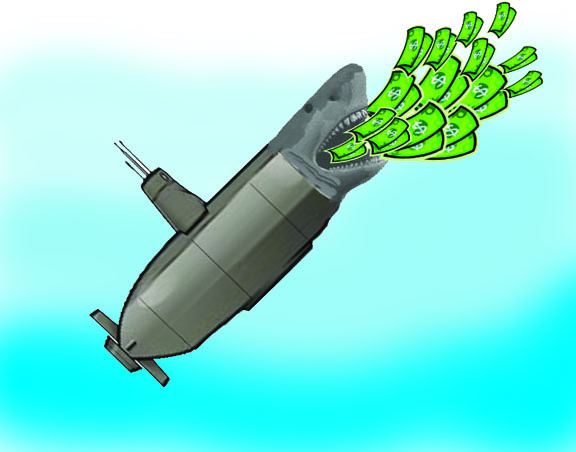
For the fiscal year 2022, the Pentagon budget proposal includes billions of dollars for new nuclear delivery vehicles, with a handful of contractors as the primary beneficiaries, including General Dynamics, Northrop Grumman, Lockheed Martin and Raytheon, along with Huntington Ingalls, Honeywell, and Bechtel.
Australia’s privilege is to pay the bill.
In Canberra, some conservatives see these trends as positive. They want to turn Australia into a world-class military-industrial complex – a more advanced version of the “arms depots” in Taiwan and Ukraine.
The Biden administration has made Australia a central part of its defense strategy. It needs a military-industrial complex in the country which is being forced into the kind of nuclear escalation that two of three Australians oppose.
These strategic objectives are very much in the interest of US Big Defense. But they are not in Australia’s national interest.
By Dan Steinbock | chinadaily.com.cn | 16 Nov 2022-
In late October, Australia dropped its opposition to a landmark treaty banning nuclear weapons in a vote at the United Nations. The shift in its voting position to “abstain” after five years of “no” is significant.
The Treaty on the Prohibition of Nuclear Weapons (TPNW) prohibits the development, testing, stockpiling, use and threats regarding the use of nuclear weapons.
The change comes as the US is planning to deploy nuclear-capable B-52 bombers to the country, where the weapons will be positioned close enough to strike China.
US pressure vs. Australian aspirations
Defending the vote, foreign affairs minister Penny Wong stresses Australia has “a long and proud commitment to the global non-proliferation and disarmament regime” and the government supports the treaty’s “ambition of a world without nuclear weapons.”
The Australian labor government is now facing extraordinary pressure due to its stand. Recently, the US warned Australia against joining the TPNW. As the US embassy in Canberra put it, the treaty “would not allow for US extended deterrence relationships.” It argues that the agreement could hamper defense arrangements between the US and its allies.
The original commentary was published by China-US Focus on Nov 15, 2022.
Beatrice Fihn, executive director of the International Campaign to Abolish Nuclear Weapons (ICAN), the Nobel-awarded organization behind the TPNW, called the US embassy’s comments “irresponsible” adding, “Using nuclear weapons is unacceptable, for Russia, for North Korea and for the US, UK and all other states in the world. There are no ‘responsible’ nuclear armed states. These are weapons of mass destruction and Australia should sign the #TPNW!”
Only 6% of Australians support nuclear arms
Australian Prime Minister Anthony Albanese believes that “nuclear weapons are the most destructive, inhumane and indiscriminate weapons ever created.” That was the basis for his 2018 motion to commit the Labor Party to supporting the TPNW.
The Labor’s 2021 platform included a commitment to signing and ratifying the treaty “after taking account” of factors including the development of “an effective verification and enforcement architecture.”
Recently, New Zealand said it was “pleased to observe a positive shift” in Australia’s position in the UN vote and “would, of course, welcome any new ratifications as an important step to achieving a nuclear weapon-free world.”
The treaty now has 91 signatories, 68 of which have formally ratified it, and it entered into force last year.
An overwhelming majority of Australians backs the government’s position. According to an Ipsos poll taken in March, 76% of people support the country signing and ratifying the treaty, while only 6% are opposed.
The real gap is between the profit objectives of the US Big Defense and the peaceful aspirations of Australian people.
AUKUS at stake
In 2021, Australia angered France by canceling a deal to build a fleet of submarines and opting to build nuclear-powered submarines with US and UK technology. According to the new trilateral security pact (AUKUS) between the United States, the UK and Australia, Washington and London will “help” Canberra to develop and deploy nuclear-powered submarines……………………………
Winners and losers
If the stakes are so high, why this interest in the weapons of mass destruction? Here’s the simple answer: follow the money.
The Pentagon and the Department of Energy have been ramping up a three-decades-long plan to build a new generation of nuclear-armed bombers, submarines and missiles, coupled with new warheads. The price tag for operating current weapons and building new ones could reach a confounding $2 trillion. The cost of nuclear weapons deployment, development, and procurement could soar to $634 billion.
For the fiscal year 2022, the Pentagon budget proposal includes billions of dollars for new nuclear delivery vehicles, with a handful of contractors as the primary beneficiaries, including General Dynamics, Northrop Grumman, Lockheed Martin and Raytheon, along with Huntington Ingalls, Honeywell, and Bechtel. Australia’s privilege is to pay the bill.
In June, Australia announced a $585 million settlement with France’s Naval Group as compensation for scuppering a submarine contract with Paris. According to current estimates, Australia’s nuclear submarines could cost up to $171 billion.
Australia is today among the four largest importers of arms, globally. In 2021, it spent over $1.2 billion on the import of weaponry, according to SIPRI, making the formerly-peaceful nation the world’s No.1 importer of deadly capability. Since two-thirds of Australia’s military imports come from the US, America’s Big Defense is the great beneficiary of the trend
According to recent disclosures by The Washington Post, the Pentagon’s high-level influence operations in Australia have escalated since the mid-2010s. The results are stunning. Between 2012-16 and 2017-21, Australia’s share of global arms exports doubled. In the period, that translates to an increase of a stunning 92%; more than in any other arms exporter worldwide, except for South Korea and India.
Economic costs of geopolitics
In Canberra, some conservatives see these trends as positive. They want to turn Australia into a world-class military-industrial complex – a more advanced version of the “arms depots” in Taiwan and Ukraine.
In the past, US-Australian bilateral interests converged in security matters, but diverged in trade and investment. However, a decade ago, I argued in a Reuters analysis that Australia was “no longer immune to the stagnation in the West.” Worse, the past decade has witnessed a drastic shift toward hawkish geopolitics at the expense of welfare……………………………..
Whose national interest?
In January, Australia agreed to a $3.5 billion deal with the US to acquire more than 120 tanks and other armored vehicles to upgrade its military fleet. In November, Australian media reported that up to six US nuclear-capable B-52s would be sent to the Royal Australian Air Force’s Tindal base in northern Australia. The move led China to accuse the US of stoking nuclear tensions in the region.
The Albanese government faces the prospect of a blowout in defense spending which reflects annual growth of 7.4% in nominal terms and 3.8% in real terms. While the economy faces prospects of stagnation and the population is aging, defense spending is increasing two to three times faster than economic growth. That’s untenable.
The Biden administration has made Australia a central part of its defense strategy. It needs a military-industrial complex in the country which is being forced into the kind of nuclear escalation that two of three Australians oppose.
These strategic objectives are very much in the interest of US Big Defense. But they are not in Australia’s national interest.
https://www.chinadaily.com.cn/a/202211/17/WS63758e0ea31049175432a3c8.html
1 This month


Help Aunty Sue Protect Her Land and Sacred Sites From Destructive Rocket Testing.
.

Australians deserve the truth
about
AUKUS – https://aukuspublicinquiry.com/

PETITION – To: Prime Minister Anthony Albanese and the Australian Labor Government

of the week – Australians for War Powers Reform (AWPR)
To see nuclear-related stories in greater depth and intensity

