The climate crisis and the danger of nuclear war are deeply intertwined
A lesson from the TPNW. by beyondnuclearinternational
A Fossil-Fuel Non-ProliferationTreaty will save lives, By Ira Helfand and Marjaneh Moini
“…………………………………………………………………………The two overriding issues of our era—the climate crisis and the danger of nuclear war—are deeply intertwined. The climate crisis is leading to greater international conflict and stockpiling nuclear weapons redirects precious resources away from equitable climate actions while increasing risk of a nuclear conflict. A nuclear war, in addition to killing billions of people and disrupting all aspects of our economy, would also cause abrupt and catastrophic climate disruption.
How are the politicians running our governments on the global stage responding to these threats? The policies our governments are implementing will lead to fossil fuel production in 2030 that is double the cap we need to maintain to limit warming to 1.5 degrees. Carbon dioxide emissions in 2021 were 36.3 billion tonnes, the highest ever. They are also stockpiling nuclear weapons and will not even promise not to start a nuclear war in Ukraine.
How is our government responding? The United States continues to increase subsidies to fossil fuel operations and expands its investments in nuclear weapons, reinforcing the two existential threats faced by humanity today. In turn, fossil fuel companies and the military industrial complex use their profits in lobbying efforts…………………more https://beyondnuclearinternational.org/2022/10/31/a-lesson-from-the-tpnw/
This week’s Australian nuclear news – heavy stuff!

some bits of good news. India headed towards 100% renewables power by 2050. Mini Wind Turbines For Rooftops: ‘Up to 50% More Power’ and No Spinning Blades Ozone Hole Continues Shrinking in 2022.
**************
Oh dear. This newsletter is miles too long. I have put the most interesting items in larger, bold, green. Perhaps you might read just those, and any other topics of interest to you.
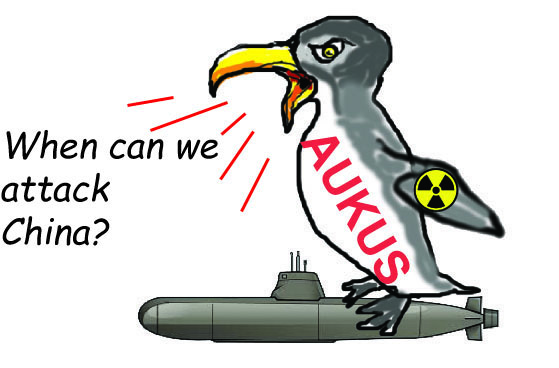
This week, I have been overwhelmed with the media tsunami of war-mongering events and articles – all gearing up to the supposedly inevitable war against China !!
But at the same time – are you noticing climate change, -global heating events and research? We might escape nuclear apocalypse, BUT – I urge you to pay attention to Alex Smith’s Radio Ecoshock, the world-leading coverage of things climate . This week’s episode is CLIMATE ENDGAME – “irreversible transition to Hothouse Earth”? – Greenland sea-level rise – and a worrying Culture of Underestimation.
***********************************
AUSTRALIA
The Pentagon builds a network in our Australian Department of Defence amidst media silence. With nuclear-capable B-52 bombers in Australia, USA could make lethal nuclear attack on mainland China. US Air Force to deploy nuclear-capable B-52 bombers to Australia. US deployment of nuclear-capable B-52 bombers to Australia’s north likely to fuel China tensions.
Nuclear zealot Jonathon Mead – in charge of the nuclear submarine deliberations? Wants to “cultivate a nuclear mindset”. Wong, Marles schedule US trip as nuclear submarine deadline nears. Captive media: what does the submarine scandal tell us about our “defence correspondents”?
Australia changes policy tack – moves in the direction of supporting the UN Treaty on the Prohibition of Nuclear Weapons. ‘Small but important step’: Australia’s shift on treaty banning nuclear weapons applauded.
Government Confirms No Nuclear for Australia. Rather than an endlessly reheated nuclear debate, politicians should be powered by the evidence. Rex Patrick: has the Australian Senate lost its mojo?.
INTERNATIONAL
Read more: This week’s Australian nuclear news – heavy stuff!CLIMATE. Climate summit – window for avoiding catastrophe is closing fast. Global heating levels threaten to destroy economies. “The voices in this world which have the most power belong to those who are destroying it”, writes Greta Thunberg.
Atmospheric levels of all three greenhouse gases hit record high. Rising Sea Levels Spell Disaster For America’s Coastal Nuclear Plants. Insect apocalypse looms as world warms
CIVIL LIBERTIES. Reporters Without Borders leads 16 organisations urging UK Home Secretary to intervene in extradition of Julian Assange.
ECONOMICS . French nuclear power group EDF to have a bigger loss than previously expected. Scotland ‘could fund England’s nuclear plants after independence‘ under “regulated asset base” (RAB) model. Sizewell C nuclear station to be funded 20% by French taxpayers, and 20% by British taxpayers. Rooppur nuclear power plant (Bangladesh) : Cost may rise for multiple factors. USA’s Westingouse likely to build and fund 49% of Poland’s first nuclear power station
EMPLOYMENT. About 100 Zaporizhzhia Nuclear Power Plant employees, including senior managers, agree to collaborate with Russian occupiers.
ENERGY. Nuclear power – a ‘religion’ in France. now turning out to be a curse..
ENVIRONMENT. This Abandoned Nuclear City Is Trapped Under Ice, What Happens If It Thaws? https://www.youtube.com/watch?v=z9uW-8vPpAU Dounreay nuclear plant radiation scare over high numbers of ‘harmful’ radioactive particles. The Fukushima Area Has Seen Better Days as Nobuhiko Ito Shows. Long-lived radionuclides from the Fukushima nuclear power plant in Japan, and consequences for Pacific ecosystems and seafood consumers.
HEALTH. ‘The nuclear bomb was so bright I could see the bones in my fingers’: The atomic veterans fighting for justice. Meetings scheduled on compensation for Utah’s ‘downwinders‘ affected by nuclear testing.
LEGAL. US nuclear firm Westinghouse sues South Korean supplier over Poland reactor deal. Together Against Sizewell and other groups to fight on, despite legal setback.
MEDIA. All at once corporate media pundits push for World War III. Western military-industrial corporate-media show only the NATO-USA war-mongering side of the news. The biggest lie – ADDICTED TO WAR – what most American people don’t know and don’t want to know. Steps towards multilateral nuclear disarmament – but media silence.
POLITICS. Kucinich Says Call for Diplomacy to end Ukraine-Russia War Must be Heard; Silencing of Congressional Progressive Caucus Casts Democrats as the “War Party” Progressives retract Ukraine letter to Biden after uproar. Worthless House Progressives Retract Mild Peace Advocacy Under Pressure From Warmongers. Democrats Should Not Make Support for War a Test of Party Loyalty – https://www.youtube.com/watch?v=f76p7NUbV5M Dennis Kucinich: Where Are the Pro-Peace Democrats?
Crushing blow to French President Macron as EDF braces for £28billion hit over nuclear shortfall. Academics and industry questioned on UK nuclear power supply. Sizewell C nuclear could become low on the priority list of UK government projects. Minister Vows Response to Fukushima Reputational Damage.
POLITICS INTERNATIONAL and DIPLOMACY. New Study Finds The Rest Of The World Supports China And Russia. West must stop blocking negotiations between Ukraine and Russia. Kremlin reveals possible basis for Putin-Biden talks. Zelenskyy blasts Israel, suggests Russia-Iran nuclear collusion. Russia suspends participation in grain deal after Ukrainian attack.
SAFETY. Ukraine’s Biggest Nuclear Plant Needs a Safety Zone. France discovers ominous cracks in dozens of nuclear reactors. Every nuclear power plant is a ‘dirty bomb’ in waiting: watchdog. Cracks found in all four Olkiluoto Nuclear 3 feedwater pumps. Bulgarian nuclear reactor shut down after technical glitch. ‘Swarm’ of drones spotted flying above UK nuclear plan.
SECRETS and LIES. Meet the spooks, mercenaries s and chickenhawk politicos enlisting as “North Atlantic Fellas Organization” (NAFO) trolls. Criminals in Finland obtain weapons from Ukraine – police.
SPACE. EXPLORATION, WEAPONS. Rocket Lab: Helping the US wage endless wars from space. Rocket Report: Norway’s nuclear rocket concerns. Russian delegation at UN calls on USA to join initiative to renounce weapons in space.
SPINBUSTER. War, propaganda, and blindness. George Monbiot leads the “left” into being cheer- leaders for USA’s endless wars.
WASTES and REACTOR SHUTDOWNS. Cocooning the past – Plutonium reactor in Eastern Washington encased in steel to protect the river. Bring voices from the coast into the Fukushima treated water debate.
WAR and CONFLICT. EU ‘dancing on edge of volcano’ with Ukraine – French ex-president. Allegations fly about plans to use “dirty bomb” and nuclear weapons in Ukraine war. ‘No need’ for nuclear strikes on Ukraine, Putin says. Kremlin diplomat assures that Russia has no intention of using nuclear weapons in Ukraine. NATO primes 20 prospective new members for global strike force. NATO could deploy nuclear warheads to Poland: official. 60 years ago today, this man stopped the Cuban missile crisis from going nuclear. Cuban missile crisis, 60 years on: new papers reveal how close the world came to nuclear disaster.
WEAPONS and WEAPONS SALES. Cities should increase role in effort to abolish nuclear weapons.24 – 30 October UN Disarmament Week – don’t let the world powers normalise “tactical” nuclear weapons – demand abolition of nuclear weapons now! Tactical Nuclear Fantasists. Spokane poised to declare city a nuclear free zone. US, Japan, S Korea vow response if N Korea tests nuclear bomb. USA upgrades its B61-12 nuclear bombs in Europe. Biden to scrap Trump missile project but critics attack US ‘nuclear overkill’/ NATO adds to warplane, missile defense assets in Baltic Sea. A failure to review America’s nuclear posture.
With nuclear-capable B-52 bombers in Australia, USA could make lethal nuclear attack on mainland China.
The ability to deploy the long-range bombers to Australia sends a strong message to adversaries about Washington’s ability to project lethal air power, the US Air Force was quoted as saying in the report.
China slams report US to deploy nuclear-capable B-52 bombers in Australia amid Taiwan tensions, SCMP 31 Oct 22
The US Air Force said deploying long-range bombers to Australia sends a message to adversaries about Washington’s ability to project lethal air power
As the B-52s could reach and potentially attack mainland China, they will serve as a warning to Beijing over a Taiwan assault, a defence analyst said
The United States is planning to deploy up to six nuclear-capable B-52 bombers to an airbase in northern Australia, a source familiar with the matter said on Monday, amid heightened tensions with Beijing.
Dedicated facilities for the bombers will be set up at Australian air force’s remote Tindal base, about 300km (190 miles) south of Darwin, the capital of Australia’s Northern Territory, said the source, who declined to be identified because they are not authorised to speak publicly on the issue.
The development was first reported by the Australian Broadcasting Corp (ABC)‘s Four Corners programme, citing US documents………………………..
Australia’s Northern Territory is already host to frequent military collaborations with the United States. Thousands of US marines rotate through the territory annually for training and joint exercises, first started under President Barack Obama.
Australian Defence Minister Richard Marles’ office did not immediately respond to a request seeking comment…………………
The ability to deploy the long-range bombers to Australia sends a strong message to adversaries about Washington’s ability to project lethal air power, the US Air Force was quoted as saying in the report.
Last year, the US, Britain and Australia created a security deal that will provide Australia with the technology to deploy nuclear-powered submarines, riling China.
Becca Wasser, senior fellow at the Washington-based Centre for a New American Security, told the ABC that putting B-52s that could reach and potentially attack mainland China in Australia will be a warning to Beijing, as fears grow of an assault on Taiwan.
Asked about US nuclear bombers being positioned in Australia, Chinese Foreign Ministry spokesperson Zhao Lijian said defence and security cooperation between countries should “not target any third parties or harm the interests of third parties.”
“The relevant US behaviours have increased regional tensions, seriously undermined regional peace and stability, and may trigger an arms race in the region,” Zhao told reporters at a regular briefing in Beijing
“China urges the parties concerned to abandon the outdated Cold War and zero-sum mentality and narrow-minded geopolitical thinking, and to do something conducive to regional peace and stability and enhancing mutual trust between the countries,” Zhao added. https://scmp.com/news/asia/australasia/article/3197806/amid-taiwan-tensions-us-deploy-nuclear-capable-b-
Australia’s slack journalists – mindlessly regurgitate handouts from military-industrial-corporate complex – especially re nuclear submarines

Captive media: what does the submarine scandal tell us about our “defence correspondents”?
The Washington Post documentation of the compromising of the Australian submarine procurement program is a devastating example of Australian state capture by foreign influences – state and corporate – in the case of Australia’s planned largest-ever defence spend.
But the Australian media are missing in inaction.
By Richard Tanter. Oct 26, 2022,
Why did no Australian media outlet tell us the easily discovered truth about the compromising of the integrity of the Australian submarine decision process revealed by US journalists last week?
On October 18th the Washington Post published a closely documented article by Craig Whitlock and Nate Jones titled “Former U.S. Navy Leaders Profited From Overlapping Interests On Sub Deal”.
In unarguable detail Whitlock and Jones laid out the role played by a veritable squadron of retired US admirals and former senior US defence officials in the Australian decision to acquire nuclear-powered submarines.
The opening paragraphs of the Washington Post article make clear the extent to which the Australian submarine procurement decision has been hopelessly compromised and indeed corrupted:
“Two retired U.S. admirals and three former U.S. Navy civilian leaders are playing critical but secretive roles as paid advisers to the government of Australia during its negotiations to acquire top-secret nuclear submarine technology from the United States and Britain.
“The Americans are among a group of former U.S. Navy officials whom the Australian government has hired as high-dollar consultants to help transform its fleet of ships and submarines, receiving contracts worth as much as $800,000 a person, documents show.
“All told, six retired U.S. admirals have worked for the Australian government since 2015, including one who served for two years as Australia’s deputy secretary of defense. In addition, a former U.S. secretary of the Navy has been a paid adviser to three successive Australian prime ministers.
“A Washington Post investigation found that the former U.S. Navy officials have benefited financially from a tangle of overlapping interests in their work for a longtime ally of the United States. Some of the retired admirals have worked for the Australian government while simultaneously consulting for U.S. shipbuilders and the U.S. Navy, including on classified programs.”
Former Defence official Mike Scrafton responded by calling for an urgent public review, saying:
“On the evidence it appears that the nuclear powered submarine decision process was heavily influenced by a clique of former US Navy Admirals with potential conflicts of interest, and who were generously paid by the Australian government. What confidence can Australians have in the soundness of this opaque, overpriced, strategically unjustifiable, and massively underspecified project?”
Scrafton’s excoriating and incisive assessment missed one important aspect of the explosive Washington Post story.
Why was this extraordinarily important story about the compromising of Australian sovereignty and the integrity of Defence procurement discovered by two American journalists and published in a US newspaper?
The documentation of the Washington Post article is complex and detailed, but almost wholly based on documents obtained under the US Freedom of Information Act.
The journalists’ work must have been assiduous over a long period, and would have required funding and editorial support from Post management.
But on the face of it, it was a straightforward, albeit brilliant, use of FOIA materials.
Nothing would have stopped our correspondents in Canberra doing the same thing.
Non-US citizens can use the US FOIA, and distance from Washington is no barrier.
Moreover, as Whitlock and Jones indicate, much of the story was lying about the Canberra landscape in plain sight.
Why then did no defence correspondents for the Australian media majors beat the Post to the story? Or have a go at even a small part of it?
The various parts of the News Corp Australia, the sometime Fairfax-now Nine Entertainment, and Seven West Media commercial media companies, as well as the ABC News division, all have dedicated “defence correspondents”, all filing frequently.
Most in reality do little more than rehashing media releases from the bloated Defence and ADF media units and their better-funded military industry corporate suppliers.
It is a long time since any Australian media major has had a proper and well-supported defence or national security correspondent. It is over a decade since the then Fairfax group laid off the best national security journalist of his generation, Philip Dorling.
The failure of our national media to reach even minimal standards of scrutiny of our massive defence spending programs and the lobbying networks of retired politicians, officials and ADF senior officers on the books and boards of multinational arms companies is effectively another case of state capture.
Other Australian instances have been well documented by studies such as the Australian Democracy Network’s Confronting State Capture, and Michelle Fahy and her colleagues in the Undue Influence group.
With well documented and carefully argued studies, both groups have demonstrated the vulnerability of Australian democracy and sovereignty to undue, illegitimate, and unacknowledged influences – especially in defence.
The Washington Post documentation of the compromising of the Australian submarine procurement program is a devastating example of Australian state capture by foreign influences – state and corporate – in the case of Australia’s planned largest-ever defence spend.
But the Australian media are missing in inaction.
US deployment of nuclear-capable B-52 bombers to Australia’s north likely to fuel China tensions
US-funded upgrade of Tindal airbase in Northern Territory will allow it to house up to six B-52s, as minister says Australia must remain ‘vigilant’
Guardian Daniel Hurst 31 Oct 22,
An expanded Royal Australian Air Force base in the Northern Territory will have space for up to six American nuclear-capable B-52 aircraft as part of a US-funded project that is likely to fuel tensions with China.
Officials in Canberra confirmed that the US-funded aircraft parking apron at RAAF Base Tindal, 320km south-east of Darwin, would be capable of accommodating up to six B-52 aircraft, but said it could also house other aircraft types……………..
the detailed plans – first reported by the ABC on Monday – suggest the new Labor government has locked in plans initiated under the former Coalition government to expand visits to Australia by US aircraft.
The B-52 is a long-range, heavy bomber that can carry out ocean surveillance and anti-ship operations and “can carry nuclear or precision guided conventional ordnance”, according to a US government summary………………………………….
The Chinese foreign ministry spokesperson, Zhao Lijian, told reporters at a regular briefing that China “urges the parties concerned to abandon the outdated Cold War and zero-sum mentality and narrow minded geopolitical thinking, and to do something conducive to regional peace and stability and enhancing mutual trust between the countries.”
He said defence and security cooperation between countries should “not target any third parties or harm the interests of third parties.”…………………..
Former prime minister Scott Morrison revealed in September last year that he expected the US to increase its military presence in the region while Australia awaits nuclear-powered submarines under the Aukus deal – the first of which were at that stage expected to be ready by the late 2030s.
Senior ministers Peter Dutton and Marise Payne held annual talks with their US counterparts in Washington DC a day after the Aukus announcement, and also flagged plans for more US military deployments to Australia.\
…………………………… The new details of the project are likely to trigger a reaction from the Chinese government. Chinese state media have previously quoted domestic analysts as saying Australia could “essentially become an overseas bomber base of the US”.
While the Albanese government has sought to “stabilise” the relationship with China through a change in “tone” and several ministers have now met with their counterparts, Canberra’s fundamental defence posture remains as it did under the Coalition.
Earlier this month the prime minister, Anthony Albanese, signed a new security declaration with his visiting Japanese counterpart, Fumio Kishida, to deter “aggression and behaviour that undermines international rules and norms”.
The deal commits Australia and Japan to consult each other on how to respond to regional crises, and is expected to pave the way for greater sharing of intelligence and strategic assessments about China’s intentions…………………. https://www.theguardian.com/australia-news/2022/oct/31/us-air-force-deployment-nuclear-capable-b-52-bombers-australia-northern-territory
Rather than an endlessly reheated nuclear debate, politicians should be powered by the evidence

[Liberal Coalition opposition leader Peter] Dutton was mostly dismissive of batteries in his budget reply, and implied small modular nuclear reactors (SMRs) – a commercially unproven technology that has been repeatedly delayed and more expensive than promised – could be the answer that ensures cheap energy.
No evidence has been presented to suggest Small Modular Nuclear Reactors are needed to meet demand in Australia, given the country’s wealth of renewable options. Never mind that no independent evidence has been offered to suggest it could compete on price.
Guardian Adam Morton, 31 Oct 22, A renewable-dominated system is comfortably the cheapest form of power generation, according to research.
We should be wary of simple declarations about the increasingly rapid transformation of the electricity grid.
The government has been given a sharp reminder of this after leaning too heavily on pre-election modelling that suggested its policies to boost renewable energy could lead to a $275 cut in bills by 2025. You never know when a Vladimir Putin-shaped villain might disrupt international fossil fuel markets, wreck your assumptions and leave you accused of breaking an election pledge.
Peter Dutton doesn’t have this excuse. The most generous thing that can be said about his foray into the debate over electricity last week is that he might want to get a broader range of advice.
Giving his budget reply speech, the opposition leader said the Coalition wanted more renewable energy, but it just wasn’t possible yet, and it was a mistake for the government to allow ageing and expensive fossil fuel power to be phased out now.
More specifically: “The technology doesn’t yet exist at the scale that is needed to store renewable energy for electricity to be reliable at night, or during peak periods. That is just the scientific reality.”
To put it mildly, this is not the consensus opinion of experts in the field.
David Osmond, a Canberra-based engineer with the global energy developer Windlab, is among those with a markedly different, evidence-based take. For more than a year, he has been posting weekly results from a live simulation tracking what would happen in Australia’s main electricity grid if it relied primarily on renewable energy.
Using a live stream of electricity data from Opennem, he adjusted inputs to see what would happen if there was enough wind and solar energy to supply 60% and 45% of demand respectively. He added enough short-term storage, likely to be in the form of batteries, to supply average demand for five hours.
The results are encouraging. They suggest close to 100% of demand – 98.9% over a 61-week period – could be delivered by solar and wind backed by existing hydro power and the five hours of storage. Nearly 90% of demand was met directly by renewable energy and 10% had to pass through storage. Achieving it would require a major expansion of transmission, as proposed by Labor under its Rewiring the Nation policy………………………………………………………
Plenty of other studies have reached similar conclusions. The big one is the Australian Energy Market Operator’s integrated system plan, a roadmap for the optimal future grid that was released in June. It backed an accelerated build of available technology to reach 83% of renewable generation by 2030, 96% by 2040 and 98% by 2050 as the best, most likely option.
Presented with this evidence, Dutton and the Coalition continue to opt for none of the above.
They appear to have joined a small band, including many in the usual right-wing media echo chambers, convinced that the evidence presented is wrong. Dutton was mostly dismissive of batteries in his budget reply, and implied small modular nuclear reactors (SMRs) – a commercially unproven technology that has been repeatedly delayed and more expensive than promised – could be the answer that ensures cheap energy.
No evidence has been presented to suggest SMRs are needed to meet demand in Australia, given the country’s wealth of renewable options. Never mind that no independent evidence has been offered to suggest it could compete on price.
If SMRs prove economically viable and safe elsewhere there is nothing to stop Australia considering their use, perhaps at remote off-grid industrial sites. It will be a good thing if they are viable, given not every country has ample alternatives to fossil fuels. But they are not designed to do the job needed here – to turn on occasionally and fill gaps in a system running on cheaper, renewable energy.
Rather than an endlessly reheated debate about nuclear – the Coalition is holding another review, so expect plenty more of this – Australians would be better served if its politicians had a close look at a major report last week by the International Energy Agency.
For the first time, the IEA forecast that fossil fuel use across the globe would peak in the next few years as Russia’s invasion of Ukraine accelerated a shift to clean fuels. It found existing policies would soon lead to coal use falling and demand for gas would plateau by the end of the decade. The declines will be much faster if, as expected, climate action continues to ramp up.
Australia has one of the world’s largest fossil fuel export industries. It is supporting massive developments expected to last until late into the century as though nothing much is going to change.
The significant climate impact of these developments is still routinely overlooked by the major parties on the grounds the gas and coal are burned overseas, and therefore somehow not Australia’s problem. But what about the economic and social impact of their potentially rapid decline?
Now there’s an issue truly worthy of more parliamentary debate and action. https://www.theguardian.com/environment/2022/oct/30/rather-than-an-endlessly-reheated-nuclear-debate-politicians-should-be-powered-by-the-evidence
THE BIGGEST LIE – ADDICTED TO WAR – WHAT MOST AMERICAN PEOPLE DON’T KNOW and DON’T WANT TO KNOW

The mainstream media will never tell the truth about this, as they are owned by the very people and corporations who make huge profits from U.S. wars.

THE BIG LIE is so big and so complete in the United States. It’s like mass hypnosis. Like mass brainwashing. ……… Most Americans are taught to believe that we are The Good Guys. And once again, most people are not taught about the true nature of U.S. foreign policy
THE BIG LIE is so big and so complete in the United States. It’s like mass hypnosis. Like mass brainwashing. ……… Most Americans are taught to believe that we are The Good Guys. And once again, most people are not taught about the true nature of U.S. foreign policy
https://www.addictedtowar.com/the-big-lie, By Frank Dorrel – Publisher of ADDICTED To WAR: www.addictedtowar.com, 31 Oct 22,
What Is This BIG LIE – I Am Talking About? ………………..
Well, it’s not Donald Trump claiming that he won the 2020 election for President……….
I’m not talking about Climate Change/Global Warming.…. now heating faster than expected
I’m not talking about Systemic Racism in the United States.………. this terrible situation.
I’m not talking about The Prison Industrial Complex………… this sad story is not really a secret
I’m not talking about Poverty and Homelessness…………. very sad situation happening to millions of American people.
I’m not talking about COVID, the pandemic that has caused the deaths of hundreds of thousands of American people in the last two years
THE BIG LIE
The BIG LIE I am talking about has to do with U.S. foreign policy and U.S. wars, both overt and covert. We are not told the truth about them or that the U.S. is a Global Empire that controls much of the World through force and power and threatens Third World countries, who are not willing to do as we say. Most American people do not know these things. Most do not believe these things are true. And most people are not willing to take a closer look at all of this.
I suggest you go to my website to see what I am talking about. Go to the Film Page: www.addictedtowar.com/films and watch as many of these important anti-war films as you can. They are all on YouTube and can be watched for free. Take as long as you need. I do not think you will find another list like this anywhere on the Internet. I have watched all of these films at least two or more times. Every one of them is very well done. Altogether, they reveal THE BIG LIE. These films are never aired on television. Not even on PBS.
Go to the Talks and Interviews Page: www.addictedtowar.com/talks-interviews – and watch and listen to as many of them as you can. The very first talk is by Martin Luther King Jr. It’s titled – BEYOND VIETNAM: A Time To Break Silence. Once again, take your time to watch these talks by these activists. They reveal the horrors our country has been committing all of these years with its many wars against innocent poor people around the World.
THE BIG LIE
I am talking about is what Martin Luther King Jr. said in his BEYOND VIETNAM Speech: “The Greatest Purveyor of Violence in The World Today, My Own Government.” The Military, the Oil Companies, the Corporations, the Weapon Makers, the Bankers, the Mainstream Media & the Politicians, also known as The Military-Industrial-Complex. They make war for profit and also to control the resources of the World. And WE, the PEOPLE are LIED to about this. One of their biggest weapons is propaganda. And they really know how to use it. It is a global battle of the rich versus the poor. And war is, for the most part, racist. We bomb, invade and kill mostly people of color.
Read this article by James Lucas titled: THE UNITED STATES HAS KILLED MORE THAN 20 MILLION PEOPLE IN 37 NATIONS SINCE WWII: https://popularresistance.org/us-has-killed-more-than-20-million-in-37-nations-since-wwii
Read this article by Professor Larry Mosqueda of Evergreen State College titled: SHOCKED and HORRIFIED, written on September 15th, 2001: www.globalissues.org/article/257/shocked-and-horrified
The mainstream media will never tell the truth about this, as they are owned by the very people and corporations who make huge profits from U.S. wars. Most people in the government will not talk about or look at this. If they were to do so, they would become outcasts and pariahs, shunned by others in the government. And for the most part, people in the military will not look at or talk about these things. However, some have spoken out. And many of them are listed on my site. The one group that does look at this issue is the Anti-War Movement. We are part of the alternative media in this country. You can see who some of these organizations are by going to: www.addictedtowar.com/sources-and-websites . CovertAction DEMOCRACY NOW, is on this list.
There is an anti-war movement in this country. But it’s just not big enough to make much of a difference. Most people are not taught about these things in their schools, in their churches, or by their parents. And they won’t learn about THE BIG LIE by watching the mainstream news on television or by reading the mainstream newspapers.
HOW DID I LEARN ABOUT THE TRUE NATURE OF U.S. FOREIGN POLICY?
I first started learning about all of this when I discovered KPFK 90.7 FM Radio in 1980. KPFK is part of the Pacifica Network: https://pacificanetwork.org – consisting of five radio stations in this country. They are KPFA in Berkeley, KPFK in Los Angeles, WBAI in New York, WPFW in Washington DC and KPFT in Houston. The first Pacifica station was KPFA in Berkeley. It was started in 1949 by Lou Hill, a man who refused to go to World War II. He wanted to have a station that was against war, dealt with social injustice and had no commercial sponsors so that the truth could be told. I discovered KPFK by chance. No one told me about it.
Read more: THE BIGGEST LIE – ADDICTED TO WAR – WHAT MOST AMERICAN PEOPLE DON’T KNOW and DON’T WANT TO KNOWI had a job as a driver for the University of Southern California. I drove about 200 miles a day. One day in 1980, I was turning the FM channels and heard Alan Watts talking on KPFK. He was an amazing storyteller, a philosopher of sorts, and very interesting to listen to. He was already dead when I started listening to him. So every Monday at 2:00 PM, I put on KPFK. Then one Monday, I left the station on and heard Noam Chomsky talking about U.S.-supported death squads in El Salvador.
That was the beginning for me. From that time on, I listened to KPFK as much as possible. I discovered many other truth-tellers on KPFK, talking about U.S. foreign policy, who you would never hear on the mainstream media. People like Howard Zinn, Ramsey Clark, Michael Parenti, Daniel Ellsberg, John Stockwell, Philip Agee, S. Brian Willson, Roy Bourgeois, Medea Benjamin, Kathy Kelly & many others. Then I discovered Blase Bonpane, who had his own weekly program on KPFK called WORLD FOCUS.
I began listening to Blase every week. Soon he became my mentor. The more I learned about what the U.S. had been doing with its foreign policy, the more upset I got. During the listener-sponsored fund-drives, I would order books and talks by these truth-tellers. Whenever they came to Los Angeles to speak, I would go to listen to them in person. I joined the Veterans For Peace group in Los Angeles and would go to their meetings. It was there that I met Tony Russo and learned so much about what he called THE U.S. WAR IN VIETNAM. Tony had been partners with Daniel Ellsberg in revealing The Pentagon Papers.
At that time, I was learning about what was happening in Nicaragua, with the U.S. supporting the Contra’s and the history of U.S. interventions there. The more I learned, the worse it got. I had no idea that my country, the United States, had been doing so many terrible things to innocent poor people all over the World. I went to hear John Stockwell at least three times. He had been a marine and was the CIA Station Chief in Angola. The stories he told about the atrocities the CIA had been committing around the World were absolutely chilling. You can hear him giving an amazing talk in 1989 here: www.youtube.com/watch?v=bmYZ_kWHk3Q .
It was on KPFK that I first heard about S. Brian Willson, as he and three other veterans began their VETERANS FAST FOR LIFE on the Capitol Steps in Washington DC in 1986. They were protesting U.S. foreign policy in Central America; in Nicaragua,
El Salvador and Guatemala. They fasted for something like 40 days and got a lot of attention all over the country through the Pacifica Network and the anti-war movement. I sent them a $100 donation and a letter of support. And I went on a march supporting these four veterans, S. Brian Willson, Charlie Liteky, Duncan Murphy and George Mizo – in Downtown Los Angeles and marched with a big crowd, right behind Jackson Browne and Kris Kristofferson.
On September 1st, 1987, I heard Blase Bonpane say on KPFK that Brian Willson had been run over at The Concord Naval Weapons Station in Northern California by a train that was carrying weapons to be shipped to Central America and used to kill innocent people there. Brian lost both legs but survived the attack. One year later, he came to Los Angeles to give a talk, which I heard about on KPFK. I went to hear him and my life was changed forever. To this day, I have never heard anyone speak quite like Brian did that night. He was so clear with his message against the U.S. war in Vietnam. I’ll never forget one thing he said: “How could I have gone 10,000 miles across the ocean to take part in killing people I did not know anything about”. Brian had been a believer in that war. He was a conservative republican, an anti-communist and an All-American young man. But he had his epiphany when he witnessed a fishing village in Vietnam that we had bombed & napalmed. He was sent to inspect the success of this mission. He saw maybe 100 people, all of them dead or dying. No soldiers. No weapons. Only women, children and a few older men. He went to four other villages that week and observed the same thing. We were killing villagers and reporting that they were V.C. or Viet Cong. Brian started to speak out against what he had witnessed and soon he was sent back to the States. Some years later, he became a full-time anti-war activist. Brian’s mantra is: We Are Not Worth More. They Are Not Worth Less.
Everything that Brian writes about on his website is well worth reading: www.brianwillson.com . You can watch Brian at: www.youtube.com/watch?v=mZ_cO1wC0yI – An excellent film about Brian titled: “PAYING THE PRICE FOR PEACE: The Story of S. Brian Willson” – can be rented or bought at: www.addictedtowar.com/about-paying-the-price . I was the associate producer on this amazing film. Brian is the last segment in my film: “What I’ve Learned About U.S. Foreign Policy: The War Against The 3rd World.” If you have never seen my film, please take the time to watch it: www.youtube.com/watch?v=0gMGhrkoncA . And once again, watch the films on The Film Page and the talks on The Talks & Interviews Page. In doing so, you could earn what would be like the equivalent of a PH.D in: The True History of U.S. Foreign Policy.
There is also the Book Page, which lists over 90 excellent books you can read, most on the topic of U.S. Foreign Policy: www.addictedtowar.com/books .
HOW DO THEY GET AWAY WITH ALL OF THIS? WHY MOST PEOPLE CAN’T SEE THESE TRUTHS?
Here is why I believe that most Americans cannot and will not see these truths that I have been talking about. THE BIG LIE is so big and so complete in the United States. It’s like mass hypnosis. Like mass brainwashing. Like something out of Orwell’s book 1984. I believe the biggest tool for brainwashing is the television set that we watch. Most Americans are taught to believe that we are The Good Guys. And once again, most people are not taught about the true nature of U.S. foreign policy in their schools, in their churches or by their parents. And they won’t learn about THE BIG LIE by watching the mainstream news on television or by reading the mainstream newspapers.
I Think The Following Is A Very Important Point In All of This!
Many people have lived a pretty good life here in the United States. They have had a lot of freedom and have been given a lot of opportunity to do what they want, to go for their own special dreams. Not everyone gets there, but at least, many have had that chance. This doesn’t necessarily happen if you are Black or Latinx or Native American or poor. And many people have had various problems fitting in our society and end up unhappy and discontented. But this is America. The Land of The Free and The Home of The Brave. There are so many things here that people appreciate. This is certainly true in my case. And many people have come here from other countries in order to have a better life. And ironically, many of these people have come from some of the very countries we have attacked and invaded. We have had it good here compared to them.
But do these facts make it OK to have a foreign policy that has literally killed millions of innocent people and ruined the lives of many millions more, all for lies?
We are told that our military goes into other countries to help the people and bring freedom and democracy. But of course, that is not what has been happening with our foreign policy. How do you help people when you invade them, drop bombs on them, send in drones to kill them, place sanctions on them and support dictators who oppress them. Most Americans do not want to believe or accept that our country has been doing these horrendous things and still is. And the policies of the U.S. also has ruined the lives of millions more people all over the World. This is not what most American’s believe. It’s much easier being ignorant than it is to realize that this is happening and has been happening all along.
For those of us who have come to understand these things, it is not easy, as we learn that others do not want us to tell them about this or to try to educate them about this. And since the vast majority of Americans do not know or believe these things, it’s very easy to dismiss those of us who do, calling us crazy or conspiracy theorists, without ever looking at the evidence we have to show them. I cannot tell you how many friends I have had in my life who are no longer my friends. Many will not call me back or respond to emails I have sent them about this. It is an amazing thing to experience. After over 40 years of being an activist, I do understand why people do not want to know. It’s just too painful to know. It’s simply easier not to know. Life can be hard. Life can be difficult. And it certainly is now with all that we are dealing with. But life is so much easier not having to deal with the information I have been talking about. However, by denying these truths, we unknowingly support the deaths and destruction of millions.
I do want to say that most of the people who have been involved, in one way or another, in carrying out these barbarous acts committed by the U.S. are not necessarily lying. For the most part, they are simply following orders. The soldiers follow orders. The politicians go along with what they are told. And the reporters in the mainstream media don’t really do true journalism. They get their stories from the State Department, the CIA or other government sources. They don’t investigate on their own to see if these stories are really true or not. The victims of U.S. foreign policy are in other countries, out of sight, out of mind. And the people I have just mentioned will not look at the information we in the anti-war movement try to give them. So the terrible, horrible and unbelievable things our country does happens because we live THE BIG LIE here in the United States.
I want to close with something important that Blase Bonpane said back in 2009. He said:
“The reason he did his anti-war work was because he wanted to stop his country (United States) from killing millions of innocent people all over the world”.
What Blase said is the very same reason why I have been doing my anti-war work all of these years. Blase was loved and respected by so many people. He died in 2019.
And I also want to thank all of the Truth-Tellers and Anti-War Activists I have mentioned in this article and who are on my website – for being my teachers, and for continuing to do this important work. The question is how can we reach enough people to change from being a war-like country to a Peace-Like country? Peace means that we help people in other countries and in our own country. We do not invade them, we do not bomb them, we do not starve them and we do not kill them.
You can read the 2004 edition of ADDICTED To WAR: www.addictedtowar.com/read-book . The 2015 edition can be purchased here: www.addictedtowar.com/store . ADDICTED To WAR is a book that most everyone (12 years and older) can read and understand. Hundreds of high school teachers and college professors have used it in their classrooms. We need to have more teachers and professors using it. When I was in high school, a book like ADDICTED To WAR could never have been used in class at all. I have read it every year since we first published it in 2002. I always think what a fantastic, one-of-a-kind book ADDICTED To WAR is.
In 2000, I put together my film compilation titled: “WHAT I’VE LEARNED ABOUT U.S. FOREIGN POLICY: The War Against The Third World.” I updated it in 2015, adding three new segments.
It can be seen here: www.youtube.com/watch?v=0gMGhrkoncA – If you have not seen it, please do.
Publisher: ADDICTED To WAR
Associate Producer: PAYING THE PRICE FOR PEACE: The Story of S. Brian Willson
Producer: What I’ve Learned About U.S. Foreign Policy:
Member: Veterans For Peace
310-838-8131
US Air Force to deploy nuclear-capable B-52 bombers to Australia
The US Air Force is preparing to deploy up to six nuclear-capable B-52 bombers to northern Australia in a show of “nuclear deterrence” to China.
news.com.au Frank Chung @franks_chung, October 31, 2022 ,
The US Air Force is preparing to deploy up to six nuclear-capable B-52 bombers to northern Australia in a show of “nuclear deterrence” to China, amid growing fears of an invasion of Taiwan.
According to an investigation by the ABC’s Four Corners airing on Monday, Washington has drawn up plans to build a dedicated a “squadron operations facility” at the Tindal air base south of Darwin that will house “six B-52s”.
The giant aircraft, with wingspan of 56 metres, have a combat range of more than 14,000 kilometres and are capable of delivering both nuclear and conventional weapons.
Documents obtained by Four Corners show the planned facilities, which will include a parking area and adjoining maintenance centre, will be used for “deployed B-52 squadrons”.
“The ability to deploy US Air Force bombers to Australia sends a strong message to adversaries about our ability to project lethal air power,” the US Air Force told the program.
The Defence Department has been contacted for comment.
According to the program, the Tindal air base plan — expected to cost up to $US100 million and be completed by 2026 — is part of a much larger upgrade of defence assets across northern Australia, including the Pine Gap spy base.
Anti-nuclear activist Richard Tanter from the Nautilus Institute told Four Corners the move greatly expanded Australia’s commitment to any US war with China.
“It’s a sign to the Chinese that we are willing to be the tip of the spear,” he said.
“It’s very hard to think of a more open commitment that we could make. A more open signal to the Chinese that we are going along with American planning for a war with China.”
The plans were hinted at in last year’s annual Australia-United States Ministerial (AUSMIN) meetings, which agreed for “enhanced air co-operation” which would see “rotational deployment of US aircraft of all types in Australia”, although B-52s were not explicitly mentioned……………………..
NSW Greens Senator David Shoebridge slammed the “dangerous escalation”.
“It makes Australia an even bigger part of the global nuclear weapons threat to humanity’s very existence — and by rising military tensions it further destabilises our region,” he said……………………………………………………. more https://www.news.com.au/technology/innovation/military/us-air-force-to-deploy-nuclearcapable-b52-bombers-to-australia/news-story/dd7cc13dc270dbabb332cc200e279b7c
Government Confirms No Nuclear for Australia, At Least Any Time Soon

https://www.gizmodo.com.au/2022/10/australia-nuclear-energy/ Asha Barbaschow, October 31, 2022 “……………………………… Addressing Senate Estimates on Friday, representatives from the Department of Prime Minister and Cabinet put this to bed.
Summarising the government’s position, the department’s acting deputy secretary for the economy, industry and G20, James Chisholm, said the cheapest form of new energy for investment is renewable energy. We’ve got too much sun and wind to not make the most of it.
That is because it has zero marginal cost,” he said.
“By that I mean there’s a cost associated with building it, seeking approval for it and its initial construction, but once that happens it doesn’t have the same costs associated with it that traditional base-load generation, whether it’s coal-fired or nuclear, has.”
There are a lot of costs associated with those forms of energy, with the CSIRO forecasting that small nuclear modular reactors would have a levelized cost of energy of between $136 and $326 per megawatt hour in 2030. Whereas the levelized cost of energy such as renewable energy is a lot lower.
“It would be estimated to cost between something like $53 to $82 per megawatt hour,” Chisolm explained.
“Really importantly, that includes firming costs.
“Often what happens is people look at these figures and say, ‘Yes, but with renewables you’re not factoring in firming and integration costs.’ But the CSIRO work does factor that in. According to CSIRO, and this is consistent with other analyses, it comes in way cheaper. And that flows through to bills.”
Although this report was published a few months ago, Chisholm said as time goes on, that cost comparison becomes more stark.
“We’re seeing it play out in other markets. If you look at those markets where nuclear power is a significant proportion of the generation mix, nuclear is experiencing the same challenges that coal-fired generation has experienced, simply because of how high the cost is. When it comes to competitive markets for energy, it is difficult for those forms of energy to compete with renewables, particularly for firmed renewables,” he said.
Well, there you have it.
New Study Finds The Rest Of The World Supports China And Russia

A puzzling observation in today’s world is that almost no Western leader has laid out a positive vision for the future.
Take Biden for instance. His big vision is “democracies vs autocracies”. Meaning his vision for the future of the world is conflict. How positive is that?
There’s simply nothing to join! Except conflict, I guess, but you join a conflict to fight for a vision – for a better world – the conflict itself cannot be the vision!
https://caitlinjohnstone.substack.com/p/new-study-finds-the-rest-of-the-world?utm_source=post-email-title&publication_id=82124&post_id=81628548&isFreemail=true&utm_medium=email Caitlin Johnstone, 31 Oct 22,
The US is preparing to station multiple nuclear-capable B-52 bombers in northern Australia in what the mass media are calling a “signal to China,” yet another example of Australia’s forced subservience as a US military/intelligence asset.
“Having bombers that could range and potentially attack mainland China could be very important in sending a signal to China that any of its actions over Taiwan could also expand further,” Becca Wasser from the Centre for New American Security think tank told the ABC.
“This is a dangerous escalation. It makes Australia an even bigger part of the global nuclear weapons threat to humanity’s very existence – and by rising military tensions it further destabilises our region,” tweeted Greens Senator David Shoebridge of the incendiary provocation.
A new Australian Financial Review article titled “Australia’s alliances in Asia are a tale of two regions” candidly discusses the Biden administration’s recent sanctions geared toward kneecapping the Chinese tech industry in what the author James Curran correctly says “is unambiguously a new cold war.” Curran describes the impossible task Australia has of straddling the ever-widening divide between its number one trading partner China and its number one “security” partner the US, while Washington continually pressures Canberra and ASEAN states toward greater and greater enmity with Beijing.
“ASEAN countries, as much as Australia, have much at stake in resisting the onset of a bifurcated world,” Curran writes.
But that bifurcation is being shoved through at breakneck pace, using both hard and soft power measures. Australians have been hammered with increasingly aggressive anti-China propaganda, and as a result nearly half of them now say they would be willing to go to war to defend Taiwan from an attack by the mainland, with a third saying they’d support a war against China over the Solomon Islands.
A recent Cambridge study found that this hostility toward China has been on the rise in recent years not just in Australia but throughout the “liberal democracies” of the US-centralized power alliance. But what’s interesting is that public opinion is exactly reversed in the much larger remainder of the Earth’s population, with people outside the US power cluster just as fond of China as those within that power cluster are hostile toward it. This relationship is largely mirrored with Russia as well.
“Among the 1.2bn people who inhabit the world’s liberal democracies, three-quarters (75%) now hold a negative view of China, and 87% a negative view of Russia,” the report reads. “However, for the 6.3bn people who live in the rest of the world, the picture is reversed. In these societies, 70% feel positively towards China, and 66% positively towards Russia.”
The report finds that in the “developing” world, approval of China is higher than approval of the US:
“For the first time ever, slightly more people in developing countries (62%) are favourable towards China than towards the United States (61%). This is especially so among the 4.6bn people living in countries supported by the Belt and Road Initiative, among whom almost two-thirds hold a positive view of China, compared to just a quarter (27%) in non-participating countries.”
The report finds that while Russia’s approval has plummeted in the west, it maintains broad support in the east despite the invasion of Ukraine:
“However, the real terrain of Russia’s international influence lies outside of the West. 75% of respondents in South Asia, 68% in Francophone Africa, 62% in Southeast Asia continue to view the country positively in spite of the events of this year.”
I first became aware of the Cambridge study via a Twitter thread by Arnaud Bertrand (who is a great follow if you happen to use that demonic app). Bertrand highlights data in the study showing that US-aligned nations’ opinion of China began plummeting not after the Covid outbreak in late 2019, but after 2017 when the US began ramping up its propaganda campaign against Beijing.
Apart from the fact that the USA’s immensely sophisticated propaganda machine naturally focuses primarily on where the world’s wealth and military firepower rests while pushing its global agendas, and apart from the fact that those in Belt and Road Initiative countries apparently believe they benefit from their economic relationships with China, the disparity between the “developed” and “developing” worlds in their perceptions of the US and its enemies may also be partly explained by another thought-provoking Arnaud Bertrand thread, which I will quote in its entirety here:
A puzzling observation in today’s world is that almost no Western leader has laid out a positive vision for the future.
Take Biden for instance. His big vision is “democracies vs autocracies”. Meaning his vision for the future of the world is conflict. How positive is that?
Contrast this with China: between “national rejuvenation” and “common prosperity” at home and the “global security initiative” as their vision for improved international relations; everyone is very clear on the journey they’re embarked on.
This is a key, if not the key reason why the “West” has no chance in hell to convince the “rest” to join them.
There’s simply nothing to join! Except conflict, I guess, but you join a conflict to fight for a vision – for a better world – the conflict itself cannot be the vision!
This reminds me of what George Kennan, the architect of the cold war, wrote: to win he said that America had to “create among the peoples of the world generally the impression of a country which knows what it wants, which is coping successfully with the problems of its internal life and with the responsibilities of a World Power, and which has a spiritual vitality capable of holding its own among the major ideological currents of the time”
Does America give this impression today?
Even in my own country, France. Ask any French person what Macron’s vision for the future of France and the world is, what the grand plan is, and you’ll get very puzzled looks. “Reform the pension system so we have to work longer?”
The truth is there’s nothing, nada, rien!
What we have essentially in the West are political operators. They think their jobs are to get reelected and to attempt to move whatever metrics the electorate cares about: GDP, unemployment, debt levels, CO2 emissions, etc. Actual leaders have gone extinct (or gone East).
It’s actually quite sad, really speaks to the levels of intellectual decrepitude in the West today. The time of the Enlightenment, the big revolutions is well and truly gone. We’re stuck with our mediocre operators.
It’s also why this is such a dangerous time. A positive vision brings confidence, it brings hope, it motivates, it makes people look forward to what’s to come. The West has none of that today.
The future is scary, the dominant feelings are fear and anger.
And when there’s a lot of fear and anger, these feelings need to be directed somewhere. And our operators certainly don’t want it to be them! So it’s China, Iran, all those “foreigners” who “hate our freedom”.
Perfect recipe for a very bad conflict…
Please, don’t get fooled!
Bertrand’s musings echo a recent quote by Professor Jeffrey Sachs at the Athens Democracy Forum: “The single biggest mistake of president Biden was to say ‘the greatest struggle of the world is between democracies and autocracies’. The real struggle of the world is to live together and overcome our common crises of environment and inequality.”
Indeed, we could be striving toward a positive vision for the future, one which seeks “common prosperity” and “improved international relations,” one which works to remedy inequality and address the looming environmental crisis. Instead the world is being bifurcated, split in two, which history tells us is probably an indication that something extremely terrible is on the horizon for our species unless we drastically change course.
It’s worth keeping all this in mind, as nuclear-capable bombers are deployed to Australia; as NATO weighs moving nuclear weapons to Russia’s border in Finland; as the Biden administration goes all in on economic warfare with China regardless of the consequences; as Russia accuses the US of “lowering the nuclear threshold” by modernizing the arsenal in Europe into “battlefield weapons”; as the Council on Foreign Relations president openly admits that the US is now working to halt China’s rise on the world stage; as China declares its willingness to deepen ties with Russia on all levels.
We could have such a wonderful, healthy, collaborative world, and it’s being flushed down the toilet because an empire is using its leverage over the wealthiest populations on our planet to work toward dominating all the other populations. This stupid, insane quest to shore up unipolar planetary domination is costing us everything while gaining us nothing, and it’s going to be the poorest and weakest among us who suffer the most as a result.
The Pentagon builds a network in our Australian Department of Defence amidst media silence

https://johnmenadue.com/pentagon-takes-over-australias-defence-policies-amidst-media-silence/ By John MenadueOct 29, 2022,
It is more than inter-operability and inter-changeability with the US military. Anthony Albanese and Richard Marles need to break up the American network in our Department of Defence that the Washington Post has exposed.
The Washington Post has found that a retired US Admiral is ‘now a Deputy Secretary of Defense for Australia’.
I wonder how the Admiral handles ASTEO documents- for Australian eyes only?
In the last few days in Pearls and Irritations, Mike Scrafton and Richard Tanter have exposed how retired US Admirals have been employed as highly paid consultants to shape our policies on submarines.
At the same time our media has shown no interest or concern. This is more than ‘foreign influence’. It looks more like foreign control.
As Paul Keating recently put it,‘our strategic sovereignty is being outsourced to another country, the US’.
It was the Washington Post, not our Corporate Media that has given us an insight into the abdication of responsibility of our politicians, public officials and journalists who have been on a Washington drip feed for so long. They have been captured by American interests, particularly the US military and industrial complex that former President Eisenhower warned us about.
Following the first Washington Post exposures, the authors then ran a webinar from which the Post has printed a Q and A.
The webinar includes the following:
“In court papers, the Justice Department and Pentagon officials were very clear about this: They argued that disclosing the documents might subject retired generals, admirals and others to embarrassment and/or harassment, and would be an invasion of their privacy.”
“We have more stories we’re working on – stay tuned. Congress has taken some half-steps in recent years to require the Pentagon to disclose more details about retired generals and admirals working for foreign governments. But the Pentagon hasn’t been very forthcoming. Maybe that will change now.”
Q: “What was something which personally shocked you during your investigation?
From Nate Jones:
“I was surprised to learn Admiral Stephen Johnson is now a deputy Secretary of Defense for Australia.”
From Craig Whitlock:
“I was surprised by how many retired U.S. generals went to work as advisors and consultants to the Saudi Crown Prince AFTER he approved the assassination of Saudi journalist Jamal Khashoggi in 2018. I mean, hello?”
Q: “Do they have to disclose anything about what they do?
From Nate Jones:
“Here is a sample of former national security advisor James Jones’s application. You can see he discloses some things in a page or two.”
From Craig Whitlock:
“The war in Yemen is a good example of a terrible, unintended consequence. The Pentagon and State Dept have authorized more than 300 retired US military personnel to work as contractors or consultants for Saudi Arabia and UAE since 2015. During that time, KSA and UAE have bombed the heck out of Yemen, turning their civil war into a far worse humanitarian disaster. US has enabled that to a significant degree by allowing so many veterans to build up the KSA and UAE armed forces.”
From Craig Whitlock:
“With one exception, there were no instances of retired US personnel seeking to work for nations that the US govt categories as “foreign adversaries” eg., China, North Korea, Iran, Cuba or Venezuela. The lone exception was a retired US Air Force officer who sought – and received – approval to work for a satellite launch company owned by the government of Russia.”
The Washington Post revealed that one of the American consultants was (probably still is) being paid $6000 a day for his consultancy to Prime Minister Morrison, plus whatever he might have been receiving from Peter Dutton, plus presumably a fee for participating in a longer running US Defence project. No doubt he was also on some sort of “compensation” from the US Defence Industry. Presumably he was the mystery source when Dutton persisted in claims that he could get a couple of US submarines much earlier.
The inclusion of the UK in AUKUS was only a cover for the US/Australia deal.
But all the $10m of funding to US Admirals is of lesser concern than the peddling of US interference in our national security debate. We have known all along that the need for the submarines stemmed from concerns in the US defence community years ago about the so-called “submarine gap” in the containment ring around China – which they intended Australia to fill. And we would pay for it!
And all of that has been borne out by the relentless pressure applied recently by US service chiefs and Pentagon officials to promote so shamelessly major new Australian defence procurement in advance of the Smith/Houston review.
While Morrison and Dutton created the astonishing network, it appears that Albanese and Marles have not moved to break it up. They should do so quickly.
This has all the makings of a major can of worms which both major parties will be keen to keep the lid on.
This is not just a national disgrace. It is positively dangerous.
Malcolm Fraser called the US a dangerous ally.
I have written many times about how we are joined at the hip to an ally that is almost always at war. And we keep tagging along in one US defeat after another. The US is now goading China.
Our future is not to be a spear carrier for the US in our region. Our future is learning to live securely in our own region.
China is not going away but the US ultimately will.
Our captured corporate media will not examine the offence to our national dignity that the Washington Post has exposed. Our media has abandoned all pretence of independence and professionalism.
Can our Parliament rouse itself and help restore some trust in our institutions and expose what is going on?
John Menadue is the Founder and Editor in Chief of Pearls and Irritations. He was formerly Secretary of the Department of Prime Minister and Cabinet under Gough Whitlam and Malcolm Fraser, Ambassador to Japan, Secretary of the Department of Immigration and CEO of Qantas.
THE BIGGEST LIE – ADDICTED TO WAR – WHAT MOST AMERICAN PEOPLE DON’T KNOW and DON’T WANT TO KNOW
The mainstream media will never tell the truth about this, as they are owned by the very people and corporations who make huge profits from U.S. wars.
THE BIG LIE is so big and so complete in the United States. It’s like mass hypnosis. Like mass brainwashing. ……… Most Americans are taught to believe that we are The Good Guys. And once again, most people are not taught about the true nature of U.S. foreign policy
THE BIG LIE is so big and so complete in the United States. It’s like mass hypnosis. Like mass brainwashing. ……… Most Americans are taught to believe that we are The Good Guys. And once again, most people are not taught about the true nature of U.S. foreign policy
https://www.addictedtowar.com/the-big-lie, By Frank Dorrel – Publisher of ADDICTED To WAR: www.addictedtowar.com, 31 Oct 22,
What Is This BIG LIE – I Am Talking About? ………………..
Well, it’s not Donald Trump claiming that he won the 2020 election for President……….
I’m not talking about Climate Change/Global Warming.…. now heating faster than expected
I’m not talking about Systemic Racism in the United States.………. this terrible situation.
I’m not talking about The Prison Industrial Complex………… this sad story is not really a secret
I’m not talking about Poverty and Homelessness…………. very sad situation happening to millions of American people.
I’m not talking about COVID, the pandemic that has caused the deaths of hundreds of thousands of American people in the last two years
THE BIG LIE
The BIG LIE I am talking about has to do with U.S. foreign policy and U.S. wars, both overt and covert. We are not told the truth about them or that the U.S. is a Global Empire that controls much of the World through force and power and threatens Third World countries, who are not willing to do as we say. Most American people do not know these things. Most do not believe these things are true. And most people are not willing to take a closer look at all of this.
I suggest you go to my website to see what I am talking about. Go to the Film Page: www.addictedtowar.com/films and watch as many of these important anti-war films as you can. They are all on YouTube and can be watched for free. Take as long as you need. I do not think you will find another list like this anywhere on the Internet. I have watched all of these films at least two or more times. Every one of them is very well done. Altogether, they reveal THE BIG LIE. These films are never aired on television. Not even on PBS.
Go to the Talks and Interviews Page: www.addictedtowar.com/talks-interviews – and watch and listen to as many of them as you can. The very first talk is by Martin Luther King Jr. It’s titled – BEYOND VIETNAM: A Time To Break Silence. Once again, take your time to watch these talks by these activists. They reveal the horrors our country has been committing all of these years with its many wars against innocent poor people around the World.
THE BIG LIE
I am talking about is what Martin Luther King Jr. said in his BEYOND VIETNAM Speech: “The Greatest Purveyor of Violence in The World Today, My Own Government.” The Military, the Oil Companies, the Corporations, the Weapon Makers, the Bankers, the Mainstream Media & the Politicians, also known as The Military-Industrial-Complex. They make war for profit and also to control the resources of the World. And WE, the PEOPLE are LIED to about this. One of their biggest weapons is propaganda. And they really know how to use it. It is a global battle of the rich versus the poor. And war is, for the most part, racist. We bomb, invade and kill mostly people of color.
Read this article by James Lucas titled: THE UNITED STATES HAS KILLED MORE THAN 20 MILLION PEOPLE IN 37 NATIONS SINCE WWII: https://popularresistance.org/us-has-killed-more-than-20-million-in-37-nations-since-wwii
Read this article by Professor Larry Mosqueda of Evergreen State College titled: SHOCKED and HORRIFIED, written on September 15th, 2001: www.globalissues.org/article/257/shocked-and-horrified
The mainstream media will never tell the truth about this, as they are owned by the very people and corporations who make huge profits from U.S. wars. Most people in the government will not talk about or look at this. If they were to do so, they would become outcasts and pariahs, shunned by others in the government. And for the most part, people in the military will not look at or talk about these things. However, some have spoken out. And many of them are listed on my site. The one group that does look at this issue is the Anti-War Movement. We are part of the alternative media in this country. You can see who some of these organizations are by going to: www.addictedtowar.com/sources-and-websites . CovertAction DEMOCRACY NOW, is on this list.
There is an anti-war movement in this country. But it’s just not big enough to make much of a difference. Most people are not taught about these things in their schools, in their churches, or by their parents. And they won’t learn about THE BIG LIE by watching the mainstream news on television or by reading the mainstream newspapers.
HOW DID I LEARN ABOUT THE TRUE NATURE OF U.S. FOREIGN POLICY?
I first started learning about all of this when I discovered KPFK 90.7 FM Radio in 1980. KPFK is part of the Pacifica Network: https://pacificanetwork.org – consisting of five radio stations in this country. They are KPFA in Berkeley, KPFK in Los Angeles, WBAI in New York, WPFW in Washington DC and KPFT in Houston. The first Pacifica station was KPFA in Berkeley. It was started in 1949 by Lou Hill, a man who refused to go to World War II. He wanted to have a station that was against war, dealt with social injustice and had no commercial sponsors so that the truth could be told. I discovered KPFK by chance. No one told me about it.
Read more: THE BIGGEST LIE – ADDICTED TO WAR – WHAT MOST AMERICAN PEOPLE DON’T KNOW and DON’T WANT TO KNOWI had a job as a driver for the University of Southern California. I drove about 200 miles a day. One day in 1980, I was turning the FM channels and heard Alan Watts talking on KPFK. He was an amazing storyteller, a philosopher of sorts, and very interesting to listen to. He was already dead when I started listening to him. So every Monday at 2:00 PM, I put on KPFK. Then one Monday, I left the station on and heard Noam Chomsky talking about U.S.-supported death squads in El Salvador.
That was the beginning for me. From that time on, I listened to KPFK as much as possible. I discovered many other truth-tellers on KPFK, talking about U.S. foreign policy, who you would never hear on the mainstream media. People like Howard Zinn, Ramsey Clark, Michael Parenti, Daniel Ellsberg, John Stockwell, Philip Agee, S. Brian Willson, Roy Bourgeois, Medea Benjamin, Kathy Kelly & many others. Then I discovered Blase Bonpane, who had his own weekly program on KPFK called WORLD FOCUS.
I began listening to Blase every week. Soon he became my mentor. The more I learned about what the U.S. had been doing with its foreign policy, the more upset I got. During the listener-sponsored fund-drives, I would order books and talks by these truth-tellers. Whenever they came to Los Angeles to speak, I would go to listen to them in person. I joined the Veterans For Peace group in Los Angeles and would go to their meetings. It was there that I met Tony Russo and learned so much about what he called THE U.S. WAR IN VIETNAM. Tony had been partners with Daniel Ellsberg in revealing The Pentagon Papers.
At that time, I was learning about what was happening in Nicaragua, with the U.S. supporting the Contra’s and the history of U.S. interventions there. The more I learned, the worse it got. I had no idea that my country, the United States, had been doing so many terrible things to innocent poor people all over the World. I went to hear John Stockwell at least three times. He had been a marine and was the CIA Station Chief in Angola. The stories he told about the atrocities the CIA had been committing around the World were absolutely chilling. You can hear him giving an amazing talk in 1989 here: www.youtube.com/watch?v=bmYZ_kWHk3Q .
It was on KPFK that I first heard about S. Brian Willson, as he and three other veterans began their VETERANS FAST FOR LIFE on the Capitol Steps in Washington DC in 1986. They were protesting U.S. foreign policy in Central America; in Nicaragua,
El Salvador and Guatemala. They fasted for something like 40 days and got a lot of attention all over the country through the Pacifica Network and the anti-war movement. I sent them a $100 donation and a letter of support. And I went on a march supporting these four veterans, S. Brian Willson, Charlie Liteky, Duncan Murphy and George Mizo – in Downtown Los Angeles and marched with a big crowd, right behind Jackson Browne and Kris Kristofferson.
On September 1st, 1987, I heard Blase Bonpane say on KPFK that Brian Willson had been run over at The Concord Naval Weapons Station in Northern California by a train that was carrying weapons to be shipped to Central America and used to kill innocent people there. Brian lost both legs but survived the attack. One year later, he came to Los Angeles to give a talk, which I heard about on KPFK. I went to hear him and my life was changed forever. To this day, I have never heard anyone speak quite like Brian did that night. He was so clear with his message against the U.S. war in Vietnam. I’ll never forget one thing he said: “How could I have gone 10,000 miles across the ocean to take part in killing people I did not know anything about”. Brian had been a believer in that war. He was a conservative republican, an anti-communist and an All-American young man. But he had his epiphany when he witnessed a fishing village in Vietnam that we had bombed & napalmed. He was sent to inspect the success of this mission. He saw maybe 100 people, all of them dead or dying. No soldiers. No weapons. Only women, children and a few older men. He went to four other villages that week and observed the same thing. We were killing villagers and reporting that they were V.C. or Viet Cong. Brian started to speak out against what he had witnessed and soon he was sent back to the States. Some years later, he became a full-time anti-war activist. Brian’s mantra is: We Are Not Worth More. They Are Not Worth Less.
Everything that Brian writes about on his website is well worth reading: www.brianwillson.com . You can watch Brian at: www.youtube.com/watch?v=mZ_cO1wC0yI – An excellent film about Brian titled: “PAYING THE PRICE FOR PEACE: The Story of S. Brian Willson” – can be rented or bought at: www.addictedtowar.com/about-paying-the-price . I was the associate producer on this amazing film. Brian is the last segment in my film: “What I’ve Learned About U.S. Foreign Policy: The War Against The 3rd World.” If you have never seen my film, please take the time to watch it: www.youtube.com/watch?v=0gMGhrkoncA . And once again, watch the films on The Film Page and the talks on The Talks & Interviews Page. In doing so, you could earn what would be like the equivalent of a PH.D in: The True History of U.S. Foreign Policy.
There is also the Book Page, which lists over 90 excellent books you can read, most on the topic of U.S. Foreign Policy: www.addictedtowar.com/books .
HOW DO THEY GET AWAY WITH ALL OF THIS? WHY MOST PEOPLE CAN’T SEE THESE TRUTHS?
Here is why I believe that most Americans cannot and will not see these truths that I have been talking about. THE BIG LIE is so big and so complete in the United States. It’s like mass hypnosis. Like mass brainwashing. Like something out of Orwell’s book 1984. I believe the biggest tool for brainwashing is the television set that we watch. Most Americans are taught to believe that we are The Good Guys. And once again, most people are not taught about the true nature of U.S. foreign policy in their schools, in their churches or by their parents. And they won’t learn about THE BIG LIE by watching the mainstream news on television or by reading the mainstream newspapers.
I Think The Following Is A Very Important Point In All of This!
Many people have lived a pretty good life here in the United States. They have had a lot of freedom and have been given a lot of opportunity to do what they want, to go for their own special dreams. Not everyone gets there, but at least, many have had that chance. This doesn’t necessarily happen if you are Black or Latinx or Native American or poor. And many people have had various problems fitting in our society and end up unhappy and discontented. But this is America. The Land of The Free and The Home of The Brave. There are so many things here that people appreciate. This is certainly true in my case. And many people have come here from other countries in order to have a better life. And ironically, many of these people have come from some of the very countries we have attacked and invaded. We have had it good here compared to them.
But do these facts make it OK to have a foreign policy that has literally killed millions of innocent people and ruined the lives of many millions more, all for lies?
We are told that our military goes into other countries to help the people and bring freedom and democracy. But of course, that is not what has been happening with our foreign policy. How do you help people when you invade them, drop bombs on them, send in drones to kill them, place sanctions on them and support dictators who oppress them. Most Americans do not want to believe or accept that our country has been doing these horrendous things and still is. And the policies of the U.S. also has ruined the lives of millions more people all over the World. This is not what most American’s believe. It’s much easier being ignorant than it is to realize that this is happening and has been happening all along.
For those of us who have come to understand these things, it is not easy, as we learn that others do not want us to tell them about this or to try to educate them about this. And since the vast majority of Americans do not know or believe these things, it’s very easy to dismiss those of us who do, calling us crazy or conspiracy theorists, without ever looking at the evidence we have to show them. I cannot tell you how many friends I have had in my life who are no longer my friends. Many will not call me back or respond to emails I have sent them about this. It is an amazing thing to experience. After over 40 years of being an activist, I do understand why people do not want to know. It’s just too painful to know. It’s simply easier not to know. Life can be hard. Life can be difficult. And it certainly is now with all that we are dealing with. But life is so much easier not having to deal with the information I have been talking about. However, by denying these truths, we unknowingly support the deaths and destruction of millions.
I do want to say that most of the people who have been involved, in one way or another, in carrying out these barbarous acts committed by the U.S. are not necessarily lying. For the most part, they are simply following orders. The soldiers follow orders. The politicians go along with what they are told. And the reporters in the mainstream media don’t really do true journalism. They get their stories from the State Department, the CIA or other government sources. They don’t investigate on their own to see if these stories are really true or not. The victims of U.S. foreign policy are in other countries, out of sight, out of mind. And the people I have just mentioned will not look at the information we in the anti-war movement try to give them. So the terrible, horrible and unbelievable things our country does happens because we live THE BIG LIE here in the United States.
I want to close with something important that Blase Bonpane said back in 2009. He said:
“The reason he did his anti-war work was because he wanted to stop his country (United States) from killing millions of innocent people all over the world”.
What Blase said is the very same reason why I have been doing my anti-war work all of these years. Blase was loved and respected by so many people. He died in 2019.
And I also want to thank all of the Truth-Tellers and Anti-War Activists I have mentioned in this article and who are on my website – for being my teachers, and for continuing to do this important work. The question is how can we reach enough people to change from being a war-like country to a Peace-Like country? Peace means that we help people in other countries and in our own country. We do not invade them, we do not bomb them, we do not starve them and we do not kill them.
You can read the 2004 edition of ADDICTED To WAR: www.addictedtowar.com/read-book . The 2015 edition can be purchased here: www.addictedtowar.com/store . ADDICTED To WAR is a book that most everyone (12 years and older) can read and understand. Hundreds of high school teachers and college professors have used it in their classrooms. We need to have more teachers and professors using it. When I was in high school, a book like ADDICTED To WAR could never have been used in class at all. I have read it every year since we first published it in 2002. I always think what a fantastic, one-of-a-kind book ADDICTED To WAR is.
In 2000, I put together my film compilation titled: “WHAT I’VE LEARNED ABOUT U.S. FOREIGN POLICY: The War Against The Third World.” I updated it in 2015, adding three new segments.
It can be seen here: www.youtube.com/watch?v=0gMGhrkoncA – If you have not seen it, please do.
Publisher: ADDICTED To WAR
Associate Producer: PAYING THE PRICE FOR PEACE: The Story of S. Brian Willson
Producer: What I’ve Learned About U.S. Foreign Policy:
Member: Veterans For Peace
310-838-8131
All at Once Mainstream Pundits Push for WW III

When they’re not arguing that World War Three is coming and we must all prepare to fight it and win, they’re arguing that a global conflict is already upon us and we must begin acting like it, as in last month’s New Yorker piece “What if We’re Already Fighting the Third World War with Russia?”
These Beltway swamp monster pontifications are directed not just at the general public but at government policymakers and strategists as well, and it should disturb us all that their audiences are being encouraged to view a global conflict of unspeakable horror like it’s some kind of natural disaster that people don’t have any control over.
Every measure should be taken to avoid a world war in the nuclear age. If it looks like that’s where we’re headed, the answer is not to ramp up weapons production and create entire industries dedicated to making it happen, the answer is diplomacy, de-escalation and detente.
https://consortiumnews.com/2022/10/28/all-at-once-mainstream-pundits-push-for-ww-iii/ October 28, 2022, Caitlin Johnstone says it should disturb everyone in the nuclear age that writers at influential publications frame the rise of a multipolar world as something that must inevitably bring on unspeakable violence and human suffering.
Mainstream punditry in the latter half of 2022 is rife with op-eds arguing that the U.S. needs to vastly increase military spending because a world war is about to erupt, and they frame it as something that happens to the U.S. as though its own actions would have nothing to do with it.
As though it would not be the direct result of the U.S.-centralized empire continually accelerating towards that horrific event while refusing every possible diplomatic off-ramp due to its inability to relinquish its goal of total unipolar, planetary domination.
The latest example of this trend is an article titled “Could America Win a New World War? — What It Would Take to Defeat Both China and Russia” published by Foreign Affairs, a magazine that is owned and operated by the supremely influential think tank the Council on Foreign Relations.
“The United States and its allies must plan for how to simultaneously win wars in Asia and Europe, as unpalatable as the prospect may seem,” writes Thomas G. Mahnken, adding that in some ways “the United States and its allies will have an advantage in any simultaneous war” on those two continents.
Mahnken doesn’t claim a world war against Russia and China would be a walk in the park; he also argues that in order to win such a war the U.S. will need to — you guessed it — drastically increase its military spending.
“The United States clearly needs to increase its defense manufacturing capacity and speed,” Mahnken writes. “In the short term, that involves adding shifts to existing factories. With more time, it involves expanding factories and opening new production lines. To do both, Congress will have to act now to allocate more money to increase manufacturing.”
But exploding U.S. weapons spending is still inadequate, Mahnken argues, saying that “the United States should work with its allies to increase their military production and the size of their weapons and munitions stockpiles” as well.
Mahnken says this world war could be sparked “if China initiated a military operation to take Taiwan, forcing the United States and its allies to respond,” as though there would be no other options on the table besides launching into nuclear-age World War Three to defend an island next to the Chinese mainland that calls itself the Republic of China.
He writes that “Moscow, meanwhile, could decide that with the United States bogged down in the western Pacific, it could get away with invading more of Europe,” demonstrating the bizarre Schrödinger’s cat Western propaganda paradox that Putin is always simultaneously (A) getting destroyed and humiliated in Ukraine and (B) on the cusp of waging hot war with NATO.
Again, this is just the latest in an increasingly common genre of mainstream Western punditry.
In “The skeptics are wrong: The U.S. can confront both China and Russia,” The Washington Post’s Josh Rogin wags his finger at Democrats who think aggressions against Russia should be prioritized and Republicans who think that military and financial attention should be devoted to China, arguing por que no los dos? (Why not both?}
In “Could The U.S. Military Fight Russia And China At The Same Time?“, 19FortyFive’s Robert Farley answers in the affirmative, writing that “the immense fighting power of the U.S. armed forces would not be inordinately strained by the need to wage war in both theaters” concluding that “the United States can fight both Russia and China at once… for a while, and with the help of some friends.”
In “Can the U.S. Take on China, Iran and Russia All at Once?” Bloomberg’s Hal Brands answers that it would be very difficult and recommends escalating in Ukraine and Taiwan and selling Israel more advanced weaponry to get a step ahead of Russia, China and Iran respectively.
In “International Relations Theory Suggests Great-Power War Is Coming,” the Atlantic Council’s Matthew Kroenig writes for Foreign Policy that a global democracies-versus-autocracies showdown is coming “with the United States and its status quo-oriented democratic allies in NATO, Japan, South Korea, and Australia on one side and the revisionist autocracies of China, Russia, and Iran on the other,” and that aspiring foreign policy experts should adjust their expectations accordingly.
When they’re not arguing that World War Three is coming and we must all prepare to fight it and win, they’re arguing that a global conflict is already upon us and we must begin acting like it, as in last month’s New Yorker piece “What if We’re Already Fighting the Third World War with Russia?”
These Beltway swamp monster pontifications are directed not just at the general public but at government policymakers and strategists as well, and it should disturb us all that their audiences are being encouraged to view a global conflict of unspeakable horror like it’s some kind of natural disaster that people don’t have any control over.
Every measure should be taken to avoid a world war in the nuclear age. If it looks like that’s where we’re headed, the answer is not to ramp up weapons production and create entire industries dedicated to making it happen, the answer is diplomacy, de-escalation and detente.
These pundits frame the rise of a multipolar world as something that must inevitably be accompanied by an explosion of violence and human suffering, when in reality we’d only wind up there as a result of decisions that were made by thinking human beings on both sides.
It doesn’t have to be this way. There’s no omnipotent deity decreeing from on high that we must live in a world where governments brandish Armageddon weapons at each other and humanity must either submit to Washington or resign itself to cataclysmic violence of planetary consequence. We could just have a world where the peoples of all nations get along with each other and work together toward the common good rather than working to dominate and subjugate each other.
As Jeffrey Sachs recently put it, “The single biggest mistake of President Biden was to say ‘the greatest struggle of the world is between democracies and autocracies’. The real struggle of the world is to live together and overcome our common crises of environment and inequality.”
We could have a world where our energy and resources go toward increasing human thriving and learning to collaborate with this fragile biosphere we evolved in. Where all our scientific innovation is directed toward making this planet a better place to live instead of channeling it into getting rich and finding new ways to explode human bodies.
Where our old models of competition and exploitation give way to systems of collaboration and care. Where poverty, toil and misery gradually move from accepted norms of human existence to dimly remembered historical record.
Instead we’re getting a world where we’re being hammered harder and harder with propaganda encouraging us to accept global conflict as an unavoidable reality, where politicians who voice even the mildest support for diplomacy are shouted down and demonized until they bow to the gods of war, where nuclear brinkmanship is framed as safety and de-escalation is branded as reckless endangerment.
We don’t have to submit to this. We don’t have to keep sleepwalking into dystopia and Armageddon to the beat of manipulative sociopaths. There are a whole lot more of us than there are of them, and we’ve got a whole lot more at stake here than they do.
We can have a healthy world. We’ve just got to want it badly enough. They work so hard to manufacture our consent because, ultimately, they absolutely do require it.
Rooftop solar take another significant bite out of Origin customer volumes — RenewEconomy

Rooftop solar takes more volume away from retail markets, but Origin gains from big business wind and LPG windfall. The post Rooftop solar take another significant bite out of Origin customer volumes appeared first on RenewEconomy.
Rooftop solar take another significant bite out of Origin customer volumes — RenewEconomy
WA takes next big step towards Made-in-WA turbine industry ahead of wind energy boom — RenewEconomy

State government commissions a full feasibility study to find out what it will take to start building wind turbines in WA. The post WA takes next big step towards Made-in-WA turbine industry ahead of wind energy boom appeared first on RenewEconomy.
WA takes next big step towards Made-in-WA turbine industry ahead of wind energy boom — RenewEconomy
1 This month


Help Aunty Sue Protect Her Land and Sacred Sites From Destructive Rocket Testing.
.

Australians deserve the truth
about
AUKUS – https://aukuspublicinquiry.com/

PETITION – To: Prime Minister Anthony Albanese and the Australian Labor Government

of the week – Australians for War Powers Reform (AWPR)
To see nuclear-related stories in greater depth and intensity

