The ‘unsustainable’ reason behind who can have nuclear weapons, and who can’t

there was no evidence of active weaponisation, or that Israel’s strike was “pre-emptive in the sense that Iran was clearly planning an attack on Israel that was imminent”.
“the most flagrant example of double standards that you could possibly imagine”.
Israel has said its attack on Iran on Friday was partially aimed at destroying its nuclear infrastructure. But it’s far from the only country to have developed its capacity in recent years.
By Alex Gallagher, 16 June 2025, https://www.sbs.com.au/news/article/the-unsustainable-decision-on-who-gets-to-have-nuclear-weapons-and-who-doesnt/dpk5breh3
On Friday, Israel launched its largest attack on Iran in decades, with a wave of airstrikes that hit nuclear facilities, military sites and residential buildings in the capital, Tehran.
Iran responded with retaliatory strikes on Israel, and the two countries have continued trading missile fire for days.
Iran’s health ministry said 224 people have been killed by Israel’s attacks, while Israel said 13 have been killed by Iranian strikes. Hundreds of people have been wounded in both countries.
Israeli Prime Minister Benjamin Netanyahu said the goal of Friday’s strikes was partially to wipe out Iran’s nuclear program, calling the strikes “pre-emptive”.
The strikes caused significant damage to linked sites such as the Natanz nuclear facility and a uranium enrichment facility in Isfahan, and killed multiple nuclear scientists in addition to military officials and civilians.
Israel has long claimed Iran is developing a nuclear weapon, with Netanyahu calling it an “existential threat to Israel”.
Iran has consistently denied it is developing nuclear weapons, saying its uranium enrichment program is exclusively for peaceful purposes such as energy, and international assessments have found no evidence that Iran, over the past 20 years, has had an active nuclear weaponisation program.
Iran’s Supreme Leader, Ayatollah Ali Khamenei, has repeatedly said there is an Islamic fatwa — a legal ruling — against the development of nuclear weapons, and that such development is prohibited under Islamic law.
Shortly before Israel’s strikes on Iran, the United Nations’ global nuclear watchdog, the International Atomic Energy Agency (IAEA), declared Iran was in breach of its non-proliferation obligations for the first time in 20 years.
The IAEA cited “many failures” since 2019 to uphold its obligations to provide the agency with “full and timely co-operation regarding undeclared nuclear material and activities”.
Earlier this month, the IAEA said Iran had enough uranium enriched to near-weapons grade to potentially make nine nuclear bombs.
In recent days, Foreign Minister Penny Wong, Defence Minister Richard Marles and Opposition leader Sussan Ley have all described Iran’s nuclear program as a significant “threat” to international peace and security.
Tilman Ruff is an honorary principal fellow at The University of Melbourne and the co-president of International Physicians for the Prevention of Nuclear War and was a founding chair of the International Campaign to Abolish Nuclear Weapons.
He told SBS News while it’s “pretty clear that Iran was flirting with nuclear weapons” and had an early nuclear weapons program around 20 years ago, there was no evidence of active weaponisation, or that Israel’s strike was “pre-emptive in the sense that Iran was clearly planning an attack on Israel that was imminent”.
Israel has never formally confirmed or denied if it has nuclear weapons itself, long maintaining a policy of deliberate ambiguity.
It’s also never signed two key international agreements aimed at the non-proliferation and prohibition of nuclear weapons. These factors have contributed to the widely held perception that Israel owns nuclear weapons.
Ruff described Israel’s “extremely dangerous” attack on Friday as “the most flagrant example of double standards that you could possibly imagine”.
When it comes to countries developing nuclear capacities, Ruff said the “inherent ambiguity” of nuclear programs made it a far bigger issue than just Iran.
“Any country that’s determined to do so, that’s got either an enrichment plant or a nuclear reactor, can build a nuclear weapon,” he said.
“If you can produce uranium to run in reactors, then you’ve got everything you need to enrich it to weapons grade. And there are other countries with vast stocks much larger than Iran’s of weapons-usable material.
“There are many other countries who have been flirting with having nuclear facilities and the capacity to produce fissile material quickly to shorten the path to a weapon, should they choose to do so.”
Which countries have nuclear weapons?
Eight countries have declared they have nuclear weapons: Russia, the United States, China, France, the United Kingdom, India, Pakistan and North Korea.
Russia and the US control the vast majority of these weapons, together possessing around 90 per cent of the 12,241 estimated warheads that exist globally, according to the Stockholm International Peace Research Institute (SIPRI).
While Israel is also strongly believed to have nuclear weapons, including by SIPRI, it has long maintained a policy of deliberate ambiguity.
Ruff said there had been “very clear threats” of nuclear weapon use from Israeli government members.
Most recently, in November 2023, Israeli minister Amihai Eliyahu said a nuclear strike on Gaza would be “one way” of responding to Hamas’ October 7 attack on Israel.
Some viewed Eliyahu’s comments as an implicit admission that Israel had nuclear capabilities.
The comments were disavowed by Israeli politicians, including a rebuke by Netanyahu.
SIPRI, in its annual assessment of armaments, disarmament and international security on Monday, warned the world’s nuclear arsenals were being enlarged.
SIPRI stated that the nine nuclear-armed states continued to modernise and upgrade their nuclear capabilities throughout 2024.
SIPRI’s Hans M Kristensen said: “The era of reductions in the number of nuclear weapons in the world, which had lasted since the end of the Cold War, is coming to an end.”
“Instead, we see a clear trend of growing nuclear arsenals, sharpened nuclear rhetoric and the abandonment of arms control agreements.”
What steps have been taken to limit nuclear weapons?
Multiple international agreements have aimed at curbing the spread of nuclear weapons with a view towards disarmament.
The United Nations-backed Treaty on the Non-Proliferation of Weapons (NPT) came into effect in 1970, and included agreements from Russia, the US, the UK, China and France.
Those states agreed to pursue disarmament in exchange for the rest of the treaty’s signatories agreeing never to acquire nuclear weapons.
The treaty has overwhelming support, with 191 states being party to it, including Iran.
Israel is one of the few countries — along with India, Pakistan, North Korea and South Sudan — to not have signed on, due to its policy of deliberate ambiguity.
Ruff said a shortcoming of the treaty was that, while it contained a detailed regime regarding non-proliferation by states that didn’t already have nuclear weapons, there were no clear details or timeframe for other countries to implement disarmament.
AUKUS: A Very Antipodean Stupidity
14 June 2025 Dr Binoy Kampmark, https://theaimn.net/aukus-a-very-antipodean-stupidity/
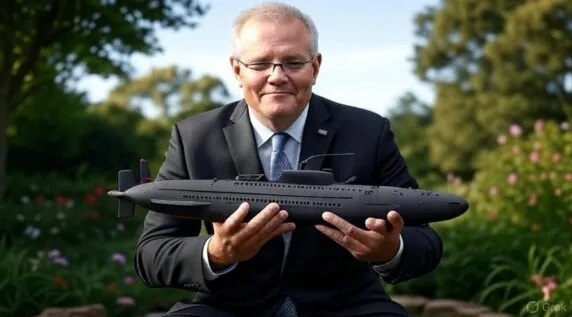
Call it abandonment, anxiety, or just latent stupidity. The messy goo of feelings and fuzzy notions behind Australia’s most injudicious strategic decision is yielding its nasty harvest. Conceived by paranoid armchair strategists, flabby think tankers and profligate spenders happy to expend other people’s money, the tripartite agreement between Australia, the United Kingdom and the United States is rapidly unravelling.
Even during the Biden administration, whose bumbling watch this agreement was hatched under, there were doubts. The ogrish price tag (US$239 billion or A$368 billion) that would be billed to the Australian taxpayer; the absurd time schedules (delivery of nuclear-powered submarines by the 2030s and 2040s); the contingencies and qualifications (Congressional concerns about transferring Virginia Class (SSN-774) submarines to the Royal Australian Navy), all pointed to the fact that Canberra had fallen for a lemon, childishly refusing to taste its stinging bitterness.
The central point of the tediously named Pillar One of the AUKUS agreement (there is no pillar, one or otherwise), which involves the transfer of US Virginia class boats to the RAN – was always its viability. While President Joe Biden was gradually losing his faculties in the White House, the Congressional Research Service was pertinently noting the obstacles that would face any transfer. The CRS report released on May 22, 2023 was the sort of thing that should have alarmed Australian defence planners, instead of turning them into paid up ostriches dreaming of consultancies. For one thing, it made it clear that Congress was always going to be the one to convince in the matter. “One issue for Congress is whether to approve, reject, or modify DOD’s AUKUS-related legislative package for the FY2024 NDAA [National Defense Authorization Act] sent to Congress on May 2, 2023.” That package included the authorisation for the transfer of “up to two Virginia-class SSNs to the government of Australia in the form of sale, with the costs of the transfer to be covered by the government of Australia.”
There were also weighty doubts about the “net impact on collective allied deterrence and war fighting capabilities of transferring three to five Virginia-class boats to Australia while pursuing the construction of three to five replacement SSNs for the US Navy.” This is a point that has never gone away. To give, even to an ally, and a perceived advantage yet diminish, however small and fictional, the supposed power of the US submarine fleet, is never going to take place if the annual production of 1.2 Virginia boats remains as it is. Mississippi Senator Roger Wicker was always of the view that “the AUKUS plan would transfer US Virginia-class submarines to a partner nation even before we have met our own Navy’s requirements.”
The fact that the Trump administration is now conducting a review of AUKUS can be seen as a mere formality – for those who think formalities smooth matters. The Australian Defence Minister Richard Marles certainly hopes so, calling it “a completely natural step for an incoming government to take.” That Yankee stronghold of renown in Canberra, the Australian Strategic Policy Institute, apes the line with simian consistency: “It’s normal, after a change of government, for a new administration to review existing commitments in the light of new policy priorities: in this case, ‘America First’.”
But nothing about the Trump government is a formality, or any review’s outcome a foregone conclusion. The presence of Undersecretary of Defense Policy Eldridge Colby should be disconcerting to the AUKUS band leaders and comparisons to Britain’s own review of the pact by Sir Stephen Lovegrove should be seen as fantastically distant. “AUKUS,” in Colby’s assessment, “is only going to lead to more submarines collectively in 10, 15, 20 years, which is way beyond the window of maximum danger, which is really this decade.” Putting to one side the warmongering stirring in the latter part of the statement, Colby is certainly not wrong about the time that will elapse before any delivery takes place.
Down under, the strategists are scurrying and fretting, a sight that is proving enormously entertaining. But the political classes have only themselves to blame for this pigsty of a conundrum. As former Australian Prime Minister Malcolm Turnbull notes with snappy precision, the AUKUS agreement is perfectly positioned for the US to not follow through. It can still stick to the letter of the agreement without having to ever transfer a single submarine to Australia, all the time raking in Australian largesse. “This is because it has always been part of the deal, and part of the US legislation, that the transfer of submarines to Australia is highly conditional.”
The legislation in question notes that the President will submit to the relevant congressional committees and leadership a certification no later than 270 days prior to the transfer of vessels that the move “will not degrade the United States underseas capabilities”; is consistent with the country’s foreign policy and national security interests and furthers the AUKUS partnership. That furtherance, however, involves the US ensuring “sufficient submarine production and maintenance investments” that will meet undersea capabilities; Australia supplying “appropriate funds and support for the additional capacity required to meet the requirements” under the provisions; and Canberra’s “capability to host and fully operate the vessels authorized to be transferred.”
The latest development in this overpriced show shows it up as a series of fictions: for Australia, the boyish hankering for nuclear powered submarines in the first place; for the United States, the fact that it needs more nuclear armed boats in order to look more ridiculous in having an arsenal it can never use. It was the military industrial complex in full song, nourished by expensive games, dubious scenarios and drab excuses for war.
With Donald Trump in the White House, the Make America Great Again philosophy mushes the terminology of sweet friends and mortal foes, turning it into the mortar of self-interest. Washington’s interests come first, and Australia’s own idiotically misplaced interests are barely visible in the White House situation room. Then again, never ask Australian strategic thinkers about their interests, ever the hostage of governing fears and treasured prejudices.
Freedom Of Information win as Information Commissioner rebukes Defence secrecy

by Rex Patrick | Jun 15, 2025 , https://michaelwest.com.au/foi-win-as-information-commissioner-rebukes-defence-secrecy/
After more than four years, the Information Commissioner has compelled the Defence Dept. to hand over information sought about expert advice on Australia’s Naval shipbuilding program. Rex Patrick reports.
In the FOI review decision, the Information Commissioner issued a scathing rebuke of Defence secrecy, saying,
“… the assertion made by the Department that disclosure of the relevant material would undermine the willingness of individuals to serve on the panel and provide full and frank advice.
“does not appear to be supported by cogent reasoning or evidence.”
Ouch!
The information we had sought was about advice provided to the Government by the Naval Shipbuilding Expert Advisory Panel, formerly the Naval Shipbuilding Advisory Board. The panel exists to “provide independent, expert advice on all matters relating to the performance of the naval shipbuilding enterprise, and assist in identifying emerging challenges that may require further consideration by Government.”
Recent costs for the board, which is laden with retired US admirals, are not available, but from 2016/17 to 2018/19 the taxpayer forked out $6.4m– an average of $2.1m a year – for their advice.
When I asked to see some of that expensive advice in 2021 (not an unreasonable proposition given the disaster area Defence shipbuilding management had already become, and it’s not got better since), I was denied access to all of the documents, bar some trivial logistical information.
I appealed the decision with the Information Commissioner, who, four years later, has ordered Defence to hand over more information.
Fearful advice
Defence told the Information Commissioner
“There is a close connection between the documents at issue to a governmental process, and disclosure of the relevant material would impair the Government’s ability to receive frank and candid advice.”
That was Defence’s ‘argument’ for secrecy. The sky was going to fall in if advice on an almost $200B naval shipbuilding program (as it was before AUKUS came along and made that look cheap) was made available to the public who were paying for it.
I pushed back hard, pointing out to the Information Commissioner that the Department had not provided any evidence to establish that disclosure of the relevant material would discourage members of the panel from providing quality advice and recommendations.
I further pointed out that the advisory board members would be under a contractual obligation to provide comprehensive advice and recommendations having regard to their expertise, and failure to do so would amount to a breach of their contractual obligations.
The Information Commissioner accepted this and berated Defence for its fantasy claims:
“The Department was provided several opportunities to make submissions in support of their claim that disclosure of the material at issue would be contrary to the public interest. However, other than an assertion that panel members would be less likely to provide full and frank advice and recommendations, the Department has not provided any evidence of substance to establish that disclosure would have this effect.”
And when it came to the idea that no one would serve on the $2m per annum advisory board if their advice were at risk of being disclosed, the Information Commissioner was again scathing, stating:
“Similarly, although the Department contends that disclosure of the relevant material would undermine the willingness of individuals to serve on the panel, the Department has not provided any evidence to support its claim.”
In other words, no evidence from a department that’s committed to spending $56.1B in the coming financial year.
Secrecy does not help
Defence procurement is a mess. MWM has been reporting this for some time. The mainstream media is just waking up to the incompetence of our Defence procurement organisation.
Defence procurement is in need of significant reform. Excessive secrecy, a default setting for Defence bureaucrats, conceals incompetence, maladministration and waste. It enables corruption in a portfolio where tens, even hundreds of millions, are regarded as small change.
The capabilities of our Defence Force and its current operations deserve a level of secrecy,
“but the same is not true for projects that deliver that capability.”
Oversight requires access to information. That includes access to the very expensive advice Government receives in relation to Defence projects. If the providers of that advice are not willing to have it peer reviewed by experienced project management experts in the general community, the Government should not rely on it.
We now await the release of the documents, and to find out what the Defence Minister knew, or didn’t know.
Unfortunately, Defence procurement change will not occur until the Prime Minister, Anthony Albanese, demands it. Defence Minister Richard Marles won’t counsel the Prime Minister because, time and time again, he’s been caught out drunk on Defence-Kool-Aid.

Crossbench Calls for AUKUS Inquiry
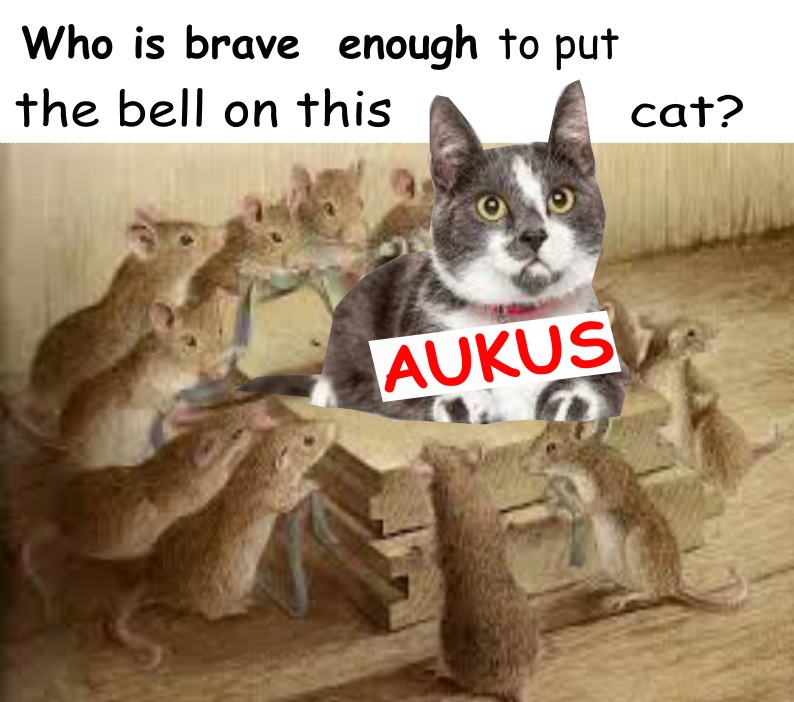
Crossbench MPs from the House of Representatives and Senate have written to Deputy Prime Minister and Defence Minister Richard Marles, calling for an urgent parliamentary inquiry into AUKUS.
In April, the UK Parliament’s Defence Committee announced an inquiry into the AUKUS arrangements, and this week the US defence department announced they were undertaking a rapid review of AUKUS.
AUKUS represents Australia’s largest defence investment in decades and is central to our defence and foreign affairs strategy.
Australians are concerned to know more about the strategic and financial implications of this policy which has been jointly adopted by major party governments without significant parliamentary scrutiny.
A full and formal parliamentary inquiry is therefore both important and timely.
Quotes from letter to Deputy Prime Minister, Richard Marles
Allegra Spender, Independent MP for Wentworth
AUKUS is the centrepiece of our defence and foreign policy strategy, but it’s been adopted by the major parties with very poor public engagement. AUKUS will shape Australia’s future for decades with enormous implications both financially, economically, and strategically, but in discussions at the community level, there are consistent questions and concerns that have not been addressed. AUKUS won’t work without wider community interrogation and engagement, and a parliamentary inquiry is the first step to building that.
We also need a more open discussion of the challenges facing AUKUS. Most urgently, the US Navy is currently short of attack submarines and there is a very clear risk that the US President at the time will not be able to certify that the Virginia class submarines can be transferred to Australia without undermining US Navy capability: a requirement of the current enabling legislation. We must publicly face those risks and actively manage them including identifying viable alternatives.
Helen Haines, Independent MP for Indi
In light of the reviews of AUKUS by our two partner nations and the consequential nature of the agreement, it important for our Parliament to apply the same level of scrutiny.
Andrew Wilkie, Independent MP for Clark
More than ever an Australian Inquiry into AUKUS is needed, and President Trump’s caution about the deal gives Australia a great chance to reset. Nuclear subs were always the wrong technology for Australia’s future submarine needs given the shallow littoral and offshore waters in our region, not to mention the ridiculous cost and impractical timeframe.
Nicolette Boele, Independent MP for Bradfield
Any time Parliament commits to spend $368 billion, we should at least have a full parliamentary inquiry. The case for an inquiry on AUKUS is even stronger given the rules of global co-operation have dramatically changed since it was signed.
AUKUS now risks our defence — because we don’t know if these submarines will ever arrive. It risks our budget — because we may waste $368 billion in taxpayer’s money. And it risks our Australian values, which we do not import from the United States.
Sophie Scamps, Independent MP for Mackellar
Circumstances have changed significantly since the AUKUS deal was first announced and it’s only reasonable it be reviewed in the current context.
This is the largest investment in our defence capability in decades, other parties are conducting their own reviews, and the Australian community largely supports a parliamentary inquiry – it’s high time the Government responds.
Senator Jacqui Lambie
We’ve poured billions into AUKUS with nothing to show for it but broken promises and cancelled defence programs. It’s a $368 billion blank cheque to the US and UK with zero guarantee of real capability for decades.
Australians deserve better and it’s time for a full parliamentary inquiry into this dud deal.
Senator David Pocock
With the UK and now the US reviewing AUKUS, Australia is now the only country not actively considering whether the agreement in its current form best serves our national interest. Given the scale and cost of this deal, a transparent review is not just sensible, it’s overdue.
Kate Chaney, Independent MP for Curtin
AUKUS is a monumental strategic commitment with far-reaching implications for our economy, sovereignty, and security posture, yet it continues to unfold with minimal public transparency and virtually no parliamentary accountability. Australians want to understand whether this is the best use of our resources and the right path for our security.
The 375 billion dollar blunder
12 June 2025 Roswell, https://theaimn.net/the-375-billion-dollar-blunder/
It’s just my opinion, but…
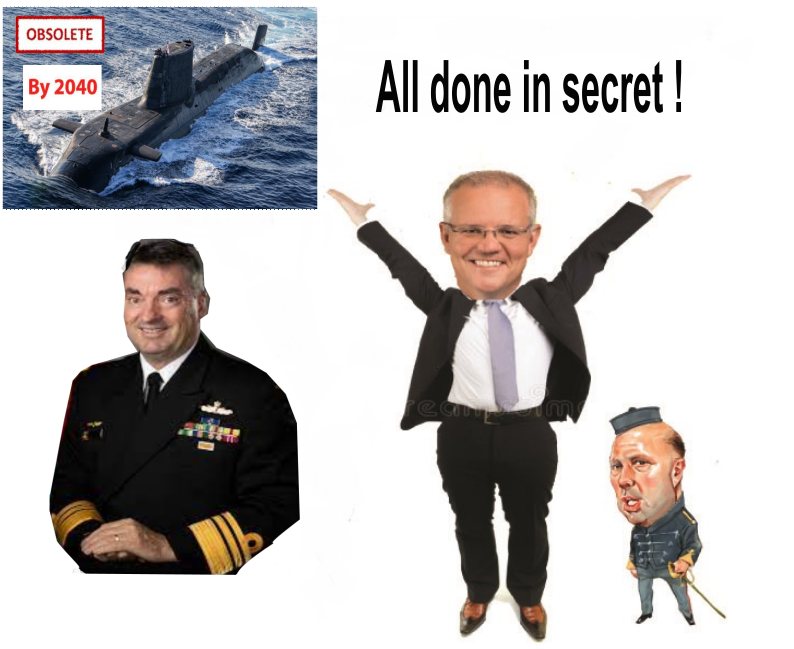
When then-Prime Minister Scott Morrison secretly negotiated the AUKUS pact in 2021, he didn’t just commit Australia to the most expensive defence project in its history – he also blindsided France, abruptly cancelling a $90 billion submarine deal and damaging an important diplomatic relationship. Now, with the Trump Administration threatening to torpedo AUKUS, Australians are left wondering: Was this deal always a $375 billion mistake?
For that eye-watering sum, Australia could have transformed healthcare, built affordable housing, or lifted thousands out of poverty. Instead, we locked ourselves into a decades-long military splurge for submarines that won’t arrive until the 2040s – assuming they ever do. Meanwhile, the U.S. and UK get a massive economic windfall while we foot the bill for their shipyards.
Worse still, Trump’s comments expose the fragility of relying on America’s political whims. If Washington pulls out, Canberra shouldn’t just walk away – it should claw back every cent we have paid them. Why waste money on a deal that may never deliver?
Defence planning is vital, but not at the expense of everything else. If Trump kills AUKUS, it might be the best thing that ever happened to Australia’s budget.
US launches AUKUS review to ensure it meets Donald Trump’s ‘America First’ agenda
By Brad Ryan and Emilie Gramenz in Washington DC, ABC News, 11 June 25
In short:
The US is reviewing the AUKUS security pact with Australia and the UK, which Australia is depending on to acquire nuclear-powered submarines.
A US defence official said it would ensure the pact met President Donald Trump’s “America First” agenda, as the US struggles to build enough submarines for its own fleet.
But Defence Minister Richard Marles said he was “very confident this [AUKUS] is going to happen” and it was only natural for the new US administration to review it.
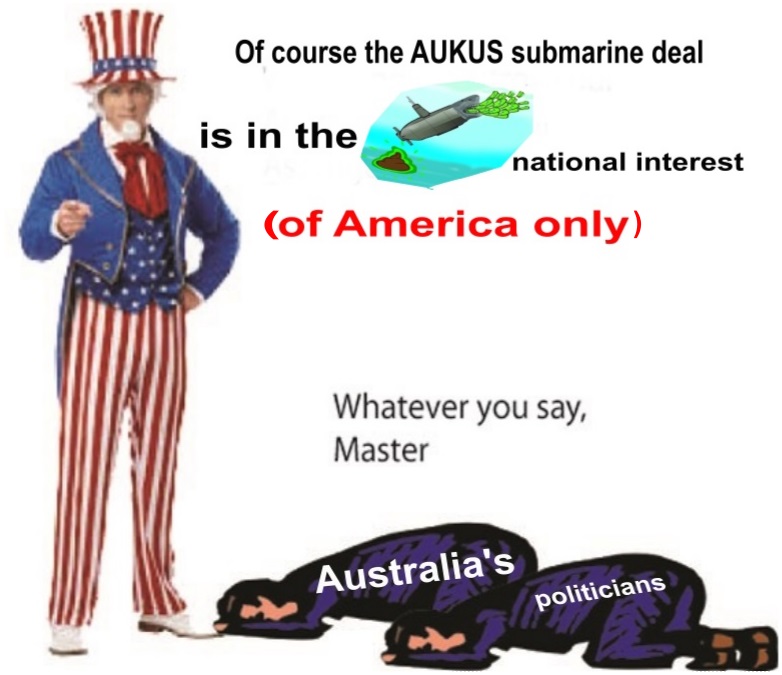
The Pentagon is reviewing the AUKUS security pact between Australia, the US and the UK to ensure it aligns with President Donald Trump’s “America First” agenda, a US defence official told the ABC.
But Defence Minister Richard Marles said he remained confident the pact would remain intact, and a review was a “perfectly natural” thing for a new administration to do.
The news follows US Defense Secretary Pete Hegseth’s recent request for Australia to significantly boost its defence spending “as soon as possible”.
The US defence official said the review “will ensure the initiative meets … common sense, America First criteria”.
“As Secretary Hegseth has made clear, this means ensuring the highest readiness of our service members, that allies step up fully to do their part for collective defence, and that the defence industrial base is meeting our needs,” the official said.
Under the AUKUS pact, Australia would be armed with nuclear-powered submarines at a cost of more than $350 billion.
Elbridge Colby, who is the under secretary of Defense for Policy and has voiced scepticism about AUKUS, is leading the review, according to the UK’s Financial Times.
Last August, Mr Colby tweeted he was an AUKUS “agnostic”.
“In principle it’s a great idea. But I’ve been very skeptical in practice,” he wrote, but added he’d become “more inclined based on new information I’ve gleaned”.
Mr Marles told ABC Radio Melbourne he was “very confident this [AUKUS] is going to happen”.
“The meetings that we’ve had with the United States have been very positive in respect of AUKUS,” Mr Marles said. “That dates back to my most recent meeting with Pete Hegseth in Singapore.”
……………………………………………. The Australian government paid the US almost $800 million earlier this year — the first in a series of payments to help America improve its submarine manufacturing capabilities.
………… Mr Hegseth met Defence Minister Richard Marles in Singapore, and said Australia needed to lift its defence spending.
Mr Trump himself has said little publicly about the AUKUS pact, and his criticisms of America’s traditional alliances have fuelled anxieties about its future in Canberra and London.
When a reporter asked Mr Trump about AUKUS in February, he appeared to be unfamiliar with the term, replying: “What does that mean?”…………………………..
Under “Pillar I” of the two-pillar AUKUS deal, the first submarine would arrive in Australia no sooner than 2032. It would be a second-hand US Virginia-class vessel.
The US would subsequently supply Australia with between three and five submarines, before Australia began building its own in Adelaide, modelled on British designs.
Mr Albanese was expected to meet Mr Trump on the sidelines of the G7 summit in Canada next week. But that’s now in limbo after the US condemned Australia and several other countries that placed sanctions on two far-right Israeli ministers.
…………..Critics of the deal, including former prime ministers Malcolm Turnbull and Paul Keating, have long warned it is unfair and risky. “I’ve never done a deal as bad as this,” Mr Turnbull told Radio National earlier this year.
The Greens have proposed a “plan B” defence policy that would eventually see AUKUS cancelled.
There are also longstanding concerns around the US’s consistent failure to meet its own submarine-building targets to fully stock its military fleet…………………………………………….https://www.abc.net.au/news/2025-06-12/aukus-pentagon-review-donald-trump-america-first/105406254
This week’s Not the Corporate Nuclear News

Some bits of good news –Patagonia Azul: Argentina’s largest coastal marine reserve unveiled. Scientists in Japan Develop Non-Toxic Plastic That Dissolves in Seawater Within Hours
Praised for Rescues and Life Lessons, DADS are Seen by Most as a Top Life Mentor, Says New Poll.
Some bits of good news –Patagonia Azul: Argentina’s largest coastal marine reserve unveiled. Scientists in Japan Develop Non-Toxic Plastic That Dissolves in Seawater Within Hours
Praised for Rescues and Life Lessons, DADS are Seen by Most as a Top Life Mentor, Says New Poll.
TOP STORIES. Trump’s Nuclear Power Obsession.
US Vice President JD Vance announces new strategy of blatant imperialism, aimed at China.
Playing with Fire- Ukraine’s Operation Spiderweb. A peace deal in Istanbul won’t happen until NATO is off the table.
Let’s not pretend nuclear works.
Climate. The World Isn’t Ready for the Mental Health Toll of Extreme Heat.
Noel’s notes. Priming us up for war – “it’s not so bad, after all” – Britain’s Labour government leads the way Jubilation at Ukraine’s Operation Spiderweb – but is this joy justified?
AUSTRALIA. Nuclear policy was at odds with Liberal philosophy AUKUS has serious problems, Australia probably won’t receive any submarines: Malcolm Turnbull. US military waste contractor with flawed safety record backing Australian N-waste dump.
NUCLEAR ITEMS.
| ART and CULTURE. Zelensky Offers to Broker Peace Between Musk and Trump |
| ATROCITIES. When Will Western Support for Israeli Genocide Finally Crack? https://www.youtube.com/watch?v=Yg_6e77Squg What’s Really Happening in Palestine. |
ECONOMICS. UK government has already allocated £6.4bn to the Sizewell C nuclear project!
This is what Britain really needs to defend itself – and it doesn’t include spending billions on arms.
Trump’s embrace of dystopian Palantir spying tool sends stock soaring.
| ENERGY. Vatican City Is Now Powered By Solar. |
| ETHICS and RELIGION. This Is Israel.Greta Thunberg Speaks from Aid Ship Heading to Gaza Despite Israeli Threats: It’s My Moral Obligation. |
| EVENTS 13 June How can European countries break out of the downward spiral of militarisation, increasing their exports of war weapons, and unaccountability for war crimes? 17 June – WEBINAR : STATE of the NUCLEAR REVIVAL. |
| HISTORY. The United States and Greenland, Part I: Episodes in Nuclear History 1947-1968. |
| HUMAN RIGHTS.Madleen Gaza flotilla live tracker: Greta Thunberg, crew taken to Israel. Greta Thunberg on Gaza: Why we joined the Freedom Flotilla | Talk to Al Jazeera – https://www.youtube.com/watch?v=OY38HjfrNGQ |
| LEGAL. Opposition to Sizewell C Nuclear Power Station sea defence plans lodged. TASC’s new legal challenge against Sizewell C’s secret flood defences. |
| MEDIA. Nuclear Power will ruin France -ALSO AT https://nuclear-news.net/2025/06/07/1-a-nuclear-power-will-ruin-france/ The Hidden Story: Israeli ‘Aid’ Is Part of Genocide Plan. From Media Darling to Persona Non Grata: Greta Thunberg’s Journey. |
OPPOSITION to NUCLEAR . Scots aren’t having our voices heard – nuclear is one such case study. Protesters raise environmental fears as wait continues for Sizewell C funding announcement.
Stop Sizewell C carries out bold projection on Sizewell B dome a week before the Spending Review, highlighting alternatives for Sizewell C’s £40 billion cost.
It’s over! Anti-nuke dump campaigners in East Lincolnshire celebrate victory.
POLITICS. Nuclear power: a dream not worth having.
during Anglo-French summit -ALSO AT https://nuclear-news.net/2025/06/05/1-b1-sizewell-c-nuclear-project-to-get-go-ahead-during-anglo-french-summit/ Sizewell C nuclear power plant ‘could get go-ahead within weeks’. Sellafield nuclear clean-up too slow and too costly, say MPs.
Ukraine “Stinks Of Authoritarianism” – Kiev Mayor Klitschko Hits Out At Zelensky.
POLITICS INTERNATIONAL and DIPLOMACY.
- US vetoes Gaza ceasefire again, due to concerns it could save Palestinian lives. US Vetoes UN Resolution Calling for a Ceasefire in Gaza.
- Nuclear Watchdog Meeting Sparks Tensions With Iran. Tehran releases explanatory note defending 60% enrichment. Trump Says New Iran Deal Must Allow US To ‘Blow Up Whatever We Want’. Ayatollah Rejects US Nuclear Proposal, Vows Iran To Keep Enriching Uranium.
- Iran says IAEA new report on nuclear activities politically motivated, based on Israel’s fake documents. Truce or trap?
- RAY McGOVERN: Putin Would Not Rise to the Bait. Ukraine makes sure peace talks go nowhere.
| PUBLIC OPINION. Revulsion for Israel surges worldwide, new survey finds. |
| SAFETY. A superhighway to nuclear hell.The Nuclear Gambit: Trump just handed the atom to the highest bidder.The NRC’s new Mission Impossible: Making Atoms Great Again. Zaporizhzhia ‘extremely fragile’ relying on single off-site power line, IAEA warns. Sellafield failing to address ‘intolerable risks’, damning parliamentary report warns. |
| SECRETS and LIES. Epstein, Israel, ISIS, Palantir.Defence review dodges Britain’s nuclear blind spot – ALSO AT https://nuclear-news.net/2025/06/09/1-b1-defence-review-dodges-britains-nuclear-blind-spot/ |
| WASTES. £127M wasted on failed UK nuclear cleanup plan . Sellafield’s race against time: nuclear waste clean-up not going quickly enough, Public Accounts Committee (PAC) warns. They Dumped 200,000 Radioactive Barrels Into the Atlantic: 35 Years Later, French Scientists Are Going After Them. |
US military waste contractor with flawed safety record backing Australian N-waste dump
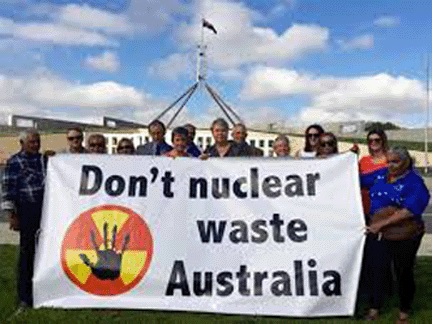
Declassified Australia can report that over a 10-year period from 2012 to 2022, during which Amentum managed the WIPP facility, multiple highly hazardous incidents occurred.
Amidst allegations of “gross mismanagement”, the dangerous incidents at the WIPP facility cost US taxpayers at least US$2 billion, and caused a three-year closure of the nuclear waste plant while redesign, repair, and remediation efforts were undertaken.
Jorgen Doyle, June 7, 2025 https://johnmenadue.com/post/2025/06/us-military-waste-contractor-with-flawed-safety-record-backing-australian-n-waste-dump/
A US military mega-contractor assisting an Australian company to develop a proposal for a nuclear waste dump in Central Australia has a flawed safety record in handling nuclear waste storage.
A DECLASSIFIED AUSTRALIA SPECIAL INVESTIGATION
In Alice Springs, Central Arrernte Country, the giant American military contractor, Amentum Holdings, is responsible for the day-to-day running of facilities for the secretive US-Australian Pine Gap satellite surveillance base. Now it’s involved in developing a proposed nuclear waste dump in Central Australia.
Declassified Australia can reveal that Amentum’s Alice Springs-based workforce of 400 people provides a myriad of support services to keep the ever-expanding base functioning, including infrastructure management, facilities operations, and maintenance services.
The proposal for the low-level nuclear waste dump comes as the Australian Government is seeking ways to manage and ultimately dispose of high-level nuclear waste from nuclear reactors in the proposed AUKUS submarines, as well as from other defence-related nuclear and hazardous waste, including visiting US and UK nuclear-powered submarines and warships.
As Declassified Australia exclusively reports, despite Amentum having a problematic record of nuclear waste management overseas, it is now involved in the nuclear waste disposal business in Australia.
Proposed Chandler waste facility
Amentum has been contracted to advise Australian hazardous waste company, Tellus Holdings, on the Chandler nuclear waste dump in Central Australia.
The Chandler nuclear waste dump is proposed to be constructed within a salt formation on Southern Arrernte country, 15km from the Aboriginal community of Titjikala and 120km south of Alice Springs.
The Northern Territory Environmental Protection Authority’s assessment report for the Chandler dump describes the project components as including construction of an underground salt mine at a depth of up to 860 metres, permanent hazardous waste disposal vaults within mined-out salt caverns, temporary above-ground storage facilities for hazardous waste, and associated infrastructure like haul roads, access roads, and salt stockpiles.
In August 2024, Tellus announced that the company had contracted Amentum to conduct a Strategic Review of the project to assess timelines, feasibility and potential international waste streams to be disposed of at the facility.
Sydney-based Tellus Holdings was founded in 2009 and describes its mission as “providing advance[d] end-to-end solutions for managing the world’s most challenging hazardous materials”. The company operates Australia’s first geological repository for low-level nuclear waste which started in 2021 at Sandy Ridge, 240km northwest of Kalgoorlie.
When Tellus’ American-born chief executive Nate Smith, a former attorney at powerful Wall Street law firm Sullivan & Cromwell, was interviewed on ABC Radio last August, he cited the proximity of Amentum’s workforce based in Alice Springs as a strong reason for selecting Amentum to carry out the strategic review of the proposed nuclear waste dump.
Declassified Australia can exclusively reveal that at an NT Defence Week presentation held in Alice Springs in May 2024, an Amentum speaker stated that the company is contracted directly by the US Government, and “employs roughly 400 people” providing services to the Pine Gap base.
According to an attendee at the event, the speaker said Amentum provides the operation services and maintenance of facilities, utilities management, renovation, security, environmental health and safety, catering, and housing services.
The company regularly posts ads for the employment of new contractors to provide services like cleaning, gardening and even swimming pool repair. On some days, the speaker said, there have been as many as 200 contractors for Amentum working on site at the spy base, 15km south of Alice Springs.
Amentum and the US military
Based in Virginia, Amentum is one of the US’s largest military contractors. The company employs 53,000 people across 80 countries, and provides services as diverse as chemical and biological weapons decommissioning, US army helicopter training, to running the Nevada Bombing Range and the Kennedy Space Centre.
As well as supporting the US’s most important satellite surveillance base outside the US at Pine Gap, Amentum also works extensively in managing and maintaining US military facilities, primarily in West Asia and sub-Saharan Africa.
The company operates in Bahrain, Jordan, Kuwait, Saudi Arabia, Qatar and the United Arab Emirates, where it provides operations and maintenance services on US military installations.
In Iraq, it manages and maintains US air force bases; and has previously operated in Afghanistan, where it maintained helicopters for the Afghan Air Force, and serviced airfields and trained Afghan police, until US forces evacuated the country.
In Somalia, Amentum is assisting in the construction of six new military bases, while in Ethiopia it is working to “enhance biosafety and biosecurity” at a vaccine lab and training facility.
Amentum is also involved more directly in training armed militias and military forces. In western Africa, the company operates in Benin, where it trains the country’s armed forces for “counter-terrorism” operations.
However, Amentum’s activities have been subject to controversy, even by the standards of a global military contractor.
Amentum is providing training to three of Libya’s armed groups as part of attempts to unify major armed factions in Tripoli to “counter Russian influence” within the country and across the African continent.
The company is currently defending a case before a US court on charges of human trafficking in Kuwait, through its predecessor companies AECOM and DynCorp. The companies allegedly participated in abusive practices against 29 interpreters working under US Army contracts during the US-led invasion of Iraq, “Operation Iraqi Freedom”. The abusive practices included forced labour under threat of deportation and arrest.
Amentum’s nuclear activities
In addition to its military contracts, Amentum has been working to support the development of nuclear reactors and facilities across a number of countries.
In the UK, Amentum has recently been selected as project manager for the proposed Sizewell C nuclear power plant on the Suffolk coast.
In South Africa, the company is working on extending the life of the country’s only nuclear reactor by 20 years. In the Netherlands, Amentum has been commissioned to undertake technical feasibility studies for two proposed new nuclear reactors.
It is on the American continent that Amentum’s reputation for managing nuclear facilities has suffered serious blows.
In 2012, Amentum formed the Nuclear Waste Partnership, a limited liability company, with BWX Technologies, in order to bid on a US Department of Energy contract to operate and manage a US nuclear weapons waste disposal facility in New Mexico, known as the Waste Isolation Pilot Plant.
Amentum’s experience managing the WIPP nuclear weapons waste disposal facility is cited as one of the reasons Tellus selected Amentum as its partner to carry out the strategic review of the planned Chandler project.
However, Declassified Australia can report that over a 10-year period from 2012 to 2022, during which Amentum managed the WIPP facility, multiple highly hazardous incidents occurred.
The incidents, described by an expert on the WIPP as a “horrific comedy of errors”, transformed a facility once regarded as “the flagship of the [US] Energy Department” into an object of serious concern.
Amidst allegations of “gross mismanagement”, the dangerous incidents at the WIPP facility cost US taxpayers at least US$2 billion, and caused a three-year closure of the nuclear waste plant while redesign, repair, and remediation efforts were undertaken.
Nuclear weapons waste disposal
The WIPP is, like Tellus’ proposed Chandler Project in Central Australia, located within a salt formation. Salt formations are generally considered ideal for the storage of nuclear waste because of their geological stability, capacity to dissipate heat generated by waste, low permeability to water and gasses, and self-sealing properties.
The WIPP site is massive. Its underground footprint currently includes 10 excavated “panels”, each consisting of seven rooms, totalling 100 acres. An 11th panel is under construction, and the US Department of Energy intends to expand the site to eventually consist of nineteen panels.
The facility has received more than 14,000 shipments of military nuclear waste since becoming operational in 1999. Its 800-strong workforce transfers transuranic waste received in drums to storage rooms 655 metres underground for permanent disposal.
The WIPP facility exclusively receives waste from the US’s nuclear weapons program, including tonnes of excess plutonium. Waste originating from 22 Department of Energy facilities, including the infamous Los Alamos National Laboratory (birthplace of the atomic bomb) is transferred to the WIPP facility for long-term storage.
There are proposals for the WIPP to take waste now classified as “high-level” once that waste has been ‘reclassified’ as transuranic (non-uranium) waste. This would pave the way for its storage at WIPP.
“Reclassification of nuclear waste could make disposal simpler and cheaper” is the breezy conclusion of one such proposal written by the editorial staff of Nature journal.
The site is legislated to receive 175,564 cubic metres of waste, and as of 2021, had reached 56.7% of its capacity.
Originally slated to begin closure in 2024, expansion plans and permit modifications have led nuclear watchdog groups to warn that what was only intended as a pilot plant is morphing into “Forever WIPP”.
The US Department of Energy itself now admits that “ final facility closure could begin no earlier than 2083”.
Faulty design and handling at the Waste Isolation Pilot Plant
On 5 February 2014, less than 18 months into the Nuclear Waste Partnership’s management of the WIPP site, a truck caught fire within the facility, and six workers were hospitalised with smoke inhalation.
A subcontractor under the Nuclear Waste Partnership subsequently sued the company for “gross mismanagement of a major construction contract” involving reconstruction of an underground air-monitoring system that failed during the truck fire.
The subcontractor alleged that the Nuclear Waste Partnership, run by Amentum and BWX Technologies, “was such a disorganised project manager that it caused repeated delays and cost overruns, resulting in multiple breaches of contract”.
The subcontractor claimed that NWP “used faulty designs that caused chronic problems and forced crews to redo large and expensive parts of the project”.
The faulty problems cited by the subcontractor included “a flawed design in hollow-roof panels requir[ing] an extensive redesign that dragged on for almost a year and at times forced work to shut down in other areas”.
Further, “[t]he building’s foundation had to be redesigned, requiring crews to move underground pipes they had already installed; and [a] defective design plagu[ed] the building’s control system”.
Less than a fortnight after the truck fire, on 14 February 2014, a barrel containing americium, plutonium, nitrate salts and organic kitty litter ruptured at the facility.
The rupture quickly spread contaminants “through about one-third of the underground caverns and tunnels, up the exhaust shaft, and into the outside environment”, exposing 22 workers at the WIPP facility to low levels of radioactive contamination.
Following the incident, the site was shuttered for three years. Clean-up efforts cost US$640 million, and a further US$600 million in operational costs were accrued during the years 2014-2017 while the site was being remediated and not accepting new waste.
In addition, the US Government paid US$74 million to New Mexico to settle permit violations involving the radiation release and the truck fire two weeks earlier.
Once costs associated with temporarily storing the nuclear waste that had been destined for WIPP are taken into account ( “hotel costs”, including the weekly inspection of more than 24,000 barrels of nuclear waste for leaks), the long-term cost of the incidents to US taxpayers is likely in excess of US$2 billion.
The WIPP site finally reopened in 2017 after three years of remediation efforts. The installation of a new ventilation system to replace the previous one contaminated in the incident of February 14, 2014 cost an additional US$486 million, and was only completed in March 2025.
A safety analysis conducted prior to the WIPP facility becoming operational reassured regulators that the likely frequency of accidents involving the release of radioactive material at the facility would be once every 200,000 years.
However the two serious incidents of February 2014, resulting in a three-year closure of the WIPP facility, occurred just 15 years into the site’s operation.
The US Department of Energy faced years of pressure from nuclear watchdog groups to end the Amentum and BWX partnership responsible for running the WIPP from 2012.
The Department finally decided not to renew Amentum and BWX partnership’s decade-long contract managing the WIPP nuclear weapons waste disposal facility. They exited in 2022.
The proposed Australian project
Back in Central Australia, Amentum’s strategic review of the Chandler Project is due to be completed soon.
Neither Tellus nor Amentum responded to a series of questions put to them about aspects of the nuclear waste dump project.
With Tellus eager to push on, the massive international nuclear waste dump proposed for Southern Arrernte country 120km south of Alice Springs could commence as early as 2028.
AUKUS has serious problems, Australia probably won’t receive any submarines: Malcolm Turnbull
Malcolm Turnbull, former Prime Minister of Australia, says that AUKUS wasn’t a very good deal for the country and that he thinks President Trump would love the deal as the U.S. would receive money without necessarily having to deliver anything in return.
Thu, Jun 5 2025, https://www.cnbc.com/video/2025/06/05/aukus-has-serious-problems-likely-australia-will-not-receive-any-submarines.html
Priming us up for war – “it’s not so bad, after all” – Britain’s Labour government leads the way
The Unseen March – video from 9 years ago – but now it’s getting worse.
On the outskirts of Berlin, you can visit what’s left of Sachsenhausen , one of the first Nazi concentration camps, set up in 1936, as a model for the more than 44,000 such camps they ran between 1933 and 1945.
I was impressed by the efficiency shown by the way that the Nazis carried out mass murder in this camp – which became a model for how to run this operation as quickly and with as little fuss as possible.
In the early days of the camp, the inmates were used as forced labour. Systematic extermination was carried out. Many thousands died by hunger, disease, overwork, medical experiments and mistreatment. But by 1941, tens of thousands of Jews and Soviet prisoners were being directly murdered.
I saw where this happened. Originally, the prisoners were forced down a brick path, and shot. You can still see stains on this path. But here’s the interesting bit. It turned out that the German soldiers who did the shooting became badly affected by it. Sometimes they would miss, or have to make several shots to actually kill a man. It made the soldiers unwell, having to rather messily murder their victims – it’s not like being in combat, not at all fair. It was making those soldiers mentally ill.
Here’s where the practical genius of the Nazis came in. They devised a special unit, (which was still there, when I visited a few years ago). In this unit, the shooter could be sure of doing one direct lethal hit, but the victim was placed in such a way that the shooter was unable to see him. This system solved the psychological problem of upsetting the man doing the shooting. No more mental illness, and the mass killing could proceed in an orderly way.
In a sort of sequel to this discovery, the Americans in recent years developed the efficiency of drones. targeting and killing suspected terrorists and militants in countries like Pakistan, Yemen, and Afghanistan. Once again, – such a beneficial effect on the operator’s mental health. From thousands of miles away – press a button, no sight of any mess. and a beneficial effect on the the public too – all this killing being done so neatly, and so far away – so much better than an old-fashioned war battle.
So it is that the thought of war becomes much less unpleasant. With drones, and missiles, it has become a sort of distant, sort of “clean”, precision operation.
This new palatability of war comes to add to the already existing beneficial aspects of war. Getting ready for war shows that our great leaders are strong and decisive. It’s patriotic. It defends our democratic values. There are those other – nebulous, but still real, concepts of courage, heroism, and past glorious victories. The new “war-readiness” shows that we are aware, and awake-up to the threats of other countries, who undoubtedly want to attack us. And on top of all that – getting ready for war provides jobs jobs jobs!
Now Sir Keir Starmer’s UK Labour government is not so sure that the British public is convinced of all this. So they’re accentuating the already existing British trend to promote militarism. The Daily Mail announces the new education programme:
Children taught value of the military
Defence chiefs will work with the Department for Education to develop understanding of the Armed Forces among young people in schools, by means of a two-year series of public outreach events across the UK, explaining current threats and future trends.
Schools and community-based cadet forces will also be expanded, with an ambition of a 30 per cent rise by 2030 with a view to the UK having 250,000 cadets, many of whom will then go on to join the armed forces.
It looks as if mass education on the necessity of war is now well underway. The general public in the West is being brainwashed with the doctrine that authoritarian Russia and China are about to invade our peace-loving democracies. Sir Keir Starmer takes the initiative, showing how Labour there is in concert with the Tories. We must be ready to fight back, or perhaps better, to pre-empt such attacks. No doubt the Russian and Chinese populations are being taught a similar message, the other way around.
What now makes it easier is that we can buy ever more of those glorious distance methods, so much neater than sending our boys out for messy personal danger. The efficient Nazis got the ball rolling on this. In education Sir Keir Starmer now takes the initiative. Labour in the UK is enthusiastically backing their own and and the USA’s arms manufacturers. Weapons-making is the big thing in business now – in Europe too, and of course in the US
Liberals put nuclear power policy to the sword
Tess Bennett, AFR 2 June 25
Liberals won’t revisit nuclear power plant policy, says Paterson
Shadow finance minister James Paterson has all but put to the sword the Coalition’s nuclear power policy, saying the more simplistic approach of lifting the moratorium on the energy source was more in line with Liberal Party principle.
Last week, as part of a new Coalition agreement, Liberal leader Sussan Ley and Nationals leader David Littleproud agreed that the ongoing commitment to nuclear energy be limited to lifting the moratorium………………… https://www.afr.com/politics/federal/ukraine-drone-strikes-hits-russian-air-bases-20250602-p5m41e
Jubilation at Ukraine’s Operation Spiderweb – but is this joy justified?

A web, or a trail to Armageddon?
Noel Wauchope, 3 June 25, https://theaimn.net/jubilation-at-ukraines-operation-spiderweb-but-is-this-joy-justified/#google_vignette
The news media is agog with the glorious success of drones sent deep inside Russia to damage 41 planes. Ukraine claims that these were A-50 surveillance planes, the supersonic Tu-160 and Tu-22 bombers, and the massive Tu-95s, which were developed to carry nuclear bombs and now launch cruise missiles.
The damage is estimated to be $7billion. The targets reached inside Russia included Belaya airbase over 4,000km) from Ukraine, and three other distant airbases. the complex operation was planned in secret, over 18 months.
It was such a clever operation, involving smuggling of drones into Russia and placing them inside containers, which were later loaded on to trucks. Remotely activated mechanisms opened the containers allowing the drones to fly out and make their distant attack.
Ukraine’s President Volodymyr Zelenskyy praised the “absolutely brilliant” Ukrainian drone attack’ – “produced by Ukraine independently”.
Wow! We’re all delighted, aren’t we, at this surprise, this ingenuity, done all alone by Ukraine – such a demonstration of how the clever Ukrainians will beat the stupid boorish Russians?
There are just a few questions that I would like to see posed, in the corporate media.
I hardly know where to start. Can we believe that:
- This was done over 18 months completely without the knowledge of Ukraine’s European partners, in particular Great Britain, France and Germany, who were all consulting with Ukraine over that period, and especially in the last few weeks?
- Without the knowledge of the USA, while Senators Lyndsay Graham and Richard Blumenthal, in Ukraine in the past week where they coordinated intensely with the Ukrainian government?
- Why was this attack timed exactly at the time of the Istanbul peace talks between Ukraine and Russia?
- Did Zelensky not understand that this would at least cast a damper on those talks, upsetting Russia – a bit like the effect on USA if someone attacked US Air Force B-52H bombers and B-2 bombers ?
- Well, if Zelensky did understand that, was his intention to sabotage the talks, and provoke Russia into a retaliation, which might bring Europeand even the USA into the war?
The jubilation of the media seems to completely ignore Russia’s stated policy on its use of nuclear weapons, updated in 2024 – nuclear weapons would be authorised for use in response to “attack by [an] adversary against critical governmental or military sites of the Russian Federation, disruption of which would undermine nuclear forces response actions”.
We don’t know how Russia will respond to this remarkable and unprecedented attack.
We don’t know how President Trump will respond.
What is clear is that the Istanbul peace talks have been wrecked, and a whole new phase now opens in the Russia’s invasion of Ukraine. It started out with the intention of a limited attack – the Russians still call it a Special Military Operation. Now Putin has no other option than to declare it a full scale war.
Nuclear policy was at odds with Lib philosophy: Paterson
Phillip Coorey, AFR, 3 June 25
Opposition finance spokesman James Paterson has put the Coalition’s nuclear power policy to the sword, saying lifting the moratorium on the energy source and leaving the rest to the private sector was more consistent with Liberal Party philosophy than building and owning generators.
The move, which cements last week’s deal to water down the policy as part of the new Coalition agreement, has killed off the prospect of nuclear power in Australia, at least in the medium term.
Clean Energy Investor Group CEO Richie Merzian said that because of time and cost, there was no appetite in the private sector to invest in nuclear power even if the moratorium was lifted.
But the Grattan Institute’s Tony Wood said nuclear power, especially small modular reactors, could be back in play within 20 years if the current policy of renewables firmed by gas and batteries doesn’t go as planned……….
The Coalition went to the last election promising to build and operate seven nuclear power plants – two small modular reactors and five large-scale plants – from 2035 onwards. The total system cost, which included the mix of nuclear, renewables and gas, was modelled at $334 billion.
Amid deep misgivings by Liberals about recommitting to the policy, last week, as part of a new Coalition agreement, Liberal leader Sussan Ley and Nationals leader David Littleproud agreed that any ongoing commitment to nuclear energy be confined to lifting the moratorium.
The plan to build seven nuclear power plants would be subject to a review of all policies to be undertaken in the wake of the Coalition’s heavy defeat on May 3, but Paterson said on Monday the old policy was unlikely to ever be revisited.
“The answer for the Liberal Party going forward on this is probably not to take what we did to the last election, which is a government-initiated and managed and run program where taxpayers would finance and build them,” he said.
“But instead go for a more traditional Liberal approach, a more market-based approach, which is repeal the prohibition on nuclear power, and then leave it up to the energy industry to decide if they want to invest in nuclear.
………………………………. With Labor opposed to nuclear, that means the renewables rollout would continue unabated for another six years, making the economic case for nuclear less compelling.
“None of the investors in the CEIG, which is 50 per cent of new energy generation, are interested in nuclear in Australia, full stop,” Merzian said.
“That includes major investors who own nuclear assets overseas.”
The objection was not philosophical, but based on time and cost, he said.
“It’s too late to go down that route, it’s just a non-starter.”………………………….. https://www.afr.com/politics/federal/nuclear-policy-was-at-odds-with-lib-philosophy-paterson-20250602-p5m42i
Nuclear news – but not from the nuclear-military-industrial-media complex

Some bits of good news – Kyrgyz Republic unveils 800,000-hectare ecological corridor for biodiversity. The EU ratified the global ocean treaty Australia’s grid ‘greener than ever’.
TOP STORIES. Legacy of US nuclear weapons tests in the Marshall Islands created global radiation exposure: new study.
US protects Israel as Netanyahu vows to ‘take over’ Gaza, using hunger as as weapon.
Desperation Time in Ukraine End-Game.Putin’s demands for peace include an end to NATO enlargement, sources say – ALSO AT ……..
https://nuclear-news.net/2025/06/02/1-a-putins-demands-for-peace-include-an-end-to-nato-enlargement-sources-say/Revealed: Nato
rearmament could increase emissions by 200m tonnes a year.
Climate. Earth is heading for 2.7°C warming this century- We may avoid the worst climate scenarios – but the outlook is still dire. Almost 40% of world’s glaciers already doomed due to climate crisis – study. World faces new danger of ‘economic denial’ in climate fight, Cop30 head says.
Noel’s notes Time to give up the pretense about Ukraine winning the war. A tale of two dodgy domes.
AUSTRALIA. Marles’ misstep: welcome to the backlash. ‘Fork in the road’: How a failed nuclear plot locked in Australia’s renewable future. Liberals put nuclear power policy to the sword. Turnbull says ‘stupid’ Nationals picking ‘fight over nothing’ as Liberals weigh nuclear.
Albanese ramps up Gaza rhetoric as Zionist narrative erodes.
Nuclear Items
ATROCITIES. Israel’s aid plan for Gaza is a key part of its strategy to expel Palestinians. Extermination as negotiation: Understanding Israel’s strategy in Gaza.
Gaza’s Hospitals ARE The Target.
| ENERGY. Solar puts Australia in fast lane to 100% renewables. |
| ENVIRONMENT. David Lowry: Nuclear power has no role in “clean energy” because it isa very dirty technology! -ALSO AT https://nuclear-news.net/2025/05/29/1-b1-david-lowry-nuclear-power-has-no-role-in-clean-energy-because-it-isa-very-dirty-technology/Davis-Besse Report Reveals Constant Pollution, Flawed Monitoring, and Unending Nuclear Waste. |
| ETHICS and RELIGION. Sorry If This Is Antisemitic But I Think It’s Wrong To Burn Children Alive.Poll: 82% of Israelis want to expel Palestinians from Gaza; 47% want to kill every man, woman, child. Pope Leo XIV Renews Call for Gaza Ceasefire, Laments Israeli Killing of Palestinian Children. |
EVENTS. Veterans Launch 40-Day Fast to Protest Israel’s Starvation of Gaza.
7 June – Sizewell C Outrage Rally.
12 June – Nuclear War: A Scenario – join an online discussion with international best-selling author Annie Jacobsen.
| HEALTH. Ending nuclear weapons, before they end us. |
| HISTORY. The health impact of nuclear tests in French Polynesia – archive, 1981 |
| LEGAL. Enough Is Enough- Israel Is Committing War Crimes- Former Israeli PM. New Israeli Law Allows Palestinians as Young as 12 to Be Imprisoned for Life.Czech Nuclear Power Plant Deal with KHNP Likely Postponed until after October, due to court ruling. |
OPPOSITION to NUCLEAR . Protest against Chalk River nuclear waste disposal project -ALSO AT https://nuclear-news.net/2025/05/30/2-b1-protest-against-chalk-river-nuclear-waste-disposal-project/
Anti-nuclear weapon campaigners picket Plymouth MP’s office ahead of Devonport demonstration.
| POLITICS. Nuclear power is back- Will it work out this time? Labour ministers under pressure as viral video shows broken promises to nuclear veterans. Lincolnshire County Councillors move to pull the plug on nuclear waste site talks. Lincolnshire County Council leader Sean Matthews defends stance on nuclear waste site amid criticism from Tories. Reform leader hits back after Tories saying he’s gone back on nuclear waste site promise. Disappointing but predictable: UK Government minister’s reply on nuke treaty. Trump’s nuclear vision collides with Trump’s actual policies.Trump’s executive orders could endanger America’s nuclear renaissance . |
| POLITICS INTERNATIONAL and DIPLOMACY. How Donald Trump Discovers the Art of Political Negotiation. Trump’s role in provoking Russia’s destruction of Ukraine should not be ignored. Trump warns Netanyahu off Iran strike as nuclear talks continue. Iran rejects IAEA report alleging increased enriched uranium stockpile. Does Tehran want the bomb?Why the US Won’t Be Able to Help Build Taiwan’s Nuclear Future. |
| SAFETY. Rise in nuclear-related incidents deeply worrying. Experts warn Trump’s nuclear blitz could trigger ‘Next Three Mile Island’. ENSURING A MELTDOWN – Trump’s reckless nuclear orders. |
| SECRETS and LIES. How does the nuclear industry get away with its persistent, repetitive lies? France spent €90,000 countering research into impact of Pacific nuclear tests. Watchdog probes Springbank baron over nuclear firm meeting. |
| SPACE. EXPLORATION, WEAPONS. Elon Musk promises more risky launches after sixth Starship failure. SpaceX loses contact with its Starship on 9th test flight after last 2 went down in flames. |
| TECHNOLOGY. Trump’s new ‘gold standard’ rule will destroy American science as we know it. China unveils world’s first AI nuke inspector. |
| WASTES. UK government’s Spending Review needs to allocate nuclear clean-up funds – ALSO AT https://nuclear-news.net/2025/05/31/1-b1-uk-governments-spending-review-needs-to-allocate-nuclear-clean-up-funds/ Dysfunctional: review reveals South Copeland GDF partnership at war. Councillors move to end nuclear waste talks. |
| WAR and CONFLICT. Here’s what they don’t tell you about ‘massive Russian strikes on Ukraine’. Ukraine drone strikes hit nuclear bombers deep inside Russia. Israeli Military Says It Will Occupy 75% of Gaza Within Two Months, ‘Concentrate’ the Civilian Population. US Has 500 Troops in Taiwan in Major Challenge to China. |
| WEAPONS and WEAPONS SALES. The 2026 bill for the Ukraine war is already in the mail. Ukraine ‘can’t afford’ it if US quits conflict – top Zelensky aide. Donald Trump’s Fool’s Gold. Gaza “a Gaping Wound on Humanity:” Spain Convenes Int’l Conference to call for Arms Embargo on Israel. Roads to War: The EU’s Security Action for Europe Fund. Europe’s defence without the U.S.: What does the new cost report say? Britain to buy fighter jets to carry nuclear weapons-ALSO AT https://nuclear-news.net/2025/06/02/1-b1-britain-to-buy-fighter-jets-to-carry-nuclear-weapons/ |
‘Fork in the road’: How a failed nuclear plot locked in Australia’s renewable future

The Age By Nick Toscano, June 1, 2025
hen Australians went to the polls and voted Anthony Albanese back as prime minister, they also voted for something that will outlive the next election: the power industry’s guaranteed switch from coal to renewable energy.
What they didn’t vote for were state-owned nuclear reactors, forced delays of coal-fired power station closures and a slew of other Coalition promises widely viewed as threats to the country’s era-defining challenge of cutting harmful emissions while keeping electricity supply and prices steady.
Although times remain testing in the energy sector, a feeling of relief is clear. “The nuclear conversation is dead and buried for the foreseeable future,” said an executive at one of Australia’s biggest power suppliers, who asked not to be named. Even as the Nationals keep arguing for a nuclear future, any genuine suggestion that atomic facilities could still be built in time to replace retiring coal plants after the next election rolls around was now downright “ridiculous”, said another, adding that renewable energy was on track to surpass 60 per cent of the grid by 2028. “That’s great for the energy sector – it simplifies the path forward,” they said.
Make no mistake, a seismic shift across the grid has been well under way for years now. Australia’s coal-fired power stations – the backbone of the system for half a century – have been breaking down often and closing down earlier, with most remaining plants slated to shut within a decade.
At the same time, power station owners including AGL, Origin Energy and EnergyAustralia are joining a rush of other investors in piling billions of dollars into large-scale renewables and batteries to expand the share of their power that comes from the sun, wind and water. The federal government has an ambitious target for renewable energy to make up 82 per cent of the grid by 2030.
Moving to a system dominated by less-predictable renewables will not be easy. It will take much greater preparation to match supply and demand and require the multibillion-dollar pipeline of private investment in the transition to continue. But ousted opposition leader Peter Dutton, before losing the May 3 federal election and his own seat, hatched a plan to change the course dramatically. A grid powered mainly by renewables would never be able to “keep the lights on”, Dutton insisted.
Instead, he declared, a Coalition government would tear up Australia’s legislated 2030 emissions-reduction commitments, cut short the rollout of renewables, force the extensions of coal-fired generators beyond their owners’ retirement plans and eventually replace them with seven nuclear-powered generators, built at the taxpayer’s expense, sometime before 2050
For Australians who wanted to see urgent action to tackle climate change – and investors at the forefront of the shift to cleaner power – the campaign to dump near-term climate targets in favour of nuclear energy came at the worst possible time. Some likened it to a “near-death experience” for the momentum of the shift to a cleaner, modern energy system that would have wiped out investor confidence and killed off billions of dollars of future renewable projects.
“When you reflect on the significance of energy in the campaign, it’s reasonable to say this was a fork in the road,” said Kane Thornton, outgoing chief executive of the Clean Energy Council……………………………………………..
Dutton argued for months that nuclear plants would be the best way to keep prices down, even though almost no one agreed with him.
“I’m very happy for the election to be a referendum on energy – on nuclear,” he said.
In the end, the idea proved too toxic for voters. It delivered big swings against Dutton’s candidates in electorates chosen to host reactors, while support for Labor grew in many of the places selected to develop massive offshore wind farms, which the Coalition had planned to scrap.
The decisive election result “locks in” the government’s ambitious push for an electricity grid almost entirely powered by renewables, said Leonard Quong, the head of Australian research at BloombergNEF.
“The Labor Party’s landslide victory … is a win for climate, clean energy and the country’s decarbonisation trajectory,” he said…………………………………………..https://www.theage.com.au/business/the-economy/fork-in-the-road-how-a-failed-nuclear-plot-locked-in-australia-s-renewable-future-20250523-p5m1qa.html
1 This month
7 April – WEBINAR – Australia and the Doomsday Clock – Preventing nuclear war through NoFirstUse and other policies
Online | Tuesday April 7, 4:00-5:30pm, Australian Eastern Time / 8:00-9:30am Central Europe Time
– Access the registration link
15 April – Zoom –Nuclear Power is Not the Solution
Apr 15, 2026 01:00 AM in Canberra, Melbourne, Sydney

Join the International Physicians for the Prevention of Nuclear War (IPPNW) on Tuesday, April 14th for a timely webinar exploring the risks associated with nuclear power and challenging the myth that it offers a simple, safe, carbon-free solution to the climate crisis

of the week – Australians for War Powers Reform (AWPR)
To see nuclear-related stories in greater depth and intensity
 Antinuclear