Main power line reconnected to Zaporizhzhia nuclear power plant
One of the Russian-held Zaporizhzhia nuclear power plant’s four main
power lines has been repaired and is supplying the plant with electricity
from the Ukrainian grid two weeks after it went down, the UN nuclear
watchdog has said.
Even though the six reactors at Zaporizhzhia, Europe’s
biggest nuclear power plant, have been shut down, the fuel in them still
needs cooling to avoid a potentially catastrophic meltdown. The plant
therefore needs electricity to pump water through the reactors’ core. The
power supply at Zaporizhzhia has been a source of concern after the last
main line went down and three backup lines that can connect it to a nearby
coal-fired power plant were also disconnected.
Guardian 17th Sept 2022
Space race – the old macho aim – USA and China to beat each other

A new space race? China adds urgency to US return to moon
By ELLEN KNICKMEYER September 15, 2022 WASHINGTON (AP) — It’s not just rocket fuel propelling America’s first moonshot after a half-century lull. Strategic rivalry with China’s ambitious space program is helping drive NASA’s effort to get back into space in a bigger way, as both nations push to put people back on the moon and establish the first lunar bases.
American intelligence, military and political leaders make clear they see a host of strategic challenges to the U.S. in China’s space program, in an echo of the U.S.-Soviet rivalry that prompted the 1960s’ race to the moon. That’s as China is quickly matching U.S. civil and military space accomplishments and notching new ones of its own.
On the military side, the U.S. and China trade accusations of weaponizing space. Senior U.S. defense officials warn that China and Russia are building capabilities to take out the satellite systems that underpin U.S. intelligence, military communications and early warning networks………………………..
NASA, the U.S. civilian space agency, is awaiting a new launch date this month or in October for its Artemis 1 uncrewed test moonshot. Technical problems scrubbed the first two launch attempts in recent weeks.
China likewise aims to send astronauts to the moon this decade, as well as establish a robotic research station there. Both the U.S. and China intend to establish bases for intermittent crews on the moon’s south pole after that…………………………………….
And for space more broadly, Americans alone have tens of thousands of satellites overhead ………………………
The moon programs signal that “space is going to be an arena of competition on the prestige front, demonstrating advanced technical expertise and know-how, and then also on the military front as well,” said Aaron Bateman, a professor of history and international affairs at George Washington University and a member of the Space Policy Institute……………………………….
A 1967 U.N. space treaty meant to start shaping the guardrails for space exploration bans anyone from claiming sovereignty over a celestial body, putting a military base on it, or putting weapons of mass destruction into space.
“I don’t think it’s at all by coincidence or happenstance that it is now in this period of what people are claiming is renewed great-power competition that the United States is actually investing the resources to go back,” said Bateman, the scholar on space and national security. “Time will tell if this turns into a sustained program.”………………………………… https://apnews.com/article/astronomy-russia-ukraine-space-exploration-science-technology-f98448825e588e8902bb74519b55ba9f
Israeli sabotage should not be allowed to kill Iran nuclear deal: Middle East Eye
Tehran Times, September 18, 2022 –
In a commentary on September 16, Middle East Eye said since the inception of the talks to resolve the nuclear dispute between Iran and the West, including the United States and certain Western European states, “Israel has done everything to prevent resolving the Iranian nuclear issue through diplomacy.”
Talks started in April 2021 to resurrect the nuclear deal, officially called the Joint Comprehensive Plan of Action (JCPO), that was ditched by former U.S. president Donald Trump.
Former Israeli prime minister Benjamin Netanyahu claimed responsibility for Trump’s decision to pull the U.S. out of the nuclear deal. “We convinced the U.S. president [to exit the deal] and I had to stand up against the whole world and come out against this agreement, and we didn’t give up,” Netanyahu said.
Even now, Middle East Eye also wrote, Israel “has not missed any opportunity to subvert President Biden’s policy to revive the JCPOA.”
Following is the text of the article:
On 12 September, U.S. Secretary of State Antony Blinken said it was “unlikely” that the U.S. and Iran would reach a new nuclear deal anytime soon. Negotiations between Iran and the world powers to revive the Iran nuclear deal, known as the Joint Comprehensive Plan of Action (JCPOA), are faced with a new deadlock .
The International Atomic Energy Agency (IAEA) report on 6 September indicates that “no progress” has been made in resolving questions about past traces of nuclear material in Iran’s three undeclared sites. “Iran’s position [on the IAEA probe] contradicts its legally binding obligations and jeopardizes prospects of restoring the JCPOA,” said the latest statement from European powers Germany, France and the UK.
The spokesperson for Iran’s Atomic Organization, Behrouz Kamalvandi, responded that Iran has been fully cooperative regarding the three alleged sites and has sent information and answers to the IAEA’s questions. “The IAEA must not pass judgements on the Iranian nuclear program based on fabricated documents provided by the Israeli regime with specific political goals,” he said.
A roadmap was signed between Iran and IAEA right after the nuclear deal and finalized the assessment of issues relating to possible military dimension (PMD) issues in December 2015 and before JCPOA’s implementation in January 2016.
“The agency has no credible indications of activities in Iran relevant to the development of a nuclear explosive device after 2009. Nor has the agency found any credible indications of the diversion of nuclear material in connection with the possible military dimensions to Iran’s nuclear program,” the IAEA concluded.
In May 2018, former President Donald Trump withdrew from the JCPOA and re-imposed the world’s most stringent sanctions and pursued the “maximum pressure” policy on Iran. A year later, in response, Iran increased its uranium capacity and enrichment levels.
While the military dimension issues were resolved under the nuclear deal, in 2019, the IAEA requested that Iran answer questions about possible undeclared nuclear activities and materials. The question that arises is whether the safeguards issues constitute the major obstacle standing in the way of reviving the JCPOA.
Israeli sabotage
Since the inception of the nuclear talks, Israel has done everything to prevent resolving the Iranian nuclear issue through diplomacy.
In 2015, in an unprecedented event, then Israeli Prime Minister Benjamin Netanyahu insulted a serving U.S. president in a speech to Congress on the emerging nuclear deal. House Minority Leader Nancy Pelosi dismissed the speech by the Israeli prime minister as an “insult to the intelligence of the United States”.
Netanyahu claimed responsibility for Trump’s decision to pull the U.S. out of the Iran nuclear deal. “We convinced the U.S. president [to exit the deal] and I had to stand up against the whole world and come out against this agreement, and we didn’t give up,” Netanyahu said.
Even during the current U.S. administration, Israel has not missed any opportunity to subvert President Biden’s policy to revive the JCPOA. Over the past decade, Israel has conducted several covert operations against the Iranian nuclear program. From sabotage, bombings, and cyber attacks such as Stuxnet and Duqu, to espionage and the assassination of Iranian nuclear scientists, Israel has done it all.
Israel’s campaign of fear against Iran’s nuclear program has been ongoing for 40 years. Over the past four decades, every now and then Israel has claimed that Iran is only a few years away from a nuclear bomb. For example, in 1995 Netanyahu claimed “Iran is three to five years from being able to produce a nuclear weapon.”
In 2009, General Yossi Baidatz, the chief of research for Israeli military intelligence, said that Iran would have a working weapon by no later than the end of 2010. In 2013, Israeli intelligence officials claimed that Iran could have a nuclear bomb by 2015 or 2016.
Moreover, Iran is deeply suspicious about the IAEA Director General Rafael Grossi’s close relations with Israel. In a statement in March 2020, Iran reiterated that “copies of papers presented to Iran by the agency as the basis for its requests are neither authentic nor related to the open-source, but rather claimed by the Israeli regime to have been acquired through a so-called secret operation.”
On 3 June 2022, Grossi visited Israel to meet with the prime minister to discuss the Iranian nuclear program. Right after the visit, on 9 June 2022, the IAEA passed a resolution saying that Iran must provide credible information in response to the IAEA’s questions. “Grossi’s visit to Israel out of phase with IAEA impartiality, professionalism,” the Iranian foreign minister reiterated.
The ‘most inspected’ country
An informed Iranian source who asked that their identity remains anonymous said “Iran has no problem with addressing all IAEA questions. We are ready to sign a roadmap similar to 2015 with the agency to finalize the IAEA’s technical questions within two months, right after signing the revived agreement. In the case of the contaminated locations, by counting every milligram of Iranian-enriched uranium, the IAEA can verify the truth.”………………………………………..
The world powers need to rethink their current approach. Israel is the only country in the Middle East in possession of nuclear bombs, is one of only four countries in the world that does not permit IAEA inspections, and is not a signatory to the NPT. Iran is not among those four, is a member of the NPT, does not have any nuclear weapons, and is the most inspected country worldwide by the IAEA.
Rather than killing the JCPOA and pushing Iran towards developing a nuclear bomb, the world powers should focus on reviving the JCPOA and push Israel to follow the deal’s principles to achieve a Middle East nuclear-weapon-free zone as the UN General Assembly mandated in 1974. https://www.tehrantimes.com/news/476862/Israeli-sabotage-should-not-be-allowed-to-kill-Iran-nuclear-deal
Walkers Count on Local Politicians to Oppose Nuclear Waste in North West Ontario
https://www.netnewsledger.com/2022/09/18/75-walkers-count-on-local-politicians-to-oppose-nuclear-waste-in-nwo/ By NetNewsLedger, September 18, 2022,
THUNDER BAY – ENVIRONMENT – Approximately 75 walkers took to the streets of Thunder Bay on Saturday to oppose the proposed burial of all of Canada’s nuclear fuel waste in the bedrock of Northwestern Ontario.
The group walked from MP Patty Hajdu’s constituency office (Thunder Bay-Superior North and Minister of Indigenous Services) to MPP Lise Vaugeois’ constituency office (Thunder Bay-Superior North).
The federal government oversees Canada’s nuclear operations including nuclear waste management in Canada, while Ontario’s government makes decisions about the province’s energy sources, and can issue directives to Ontario Power Generation. Ontario Power Generation is the largest shareholder in the Nuclear Waste Management Organization, owns more than 90% of the high-level nuclear waste in Canada, and contributes more than 90% of the NWMO’s operating budget.
The Walk was organized by the local group Nuclear Free Thunder Bay, in solidarity with a similar event earlier in September: Ojibway Nation of Saugeen member Darlene Necan’s “Peaceful Walk Against Nuclear Waste on Treaty 3 Lands”, in which walkers left Ignace on September 1 and walked from Ignace to Dryden and then from Dryden to Sioux Lookout.
“Darlene Necan has done her Walk three years in a row,” said Charles Faust, a member of Nuclear Free Thunder Bay. “The idea of this nuclear waste burial project going forward deeply disturbs our group. Northwestern Ontario is not an empty land – it is home to many people, and is the traditional territory of our Anishinaabe friends and neighbours. It is also one of the least spoiled natural areas in the world. Radioactive contamination of the extensive watersheds there would be disastrous.”
Lise Vaugeois MPP was present at her constituency office and had supportive words for those gathered.
Nuclear Free Thunder Bay, part of the We the Nuclear Free North alliance, opposes the Nuclear Waste Management Organization’s (NWMO’s) proposed plan to bury all of Canada’s nuclear fuel waste – more than 3 million fuel bundles – in a deep geological repository (DGR) between Ignace and Dryden. There is no operating DGR for nuclear fuel waste anywhere in the world.
The group prefers the alternative of maintaining the waste in hardened and more secure facilities close to the nuclear reactors where it was produced. Such an approach would eliminate the dangers of transporting the waste up to 2,400 km by road or rail into Northwestern Ontario and would allow ongoing monitoring of the waste in the event of future problems.
The group believes that burying the waste would mean forgetting the deadliest, most long-lived toxic substance a society has ever produced.
40% of Japan’s nuclear plant staff lack experiences of reactivation
By Takashi Maemura and Ayaka Matsuo / Yomiuri Shimbun Staff Writers, September 18, 2022
Nearly 40% of the operations staff at the seven electric power companies that have not yet restarted their nuclear power plants since 2011 have no experience with reactors, a Yomiuri Shimbun survey found.
That group includes Tokyo Electric Power Company Holdings, Inc., the operator of the Fukushima No. 1 nuclear power plant that had an accident during the March 11, 2011, earthquake and tsunami.
Because progress to restart their reactors has been slow, these power companies have sought to maintain their personnel’s skills by dispatching staff to nuclear power plants and thermal power plants operated by other companies.
Currently, only Kansai Electric Power Co., Kyushu Electric Power Co. and Shikoku Electric Power Co. have been able to restart some reactors…………………………………..
Chugoku Electric Power Co.’s Shimane nuclear power plant Reactor No. 2, which is currently shut down, has passed the Nuclear Regulation Authority’s safety examinations, which took about seven years and eight months to complete.
However, the Shimane nuclear power plant has been shut down for more than 10 years, and 41 out of its 107 operators, or 38%, have no experience operating a nuclear power plant. In light of this, Chugoku Electric Power has begun training them this fiscal year, asking Makino, a former operator with more than 30 years of experience, to serve as an instructor.
Weapons-grade plutonium secretly sent from South Carolina to Nevada removed early
The Nevada site was used to conduct nuclear weapons testing from 1945 to 1992.
https://www.wltx.com/article/news/regional/weapons-grade-plutonium-from-south-carolina-nevada-removed/101-dba724ee-6fbb-46b0-8d06-3cb9c00— Associated Press, September 17, 2022, CARSON CITY, Nev — Weapons-grade plutonium that secretly was sent to Nevada over objections from the state has been removed ahead of schedule, federal officials said.
U.S. Sen. Catherine Cortez Masto said in a statement that she was notified by the National Nuclear Security Administration late Friday that the plutonium had been removed. The work that started last year had been expected to wrap up by the end of 2026.
The U.S. Energy Department under former President Donald Trump had planned to ship a full metric ton (2,204 pounds) of plutonium to Nevada from South Carolina, where a federal judge ordered the material be removed from a Savannah River site.
Nevada had argued in a lawsuit that the clandestine shipment of half a metric ton (1,100 pounds) of plutonium to the vast Nevada National Security Site — an area larger than the state of Rhode Island — in 2018 amounted to a “secret plutonium smuggling operation.” The U.S. government argued it kept the shipment secret because of national security concerns.
The Nevada site was used to conduct nuclear weapons testing from 1945 to 1992.
The legal battle ended in mid-2020 after the federal government agreed to remove the highly radioactive material already trucked to Nevada and abandon any future plans to send more.
The material now is held at a site in New Mexico, a congressional aide told the Las Vegas Review-Journal.
Walk held to protest storing nuclear waste in Northwest
The group of over 50 people gathered outside MP Patty Hajdu’s office before their walk and shared their concerns over the possible storage of nuclear waste in the region
https://www.tbnewswatch.com/local-news/walk-held-to-protest-storing-nuclear-waste-in-northwest-5835959 TBnewsWatch.com Staff, 18 Sept 22
THUNDER BAY – Nuclear Free Thunder Bay held a walk on Saturday in solidarity of other walks happening in Northwestern Ontario throughout September to protest the transport and burial of nuclear waste in the north.
The group of over 50 people gathered outside Thunder Bay-Superior North MP Hajdu’s office before their walk and shared their concerns over the possible storage of nuclear waste in the region.
The Nuclear Waste Management Organization currently has two potential siting areas the Municipality of South Bruce in southern Ontario and The Township of Ignace in northwestern Ontario.
The site selected will then be home of Canada’s deep geological repository where nearly 5.5 million spent nuclear fuel bundles from across Canada will be shipped to and then stored.
“We are opposed to it largely because there are all kinds of weaknesses with the DGR and no one can predict over the next hundred-thousands of years how safe it’s going to be for your next generation and generations to come,” said Dodie Legassick, co-organizer of the walk.
“And we’re also opposed because it is a real transportation issue. There’s going to be two to three truckloads carrying UFTPs (Used Fuel Transportation Packages) per day for 45 to 50 years and there are going to be super loads in addition to that and they want to bring in.”
Charles Faust, co-organizer, says that they’re also concerned with the lack of transparency from the NWMO.
“We have major concerns with the citing process that they’ve undertaken. Which is, as I said, not a legislative or regulatory requirement,” he said. “It’s a public relations exercise, where they are looking for an impoverished community like Ignace to accept them as a willing host for this project.”
The walk ended at the office of Thunder Bay-Superior North MPP Lise Vaugeois’ to petition the Ontario Government to adopt the proximity principle which advocates that waste should be disposed of (or otherwise managed) close to the point at which it is generated.
“We’ve got a petition out that we’ve that we’re getting signed to present to the Legislature of Ontario,” said Faust. “So, we’re asking people to get involved, to tell their friends, to tell her family to walk with us, to take a sign and to write letters to the editor and basically to spread the word.”
France Urges Brussels To Label Nuclear-Produced Hydrogen “Green”

EurActiv , By Paul Messad, French Energy Minister Agnès Pannier-Runacher is trying to get EU Energy Commissioner Kadri Simson to include nuclear among energy sources for the production of so-called “green” hydrogen, according to a letter seen by EURACTIV France………………..
according to the French minister, the current rules leave little room for the production of green hydrogen from “low-carbon” electricity, mostly nuclear power.
Given “the absolute priority of the next decade for hydrogen, […] the only important issue is the carbon content of the hydrogen produced and not the production vector,” Pannier-Runacher wrote to the European Commissioner…………………………….
France riding solo
The pro-nuclear position of the French when it comes to green hydrogen is not entirely shared by the industry.
Jorgo Chatzimarkakis, CEO of Hydrogen Europe, which represents the interests of the industry in 25 EU countries, said the letter is proof that France is “going solo” on nuclear and putting itself in a “dangerous insular position”……… https://www.eurasiareview.com/18092022-france-urges-brussels-to-label-nuclear-produced-hydrogen-green/
France sends reprocessed nuclear fuel to Japan, despite environmental and safety dangers

https://japantoday.com/category/national/france-sends-latest-nuclear-shipment-to-japan CHERBOURG, France 18 Sept 22
Two ships carrying reprocessed nuclear fuel destined for Japan set sail Saturday morning from northern France, an AFP photographer said, despite criticism from environmental campaigners.
The fuel was due to leave the northern French port city of Cherbourg earlier this month but was delayed by the breakdown of loading equipment.
Environmental activists have denounced the practice of transporting such highly radioactive materials, calling it irresponsible.
The previous transport of MOX fuel to Japan in September 2021 drew protests from environmental group Greenpeace.
MOX fuel is a mixture of reprocessed plutonium and uranium.
“The Pacific Heron and Pacific Egret, the specialised ships belonging to British company PNTL, left Cherbourg harbor on September 17. They will ensure the shipment of MOX nuclear fuel to Japan,” French nuclear technology group Orano said in a statement Saturday.
They are bound for Japan for use in a power plant and Orano said it expected the shipment to arrive in November.
Japan lacks facilities to process waste from its own nuclear reactors and sends most of it overseas, particularly to France.
The operation was carried out “successfully”, Orano said, and it is the second shipment that arrived in Cherbourg from a plant in La Hague, located 20 kilometers away, after the first came on September 7.
Yannick Rousselet of Greenpeace France previously denounced the shipment.
“Transporting such dangerous materials from a nuclear proliferation point of view is completely irresponsible,” he said last month.
MOX is composed of 92 percent uranium oxide and eight percent plutonium oxide, according to Orano.
The plutonium “is not the same as that used by the military,” it said.
France’s problems with nuclear power now causing electricity shortage in Britain, too
More than half of France’s 56 nuclear reactors are offline due to issues
around corrosion. That has left their owner, EDF, struggling to generate
enough electricity to meet the nation’s needs.
Last week it warned it
would take a €29 billion hit as production from nuclear power dipped to a
30-year low. EDF has indicated it wants to get its reactors back online by
the winter, but the problems have raised fears not just for France’s
energy supply, but the UK, which typically imports a chunk of its energy
via undersea cables called interconnectors.
Times 18th Sept 2022
https://www.thetimes.co.uk/article/hunt-for-cash-fund-britain-new-nuclear-age-sizewell-edf-hq9fg3zt3
EDF contractors relax radiation exposure limits to speed up reactor repairs
By Benjamin Mallet – Friday 16 Sept 22, PARIS (Reuters) https://www.msn.com/en-gb/news/world/exclusive-edf-contractors-relax-radiation-exposure-limits-to-speed-up-reactor-repairs/ar-AA11UdIE?ocid=st– Some contractors helping French power giant EDF to inspect and repair its corrosion-hit nuclear reactors are planning to relax their rules on radiation exposure limits so that their workers can spend more time on the job, EDF told Reuters.
The company, which is rushing to get its fleet of nuclear powerstations ready for the winter, said the new threshold was in line with its own standards and remained well below French legal limits.
“We have been informed by some of our partners that they expect to increase the radiation exposure limit for some of their staff,” EDF said in emailed comments on Friday, responding to a Reuters query.
“The activities currently underway at our plants lead to a higher number of hours worked in the nuclear part of our sites. This additional activity had not been foreseen by our partners when they set their radiation limits,” the company said.
Two sources with direct knowledge of the repair works told Reuters that at least one EDF contractor, French company Monteiro, had already increased the maximum exposure its workers could be subject to, adding this posed no health risk.
A Monteiro spokeswoman had no immediate comment.
The sources said the changes to the safety guidance illustrated how EDF was racing against the clock to restart 15 reactors taken offline last winter after the emergence of stress corrosion at some plants.
Continue reading
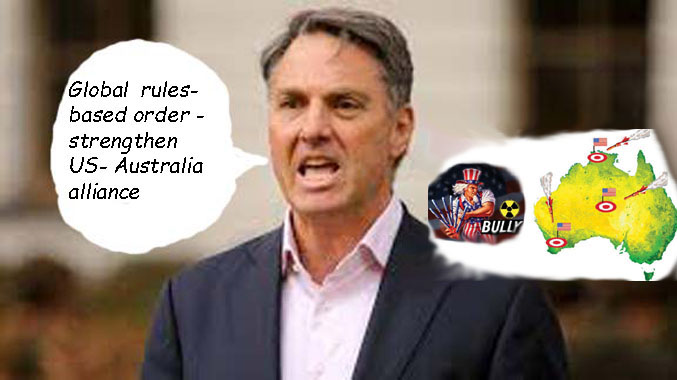
Australia’s Defence Strategic Review – We are becoming a proxy or is it a patsy for the US in a possible conflict with China
Pearls and Irritations By John Menadue, Sep 16, 2022
The Defence Strategic Review must warn Minister Marles about the dangerous path he is committing Australia to. We are becoming a spear carrier for the US.
- Fearing its world hegemony is under challenge the US is goading China at every opportunity. Speaker of the US House of Representatives, Nancy Pelosi’s visit to Taiwan was but the most recent example of this goading.
- The threat we face from China is if we continue to act in our region as a proxy for the US. Other regional countries are not doing so.
- The ‘China’ threat is a rerun of the shameful and earlier ‘yellow peril’. China is not a military threat to Australia.
- The US is the most violent and aggressive country in the world, almost always at war. Its military empire includes 800 foreign military bases.
We need a strong US presence in our region but not the provocative and dangerous behaviour we see time and time again.- We are attaching ourselves uncritically to a declining but dangerous hegemon.
- Our ‘Washington Club’ has been on an American drip feed for a long time.It has a ‘colonial’ mind set.It accepts without serious thought the US view of the world.
- Northern Australia is becoming a US military colony.These points are developed further below.
Northern Australia is becoming a US military colony
In some political difficulty in 2011 Julia Gillard was anxious for President Obama to visit Australia and address the Parliament. Kim Beazley, our Ambassador in Washington was very keen to help. As part of the deal to lock in the Obama visit Gillard agreed to the rotation of Marines through Darwin with US hopes for more future basing in Perth and Cocos-Keeling.
This was the real door opening for the Americans.
The colonisation has continued apace since then with more and more Marines rotating through Darwin and USAF operations in Northern Australia.
But putting the foot on the accelerator of US military colonisation really came in September 2021.
On 16 September 2021, Secretary of State Antony Blinken and Secretary of Defence Lloyd Austin hosted Minister for Foreign Affairs and Minister for Women Marise Payne and Minister for Defence Peter Dutton in Washington D.C. for the 31st Australia-United States Ministerial Consultations (AUSMIN 2021). The Secretaries and Ministers endorsed the following areas of force posture cooperation:
Enhanced air cooperation through the rotational deployment of U.S. aircraft of all types in Australia and appropriate aircraft training and exercises.
Enhanced maritime cooperation by increasing logistics and sustainment capabilities of U.S. surface and subsurface vessels in Australia.
Enhanced land cooperation by conducting more complex and more integrated exercises and greater combined engagement with Allies and Partners in the region.
Establish a combined logistics, sustainment, and maintenance enterprise to support high end warfighting and combined military operations in the region.
See the Australia-US Ministerial Consultations (AUSMIN) joint statement.
We have committed ourselves to ‘high end warfighting and combined military operations and unfettered access for US forces and platforms’ in northern and western Australia.
Only yesterday the AFR highlighted the US focus on western and northern Australia. ‘Former foreign policy adviser to president George W. Bush and new United States Studies Centre chief executive Michael Green predicts the US will become more dependent on Australia for its military operations and intelligence. A shift in foreign policy focus from Asia-Pacific to Indo-Pacific meant that areas of western and northern Australia would be ‘‘critical’’ for the US and its allies. ‘‘We need access: we need purchase on the Indian Ocean and, so geographically, in technology, in terms of military operations and intelligence, the US is going to be more dependent on Australia,’’ Mr Green said. ‘‘There’s no two ways around it.’’
We have not seriously debated or considered the enormous and very risky consequences of all of this. Our sovereignty and integrity as a nation is on the line and at the whim of the US, a country that does not really know which path it is on, crypto-fascism, civil war or anarchy.
In AUKUS, at enormous cost and with great delay we are planning to fuse our future nuclear powered submarines with the US Navy to operate in the South China Sea against China.
Minister Marles has told us that we are not only working ‘inter-operatively’ with the US military in numerous ways but we are now committed to ‘inter-changeabilty’ with US forces. We are locking ourselves even more to a ‘dangerous ally’. Minister Marles seems unconcerned about the dangerous path we are on.Even worse he seems careless about surrendering our national sovereignty. He should be watched very carefully.
The US is the most violent country in the world and almost always at war
There is an enormous and powerful US constituency committed to continual war. We joined those wars in Vietnam, Iraq, Afghanistan and Syria. All were disastrous. Now the US is continually goading and provoking China and wants us to join it. And we are obliging…………….
In this blog, Is war in the American DNA?, I have drawn attention repeatedly to the risks we run in being “joined at the hip” to a country that is almost always at war. The facts are clear…………………..
Despite all the evidence of wars and meddling, the American Imperium continues without serious check or query in America or Australia………………………………………………………………
Australia is trapped within the American Imperium
This complex co-opts institutions and individuals around the globe. It has enormous influence. No US president, nor for that matter any Australian prime minister, would likely challenge it. Morrison and Albanese have the same view on the US imperium.
Australia has locked itself into this complex. Our military and defence leaders are heavily dependent on the US Departments of Defence and State, the CIA and the FBI for advice. We act as their branch offices.
…………………………………… AUKUS has locked us in even more. In AUKUS we are effectively fusing our Navy with that of the US so that we can operate together in the South China Sea and threaten China. We are surrendering more and more of our strategic autonomy by encouraging the US to use Northern Australia as a forward base against China as if the US does not have enough giant military bases ringing China in Japan, ROK and Guam.
A ’rules-based international order’; but not for America
The third reason for the continuing dominance of the American Imperium is the way the US expects others to abide by a “rules-based international order”………………………….
Derivative media compounds Australia’s lack of autonomy
A major voice in articulating American extremism and the American Imperium is Fox News and Rupert Murdoch who exert their influence not just in America but also in the UK and Australia. ………………………. But it is not just the destructive role of News Corp in the US, UK and Australia. Our media, including the ABC are so derivative. It is so pervasive and extensive, we don’t recognise it for its very nature. We really do have a ‘white man’s media’. We see it most obviously today in the way legacy media spew out an endless daily conveyor belt of anti-China stories…………………………………..
Read more in our Defence Strategic Review series of articles. https://johnmenadue.com/the-defence-strategic-review-we-are-ceding-our-sovereignty-to-the-us/
How we got to an $850 billion Pentagon budget – “independent” think tanks are funded by weapons corporations

Speaking Security Newsletter | Note n°173 | 16 September 2022, Stephen Semler
Situation
The Senate might vote on the fiscal year 2023 military budget this month. Or it might not; nobody’s sure. What’s for certain is that the bill the Senate considers will have at least as much as $850 billion for the Pentagon. In other words, we’re staring down a $72 billion year-to-year increase in military spending with this legislation: The FY2022 version of the same bill (National Defense Authorization Act, or NDAA) licensed $778 billion for the Pentagon.
How we got to an $850 billion Pentagon budget
In March, Joe Biden proposed increasing annual military spending by $35 billion—to $813 billion—as part of his FY2023 budget request. In June, the House Armed Services Committee (HASC) added another $37 billion on top of that before advancing the $850 billion bill to the House floor for approval.
This decision was reportedly a matter of course for the committee. According to one HASC member, there was “almost no debate” on dumping another $37 billion on top of Biden’s own proposed increase. An overlooked reason why the committee’s move was so automatic was the ‘expertise’ that made a $72 billion year-to-year increase seem appropriate or even natural.
Think tanks are said to be free from the ugly forces that bias in-house policy planning—namely, all the lobbying and campaign cash that encourage members of Congress to make decisions based on parochial interests and not the public’s. The problem is that establishment think tanks are corrupted by the same monied interests members of Congress are. In this case, we’re talking about the arms industry.
Every think tank represented in a House Armed Services Committee hearing to provide expert testimony from January 1, 2020 through September 16, 2022 that disclosed its donors received funding from military contractors (the one that didn’t disclose its donors was the hawkish American Enterprise Institute).
The result? Military contractors were able to launder their profit-driven interests through ostensibly non-political institutions, while powerful lawmakers on the HASC got their parochially-driven policy positions validated by ostensibly unbiased ‘expertise’.
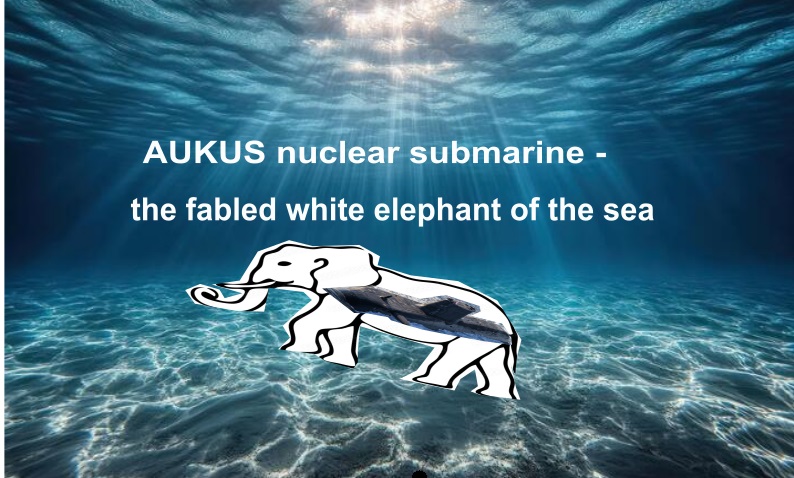
Australia needs a non-nuclear submarine – the TKMS TYPE 218SG would be fine – just do it, Richard Marles!

This article is definitely worth the read! Highly possible we may not be getting nuclear subs in Australia – and the reasons why!
National Times The Answer is staring Richard Marles in the Face. ( Article by Politics Australia) 17 Sept 22.

It was fomer Australian Prime Minister Scott Morrison’s rank incompetence, stupidity and arrogance that has landed Australia in its Submarine replacement program dilemma
But all this goes back the Liberal Party and its bizarre idea to buy French Nuclear Submarines and have them convert back to a conventional propulsion system. This meant a complete redesign of the existing hull to accommodate diesel engines, fuel tanks and bank of batteries.
Just what were our Defence Planners thinking, obviously the French must have been laughing all the way to the bank.
All this was done in the face of existing and proven conventionally designed submarines. Submarines that were available at the time.

It was only because Scott Morrison wanted to appear the big man by cancelling the French submarine contract and tugging his forelock to the British and the Americans who held out the distant promise of Australia buying British or American Nuclear Submarines. In reality it was about basing existing American submarines here for them to operate out of Australia.
As it turns out the current and forecast British and American building programs have no scope to add in an extra eight or so submarines for Australia’s needs and never intended to.
Then there was Peter Dutton’s desperate political pitch that Australia could lease a couple of Nuc Boats from the Americans, another stupid idea.

At present Richard Marles is doing an ‘all the way with LBJ’ routine, sticking to the script with Australia purchasing Nuclear Submarines. Having Nuc Boats isn’t just a matter of tying them up at the Port of Darwin, Freemantle, or Sydney. There needs to be specific infrastructure to accommodate, service and maintain these expensive pieces of kit and that is something Australia does not have.
Sure, the proponents of Nuclear Submarines will argue that Nuc Boats have unlimited range and would be able to conduct long range patrols right up into the South China Sea, in cooperation with the Americans, and remain on station undetected for weeks and weeks on end.
While in theory this is true, Nuc Boats and to a lesser degree conventional submarines are governed by the same logistical problem that faced the Germans in WWII and that is the amount of food they need to carry.
Politics Australia can assure our readers that a Nuc Boat’s endurance is governed by the amount food it can carry which obviously limits its time on station.
So, let’s look at some basic economics.
If it were to occur, Australia might purchase a current Virginia class submarine which costs $US3.6 billion ($5.2 billion) but as reported in the Australian Financial Review by Andrew Tillett who reports that estimates for the new design put the price tag at between $US5.8 billion ($8.4 billion) and $US6.2 billion ($9 billion) per boat.
However, the cost of a German 218 class submarine is $1.36 Billion.
For instance, the German 212A, 214 and 218 class submarines are very capable and are equipped with Air Independent Propulsion.
The Air Independent Propulsion allows submarines to stay underwater longer before surfacing to recharge the battery that powers its systems. The battery is charged by a diesel engine that needs air to operate.
As such, the Type 218SG Submarine can last underwater two times longer than Australia’s current Collins Class submarines. “That makes the submarine even more stealthy and mysterious because it can be all over the place without coming up,”
They have a crew of 30 and can stay submerged for 3-4 weeks.
Australia could buy 10 class 212A or 218 submarines off the shelf for approximately $15B by around 2030,
It’s widely known the Germans are very keen to do a deal with Australia over Submarine purchases.
The conventional Submarines are quieter than nuke boats and could be maintained in Australia.
Nuclear submarines are unmaintainable in Australia and would have to be maintained in the USA. Crews in the vicinity of 100 to 137 add to the costs, and if ever delivered, it won’t be until at least 2045 at a cost of more than $150B.
Food for thought, isn’t it?
Richard Marles has to stop dithering and tugging his forelock to the Americans and think about Australia’s needs first and not those of the Americans and their anti-China stance.
Richard Marles can order German, Japanese, Spanish or Swedish conventional submarines and have them delivered in a timely manner whilst still maintaining Australia’s best interests.
Stop dithering Richard Marles and just ‘do it’
Gullible governments – US Energy Department returns to costly and risky plutonium separation technologies
Bulletin of the Atomic Scientists, By Jungmin Kang, Masafumi Takubo, Frank von Hippel | September 14, 2022, On July 17, the United Kingdom ended 58 years of plutonium separation for nuclear fuel by closing its Magnox nuclear fuel reprocessing plant at Sellafield. This leaves the UK with the world’s largest stock of separated power-reactor plutonium, 140 metric tons as of the end of 2020, including 22 tons separated for Japan. The UK is also second in the world only to Russia in the size of its overall inventory of separated plutonium with 119 tons, including 3.2 tons for weapons. Russia’s stock, 191 tons, is mostly “weapon-grade” separated for use in nuclear weapons during the Cold War, but the UK’s power-reactor plutonium is also weapon usable, and therefore also poses a security risk. The UK has no plan for how it will dispose of its separated plutonium. Its “prudent estimate” placeholder for the disposal cost is £10 billion ($12.6 billion).
One obvious way to get rid of separated plutonium would be to mix it with depleted uranium to make “mixed-oxide” (MOX) fuel energetically equivalent to low-enriched uranium fuel, the standard fuel of conventional reactors. Despite the bad economics, since 1976 France has routinely separated out the approximately one percent plutonium in the low-enriched uranium spent fuel discharged by its water-cooled reactors and recycled the plutonium in MOX fuel.
But both the UK and the US have had negative experiences with building their own MOX production plants.
In 2001, the UK completed a MOX plant, only to abandon it in 2011 after 10 years of failed attempts to make it operate. For its part, the US Energy Department, which owns almost 50 tons of excess Cold War plutonium, contracted with the French government-owned nuclear-fuel cycle company, Areva (now Orano), in 2008 to build a MOX fuel fabrication plant. But the United States switched to a “dilute and dispose” policy for its excess plutonium in 2017 after the estimated cost of the MOX plant grew from $2.7 billion to $17 billion.
Despite decades of failed attempts around the world to make separated plutonium an economic fuel for nuclear power plants, the United States Energy Department is once again promoting the recycling of separated plutonium in the fuel of “advanced” reactor designs that were found to be economically uncompetitive 50 years ago. At the same time, other countries—including Canada and South Korea, working in collaboration with the Energy Department’s nuclear laboratories—are also promoting plutonium separation as a “solution” to their own spent fuel disposal problems. These efforts not only gloss over the long history of failure of these nuclear technologies; they also fail to take into account the proliferation risk associated with plutonium separation—a risk that history has shown to be quite real.
Renewed advocacy for plutonium separation. As the UK finally turns its back on plutonium separation, the United States Energy Department is looking in the other direction. Within the Energy Department, one part, the Office of Defense Nuclear Nonproliferation, is struggling to dispose of excess Cold War weapons plutonium, as two others—the Office of Nuclear Energy and ARPA-E (Advanced Research Project Agency – Energy)—are promoting plutonium separation……………………………………..
In fact, the Energy Department’s Office of Nuclear Energy is promoting sodium-cooled reactor designs based on the Idaho National Laboratory’s Experimental Breeder Reactor II, which was shut down in 1994 due to a lack of mission after the end of the US breeder program a decade earlier. The Energy Department’s office is now supporting research, development, and demonstration of sodium-cooled reactors by several nuclear energy startups.

Among them is Bill Gates’ Terrapower, to which the department has committed as much as $2 billion in matching funds to build a 345-megawatt-electric sodium-cooled prototype reactor—called Natrium (sodium in Latin)—in the state of Wyoming. One of Wyoming’s current senators, John Barrasso, is a leading advocate of nuclear power and could become chair of the Senate Committee on Energy and Natural Resources if the Republicans take control of the upper chamber in the elections this fall.
Terrapower insists Natrium is not a plutonium breeder reactor and will be fueled “once through” with uranium enriched to just below 20 percent and its spent fuel disposed of directly in a deep geologic repository, without reprocessing. Natrium, however, is set to use, initially at least, the same type of fuel used in Idaho’s Experimental Breeder Reactor II. The Energy Department maintains that this spent fuel cannot be disposed of directly because the sodium in the fuel could burn if it contacts underground water or air. On that basis, the Idaho National Laboratory has been struggling for 25 years to treat a mere three tons of spent fuel from the Experimental Breeder Reactor II using a special reprocessing technology called “pyroprocessing.”

In pyroprocessing, the fuel is dissolved in molten salt instead of acid, and the plutonium and uranium are recovered by passing a current through the salt and plating them out on electrodes. In 2021, Terrapower stated that it plans to switch later to a fuel for Natrium that does not contain sodium but then received in March 2022 the largest of eleven Energy Department grants for research and development on new reprocessing technologies.
Liquid-sodium-cooled reactor designs date back to the 1960s and 1970s, when the global nuclear power community believed conventional power reactor capacity would quickly outgrow the available supply of high-grade uranium ore. Conventional reactors are fueled primarily by chain-reacting uranium 235, which comprises only 0.7 percent by weight of natural uranium. Because of this low percentage, nuclear power advocates focused on developing plutonium “breeder” reactors that would be fueled by chain-reacting plutonium produced from the abundant but non-chain-reacting uranium 238 isotope, which constitutes 99.3 percent of natural uranium. (Liquid-sodium-cooled reactors are sometimes called “fast-neutron reactors” because they utilize fast neutrons to operate. Sodium was chosen as a coolant because it slows neutrons less than water. Fast neutrons are essential to a plutonium breeder reactor because the fission of plutonium by fast neutrons releases more excess secondary neutrons whose capture in uranium 238 makes possible the production of more plutonium than the reactor consumes.)
Large programs were launched to provide startup fuel for the breeder reactors by reprocessing spent conventional power-reactor fuel to recover its contained plutonium.
………………………………….. Only a few prototypes were built and then mostly abandoned. In 2020, the Organisation for Economic Co-operation and Development’s Nuclear Energy Agency estimated that sufficient low-cost uranium would be available to fuel existing conventional reactor capacity for more than a century.
Zombie plutonium-separation programs. Even though separated plutonium has morphed from the nuclear fuel of the future into a disposal problem, civilian plutonium separation continues in several countries, notably France, Japan, and Russia. It is also being advocated again by the offices within the US Energy Department that fund research and development on nuclear energy.
Russia still has an active breeder reactor development program, with two operating liquid sodium-cooled prototypes—only one of them plutonium fueled—plus a small, liquid, lead-cooled prototype under construction. But Russia has already separated 60 tons of power-reactor plutonium and has declared as excess above its weapons needs approximately 40 tons of weapon-grade plutonium. These 100 tons of separated plutonium would be enough to provide startup fuel for five years for six full-size breeder reactors.
China and India have breeder reactor prototypes under construction, but their breeders are suspected of being dual-purpose. In addition to their production of electric power, the weapon-grade plutonium produced in uranium “blankets” around the breeder cores is likely to be used for making additional warheads for their still-growing nuclear arsenals.
France and Japan require their nuclear utilities to pay for reprocessing their spent fuel and for recycling the recovered plutonium in MOX fuel, even though both countries have known for decades that the cost of plutonium recycling is several times more than using low-enriched uranium fuel “once through,” with the spent fuel being disposed of directly in a deep geological repository.
Claimed benefits of reprocessing. Advocates of plutonium recycling in France and Japan justify their programs with claims that it reduces uranium requirements, the volume of radioactive waste requiring disposal, and the duration of the decay heat and radiotoxicity of the spent fuel in a geologic repository. These benefits are, however, either minor or non-existent. First, France’s plutonium recycling program reduces its uranium requirements by only about 10 percent, which could be achieved at much less cost in other ways, such as by adjusting enrichment plants to extract a higher percentage of the uranium 235 isotopes in natural uranium. Second, with proper accounting, it is not at all clear that recycling produces a net reduction in the volume of radioactive waste requiring deep geological disposal. Third, the claimed heat reduction, if realized, could reduce the size of the repository by packing radioactive waste canisters more closely. But this is not significant because, with the currently used reprocessing technology, americium 241, which has a 430-year half-life and dominates the decay heat from the spent fuel during the first thousand years, remains in the reprocessed waste.
Claims of the reduced toxicity of reprocessed waste turn out to be false as well. For decades, France’s nuclear establishment has promoted continued reprocessing in part out of hope that, after its foreign reprocessing customers did not renew their contracts, it could sell its plutonium recycling technology to other countries, starting with China and the United States. But, with the notable exception of the canceled US MOX plant, these efforts so far have not materialized, and the willingness of the French government to continue funding its expensive nuclear fuel cycle strategy may be reaching its limits………………………..
Proliferation danger. Aside from the waste of taxpayer money, there is one major public-policy objection to plutonium separation: Plutonium can be used to make a nuclear weapon. The chain-reacting material in the Nagasaki bomb was six kilograms of plutonium, and the fission triggers of virtually all nuclear warheads today are powered with plutonium. Reactor-grade plutonium is weapon-usable, as well.
In the 1960s, however, blinded by enthusiasm for plutonium breeder reactors, the US Atomic Energy Commission—the Energy Department’s predecessor agency—promoted plutonium worldwide as the fuel of the future. During that period, India sent 1,000 scientists and engineers to Argonne and other US national laboratories to be educated in nuclear science and engineering. In 1964, India began to separate plutonium from the spent fuel of a heavy-water research reactor provided jointly by Canada and the United States. Ten years later, in 1974, India used some of that separated plutonium for a design test of a “peaceful nuclear explosive,” which is now a landmark in the history of nuclear weapon proliferation……………………….
False environmental claims for reprocessing. Since the 1980s, advocates of reprocessing and plutonium recycling and fast neutron reactors in the Energy Department’s Argonne and Idaho National Laboratories have promoted them primarily as a strategy to facilitate spent fuel disposal.
The George W. Bush administration, which came to power in 2001, embraced this argument because it saw the impasse over siting a spent fuel repository as an obstacle to the expansion of nuclear power in the United States. To address the proliferation issue, the Bush Administration proposed in 2006 a “Global Nuclear Energy Partnership” in which only countries that already reprocessed their spent fuel (China, France, Japan, and Russia) plus the United States would be allowed to reprocess the world’s spent fuel and extract plutonium. The recovered plutonium then would be used in the reprocessing countries to fuel advanced burner reactors (breeder reactors tweaked so that they would produce less plutonium than they consumed). These burner reactors would be sodium-cooled fast-neutron reactors because the slow neutrons that sustain the chain reaction in water-cooled reactors are not effective in fissioning some of the plutonium isotopes. After Congress understood the huge costs involved, however, it refused to fund the partnership…………………………….
Plutonium and the geological disposal of spent fuel. Despite the unfavorable economics, the idea of separating and fissioning the plutonium in spent fuel has been kept alive in the United States and some other countries in part by continuing political and technical obstacles to siting spent fuel repositories. Proponents of reprocessing have managed to keep their governments’ attention on plutonium because it is a long-lived radioelement, a ferocious carcinogen—if inhaled—and has fuel value if recycled.
But detailed studies have concluded that plutonium makes a relatively small contribution to the long-term risk from a spent fuel geologic repository for spent fuel from commercial power reactors.
……………………………………………….. risk assessments are theoretical, but they are based on real-world experience with the movement of radioisotopes through the environment.
The main source of that experience is from the large quantities of fission products and plutonium lofted into the stratosphere by the fireballs of megaton-scale atmospheric nuclear tests between 1952 and 1980. During that period, the Soviet Union, the United States, China, the United Kingdom, and France injected into the stratosphere a total of about eight tons of fission products and 3.4 tons of plutonium—comparable to the quantities in a few hundred tons of spent light water reactor fuel. These radioisotopes returned to earth as global radioactive “fallout.”
…………………………………… In addition to the proliferation danger dramatized by the case of India, plutonium separation also brings with it a danger of a massive accidental radioactive release during reprocessing. The world’s worst nuclear accident before Chernobyl involved the Soviet Union’s first reprocessing plant for plutonium production, in 1957……………………………………………..
Gullible governments. Nearly half a century after India conducted its first nuclear test in 1974 with assistance provided inadvertently by Canada and the United States, both countries’ governments seem to have forgotten about the proliferation risk associated with spent fuel reprocessing. Today, advocates of fast-neutron breeder or burner reactors are pitching again the same arguments—used before the test—to gullible governments that seem unaware of the history of this issue. This ignorance has created problems for Canada’s nonproliferation policy as well as that of the United States.
In Canada, a UK startup, Moltex, has obtained financial support from federal and provincial governments by promising to “solve” Canada’s spent fuel problem. Its proposed solution is to extract the plutonium in the spent fuel of Canada’s aging CANDU (CANada Deuterium Uranium) reactors to fuel a new generation of molten-salt-cooled reactors. The Moltex company also proposes to make Canada an export hub for its reactors and small reprocessing plants.
In South Korea, the Korea Atomic Energy Research Institute, with support from Energy Department’s Argonne and Idaho National Laboratories, has similarly been campaigning to persuade its government that pyroprocessing spent fuel and fissioning plutonium in sodium-cooled reactors would help solve that country’s spent fuel management problem.
It is time for governments to learn again about the risks involved with plutonium separation and to fence off “no-go zones” for their nuclear energy advocates, lest they unintentionally precipitate a new round of nuclear-weapon proliferation.
Notes:
[1] Carbon 14 and iodine 129 are difficult to capture during reprocessing and therefore are routinely released into the atmosphere and ocean by France’s reprocessing plant at La Hague. Also, had the uranium 238 in the spent fuel not been mined, its decay product, radium 226, would have been released within the original uranium deposit. So, even though some reprocessing advocates join with nuclear power critics in amplifying the hazards of plutonium and other transuranic elements in underground radioactive waste repositories, they generally omit comparisons with reprocessing hazards (in the case of reprocessing advocates) or with natural uranium deposits (in the case of repository opponents). https://thebulletin.org/2022/09/some-fuels-never-learn-us-energy-department-returns-to-costly-and-risky-plutonium-separation-technologies/
1 This month
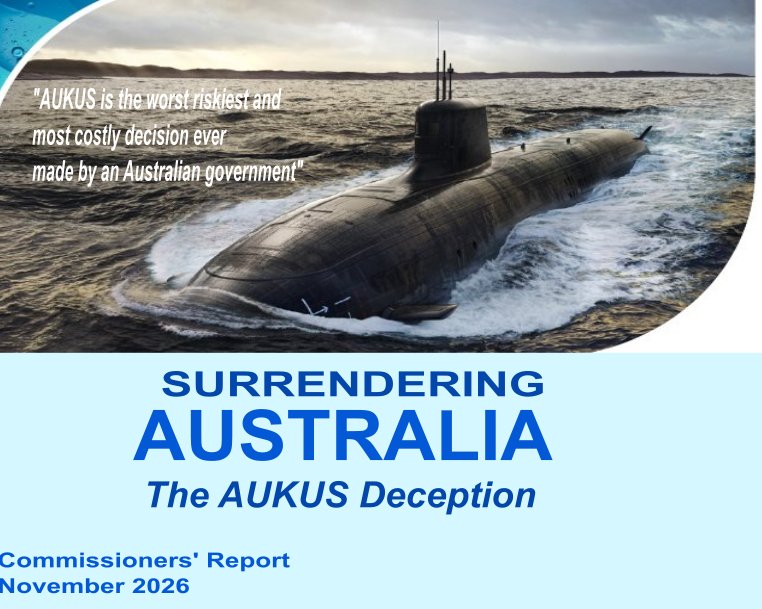
Read the Public Inquiry Report, the Commissioners’ report, Surrendering Australia: The AUKUS Deception is available to download for free at aukuspublicinquiry.com. Or just watch the replay of the National Press Club Luncheon.

4 November – Will AUKUS keep us safe – at what cost?
the Commissioners of the AUKUS Public Inquiry present their findings at the National Press Club of Australia in Canberra. iview.abc.net.au/show/national-press-club-address
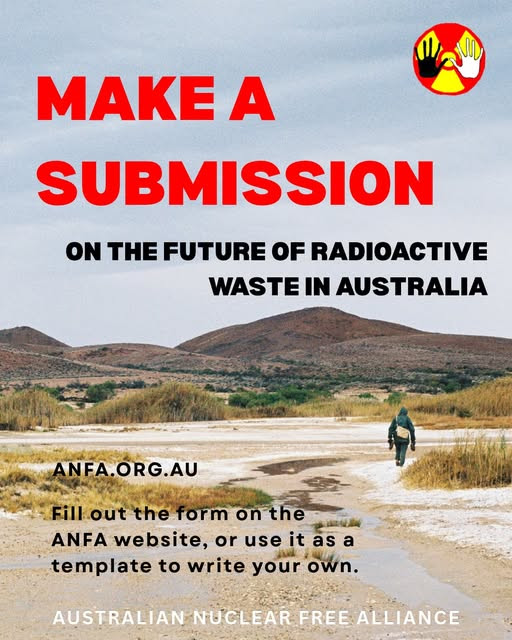
Submissions to the federal government’s new draft framework close on the 13th November 2026.
Australians deserve the truth
about
AUKUS – https://aukuspublicinquiry.com/

PETITION – To: Prime Minister Anthony Albanese and the Australian Labor Government

of the week – Australians for War Powers Reform (AWPR)
To see nuclear-related stories in greater depth and intensity

