Global renewables investment hits record high, boosted by solar and offshore wind — RenewEconomy

Global renewable energy investment reached $US226 billion in the first half of 2022, a record that defied supply chain challenges and cost inflation. The post Global renewables investment hits record high, boosted by solar and offshore wind appeared first on RenewEconomy.
Global renewables investment hits record high, boosted by solar and offshore wind — RenewEconomy
August 3 Energy News — geoharvey

Opinion: ¶ “The Hollow Promise Of Small Modular Nuclear Reactors” • Nuclear power offers a great example of what happens when hype, advertisement, and belief in impossible promises are very much the norm. And Small Modular Reactors are one class of nuclear reactors that have been extensively promoted in this vein during the last decade. […]
August 3 Energy News — geoharvey
Hard-Wired for Corruption -The arms trade and Australia’s lax monitoring regimes
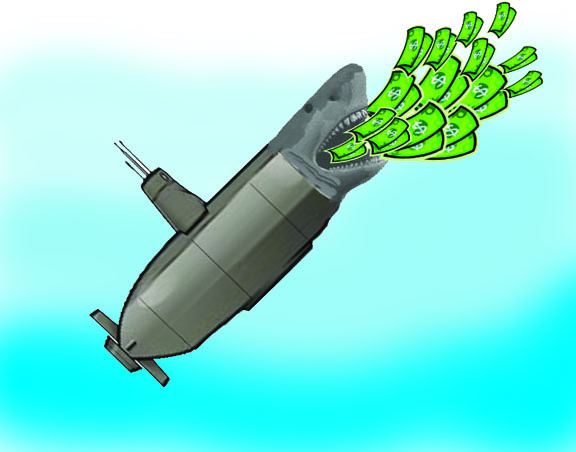
Chris Douglas concludes that from an anti-bribery/corruption risk perspective, Naval Group should not have been put on the shortlist for the Future Submarines program, let alone selected to partner with Australia to build the submarines. The ‘contract of the century’ was mired in unacceptable risk from the outset due to Defence’s poor risk-management processes and non-existent specific anti-bribery/corruption measures. A formal inquiry is needed both to examine how this deeply flawed decision was reached and to help prevent the situation recurring in future major defence procurement projects.
‘In the arms business, it’s always a time of war’, wrote Roeber. Without war, there is no revenue, no profit, no growth. Countries with established arms manufacturing industries therefore have a perpetual economic driver towards conflict and warfare.
To give just one example, there is no visibility around what or how much weaponry Australia has exported to Saudi Arabia or the United Arab Emirates during the years of the Yemen war.
https://undueinfluence.substack.com/p/hard-wired-for-corruption?utm_source=substack&utm_medium=email Michelle Fahy 1 Aug 22, The international arms trade, worth around US$200 billion a year, represents less than 1 per cent of world trade yet is said to account for about 40 per cent of its corruption. While estimates vary, there is little dispute amongst long-term arms industry researchers that it is the most corrupt industry on the planet. Indeed, it is said to be hard-wired for corruption.
The World Peace Foundation (WPF), housed at Tufts University in America, produces extensive research on the global arms trade, including a compendium of corrupt arms deals. It says that ‘Corruption within the industry is often treated in terms of isolated incidents, when it is, in fact, representative of the business model for the industry’.
This finding is supported by research for Transparency International’s (TI) Government Defence Integrity (GDI) index, which assesses the quality of controls for managing corruption risk in defence and security institutions. The GDI shows that 86 per cent of global arms exports between 2016 and 2020 originated from countries at moderate to very high risk of corruption in their defence sectors, while 49 per cent of global arms imports went to countries at high to critical risk of defence corruption. Australia is rated as a moderate corruption risk in the GDI, with two key areas of concern being the lack of transparency in defence procurement and weak anti-corruption safeguards on military operations.
The legal trade in arms has long been known for its susceptibility to corruption. This is due to the high value and complexity of arms deals, the close association between the arms industry and political power, and the secrecy claimed necessary for national security, all of which shield arms-related activities from scrutiny. As arms industry expert Joe Roeber pointed out, ‘Defence goods are complex and each contract contains a mix of special requirements. Comparison is remarkably difficult and effective monitoring by public watchdogs is all but impossible. An unknowable price can be manipulated to accommodate any amount of covert payments’. Further, there are very few major arms deals on offer globally each year—usually less than 10 in the range of tens of billions each meaning competition is intense—while only a small number of people make the decision on what to buy…
‘In the arms business, it’s always a time of war’, wrote Roeber. Without war, there is no revenue, no profit, no growth. Countries with established arms manufacturing industries therefore have a perpetual economic driver towards conflict and warfare.
For example, in the month leading up to Russia’s invasion of Ukraine, and just days after a horrific attack in Yemen by the Saudi-led coalition using a Raytheon missile that killed 90 people and injured 200, Raytheon’s CEO told investors that global tensions represented ‘opportunities for international sales’, and that he expected to ‘see some benefit’ from ‘the tensions in Eastern Europe [and] in the South China Sea’. Meanwhile, Just Security has noted that the ‘well-documented risks of corruption in the arms industry and the potential for profiteering from an arms race in the Ukraine war’ are risk factors embedded in the massive flow of lethal weaponry from the West into Ukraine…
Blanket secrecy
All countries justify secrecy around arms-related activity with claims of protecting ‘national security’. The Australian government, for example, imposes a high level of secrecy over its arms procurement, sustainment and export deals, with politicians and the Department of Defence resisting demands for greater transparency…
Australia also relies on ‘commercial-in-confidence’ justifications to protect arms industry interests. This, in combination with national security claims, has led to almost blanket secrecy around Australia’s arms exports. To give just one example, there is no visibility around what or how much weaponry Australia has exported to Saudi Arabia or the United Arab Emirates during the years of the Yemen war. The government has only released information about the number of export permits it has approved or declined (by March 2021 Australian approvals to these two nations topped 100). However, permit numbers are not useful, as not all permit approvals translate into actual exports, and permits can cover numerous types of equipment, small or large quantities, extend for varying time periods, and even cover multiple destinations.
This is significant because the decades-long UK Campaign Against the Arms Trade has amassed a ‘mountain of evidence of corruption in arms sales to Saudi’ showing that bribery is central to the Saudi government’s approach to arms deals. Andrew Feinstein, author of the exhaustively researched 600-page book The Shadow World: Inside the Global Arms Trade, told ABC radio in 2018 that he had never seen a Saudi arms deal that didn’t involve ‘massive amounts’ of corruption, and that the percentage of a Saudi contract paid in bribes could be up to ‘about 35 per cent of the contract price’. The United Arab Emirates is also known for its secrecy, corruption, and money laundering links.
Australia’s decreasing commitment to anti-corruption measures
Australia’s extraordinary current spending on military capability—$270 billion in a decade, on top of the usual defence budget—means the domestic arms industry is awash with cash. At the same time, the public’s limited ability to scrutinise this spending has been eroded further by a defence minister, Peter Dutton, who has restricted Defence’s engagement with the media. The combination of record sums of money and little scrutiny provides fertile ground for corruption.
Australia’s performance on anti-corruption measures has nose-dived in recent years:
- It recorded its worst ever score on a global anti-corruption index in 2022, dropping four points (from 77 to 73) and falling to 18th place. Australia has now dropped 12 points in a decade, from a high of 7th (85 points) in 2012.
- Its membership status at the Open Government Partnership risks being put under review because it has ‘acted contrary to the OGP process’ and failed to submit its latest national action plan.
- Its negligible attempts to investigate and prosecute cases of foreign bribery have been criticised by the Working Group for the OECD’s Anti-Bribery Convention (it expressed concern over ‘the continued low level of foreign bribery enforcement… given the size of Australia’s economy and the high-risk regions and sectors in which its companies operate’ and ‘its long-standing challenges in attributing wrongdoing to corporate entities’).
- It has been named an ‘international laggard’ in expanding anti-money-laundering laws in line with recommendations by the G7’s Financial Action Task Force, one of only three countries, alongside Haiti and Madagascar, to have failed to do so. Australia now risks being put on a grey list of countries that don’t meet international money-laundering standards. (Australia has been resisting anti-money-laundering regulation for fifteen years.)
- A dedicated federal anti-corruption body still has not been established…
Red flags
‘The biggest corruption risk in an arms deal is a company’s decision to pay bribes to secure the deal’, says Sam Perlo-Freeman, former Program Manager for Global Arms and Corruption, World Peace Foundation, Tufts University. Decisions to pay significant bribes are made at a company’s highest levels, and while no amount of technical anti-corruption measures will eliminate high-level corrupt behaviour, strong whistleblower protection mechanisms can increase the probability of exposure. Other anti-corruption measures are also important, particularly at lower levels where zealous company employees might be tempted to cut corners to advance their careers. However, such technical measures do not tackle the underlying political and economic drivers of high-level corruption in the arms industry, where winning large deals is necessary for corporate survival and price is not the primary concern. As Joe Roeber noted incisively, bribery in this context ‘is not just a simple add-on to the procurement process, but distorts the decisions. What would the equilibrium level of trade be without the stimulus of corruption?’ …
No evidence has emerged of…extensive corrupt practices in Australia, but there are regular red flags of possible arms industry corruption. Chris Douglas, a 31-year veteran of financial crime investigation for the Australian Federal Police, who now runs his own consultancy, is an Australian expert in anti-bribery and corruption measures. He says that such compliance programs are a necessary component of good corporate and public governance—essential for preventing corruption in the defence industry. Although he has lodged numerous Freedom of Information requests (FOIs) with the Defence Department about anti-bribery/corruption measures on major procurements, he says, ‘I have not detected an ABC [anti-bribery/corruption] program being used in any of the major defence projects I have examined’.
Douglas says that the Department of Defence ‘has not caught up with modern corporate management practices’ and has no understanding of how to use anti-bribery/corruption risk-based assessments to manage the significant risks posed by bribery and corruption in its projects, particularly major ones. As he puts it: ‘That any department would not undertake an ABC risk assessment when such large sums of money are involved, in an industry that is rated high for corrupt behaviour, speaks volumes about a poor culture within that department’.
Repeated cost blowouts and delays are just two of the red flags for corruption that are regularly found in Australian defence procurement and sustainment projects. The cost of these to the public is substantial.
While there are numerous examples of red flag projects, here are just three.
Naval Group—submarine contract
This contract was abandoned with the arrival of AUKUS, but the original deal with Naval Group requires a public inquiry to examine the full extent of the process by which the internationally lucrative ‘contract of the century’ was awarded. The need for an inquiry has been amplified given the shock shredding of Defence’s largest ever contract, a decision which made international news and may yet cost Australia billions.
Continue readingThe Anti-China Brainwashing Is Working: Notes From The Edge Of The Narrative Matrix

Caitlin Johnstone 2 Aug 22, If someone criticizing the most dangerous agendas of the most powerful and destructive government on earth looks like “Russian propaganda” or “Chinese propaganda” to you, it’s because you yourself have been brainwashed by propaganda.
The western propaganda campaign against China is succeeding, even among many who consider themselves anti-war or critical of establishment power. Whatever sick future agendas they’re manufacturing consent for, they’ll be able to roll right on out. People’s brains are turning to soup.
❖
The best case scenario for Nancy Pelosi’s Taiwan visit — the absolute best case — is that it ratchets up cold war tensions with China that threaten us all and benefit ordinary people in no way. The worst case scenario is as bad as anything you can possibly imagine.
So why are we being told that it’s still happening? Well, as Antiwar’s Dave DeCamp reminded us a few months ago, one major factor is that it facilitates US military expansionism geared toward encirclement strategies against China.
“The United States no longer sees Taiwan as a ‘problem’ in our relations with China, we see it as an opportunity to advance our shared vision for a free and open Indo-Pacific,” Raymond Greene, the deputy director of the de facto US embassy in Taipei, said last year.
Imagine if the Democratic Party fought against Republicans as hard as they fight against world peace……..
Taiwan is a US military asset, not a US ally. That’s a very significant difference that everyone, especially the Taiwanese, would do well to keep in mind………
It’s a safe bet that a minority of Americans could find Taiwan on a map, and that of these the overwhelming majority believe it’s just some island nation that China randomly decided it hates…….
There needs to be a major war every generation or two, otherwise peace becomes normalized and becomes the expectation. If you allow that to happen then war begins to stand out against expected norms like the freakish abomination that it is, and militarism looks insane.
They use propaganda to facilitate war, but they also use war to facilitate propaganda. Keeping the wars going helps the propaganda machine spin war as something normal and expected and to be continuously prepared for. It acts as an immunosuppressant against the public’s natural, healthy rejection of war. The more normalized war becomes, the more suppressed our collective immune system’s rejection of it becomes.
War is the absolute worst thing in the world. It’s the most insane thing humans do. The most destructive. The least sustainable. The most conducive to human suffering. Only by very aggressive narrative management can the public be dissuaded from insisting on peace…………………..
Westerners are only encouraged to contemplate the horrors of war when it is someone else’s war.
https://caitlinjohnstone.substack.com/p/the-anti-china-brainwashing-is-working?r=19f8t&s=r&utm_campaign=post&utm_medium=web&utm_source=direct
“Exciting and pivotal moment:” NSW prepares for big switch from coal to renewables — RenewEconomy

AEMO briefs investors on the first of many auctions designed to bring in wind, solar and storage to replace ageing coal plants in the country’s biggest grid. The post “Exciting and pivotal moment:” NSW prepares for big switch from coal to renewables appeared first on RenewEconomy.
“Exciting and pivotal moment:” NSW prepares for big switch from coal to renewables — RenewEconomy
South Australia’s biggest renewables hub lands a second power offtake deal — RenewEconomy

The stage one wind farm of Neoen’s massive Goyder Renewables Zone has notched up its second power purchase deal, this time with Flow Power. The post South Australia’s biggest renewables hub lands a second power offtake deal appeared first on RenewEconomy.
South Australia’s biggest renewables hub lands a second power offtake deal — RenewEconomy
“World first” network innovation promises more wind and solar, less curtailment — RenewEconomy

Victorian network company Powercor finds way to squeeze more wind and solar onto its grid without expensive new infrastructure or hefty curtailment. The post “World first” network innovation promises more wind and solar, less curtailment appeared first on RenewEconomy.
“World first” network innovation promises more wind and solar, less curtailment — RenewEconomy
There is no shortage of gas, or fossil fuel cartels, in Australia — RenewEconomy

Sudden price falls in gas and electricity markets have caught out Australia’s fossil fuel cartels – like a trillion dollar toddler – with their hands in the cookie jar. The post There is no shortage of gas, or fossil fuel cartels, in Australia appeared first on RenewEconomy.
There is no shortage of gas, or fossil fuel cartels, in Australia — RenewEconomy
Beatty Nevada Nuclear waste explosions, in the desert.
Terry Southard 2 Aug 22,
Explosions of nuclear waste from pieces of decommissioned San onofre reactor, by San diego.The pieces of the reactor and the other waste from the San Diego, San Onofre reactor decommissioning, started blowing up in the desert outside beatty Nevada. Later the San onofre nuclear waste was dug up and transfered, to a nuclear waste facility outside salt lake city Utah. The explosions, were caused by the decay heat and pyrophoricty of the radionuclides, in the waste and that had accumulated on the reactor pieces.
We simply, don’t get to learn from the mainstream media, about these radioactive hazards.
New Mexico was on fire this summer. 800 thousand acres burned. So much nuclear waste and fallout, in New Mexico, from bomb building and testing. I would not be surprised, if there is a major uptick in lung cancers, and other cancers, in New Mexico in the next 5 years . Nuke bombs exploded under rivers in New Mexico, project gas buggy. Uranium waste catastrophes. Nuclear waste dumps in many places. Largest plutonium core operation in the world at Los Alamos, by Santa fe. Wipp plutonium dump, by Clovis.
These explosions were caused by parts of the decommisioned, highly radioactive pieces of the San onofre reactor, buried in Nevada for a few years. They had to dqqig them up, after the explosions and, moved them to utah. You would have thought, peopke in Utah, would have known better.
Steppenwolf just stick yur head into the sand, pretend that all is grand and everything will be ok
This will happen at other shoddy nuclear waste operations in the usa. Typically under-regulated, and under supervised by cheap and mismanaged, foreign owned nuclear waste management companies. Give them an inch and, they take a mile. They bribe state legislators and start taking in nuclear waste, from other countries. Countries like Japan and Estonia. That happened at the white mesa nuke waste operation, by blanding, utah. I think there is greater risk of wildfires, in the white mesa area, from the pryophoric effects of radionuclide dust from white mesa, blowing into surrounding areas.. There was a truck full of nuke waste owned by energy fuels, by Salt Lake City, that caught fire in 2018. The white mesa, energy fuel operation is trucking in nuke waste, from all over the world.
Radionuclides generate their own heat and can start fires on their own even in small amounts, like the plutonium did at rocky flats. That is why the US Armed forces, uses depleted uranium in bombs, bullets and, other munitions.
https://en.wikipedia.org/wiki/Rocky_Flats_Plant
https://www.osti.gov/biblio/515622
Wildfires and cancer
https://www.thelancet.com/journals/lanplh/article/PIIS2542-5196(22)00067-5/fulltext
More wildfires and cancer
https://www.upi.com/Health_News/2022/05/17/wildfires-cancer-risk-study/5531652723109/
Wildfires are increasing cancer rates in the World.
https://thescotfree.com/opinion/incident-at-santa-susana-a-meltdown-a-fire-and-a-cover-up/
Is nuclear disarmament possible?
Aljazeera, 2 August 22, “We are pushing closer and closer to that point where [nuclear weapons are] eventually going to be used, and we have to drastically change,” says Beatrice Fihn, the executive director of the International Campaign to Abolish Nuclear Weapons, ICAN.
“It is the nuclear-armed states, and it’s the nuclear-allied states in NATO, for example, that really have to lead this charge,” she says of the push for disarmament.
ICAN was awarded a Nobel Peace Prize for spearheading the 2017 Treaty on the Prohibition of Nuclear Weapons. Fihn says it is imperative for all countries to eliminate nuclear weapons, adding that the treaty is a “way of creating a revolution in this nuclear structure that we created”.
“The powerful have always lost their power when the majority has risen up and stood against it.” On UpFront, Marc Lamont Hill sits down with ICAN Executive Director Beatrice Fihn to discuss nuclear threats and the fight for global nuclear disarmament.
World one misstep from ‘nuclear annihilation’: UN chief
https://www.aljazeera.com/news/2022/8/1/un-chief-warns-world-is-one-step-from-nuclear-annihilation 2 Aug 22, Antonio Guterres sounds a global alarm at the opening of the meeting to review a landmark nuclear weapons treaty.
Nuclear threats emanating from the war in Ukraine as well as in Asia and the Middle East have put the world “one miscalculation away from nuclear annihilation”, the United Nations secretary-general said.
At the UN on Monday, Antonio Guterres issued the dire warning at the opening of a long-delayed meeting to review the landmark 50-year-old Non-Proliferation Treaty (NPT) aimed at preventing the spread of nuclear weapons and eventually achieving a nuclear-free world.
Guterres told many ministers, officials and diplomats gathered in the General Assembly Hall that the month-long review conference is taking place “at a time of nuclear danger not seen since the height of the Cold War”.
The meeting is “an opportunity to hammer out the measures that will help avoid certain disaster, and to put humanity on a new path towards a world free of nuclear weapons”, he said.
However, Guterres warned that “geopolitical weapons are reaching new highs” as almost 13,000 nuclear arms are in arsenals around the world and countries are seeking “false security” by spending hundreds of billions of dollars on “doomsday weapons”.
“We have been extraordinarily lucky so far. But luck is not a strategy. Nor is it a shield from geopolitical tensions boiling over into nuclear conflict,” the UN chief said………………………………………………
International Atomic Energy Agency (IAEA) Director-General Rafael Grossi said the Ukraine conflict is “so grave that the spectre of a potential nuclear confrontation, or accident, has raised its terrifying head again”.
Grossi warned that at the Zaporizhzhia nuclear plant, “the situation is becoming more perilous by the day”, and he urged all countries to help make possible his visit to the facility with a team of IAEA safety and security experts, saying his efforts for the past two months have been unsuccessful.
In force since 1970, the Non-Proliferation Treaty has the widest adherence of any arms control agreement with some 191 countries that are members.
Under its provisions, the five original nuclear powers – the United States, China, Russia (then the Soviet Union), Britain and France – agreed to negotiate towards eliminating their arsenals someday and nations without nuclear weapons promised not to acquire them in exchange for a guarantee to be able to develop nuclear energy for peaceful purposes.
India and Pakistan, which did not join the NPT, went on to develop nuclear weapons. So did North Korea, which ratified the pact but later announced it was withdrawing. Non-signatory Israel is believed to have a nuclear arsenal, but neither confirms nor denies it.
Beatrice Fihn, from the International Campaign to Abolish Nuclear Weapons, said the failure to fulfil legal commitments by nuclear powers and to work seriously on disarmament is concerning.
“If they don’t, countries like Iran might be very tempted in the future to develop nuclear weapons,” Fihn told Al Jazeera.
The UN meeting, which ends August 26, aims to generate a consensus on next steps, but expectations are low for substantial – if any – agreement. There were 133 speakers as of Monday plus dozens of side events.
The NPT’s five-year review was supposed to take place in 2020 when the world already faced plenty of crises, but was delayed because of the COVID-19 pandemic.
UN to Host Over 190 World Leaders & Delegates — Despite Threats from a Deadly New Covid-19 Variant

By Thalif Deen /UNITED NATIONS, Jul 22 2022 (IPS) – The United Nations is planning to host a high-level “in-person” General Assembly session, September 20-26, with over 190 world leaders and delegates listed to speak, including heads of state, heads of government, high-ranking ministers and senior officials.
The world body is apparently on a risky path, with hundreds of delegates due in New York for the opening of the 77th session—and, most worryingly, at a time when a new Covid-19 variant BA.5 is sweeping across the United States, including New York.
In a letter addressed to the President of the General Assembly, E. Courtenay Rattray Chef de Cabinet, says “while there is strong support for the return to a pre-pandemic General Debate, as reflected by the level of inscriptions by Member States in the provisional list of speakers– and an improvement in the environment as compared to the last two years– we also recognize that we are not free from the Coronavirus and its impact.”
“As such, there is a need to be prudent in our facilitation of the General Debate and High-level Week.”
Under a business-as-usual scenario, occupancy at UN Headquarters will increase significantly this September, particularly in meeting rooms and in the General Assembly and Conference buildings.
“With a view to mitigating this impact, our planning assumptions reflect an emphasis on basic protective measures and a decrease in the number of attendees, as much as reasonably possible”, the letter said.’
On July 21, White House Press Secretary Karine Jean-Pierre formally announced that US President Joe Biden, who is scheduled to address the General Assembly on September 20, tested positive for COVID-19.
“He is fully vaccinated and twice boosted and experiencing very mild symptoms. He has begun taking Paxlovid. Consistent with CDC guidelines, he will isolate at the White House and will continue to carry out all of his duties fully during that time,” she added.
In a July 20 report, Cable News Network (CNN) said “in the United States, BA.5 has become the dominant strain and is driving a significant spike in cases — more than 120,000 a day, according to the Centers for Disease Control and Prevention (CDC), though experts say that number may be more like 1 million, given the underreporting of home test results.
Europe, meanwhile, has seen a tripling of new Covid-19 infections over the past six weeks, with nearly 3 million reported last week, accounting for almost half of all new cases worldwide. Hospital admissions in Europe over the same period have doubled.
“The end of the last remaining restrictions on international travel and return of large gatherings, like music festivals, are among the factors helping the virus to spread, experts say. And the number of cases may actually be higher than data shows because countries have significantly pared back testing and surveillance, making it difficult to judge the true extent of the current surge’, said CNN.
Last week, the World Health Organization (WHO) warned that the spike in infections was a harbinger of an even worse situation to come, calling on countries to urgently reintroduce mitigation strategies before it was too late.
“It’s now abundantly clear we’re in a similar situation to last summer — only this time the ongoing Covid-19 wave is being propelled by sub-lineages of the Omicron variant, notably BA.2 and BA.5, with each dominant sub-lineage of Omicron showing clear transmission advantages over the previously circulating viruses,” WHO’s regional director for Europe, Hans Kluge, said in a statement.
Though intensive care admissions remain relatively low, as infection rates rise among older populations, deaths are mounting — almost 3,000 people a week are dying from Covid in Europe.
But in order to protect delegates and staff alike, UN Secretary-General Antonio Guterres, having considered the recommendations of the UN’s Occupational Safety and Health (OSH) Committee, has decided on the following guidelines:
- * As a condition of entry to the compound, all persons will be required to attest that they have not had symptoms of, or been diagnosed with, COVID-19 in the last 5 days.
- ** Masks are to be worn by all attendees at all times when indoors, except when directly addressing a meeting or consuming food/beverages
- ** Apart from a limited number of high-level side events, for which preparations are well under way, side events are to be conducted virtually or off-site.
- ** United Nations departments and offices will not be hosting or co-hosting in-person side events or luncheons during the high-level week.
- ** Bilateral booths will be available with seating for 2 principals and 6 advisers (3 per side).
- ** Permanent Missions are encouraged to manage COVID-19 cases and determine any subsequent action regarding case exposures among their own attendees and guests, including notification to other delegations or to the President of the General Assembly.
- ** United Nations staff who are not required to be on-site to support the proceedings will be mandated to work remotely for the full week………………………….more https://www.ipsnews.net/2022/07/un-host-190-world-leaders-delegates-despite-threats-deadly-new-covid-19-variant/?utm_source=rss&utm_medium=rss&utm_campaign=un-host-190-world-leaders-delegates-despite-threats-deadly-new-covid-19-variant
August 1 Energy News — geoharvey

Opinion: ¶ “Is The Tesla Model Y The World’s Best Selling Vehicle Right Now?” • My answer is “maybe,” depending on how you measure sales and how sales of last year’s best sellers have increased or decreased. Since sales figures lag 3 to 6 months, we won’t know for sure until next year, but I’ll […]
August 1 Energy News — geoharvey
This week’s nuclear news

I had trouble finding “good news” for today. So, I’ll put in a thought of my own. My own country, Australia, today gives some hope, For the first time, we have a government really trying to include our First Nations people in decision-making. Not only is Australia headed for a referendum to bring indigenous voices into our Parliament – with hope to redress the wrongs of 200 years, but also the hope that indigenous knowledge and culture will advise and further the mighty task of healing our damaged environment.
Coronavirus and Climate – it’s all drastically bad- the mind boggles – best for readers to do their homework on these.
Nuclear. Ironically, as nations ramp up their nuclear weaponry – comes the anniversary of the nuclear bombing of Hiroshima and Nagasaki. https://www.youtube.com/watch?v=tZSENcK-en4 At some commemorations. survivors like Setsuko Thurlow will be speaking. Like the survivors of Auschwitz, these first witnesses may not be with us much longer. It is all-important that their message is remembered, and that denialism of these truly awful horrors does not prevail.
AUSTRALIA
Labor should halt plans to dump nuclear waste on South Australia – Greens Senator Barbara Pocock. Alarm on nuclear waste transport.
Australia urged to prove it is a safe nuclear custodian as Aukus comes under scrutiny at UN. Fleet of nuclear submarines will be sent by Britain to Australia as a warning to China. Indonesia warns of perils of nuclear-powered submarines in submission to the UN.
Busting the poorly informed pro-nuclear hype of Spectator Australia. Jenny Ware -A Liberal MP happily in the grip of the nuclear lobby.
Nancy Pelosi’s planned trip to Taiwan – ‘Unprecedented, foolish, dangerous’ -says former Australian Prime Minister.
Government to rewrite climate bill to win over Greens.
INTERNATIONAL
The World Does Not Want a Global NATO.
Deterrencelessness: Nuclear threats neither credible nor viable.
UN Nuclear Review: a prime time to stop the new arms race. Ukraine War Hangs Over UN Meeting on Nuclear Treaty’s Legacy. U.N. nuclear conference to start Monday as Ukraine’s Zaporizhzhya plant in “alarming” state, watchdog says.
For Warmongers It’s Always 1938. US airman who rescued film of A-bomb horrors is honoured at last.
Small nuclear reactors will bleed us dry and won’t solve climate change – unfounded promises.
The future of global catastrophic risk events from climate change.
UKRAINE. Russia accused of waging war out of working nuclear power plant in Ukraine. How professional lobbyists have worked to generate enthusiasm in Washington for a long proxy military conflict in Ukraine. High risks at
Jenny Ware -A Liberal MP happily in the grip of the nuclear lobby

Some of the more inane comments promoting nuclear power for Australia have lately been voiced by Liberal MP Jenny Ware . She’s enthusiastically advocating nuclear to solve Australia’s electricity crunch prices. (a. Nuclear would not be operative for decades. b. Nuclear is the most costly source)
And she wants the Lucas Heights research reactor to provide electricity. Does she not know that there’s a bit of a difference between a research reactor and a commercial nuclear power plant? (There are a few other problems, too, but nuclear lobby mouthpieces don’t usually stretch to considering them.
from The Daily Telegraph – Nuclear the best medicine for power prices, says new MP Newly elected member for Hughes Jenny Ware has declared Australia has to start talking about adding nuclear into the mix, otherwise we won’t be able to keep the lights on.
James Morrow in The Chronicle writes Hughes MP Jenny Ware wants Lucas Heights nuclear reactor to help power Australia
1 This month


Help Aunty Sue Protect Her Land and Sacred Sites From Destructive Rocket Testing.
.

Australians deserve the truth
about
AUKUS – https://aukuspublicinquiry.com/

PETITION – To: Prime Minister Anthony Albanese and the Australian Labor Government

of the week – Australians for War Powers Reform (AWPR)
To see nuclear-related stories in greater depth and intensity

