The lingering horror of thorium radioactive poisoning in West Chicago

On the one hand, the story of West Chicago and thorium is one of triumph: a small town overcomes the odds and makes a big corporation clean up its radioactive waste. On the other hand, thorium still haunts some residents, especially those living with illness or deaths in the family that they suspect are related.
Are West Chicago’s Radiation Worries Over?, BELT Magazine, By Liuan Huska, 13 July 22,
Sandra Arzola was relaxing in her West Chicago home one weekend in 1995, when she heard a knock at the door. Recently married, she shared the gray duplex with her husband, mom and sister, and family members were constantly coming and going. But when Sandra answered the door that day, what she learned would change how she looked at her home and suburban community forever.
At the door was a woman representing Envirocon, an environmental cleanup company. There was thorium on the family’s property, the woman said, and if it was OK with them, workers were coming to remove it. It was the first time Sandra had heard of thorium “It took me by left field,” she said. “But [the representative] made it sound like everything was going to be fine.”
Unknowingly, the Arzolas had bought their way into what the Chicago Tribune in 1979 called “the radioactive capital of the Midwest.” Not long after they purchased the property, the U.S. Environmental Protection Agency designated it a Superfund site because of the hazardous waste in their yard.
The source of the danger was the old factory one block to the north of the Arzola home, which Jesse Arzola frequently went past while walking their dogs. From 1932 to 1973, the factory was the largest producer of rare earth and radioactive thorium compounds in the world. It started out producing lamps and later supplied thorium for the federal government’s atomic bomb development. But perhaps the factory’s most lasting legacy, at least in West Chicago, is the harmful radioactive waste that was dumped in ponds, piled at the factory and buried around homes and sidewalks across town.
Residents raised health concerns as early as the 1940s about the toxic material, but these were regularly dismissed by the factory, last owned by the Kerr-McGee Chemical Corporation. Comprehensive environmental protection rules weren’t put in place until the early 1970s, leaving the factory largely free to dispose of its nuclear waste for decades.
It has taken just as long for the company and government to clean up the radioactive waste. As of 2015, the radioactive sites under federal jurisdiction near the factory have been cleaned to EPA standards. There are no remaining health risks from the land, according to government officials.
But below the factory, the groundwater is still polluted with a range of toxins – particularly uranium – that exceed protection standards. The Illinois Emergency Management Agency, which has jurisdiction over the site, expects remediation to begin this fall. ……………………..
Prolonged or high levels of radiation exposure can damage genetic material in cells and cause cancer and other diseases later on, especially for children, who are more sensitive to radiation. Only two public health studies, published in the early 1990s, have been conducted in West Chicago. Both found elevated cancer rates in the 60185 zip code, which includes the neighborhood around the factory……………………………
The challenges facing West Chicago residents today began ninety years ago, when Charles R. Lindsay moved his lamp factory from Chicago to what was then an undeveloped little town with multiple rail connections. The factory, now officially known as the Rare Earths Facility, took monazite ore and used powerful acids to extract minerals to make gas lanterns, which burned thorium nitrate to emit an incandescent glow. During World War II, it also supplied thorium to the federal government to develop the atomic bombs that were later dropped on Nagasaki and Hiroshima, Japan.
During its four decades of operation, the Rare Earths Facility processed up to one hundred and forty-one thousand tons of monazite. The liquid waste from the extraction process was dumped into unlined ponds around the factory, seeping into the surrounding water table. Solid waste, a black, sand-like material known as thorium tailings, piled up on site. Old-timers share stories of sneaking into the factory grounds and playing on “Mount Thorium.” When the pile got too big, the waste was trucked down the road to a new pile in Reed Keppler Park.
Facing mounting piles of toxic waste, Lindsay came up with another solution: offer the waste to residents for landscaping. From the 1930s through the 1950s, radioactive thorium tailings were distributed across town, mixed with concrete to pour foundations, mixed with topsoil for gardens and spilled along roadways. The company continued to do this as the risks of radiation exposure became widely known starting in the late 1940s through its effects on Japanese atomic bomb survivors.
Soon after the factory moved to West Chicago, people started complaining. In 1941, nearby residents sued Lindsay Light for releasing airborne hydrofluoric acid that killed trees and shrubs nearby.
The federal government did not begin regulating nuclear materials until 1954. Starting in 1957 the company received repeated citations for safety violations, including failing to fence off radioactive storage areas, exposing workers to radiation levels above standards and improper waste disposal.
As the environmental movement gained steam through the 1960s, growing public pressure pushed Congress to create the Environmental Protection Agency and pass the Clean Air Act of 1970 and Clean Water Act of 1972. That resulted in sweeping new regulations – and obligations to the American public – for companies like Kerr-McGee, which had gotten used to operating with limited oversight…………………………….
The EPA denied the company’s request for an operating permit and the factory shuttered in 1973. It was cheaper to cease operations than follow the new rules. By 1980, Kerr-McGee had started the process of closing down the West Chicago facility for good. Pressure from residents and the city pushed the company to begin cleanup on 119 contaminated residential properties.
Still, Kerr-McGee had another plan that worried residents: to permanently store thirteen million cubic feet of radioactive waste at the factory site in a four-story, twenty-seven-acre, clay-covered cell. Concerned residents formed an organization, the Thorium Action Group, to fight the company’s proposal. This spawned more than a decade of legal battles between residents, the city of West Chicago, and state of Illinois — who wanted the thorium out of town — and the company and the federal Nuclear Regulatory Commission, who insisted the waste could safely be stored in this densely populated neighborhood of West Chicago…………………
Moving the thorium waste out of town would take over two decades to complete. In the meantime, there was still the problem of radioactive tailings embedded around the neighborhood…………………….
The Arzolas’ experience is far from rare. Realtors in West Chicago have operated with a “don’t ask, don’t tell” policy, said longtime realtor and former West Chicago resident Dan Czuba. Unlike for radon or lead, realtors never received directives from the state or any licensing board to disclose other harmful thorium byproducts. People have had to do their own homework and decide whether or not a home was a risk. “To this day,” Czuba said, “I still don’t know that there was an official statement of, ‘Thorium will hurt you.’”…………………………………..
Throughout the decades, various groups have tried to get the word out about thorium. The Thorium Action Group was active through the early 2000s. Once the EPA got involved and Kerr-McGee agreed to move the waste out, the group dissipated………
The lack of easily accessible information surrounding the contamination and cleanups has left some residents with the nagging worry that there may be other hidden pockets of radiation around town……….
One house to the west and across the railroad from the Arzolas, Erika Bartlett grew up playing along the tracks and under her yard’s sprawling old oak trees. When she was diagnosed with leukemia in 2012, at age thirty-four, a friend asked if there was anything she could have been exposed to.
“Wait a minute, I actually was,” Bartlett told her friend. She thought back to her high school years, when the oak trees, swingset and above-ground pool at her house were removed during the radiation remediation. Bartlett realized she had spent her childhood, starting from age four, in a neighborhood embedded with nuclear waste. She wondered how many others living near the factory had similar health problems. That started her on a yearslong personal investigation into the town’s thorium legacy.
Between 2012 and 2016, as Bartlett was undergoing cancer treatment, she knocked on doors in the neighborhoods around the factory, an area covering about one square mile. She found over 200 cases of cancers and other illnesses that could stem from radiation exposure, including birth defects, Hashimoto’s and aplastic anemia, the illness that killed the pioneering radioactivity researcher Marie Curie in 1934.
“When I first started, I didn’t think I’d find anything,” Bartlett said. “But block after block, it seemed like a bigger deal than I thought.”
The EPA estimated that, before the waste was removed, radiation levels in some residential neighborhoods in West Chicago increased lifetime cancer risks up to seventy times what is acceptable……
The only official health studies into the impacts on people living near the factory were conducted over three decades ago, by the Illinois Department of Public Health. Among residents in the 60185 zip code, studies in 1990 and 1991 found elevated rates of cancer, including melanomas and lung, colorectal and breast cancers. By grouping exposed and unexposed people together, however, researchers said more differences may have been masked……………………………………….
On the one hand, the story of West Chicago and thorium is one of triumph: a small town overcomes the odds and makes a big corporation clean up its radioactive waste. On the other hand, thorium still haunts some residents, especially those living with illness or deaths in the family that they suspect are related………………… https://beltmag.com/are-west-chicagos-radiation-worries-over/
Biden Rebuked for ‘Openly Praising War Profiteering’ at Lockheed Martin

Critics said Biden’s visit to Lockheed Martin—whose CEO suggested to investors in January that the coming conflict would strengthen the company’s profits—offered a clear picture of the president’s current priorities
“This is all the [Democrats] can deliver,” said one critic. “War, policing, capital consolidation for warmongers, and more war
https://www.commondreams.org/news/2022/05/04/biden-rebuked-openly-praising-war-profiteering-lockheed-martin JULIA CONLEY. May 4, 2022
While reproductive rights advocates across the U.S. Tuesday called on the Democratic Party to do everything in its power to codify abortion rights into federal law, President Joe Biden called on Congress to approve more military aid for Ukraine after visiting a Lockheed Martin facility to praise its supply of weaponry.
Biden headed to Troy, Alabama to visit the factory where 600 workers have the capacity to produce more than 2,000 Javelin anti-tank missiles per year, applauding the facility for helping to defend “freedom and democracy itself” in Ukraine.
The U.S. has sent more than 5,000 Javelin missiles to Ukraine since Russian forces invaded the country in February, according to the White House.
“The weapons built here—now in the hands of Ukrainian heroes—are making all the difference,” the president said.
Critics said Biden’s visit to Lockheed Martin—whose CEO suggested to investors in January that the coming conflict would strengthen the company’s profits—offered a clear picture of the president’s current priorities following the collapse of his domestic agenda, the Build Back Better Act and its anti-poverty and climate action provisions.
“Update on Biden’s economic agenda,” tweeted Stephen Semler of the Security Policy Reform Institute. “He’s abandoned his Build Back Better agenda and is now openly praising war profiteering.”
Following Biden’s visit to Lockheed Martin, the president called on federal lawmakers to approve $33 billion in additional aid for Ukraine, including $20 billion in security and military assistance and funds to replenish the Pentagon’s own stockpiles “to replace what we’ve sent to Ukraine.”
The U.S. has sent more than $3 billion in military aid to Ukraine since the war began on February 24.
CodePink co-founder Medea Benjamin demanded to know how Lockheed Martin’s contributions are “saving civilization,” as the president said during his tour of the factory.
“Is war-making really civilized, no matter which side?” she asked.
Progressive political strategist Peter Daou denounced Biden for visiting the weapons facility as women’s rights in the U.S. apeared on the cusp of being effectively “gutted” following the leak of a Supreme Court draft opinion in which Justice Samuel Alito said Roe v. Wade “must be overruled.”
Since the leak Monday night, progressives have been demanding that Biden push every Democrat in the Senate to support eliminating the filibuster in order to pass the Women’s Health Protection Act, which would codify into federal law the right to obtain and provide abortion care. Right-wing Sens. Kyrsten Sinema (D-Ariz.) and Joe Manchin (D-W.Va.) do not support filibuster reform.
Steven Thrasher, a professor at Northwestern University and author of The Viral Underclass, said Biden’s visit demonstrated that “this is all the [Democrats] can deliver: war, policing, capital consolidation for warmongers, and more war.”
“They’ve no money for Covid. They won’t legislate on abortion,” Thrasher said. “Just war, war, war.
The Biggest Lie The Hawks Ever Sold: Notes From The Edge Of The Narrative Matrix

The most important job of the western media right now is convincing the public that the world’s major powers splitting into two increasingly hostile alliances is probably nothing to worry about.
The Biggest Lie The Hawks Ever Sold: Notes From The Edge Of The Narrative Matrix, Caitlin Johnstone The US is the only nation on earth whose entire economy is built on arms manufacturing and security guarantees to tyrannical Gulf states. It’s not just correct to call the US empire a uniquely evil power structure, it’s correct to say it’s impossible for it not to be.
Saudi Arabia’s destruction of Yemen and proxy warfare in Syria are many thousands of times more evil and horrific than the assassination of one Washington Post columnist, but because the empire is built on that kind of bloodshed it gets far less attention.
Biden continuing the unbroken presidential tradition of courting the Saudis is not a betrayal of US values but a very normal expression of them. You either want the complete dismantlement of the US empire or you don’t. If you don’t, quit bitching about how the sausage gets made.
The difference between Democrats and Republicans is that Republicans say they will do evil things and then do evil things, while Democrats say they will not do evil things and then do evil things…………..
Current proxy warfare tactics in Ukraine have no chance of delivering a swift defeat to Russia. What they do have is a pretty good chance of creating a costly military quagmire for Russia and a 100 percent certainty of creating massive profits for the arms industry.
The biggest lie the hawks ever sold was that their militaristic policies prevent the problems they actually create. Militarizing against Russia caused this war. The war on terror created terror groups. Continuing the encirclement of China will likely lead to a nasty confrontation there. Etc.
Working to bring down Moscow and Beijing would be a great way to move toward securing unipolar planetary hegemony while simultaneously unleashing the kind of worldwide economic chaos and desperation that shock doctrine capitalism engineers have heretofore only ever dreamed of.
At the end of this clip Bolton cites “classified information” as the reason he won’t name the other US coups he’s helped orchestrate, calling to mind when Assange said “The overwhelming majority of information is classified to protect political security, not national security”:
The most important job of the western media right now is convincing the public that the world’s major powers splitting into two increasingly hostile alliances is probably nothing to worry about. ………………. https://caitlinjohnstone.substack.com/p/the-biggest-lie-the-hawks-ever-sold?r=3pc89&s=r&utm_campaign=post&utm_medium=web
Greenpeace radiation investigation at Chornobyl to assess accuracy of IAEA data.

During the Russian occupation of the Chornobyl region, Greenpeace experts warned that this could lead to increased radioactive contamination.
But the IAEA gave an “all-clear” at the end of April. The nuclear agency has a mandate to promote nuclear power.
Greenpeace Germany will present the results of the Chornobyl radiation research, in English, at a press conference in Kyiv on July 20 at 9:00 am CEST (ZOOM Link: https://t1p.de/dzbks).
Greenpeace https://www.miragenews.com/greenpeace-radiation-investigation-at-chornobyl-820855/ 18 July 22,
Chornobyl, Ukraine – Near the ruins of the Chornobyl nuclear power plant, an international team of radiation experts led by Greenpeace Germany is examining abandoned Russian positions for radioactive contamination. Trenches and dugouts were built by Russian soldiers during their occupation of the Chornobyl site in March. About 600 soldiers were deployed there. The research project is being conducted with the approval of the Ukrainian government and in cooperation with scientists from the State Agency of Ukraine on the Exclusion Zone Management (SAUEZM).
For the first time since the beginning of the Russian invasion, independent measurements will be taken and the April 28 statement of the International Atomic Energy Agency (IAEA) will be assessed. According to the IAEA, while there was increased radiation the levels did not pose a great danger to the environment or people. The IAEA’s deputy director is Mikhail Chudakov, a long-time employee of the Russian nuclear company Rosatom.[1]
Shaun Burnie, a nuclear expert from Greenpeace Germany, on site in Chornobyl, said:
“We want to know what really happened on the ground. The IAEA’s information so far is insufficient. The Ukrainian authorities are enabling the Greenpeace Germany research team to gather independent information about radiation safety in the region. This includes investigating the radioactive contamination that deposited in the Exclusion Zone when the Chornobyl reactor exploded in 1986. Between seven and nine tonnes of nuclear fuel were pulverized and ejected into the atmosphere in the 1986 explosion.”
During the Russian occupation of the Chornobyl region, Greenpeace experts warned that this could lead to increased radioactive contamination. But the IAEA gave an “all-clear” at the end of April. The nuclear agency has a mandate to promote nuclear power.[2]
“While the European Commission actively supports nuclear power by including it in its taxonomy. It’s more important than ever to investigate the environmental impact of Chornobyl, the world’s worst nuclear disaster,” said Burnie.
Greenpeace Germany will present the results of the Chornobyl radiation research, in English, at a press conference in Kyiv on July 20 at 9:00 am CEST (ZOOM Link: https://t1p.de/dzbks).
Public Release. This material from the originating organization/author(s) may be of a point-in-time nature, edited for clarity, style and length. The views and opinions expressed are those of the author(s).View in full here.
Was Obama right about Russia-Ukraine?

NonZero Newsletter, 18 July 22, If President Obama’s successors had stuck with his policy toward Ukraine, would there be a war there now?
That question is raised by a 2015 New York Times article that Glenn Greenwald unearthed this week. And, though the answer, as with other great historical what-ifs, is “We’ll never know for sure,” you could make a case for “Probably not.” In any event, pondering the question has benefits—such as reminding us how constricted discourse about war becomes once a war is underway.
The Times article was about Obama’s refusal, in the face of bipartisan pressure, to send arms to Ukraine. Obama, the Times reported, “has told aides and visitors that arming the Ukrainians would encourage the notion that they could actually defeat the far more powerful Russians, and so it would potentially draw a more forceful response from Moscow.”
An anonymous source paraphrased Obama as asking questions like, “Okay, what happens if we send in equipment – do we have to send in trainers?” And, “What if it ends up in the hands of thugs? What if Putin escalates?” In the absence of satisfactory answers, Obama confined aid to things like helmets and night vision goggles.
After he left office, Washington reversed course and sent lethal military aid to Ukraine—billions of dollars worth. And, to answer Obama’s questions: Yes, that turned out to involve sending trainers to Ukraine—as well as conducting NATO-Ukraine military exercises on Russia’s doorstep; and yes, Putin escalated. This doesn’t mean that the former caused the latter, but the sequence of events leaves that possibility quite open.
By early fall of 2021, some American observers were warning that the kinds of fears Obama expressed were being born out. Ted Galen Carpenter of the CATO institute noted that Biden had continued and in some ways accelerated the flow of weapons started under Trump, including weapons that “Russia considers especially destabilizing.” Galen said Ukraine had become “a NATO member in all but name” and called this policy “arrogant, unwise, and potentially very dangerous.”
In Putin’s famously intense speech on February 21, a few days before the invasion, the flow of western weapons to Ukraine, and Ukraine’s increasingly close relationship to NATO, were central themes. ………………………….
given the power wielded within the Ukrainian military by its famously zealous Azov battalion, it’s certainly possible that assertiveness on the part of American-equipped Azov officers was a factor.
In any event, these are all good questions. So it’s unfortunate that, since the invasion, they’ve become virtually off limits. If you suggest that things like arming Ukraine or encouraging Ukraine to join NATO raised the chances of war, you’re accused of “reciting Putin talking points” or “justifying” Putin’s invasion (even if you explicitly and repeatedly say that the invasion was wrong and unjustified)……………………….. https://nonzero.substack.com/p/earthling-was-obama-right-about-russia?utm_medium=email
AEMO says firmed wind and solar cheapest reliable energy option by “country mile” — RenewEconomy

AEMO’s Westerman says firmed wind and solar are the cheapest reliable power option for Australia “by a country mile.” The post AEMO says firmed wind and solar cheapest reliable energy option by “country mile” appeared first on RenewEconomy.
AEMO says firmed wind and solar cheapest reliable energy option by “country mile” — RenewEconomy
Labor names three independent experts to Chubb-led review of carbon credits — RenewEconomy

Labor names three independent experts to panel reviewing integrity of carbon offsets scheme. The post Labor names three independent experts to Chubb-led review of carbon credits appeared first on RenewEconomy.
Labor names three independent experts to Chubb-led review of carbon credits — RenewEconomy
Video: Indigenous Elders Predicted Climate Crisis. Will Native Voices Finally Be Heard? — Vox Populi — Barbara Crane Navarro

Indigenous communities are among the most vulnerable to climate change, yet they still struggle to be heard by governments around the world. Their spiritual teachings might help civilization to change course and prevent disaster. Video: Indigenous Elders Predicted Climate Crisis. Will Native Voices Finally Be Heard? — Vox Populi
Video: Indigenous Elders Predicted Climate Crisis. Will Native Voices Finally Be Heard? — Vox Populi — Barbara Crane Navarro
July 18 Energy News — geoharvey

Opinion: ¶ “US EIA Projected The Future Of Electricity Generation In 2001. Why Were They So Wrong?” • Back in 2001, the US Energy Information Administration used its crystal ball and forecast the future of the US electricity supply through 2020. They forecast more coal, a small role for renewables, and steady growth in demand. […]
July 18 Energy News — geoharvey
The tragic obsession with the Chinese threat

From deliberately playing up and smearing China’s normal security cooperation with the Solomon Islands to eagerly jumping on the US bandwagon drumming up support for its containment policy against China, the current Australian government has displayed no signs of changing the course set by its predecessor.

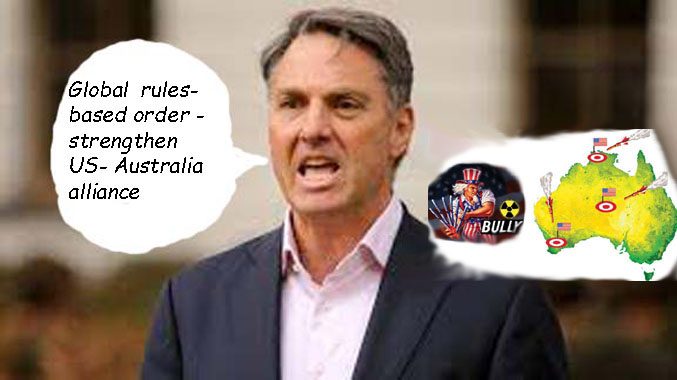
The fact that the United States, thirty years after the end of the Cold War, still has well over 700 bases in at least 70 countries is accepted as normal, and in keeping with an international rules based order.
https://johnmenadue.com/joseph-camilleri-the-tragic-obsession-with-the-chinese-threat/
By Joseph CamilleriJul 20, 2022
Seven weeks in government, and still no sign that Labor in office is prepared to rethink the relationship with either China or the United States. The two are not unconnected. The link is their common addiction to the China threat thesis.
The fact that Australia’s new defence and foreign ministers have met with their Chinese counterparts is no doubt a positive step. But it comes primarily as a result of China’s openness to the idea of resetting the relationship.
The Chinese statement released after the meeting between Wang Yi and Penny Wong on 8th July makes this clear. It reports Wang Yi as saying: “China is ready to re-examine, re-calibrate, and reinvigorate bilateral ties in the spirit of mutual respect, and strive to bring bilateral relations back on the right track.”
The Australian statement is far more guarded. It refers first to “Australia’s concerns about a range of bilateral, regional, trade and consular issues”, and then goes on to say “. . . it is in both our countries’ interests for the relationship to be stabilised.”
But what does “stabilised” mean? China can be forgiven for thinking that what Australia wants is to stabilise its highly profitable trade with China, while continuing to be fiercely critical of Chinese policies at home and abroad, and to support US actions and pronouncements, however provocative Beijing may consider them.
One sentence in Penny Wong’s opening remarks at the meeting with Wang Yi gives the game away: “Australia’s Government has changed but our national interests and our policy settings have not.” It is precisely these policy settings which became the trademark of Liberal governments and provoked China’s ire, eventually prompting a suite of sanctions targeting Australian beef, wine, barley, and coal exports.
If the policy settings remain the same, it is because the Labor government has still to distance itself from the politically contrived anti-China hysteria which has swept the corridors of influence in Washington and increasingly in Canberra.
Not surprisingly, both Albanese and Wong made it clear before and since the May election that they took great exception to the China-Solomons Security Pact. The Labor opposition was critical of the Morrison government for being caught off guard and not acting in timely fashion to forestall the signing of such an agreement.
The widely held view within Australia’s security circles was that the agreement would in time pave the way for a Chinese military base less than 2,000 km from Australia’s coastline. Mainstream media, not noted for their expertise on China, assumed a sombre tone: ‘Australia’s gravest fears were about to be realised’.
Repeated assurances by Prime Minister Sogavare that the Solomons had no intention of allowing a Chinese naval base seemed to carry no weight. Explanations offered by both China and Sogovare that the agreement was intended to foster social stability in the Solomons appeared to fall on deaf ears.
The subsequent tour by Wang Yi of eight Pacific Islands became further grist to the anti-China mill. Apart from concluding bilateral agreements with each of the countries he visited, Wang Yi proposed a multilateral economic and security agreement known as the “China-Pacific Island Countries Common Development Vision”. His meeting with the foreign ministers of the ten Pacific Island countries that recognise China rather than Taiwan declined to support the agreement, at least in its present form. But none of this was enough to placate the ‘frenzy of concern’.
Since being sworn in as foreign minister, Penny Wong has made four trips to the Pacific. This whirlwind of diplomacy supported by additional promises of development and security aid is ostensibly meant to repair Australia’s long neglected relationship with the Pacific. The underlying and unconcealed purpose is to secure a regional framework able to contain the “dangers of Chinese expansion”.
The threat posed by China now pervaded every facet of Australia’s foreign and security policy. A clear indication of this was Prime Minister Albanese’s decision to attend four international summits in his first seven weeks in office.
The first of these was the QUAD Leaders’ meeting in Japan. Predictably the communiqué issued at the end of the meeting pointedly called for a maritime rules-based order – codeword for continuing US military supremacy – that would include the East and South China Seas. Without referring to China by name, the statement pointed to China’s numerous sins, notably “the militarisation of disputed features, the dangerous use of coast guard vessels and maritime militia, and efforts to disrupt other countries’ offshore resource exploitation activities.”
A few weeks later, Albanese joined NATO leaders in Madrid for what was billed as “the most important summit in generations”. For the first time in its history, it was attended by leaders of four key US allies in the Asia-Pacific region: Australia, New Zealand, Japan and South Korea. The message was clear. Though the summit would direct most of its venom against Russia, China would not be spared.
The declaration issued by member states explicitly accused China of challenging NATO’s “interests, security, and values” and seeking “to undermine the rules-based international order.” But there was more to come.
The denunciation of China assumed vitriolic proportions in the much heralded NATO Strategic Concept adopted at the summit. It merits quoting at length:
The PRC’s malicious hybrid and cyber operations and its confrontational rhetoric and disinformation target Allies and harm Alliance security. The PRC seeks to control key technological and industrial sectors, critical infrastructure, and strategic materials and supply chains. It uses its economic leverage to create strategic dependencies and enhance its influence. It strives to subvert the rules-based international order, including in the space, cyber and maritime domains. The deepening strategic partnership between the People’s Republic of China and the Russian Federation and their mutually reinforcing attempts to undercut the rules-based international order run counter to our values and interests.
Comments made by Albanese before and during the summit left little doubt that he concurred with the letter and spirit of these admonitions. To dispel any doubts, he launched a diatribe against China for its failure to condemn Russia’s aggression in Ukraine, drew a parallel between Ukraine and Taiwan and invited China to learn from Russia’s “strategic failure”. He went on to commit Australia’s participation in NATO exercises later in the year.
China’s response was swift and direct. The parallel between Ukraine and Taiwan was vehemently rejected. The Chinese Foreign Ministry accused Albanese of gross ignorance with regard to China’s stance on the Ukraine Crisis and Taiwan’s status. “Taiwan”, it emphatically asserted, “is not a sovereign country.”
The China Daily’s assessment was brutally frank:
From deliberately playing up and smearing China’s normal security cooperation with the Solomon Islands to eagerly jumping on the US bandwagon drumming up support for its containment policy against China, the current Australian government has displayed no signs of changing the course set by its predecessor.
This latest unfortunate episode raises unavoidable questions: When it comes to China, does the Labor government have any intention to distance itself from the dictates of current US policy and strategic rhetoric? Will it continue to despatch Australian warships and aircraft to the contested waters of the South China Sea and East China Sea? Recent incidents suggest that increased military activity of this kind heightens the risk of military confrontation, whether by accident or miscalculation.
It is difficult to see why Australia should entertain such risks, not least the prospect of a indefinite freeze in its relations with China. And this, simply to give credence to a threat scenario whose main objective, at best elusive and ultimately unattainable, is to ensure America’s regional and global dominance.
There is little evidence to support the claim that China is intent on using military force against its neighbours. Taiwan is a possible exception, but even here such a military thrust is unlikely to occur unless Taiwan foolishly moves towards a unilateral declaration of independence.
The fact remains that, despite its remarkable economic growth and a rising defence budget, China’s capacity to project military muscle pales in comparison with America’s global military reach.
The possibility, however distant, that the Chinese navy may gain access to one or more port or basing facilities in the Indio-Pacific region, routinely raises eyebrows and provokes deep consternation in government and media circles. The fact that the United States, thirty years after the end of the Cold War, still has well over 700 bases in at least 70 countries is accepted as normal, and in keeping with an international rules based order.
The same holds for China’s efforts to establish links with Australian institutions and political, business and community leaders. These are viewed with suspicion verging on hysteria. By contrast, the longstanding networks of influence which the United States, Britain or Israel have developed across Australia’s political, military and intelligence landscape are viewed with equanimity.
The carefully orchestrated threat scenarios that currently underpin Australia’s China policy offer few benefits. They simply feed on public fears, fan the flames of militarist discourse and policy-making, and heighten tensions in already troubled waters.
A rethink is more urgent than ever. It is unlikely to be facilitated, let alone initiated, by our moribund political parties or blinkered mainstream media. For now, only civil society, in its diverse expressions, can stimulate the mature public conversation we need to have.
Nuclear news -week to 18 July

A bit of god news – On the Hudson River, a New Model of Environmental Stewardship
AUSTRALIA
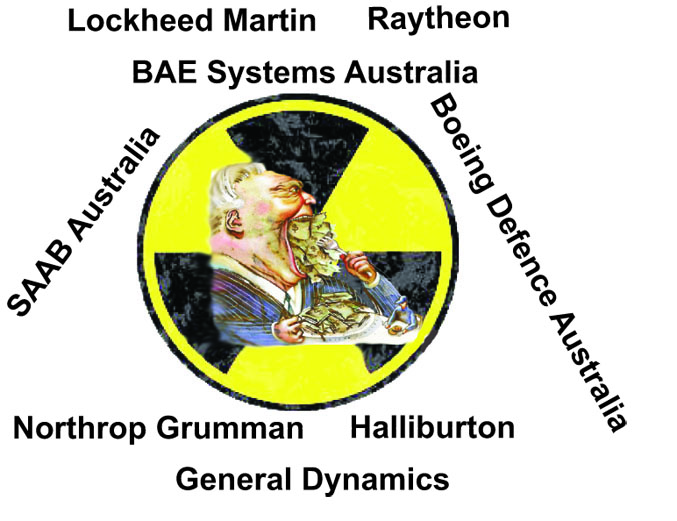
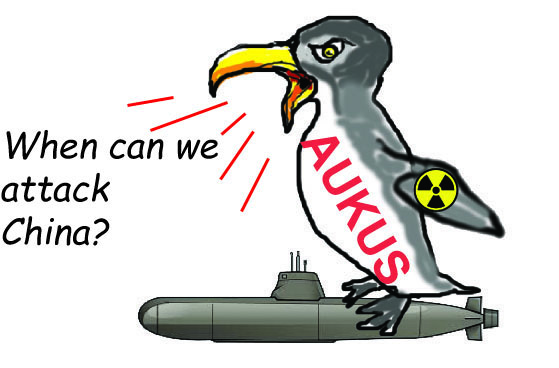
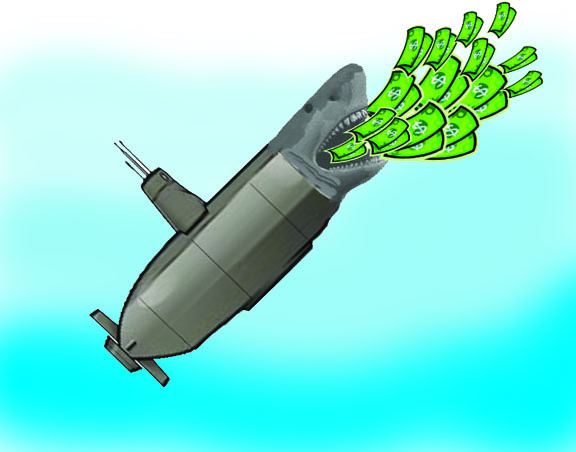
Australia ‘Punctures’ US-UK Nuclear Submarine Proposal Under AUKUS; Says Hi-Tech Arms Better Than Nuke Subs. Michael West busts the spin of Murdoch media’s nuclear marketing.
- Australia should show leadership in nuclear disarmament – a resolution in the UN General Assembly on the use of tactical nuclear weapons in Ukraine would help.
- Australian Nuclear Free Alliance (ANFA) meeting across the nation, via Zoom
- David Littlebrain and the Nationals still pushing for nuclear power. Liberals to seek ‘social licence’ for nuclear power. Australian local governments vote to retain prohibitions on nuclear power.
- Mining lobby exaggerates taxes and royalties paid by $45 billion.
Climate.
- Everything has to change’: Decades of ignored warnings are leaving towns with flood ‘refugees’. Pressure on Australia over climate case. Labor climate bill guarantees ‘weak’ emissions target: Greens .
- Robbing Australia: profits soar for gas giants, royalties and tax languish.
- Our villages, our islands, our young people’ need action on climate change, Vanuatu PM says. Australia prepares for likelihood of climate refugees, backs push for UN justice. Labor in diplomatic climate flurry, at home and overseas, before parliament sits .
- ‘Greatest peace plan of all’: US, Australia say renewable energy cannot be ‘weaponised’. Albanese just laid out a radical new vision for Australia in the region: clean energy exporter and green manufacturer. CSIRO energy report highlights opportunity for farmers and regions
INTERNATIONAL
How social media is censored by algorithms to effectively throttle dissent.
‘Big guns’ keep the world on nuclear high alert. Atomic Lies: New York’s bizarre Nuclear Preparedness PSA
This proxy war has no exit strategy – the West’s desired outcome – a long and gruelling war?
World population to peak and decline sooner than previously thought . 8 billion morons on an orbiting sewer – World population rises as quality of life crashes.
Humanity is on track to cause one million species to go extinct, according to UN report. Fed up with net-zero climate goals, activists call for ‘real zero’. Radioactive portents on a burning earth.
The Nuclear Ban Treaty Had a Conference. Now it Has a Plan. The prohibition of nuclear weapons: a public health priority.
NATO’S 2022 PLAN DECLARES SECOND COLD WAR ON RUSSIA AND CHINA. NASA and Roscosmos Russian space agency sign deal to share space station flights.
Nuclear power is racist, sexist and ageist.
Uranium is losing the new energy market battle. Uranium, conflict and Indigenous lives .
No need for miracle technologies to rapidly decarbonise energy
UKRAINE. Danger intensifies around Zaporizhzhia Nuclear Power Plant in southern Ukraine. Unconfirmed reports that Russian forces at Zaporizhzhia Nuclear Power Station might drain the cooling ponds . There Is No ‘Magic Bullet’ That Can Turn The Tide For Ukraine. How To End the War in Ukraine? Ukraine reveals negotiation ‘end point‘.
RUSSIA. Russia’s will to win in Ukraine.
USA.
- U.S. China policy: a perilous arms race instead of waging critical co-operation. Biden moves US closer to confrontation with Russia.Heatwave? No, it’s a national emergency, disrupting lives and threatening our health.
UK. Heatwave? No, it’s a national emergency, disrupting lives and threatening our health.
‘Big guns’ keep the world on nuclear high alert – Helen Caldicott

With Russia and the U.S. currently on the warpath during the escalating conflict in Ukraine, the world is again at serious risk of nuclear disaster, writes Dr Helen Caldicott.
By Helen Caldicott | 17 July 2022,
JOHN F. KENNEDY’s Secretary of Defense Robert McNamara and I got to know each other during the last years of his life.
One day, as we were having lunch in the Metropolitan Club, he said to me:
“Helen, I was in the Oval Office during the Cuban Missile Crisis and we came so close – within three minutes – to nuclear war.”
Now, we are at another turning point in history — although most commentators seem not to understand the gravity of the situation. For the first time since then, the two nuclear superpowers armed as they are with thousands of nuclear weapons – many on hair-trigger alert – are facing each other during an escalating war in Ukraine.
As the genius, Albert Einstein said:
‘The unleashed power of the atom has changed everything save our modes of thinking and we thus drift toward unparalleled catastrophe.’
So true.
Here we are with Vladimir Putin who decided to invade Ukraine killing innocent civilians and destroying property at random, while the U.S. military-industrial complex rejoices at the opportunity to make and sell as many weapons as it can, as its shares bound sky high.
The neo-cons that Joe Biden has appointed to his Cabinet are thrilled that for the first time since the Cold War ended, they can take on the “evil” Russia — although Russia seems no longer to be a communist country, but in fact a raging capitalist institution, with many of its state riches stolen by outrageous oligarchs living high on the hog.
During the Clinton Administration, Putin requested that Russia become a member of the North Atlantic Treaty Organization (NATO), but it never eventuated as Russia was too big and too authoritarian.
NATO was created to defend western Europe from the perils of the “aggressive” Soviet Union and, as is well-known when the Cold War ended, U.S. Secretary of State James Baker promised Mikhail Gorbachev that NATO would not move one inch to the East.
This posture however was antithetical to aerospace corporation Lockheed Martin whose president, Norman Augustine took it upon himself to visit these newly liberated countries convincing them to become democracies – that is, part of NATO – which required them to arm themselves to the tune of millions of dollars, enormously benefiting the U.S. military-industrial complex.
America then introduced military and missile equipment in all these NATO countries, targeting, of course, Russia, while NATO expanded from 12 to 30 countries.
Putin originally had two requests:
- that the missiles targeting Russia be removed; and
- that Ukraine not be admitted to the NATO block.
He was refused.
The present precarious situation is heightened by the testosterone imperative that has dominated and guided wars throughout history, superimposed by the tenuous control of nuclear arsenals, the launching of which has too often been triggered by false alarms, a rising moon, a flock of geese triggering radar alerts, human fallibility, war games, tapes plugged into the Pentagon system and many more.
Superimposed upon this fragile system is the age-old necessity to “win”.
I wake up each morning, look out the window to see the roses and wonder how much longer they will exist — more frightened now than I have ever been even during the Cuban Missile Crisis.
Uranium, conflict and Indigenous lives

Where will non-Russian uranium come from and who does it hurt?
Uranium, conflict and Indigenous lives — Beyond Nuclear International https://wordpress.com/read/feeds/72759838/posts/4139419366.
Nuclear power, uranium and the war in Ukraine
By Günter Wippel, for the uranium network
Although little known to the public, the European Union obtains about 20% of the uranium it needs for nuclear power plants from Russia, and another 20% from Kazakhstan, which is considered a close ally to Russia.
While for Germany the issue of nuclear power will be settled by the end of this year in regard to demand for uranium, the EU will have to continue importing almost 100% of the required nuclear fuel.
If sanctions against Russia are to be taken seriously, uranium supplies will have to be sourced from countries not belonging to, or not close to, the Russian Federation.
The number of (potential) suppliers is manageably small: eight countries worldwide produce more than 90% of the uranium supply, led by Kazakhstan, followed by Australia, Namibia and Canada, Uzbekistan and Niger. Eight companies provide about 85% of the supply, with Kazakhstan’s KAZATOMPROM alone delivering 25%.
Thus, Australia or Canada, for example, might be considered as alternative sources of supply.
However, in both countries, there are regular conflicts between uranium mining companies, the state and Indigenous People. Currently operating Canadian uranium mines – all of them in the north of the province of Saskatchewan – are located on the land of the Dene and Cree, who have been opposing the mines and further exploration for decades.
In Canada’s province of Quebec, uranium companies have been trying to gain a foothold since 2008 – without success. The Cree in Quebec were able to stop uranium mining plans, also through cooperation with environmental protection organizations. Since 2016, there has been a de facto moratorium.
In Nunavut, Canada’s far North (formerly Northwest Territories), a large-scale uranium mining project was rejected by the Inuit people in 2016 after years of conflict with French uranium miner AREVA (now renamed ORANO).
In Namibia, uranium mining is now firmly in the hands of Chinese companies, which primarily extract uranium for Chinese nuclear power plants.
In Australia, uranium mining is also highly controversial: Indigenous / Aboriginal people are generally critical or opposed to it. Ranger Uranium mine was to be closed in 2021. An expansion to mine neighboring deposits was rejected by the Mirrar Aboriginal people and by environmental organizations.
The nearby Jabiluka Uranium Mine was rejected after more than 20 years of disagreement between Aboriginal people, environmental organizations and the company. Another Australian uranium deposit, Koongarra , was saved from exploitation by the refusal of the traditional Indigenous landowner, Jeffrey Lee, to release his land for uranium mining. Today, it is a national park and inscribed as a World Heritage Site.
The US and uranium
In the US, the situation is not much different. Domestic uranium production has dropped to nearly zero for various reasons. The fuel for nuclear power plants is 100% imported. Similar to the EU, just under 40% comes from Russia’s sphere of influence (16% from Russia, 22% from Kazakhstan). Another 22% comes from neighboring Canada, while Australia supplies 11% of the uranium needed in the US.
Attempts by the domestic mining industry to revive uranium mining in the United States were unsuccessful under Trump’s presidency, despite great efforts on the part of some companies. Under President Biden, the creation of a “national uranium reserve” was considered, but no money was allocated for it in the budget.
In May 2022, US Energy Secretary, Jennifer Granholm, stated that the US is working on a strategy to ensure a stable uranium supply. What it might look like was not clarified.
Nevertheless, some media outlets are speculating about a ‘revival ‘ of the domestic uranium industry.
In June 2022, there was discussion about allocating over $4 billion for the construction of uranium enrichment capacities, since lack of such plants makes the US also heavily dependent on Russian plants and companies. However, it is not clear yet how uranium enrichment plants might help to break the dependency on uranium imports from CIS-states.
In any case, the risk for uraniferous regions to become a sacrifice area is growing: this applies also to the Grand Canyon region. The danger has not escaped the attention of Indigenous Peoples who view this development with great concern after their very bad experiences with uranium mining in the past, the New York Times reported. Carletta Tilousi , Havasupai , who with her people has been resisting the Canyon Mine Uranium Mining (now renamed Pinyon Mine) for decades, found clear words: “We’ll lie down in front of the mine’s entrance to keep it from fully functioning if we have to,” she said. “We’ll make them understand this is about much more than money.”
Günter Wippel manages the uranium network, which works to inform the world of the hazards of uranium mining.
How To Create a “Willing Community” – or – How Millom and Haverigg are being Nuclear Conned

https://mariannewildart.wordpress.com/2022/07/16/how-to-create-a-willing-community-or-how-millom-and-haverigg-are-being-conned/ BY MARIANNEWILDART, The following article has been written by former Millom Town Councillor, Jan Bridget who has heroically exposed the nuclear tentacle grip on key West Cumbrian Town and Parish Councils being lined up as “willing communities” to host a deep and very hot nuclear waste dump.
MILLOM AND HAVERIGG BEING CONNED
1. A Councillor from Bootle (not Millom) and ex employee of Sellafield, put forward Millom as a potential site for the GDF; Copeland Borough Council (not the full Council) also proposed Millom. Millom, Millom Without and Whicham DID NOT put themselves forward, neither were their constituents asked.
2. Millom, Millom Without and Whicham Councils joined the South Copeland GDF Partnership in good faith because they were told this was how they could access the £1 million funding being made available to them whilst the area was being considered: this would go up to £2.5 million should the investigstions get to the drilling bore holes stage. So a significant incentive to remain in the Partnership.
3. NWS are using the Partnership to imply we (Millom and area) are a willing community.
4. NWS are using the Partnership to say they are in communication with the willing community (ie the Partnership). They have held several ‘events’ promoting the GDF to constituents. It is believed about 200 people attended the events in Millom and Haverigg and many of these were opposed to the GDF and told them this (nb NWS had refused to allow Radioactive Free Lakeland to have leaflets at the events to give an alternative view). But amongst the information NWS provided was a colouring book and crayons which, Cllr McGrath said was available “in case the children of anyone visiting the event got bored.” https://m.youtube.com/watch?v=g5rrdjoZc-o A group of about twenty locals (apart from one) held a demonstration outside the event in Haverigg.
5. The siting of a GDF off Haverigg (and one assumes investigations into whether land under the sea off Millom/Haverigg) can only go ahead, according to government, if there is a willing community.
6. The information available by the government gives the impression Millom (Millom Without and Whicham) could withdraw from the process at any time. This is not true. In response to a question about this Councillor Bridget was told by NWS that only they and Copeland Borough as the lead council could withdraw. If Millom Council decided to withdraw the process would continue irrespective of whether they were members of the Partnership or not.
7. On 1st August seismic surveys are about to begin off the coast of Haverigg. The constituents have NOT been asked if they support this, nor indeed, as far as we know, have members of the Partnership been asked.
8. There is more and more research becoming available which suggests these seismic surveys (despite having been used for years by the gas and oil companies) are dangerous to many marine species.
9. There are tough procedures to go through to acquire licences to be able to carry out seismic surveys, especially as there are endangered species in our area.
10. NWS have circumvented these procedures by acquiring an exemption and given the go ahead to carry out the surveys.
11. What limited consultation there has been with constituents suggests the majority are opposed to a GDF being sited near Millom. e.g Millom Without held two on-line consultations with 25 constituents, all were opposed to a GDF being sited here. A few years ago Whicham council surveyed their constituents and one of the questions was what are the three things you do not want (with another question, what three things do you want).
Amongst the top three things constituents did not want was any nuclear facility. Constituents in Millom and Haverigg have not been asked. However, a poll on a community Facebook group with a membership of around 2,000 were asked what they thought about a GDF, 151 people responded, two thirds were against it, one third in favour and a few (11?) wanted more information. When a local constituent, Jan Bridget who was a new town councillor, learnt about the proposed GDF she tried to alert the Council to what was happening, but they did not want to know, all they concerned themselves with was acquiring much needed funding for their area. Councillor Bridget believed it was incumbent upon her, as a Town Councillor, to provide alternative information to that being espoused by the Partnership (NWS) and so set up a private Facebook group, Millom and District Against the GDF. Within two days there were nearly 300 members, the majority from Millom and the local villages. After a month this has grown to nearly 400 members. Councillor Bridget believed that being a member of the Partnership gave the impression Millom Council were in support of a GDF in the area. The mayor, Cllr Kelly wrote a statement to say they took a neutral stance but Cllr McGrath, chair of the South Copeland GDF Community Partnership, Millom Town Councillor and Copeland Borough Councillor, threatened to resign should it be sent out; it was agreed to ask the Partnership what to do (although it is thought nothing has happened apart from the statement not being made). The Council maintains they have a neutral stance yet opposed Councillor Bridget from communicating her opposition to the GDF as a Councillor and refused to discuss the issue.
12. Millom Council received two letters from constituents opposing the GDF and Councillor Bridget read out a statement in opposition to the GDF at the June Council meeting. Immediately after reading her statement she was verbally attacked by Councillor Billing (the Millom Council representative on the Partnership) who shouted at her, in an uncontrolled manner, accusing her of calling him a liar. Councillor Bridget did not accuse him of being a liar, she merely pointed out that he and Councillor McGrath, had informed the Council that NWS were going through all the correct channels and acquiring the relevant licences to conduct the surveys which, Councillor Bridget had discovered, was not the case. The effect of the attack was to stifle a proper debate. The Council agreed to seek clarification from the NWS about the surveys. Councillor Bridget and the Mayor, Councillor Kelly, agreed the wording of the letter and Councillor Kelly gave instructions for the letter to be sent the day before he went on leave (for a month). He confirmed to Councillor Bridget that he had sent the email the day before he went on holiday. Councillor Bridget contacted the Clerk to ascertain if the letter had been sent but was informed it had not been sent and was in the possession of the Deputy Mayor. At this point Councillor Bridget resigned from the Council.
13. Copeland have just ignored a petition of nearly 50,000 signatures against the survey and given it the go ahead.
14. Millom Without and Whicham Councils will now not meet until September
15. Millom were due to meet on 3rd August, 7 pm at office 6 Newton Street. However, they are holding an Extraordinary meeting on 21st July at 10 am to discuss a proposed statement about the GDF for their website. This will be a chance to try and stop the surveys.
Nuclear power is racist, sexist and ageist — Beyond Nuclear International

Progressive Democrats should reject, not embrace it.
Nuclear power is racist, sexist and ageist — Beyond Nuclear International https://wordpress.com/read/feeds/72759838/posts/4139419698
So why do some progressives support it?
By Linda Pentz Gunter
I am sure that certain Democratic senators such as Cory Booker and Sheldon Whitehouse, who are reasonably progressive on a host of social issues, would not considers themselves racist, sexist or ageist.
Nuclear power is all three of these things, yet Booker, Whitehouse and a number of others on the Democratic left, support nuclear power with almost fervent evangelism.
Let’s start with racism. The fuel for nuclear power plants comes from uranium, which must be mined. The majority of those who have mined it in this country — and would again under new bills such as the ‘International Nuclear Energy Act of 2022’ forwarded by not-so-progressive “Democrat”, Senator Joe Manchin (D-WV) — are Native Americans.
As such, they have taken the brunt of the negative health impacts as well as the environmental degradation both created and then left behind by uranium mines when they cease to operate, as most in the U.S. now have.
Studies conducted among members of the Navajo Nation have shown increases in a number of diseases and lingering internal contamination from uranium mine waste among newborns and children. Chronic ailments including kidney disease and hypertension found in these populations are medically linked with living near –and contact with — uranium mine waste.
At the other end of the nuclear power chain comes the lethal, long-lived and highly radioactive waste as well as the so-called low-level radioactive waste stream of detritus, including from decommissioned nuclear power plants. Again, Indigenous peoples and poor communities of color are routinely the target.
The first and only high-level radioactive waste repository identified for the U.S. was to have been at Yucca Mountain, Nevada, against the strong wishes of the Western Shoshone Nation of Indians, on whose land the now canceled site is located. The Western Shoshone had already suffered the worst of the atomic testing program, with the Nevada atomic test site also on their land, making them “the most bombed nation on Earth,” as Western Shoshone Principal Man, Ian Zabarte, describes it.
An attempt to site a “low-level” radioactive waste dump in the largely Hispanic community of Sierra Blanca, TX was defeated, as was an allegedly temporary high-level radioactive waste site targeted for the Skull Valley Goshute Indian reservation in Utah.
Currently, efforts are underway to secure what are euphemistically known as “Consolidated Interim Storage Sites” in two communities in New Mexico and Texas, again with large Hispanic populations and considerable opposition.
Needless to say, these waste projects come with notable incentives — sometimes more accurately characterized as bribes — for the host community, in an effort to describe the deal as “voluntary.” But this preys upon the desperate economic needs of the most vulnerable communities, which are usually those of color.
The only two new U.S. nuclear reactors still under construction sit close to the African American community of Shell Bluff, Georgia, a population riddled with cancers and other diseases and who bitterly opposed the addition of more reactors to an already radioactively contaminated region.
Nuclear power is sexist because exposure to the ionizing radiation released at every stage of the nuclear fuel chain harms women more easily than men. Women are more radiosensitive than men — the science is not fully in on this but it is likely connected to greater hormone production — but women are not protected for.
Instead, the standard guidelines on which allowable radiation exposure levels are based (and “allowable” does not mean “safe”), consider a healthy, White male, in his mid-twenties to thirties and typically weighing around 154 pounds. He is known as “Reference Man”.
Women’s more vulnerable health concerns, and especially those of pregnant women, the fetus, babies and small children — and in particular female children — are thus overlooked in favor of the higher doses a healthy young male could potentially withstand.
As my colleagues Cindy Folkers and Ian Fairlie wrote:” “Women, especially pregnant women and children are especially susceptible to damage from radiation exposure. This means that they suffer effects at lower doses. Resulting diseases include childhood cancers, impaired neural development, lower IQ rates, respiratory difficulties, cardiovascular diseases, perinatal mortality and birth defects — some appearing for the first time within a family in the population studied.”
Even around nuclear power plants, the very young are at greater risk. Numerous studies in Europe have demonstrated that children age five or younger living close to nuclear power plants show higher rates of leukemia than those living further away. The closer they lived to the nuclear plant, the higher the incidences.
Similarly, the elderly are more vulnerable to the harmful effects of radiation exposure than adults in the prime of life. They, too, are overlooked in favor of protecting a robust man. Elders exposed to radiation are mainly to be found in the uranium mining and milling communities, or where waste dumps are located, and are therefore more likely to be low-income with poorer access to health care and fewer finances to pay for it.
The urgency of the climate crisis is a valid reason to revisit all electricity sources and make some important choices about lowering — and ideally eliminating — carbon emissions. Ruling out fossil fuel use is a must. But turning to nuclear power — rather than the faster, cheaper and safer options of renewable energy and efficiency — is not a humane choice.
If health is the concern, along with climate change, as it most certainly is for someone like Cory Booker, then choosing nuclear power as a substitute for fossil fuels is simply trading asthma for leukemia and asking frontline and Indigenous communities to, once again, suffer the greatest harm for the least return.
A truly progressive energy policy looks forward, not back. Nuclear power is an energy of the past — borne of a public relations exercise to create something positive out of splitting the atom. It was a mistake then. And it is a mistake now. If we are to address our climate crisis in time, and to do so with justice and equality, then we must ensure a Just Transition that considers the most vulnerable and discriminated among us, not what is best for that healthy, White Reference Man.
Linda Pentz Gunter is the international specialist at Beyond Nuclear and writes for and curates Beyond Nuclear International.