There Is No ‘Magic Bullet’ That Can Turn The Tide For Ukraine
1945 By Daniel Davis 8 July 22
It is necessary, in light of these physical realities, for U.S. and Western policies to change. Continuing to give verbal support to Ukraine and claiming that eventually, Kyiv’s side will win the war is not likely to change the outcome and is likely to result in a policy failure for Washington.
There Is No ‘Magic Bullet’ That Can Turn The Tide For Ukraine,8 July 22, Last Sunday when the remaining Ukrainian soldier withdrew from Lysychansk, Ukrainian President Volodymyr Zelensky said evacuating his troops from the city “where the enemy has the greatest advantage in fire power,” was the right call, but “means only one thing… That we will return thanks to our tactics, thanks to the increase in the supply of modern weapons.” While many in the West would like that to be true, the reality is very different: there is no basis upon which to hope for a future offensive to drive Russian troops out of conquered territories.
The most likely result for the Ukrainian Armed Forces (UAF) if they continue fighting the Russians is that more of Zelensky’s troops will be killed, more Ukrainian cities will be turned to rubble, and more territory Kyiv will lose to the invaders. A sober analysis of the capacity of the of the two armed forces, an assessment of the military fundamentals that have historically proven decisive on the battlefield, and an examination of the sustainability potential for both sides, make it plain that Russia will almost certainly win a tactical victory.
Ukrainian Presidential Advisor Oleksiy Arestovych said that, to the contrary, the withdrawals in Severodonetsk and Lysychansk weren’t defeats at all, but instead “successful” in that he claimed they allowed Ukraine to “buy time for the supply of Western weapons and the improvement of the second line of defense, to create conditions for our offensive actions in other areas of the front.” This is a common belief in the West but one not borne out by the facts……………..
The much-ballyhooed supply of “heavy weapons” from the West that both Zelensky and Arestovych claim is coming will not be enough to turn the tide. Not even close. Zelensky advisor Mykhailo Podolyak correctly noted that the minimum needed by Ukraine to have a chance at reaching parity with the Russian invaders would require modern kit in the range of 1,000 howitzers, 500 tanks, and 300 rocket launchers.
As detailed by The Kiel Institute for the World Economy, the sum total of all heavy weapons delivered or promised by the West through last week’s G7 and NATO summits amounts to a paltry 175 howitzers, 250 Soviet-era tanks, and an anemic dozen or so rocket launchers. To date, no other help is being considered.
The ramifications of this mismatch should be clear: despite numerous and boisterous claims of Western support, it is militarily unsound for Ukraine to base its defense plans on the hope that major quantities of high quality Western heavy weapons will show up to help Ukraine stop the Russians. But there is a bigger, less obvious truth at play as well: even if Zelensky got everything on Podolyak’s list, it still would not likely change the battlefield dynamics.
The reason is that, like in all modern wars, military victory or defeat in the Russian-Ukraine War is likely to be determined by the side that has the highest quality of manpower and less on the platforms of war. For all its major missteps in the opening round, Russia began the war with a total active force of 900,000 whereas Ukraine had approximately 250,000…………………………
In short, there is no valid military path through which Ukraine can hope that trading space for time will result in stopping Russia’s methodical progress through Ukraine – much less reverse it. To continue contesting every town and city is to ensure the Ukrainian casualties continue to mount and its urban areas destroyed. In the end, Russia is still likely to achieve a tactical victory.
It is necessary, in light of these physical realities, for U.S. and Western policies to change. Continuing to give verbal support to Ukraine and claiming that eventually, Kyiv’s side will win the war is not likely to change the outcome and is likely to result in a policy failure for Washington.
No one wants to negotiate from a position of weakness with an invading power, but the harsh truth is that the longer Zelensky and his Western supporters continue pursuing unrealistic objectives, the more likely Ukraine eventually suffers an outright military defeat.
Expert Biography: Now a 1945 Contributing Editor, Daniel L. Davis is a Senior Fellow for Defense Priorities and a former Lt. Col. in the U.S. Army who deployed into combat zones four times. He is the author of “The Eleventh Hour in 2020 America.” Follow him @DanielLDavis. https://www.19fortyfive.com/2022/07/there-is-no-magic-bullet-that-can-turn-the-tide-for-ukraine/
July 13 Energy News — geoharvey

Opinion: ¶ “EVs Provide Energy Security, Aid Energy Transitions During Conflicts” • Society has had to transition from and use backup energy sources multiple times. The problem can be caused by political conflicts, shortages caused by natural disasters, financial troubles, and environmental issues, and wars. EVs offer a degree of energy security. [CleanTechnica] Tesla Model […]
July 13 Energy News — geoharvey
The consequences of a war between the US and China” – Kevin Rudd
The Hon. Kevin Rudd, president and CEO of Asia Society, served as Australia’s 26th Prime Minister from 2007 to 2010, then as Foreign Minister from 2010 to 2012, before returning as Prime Minister in 2013. He discusses major topics of his new book, “The Avoidable War: The Dangers of a Catastrophic Conflict between the US and Xi Jinping’s China” Rudd graduated from the Australian National University with honors in Chinese studies, and is fluent in Mandarin. He also studied at the National Taiwan Normal University in Taipei.
Australia ‘Punctures’ US-UK Nuclear Submarine Proposal Under AUKUS; Says Hi-Tech Arms Better Than Nuke Subs.

Eurasia Times. By Parth Satam, July 11, 2022
Australia’s new Defense Minister Richard Marles’ recent comment about “hi-tech arms” being “more important” than “nuclear submarines” while being in the US to meet his counterpart, Secretary of Defense Llyod Austin, presents a grim future for the Australia-United Kingdom-United States (AUKUS) pact.
This comes amidst Prime Minister Anthony Albanese’s government’s outreach to China, deployment and technical shortcomings with the USS Virginia-class nuclear submarines, and; oversight of the International Atomic Energy (IAEA) regarding the use of nuclear propulsion material some of the dampeners staring at Canberra.
Sky News Australia reported that this was Marles’ first since assuming office, making the statement a significant signal.
The AUKUS deal was announced on September 15 last year under then Prime Minister Scott Morrison in a secret agreement with Washington and London that envisages Australia acquiring at least eight nuclear submarines.
………… the deal’s biggest drawback is the monetary, operational, and technical challenges more than the political repercussions.
Nuclear Submarines Overrated?
The first submarine, which is probably a version of the US Virginia class attack, will not be operationally available until the early 2040s and the last vessel by 2060.
The extended timeline that will leave the Royal Australian Navy without serious undersea capability calls for a stopgap interim arrangement. It could be an improved version of the Swedish-origin Collins-class ship to bridge the looming capability gap.
The Virginia class has been afflicted with maintenance problems and, over the last 33 years, has only performed 15 six-monthly deployments. Conventionally powered submarines are now commonly equipped with air-independent propulsion (AIP), which makes them quieter than nuclear submarines.
The latter must keep their reactor cooling pumps going and use noisy giant meshing gears between the steam turbines and propellers.
Nuclear submarines can also be detected by their constant release of hot water by leaving wakes on the surface when running at high speeds. A section of naval strategists within the US has been making a case for a return to diesel-electric or AIP-powered boats, given the technological improvements that have enhanced their speed, submerged endurance, and diving depths.
Diesel-electrics and AIP SSKs like the Swedish Gotland class or the Indian Navy’s Russian origin Kilo-class have also ‘sank’ US carriers often in exercises. Worse, the nuclear propulsion of the Virginia-class is not suitable in the littoral, shallow waters of the South and East China Seas…..
Naval bases in the first island chain around China like Guam, Subic Bay, Singapore, and Okinawa already provide proximity making attributes like range and endurance irrelevant, making conventional submarines more suited for the task.
The cost of the project also dwarfs Australia’s financial wherewithal. Australia’s defense budget this financial year stood at $48.6 billion.
But the upgraded USS Virginia-class boat that the AUKUS pact promises would be $3.5 billion per unit alone. This doesn’t include the highly sophisticated infrastructure required to maintain the fleet, which will entail additional expenses and having to rely on UK and US support until the facilities are functioning.
While former Australian Prime Minister Scott Morrison had announced that the submarines would be built within the country, the construction of advanced nuclear-powered submarines involves steep learning curves, experience, and transfer of technology costs.
Morrison had announced that the hulls would be fabricated in Australia and then sent to the US to install nuclear propulsion and other components. Only time will tell what will be the order book at overburdened US shipyards like the General Dynamics Electric Boat then.
Nuclear Proliferation Safeguards
Lastly, possible run-ins with the International Atomic Energy Agency (IAEA), the UN’s nuclear watchdog, will likely trigger different diplomatic hurdles. The IAEA prohibits the transfer of fissile material for nuclear purposes, preventing the use of nuclear fuel from Australia’s civil nuclear power plants from diverting it for the nuclear submarines.
Australia may be exempted under Paragraph 14 of the standard pact with the IAEA that allows the transfer of nuclear material for “non-prescribed military activity” like nuclear weapons or explosive nuclear material. But that raises a question of a different standard for Iran, whose IAEA-approved civil nuclear program is heavily monitored and safeguarded.
When the new Australian Foreign Minister Penny Wong has to assure IAEA chief Rafael Grossi about Canberra’s “total commitment” to nuclear non-proliferation, it portends tough nuclear diplomacy. Australia is a signatory of the Nuclear Non-Proliferation Treaty (NPT) and the South Pacific Nuclear Free Zone Treaty (SPNFZT) https://eurasiantimes.com/australia-punctures-us-uk-nuclear-submarine-proposal-under-aukus/
China Reaffirms Support for ASEAN’s Nuclear Weapon-Free Zone
https://jakartaglobe.id/news/china-reaffirms-support-for-aseans-nuclear-weaponfree-zone BY :JAYANTY NADA SHOFA. JULY 11, 2022
Jakarta. China recently pledged to take its ties with ASEAN to greater heights, among others, by backing the Southeast Asian bloc’s nuclear-weapon-free treaty.
China reaffirmed its readiness to ink the protocol to the treaty when its senior diplomat Wang Yi visited the ASEAN Secretariat in Jakarta on Monday.
“We will continue to support ASEAN’s efforts in building a nuclear-weapon-free zone and reaffirm that China is ready to sign the protocol to the Treaty of Southeast Asia Nuclear-Weapon-Free Zone at any time,” Wang Yi said at the ASEAN Secretariat.
According to Wang Yi, over the past years, China has made several historic milestones in its ties with ASEAN, among others, in regard to the country’s support to help keep the Southeast Asian region free of nuclear arms.
“[China was] the first to publicly express its willingness to sign the protocol to the Southeast Asia nuclear-weapon-free zone,” Chinese Foreign Minister Wang Yi said.
In 1995, the ten ASEAN member states, including Indonesia, agreed to a nuclear weapons moratorium treaty known as the Bangkok Treaty.
The protocol for this treaty is open for signature by the five nuclear-weapon states recognized by the Non-Proliferation Treaty, namely China, France, the UK, the US, and Russia.
The protocol obliges its signatories not to use or threaten to use nuclear weapons within the zone or against any state party to the treaty. To date, none of the nuclear-weapon states has penned the protocol.
Chinese President Xi Jinping has pledged to sign the protocol as early as possible. Xi Jinping made this commitment at last year’s China-ASEAN Special Summit, which marked the 30th anniversary of dialogue relations between the two sides.
Australia prepares for likelihood of climate refugees, backs push for UN justice
Australia prepares for likelihood of climate refugees, backs push for UN justice
Australia is set to back Vanuatu’s campaign at the Pacific Islands Forum to have the International Court of Justice consider whether inaction on climate should be considered a breach of human rights, as Labor warns Australia may need to prepare to accept climate refugees.
Pressure on Australia over climate case
Pressure on Australia over climate case
Climate campaigners want Australia to back Vanuatu’s bid to have climate change commitments underscored by international law.
CSIRO energy report highlights opportunity for farmers and regions
CSIRO energy report highlights opportunity for farmers and regions
CSIRO’s GenCost 2021-2022 Final Report into energy again highlights the huge opportunities for farmers and regional Australia in renewable energy and storage, Farmers for Climate Action CEO Dr Fiona Davis said today.
Everything has to change’: Decades of ignored warnings are leaving towns with flood ‘refugees’
Everything has to change’: Decades of ignored warnings are leaving towns with flood ‘refugees’
As towns and suburbs continue to go under water, experts say Australia is at a critical moment where the choices made now will determine whether the misery will be repeated for generations to come.
U.S. China policy: a perilous arms race instead of waging critical co-operation

| U.S. belligerence will be met with more Chinese belligerence and vice versa as the perils and risk increase. |
| William Hartung (See, Center for International Policy) points out – a far brighter future would come from intense U.S. and China cooperation on the climate crises, averting pandemics, ocean preservation, and international arms accords including cybersecurity. Wage peace and pursue mutual self-interest as if our children and grandchildren matter. |

Relations between major nations are shaped by momentum in one direction or another. Both U.S. political parties have chosen a militant path without an exit strategy – one that must please Lockheed Martin and the rest of the military-industrial complex.
| Ralph Nader 12 July 22, Did the Biden officials know what they were doing when they announced a broad expansion of export controls on China? China is the world’s second-largest economy, which is intricately intertwined with the economy of the U.S. and other nations. This is mainly due to U.S. multinational companies exporting huge slices of our manufacturing economy to China for its cheap labor. What is the White House and the Department of Commerce thinking? China is not Venezuela nor is it Russia, a weak and dependent economy with a GDP smaller than Italy. Do these brazen Bidenites realize the consequences of a grand list of technologies and knowhow being barred from China? |
| As the dominant imperial world power, the U.S. is struggling to understand how to deal with an aggressive rising power like China building spheres of influence around the world through exports, loans, development contracts, and technical assistance. It’s okay that we have military bases in over 100 countries whose leaders know the U.S. as the premier overthrower of elected governments with policies displeasing to Washington and Wall Street. |
| As a result, the Bidenites are unleashing export controls, arrived at through administrative secrecy, that will surely invite black markets, high-tech smuggling, and retaliation to make these controls a nightmare to enforce |
| Provoking China to play its own cards is not smart. China, thanks to the greed of coddled and subsidized U.S. drug companies, produce much of our pharmaceuticals. These companies have left America, for example, with no production domestically of antibiotics – certainly a national security priority! |
| China possesses “rare earth” minerals and produces technology crucial to our own defense and high-tech industries. Its government allows U.S. factories to be built in China on the condition of a flow of latest “technology transfers.” Ask General Motors. |
| How are export controls – based on asserted national security grounds – going to work, other than to accelerate a new arms race? “We need to retain technological overmatch” declared Commerce Secretary Gina Raimondo, adding that export controls “are at the red hot center of how we best protect our democracies.” Tell that to the mass victims of the next round of viruses from China due to our minuscule weak public health programs and early detection systems, while we spend more than 2 ½ times as much as China on our military budget having had a huge head start in past years. |
| The New York Times reports that U.S. officials also don’t like China’s deep surveillance of its people. It is as if surveillance capitalism (See, The Age of Surveillance Capitalism: The Fight for a Human Future at the New Frontier of Power by Professor Shoshana Zuboff) and the NSA’s dragnet violations of the 4th amendment are chump change. |
| What is also well known, but not uppermost in people’s minds, is that China, Russia, and the U.S. have embedded malware in each other’s cyber worlds that if triggered could cause catastrophe. The concern about China’s tens of billions of dollars invested in U.S. Treasury bonds should also be an issue for Mr. Biden. |
| Another calculation underweighted is the quiet opposition to export controls by U.S. companies that salivate over the present and future profits with Chinese trade – Apple CEO Tim Cook (who, by the way, makes $833 a minute on a 40-hour week) got a special waiver treatment from Trump, continued by Biden, for importing tens of billions of dollars annually of iPhones and computers from its Chinese contractors without tariffs. |
| This is another way of noting that export controls invite both raw corruption and special lobbying for waivers. They were tried by the U.S. against the old USSR, which developed elaborate circumventions. |
| So here we go again. Of course, certain lethal products need to be embargoed by all countries protective of their people. The U.S is expanding its so-called “entity list” cutting off hundreds of foreign companies and groups from certain U.S. technologies unless U.S. suppliers get licenses to sell goods to them. Don’t these government officials know that blacklisted companies can mutate through other corporations chartered in tax havens or dictatorships abroad? |
| U.S. belligerence will be met with more Chinese belligerence and vice versa as the perils and risk increase. |
| William Hartung (See, Center for International Policy) points out – a far brighter future would come from intense U.S. and China cooperation on the climate crises, averting pandemics, ocean preservation, and international arms accords including cybersecurity. Wage peace and pursue mutual self-interest as if our children and grandchildren matter. |
| Where is our Department of Peace, once advanced by Congressman Jim McGovern (D-MA) and former Congressman Dennis Kucinich (D-OH), when we need it? |
| Relations between major nations are shaped by momentum in one direction or another. Both U.S. political parties have chosen a militant path without an exit strategy – one that must please Lockheed Martin and the rest of the military-industrial complex. |
| The forces for muscular peace and cooperation must show there is an alternative path to secure the common interests of the two nations. That’s called robust diplomacy in this era of recurring pandemics, expanding ransomware, bloated military budgets, and interconnected economies. |
NATO’S 2022 PLAN DECLARES SECOND COLD WAR ON RUSSIA AND CHINA

- Popular Resistance, By Ben Norton, Multipolarista., July 10, 20
NATO’s 2022 “Strategic Concept,” Its First New Plan Since 2010, Declares Russia A “Threat” And China “Systemic Challenge.”
It demonizes the Eurasian powers as “authoritarian actors” and “strategic competitors,” essentially declaring a second cold war to maintain Western hegemony.
The US-led NATO military alliance has published a historic new plan outlining its goals. The document, officially titled the 2022 “Strategic Concept,” is the first such blueprint NATO has released since 2010.
The 2022 Strategic Concept is essentially a call for a new cold war on both Russia and China.
In the document, NATO condemned Russia and China as “authoritarian actors” and “strategic competitors” that pose “systemic challenges.”
NATO referred to the Russian Federation specifically as “the most significant and direct threat.” It also claimed China “challenge[s] our interests, security and values” and “strives to subvert the rules-based international order.”
The plan made it clear that the US-led military cartel is very concerned about the growing Eurasian alliance between Beijing and Moscow.
“The deepening strategic partnership between the People’s Republic of China and the Russian Federation and their mutually reinforcing attempts to undercut the rules-based international order run counter to our values and interests,” NATO wrote.
The document euphemistically refers to this new cold war climate as an “environment of strategic competition.”
NATO’s Madrid Summit: New Cold War On Russia And China, Continued Expansion, More Military Spending
The 2022 Strategic Concept was adopted unanimously by the leaders of NATO member states in a summit in Madrid, Spain in late June……………………….
The Madrid summit showed how the US-led military cartel is expanding, and not just in Europe, but also in the Pacific region.
Japan, South Korea, Australia, and New Zealand – all of which are very far from the North Atlantic region – attended the NATO summit for the first time…………
After the Madrid summit, NATO boasted that it had agreed to “the biggest overhaul of Allied collective defence and deterrence since the Cold War.”
The US-led cartel announced more common funding, and said member states agreed to increase their national military spending to 2% or more of GDP……………….
Like the NATO conference, the G7 summit was clearly aimed at coordinating tactics in a new cold war to weaken Russia and China. At that meeting, the G7 pledged $600 billion in spending on public-private partnerships to challenge Beijing’s global Belt and Road Initiative.
NATO Portrays Second Cold War On Russia And China As Supposed Battle Between ‘Democracy’ And ‘Authoritarianism’
While dubbing Russia its top “threat” and China a “systemic challenge” and “strategic competitor,” NATO’s 2022 Strategic Concept portrays the second cold war that it is waging as a supposed battle between “democracy” and “authoritarianism.”………………………….
In addition to focusing on Russia and China, the Strategic Concept portrayed Iran, Syria, and North Korea as threats.
The document asserted that NATO exists to “safeguard our freedom and democracy” and is based on “shared democratic values,” in order to protect a “rules-based international order.”
Left completely unmentioned was that numerous authoritarian regimes are currently members of NATO, including Turkey, Hungary, and Poland.
Portugal’s former fascist dictatorship was likewise a founding member of NATO in 1949.
NATO’s insistence that it is supposedly dedicated to protecting democracy, and not US hegemony, is especially ironic considering that the Madrid summit prominently featured Turkey’s autocratic leader Recep Tayyip Erdogan.
Western officials’ constant refrain at the Madrid summit that NATO exists to defend democracy was similarly undermined by the fact that Sweden and Finland refused to hold popular referenda on membership, meaning their people had no voice in the process and no opportunity to vote on whether or not they think joining the US-led military cartel is a good idea.
NATO’s democratic window dressing was even more transparently contradicted by the opening of the summit on June 28, which featured a “special address” by Spain’s King Felipe VI.
“The long-standing global struggle between tyranny and democracy is as relevant as ever,” Spain’s unelected hereditary monarch declared, without a hint of irony………………………
In the plan, the US-led military cartel also emphasized its commitment to continue expanding.
“NATO’s enlargement has been a historic success,” it insisted, underlining, “We reaffirm our Open Door policy.”……………
The 2022 Strategic Concept described NATO as a “defensive alliance,” despite its offensive wars on Libya in 2011, Afghanistan from 2001 to 2021, and Yugoslavia in the 1990s.……
The US-led military cartel hinted it is ready for World War III if deemed necessary, underscoring that it is prepared for “high-intensity, multi-domain warfighting against nuclear-armed peer-competitors.”
The Strategic Concept emphasized its firm commitment to nuclear weapons, describing them as unnegotiable: “As long as nuclear weapons exist, NATO will remain a nuclear alliance.”
……………………………… The US-led military cartel claimed “NATO does not seek confrontation and poses no threat to the Russian Federation,” although the alliance has surrounded Moscow with hostile military bases and repeatedly expanded right up to its borders. https://popularresistance.org/natos-2022-plan-declares-second-cold-war-on-russia-and-china/
Danger intensifies around Zaporizhzhia Nuclear Power Plant in southern Ukraine

The Russian army is transforming Europe’s largest nuclear power plant into a military base overlooking an active front, intensifying a monthslong safety crisis for the vast facility and its thousands of staff. At the
Zaporizhzhia Nuclear Power Plant in southern Ukraine, more than 500 Russian soldiers who seized the facility in March recently have deployed heavy artillery batteries, and laid anti-personnel mines along the shores of the reservoir whose water cools its six reactors, according to workers, residents, Ukrainian officials, and diplomats.
The Ukrainian army holds the towns dotted on the opposite shore, some 3 miles away, but sees no easy way to attack the plant, given the inherent danger of artillery battles around active nuclear reactors.
Wall St Journal 5th July 2022
July 11 Energy News — geoharvey

Science and Technology: ¶ “Converting Mines Into Hydro-Powered Batteries” • A group of researchers at Michigan Technological University argues that a fully renewable energy grid could be achieved if mines in the US are converted into hydro-powered batteries. Such mines could clear the path for the “most ambitious” renewable energy goals in much of the […]
July 11 Energy News — geoharvey
Australian and other nuclear news this week
I had a hard time finding good news this week – I’m sure that it’s happening, and very many good people are doing good things – just not seen as newsworthy. Here is one little bit of good news – India outlawed scores of plastic products.
I had a hard time finding good news this week – I’m sure that it’s happening, and very many good people are doing good things – just not seen as newsworthy. Here is one little bit of good news – India outlawed scores of plastic products.
Coronavirus numbers, and deaths, continue to increase worldwide – and the scary thing is that many cases are nor reported and recorded.
Climate – also a whole nother story – of extreme weather events in many countries – check out Radio Ecoshock and also latest news on heat, wildfires, floods……..
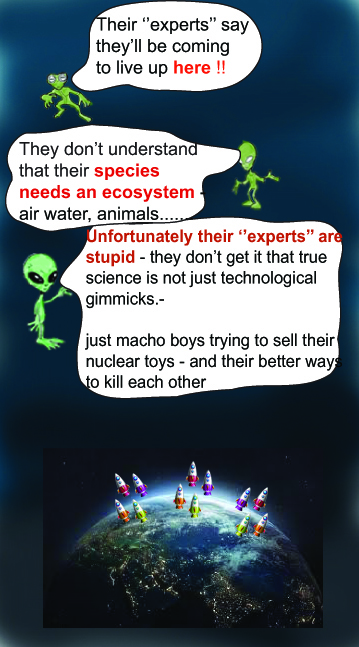
There’s so much going on – I didn’t know where to start on things nuclear this week. I got a bit fed up with all the space colonisation fervour going on, so – I wrote my own little bit about it.
AUSTRALIA
Why Australia’s Labor government refuses to defend Julian Assange.
Labor must reverse Morrison’s nuclear submarine bungle to protect the nation. AUKUS submarines: Beasts of nuclear proliferation.
Albanese’s extreme language against China is out of place now, and against Labor tradition.
Slow, expensive and no good for 1.5° target: CSIRO crushes Coalition nuclear fantasy. Forget nuclear and simplify electrification:” The message from energy experts. A Liberal National Party, led by Dutton and Littleproud vote on support for Queensland nuclear plants.
Scientist sheds doubt on the viability of Australia’s planned Kimba nuclear waste dump. Kimba nuclear waste dump – phase 3 in progress, but the Australian Radioactive Waste Agency (ARWA) has not completed phase 2 !
Time to speak up: water apartheid is Australia’s dirty secret.
Climate emergency actions are needed not just promises.
Australia has key role to play as clean energy reshapes Indo-Pacific relations
‘A human rights crisis in the making’: Climate activists rally in Fiji ahead of Pacific Islands Forum. ‘Far from adequate’: former Pacific leaders group urges Australia to increase 43% emissions cut.
Climate change modelling abandoned by Abbott nine years ago restarted by government.
INTERNATIONAL
Nuclear war would turn oceans upside down, crash food web.
Russia and other nuclear-armed parties must be held to account for violations of non-proliferation treaty.
NO TO NATO IN MADRID.
Following Turkish blackmail, 30 NATO states sign accession protocols for Finland, Sweden .
Nuclear myopia — Promoting nuclear power as a solution to climate change is short-sighted
Enthusiastic space travel publicity avoids mentioning radiation danger. The Corporatisation of Space.
UKRAINE. Ukrainians have sold two French-donated 155mm Caesar howitzers to Russia. Not only Russian: Ukrainian forces also are killing children. U.N. report on crimes, human rights violations in Ukraine-Russia war includes abuses done by the Ukrainian side. Ukraine Reform Conference – name changed to Ukraine Recovery Conference – to hide the reality of Ukraine’s endemic corruption.
JAPAN. Nuclear plant cooling system stops working for 8 hours. Nuclear power in Japan may be a mistake we are doomed to repeat. Fukushima nuclear plant compensation burden was secretly reduced. Where to in 2045? Contaminated Soil from the Nuclear Power Plant Accident: The Present Location of Interim Storage Facilities, Fukushima. Decadal trends in 137Cs concentrations in the bark and wood of trees contaminated by the Fukushima nuclear accident.
Criminal assassination of Shinzo Abe. But let us not forget Shinzo Abe’s full record as PM. Prime Minister Shinzo Abe pretending that all is well at Fukushima, using this lie to promote Olympics. Japan could change pacifist constitution after Shinzo Abe victory. Japan’s Constitution Allows Nuclear Weapons, Says Shinzo Abe.
s……………….
Labor must reverse Morrison’s submarine bungle to protect nation
https://independentaustralia.net/politics/politics-display/labor-must-reverse-morrisons-submarine-bungle-to-serve-nation,16546 By Alan Austin | 11 July 2022,

There is a niche in the global submarine industry that Australia is well-placed to occupy, reports Alan Austin.
IT WOULD BE a bold move which only a visionary and courageous government could accomplish. Australia has the chance now to reimagine its status as a global naval manufacturer and exporter. The challenge is to build a smaller, faster, stealthier, stronger submarine than its rivals, which requires fewer crew and is cheaper to build and operate.
This can be achieved with a scaled-down version of one of the best submarines ever designed: the Collins class. Where was this built? In South Australia in the 1990s.
This “daughter-of-Collins”, as former Prime Minister Paul Keating dubbed it, offers multiple gains. It will replace the current ageing Collins class more quickly than other options, it will give Australia’s navy boats fit for purpose, it will generate export income and build a springboard for expansion into other high-tech manufacturing. It’s a win-win.
Australia lost its car manufacturing industry during the disastrous Tony Abbott period. Australia’s military procurement suffered badly throughout the later Coalition years due to ineptitude, lack of enterprise and corruption. New submarine construction will restore Australia’s heavy industry capability and recover – eventually – the treasure lost with all those Coalition failures.
The boat for middle-power countries
None of the submarines considered by the previous incompetent Coalition Government is right for Australia.
These were:
- Japan’s Soryu class diesel-electric, 84 meters long, speed of 20 knots submerged, 65 crew. The Abbott Government announced in 2014 that it was buying these but did not proceed;
- France’s Barracuda class nuclear attack submarine, 99.5 meters, speed of 25 knots, 60 crew. The Turnbull Government contracted to buy twelve in 2015. The Morrison Government welched on that deal in 2021, costing Australia its international reputation as an honourable trading partner, compromising Australia’s medium-term security, and losing taxpayers around five billion borrowed dollars with nothing to show for it;
- American Virginia class nuclear-powered fast-attack submarine, 115 metres, speed of 25 knots, 135 crew. Designed in the 1990s, first delivered in 2008;
- Britain’s Astute class, nuclear-powered attack submarine, 97 metres, speed of 30 knots, 98 crew. Designed in the 1990s, first launched in 2007.
Other options include Sweden’s Blekinge class diesel-electric, 66 metres; Germany’s U-36, diesel-electric, 57 meters; and India’s Kalvari class diesel-electric, 67.5 metres.
These compare with the current Australian Collins class, which is 77 metres, speed of 20 knots, crew 42, including six officers.
Assessing Australia’s needs
The new Australian sub should be around 60 metres, diesel-electric, speed 30 knots and operable with a crew of four officers and 25 sailors. This is based on the following needs:
- Given regional stability is steadily improving, Australia can ensure its defence with smarter decisions, more advanced technology, better regional collaboration and much lower expenditure;
- Australia’s immediate neighbours are Papua New Guinea, Timor-Leste, New Zealand, Indonesia and Malaysia. Nuclear submarines are not needed to patrol these waters and cannot access New Zealand ports under laws unlikely to change. Malaysia and Indonesia also have serious misgivings;
- The concept that Australia, population 26 million, could deploy nuclear attack class vessels in the South China Sea or beyond to engage militarily with China, population 1,439 million, is ludicrous. This seems to be the underpinning of the previous Government’s failed endeavours.
- The risk of China attacking Taiwan is limited. Even if it does, Australia has no treaties with Taiwan, and will not be involved;
- The risk of buying American nuclear submarines is that they will be operated and controlled by Americans and effectively just add to the U.S. fleet.
Historical precedent
Building the six Collins class submarines in Australia was an extraordinarily ambitious project. The challenge was to build faster, stealthier and more lethal boats than its successful predecessor, the Oberon class.
Prime Minister Bob Hawke delegated this task to Treasurer Paul Keating and Defence Minister Kim Beasley.
Keating recalled recently that “Kim always had the admiral’s hat on. I had the money and the guns”.
Construction began in 1990 and encountered multiple engineering problems, all of which were eventually overcome. The first boat was delivered in 1996, the sixth in 2003. These will now serve until the mid-2030s.
Military analysts Asianometry recently assessed them as:
‘… very capable, up to par with anything the United States has to offer … The Collins was a triumph.’
Australia can do this
ASC, the government-owned shipbuilders based in Osborne, South Australia, built the Collins vessels and has continual experience maintaining them. It has also successfully delivered three Hobart class destroyers and other vessels.
Home-built submarines superior to Collins are now possible because of advances since the 1990s in metallurgy, engine design, sonar technology and batteries. Weapons systems are also more compact.
Importantly, Australia is one of two major lithium mining countries. Lithium-ion batteries have double the storage capacity of lead-acid batteries. Australia becoming the world’s leading lithium battery producer will be a highly-profitable spin-off.
Can new Defence Minister Richard Marles pull this off? As Deputy PM, he had the choice of portfolios and chose defence. He has put his hand up. Let’s see what he delivers when he dons his admiral’s hat.
South Australia’s enthusiasm
The project has passionate support from the State Government.
Welcoming new Defence Minister Richard Marles to South Australia last week, Premier Peter Malinauskas said:
What the Deputy Prime Minister has been able to see firsthand today is the extraordinary capability that South Australia offers when it comes to shipbuilding. This has been something that is now in our blood here in South Australia. We are the home of the Collins-class submarine. We built the AWDs. We now see firsthand the work in terms of the delivery of the Hunter class.
What should we call this new class of submarines built in Australia? One option is to honour the last of the Coalition defence ministers, whose incompetence has inadvertently gifted the new Government with this shot at greatness.
So why not the Boofhead class? Or in honour of Keating, who remains an inspirational visionary in this area, maybe the Scumbag class?
Perhaps, to recognise the recent historic change of government, the Toto class? Or if the incoming Government succeeds with this ambitious project, as it should, then why not simply the Albo class?
1 This month
17 October, Free Public Talk on Nuclear Issues in South Australia
David Noonan will speak on public interest concerns over the new Roxby Downs Indenture Act 2026 on BHP copper-uranium mining and ore processing in SA, and on how AUKUS may face SA with a High-Level nuclear waste agenda.
Dr Jim Green will discuss international developments in the field of nuclear power including ‘small modular reactors’ and Generation 4 ‘advanced’ nuclear reactor concepts.


Help Aunty Sue Protect Her Land and Sacred Sites From Destructive Rocket Testing.
.

Australians deserve the truth
about
AUKUS – https://aukuspublicinquiry.com/

PETITION – To: Prime Minister Anthony Albanese and the Australian Labor Government

of the week – Australians for War Powers Reform (AWPR)
To see nuclear-related stories in greater depth and intensity

