EU hits fast forward on renewables, including “massive deployment” of solar — RenewEconomy

Spurred by Russia’s invasion of Ukraine, European Commission unveils massive scaling-up and speeding-up of renewable energy, with solar as the “kingpin.” The post EU hits fast forward on renewables, including “massive deployment” of solar appeared first on RenewEconomy.
EU hits fast forward on renewables, including “massive deployment” of solar — RenewEconomy
Ukraine controlled by US and UK – Russia
Rt.com 17 May 22, The stalling of the peace talks is a result of the wish of London and Washington to drag out the Ukraine conflict, Lavrov claimed. London and Washington have been exercising their control over the Ukrainian negotiators with the aim of dragging out the conflict, and this policy has led to the suspension of peace talks between Moscow and Kiev, Russian Foreign Minister Sergey Lavrov claimed on Tuesday.
Speaking at the New Horizons educational marathon, Lavrov said that Ukraine may have made its own decision in Istanbul, when it came up with some “acceptable principles for reaching agreements” during negotiations with Russia. However, according to the minister, these ideas were apparently not supported by the West.
“We have information coming through various channels that Washington and especially London ‘lead’ the Ukrainian negotiators and control their freedom of maneuver. They want to drag out the conflict, and it seems to them that the longer it will last, the more damage they will inflict on Russian servicemen,” Lavrov said.
The foreign minister doubts, however, that “transferring the conversation to the level of Washington or London” would be able to change anything in terms of the progress.
“Anyway, neither London, nor Washington, nor the West as a whole has put forward any proposals,” Lavrov said.
The West actually acknowledged that Ukraine is “expendable in a hybrid total war against the Russian Federation,” Lavrov claimed, citing remarks by the EU, UK and US officials who have said on multiple occasions that Russia should not be allowed to win in the Ukrainian conflict.
“The war was declared by them. And not at all between Ukraine and Russia, but between the West and Russia,” Lavrov said.
Earlier on Tuesday, Deputy Foreign Minister Andrey Rudenko said that diplomatic dialogue between Moscow and Kiev had been completely suspended after Kiev withdrew from negotiations without providing any response to the latest Russian proposals.
A Ukrainian presidential adviser, Mikhail Podolyak, later confirmed that “after the Istanbul communiqué [in March], there have been no changes, no progress.”……. https://www.rt.com/russia/555640-russia-lavrov-west-ukraine/
Climate change makes record-breaking heatwaves in northwest India and Pakistan 100 times more likely

Climate change makes record-breaking heatwaves in northwest India and
Pakistan 100 times more likely, a Met Office study finds. The region should
now expect a heatwave that exceeds the record temperatures seen in 2010
once every three years.
Without climate change, such extreme temperatures
would occur only once every 312 years, the Met Office says. The report
comes as forecasters say temperatures in north-west India could reach new
highs in the coming days. The extreme pre-monsoon heatwave the region has
suffered in recent weeks eased a little after peak temperatures reached 51C
in Pakistan on Saturday.
But the heat looks likely to build again towards
the end of this week and into the weekend, the Met Office’s Global Guidance
Unit warns. It says maximum temperatures are likely to reach 50C in some
spots, with continued very high overnight temperatures.
BBC 18th May 2022
1.2 billion people threatened by escalating heat due to climate change

Rolling out cooling technologies to the 1.2 billion people most at risk
from extreme heat incidents should be a global priority, according to the
global Sustainable Energy for All (SEforALL) campaign.
In a new report, titled Chilling Prospects, SEforALL reveals the escalating threat
communities are facing from extreme heatwaves and warns that the world is
entering a decisive decade when sustainable cooling solutions must be
deployed at pace if increasingly common heatwaves are not to have
catastrophic and deadly consequences.
The report assesses 76 countries with
cooling access challenges and found that, globally, 1.2 billion people do
not have adequate access to cooling, threatening their ability to survive
extreme heat, store nutritious food, or secure access to safe vaccines.
Business Green 17th May 2022
COP26: No countries have delivered on promise to improve climate plans.
COP26: No countries have delivered on promise to improve climate plans. In
Glasgow, 196 countries promised to “revisit and strengthen” their plans for
curbing emissions, but there is little sign of this happening before the
next talks in November.
Sebastian Mernild’s presentation pulled no
punches. As more than 40 countries met in Copenhagen last week to discuss
progress since 2021’s COP26 climate summit, the University of Southern
Denmark glaciologist greeted ministers with jagged red lines showing rising
global temperatures. He reminded them that emissions are still growing.
And he told them their goal of holding temperature rises to 1.5°C needs
nothing less than “rapid, deep and sustained” emissions cuts. “They
all know what we are facing scientifically regarding 1.5°C,” says
Mernild. Whether they are acting on that knowledge is another question.
Half a year on from a deal at COP26 in Glasgow, it is far from clear if
countries are delivering on the commitments they made. COP26 president Alok
Sharma said today that failure by world leaders to deliver on their pledges
would be a “monstrous act of self-harm”. Speaking in Glasgow, he said
he could understand why action to cut emissions had been pushed out of the
spotlight by the war in Ukraine and the cost-of-living crisis, but reminded
his audience that “climate change is a chronic danger” the world
couldn’t ignore.
New Scientist 16th May 2022
Up to 100 U.S. nuclear weapons surround Russia’s border
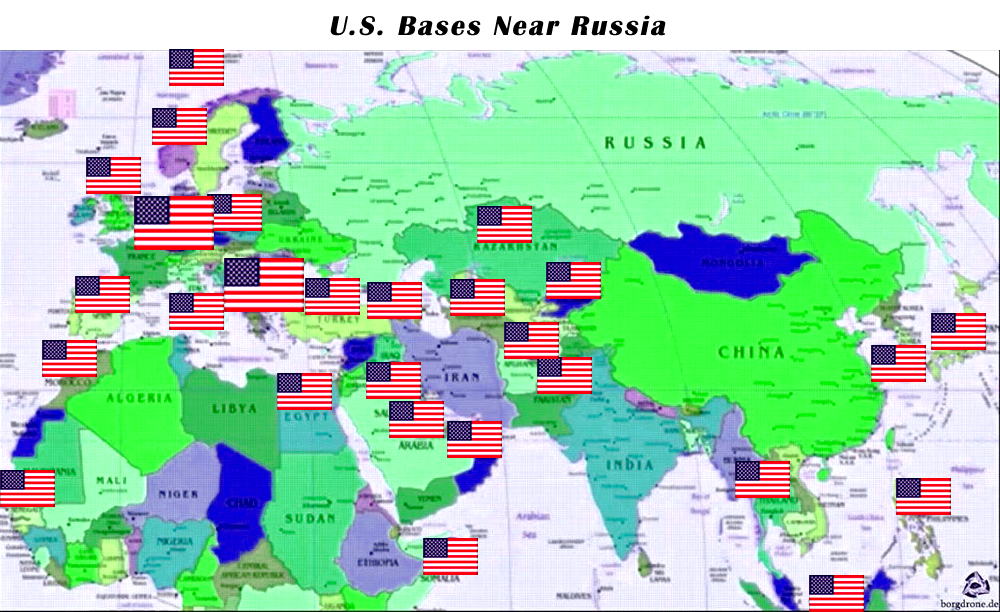
Putin’s worst nightmare MAPPED as ‘up to 100’ US nuclear weapons surround Russia’s border https://www.express.co.uk/news/science/1611678/putin-nuclear-weapons-nato-europe-russia-us
AS MANY as 100 of the US’s nuclear weapons are reportedly stationed surrounding Russia in European NATO territories in a nightmare situation for Vladimir Putin.
By JACOB PAUL, May 17, 2022 While Russia has the largest arsenal of nuclear weapons, at nearly 6,000, none of these are anywhere near the US. But the US reportedly keeps many of its nuclear weapons at sites in Europe. The estimate comes from experts Miles A. Pomper and Vasilii Tuganov, both from the James Martin Center for Nonproliferation Studies. They wrote in a piece for The Conversation: “About half of the roughly 200 US shorter-range weapons are believed to be deployed in five NATO countries in Europe.”
It is thought that the Volkel Airbase in the Netherlands, Kleine Brogel Air Base, in Belgium and Buchel Air base in Germany house the US’s B61-3 and -4 gravity bombs.
The same goes for Ghendi and Aviano bases, both in Italy, and the Incirlik Air Base in Turkey.
Several NATO countries do have their own arsenals too, but this refers specifically to US weapons. The B61 nuclear bomb is the US’ main type of thermonuclear gravity bomb, meaning it is even more destructive than the first-generation atomic bombs. The weapon has been operational with the US military since 1968.
The weapons can be dropped by dual aircraft, which is likely why they are kept at air bases.
And these bombs might not only stay limited to continental Europe.
According to US government budget documents, RAF Lakenheath in Suffolk is set to be upgraded – and some believe that will hand it the ability to store B61-12 nuclear bombs.
But the Ministry of Defence has so-far refused to clarify whether US nuclear weapons would be returning to the UK.
Back in the 1990s, RAF Lakenheath had 33 underground storage vaults, where 110 B61 bombs were stored, according to the Federation of American Scientists (FAS).
The American weapons on NATO territories are thought to be kept in underground vaults of the airbases, with a Permissive Action Link (PAL) code restricting their use to the US.
While there are thought to be 100 US nuclear bombs in NATO territory today, back at the peak of Cold War tensions there were thought to be a staggering 7,300 or so.
But the US does not have a shortage of bases on its own territory, where thousands of weapons are kept.
US strategic bombers are kept at the Minot Air Force base in North Dakota and the Whiteman Air Force base in Missouri .
The US also has ICBM silo fields in its Frances E. Warren Air Force base in Wyoming and its Malmstrom Air Force Base in Montana. There are submarine bases in Kings Bay in Georgia and Kitsap in Washington.
While Russia does possess more weapons than the US in total, the 2011 New Strategic Arms Reduction Treaty limits both sides to 1,600 weapons on standby each.
These weapons include intercontinental ballistic missiles (ICMBs), and submarine-launched ballistic missiles, missiles launched from specialized aircraft.
Many of these have nuclear warheads attached.
Despite being surrounded by US weapons, Russian nuclear warheads can travel at alarming speeds to strike targets large distances away. This includes the recently unveiled Sarmat 2, dubbed Satan 2 by the West.
The ICBM is capable of carrying 10 or more nuclear warheads and can even hit targets in the US and Europe.
Prof Andrew Futter, a nuclear weapons expert from the University of Leicester, warned that if Putin did launch an attack on London, it would have around 15 minutes to prepare.
He told MyLondon: “It wouldn’t give us time to do anything. Government officials might be OK, there is a bunker under Whitehall and some places VIPs can hide.”
Disinformation’ Label Serves to Marginalize Crucial Ukraine Facts
To ignore the fact that prolonged military aid could reshape Ukraine’s politics in favor of neo-Nazi groups prevents an understanding of the threats posed to Ukrainian democracy and civil society.
These “disinformation” claims also ignore the more contemporary evidence that Western officials have an explicit agenda of weakening Russia and even ending the Putin regime. According to Ukrainska Pravda (5/5/22; Intercept, 5/10/22), in his recent trip to Kyiv, UK prime minister Boris Johnson told Volodymyr Zelensky that regardless of a peace agreement being reached between Ukraine and Russia, the United States would remain intent on confronting Russia.
https://fair.org/home/disinformation-label-serves-to-marginalize-crucial-ukraine-facts/– 18 May 22,
Disinformation has become a central tool in the United States and Russia’s expanding information war. US officials have openly admitted to “using information as a weapon even when the confidence and accuracy of the information wasn’t high,” with corporate media eager to assist Washington in its strategy to “pre-empt and disrupt the Kremlin’s tactics, complicate its military campaign” (NBC, 4/6/22).
In defense of the US narrative, corporate media have increasingly taken to branding realities inconvenient to US information goals as “disinformation” spread by Russia or its proxies.
The New York Times (1/25/22) reported that Russian disinformation doesn’t only take the form of patently false assertions, but also those which are “true but tangential to current events”—a convenient definition, in that it allows accurate facts to be dismissed as “disinformation.” But who determines what is “tangential” and what is relevant, and what are the guiding principles to make such a determination? In this assessment, Western audiences are too fickle to be trusted with making up their own mind.
There’s no denying that Russia’s disinformation campaign is key to justifying its war on Ukraine. But instead of uncritically outsourcing these decisions to Western intelligence officials and weapons manufacturers, and as a result erasing realities key to a political settlement, the media’s ultimate guiding principle for what information is “tangential” should be whether it is relevant to preventing the further suffering of Ukrainian civilians—and reducing tensions between the world’s two largest nuclear powers.
For Western audiences, and US citizens in particular, labeling or otherwise marginalizing inconvenient realities as “disinformation” prevents a clear understanding of how their government helped escalate tensions in the region, continues to obstruct the possibility of peace talks, and is prepared to, as retired senior US diplomat Chas Freeman describes it, “fight to the last Ukrainian” in a bid to weaken Russia.
Coup ‘conspiracy theory’
For example, the New York Times (4/11/22) claimed that US support for the 2014 “Maidan Revolution” that ousted Ukraine’s democratically elected President Viktor Yanukovych was a “conspiracy theory” being peddled by the Chinese government in support of Russia. The article featured an image with a red line crossing out the face of journalist Benjamin Norton, who was appearing on a Chinese news channel to discuss how the US helped orchestrate the coup. (Norton wrote for FAIR.org frequently from 2015–18.) The evidence he presented—a leaked call initially reported by the BBC in which then–State Department official Victoria Nuland appears to select opposition leader Arseniy Yatsenyuk to be Ukraine’s new prime minister—is something, he noted, that the Times itself has reported on multiple times (2/6/14, 2/7/14).
Not having been asked for comment by the Times, Norton responded in a piece of his own (Multipolarista, 4/14/22), claiming that the newspaper was “acting as a tool of US government information warfare.”
Beyond Nuland’s apparent coup-plotting, the US campaign to destabilize Ukraine stretched back over a decade. Seeking to isolate Russia and open up Ukraine to Western capital, the US had long been “fueling anti-government sentiment through mechanisms like USAID and National Endowment for Democracy (NED)” (FAIR.org, 1/28/22). High-profile US officials like Sen. John McCain even went so far as to rally protesters in the midst of the Maidan uprising.
In the wake of the far right–led and constitutionally dubious overthrow, Russia illegally annexed the Crimean Peninsula and supported a secession movement in the eastern Donbass region, prompting a repressive response from Ukraine’s new US-backed government. Eight years later, the civil war has killed more than 14,000. Of those deaths, 3,400 were civilian casualties, which were disproportionately in separatist-controlled territories, UN data shows. Opinions on remaining in Ukraine vary within the Donbass.
When the Times covered the Russian annexation of Crimea, it acknowledged that the predominantly ethnic Russian population there viewed “the Ukrainian government installed after the ouster last weekend of Mr. Yanukovych as the illegitimate result of a fascist coup.” But now the newspaper of record is using allegations of disinformation to change the record.
To discredit evidence of US involvement in Ukraine’s 2014 regime change hides crucial facts that could potentially support a political solution to this crisis. When the crisis is reduced merely to the context of Russian aggression, a peace deal that includes, for example, a referendum on increased autonomy for the Donbass seems like an outrageous thing for Ukraine to have to agree to. But in the context of a civil war brought on by a US-backed coup—a context the Times is eager to erase—it may appear a more palatable solution.
More broadly, Western audiences that are aware of their own government’s role in sparking tensions may have more skepticism of Washington’s aims and an increased appetite for peace negotiations.
Normalizing neo-Nazis
The outsized influence of neo-Nazi groups in Ukrainian society (Human Rights Watch, 6/14/18)—including the the Azov Regiment, the explicitly neo-Nazi branch of Ukraine’s National Guard—is another fact that has been dismissed as disinformation.
Western outlets once understood far-right extremism as a festering issue (Haaretz, 12/27/18) that Ukraine’s government “underplayed” (BBC, 12/13/14). In a piece called “Ukraine’s Got a Real Problem with Far-Right Violence (and No, RT Didn’t Write This Headline),” the Atlantic Council (UkraineAlert, 6/20/18) wrote:
Amnesty International, Human Rights Watch, Freedom House and Front Line Defenders warned in a letter that radical groups acting under “a veneer of patriotism” and “traditional values” were allowed to operate under an “atmosphere of near total impunity that cannot but embolden these groups to commit more attacks.”
To be clear, far-right parties like Svoboda perform poorly in Ukraine’s polls and elections, and Ukrainians evince no desire to be ruled by them. But this argument is a bit of “red herring.” It’s not extremists’ electoral prospects that should concern Ukraine’s friends, but rather the state’s unwillingness or inability to confront violent groups and end their impunity.
But now Western media attempt to diminish those groups’ significance, arguing that singling out a vocal but insignificant far right only benefits Russia’s disinformation campaign (New Statesman, 4/12/22). Almost exactly three years after warning about Ukraine’s “real problem” with the far right, the Atlantic Council (UkraineAlert, 6/19/21) ran a piece entitled “The Dangers of Echoing Russian Disinformation on Ukraine,” in which it seemingly forgot that arguments about the electoral marginalization of Ukraine’s right wing are a “red herring”
In reality, Ukraine’s nationalist parties enjoy less support than similar political parties in a host of EU member states. Notably, in the two Ukrainian parliamentary elections held since the outbreak of hostilities with Russia in 2014, nationalist parties have failed miserably and fallen short of the 5% threshold to enter Ukrainian parliament
‘Lead[ing] the white races’
Russian propaganda does overstate the power of Nazi elements in Ukraine’s government—which it refers to as “fascist”—to justify its illegal aggression, but seizing on this propaganda to in turn downplay the influence and radicalism of these elements (e.g., USA Today, 3/30/22; Welt, 4/22/22) only prevents an important debate on how prolonged US and NATO military aid may empower these groups.
The Financial Times (3/29/22) and London Times (3/30/22) attempted to rehabilitate the Azov regiment’s reputation, using the disinformation label to downplay the influence of extremism in the national guard unit. Quoting Azov’s founder Andriy Biletsky as well as an unnamed Azov commander, the Financial Times cast Azov’s members as “patriots” who “shrug off the neo-Nazi label as ‘Russian propaganda.’” Alex Kovzhun, a “consultant” who helped draft the political program of the National Corps, Azov’s political wing, added a lighthearted human interest perspective, saying Azov was “made up of historians, football hooligans and men with military experience.”
That the Financial Times would take Biletsky at his word on the issue of Azov’s Nazi-free character, a man who once declared that the National Corps would “lead the white races of the world in a final crusade…against Semite-led Untermenschen [subhumans]” (Guardian, 3/13/18), is a prime example of how Western media have engaged in information war at the expense of their most basic journalistic duties and ethics.
Azov has opened its ranks to a flood of volunteers, the Financial Times continued, diluting its connection to Ukraine’s far-right movement, a movement that has “never proved popular at the ballot box” anyways. BBC (3/26/22) also cited electoral marginalization in its dismissal of claims about Ukraine’s far right as “a mix of falsehoods and distortions.” Putin’s distortions require debunking, but neither outlet acknowledged that these groups’ outsized influence comes more from their capacity for political violence than from their electoral participation (Hromadske, 10/13/16; Responsible Statecraft, 3/25/22).
In the London Times piece, Azov commander Yevgenii Vradnik dismissed the neo-Nazi characterization as Russian disinformation: “Perhaps [Putin] really believes it,” as he “lives in a strange, warped world. We are patriots but we are not Nazis.” Sure, the article reports, “Azov has its fair share of football hooligans and ultranationalists,” but it also includes “scholars like Zaikovsky, who worked as a translator and book editor.”
To support such “patriots,” the West should fulfill their “urgent plea” for more weapons. “To retake our regions, we need vehicle-mounted anti-aircraft weapons from NATO,” Vradnik said. Thus Western media use the “Russian disinformation” label to not only downplay the threat of Ukraine’s far right, but even to encourage the West to arm them.
Responsible Statecraft (3/25/22) pushed back on the media’s dismissiveness, warning that “Russian propaganda has colossally exaggerated the contemporary strength of Ukrainian extreme nationalist groups,” but
because these groups have been integrated into the Ukrainian National Guard yet retain their autonomous identities and command structures, over the course of an extended war they could amass a formidable fifth column that would radicalize Ukraine’s postwar political dynamic.
To ignore the fact that prolonged military aid could reshape Ukraine’s politics in favor of neo-Nazi groups prevents an understanding of the threats posed to Ukrainian democracy and civil society.
Shielding NATO from blame
Much like with the Maidan coup, the corporate media’s insistence on viewing Russian aggression as unconnected to US imperial expansion has led it to cast any blame placed on NATO policy as Russian disinformation.
In “The Five Conspiracy Theories That Putin Has Weaponized,” New York Times (4/25/22), historian and author Ilya Yaboklov listed the Kremlin’s most prominent “disinformation” narratives. High on his list was the idea that “NATO has turned Ukraine into a military camp.”
Without mentioning that NATO, a remnant of the Cold War, is explicitly hostile to Russia, the Times piece portrayed Putin’s disdain for NATO as a paranoia that is convenient for Russian propaganda:
”NATO is Mr. Putin’s worst nightmare: Its military operations in Serbia, Iraq and Libya have planted the fear that Russia will be the military alliance’s next target. It’s also a convenient boogeyman that animates the anti-Western element of Mr. Putin’s electorate. In his rhetoric, NATO is synonymous with the United States, the military hand of “the collective West” that will suffocate Russia whenever it becomes weak.”
The New York Times is not the only outlet to dismiss claims that NATO’s militarization of Ukraine has contributed to regional tensions. Jessica Brandt of the Brookings Institute claimed on CNN Newsroom (4/8/22): “There’s two places where I have seen China carry Russia’s water. The first is, starting long before the invasion, casting blame at the foot of the United States and NATO.” The Washington Post editorial board (4/11/22) argued much to the same effect that Chinese “disinformation” included arguing “NATO is to blame for the fighting.” Newsweek (4/13/22) stated that Chinese disinformation “blames the US military/industrial complex for the chaos in Ukraine and other parts of the world,” and falsely claims that “Washington ‘squeezed Russia’s security space.’”
Characterizing claims that NATO’s militarization of Russia’s neighbors was a hostile act as “paranoia” or “disinformation” ignores the decades of warnings from top US diplomats and anti-war dissidents alike that NATO expansionism into former Warsaw Pact countries would lead to conflict with Russia.
Jack F. Matlock Jr, the former ambassador to the USSR warned the US Senate as early as 1997 that NATO expansion would threaten a renewal of Cold War hostilities (Responsible Statecraft, 2/15/22):
I consider the administration’s recommendation to take new members into NATO at this time misguided. If it should be approved by the United States Senate, it may well go down in history as the most profound strategic blunder made since the end of the Cold War. Far from improving the security of the United States, its Allies, and the nations that wish to enter the Alliance, it could well encourage a chain of events that could produce the most serious security threat to this nation since the Soviet Union collapsed.
Weakening Russia
These “disinformation” claims also ignore the more contemporary evidence that Western officials have an explicit agenda of weakening Russia and even ending the Putin regime. According to Ukrainska Pravda (5/5/22; Intercept, 5/10/22), in his recent trip to Kyiv, UK prime minister Boris Johnson told Volodymyr Zelensky that regardless of a peace agreement being reached between Ukraine and Russia, the United States would remain intent on confronting Russia.
The evidence doesn’t stop there. In the past months, Joe Biden let slip his desire that Putin “cannot remain in power,” and US officials’ have become more open about their objectives to weaken Russia (Democracy Now!, 5/9/22; Wall Street Journal, 4/25/22). Corporate media have cheered on these developments, running op-eds in support of policies that go beyond a defense of Ukraine to an attack on Russia (Foreign Policy, 5/4/22; Washington Post, 4/28/22), even expressing hope for a “palace coup” there (The Lead, 4/19/22; CNN Newsroom, 3/4/22).
As famed dissident Noam Chomsky said in a discussion with the Intercept’s Jeremy Scahill (4/14/22):
We can see that our explicit policy—explicit—is rejection of any form of negotiations. The explicit policy goes way back, but it was given a definitive form in September 2021 in the September 1 joint policy statement that was then reiterated and expanded in the November 10 charter of agreement….
What it says is it calls for Ukraine to move towards what they called an enhanced program for entering NATO, which kills negotiations.
When the media denies NATO’s culpability in stoking the flames of war in Ukraine, Americans are left unaware of their most effective tool in preventing further catastrophe: pressuring their own government to stop undermining negotiations and to join the negotiating table. Dismissing these realities threatens to prolong the war in Ukraine indefinitely.
Squelching dissent
As the Biden administration launches a new Disinformation Governance Board aimed at policing online discourse, it is clear that the trend of silencing those who speak out against official US narratives is going to get worse.
Outlets like Russia Today, MintPress News and Consortium News have been banned or demonetized by platforms like Google and its subsidiary YouTube, or services like PayPal. MintPress News (4/25/22) reported YouTube had “permanently banned more than a thousand channels and 15,000 videos,” on the grounds that they were “denying, minimizing or trivializing well-documented violent events.” At the same time, platforms are loosening the restrictions on praising Ukraine’s far right or calling for the death of Russians (Reuters, 3/11/22). These policies of asymmetric censorship aid US propaganda and squelch dissent.
After receiving a barrage of complaints from the outlet’s supporters, PayPal seemingly reversed its ban of Consortium News’ account, only to state later on that this reversal was “mistaken,” and that Consortium was in fact permanently banned. The outlet’s editor-in-chief Joe Lauria (5/4/22) responded to PayPal’s ban:
Given the political climate it is reasonable to conclude that PayPal was reacting to Consortium News’ coverage of the war in Ukraine, which is not in line with the dominant narrative that is being increasingly enforced.
As Western outlets embrace the framing of a new Cold War, so too have they embraced the Cold War’s McCarthyite tactics that rooted out dissent in the United States. With great-power conflict on the rise, it is all the more important that US audiences understand the media’s increasing repression of debate in defense of the “dominant narrative.” In the words of Chomsky:
There’s a long record in the United States of censorship, not official censorship, just devices, to make sure that, what intellectuals call the “bewildered herd,” the “rabble,” the population, don’t get misled. You have to control them. And that’s happening right now.
May 18 Energy News — geoharvey

Opinion: ¶ “The ‘Lucky Country’ Is Facing A Crucial Test. The Result Will Affect Us All” • Australia is called the “Lucky Country” because of its vast resources. But it’s now sitting on the frontier of a climate crisis, with droughts and floods getting worse. The government response to climate change is among the world’s […]
May 18 Energy News — geoharvey
May 19-29 1NTERNATIONAL URANIUM FILM FESTIVAL Live and online
INTERNATIONAL URANIUM FILM FESTIVAL

THE ATOMIC AGE FILM FESTIVAL
International Uranium Film Festival @URANIUMFESTIVAL
Nucler war! The legacy of uranium mining! Is nuclear power a solution against climate change? These are the issues of the 11. International Uranium Film Festival May 19 – 29, 2022, Modern Art Museum Rio de Janeiro
(Live and Online). Mark the date, join us and spread the word. Thank you. uraniumfilmfestival.org/en/rio-2022
More scathing comments from readers, about Scott Morrison’s foolish nuclear submarine deal
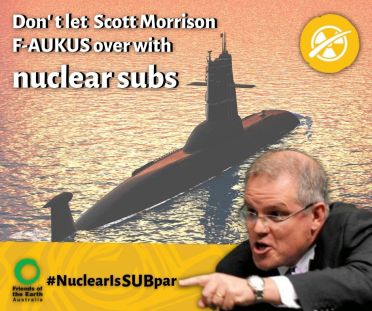
Here is another bunch of the many comments from readers, in reaction to Peter Harcher’s article https://www.smh.com.au/national/aukus-fallout-double-dealing-and-deception-came-at-a-diplomatic-cost-20220513-p5al95.html
Lorenzo the Mag That’s what you get when you hire a marketing person.
KEEPITREAL Australia is facing an unprecedented debt disaster. Already $1.2 Trillion dollars in Sovereign debt the LNP want to add to that with perpetual weapons acquisitions that will cost hundreds of billions of dollars and lock Australia into agreements spanning many decades with evermore additional associated expenses. The 2024 Stage 3 tax cuts / vote buy will cost $20 billion / year in lost budget revenue whilst entrenching poverty.
This LNP insanity has to stop, their debt consolidation would only make sense if their plan is for Australia to become the North Korea of the South Pacific
Kim Australia is committed to paying whatever the US military complex want to charge, not just for the submarines but all the add ons as well. A blank cheque for the US to fill in the figures. No wonder the US official asked if Australian taxpayers can sustain the cost. How stupid is this government?
David AUKUS or in order of importance USUKA (you sucker) will cost us mega billions, only to see the subs never delivered because they will be yesterday”s technology by the time they are delivered.
MM55 Sooner or later nuclear subs have to return to base. They could be destroyed by hypersonic missiles sent from China direct. In 10 years they will be obsolete. Technology will see to that. In the meantime we keep the workers in the US submarine industry in a job.
Tahoe Why the need for absolute secrecy? Such strategic decisions need proper analysis.
The thing that Labor failed to understand is that the American subs use weapons grade uranium. It was never going to get past Nuclear Non-Proliferation Treaty, not as far as Iran was concerned. The French *nuclear* subs used non-weapons grade uranium.
These US submarines ain’t never going to be actually delivered.
Terryroger#2 Last year, Morrison and Dutton effectively shunned and insulted France the only European power and the only nuclear power with territory and military and naval bases in the South Pacific. We’re now on the hook to buy nuclear submarines that were intended to be integrated into the US Navy to blockade China’s sea lanes. As a result China is building the capacity to block our sea lanes to the US. .
The French Barracuda subs would be far more suitable for defending and monitoring the maritime approaches to Australia, which is what our defence priority should be – independent self-defence.
Morrison and Dutton have shown themselves to be nothing more than ventriloquist dolls for Uncle Sam for it was they who were ‘conned’ by Trump and Bannon and Pompeo in to leading the way in the call for a Covid inquiry – well ahead of the rest of the world and of course the results were that Australia lost trade with China while the US gained those lost markets – some ally!
If Labor win the election, they could do worse than prepare a current Defence White Paper, based on the circumstances we now face and on our own interests rather than those of the US, and tell Macron that we may yet take the more useful, appropriate and delivered-on-time French subs.
fizzybeer…. anti lies and rorts, pro ICAC I would have expected a thousand comments on this series of revelations about the Morrison lies and incompetence with defence purchases and national security, are we becoming used to the lies or too tired of Morrison to take an interest?
EVAN SMITH Thanks Peter,
As if more proof was required about the PM’s unfitness for office, then this article by Peter Hartcher exposes it concisely and succinctly in this article.
The duplicitous conduct and lack of decency and respect that the Pm has for others, is laid bare by Peter Hartcher!
Vote this useless LNP mob out and restore Australia’s tattered reputation as a trusted ally!
@therealmclovin Another really important aspect to all of this, which I’m surprised isn’t even alluded to given what has been happening in our region in the last few weeks, is that France has a significant regional presence. New Caledonia and French Polynesia are both French territories. Setting aside which boats we needed to buy, if putting a regional partner offside seemed like a bad idea last year, it seems spectacularly idiotic now. Surely there could have been another way of handling this. We’ve created significant rifts within our region, this being just another example, that are being exploited and will continue to be exploited and we won’t even see these boats for 15 -18 years or more!
Even if the idea and technologies aren’t obsolete in two decades (and I’m not opposed to nuclear subs), given the amount of coastline we have (or the amount of area of the SW Pacific we operate in), we may in retrospect conclude we would have been much better off with 20 French subs for the price of 8 US/UK ones and in a conflict continue to be able to build and importantly fuel them ourselves.
Lorne Green As we have seen its not only the French who have been deceived but possibly the whole of the South Pacific region, not to mention a large chunk of the Australian population.
Well detailed analysis of the level of underhandedness our government went to in this affair – sounds like a masterstroke of deception worthy of intelligent services in WW2.
Is this a forewarning of the way we will be treated by the LNP, when they decide there is something we don’t need to know – there is a danger that we end becoming like our worst enemy.
No vision- No policies- No direction – How good is that! This confirms it – we have to get rid of this LNP rabble.😠
They can’t be trusted are underhanded and make terrible decisions that we will live with for the next decades.
$40 Billion More for the Ukraine War

We love the Ukraine war !!!
$40 Billion More the Ukraine War: A Wakeup Call for Those Who Still Believe in Lesser-Evilism, Anti-War.com, by Ryan Costello , , The US House of Representatives just approved another massive military “aid” package for the Ukraine War. The Biden administration had initially requested $33 billion in new money for the war, but leaders of both parties in Congress, eager to support the war, quickly said this was not enough, and raised the total for this package to $40 billion, a truly staggering total.
The administration had already spent $14 billion before this latest weapons package. The latest spending spree (at a time when many Americans are struggling with crushing debt loads, lack of baby formula and other key supplies, and skyrocketing inflation) brings the total spent in Ukraine in 3 months to $54 billion on the books (not counting all the dark money for the spy agencies). The official annual budget for the War in Afghanistan averaged $46 billion…The sum the US has already spent on this war in a few months is quickly approaching the annual military budget of the entire Russian military.
This money goes to companies like Raytheon, Lockheed Martin, General Dynamics, etc. These merchants of death make up the military industrial complex; they promote the permanent war economy, and have a vested interest in ensuring the US continues to engage in and support devastating wars abroad that destroy whole countries and societies, lead to millions of deaths and untold horrors like what we have seen in Yemen over the past few years.
These same corporate and state ghouls are salivating over the profits to be made in a new cold war with China. In this conflict for global dominance they see a shining opportunity to bleed the taxpayers of this country dry, looking to get blood from a stone in our country where the rich pay and big corporations no real taxes, but the middle class and poor are bled dry, being pushed deeper and deeper into debt-peonage and wage slavery by rising tax rates, shrinking paychecks, and red hot inflation (itself a result of the Federal Reserve’s reckless money printing to bailout the banks numerous times since 2008).
And yet not one of the so-called progressive Democrats could find a spine to stand against this weapons package. Not AOC, not Ilhan Omar, not any of them. This is not so surprising when one considers their spinelessness on Yemen (introducing a War Powers Resolution under Trump, knowing he would veto it, bur refusing to do so now that Biden is president), their posturing around Palestine (where they consistently rotate turns supporting more military funding for Israel), and countless other betrayals and hypocrisies.
Of all the “squad” only Cori Bush has released a statement justifying her vote for the bill. The others have remained silent and refused to respond to requests for comment on why they voted to fund the war machine after so many promises (clearly hollow) to end “the forever war.” Bush’s statement, like the entire legacy of the Squad, is a pathetic excuse for progressive politics. First, she claims that this $40 billion in military funding is about “strengthen[ing] the Ukrainian people’s fight against oppression and tyranny.” She makes no mention of the fact that key US leaders from Hillary Clinton to the Chairman of the Joint Chiefs have made it clear that they want this war to drag out as long as possible to bleed Russia.
In the course of such a prolonged conflict, we can only imagine the cost the people of Ukraine will pay. In short, this bill is both about padding the pockets of the military industrial complex and also about sacrificing Ukraine to weaken Russia as a rival to the US and NATO. As many have noted, the US elite are more than happy to fight Russia to the last Ukrainian.
At the end of her statement, Bush includes a hollow note that “The sheer size of the package given an already inflated Pentagon budget should not go without critique. I remain concerned about the increased risks of direct war and the potential for direct military confrontation.” This is akin to helping someone pour gasoline on a fire, and then saying that one remains concerned about the risk of the fire spreading! This is what we can expect from Bush, the squad, and the entire so-called progressive wing of the democratic party…………………..
The time has come to cast aside illusions about our so-called representatives in Washington, to stop believing in the lie of the Democratic Party as the supposed lesser of two evils, and to redouble our efforts to build up a renewed antiwar movement. Likewise, while a few dozen Republicans voted against the $40 billion, this is no reason for optimism that the Republican Party can be a vehicle for real change. During the Iraq War, once the protests swelled in size, many Democrats made court theater by feigning opposition to the war when Bush was president, only to support continued escalations and drone strikes once Obama was elected. As Howard Zinn notes over and over again in A People’s History of the United States, the two parties are part of one unified system of corporate monopoly rule. They exist to co-opt, mislead, and ultimate destroy movements that seek to change this system of oligarchical control of nearly every aspect of our country.
As long as we remain beholden to the Democrat or Republican Party politics, our movements will be gobbled up, defanged, and spat back out; regurgitated as pliant pawns of the corporate state and the military industrial complex, able to offer only the mildest of criticisms, and utterly impotent and unable to stand against the machinations of the megalomaniacs who run this country and are driving us all towards the brink of WWIII.
Ryan Costello is an organizer in New York City with United Against War and Militarism and a member of the Yemen Peace Vigil https://original.antiwar.com/ryan_costello/2022/05/15/40-billion-more-the-ukraine-war-a-wakeup-call-for-those-who-still-believe-in-lesser-evilism/
It’s election time! For one party the environment is not a priority. For the other, it’s not something to talk about. — Sustainability Bites

What’s the overarching message on election policies on the environment from the two parties capable of forming government: a re-elected Coalition, or Labor? It boils down to ‘not a focus for us’ vs ‘not telling’.
It’s election time! For one party the environment is not a priority. For the other, it’s not something to talk about. — Sustainability Bites
Former Kiribati president slams Australia’s ‘politicisation’ of climate action and power of fossil fuel lobby
Five days before Australian election, Anote Tong urges leaders to understand climate crisis means ‘survival is on the line’ for Pacific islands
In a year of endless floods, why isn’t disaster governance front and centre in the election campaign?
Markus A. Höllerer
Australia has recently experienced multiple natural and man-made disasters, creating overlapping crises, often disproportionately affecting disadvantaged populations. The situation is here to stay, and, worryingly, likely to worsen.
Gas giants paying zero income tax on Australian operations, new data shows — RenewEconomy

As the gas and oil industry gathers in Brisbane for the annual APPEA summit, data shows some member companies paid no income tax for past seven years. The post Gas giants paying zero income tax on Australian operations, new data shows appeared first on RenewEconomy.
Gas giants paying zero income tax on Australian operations, new data shows — RenewEconomy
1 This month
17 October, Free Public Talk on Nuclear Issues in South Australia
David Noonan will speak on public interest concerns over the new Roxby Downs Indenture Act 2026 on BHP copper-uranium mining and ore processing in SA, and on how AUKUS may face SA with a High-Level nuclear waste agenda.
Dr Jim Green will discuss international developments in the field of nuclear power including ‘small modular reactors’ and Generation 4 ‘advanced’ nuclear reactor concepts.


Help Aunty Sue Protect Her Land and Sacred Sites From Destructive Rocket Testing.
.

Australians deserve the truth
about
AUKUS – https://aukuspublicinquiry.com/

PETITION – To: Prime Minister Anthony Albanese and the Australian Labor Government

of the week – Australians for War Powers Reform (AWPR)
To see nuclear-related stories in greater depth and intensity

