Germany to reject EU green investment label for nuclear power

https://www.reuters.com/business/germany-reject-eu-green-investment-label-nuclear-power-2022-05-16/ , By Kate Abnett. BRUSSELS, May 16 (Reuters) – Germany will oppose European Union plans to include nuclear energy as a sustainable investment in its “taxonomy” policy for labelling green investments, the government said on Monday.
Brussels is seeking approval from EU countries and European Parliament for its plan to label gas and nuclear as climate-friendly investments, which has split opinion among states who disagree on the fuels’ green credentials.
Germany, the EU’s biggest economy, is among those planning to reject it when countries come to vote on the plan in the coming weeks.
“The Federal Government has expressed its opposition to the taxonomy rules on nuclear power. This ‘no’ is an important political signal that makes clear: Nuclear energy is not sustainable and should therefore not be part of the taxonomy,” Germany’s environment ministry and its economy and climate ministry said in a statement.
“Accordingly, the Federal Government would vote for the Council to object to the EU Commission’s delegated legal act,” the ministries said.
To reject the rules, 20 of the EU’s 27 countries must oppose it – a high threshold seen as unlikely to be reached. Germany’s stance could also steer opinion in the European Parliament, however, where a majority of the assembly’s 705 lawmakers could block the gas and nuclear rules in a July vote.
The EU’s sustainable finance taxonomy was designed to provide a “gold standard” for green investing, by limiting which investments can be labelled climate-friendly to only those that truly protect the planet.
Nuclear energy generation is CO2-free, but produces radioactive waste. Separately, Austria and Luxembourg have threatened legal action over the plan to label nuclear investments as green.
The plan to label gas as climate-friendly has faced criticism from countries including Spain, although some countries had lobbied hard for the taxonomy to incentivise gas investments to help them phase out coal. Gas emits less CO2 than coal when burned, but is also associated with leaks of methane, a potent greenhouse gas.
Nuclear Bomb Blast Map Shows What Would Happen if One Detonated Near You

NEWSWEEK, BY ARISTOS GEORGIOU ON 5/16/22
Discussions around the threat of nuclear war have escalated in recent weeks, as Sweden and Finland look set to join NATO—and Russia saying it would not accept their membership.
Commentators have been divided on whether Russian president Vladimir Putin would ever go so far as to use these weapons, with some calling them “empty threats,” while others saying the risk is real if he feels backed into a corner.
But what would happen if a bomb detonated? What would be the immediate impact and how far would the radiation zone extend?
Alex Wellerstein, a historian of nuclear weapons, who is an associate professor at the Stevens Institute of Technology, in Hoboken, New Jersey, created a nuclear bomb simulator to show just that.
The NUKEMAP is designed to show the effect of a nuclear detonation in any given location across the globe. It consists of a map in which users can select a location and model the local impacts of a blast, while accounting for various factors, such as the power of the weapon and whether or not it detonates on (or near) the surface or up in the air.
The simulation estimates the potential number of deaths and injuries resulting from any given blast, as well as a rough model of where any nuclear fallout will spread and the dimensions of the mushroom cloud.
In the simulator description, Wellerstein said the aim of the educational tool was to help people visualize the impact of nuclear weapons in simple terms in order to help them gain an understanding of the scale of these blasts.
“We live in a world where nuclear weapons issues are on the front pages of our newspapers on a regular basis, yet most people still have a very bad sense of what an exploding nuclear weapon can actually do,” Wellerstein said in a statement on the simulator website.
“Some people think they destroy everything in the world all that once, some people think they are not very different from conventional bombs. The reality is somewhere in between: nuclear weapons can cause immense destruction
and huge losses of life, but the effects are still comprehendible on a human scale.”
The creator said enabling people to visualize the effects in arbitrarily picked geographical locations could help them understand what a nuclear weapon would do to places they are familiar with.
“I created NUKEMAP because it’s very hard for anyone—even me—to intuitively understand the sizes of nuclear explosions, much less the differences between different types of nuclear weapons,” Wellerstein told Newsweek. “NUKEMAP is made to make understanding nuclear explosions easy for anyone, since pretty much everyone knows how to use online mapping software these days.”
Modeling nuclear fallout accurately, in particular, is “very difficult,” according to Wellerstein given that there are so many relevant variables, including the type of terrain the explosion is detonated on or over and the weather conditions.
Nuclear fallout is the “short-term” radiation—defined here as the radioactive residues of the explosion that remain active for the next few weeks or months (as opposed to years)—that “fall out” of the mushroom cloud following the bomb’s detonation.
This is slightly different to the immediate radiation that it is produced when a nuclear weapon explodes.
As an example, you can use the model to estimate what would happen to the largest cities in the U.S. if a nuclear bomb as powerful as the infamous “Tsar Bomba” was detonated on them.
The Tsar Bomba, which was developed by the USSR in the mid-1950s and early 1960s, was the most powerful nuclear weapon ever created and tested, with a blast yield equivalent to roughly 50 megatons of TNT. As a comparison, “Little Boy”—the nuclear bomb that the United States dropped on Hiroshima during WWII—had a
blast yield of around 15 kilotons of TNT, which is around 3,300 times less powerful.
Below are some rough estimates for an airburst detonation of the Tsar Bomba at 13,000 feet above the following cities, according to the simulator:
- New York City, New York – 7.6 million fatalities and 4.2 million injuries
- Los Angeles, California – 3.9 million fatalities and 3.7 million injuries
- Chicago, Illinois – 2.7 million fatalities and 2 million injuries
- Houston, Texas – 1.7 million fatalities and 1.7 million injuries
- Phoenix, Arizona – 1.3 million fatalities and 1.2 million injuries
- Philadelphia, Pennsylvania – 2.3 million fatalities and 1.5 million injuries
| Wellerstein stresses that the NUKEMAP model can only provide estimates and is only is good as the data it relies on—which is to say, not perfect. Some factors that could make a difference in the real world when it comes to estimating casualty numbers and the size of a given blast, for example, may not be taken into account in the simulation.Wellerstein told Newsweek that NUKEMAP has experienced a “huge” uptick in traffic since Russia launched its full-scale invasion of Ukraine earlier this year, to the point where he has had to radically upgrade and improve the server that hosts the site in order to handle it…….. https://www.newsweek.com/nuclear-bomb-blast-map-shows-what-would-happen-one-detonated-near-you-nukemap-1706923 |
Extreme heat hitting India
An intense heatwave has been sweeping through northern India with
temperature hitting a record 49.2C in parts of the capital, Delhi. Reports
say this is the fifth spell of a heatwave in the capital this summer.
Officials in many parts of the country have asked people to take
precaution. They warned the heat could cause moderate health concerns for
the vulnerable, including infants, the elderly and people with chronic
diseases.
BBC 16th May 2022
This week, nuclear news and more

Some bits of good news – Removal of over 200 dams in Europe has restored free flowing streams and migratory fish. Norway turns its back on gas and oil to become a renewable superpower.
Curiouser and curiouser. In Australia, and presumably in other ”developed” countries, the focus on squabbling political personalities, and on sporting celebrities, pretty much dominates the news, except for the continued coverage of Ukraine, seen through an American filter. Meanwhile, strangely lost in the background is the pandemic story, with new case numbers rocketing world-wide. Then there’s global heating – noted effects in California and Northern Australia – but what about India, Pakistan, Kenya, Bangladesh?
It is strange, and worrying, that the pandemic, climate change, and the heightened nuclear dangers have somehow slipped below the radar of public consciousness – but those threats are still there, even if it’s not nice to talk about them.
AUSTRALIA
Radioactive: Inside the top-secret AUKUS nuclear submarines deal. AUKUS nuclear submarine fallout: double-dealing and deception came at a diplomatic cost.
Australian readers condemn the Morrison government’s AUKUS deal Biden demanded bipartisan support before signing AUKUS. Labor was not told for months. Extraordinary’: Albanese slams Morrison for not briefing him on subs deal,
Remote NT community not told about $5m contract to fix uranium in water supply
Young voters will inherit a hotter, more dangerous world – but their climate interests are being ignored this election. Political leaders ignoring the biggest threat to our national security
No, Mr Morrison. Minority government need not create ‘chaos’ – it might finally drag Australia to a responsible climate policyMeet Zoe Daniel: Journalist turned independent fighting for climate, integrity and gender equality. Greens voter exhausted from constantly being right – satire The Shovel
Democracy in danger –State capture’ by private interests
The end of Adani? Investment giant says coal miner has revealed Carmichael closure plan.
The day one person was left to monitor nine river systems as floods swept the state
INTERNATIONAL.
The Danger of Ignoring Julian Assange https://www.youtube.com/watch?v=P6bVl47kdNk
Ending the War of Attrition in Ukraine. Forgetting the apocalypse: why our nuclear fears faded – and why that’s dangerous.
Strategic partnership: U.S. pushes ASEAN to join crusade against Russia, China, Myanmar.
The Insanity Of Expanding Nuclear Energy. Poisoned legacy: why the future of power can’t be nuclear.
John Kerry warns a long Ukraine war would threaten climate efforts
Underwater drones could be the end of nuclear submarines. Underwater drones herald sea change in Pacific warfare.
UKRAINE. The horrible dangers of pushing a US proxy war in Ukraine – Atomic energy chief: Ukraine’s nuclear safety situation ‘far from being resolved‘. UN: There is ‘credible’ information Ukrainian forces are torturing Russian POWs .We Think).
Australian readers condemn the Morrison government’s AUKUS deal
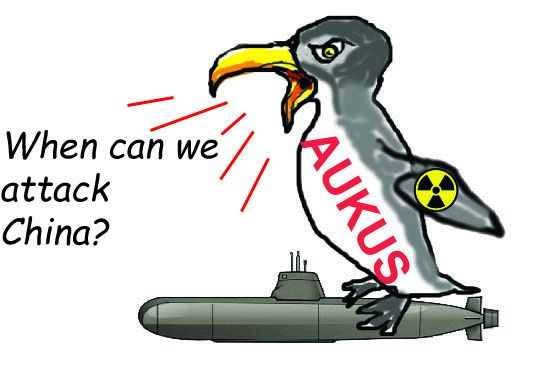
Below are just a few of the many comments that readers made, on the article about Australia’s devious nuclear submarine diplomacy.
My own comment – going to the issue of whether the nuclear submarines would be obsolete before ever in use, was not published.
Still, the overwhelming content of the published comments was condemnation of the AUKUS deal. (I’ll publish more comments later, on this page)
KEEPITREAL Super power toys and massive debt.
Social D-Greaser benefit of the termination of the contract with the French will flow to the UK or US or both. Naturally, they both will be happy.
The new nuclear sub contract either with the US or UK, could cost Australia hundreds of billion dollars more than than that with the French.
In thirty/forty years time when we could expect the delivery of these nuclear subs, the technology could already be obsolete. China could operate their subs from the moon by that time, because they make things themselves.
All these maneuvering (changing the diesel propulsion to nuclear) is aimed to scare China. Does Australia think that it will have to face China in a war really? Why are we then, unnecessarily annoying the Chinese where our business interest heavily lies. Therefore AUKUS is all loss – loss for Australia.
Trim the cat The whole world now knows you can’t trust the duplicitous Australian government.
KEEPITREAL. Just get one thing straight, me may get into a hard and bloody conflict with China , however our Trade Minister is sure that our major exports of Coal and Iron ore to China will not be affected
Petra665 Way to go Mr Morrison. You’re duplicitous handling of this I suspect is related to your quest for your own power ambitions and hanging with the “big boys”.
You managed to put a key strategic partner in an embarrassing situation damaging their diplomatic relations with a key NATO member which Biden was keen to repair. Particularly as one of his key promises to the US electorate was that he would seek to mend the US relationship with NATO after Trump had trampled all over it. Well Done clap….clap…..
No vision- No policies- No direction – How good is that! This is Morrisons $5 billion lie.
He doesn’t care as it is not his money.
Figment. Anyone who is considering employing Morrison after 22 May should think again after reading this article.
Sir Rex So the short version is… the Morrison government was willing damage a range of long-standing and critical international relationships to play wedge politics for personal advantage on the home-front.
Gee Scotty, I hope those triumphant headlines uncle Rupert gave you were worth selling-out your country for…
Social D-Greaser Remember, the Chinese will be on Solomon Island now. If they have a military base in Solomon Island with 300 fighter planes, 20-30 nuclear propelled subs fitted with nuclear missiles, will we think of fighting with China. The US has a power rivalry. The US would want to dominate in the South China sea, China is aware of it. China is unstoppable, it will find its way out to reach its goal.
Australia joined the US in Vietnam, Iraq, Syria, Yemen, Afghanistan and any other wars the US asked for, led the Covid -19 investigation on its origin (thereby annoying China), terminated the 90 billion dollar sub contract with the French (only to please the US and UK) etc, still the US Secretary of State failed acknowledge the Australia’s contribution in the Afghanistan war.
Every time the US asked Australia to jump, Australia did not ask why but asked how high. That’s a bit shame. Nobody will give you respect, you have to earn it. The US would, probably, respect NZ more than Australia. Late NZ prime Minister David Lange (rest in peace David) resolutely opposed the entry of US nuclear arm ships in NZ port and still a good friend to the US. The US now , probably, considers NZ, a country with some backbone.
Question: Do you do anything that doesn’t involve how it can benefit yourself?
Alan This is a decision that needs to go to the Australian people, as the country’s political class in particular Morrison and Dutton who have shown the contempt they hold us in given the lies Morrison told the French in backing away from the conventional sub deal last year leaving us with a $5 billion compensation bill all for Morrison to be seen as a winner on a tiny world stage.
This is one decision that should never have been made by the partisan Morrison who has made the play just to further his time as prime minister which has only made us a target of the Chinese, has pissed off most of our Asia Pacific neighbours including France and has the potential to contaminate and make an Australian city off limits for decades if there is a operational or maintenance accident with the submarines – all of this because the erstwhile prime minister decided that it will help him remain the favoured incumbent after this election.
Morrison’s wedge tactic over the nuke sub deal failed with the small target stance of Labor, but it leaves the country in a horrible scenario, one that should never have been allowed to happen without every voter being consulted over.
Morrison has saddled the country with a ticking time bomb likely to blow up in 2040, long after he is booted in 7 days time.
Relotra No matter how you look at it, it was poorly done by the ‘only-ever-announcements, no-substance-ever’ incompetents of the Coalition led by a man who cannot apologise for his mistakes even in the face of his own unrelenting incompetence.
The Coalition’s eternal claim to be the masters of national security (& the economy) has been shown quite substantially to NOT be the case whatsoever. And when has it? Only ever in their own opinion.
And for the PM of Australia to be called a liar by another country’s leader is just extraordinary. Unheard of in public & the point made most clearly to the press. What an embarrassment for Australia.
It’s Time!!!!!!!!
Misnomer ”they could allow Australia to pose a direct threat to the Chinese mainland”
Exactly. Our war mongers in Canberra aren’t interested in defence, they want war with China. They have written a $100+ billion blank cheque for the “crown jewels” (seriously?), leaving us without subs and defence for decades so hairy-chested Morrison and Dutton can bang the defence drums for an election.
The subs are a political play from a reckless, spendthrift government beholden to the US, which is happy to take a huge chunk of our debt-fuelled cash and let us fight their war against China.
Ditch the subs. They are a folly from an out-of-control government and should be the first thing Labor axes in the name of debt repair.
Inner West Andrew…. The French option should not have been discarded so readily on what appears to be a political process instigated by scotty from marketing in secret and using notes on the back of a beer coaster. The lack of proper policy development on the AUKUS deal is truly astonishing. Neither Britain or America are likely to have the spare capacity to help us obtain a fleet of even just 3 nuclear submarines for decades. meanwhile we have a massive capability gaps, just as Dutton appears determined to start a war.
Budawang The momentous decision to bankroll the US projection of power against China in the Western Pacific for decades to come was made without any public debate and without even consulting with Labor. This is not the sign of a well-functioning democracy.
lets be frank. Since ScoMo didn’t talk to Albo . Albo as PM should bite the bullet and CANCEL THE NUCLEAR DEAL . Its too far above our budget and capability. It will bankrupt us . Scomo has shown himself to be the most incompetent reactive idiot in a conga line of LNP incompetent reactive idiots. This is what happens when you have amateurs in the Lodge
Phil 1943 Why wouldn’t the US and UK rush to accept the offer of a base – or bases, for their naval assets in Australia without the inconvenience of having to pay for them? If all goes as vaguely announced by the LNP, Australia will fork out big bucks for a smallish fleet of nuclear subs that will be serviced here in ‘joint’ facilities that will be shared with those two nuclear-experienced nations while we learn how to operate our submersible purchases.
During the twenty or so years while we wait for this questionable deal to coalesce, our allies will have new Australian bases to show on the maps of their global military facilities. And it’s going to cost us billions of dollars in the interim. We can only hope Albo says ‘no’.
mmanuel Can. The fact it makes us more of a target doesnt seem to have been given too much weight.
Allan Woodley. I guess that’s what he was doing in Hawaii during the bushfires
Southerner. So this puts into perspective China’s reaction to Australia, the trade bans and the Solomons and China’s spy ships cruising in international waters off Australia’s coast. Why does Australia need an attack capacity? Why would a nation of 25 million seek to be a protagonist? Why didn’t Morrison and Co spend the time building constructive, healthy relationships with the Pacific, our SE Asian neighbours and all our trading partners including China? Once again Morrison was playing domestic politics, keeping Albanese out of the picture, pursuing a fait accompli to reap what he saw as glory. Has Morrison made Australians safer? That is uncertain. Hopefully, this very dangerous man and his very bad government will be gone in 7 days time
AUKUS nuclear submarine fallout: double-dealing and deception came at a diplomatic cost

When this masthead’s then Europe correspondent Bevan Shields asked Macron if he thought Morrison had lied to him, the French leader replied: “I don’t think, I know.”
In the White House, everyone who’d worked on the deal felt let down by the Australians. Biden felt blindsided
AUKUS fallout: double-dealing and deception came at a diplomatic cost, Scott Morrison’s efforts by stealth to secure the AUKUS deal had global ramifications, with the French president enraged and the US president blindsided. SMH, By Peter Hartcher, MAY 15, 2022
While Scott Morrison was secretly pursuing the AUKUS deal with Washington and London, the French ambassador in Canberra was starting to fret. President Emmanuel Macron had charged him to act with “ambition” in expanding the relationship with Australia, yet Jean-Pierre Thebault was finding it impossible to get access to cabinet ministers except for fleeting handshakes and “how-do-you-dos” at cocktail parties.
Foreign Affairs Minister Marise Payne would not agree to see him, nor would then defence minister Linda Reynolds. Yet the nations were supposed to be strategic partners on a high-stakes, $90 billion “Future Submarine” project. As 2020 became 2021, Thebault was feeling stonewalled. What was going on?
Morrison was confidentially exploring the prospect of nuclear-propelled submarines with the US and Britain. Yet a Defence Department official says: “The PM was still telling us, ‘I’m not cancelling anything ……… The Defence Department handled the duality – or perhaps duplicity – of the two projects by setting up compartmentalised working groups.
One, led by former submarine skipper Rear-Admiral Greg Sammut, continued working with the French towards the delivery of 12 French “Shortfin Barracuda” subs.
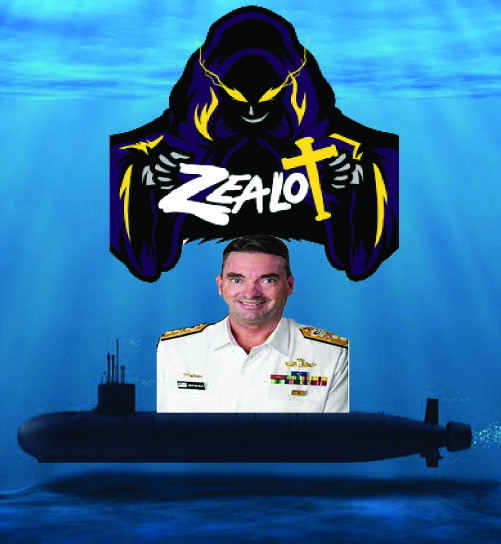
Sammut had no knowledge of the other project, led by one-time clearance diver Rear-Admiral Jonathan Mead, who was pursuing the idea of nuclear-powered subs with the Americans and the British.
The two were kept in strict separation. Both reported to defence secretary Greg Moriarty and the Chief of the Defence Force, General Angus Campbell…………..
Morrison saw an opportunity. US President Joe Biden and British Prime Minister Boris Johnson would be at a G7 summit in the quaint English seaside resort of Carbis Bay in Cornwall in June. Australia, not a member of the G7, was invited as a guest, along with India and South Korea.
Morrison used the meeting of 10 democracies to highlight the China threat………..
Morrison organised a smaller meeting with Biden and Johnson to drive his submarine ambition. Biden and Johnson had been briefed.
Morrison pitched two ideas. One was the request for the two countries to help Australia get nuclear-propelled subs. The other was a wider project for the three nations to develop other, cutting-edge technologies crucial to future warfare, such as quantum computing, artificial intelligence and other undersea capabilities…..
Morrison wanted a commitment; he didn’t get it. Biden’s big concerns remained. He said that he needed to be satisfied that the three countries would meet their obligations under the Nuclear Non-Proliferation Treaty. He wanted more work done on this in the White House.
The British were keen to proceed. Johnson even told Morrison that the UK would be prepared to build nuclear-propelled subs for Australia….. Johnson also saw it as an opportunity for British industry.
Morrison started to think of a British sub – smaller than the American nuclear-powered subs (SSNs) – as the working model for Australia’s fleet………
But the nuclear-propulsion technology was American and veto power rested with Washington…………
After Carbis Bay, Morrison had a dinner date with Macron at the Elysee Palace in Paris. ……… he might have been honest, but not fully so…………….. He left open the prospect of walking away. Deliberately.
That gate was three months away. Morrison pushed hard to get the assurances Biden needed. He had a vital friend at court: Kurt Campbell, the White House’s Indo-Pacific Co-ordinator and the man the Lowy Institute’s head, Michael Fullilove, calls “Mr Australia in Washington”.
Agreement had to be reached between the three countries, but, just as importantly, within the US group. The director of the US Naval Nuclear Propulsion Program, Admiral Frank Caldwell, custodian of the late Hyman Rickover’s crown jewels, had to be thoroughly satisfied. It took four consecutive full-day sessions to complete the work.
The nuclear Navy, once committed, committed fully………
Each government sent a team of 15 to 20 people drawn from multiple agencies. They were told to set aside eight to 10 business days.
Secrecy was paramount. The naval officers, led by Mead in Australia’s case, were told to wear civilian clothes so as not to draw attention to themselves in the streets of Washington.
………..They met at the Pentagon in August………………
The delegations initially sat in national groups around the room, co-chaired by Campbell, Mead and Vanessa Nicholls, the British government’s Director General Nuclear.
One by one, Biden’s four big concerns were met. Experts on the Nuclear Non-Proliferation Treaty were consulted. They agreed that if the reactors on the submarines were run as sealed units, installed and later removed by the US or UK at the end of their 30-year life, then the treaty would not be breached. Australia may have use of, but not access to, the nuclear technology and materials. “The Australians will never have to handle any of this material, it can’t be lost or stolen,” a US official explained…………..
The second concern was China’s reaction. “We assessed with our intelligence community that blowback from China would be manageable,” says a White House official……..
Third was Australia’s capacity. There were questions about Australia’s ability to recruit, train and retain the talent needed to maintain SSNs. However, the Americans’ biggest reservations were over Australia’s finances and politics.
The US wanted to avoid being entangled in any local budgetary disasters. A preliminary guess at the price of acquiring the nuclear subs ranges from $116 billion to $171 billion, including anticipated inflation, according to the Australian Strategic Policy Institute. Incidental extras would include the $10 billion cost of a new subs base on the east coast, as flagged by Morrison in March. The cost of training, crewing, operating and maintaining the boats would not be small
………. Ultimately, Washington decided that Australia could manage the cost, but it was an act of faith in Australia’s future economic strength.
Of the hot potatoes tossed around by the US administration, Australia’s political commitment was the hottest of all. The Americans had tested their own political support. The White House confidentially consulted Trump-aligned Republican senators. They found them supportive, even enthusiastic.
But Biden’s people had reservations about Australia’s political stability. There were concerns about the Labor Party, about the churn of prime ministers in both parties in the last decade, and about the Coalition’s serial dumping of submarine agreements, first with Japan and now with France.
The cone of silence prevented direct US contact with Labor. They called on a National Security Council staffer who’d been posted to Australia, Edgard Kagan, for his view. He consulted the US embassy in Canberra and observed that the Australian government seemed confident that Labor would support such a deal when they were eventually informed.
The Americans could see that if Labor baulked, Morrison would use it as a wedge against opposition leader Anthony Albanese in the approach to an election, to frame him as weak on national security……………
That just left Paris. The White House had pressed the Australians on the need to consult closely with the French. To satisfy the Americans, Canberra went so far as to give the NSC a list of all dealings the Australian government had had with the French on the submarines.
In the end, France’s Naval Group gave Morrison no excuse for detonating the deal. It delivered all its contracted work on time. Australia’s Admiral “Greg Sammut reported that we’d received the report from the French and it met our requirements,” a department official said. “The reply was, ‘very good, the government will be advised’.”
……….. Macron felt set up nonetheless. Payne and new Defence Minister Peter Dutton had met their French counterparts just two weeks earlier and given no sign of what was to come. Admiral Morio de l’Isle had been in Canberra just a week earlier to make sure that Naval Group was delivering as agreed, and the Australians had certified that they were. It was scant comfort that Moriarty confirmed that “the program was terminated for convenience, not for fault”.
It was a harsh blow to French pride and to Macron personally. He felt the US had connived with Australia against France. He withdrew his ambassadors from both countries in protest. When this masthead’s then Europe correspondent Bevan Shields asked Macron if he thought Morrison had lied to him, the French leader replied: “I don’t think, I know.”
In the White House, everyone who’d worked on the deal felt let down by the Australians. Biden felt blindsided. He mollified Macron. It was “clumsy, it was not done with a lot of grace,” Biden said. “I was under the impression that France had been informed long before that the [French] deal was not going through.”
Macron relented with the Americans. Morrison could not bring himself to show remorse. Macron has not yet forgiven him……. https://www.smh.com.au/national/aukus-fallout-double-dealing-and-deception-came-at-a-diplomatic-cost-20220513-p5al95.html
Remote NT community not told about $5m contract to fix uranium in water supply
Remote NT community not told about $5m contract to fix uranium in water supply
Laramba residents have no details of when treatment system will be ready and are forced to pay for bottled water while they wait
DEMOCRACY IN DANGER — Declassified Australia

Upon leaving parliament, former Liberal party Defence Minister Christopher Pyne was immediately employed with corporate consultants EY Defence (Ernst & Young) to help them grow their defence business, and Adelaide-based arms industry lobbyists GC Advisory.
Brendan Nelson, former Liberal Party leader, Defence Minister, and director of the Australian War Memorial, is now president of Boeing Australia, New Zealand and South Pacific, a top five contractor to Defence. Nelson is also on the board of defence advisory and weapons lobbyist Australian Strategic Policy Institute (ASPI).
Former Labor senator and chair of the Joint Standing Committee on Foreign Affairs, Defence and Trade, Stephen Loosley joined the board of French arms multinational Thales Australia.
Former Liberal defence minister Robert Hill is on the board of German weapons-maker Rheinmetall’s Australian subsidiary, which is supplying Defence’s $5 billion of Boxer combat reconnaissance vehicles.
Former Labor defence minister and Labor leader Kim ‘Bomber’ Beazley joined the board of Lockheed Martin Australia and was the chair of EY Defence lobby group
State capture’ by private interests explains why, no matter which major party forms government in Australia, powerful and well-connected industries always seem to win.
FELICITY RUBY and SCOTT LUDLAM16 MAY 2022 ‘State capture’ by powerful corporate and political players is a major existential threat to democracy and communities across the world. It is fast becoming […]
DEMOCRACY IN DANGER — Declassified Australia
State capture’ by fossil fuel, defence and other powerful industries is more systematic and entrenched than corruption but falls short of the definition of oligarchy, or corporate dictatorship. It exists in a distinct place in the middle, where private sector actors get hold of democratic levers to shape policy in their interest, no matter the outcome of elections.
The World Bank coined the ‘state capture’ phrase when observing private sector actors in former eastern bloc states shaping policies to serve their narrow interests. The power comes through control over resources, the threat of state violence, or other forms of influence on the judiciary, bureaucracies and government.
In Australia, state capture explains why no matter which major party forms government, powerful industries always seem to win.
Fighting state capture at election time means voting for people who don’t bank cheques from the huge companies, and who are not part of the revolving door between industry and politics.
Opinion polling and the surge in volunteers working to elect independents and Greens indicate that more Australians understand that a big, uncaptured and raucous crossbench can restore some integrity to parliament and fight corporations undermining democracy.
Early in 2022, the Australian Democracy Network published a report titled ‘Confronting State Capture’ which outlined six channels of state capture: financial, lobbying, revolving doors, institutional repurposing, research and policymaking, and public influence campaigns.
The foundation of state capture is money: using it to fund political parties, buy access to decision makers and wage third party attack campaigns. Lobbying is then used to build relationships, either through consultancies, direct CEO-Minister contact, or peak bodies.
Revolving doors, the great merry-go-round or golden escalator, sees people working as Ministers or advisers one day and company directors or lobbyists the next, providing familiarity with process and people in decision making roles.
The mostly observable work of policy and research involves the think tanks, the ‘Big 4’ professional services consultancies, and industry peak bodies. They allow these companies to cover every Senate inquiry, every piece of legislation, and infiltrate every regulatory body – unlike affected populations, community groups or social movements.
Institutional repurposing occurs when public authorities like the CSIRO or Bureau of Meteorology, or environmental protection authorities or universities are hollowed out through placing industry people on the board, changing underpinning legislation, gradually diverting them from the public interest to serving private industry. Finally, there are the public influence campaigns that are run on traditional media platforms and social media.
Revolving doors and golden escalators
When senior public officials and politicians ‘retire’ from public service and move into lobbyist roles in industry, they take with them an extensive contact network, deep institutional knowledge, and rare and privileged personal access to people at the highest levels of government.
Their presence in the private sector entrenches the influence of industry over policymaking and government procurement decisions – decisions that should be entirely unmoved by commercial imperatives.
The ministerial code supposedly requires ministers to not lobby government for industries connected to their portfolio for a period of 18 months, and yet some politicians don’t even wait before they have left office.
In defence of the realm
- Former Liberal Trade and Investment Minister Andrew Robb on the day before his resignation, took up a job with Chinese-owned developer Landbridge, the leaseholder of the strategically important Port of Darwin.
- Upon leaving parliament, former Liberal party Defence Minister Christopher Pyne was immediately employed with corporate consultants EY Defence (Ernst & Young) to help them grow their defence business, and Adelaide-based arms industry lobbyists GC Advisory.
- Former Liberal Foreign Affairs Minister Julie Bishop overseeing the Australian Aid agency, became a director with private aid contractor Palladium.
- Labor MP Mike Kelly went in 2020 directly from the powerful Parliamentary Joint Committee on Intelligence and Security into the arms of Palantir, a creepy US global surveillance consultancy.
- Brendan Nelson, former Liberal Party leader, Defence Minister, and director of the Australian War Memorial, is now president of Boeing Australia, New Zealand and South Pacific, a top five contractor to Defence. Nelson is also on the board of defence advisory and weapons lobbyist Australian Strategic Policy Institute (ASPI).
- The former Labor defence minister Stephen Smith, chairs the Perth-based cybersecurity company Sapien Cyber.
- Former Labor senator and chair of the Joint Standing Committee on Foreign Affairs, Defence and Trade, Stephen Loosley joined the board of French arms multinational Thales Australia.
- Former Liberal defence minister Robert Hill is on the board of German weapons-maker Rheinmetall’s Australian subsidiary, which is supplying Defence’s $5 billion of Boxer combat reconnaissance vehicles.
- Former Labor defence minister and Labor leader Kim ‘Bomber’ Beazley joined the board of Lockheed Martin Australia and was the chair of EY Defence lobby group.
- Former Foreign Minister Alexander Downer had been closely involved in negotiations on the Timor Sea boundary, to the ultimate advantage of Woodside Petroleum. As an ex-MP, he established a political advisory consultancy, Bespoke Approach, which was contracted by Woodside to lobby the East Timorese government to accept the basing of Timor’s LNG processing in Darwin rather than in Timor. Downer’s former departmental head also retired and joined the board of Woodside.
It’s not just ministers who seem to struggle on the Commonwealth pension, but also senior military and intelligence heads who pick up work with their former clients.
Former Chief of the Defence Force Mark Binskin, exactly a year after he retired as Defence Force Chief, was appointed as ‘non-executive director, defence and national security policy’ at BAE Systems Australia, one of Australia’s top three defence contractors. BAE Systems is in the running to provide Australia’s planned nuclear-powered submarines under the AUKUS military pact.
- Five months after leaving his post as ASIO chief, Duncan Lewis joined the Australian board of Thales, a French arms and security multinational and a top three Australian defence contractor.
- Former defence secretary, head of the Office of National Intelligence (ONI) and director general of the Australian Secret Intelligence Service (ASIS), Nick Warner, joined the board of defence lobbying firm Dragoman Global, whose clients include French submarine company, Naval Group Australia.
- Former defence secretary and ASIO boss, Dennis Richardson, joined the board of Vault Cloud, which provides high-security cloud infrastructure for government and critical industries.
- Former chief of army, Lt Gen Ken Gillespie, chairperson of ASPI’s council, has joined the boards of Naval Group Australia and cybersecurity firm Senetas Corporation.
- Retired Air Vice-Marshal Margaret Staib joined the board of QinetiQ, a British defence multinational that is deeply embedded with Defence’s weapons arm, Defence Science and Technology.
- Former defence secretary Allan Hawke joined the Lockheed Martin Australia board as well as the military advisory and lobbyist group, ASPI.
- Chief of Army Peter Leahy soon joined the boards of Codan, manufacturer of military communications equipment, and Electro Optic Systems, manufacturer of machine guns exported to UAE and Saudi Arabia, both at war against Yemen.
Fossil fuelled influence
key weakness in the Lobbying Code is that it only applies to ministers, and has no application to senior public servants, nor to MPs who have spent years on relevant committees.
While the defence and intelligence industries are renowned for making astute appointments of former ministers and senior bureaucrats, the fossil-fuel industries are also keen to exchange personnel with governments to share the knowledge and contacts that secure their deep influence…………………………..
The use of ‘institutional repurposing’
One of the most threatening aspects of state capture is the manipulation or ‘repurposing’ of government agencies set up to serve the public interest, through a process of board appointments, legislative amendments or cultural drift.
The Australian Renewable Energy Agency (ARENA) and the Clean Energy Finance Corporation (CEFC) have been persistent targets for repurposing by fossil industries……………….
No, Mr Morrison. Minority government need not create ‘chaos’ – it might finally drag Australia to a responsible climate policy
Kate Crowley
Labor might be leading in the national polls, but a hung parliament after the May 21 election remains a distinct possibility.
Political leaders ignoring the biggest threat to our national security
Political leaders ignoring the biggest threat to our national security
Robert Glasser
In a rapidly warming climate, geo-strategic competition between China and Australia will be like trying to manoeuvre chess pieces on a toppling chessboard
The day one person was left to monitor nine river systems as floods swept the state
The day one person was left to monitor nine river systems as floods swept the state
Communities were left stranded by floods because a lack of resources meant the SES missed crucial flood triggers, an independent review into the agency’s response to the deadly March 2021 floods has found.
A climate secret leaking out in France. Already, before summer begins, global heating is affecting the output of nuclear reactors

Nuclear: “Global warming highlights the vulnerability of power plants torising temperatures” In recent months, the debate on atomic energy has focused on its low climate impact. But global warming also poses a risk to the proper functioning of power plants, explains Stéphane Foucart, journalist at “Le Monde”.
Summer hasn’t started it’s already too hot. EDF announced it on May 9: electricity production could be affected until Sunday May 15, in particular at the Blayais power plant. The temperature of the water discharged into the Gironde estuary no longer meets environmental protection standards.
This micro-event will only have a marginal impact on electricity production, but it highlights what an intense public relations and communication campaign has been trying to keep under wraps for several
months: presented as a solution major challenge in the face of global warming, nuclear energy is also vulnerable to it.
Today, it is at the beginning of May that the problems begin at Blayais. In August 2018, the
Saint-Alban and Bugey power plants were partially shut down for similar reasons. The following summer, the same as well as that of Golfech were also slowed down. In August 2020, for the first time in its history, the Chooz plant was in turn temporarily shut down for similar reasons.
Le Monde 15th May 2022
The horrible dangers of pushing a US proxy war in Ukraine

If there is indeed a shift in strategy to another level of confrontation with Russia, we need to know what we’re getting into.
Responsible Stateccraft APRIL 27, 2022, Anatol Lieven,
To judge by its latest statements, the Biden administration is increasingly committed to using the conflict in Ukraine to wage a proxy war against Russia, with as its goal the weakening or even destruction of the Russian state.
This would mean America adopting a strategy that every U.S. president during the Cold War took great pains to avoid: the sponsorship of war in Europe, bringing with it the acute risk of escalation towards direct military confrontation between Russia and NATO, possibly ending in nuclear catastrophe. The U.S. and NATO refusal to support armed rebellions against Soviet rule in eastern Europe was obviously not based on any kind of recognition of the legitimacy of Communist rule and Soviet domination, but simply on a hard-headed calculation of the appalling risks involved to America, Europe and humanity in general.
……………………………… Lavrov compared the situation in terms of nuclear danger to the Cuban missile crisis. We might do well to remember in this context how very close humanity came to nuclear annihilation in the fall of 1962. At one point, the fate of the world depended on the wisdom and caution of just one Soviet naval officer on board a nuclear attack submarine: Commander (later Admiral) Vassily Arkhipov………..

Two of Lloyd Austin’s remarks are especially worth examining in some detail. The first is that weakening Russia is necessary in order to prevent it repeating its invasion of Ukraine elsewhere. This statement is either meaningless, hypocritical, or both. There is no sign that Russia wants to or indeed could invade any other countries. As far as an attack on NATO is concerned, the miserable performance of the Russian military in Ukraine should have made absolutely clear that this is a fatuous chimera. If Russia cannot capture cities less than 20 miles from Russia’s own border, the idea of an attack on NATO is ludicrous.
As far as Georgia, Moldova and Belarus are concerned, it already holds the positions it needs in these countries. Russia’s military presence in Armenia and Nagorno Karabakh is at the request of the Armenians themselves, and is indeed essential to protect them against Turkey and Azerbaijan. When it comes to combating Islamist extremism in Central Asia and elsewhere, Russia’s interests and those of the West are in fact aligned.
Lloyd Austin also stated that U.S. officials believe that Ukraine can “win” the war with Russia given the right equipment and support from the West. The question is what “winning” means. If it means preserving Ukrainian independence, freedom to join the European Union, and sovereignty over the great majority of Ukrainian territory, then this is a legitimate and necessary goal. Indeed, thanks to Ukrainian courage and Western weaponry, it has already to a great extent been achieved.
Moscow’s original goal of overthrowing the Ukrainian government and subjugating the whole of Ukraine failed utterly. Given the losses that the Russian military has suffered, it seems highly unlikely that Russia can capture any more large Ukrainian cities, let alone conquer the whole of Ukraine.
If however what is meant by victory is Ukrainian reconquest — with Western help — of all the areas lost to Russia and Russian-backed separatists since 2014, then this is a recipe for perpetual war, and monstrous losses and suffering for Ukrainians. The Ukrainian army has fought magnificently in defense of its urban areas, but attacking entrenched Russian defensive positions across open country would be a very different matter.
Moreover, since Russia has annexed Crimea and the vast majority of the Russian people believe that this is Russian national territory, no future Russian government could possibly agree to give it up. A goal of complete Ukrainian victory therefore does indeed imply the destruction of the Russian state — something that Russia’s nuclear arsenal exists to prevent.
There is however a fatal ambiguity involved in such statements. For if what they suggest is a U.S. commitment to help Ukraine to go on fighting until Ukraine has reconquered all of the territory taken by Russia since 2014, including Crimea, then this implies a permanent war with the destruction of the Russian state as its goal; for short of the collapse of the Russian state, no Russian government will surrender Crimea, and for geographical reasons, no Ukrainian victory on the ground can bring this about. Furthermore, while China has so far been very restrained in its support for Russia over Ukraine, Beijing could not possibly tolerate a U.S. strategy aimed at the destruction of the Russian state and the consequent complete isolation of China. https://responsiblestatecraft.org/2022/04/27/the-horrible-dangers-in-pushing-a-us-proxy-war-in-ukraine/
Poisoned legacy: why the future of power can’t be nuclear

Warfare, economic collapse, climate change itself – all of these increasingly real risks make nuclear sites potentially perilous places. Even without them, the dangers of atomic fission remain, and we must ask ourselves: are they really worth the cost?

the reactors promised by Gates’s TerraPower company are still at the computer-simulation stage and years away from construction. But his claim that in such reactors “accidents would literally be prevented by the laws of physics” must be taken with a pinch of salt, as there are no laws of war protecting either old or new reactors from attack. There is also serious concern that the rapid expansion in the number of plants, advocated as a way of dealing with climate change, will increase the probability of accidents. While new technology will help to avoid some of the old pitfalls, it will also bring new risks associated with untried reactors and systems. Responsibility for dealing with such risks is currently being passed on to future generations.
This is the second great risk from nuclear power: even if a reactor runs for its lifetime without incident, you still have a lot of dangerous material left at the end of it. Fuel from nuclear power plants will present a threat to human life and the environment for generations to come
The problem is that the underground store will still be contaminated in 300,000 years, and no one can predict what language our descendants will read or speak at that time, or what messages might convince them not to dig
Billions that would otherwise go to new nuclear infrastructure, with all the attendant costs of cleanup that continue for decades and beyond, should be pumped instead into clean energy.
Guardian, Serhii Plokhy, Sat 14 May 2022
On 10 October 1957, Harold Macmillan sent a letter to President Dwight Eisenhower. The question he asked his US counterpart was: “What are we going to do about these Russians?” The launch of the Sputnik satellite six days earlier had carried with it the threat that Soviet military technology would eclipse that of the west. The prime minister was hoping to boost British nuclear capabilities, and was desperate for US cooperation.
On that same day, however, the UK’s most advanced nuclear project went up in flames – putting the knowledge and bravery of its best scientists to the test, and threatening England’s peaceful countryside with a radiological disaster.
Britain’s first atomic establishment had been hurriedly put together after the second world war. It had turned the small village of Seascale, on the Cumbrian coast, into one of Britain’s most highly educated places, brimming with nuclear scientists and engineers. At the centre of this rarified new world were two buildings: Windscale piles No 1 and No 2. They were Britain’s first nuclear reactors, on a campus that for decades afterwards would be used to produce energy for the grid, but their primary purpose was to produce the material for a British bomb.
One atomic energy official would later refer to the piles as “monuments to our initial ignorance”, and it was ignorance about one particular nuclear phenomenon that almost led to disaster. “Wigner energy” is the energy that accumulates in the graphite blocks that make up the main body of the reactor while the fission reaction is taking place. If it’s not released in time, the energy can build up to such an extent that it ignites the graphite. Periodically, a special operation called “annealing” has to be undertaken in order to release the excess energy.
Macmillan wanted Windscale to produce more plutonium and tritium for a hydrogen bomb as quickly as possible. But annealing required stopping the reactor. The Windscale Technical Evaluation Committee decided it would be safe to do it less often. Managers had scheduled the annealing of Pile No 1 for early October 1957, but it was long overdue.
It began at 11.45am on 7 October, under the supervision of physicist Ian Robertson. Everything seemed to go according to plan, ……………… Robertson was back at the pile for 9am the following day. …..The temperature in the pile was not behaving as predicted and it was a challenge to keep things stable. The operators managed to maintain control for the rest of the day and night, but on 9 October the temperature began to rise again. As the situation became critical, no one could tell what was going on inside the pile…………there it was – a fire at the face of the reactor.” Normally it was dark, but now the channels were glowing bright red from the soaring temperature.
Aratcheting up of tensions with Russia, a global pandemic and a scramble for nuclear energy with potentially deadly consequences. The echoes of 1957 are powerful, and though much has changed, we would do well to heed them.
When Russia launched its missiles at targets deep inside Ukrainian territory on 24 February, 2022, the shockwaves were felt far beyond that country’s borders. Outside politics, nowhere was the impact stronger than in the energy markets.. Prices that were already hitting historical highs jumped even higher. European countries immediately saw the need to wean themselves off dependence on Russian gas.
………… Nuclear energy – which, after all, provides France with 70% of its electricity – was quickly touted as a solution. In fact, a few weeks before the start of the war, President Emmanuel Macron had already announced a programme to construct 14 new nuclear reactors. In neighbouring Belgium, which had originally planned to phase out nuclear energy by 2025, a decision was made to extend the life of two reactors by an additional 10 years.
In the UK, Boris Johnson’s rhetoric extended even further. He announced “nuclear is coming home” (Calder Hall, right next to Windscale, was among the first civilian nuclear reactors in the world) and pledged to make it 25% of the nation’s electricity mix by 2050.
On the surface, the switch to nuclear makes sense. ………..
But the invasion also provided a chilling reminder of just why so many governments have treated nuclear power with great caution over the years. On the first day, Russian troops in unmarked uniforms took control of the Chernobyl nuclear power plant, the site of the worst ever nuclear disaster. On the following day, electronic monitors in the Chernobyl exclusion zone indicated sharp spikes in radiation levels as heavy equipment and trench-digging by Russian soldiers threw up contaminated dust.
The world woke up to an even more nightmarish reality a week later, when news arrived from the Zaporizhzhia nuclear power plant in southern Ukraine. Reports suggested that Russian forces had shelled the plant and set one of its buildings on fire. Russian troops left Chernobyl once they lost the battle for Kyiv, but they remained in Zaporizhzhia, further endangering the operation of Europe’s largest nuclear power station. On 26 April, Ukraine’s state-run atomic energy company reported that Russian missiles aimed at the town of Zaporizhzhia flew at low altitude over the reactor buildings.
What the Russian takeover of these nuclear facilities exposed is a hazard inherent in all nuclear power. In order for this method of producing electricity to be safe, everything else in society has to be functioning perfectly. Warfare, economic collapse, climate change itself – all of these increasingly real risks make nuclear sites potentially perilous places. Even without them, the dangers of atomic fission remain, and we must ask ourselves: are they really worth the cost?
The Windscale fire was eventually brought under control through a combination of scientific guesswork and sheer luck. Had it not been, the consequences could have been devastating. As it was, in 1982, the British National Radiological Protection Board estimated the death toll at 32 and attributed more than 260 cases of cancer to the fire. Windscale workers and engineers directly involved in the accident were more likely to die of circulatory system diseases and heart disease than the population of England and Wales as a whole. But there was virtually no difference in the disease rates of workers and their immediate neighbours in northwestern England, suggesting that the fire and other accidents at the complex affected not just the nuclear personnel but many who never crossed the threshold of the nuclear plant.
Continue readingThe dangers of atomic fission remain, and we must ask ourselves: are they really worth the cost?
Pentagon-Funded Think Tank Simulates War With China On NBC

https://caitlinjohnstone.com/2022/05/16/pentagon-funded-think-tank-simulates-war-with-china-on-nbc/ 16 May 22
the mass media are now openly teaming up with war machine think tanks to begin seeding the normalization of a hot war with China into the minds of the public
As we’ve discussed previously, citing war machine-funded think tanks as expert analysis without even disclosing their financial conflict of interest is plainly journalistic malpractice. But it happens all the time in the mass media anyway, because the mass media exist to circulate propaganda, not journalism.
This is getting so, so crazy. That the mass media are now openly teaming up with war machine think tanks to begin seeding the normalization of a hot war with China into the minds of the public indicates that the propaganda campaign to manufacture consent for the US-centralized empire’s final Hail Mary grab at unipolar domination is escalating even further. The mass-scale psychological manipulation is getting more and more overt and more and more shameless.
This is headed somewhere very, very bad. Hopefully humanity wakes up in time to stop these lunatics from driving us off a precipice from which there is no return.
NBC’s Meet the Press just aired an absolutely freakish segment in which the influential narrative management firm Center for a New American Security (CNAS) ran war games simulating a direct US hot war with China.
CNAS is funded by the Pentagon and by military-industrial complex corporations Northrop Grumman, Raytheon, and Lockheed Martin, as well as the Taipei Economic and Cultural Representative Office, which Antiwar’s Dave DeCamp has described as the de facto US embassy in Taiwan.
The war game simulates a conflict over Taiwan which we are informed is set in the year 2027, in which China launches strikes on the US military in order to open the way to an invasion of the island. We are not told why there needs to be a specific year inserted into mainstream American consciousness about when we can expect such a conflict, but then we are also not told why NBC is platforming a war machine think tank’s simulation of a military conflict with China at all.
It happens that the Center for a New American Security was the home of the man assigned by the Biden administration to lead the Pentagon task force responsible for re-evaluating the administration’s posture toward China. That man, Ely Ratner, is on record saying that the Trump administration was insufficiently hawkish toward China. Ratner is now the Assistant Secretary of Defense for Indo-Pacific Security Affairs in the Biden administration.
It also happens that the Center for a New American Security has openly boasted about the great many of its other “experts and alumni” who have assumed senior leadership positions within the Biden administration.
It also happens that CNAS co-founder Michele Flournoy, who appeared in the Meet the Press war games segment and was at one time a heavy favorite to become Biden’s Pentagon chief, wrote a Foreign Affairs op-ed in 2020 arguing that the US needed to develop “the capability to credibly threaten to sink all of China’s military vessels, submarines, and merchant ships in the South China Sea within 72 hours.”
It also happens that CNAS CEO Richard Fontaine has been featured all over the mass media pushing empire narratives about Russia and China, telling Bloomberg just the other day that the war in Ukraine could serve the empire’s long-term interests against China.
“The war in Ukraine could end up being bad for the pivot in the short-term, but good in the long-term,” Fontaine said. “If Russia emerges from this conflict as a weakened version of itself and Germany makes good on its defense spending pledges, both trends could allow the US to focus more on the Indo-Pacific in the long run.”
It also happens that CNAS is routinely cited by the mass media as an authoritative source on all things China and Russia, with no mention ever made of the conflict of interest arising from their war machine funding. Just in the last few days here’s a recent NPR interview about NATO expansion with CNAS senior fellow Andrea Kendall-Taylor, a Washington Post quote from CNAS fellow Jacob Stokes about the Chinese threat to Taiwan, a Financial Times quote from CNAS “Indo-Pacific expert” Lisa Curtis (who I’ve previously noted was cited by the mass media for her “expert” opposition to the US Afghanistan withdrawal), and a Foreign Policy citation of the aforementioned Richard Fontaine saying “The aim of U.S. policy toward China should be to ensure that Beijing is either unwilling or unable to overturn the regional and global order.”
As we’ve discussed previously, citing war machine-funded think tanks as expert analysis without even disclosing their financial conflict of interest is plainly journalistic malpractice. But it happens all the time in the mass media anyway, because the mass media exist to circulate propaganda, not journalism.
This is getting so, so crazy. That the mass media are now openly teaming up with war machine think tanks to begin seeding the normalization of a hot war with China into the minds of the public indicates that the propaganda campaign to manufacture consent for the US-centralized empire’s final Hail Mary grab at unipolar domination is escalating even further. The mass-scale psychological manipulation is getting more and more overt and more and more shameless.
This is headed somewhere very, very bad. Hopefully humanity wakes up in time to stop these lunatics from driving us off a precipice from which there is no return.
1 This month
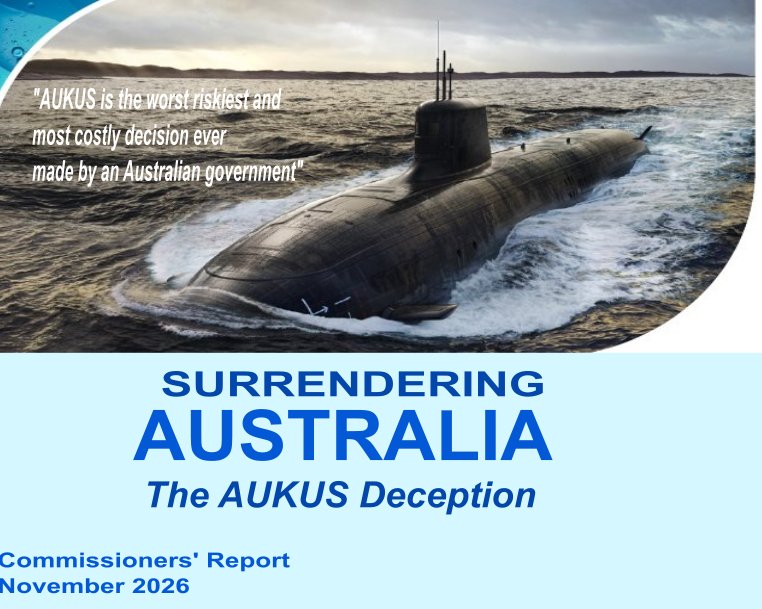
Read the Public Inquiry Report, the Commissioners’ report, Surrendering Australia: The AUKUS Deception is available to download for free at aukuspublicinquiry.com. Or just watch the replay of the National Press Club Luncheon.
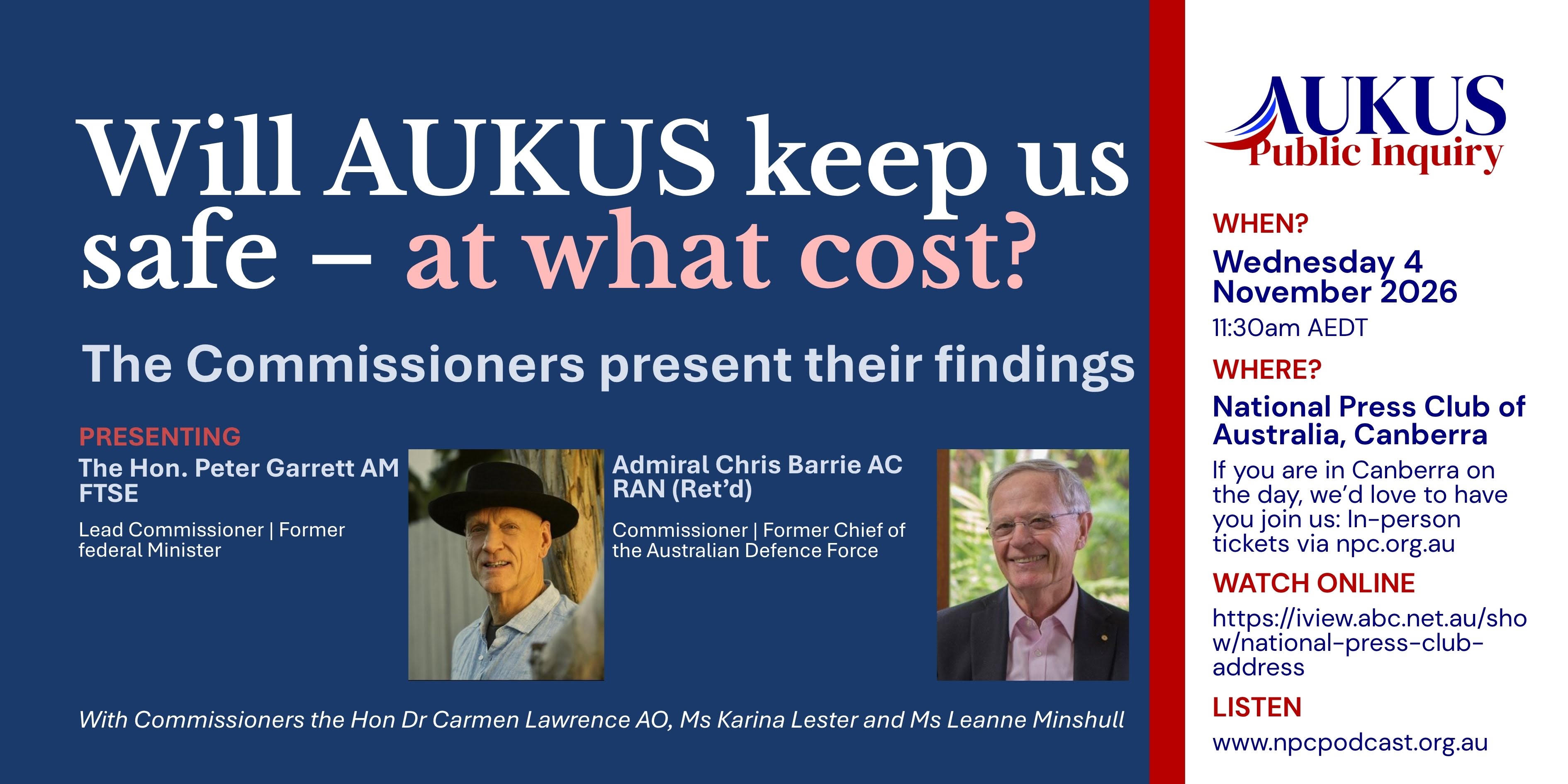
4 November – Will AUKUS keep us safe – at what cost?
the Commissioners of the AUKUS Public Inquiry present their findings at the National Press Club of Australia in Canberra. iview.abc.net.au/show/national-press-club-address
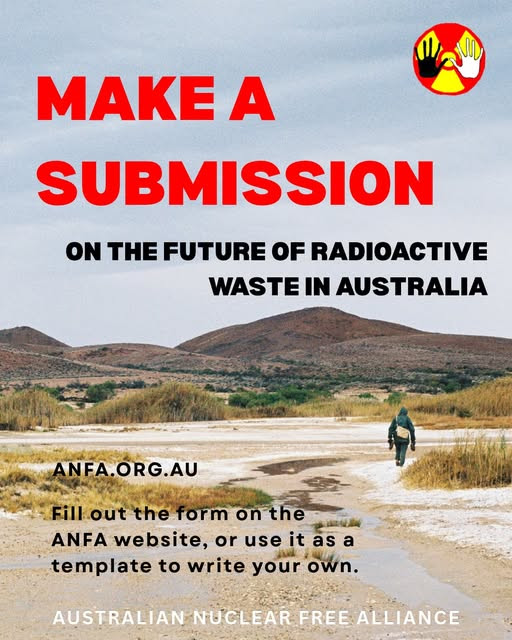
Submissions to the federal government’s new draft framework close on the 13th November 2026.
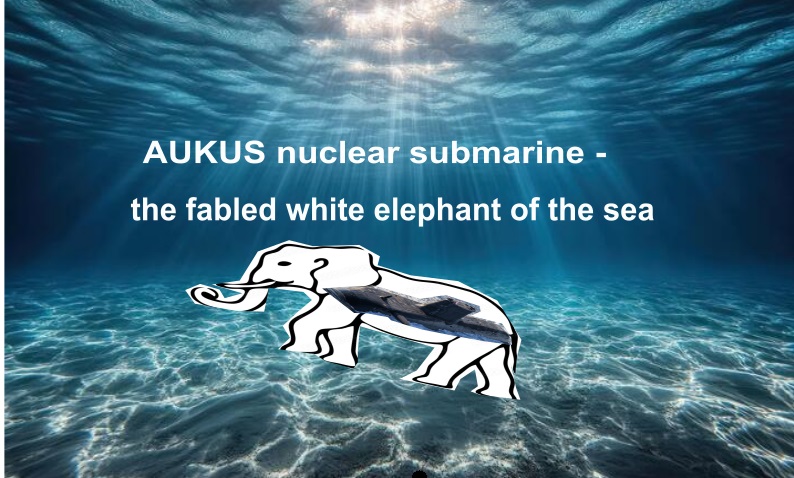
Australians deserve the truth
about
AUKUS – https://aukuspublicinquiry.com/

PETITION – To: Prime Minister Anthony Albanese and the Australian Labor Government

of the week – Australians for War Powers Reform (AWPR)
To see nuclear-related stories in greater depth and intensity

