Hiroshima man’s anime sheds light on Fukushima nuclear project — Fukushima 311 Watchdogs

The protagonist of the anime “Fukushima Genpatsu Hajimari Monogatari: Toge” (The prologue to the Fukushima nuclear power plant: Mountain pass) lives in temporary housing following the 2011 nuclear accident. (Provided by Machimonogatari Seisaku Iinkai) May 3, 2022 Hiroshima resident Hidenobu Fukumoto was astonished when he learned there was once a plan to build a nuclear […]
Hiroshima man’s anime sheds light on Fukushima nuclear project — Fukushima 311 Watchdogs
3 doctors to be dispatched nationwide to respond to nuclear accident; government requests early expansion — Fukushima 311 Watchdogs

Doctors from around the country examine workers on the grounds of TEPCO’s Fukushima Daiichi Nuclear Power Plant. They rushed to Fukushima to provide medical support in June 2011. May 2, 2022The Federation of Electric Power Companies of Japan (DENJIREN) learned in an interview on May 2 that only three doctors have been dispatched to power […]
3 doctors to be dispatched nationwide to respond to nuclear accident; government requests early expansion — Fukushima 311 Watchdogs
TEPCO net profit slides 96.9%; cost for Fukushima well out of reach — Fukushima 311 Watchdogs

Yoshimitsu Kobayashi, chairman of Tokyo Electric Power Co. Holdings Inc., attends an April 28 news conference where the company’s financial results were announced April 29, 2022 Tokyo Electric Power Co.’s dismal financial results have compounded the difficulties facing the company in compensating victims of the Fukushima nuclear disaster and covering the cleanup and decommissioning costs. […]
TEPCO net profit slides 96.9%; cost for Fukushima well out of reach — Fukushima 311 Watchdogs
Australia should note the UK experience. There, government promotes costly nuclear power, solely to secretly fund and supply nuclear submarines.

After years’ long research, Phil Johnstone and Andy Stirling have produced a report – https://www.tandfonline.com/doi/full/10.1080/24724718.2021.2012351 – it’s a seminal study of how tax-payers’ money goes secretly from ”beneficial” megaprojects to the nuclear weapons industry. In the UK, this means specifically- to nuclear submarines.
The money to the nuclear submarines cannot be measured, cannot be counted – it is so hidden in the world of energy projects, civil nuclear energy. But this explains why the governments persist doggedly with nuclear power projects that are clearly uneconomic, (and no use in combatting climate change – too late, even if they did work)
The sad and shocking thing about this – is the sort of groupthink that has pretty well everyone on the bandwagon – politicians, media, academia, business, education – and not just those who have been bribed by the nuclear industry. It’s a sort of groupthink treadmill, and they can’t seem to get off it, lest they look unpatriotic, or worse, – silly.

Expansion into Asia-Pacific: NATO military bloc is poison, not antidote — Anti-bellum
Global TimesMay 7, 2022 Japan shouldn’t be a promoter for NATO’s Asia-Pacific expansion The Ukraine crisis and the geopolitical tragedy it has triggered are not enough to kill the hunger of the US and some Western countries to reap political profits from the situation. Visiting Japanese Prime Minister Fumio Kishida and his British counterpart Boris […]
Expansion into Asia-Pacific: NATO military bloc is poison, not antidote — Anti-bellum
China slams Japanese PM’s five-nation ASEAN/NATO trip as provoking confrontation — Anti-bellum
South China Morning PostMay 6, 2022 China hits out at Japanese PM’s five-nation tour of ‘confrontation’ Beijing has accused Japanese Prime Minister Fumio Kishida of “provoking confrontation” between China and major powers after Tokyo and London signed a landmark pact to “rapidly accelerate” defence and security ties. On the final leg of his five-nation Asian […]
China slams Japanese PM’s five-nation ASEAN/NATO trip as provoking confrontation — Anti-bellum
May 6 Energy News — geoharvey

Opinion: ¶ “REpowerEU: Europe’s Chance To Say Bye To Fossil Fuels” • REpowerEU is the EUʼs flagship strategy to reduce its energy dependence on Russia. It is planned for publication on May 18. The strategy provides the perfect opportunity for the EU not only to wean itself off Russia energy but to reduce hugely its […]
May 6 Energy News — geoharvey
An Australian fusion company awarded money under a Defence program (Why?)
World Nuclear News, 4 May 2022
http://WNA.informz.ca/z/cjUucD9taT0xMzQ0NjkwJnA9MSZ1PTkwOTg5NjAyMSZsaT0yNTg0MzI0Nw/index.html
Australia’s first laser fusion energy company, HB11 Energy, has been awarded a AUD22 million (USD16 million) project to develop the next-generation high-power lasers needed to create a multi-billion dollar nuclear fusion energy industry from Australia, and export this capability to the world. The HB11 Energy project forms part of a AUD50 million Trailblazer grant awarded to the University of Adelaide and University of New South Wales under the Defence Trailblazer for Concept to Sovereign Capability bid. It comprises a AUD6 million grant and AUD16 million in contributions from partners. HB11 Energy will assist with the proof-of-concept and development of new petawatt laser technology that is suited to generating hydrogen-boron fusion.
Propaganda During Times of War
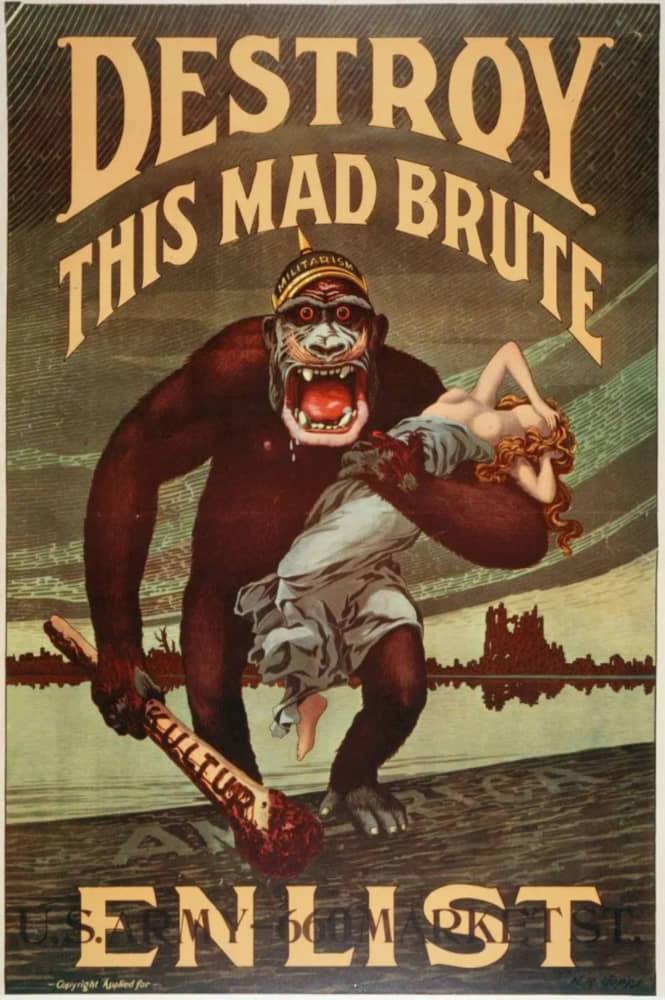
The Postil Magazine, Anne Morelli
This article, by Anne Morelli, is here translated for the first time complete. It is based on her monograph, Principes élémentaires de propagande de guerre (utilisables en cas de guerre froide, chaude ou tiède)—The Basic Principles of War Propaganda (For Use in Case of War, cold, hot, or warm), which was first published in 2001 and then revised and republished in 2010 to include the war in Afghanistan and Obama’s Nobel Peace Prize speech.
Morelli’s ten principles, or “commandments” are often accredited to Lord Arthur Ponsonby. Rather, Morelli summarized Ponsonby’s work, Falsehood in War-Time to formulate them.
The current Russian-Ukrainian conflict is just the latest iteration of the immense reach of war propaganda to fashion consent, in the form of ready sacrifice of blood and treasure.
…………………. Ponsonby’s Ten Commandments
The principles identified by Ponsonby can be easily stated as ten “commandments.” I will state them here, and we will see for each of them to what extent they have been applied by NATO’s propaganda services.
- We do not want war
- The other side is solely responsible for the war
- The enemy has the face of the devil (or in the order of “ugly”)
- The real aims of the war must be masked under noble causes
- The enemy knowingly commits atrocities. If we commit blunders, they are unintentional
- We suffer very few losses. The enemy’s losses are enormous
- Our cause is sacred
- Artists and intellectuals support our cause
- The enemy uses illegal weapons
- Those who question our propaganda are traitors
1. We Do Not Want War
Arthur Ponsonby had early noticed that the statesmen of all countries, before declaring war or at the very moment of this declaration, always solemnly assured as a preliminary that they did not want war. ………….
2. The Other Side is Solely Responsible for the War
Ponsonby noted this paradox of the First World War, which can also be found in many previous wars: each side claimed to have been forced to declare war to prevent the other from setting the planet on fire. Each government would loudly declare the aporia that sometimes war is necessary to end wars………..
,………….. in the case of this second principle (“it is the other who wanted the war”), it is obvious that it has been applied many times during the NATO war against Yugoslavia……………………..
…. The Franco-Belgian weekly Le Vif-Express ran this headline: “The dictator of Belgrade has a crushing responsibility in the misfortunes of the Serbian and Albanian people.” The insistence on the person of the leader of the enemy camp is not a coincidence. Ponsonby’s third principle insists on the need to personify the enemy in the person of its leader.
3. The Enemy has the Face of the Devil
It is not possible to hate a whole people globally. It is therefore effective to concentrate this hatred of the enemy on the opposing leader. The enemy thus has a face, and this face is obviously odious…………..
……….. as far as possible, it is necessary to demonize this enemy leader, to present him as a madman, a barbarian, an infernal criminal, a butcher, a disturber of peace, an enemy of humanity, a monster. ………….
Since the Second World War, Hitler has been considered such a paradigm of evil, that any enemy leader must be compared to him. ……………………………..
4. The Real Aims of the War must be Masked under Noble Causes
Ponsonby had noted for the 1914-1918 war that one never spoke, in the official texts of belligerents, of the economic or geopolitical objectives of the conflict. Not a word was said officially about the colonial aspirations, for example, that Great Britain expected and which would be fulfilled by an Allied victory. Officially, on the Anglo-French side, the goals of the First World War were summarized in three points:
- to crush militarism
- to defend small nations
- to prepare the world for democracy
……………………………. One might innocently ask what connection there can be between the defense of oppressed minorities and the free movement of capital, but the first type of discourse obviously conceals less avowed economic goals. Thus, 12 large American companies, including Ford Motor, General Motors and Honeywell, sponsored the 50th anniversary summit of NATO in Washington, in the spring of 1999.
……….. NATO spokesman Jamie Shea announced that the cost of the military operation against Yugoslavia would be more than offset by the longer-term benefits that the markets could realize.
…………. This is also one of the basic principles of war propaganda: the war must be presented as a conflict between civilization and barbarism. To do this, it is necessary to persuade the public that the enemy systematically and voluntarily commits atrocities, while our side can only commit involuntary blunders..
5. The Enemy Knowingly Commits Atrocities. If We Commit Blunders, They are Unintentional
Stories of atrocities committed by the enemy are an essential part of war propaganda. This is not to say, of course, that atrocities do not occur during wars. On the contrary, murder, armed robbery, arson, looting and rape seem to be commonplace in all circumstances of war and the practice of all armies, from those of antiquity to the wars of the 20th century. What is specific to war propaganda, however, is to make people believe that only the enemy is accustomed to these acts, while our own army is at the service of the population, even the enemy, and is loved by them.
6. We Suffer very few Losses. The Enemy’s Losses are Enormous
During the Battle of Britain in 1940, the British greatly “overestimated” the number of German planes shot down by British fighter and the D.C.A………………………………………………..
7. Our Cause is Sacred
God’s support for a cause is always an important asset, and for as long as religions have existed, we have happily killed each other in the name of God. War propaganda must obviously make public opinion believe that “God is on our side;………………………………………..
8. Artists and Intellectuals Support our Cause
During the First World War, with a few rare exceptions, intellectuals massively supported their own side.
9. The Enemy uses Illegal Weapons
There is nothing like affirming the deceitfulness of the enemy in war propaganda by assuring that he fights with “immoral” and condemnable weapons………………………………………
During NATO’s war against Yugoslavia, this old principle of war propaganda, noted by Ponsonby, was reused. Indeed, when the Yugoslavs revealed in June 1999 the use by NATO of depleted uranium weapons, with immeasurable human and ecological consequences, it was not necessary to wait long for the response. By August 1999, the Western media claimed that the Yugoslavs had used chemical weapons in Kosovo, thereby transgressing the rules of “civilized” war.
10. Those who Question our Propaganda are Traitors
Ponsonby’s last principle is that those who do not participate in the official propaganda should be ostracized and suspected of intelligence with the enemy.
Conclusion
As we can see from these examples, the ten “commandments” of war propaganda described by Ponsonby have lost none of their relevance in almost a century. Have they been applied intuitively by NATO propaganda officers or by following the grid that we ourselves have followed? It is always risky to think that propaganda is built by systematically staging it, according to a meticulous plan; and one would rather believe that the possibility of improvement has criss-crossed the old Ponsonby principles……………. Anne Morelli is a Belgian historian at the Université Libre de Bruxelles (ULB). https://www.thepostil.com/propaganda-during-times-of-war
Antiwar Coalitions in Action
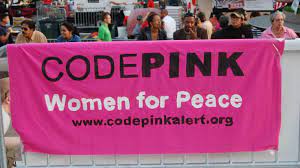
Antiwar Groups Protest Defense Industry Profiteering in Ukraine, Tyler Walicek, Truthout, 3 May 22,
”……………………………………………….. In the meantime, large-scale real-world protests against the war have erupted on numerous fronts — both within Russia and Ukraine and across the globe. Progressive, pacifist and anti-imperialist groups in the U.S. are no exception, having mobilized their considerable institutional resources to voice their own opposition. Given the unlikelihood of influencing the actions of the Russian government, they’ve targeted the realm in which they are mostly likely to have an impact — namely, U.S. policy. Because of its deep entanglements in the war, the U.S. response could easily be a critical determining factor on the outcome: either negotiation, drawdown and eventual peace, or escalation and sustained bloodshed.
Though the U.S. antiwar movement has never reattained the scale of its Vietnam-era heyday, plenty of groups with antiwar missions are active in the modern day. Many date to the resistance against the U.S.’s imperial expeditions in Afghanistan and Iraq in the early 2000s — for example, CODEPINK, the sizeable progressive and feminist antiwar organization, was founded in 2002. The group has been one of the more visible in mounting a response to the Ukraine issue, voicing dissent with the provision of weapons and directing public attention to the geopolitical context of NATO’s aggressive posture in the preceding years.
Truthout reached CODEPINK cofounder and activist Medea Benjamin, a Green Party member and former California Senate candidate, to learn more about the group’s agitational efforts and how antiwar elements in the U.S. might conceivably affect policy. As Benjamin sees it, the effort begins with education and informing the public: counteracting a media apparatus that insistently seeks to justify opening the floodgates of advanced weaponry — sometimes very directly.
“[The idea that weapons and sanctions are necessary] is being pushed by people in the White House and most members of Congress. It’s certainly being pushed by the corporate media,” Benjamin said. (Take The New York Times, for instance, which conceded sanctions may be “harsh,” but deemed they were ultimately “appropriate.” We are left to wonder why the Times didn’t insist the U.S. be so “harshly” sanctioned in the wake of the invasion of Iraq.)
Benjamin underscored the structural incentives: “The weapons companies [are] concerned about the drawing down of U.S. wars in Afghanistan and in Iraq. [The state] sees this as an opportunity to really debilitate Russia.… The ability to bleed the Russian economy and to curtail its reach also means that the U.S. is strengthening its position globally.”
CODEPINK and its allies, galvanized by the war, have busied themselves in a flurry of activity. CODEPINK had in fact already rallied a number of times in protest of rising tensions, before the crisis’s late-February outbreak. Immediately after Russian troops made their first incursion into Ukraine, the organization, along with U.K.-based groups like the Stop the War Coalition, the No to NATO Network and the Campaign for Nuclear Disarmament, held an emergency online panel and rally, bringing together figures like Jeremy Corbyn and historian and writer Vijay Prashad to denounce the war (Corbyn called it “abominable, appalling and unnecessary”), and to call for peace.
CODEPINK’s series of webinars drew thousands — including, as Benjamin described, “representatives from members of parliaments from many governments, including the British, Irish, German, French and Spanish, [and] well-known academics and activists.” In April, Benjamin also hosted another “Stop the War in Ukraine” online rally featuring Noam Chomsky, another appearance from Vijay Prashad, Greek leftist politician Yanis Varoufakis, New Left Review editor Tariq Ali, and other notable voices.
These online events occurred in tandem with real-world rallies — “days of action,” which, Benjamin said, brought together “about 125 different groups around the world.” CODEPINK has long worked beside organizations like the ANSWER Coalition (another large antiwar group in the United States, which has also hosted online conversations). Together with the Black Alliance for Peace, Peace Action, and others, the coalition put together a rally in Washington, D.C.’s Lafayette Square as tensions rose. Further CODEPINK protests took place across various U.S. locales, where volunteers demonstrated, put up flyers and gathered signatures on petitions.
As Benjamin framed it, the core message in conducting this public outreach amounted to posing the questions, “Do you want the war in Ukraine to end? Do you want to save the lives of Ukrainian people? Well, then let’s call for a ceasefire and for serious negotiations.” She feels that this approach is a convincing one: “Once we have a chance to talk to people about it, we do get them to our side.”
Benjamin and CODEPINK plan to sustain their current rates of activity. In June, the group is joining the Mass Poor People’s Assembly and Moral March on Washington, D.C. — an effort spearheaded by the Poor People’s Campaign to speak out against militarism and the bloated defense budget, among other systemic issues. Benjamin also highlighted future plans to send activists to protest an upcoming NATO strategic summit in Madrid, along with an international antiwar coalition of considerable size. Their hope is to apply pressure at a critical time: “With the upcoming election in November, I think that we can be part of talking about why this is happening, not allowing Biden to get away with blaming everything on Russia, but instead putting the blame on militarism and the inability to really seriously push for a negotiated solution,” Benjamin told Truthout.
Resolute Nonviolence

Joining CODEPINK at the Madrid NATO summit and elsewhere will be World Beyond War (WBW), a U.S.-based pacifist organization that maintains international chapters, including in Ukraine. David Swanson is WBW’s executive director. In a conversation with Truthout, he described the group’s assiduous organizing efforts. Like CODEPINK, WBW’s current strategy is to inform the public, presenting pacifist arguments for abolishing war, nuclear weaponry and arms dealing. WBW’s output has included innumerable articles, books, interviews, op-eds, videos, podcasts, and other media. In addition, said Swanson, “We’ve done tons of webinars, online and offline educational events. We have lots of speakers, we go and talk to classrooms, go and talk to peace groups that organize events and do tons of the same online.”
To augment the media push, WBW has also directed substantial real-world actions. “The past week, we’ve been doing protests all over the world,” said Swanson. The immediate future will see WBW participate in widespread protests on a global day of action, planned for May 7.“We’ve done these days before, usually in coalition with other groups, sometimes globally, sometimes nationally, trying to do days of events where we have at least small and sometimes large demonstrations or rallies or protests everywhere.”
WBW is also engaging in some more pointed confrontations. In one instance, a WBW advisory board member disrupted an event in Canada by confronting the deputy prime minister with an antiwar, anti-NATO diatribe. Another arm of WBW’s strategy, ongoing for years, is to protest at the physical offices of weapons manufacturers — major beneficiaries of wars that are incentivized to ensure they remain as drawn-out and destructive as possible. WBW will be demonstrating at the next annual meeting of aviation and defense corporation Northrop Grumman. Members aim to draw attention to the key role that the corporation and other arms manufacturers like Lockheed Martin play in “the war on Ukraine from which [they are] proudly profiting,” Swanson said. “There are Congress members proudly profiting from stock ownership in Lockheed Martin.”
Swanson sees the attention that the war on Ukraine has received as an opportunity to buttress opposition to militarism in general — and to flag certain contradictory narratives from U.S. empire and its mouthpieces. “After decades of demanding that war victims be treated with some sympathy and respect,” he said, “to have that finally happen in one place is an opportunity to say ‘Yes! Right on! What about all the other war victims?’ To have the U.S. government want war treated as a crime and prosecuted in a court — wonderful! Now how about all the other wars?”
That sort of hypocrisy around foreign policy is one of the state’s (and dominant media’s) most reliable features. Again, the tragedy of Ukraine has been especially amplified because it serves a convenient ideological function in contesting Russia’s geopolitical position. (And, as many have pointed, or blurted, out: Sympathy towards this conflict has also had particular purchase because Ukraine is considered a “civilized” European country with a large white population. A number of media figures have told on themselves on this front.)
Key to WBW’s ideology is an unswerving commitment to pacifism. As Swanson described it, “We are opposed to all war, all militarism, all war thinking, all support for military funding, always, without exception.… We think that’s actually the moral thing to do.” Nonviolence, for WBW, is non-negotiable — as evidenced by a recent article of his, which criticized the Poor People’s Campaign for an email that seemed to condone arming Ukraine. As Swanson continued: “To drag this on, to fight Russia to the last Ukrainian as we have their backs with the money rolling in — I don’t think this is a moral position. This is the point we struggle to educate people on: that the United States and Ukraine, as well as Russia, should be trying to end the war. It’s almost considered treasonous. The ‘proper’ position is to want to continue the war to weaken Russia.”
People Can Still Stop Wars
Countless organizers are just as aghast as Swanson at the grotesqueries of this war as well at its ideological utility for other powerful warmongering interests, their rank hypocrisy on display. Despite its distance from the conflict and a lack of leverage over Russia’s actions, the U.S. antiwar movement does, conceivably, have the potential to impact its own government. A U.S. pivot to pursuing a diplomatic resolution might help avoid a prolonged and grueling war of attrition. Yet if present conditions continue to accelerate — continued Russian aggression (as well as their significant battlefield setbacks) as the West increasingly arms Ukraine — the war may develop into the latter.
There are challenging moral questions to be weighed by the war’s opponents: questions of pacifism and self-defense, of how best to show solidarity with a beleaguered Ukraine, of how a war of aggression might be mitigated without worsening violence. Even understanding the conflict requires triangulating between the relentless propaganda of two powerful and deceptive nations. It would be easy for antiwar activists to give into the long odds and a sense of impotence or apathy, in a struggle that can seem quixotic. Yet the U.S. military and government, while an imposing edifice of power and profit, is not invulnerable, and mass protest and dissent have swayed the course of its history in the past. Despite their differences, antiwar organizers are collectively buoyed by a faith in what history has demonstrated: that people, when organized, can still stop wars. https://truthout.org/articles/antiwar-groups-protest-defense-industry-profiteering-in-ukraine/?eType=EmailBlastContent&eId=77e07376-4f26-4746-9b6e-12d42fb0f129
[Book review] Documenting the tragic aftermath of the Fukushima nuclear disaster
Natsuko Katayama kept fastidious notes on what she saw – and the people she spoke to – on the grounds of the Fukushima nuclear site.
Peopleon the Front Lines: A Record of Nine Years of Disaster Relief by Workers at the Fukushima Nuclear Plant”Written by Natsuko Katayama, translated by Lee Eon-suk, published by Prunsoop, sold for 23,000 won.
We have already forgotten about Fukushima. Hardly anyone remembers what happened there 11 years ago.People seemed apathetic when the incoming administration’s transition team announced that it will be extending the operational life of 18 nuclear reactors. There’s little sign of public pushback or opposition. Short-term profit is regarded as more important and precious than human lives and the environment, as greed erodes fear.I try to imagine the 179 notebooks that reporter Natsuko Katayama kept over nine years at Fukushima. Those tattered notebooks must contain not only the blood, sweat and tears of those years, but also pain, anger and sadness. Disaster, sacrifice, suffering, frustration, tenacity, hope and sadness arise amid unfamiliar words such as Fukushima, nuclear power, workers, contaminated water, nuclear meltdown, protective equipment, radiation exposure, risk, and subcontractors and then grow dim amid imaginary shouts and groans.
Katayama, a reporter on the city desk at the Tokyo Shimbun newspaper, went undercover at Fukushima after the Tohoku earthquake in March 2011 and continued digging for the truth there through 2019. She recorded her struggle in 179 notebooks which serve as the basis for “People on the Front Lines.” The “people on the front lines” that she met at Fukushima during those nine years can be seen as “minor characters.”According to Osamu Aoki, a freelance journalist whose commentary appears at the end of the book, this book represents “reportage that insists on covering minor characters.”“There are too many major characters in the world of journalism, including newspapers. [. . .] But there are many voices that are omitted in that process. Unknown people have feelings that contain facts we need to savor, ponder, contemplate and ruminate over,” Aoki wrote in the essay.
In reality, this book is a treasure trove of those minor characters. Katayama’s reporting is raw and intimate precisely because it is so plain and unadorned. Nine years of reporting is divided into nine chapters, which are summarized in a table of contents that runs for six pages.Randomly sampling the table of contents feels as if you’ve already read the whole book.“Fighting with sweat under the masks.” “Home before winter?” “Please tell them what’s happening here.” “Heading into the reactor with a son’s encouragement.” “Drilling into the containment vessel despite the radiation.” “Families scattered to the winds.” “Let’s live here.” “They do want to work until the reactor is decommissioned.” “Enough with these pointless inspections.” “Nothing has changed since the accident.” “How long will the contaminated water keep leaking?” “The scariest thing is being forgotten.” “A colleague died, but the work resumes.” “Are they just going to throw it away in the end?” “Someone’s got to do the work.” “We face the radiation, but the company keeps the money.” And so on.
Sei (55, a pseudonym) had been working with nuclear reactors since getting a part-time job at one in high school, at the age of 16. He fled Fukushima with his family three days after the nuclear accident, but came back four months later.Sei firmly believed in the safety of the reactor. That was partly because he’d been working at nuclear reactors for four decades. His confidence in the five-fold barrier that was supposed to keep the radiation out was shattered into pieces.
This is what he told Katayama: “We didn’t take any precautions after the accidents at Chernobyl and Three Mile Island in the US because we saw those as being other countries’ problems. There was too much arrogance in the government and the power company. I felt betrayed because I’d believed it was absolutely safe.”Sei was the technician who “drilled into the containment vessel despite the radiation.” He knew it was risky but thought that someone had to do it.Compensation from the government made things harder for the victims. They had to deal with resentment from those around them, who thought they didn’t have to work anymore.
Katayama recorded what she was told about the suffering of scattered families who were shuffled from one shelter to another, suffering that they were reluctant to talk about. The victims were shunned in other areas, and their children were treated as refugees and “contaminants” at nurseries and schools.Parents felt they had to dress their children in plain clothes to keep a low profile. Family breakdowns were common, including separations and divorces. With so many people separated from their families, some were even driven to suicide.Workers went about their duties in the wrecked reactor despite radiation so heavy that not even robots could operate. That raises many questions. For example, why did they work there? Was it because of the money?
The only way to learn how those workers truly felt was to rub shoulders with them in the field. The stories that Katayama tells so plainly present us with the complex interiority of people facing an unheard-of disaster.Do people carry the genes of hope that allow them to overcome extreme discouragement when they are pushed to the brink? Their desire to return home and remake it into a place where children can live in peace through their own strength could be seen as foolish bravado. But that conceals their heavy responsibility as members of society — the notion of “if not us, then who?”In July 2011, a 56-year-old worker was diagnosed with cancer of the bladder, large intestine and stomach after just four months at the Fukushima nuclear plant. The cancer hadn’t metastasized, but had occurred separately in those organs.
But the government didn’t recognize the cancers as being job-related. Too little time had elapsed between the radiation exposure and the occurrence of cancer for a causal relationship to be established, the government said.That worker had gone to Fukushima not because he wanted to, but because he didn’t want to lose his job. He had been more afraid of being terminated than being exposed to radiation, but now he regrets that decision.The workers who combated the disaster at Fukushima were given unreasonable duties without receiving decent pay in a network of subcontractors that were often seven or eight times removed from the prime contractor.
Any incident, no matter how horrific, is forgotten with time. But Katayama had been meticulously investigating, listening, and recording what had happened at the Fukushima nuclear plant with the conviction that it must not be forgotten. In the eighth year after the accident, she started coughing up blood and was diagnosed with cancer of the throat.The workers that Katayama had gotten to know during her long reportage were worried about her. “How did you come down with cancer before we did?”One worker who was already racked with illness offered her comfort. “When one door closes, another opens.”Katayama maintains her journalistic interest in Fukushima. She’s now in her 11th year reporting there, and on her 220th notebook.By Kim Jin-cheol, staff reporterPlease direct questions or comments to [english@hani.co.kr]
Militarism in the USA on the rise, with the Ukraine war.

The U.S. public largely endorses these policies, with a majority approving of or wishing to increase weaponry shipments. (Further, a remarkable 35 percent favor direct military action — “even if it risks nuclear conflict with Russia,”
Antiwar Groups Protest Defense Industry Profiteering in Ukraine, Tyler Walicek, Truthout, 3 May 22, The war of aggression that Russia has perpetrated in Ukraine has rightly generated widespread condemnation, both among Russia’s Western critics and the world at large. On the war’s obvious heinousness, almost all of the U.S. political spectrum is in agreement. However, opinions as to the appropriate Western response proceed from vastly different premises.
The predominant left position is, on the whole, resolutely antiwar. U.S. activists of all stripes have been rolling out ambitious organizing efforts in the hopes of nudging the conflict towards diplomacy and an eventual ceasefire. Given the considerable death toll and the millions of refugees the war has produced — to say nothing of the threat of conventional or nuclear escalation — the matter is an urgent one.
In the process of organizing opposition, there has, of course, been much in the way of internal debate among various left factions. More contentious dimensions include the question of arming Ukrainians, the comparative moral weighting of nonviolence and self-defense, and the degree of culpability that should be attributed to NATO for its demonstrable role in decades of ratcheting tensions.
Whatever their perspective on the circumstances, organizers from left-liberals to communists are calling upon the means of protest at their disposal, from media initiatives to global rallies to demonstrations at the thresholds of the military-industrial complex. To mount an effective confrontation with the U.S. empire and defense industry and influence a far-flung conflict is a daunting prospect. Yet despite the historic scale of the challenge, coalitions of antiwar activists are striving to realize their vision of the end of imperial aggression — perpetrated by Russia and the U.S. alike.
Defaulting to Militarism
Antiwar organizers generally share a conviction that diplomacy should take precedence in resolving the Russia-Ukraine conflict. The vast majority are vehemently opposed to any form of active U.S. military intervention — a prudent stance for those who wish to avoid a hot war with a nuclear power. Unsurprisingly, the same cannot be said for the U.S. political establishment, which has seized upon the opportunity to vilify Russia, seemingly eager to court a clash between the two deteriorating superpowers. Right-wing war fervor, always simmering below the surface, has boiled over; Republican jingoists (and a number of foolhardy op-eds in major media) espoused everything from a no-fly zone to refusing to rule out the deployment of U.S. ground troops.
These lawmakers’ martial fantasies are more than a little cavalier about the potential for Great Power conflict. Comparatively less reckless centrists, for their part, mostly favor a two-pronged approach: the imposition of devastating punitive sanctions on Russia and the delivery of vast amounts of weaponry to Ukrainian forces — stopping short of outright U.S. military intervention.
Democrats have leaped to snipe at the right by demonstrating who can demand the larger flood of weaponry, while leveraging the conflict for all manner of political purposes. By any measure, it has been a field day for fawning, ham-fisted propagandists like noted stenographer Bret Stephens. (“The U.S. stands up to bullies!”) Both parties are unequivocal in their shared support for an overflowing bounty of war materiel and other assistance. As of this writing, the White House is requesting a stunning $33 billion for Ukraine. The number keeps climbing.
The U.S. public largely endorses these policies, with a majority approving of or wishing to increase weaponry shipments. (Further, a remarkable 35 percent favor direct military action — “even if it risks nuclear conflict with Russia,” speaking poorly of their aptitude in risk assessment.) NATO has held out against calls to impose a no-fly zone; at least the military alliance sees the wisdom in avoiding a shooting war with Russian forces.
The shooting will instead be done by Ukrainian hands with plentiful Western arms — very much to the benefit of the U.S. defense industry. It is no coincidence that we see such an eagerness to fortify Ukraine among the government and media. Not only is the state keen to see Russia battered and chastened, but conflict and arms deals, as ever, mean profit.
Antiwar activists perceive the inundation of Ukraine with armaments as yet another round of war profiteering — one that risks precluding diplomatic solutions. As Ukrainian President Volodymyr Zelenskyy petitions the world to arm Ukraine and intervene militarily, antiwar groups, in contrast, have spoken out in strident opposition to the staggering influx of Western arms, as well as the Cold-War style bellicosity that U.S. power has again taken up with gusto.
Antiwar Coalitions in Action
In the meantime, large-scale real-world protests against the war have erupted on numerous fronts — both within Russia and Ukraine and across the globe. Progressive, pacifist and anti-imperialist groups in the U.S. are no exception, having mobilized their considerable institutional resources to voice their own opposition. Given the unlikelihood of influencing the actions of the Russian government, they’ve targeted the realm in which they are mostly likely to have an impact — namely, U.S. policy. Because of its deep entanglements in the war, the U.S. response could easily be a critical determining factor on the outcome: either negotiation, drawdown and eventual peace, or escalation and sustained bloodshed………………….. https://truthout.org/articles/antiwar-groups-protest-defense-industry-profiteering-in-ukraine/?eType=EmailBlastContent&eId=77e07376-4f26-4746-9b6e-12d42fb0f129
Ukraine seeks Russia’s total defeat – top officials
Kiev insists the only document it will sign with Moscow is Russia’s “capitulation”, https://www.rt.com/russia/554887-ukraine-treaty-russia-capitulation/ 3 May 22,
Ukraine’s top security official has said that, instead of a peace treaty, Kiev is only prepared to sign a document with Moscow that would finalize Russia’s defeat. The announcement comes as the conflict between the two countries continues to rage.
During an TV interview on Monday, Alexey Danilov, the head of Ukraine’s National Security and Defense Council (NSDC), was asked about international security assurances for Kiev and possible peace with Russia.
Danilov replied: “With Russia we can only sign an act of its capitulation. The sooner they do it, the better it will be for their country.”
The official noted earlier in the interview that President Volodymyr Zelensky’s office handles the talks and not the NSDC. “We have our own views. The president knows my stance on the issue,” he said. He added that he believes Zelensky will not violate Ukraine’s constitution, which guarantees the country’s territorial integrity and aspirations to join NATO.
Later on Monday, Zelensky’s adviser Alexey Arestovich brought up Danilov’s remarks during a chat with activist and YouTuber Mark Feygin. “The statement is very simple: there will be no peace treaty with Russia. There will only be the capitulation of the Russian Federation,” Arestovich said.
Asked whether Danilov had been authorized to make such statements, Arestovich said: “He doesn’t just make statements like that. He’s an official of the highest rank. It’s a completely new reality.”
Moscow wants Ukraine to renounce its bid to join NATO, as well as recognize Crimea as part of Russia, and the independence of the Donbass republics. Moscow also seeks the “demilitarization” and “denazification” of Ukraine.
Peace negotiations stalled after a meeting in Istanbul, Turkey, in late March. Russian Foreign Minister Sergey Lavrov accused Kiev on Sunday of frequently changing positions and “sabotaging” the talks.
Russia attacked neighboring Ukraine in late February, following Kiev’s failure to implement the terms of the Minsk agreements, first signed in 2014, and Moscow’s eventual recognition of the Donbass republics of Donetsk and Lugansk. The German and French brokered protocol was designed to give the breakaway regions special status within the Ukrainian state.
Kiev insists the Russian offensive was completely unprovoked and has denied claims it was planning to retake the two republics by force.
It’s time Russia and NATO stop playing games with nuclear war
Throughout most of human history, having more powerful weapons than potential adversaries did make people feel stronger and more secure. But the destructive power of nuclear weapons is so great, that increased strength no longer translates into increased security. We may be able to destroy our enemy, but it can destroy us, too. We have armed ourselves with suicide bombs.
Opinion by Dr. Ira Helfand and Michael Christ, CNN, May 3, 2022,
Michael Christ is executive director of the International Physicians for the Prevention of Nuclear War, the recipient of the 1985 Nobel Peace Prize. Dr. Ira Helfand is the immediate past president of the organization. The opinions expressed in this commentary are their own. View more opinion at CNN.
(CNN)After Russian President Vladimir Putin put his country’s nuclear forces on high alert on February 27, UN Secretary-General António Guterres said, “The prospect of nuclear conflict, once unthinkable, is now back within the realm of possibility.” Recent statements by government officials and pundits, both in Russia and the United States, have made it clear that while nuclear war should be unthinkable, they are indeed thinking about it … a lot.
French Foreign Minister Jean-Yves Le Drian countered with a threat of his own, saying, “Putin must also understand that the Atlantic alliance is a nuclear alliance.”
Last week, Putin issued the latest in a series of nuclear threats when he warned of a “lightning-fast” response if any nation intervened in Ukraine.
While the United States hasn’t put its forces on higher alert, the Biden administration has adopted a more confrontational stance toward Russia in recent weeks.
The Pentagon response appears to be an “extra urgency in developing a new generation of doomsday weapons that could maintain deterrence,” according to David Ignatius in The Washington Post. And a headline for a Wall Street Journal column argued, “The US Should Show It Can Win a Nuclear War.”
What are they thinking? If there’s one thing we know about such a conflict, it is as President Ronald Reagan and Soviet leader Mikhail Gorbachev said in a joint statement in 1985, “(A) nuclear war cannot be won and must never be fought.”
The US and Russia currently have some 3,000 strategic nuclear warheads pointed at each other, according to the Federation of American Scientists. A 2002 study showed that if only 300 Russian warheads got through to cities in the United States, 77 million to 105 million people would be killed in the first afternoon.
In addition, the economic infrastructure of the United States would be gone. There would be no electric grid, internet, food distribution system, banking or public health system, or transportation network. In the months following, most of those who survived the initial attack would also die — from starvation, exposure, disease and radiation poisoning, the same study found. A US attack on Russia would produce the same destruction there, it said.
And the fires caused by these combined attacks would put millions of tons of soot into the upper atmosphere, blocking out the sun and dropping temperatures across the globe to levels not seen since the last ice age. Food production would crash, triggering a global famine that would destroy modern civilization, according to a study published in the journal Science Advances.
It is hard to understand by what definition anyone could win such a war.
Throughout most of human history, having more powerful weapons than potential adversaries did make people feel stronger and more secure. But the destructive power of nuclear weapons is so great, that increased strength no longer translates into increased security. We may be able to destroy our enemy, but it can destroy us, too. We have armed ourselves with suicide bombs…………………………………………………….
And all the nuclear armed states need to understand that nuclear weapons, far from being instruments of national security, are the greatest threat to security. The nine nuclear nations must no longer hold their own people and all of humanity hostage. If we are to survive, they must come together and negotiate a verifiable, enforceable timetable to eliminate their nuclear arsenals so they can all join the UN Treaty on the Prohibition of Nuclear Weapons. Sooner or later, our luck will run out.
In the 1983 movie “WarGames,” the supercomputer Joshua tries to win a simulation of a nuclear war and comes to a startling conclusion: “A strange game. The only winning move is not to play.” Joshua was right. Let’s stop playing games with human survival and get rid of these weapons before they get rid of us. https://edition.cnn.com/2022/05/03/opinions/nuclear-war-talk-russia-helfand-christ/index.html
“Coal fired power stations will close, regardless of who’s in office:” Bowen
“Coal fired power stations will close, regardless of who’s in office:” Bowen
Labor’s Chris Bowen says what Angus Taylor won’t – that Australia’s coal power stations are going to close.
1 This month
17 October, Free Public Talk on Nuclear Issues in South Australia
David Noonan will speak on public interest concerns over the new Roxby Downs Indenture Act 2026 on BHP copper-uranium mining and ore processing in SA, and on how AUKUS may face SA with a High-Level nuclear waste agenda.
Dr Jim Green will discuss international developments in the field of nuclear power including ‘small modular reactors’ and Generation 4 ‘advanced’ nuclear reactor concepts.


Help Aunty Sue Protect Her Land and Sacred Sites From Destructive Rocket Testing.
.

Australians deserve the truth
about
AUKUS – https://aukuspublicinquiry.com/

PETITION – To: Prime Minister Anthony Albanese and the Australian Labor Government

of the week – Australians for War Powers Reform (AWPR)
To see nuclear-related stories in greater depth and intensity

