Renewable energy: Austria, a leader of anti-nuclear advocacy in Europe
Renewable energy: Austria, a leader of anti-nuclear advocacy in Europe, https://www.france24.com/en/tv-shows/focus/20220321-renewable-energy-austria-a-leader-of-anti-nuclear-advocacy-in-europeBy:
Vianey LORIN|Anthony MILLS, The EU is proposing to put nuclear power on its list of sustainable energy sources. But Austria is threatening to file a case with the Court of Justice of the European Union to get that text annulled. The country has never embraced nuclear energy and is even home to the world’s only power station to have been built but never fired up. Austria produces more than 75 percent of its electricity from renewable energy and is a leader of anti-nuclear advocacy in Europe. Our correspondents report.
March 21 Energy News — geoharvey

Opinion: ¶ “Increasing Oil Drilling Won’t Solve High Gas Prices” • More oil drilling will not solve high gas prices, despite what the fossil fuel industry wants you to believe. US Rep Sean Casten (D-IL) pointed out that the oil industry and conservative politicians are both lying when they make the claim that increasing oil […]
March 21 Energy News — geoharvey
This week: Australian nuclear news, and more

Some bits of good news: Giant Floating Solar Panel Flowers Replace Coal in Korea.
Most significant environmental deal since Paris’: UN agrees on landmark plastic pollution treaty. Solar Panels Built From Waste Crops Can Make Energy Without Direct Light. The ‘charismatic’ Mexican tequila fish has been saved from extinction
*************************************************************
I know that it’s all about Ukraine. BUT – is anybody noticing? – the global climate is weird- it’s getting hot at the Poles. In the total scheme of things – that process is going to matter more to the world, even than the Ukraine horror.
Meanwhile, inexplicably, governments are pushing futuristic not-yet -existing gee-whiz nuclear reactors to solve this climate problem, which is already upon us! A space alien, observing us, might have a laugh at that. And also laugh that, just as the Ukraine war is demonstrating the awful danger to nuclear reactors there, politicians are touting nuclear as the safest energy source.!
Oh, and by the way, – the pandemic is still happening.
AUSTRALIA.
Extradition of Julian Assange. REMEMBER – he’s an Australian citizen! https://www.youtube.com/watch?v=jv5GDnApfqc
Nuclear.. South Australian Unions stand with Traditional Owners in rejecting nuclear waste dump. A genuine Environmental Impact Statement must thoroughly cover the plan for National Radioactive Waste Dump, including transport issues, and the alternative option.
Report to U.S. Congress on AUKUS agreement, allows Australia access to Highly Enriched Uranium and Plutonium. Australia’s ‘Historic’ Submarine Pact Enters 1st Phase; Will Become Only The 2nd Country With US Nuclear Propulsion Tech. Nuclear testing in Maralinga, sixty years on. HOW AUSTRALIA GOES TO WAR.
Defence Minister Peter Dutton off-target with claim Labor cut billions from defence.
Scott Morrison says coal power stations should ‘run as long as they possibly can’ Honest Australian Government explanation on the flood crisis. https://www.youtube.com/watch?v=PvFy2TuPDaw After the flood: Lismore’s future in doubt with 4000 homes uninhabitable. What does a ‘once-in-100-year’ weather event actually mean?
INTERNATIONAL
A “no-fly zone” does not becalm the skies. Veterans warn against no-fly zone in Ukraine: Examine Western propaganda critically. Putin’s ‘Peaceful Atom’ Apocalypse Draws Closer by the Minute. How Much Less Newsworthy Are Civilians in Other Conflicts?
Chris Hedges: Waltzing to Armageddon .
HELEN CALDICOTT: Russia’s war could spell worldwide nuclear disaster. International Committee of the Red Cross calls for States to join UN Treaty on the Prohibition of Nuclear Weapons. The $multibillion question. Will UKraine have to pay for all those foreign weapons?
“Russian Invasion of Ukraine Spotlights the Dangers of Nuclear Reactors in War,”
Why New Technology Is Making Nuclear Arms Control Harder.
Fears of nuclear war in Europe stoke demand for fancy bunkers.
What the nuclear industry and its supporters have to say about the economic viability of nuclear power.
ANTARCTICA. Record minimum amount of Antarctic sea ice. Temperatures in eastern Antarctica are 70 degrees warmer than usual.
ARCTIC. Exceptional warmth at North Pole https://www.youtube.com/watch?v=5nJczShXwaU
UKRAINE. Zelensky Says He’s ‘Cooled’ on Joining NATO, Ready for Talks With Russia on Crimea, Donbas. Shrouded in doubt: safety issues at Russian-occupied nuclear stations in Ukraine. Electric Power Restored to Ukraine’s Chernobyl Plant. Safety fears, as Chernobyl nuclear staff tired and stressed. Danger of radioactive disaster at Chernobyl and other nuclear sites, with exhausted staff, and risk of loss of remote control. Understanding the war in Ukraine. What next for Ukraine’s nuclear sites and Wylfa and Trawsfynydd?
Zelensky Announces Ban on 11 Political Parties-, although no evidence linking any to Russian government.
Thought for the day – Global heating rockets up at the Poles – and nuclear is just too late to matter.

It’s 28 degrees Celsius warmer than usual in the Antarcticm and 18 degrees warmer in the Arctic. And wildfires raging in Texas. But nuclear propagandists are recommeniding technologies that don’t even exist yet -the magical unicorns of Small Modular Nuclear Reactors as the solution to this runaway climate change.
It would be a joke, if this were not so serious – as Australia’s top nuclear propagandist, Adi Paterson, pushes for a switch to nuclear powee in a country that is successfully implementing truly clean wind and solar.
A “no-fly zone” does not becalm the skies — Beyond Nuclear International

Would put nuclear plants at even greater risk
A “no-fly zone” does not becalm the skies — Beyond Nuclear International 20 Mar 22 , Humanitarian crisis would be worsened if nuclear plants hit
Introduction: There are many views about what the next steps should be to address the ever greater humanitarian tragedy in Ukraine, but virtual unanimity in favor of an immediate end to the war. Ukrainian President, Volodymyr Zelensky, has made frequent pleas for a “no-fly zone.” But what would this mean?
On Saturday, a State Department spokesperson told Reuters that U.S. military support helps put Ukraine “in the strongest possible negotiating position.” But at what cost? ……………
For a ceasefire agreement to be reached, it will be necessary to secure Russian strategic interests. This means confirmation that Ukraine will never be a part of NATO and will be a neutral country. It also means clear pathways — carrots as opposed to only sticks — for sanctions to be lifted. There is no time to waste.
On March 17, US Representative Ilhan Omar said, “As we support Ukraine in their fight against Russia’s brutal invasion, we must avoid the knee-jerk calls that risk nuclear war. A no-fly zone is not simply declared, it must be militarily enforced. It would mean the beginning of World War III. We must reject this completely.” As Code Pink lays out below, a no-fly zone would likely escalate the war exponentially, with the US and NATO involved directly in aerial combat with Russia. That could rain down damage on nuclear power plants indiscriminately. None of the four nuclear power plants sites in Ukraine was built to withstand protracted bombardment.
While the Code Pink article does not address the specific risks to nuclear power plants should a “no-fly zone” be declared (unlikely at this time), it lays out both a preview of such an escalation and a plea for peace, alongside a perhaps uncomfortable short history lesson about the contribution of the US and NATO to the current crisis. While the solutions offered by Code Pink are their own, neither Code Pink nor Beyond Nuclear exonerates in any way the atrocities currently being committed against civilians in a country under invasion. But the precarious situation, poised for a potential escalation — rather than cessation — of war, points up once again the extreme liabilities of nuclear power plants, whose dangers are unequalled by any other power source.
By Medea Benjamin and Code Pink
Ukrainian President Volodymyr Zelensky just addressed both chambers of Congress. He asked for a no-fly zone — a situation in which U.S. fighter jets would shoot down Russian planes — and for MiG-29 fighter jets to be transferred from Poland to Ukraine (the U.S. has so far declined to be a part of such a transfer as it would be received by Russia as U.S. combat entry into the war).
Following Zelensky’s address, President Biden approved $800 million in new aid for Ukraine, bringing the total U.S. assistance to Ukraine to $1 billion in just this past week, and will include Javelin anti-tank and Stinger anti-aircraft missiles.
Standing ovations, such as the one Zelensky just got from Congress, are great, but what Ukraine really needs is vigorous negotiations to reach a ceasefire deal. To this end, we are calling on the U.S. to enter the negotiations by outlining the agreements and compromises the U.S. should support. Add your name.
By breaking promises not to expand NATO into Eastern Europe, by placing offensive missiles in Romania and Poland that could reach Russia in minutes, by arming Ukrainian forces, by continuing to “modernize” the U.S. nuclear arsenal, and by withdrawing from key nonproliferation treaties, the U.S. exacerbated the conflict that led up to Russia’s invasion of Ukraine.
Russia must withdraw its troops and commit to respecting the sovereignty of Ukraine, but the United States must also be clear that it supports and is ready to commit to the following:
- Continued rejection of a no-fly zone over Ukraine;
- No NATO expansion;
- Recognition of Ukraine as a neutral country;
- An off-ramp for sanctions on Russia to be lifted;
- Support for an international security agreement to protect the interests of all people on the European continent to remain free from war and occupation;
- Support for Ukrainian demilitarization to the degree that missiles would be banned;
- Supply humanitarian aid to Ukraine and support Ukrainian refugees.
Beyond increased prices at gas stations, the war in Ukraine is resulting in a silencing of critical anti-war voices inside America. While mainstream U.S. media is providing only a narrow narrative on the war, social media platforms are increasing their censorship.
Along with asking the U.S. to join the war — a move that could mean a nuclear WWIII — Zelensky has been asking the U.S. to be more involved in the Ukraine-Russia negotiations.
On Saturday, a State Department spokesperson told Reuters that U.S. military support helps put Ukraine “in the strongest possible negotiating position.” But at what cost? ……………
For a ceasefire agreement to be reached, it will be necessary to secure Russian strategic interests. This means confirmation that Ukraine will never be a part of NATO and will be a neutral country. It also means clear pathways — carrots as opposed to only sticks — for sanctions to be lifted. There is no time to waste. https://wordpress.com/read/feeds/72759838/posts/3899932178
Shrouded in doubt: safety issues at Russian-occupied nuclear stations in Ukraine
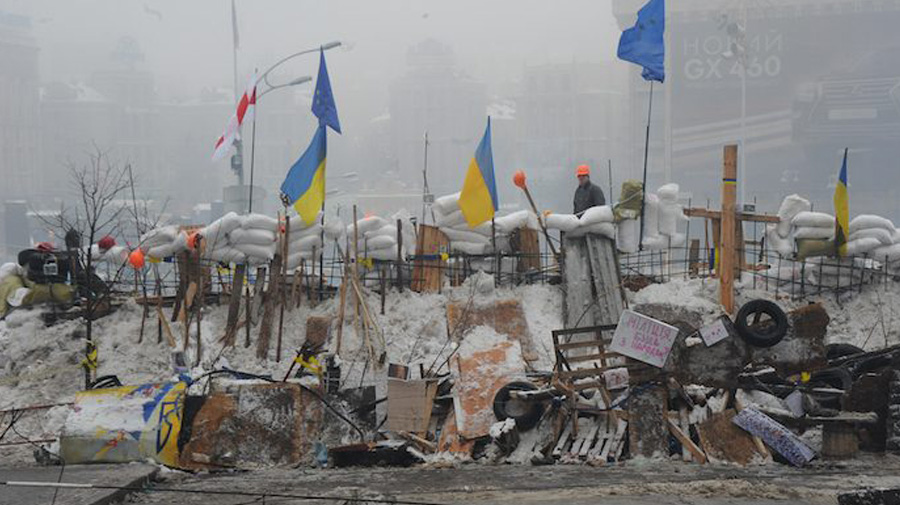
Kate Brown and Susan Solomon: One thing nuclear power plants weren’t built to survive: War. Military strategists commonly target the enemy’s electrical grid. That’s a problem when combat is in a nuclearized country like Ukraine.
Inside the New Safe Confinement at the decommissioned Chernobyl nuclear power plant in Ukraine in 2021, The structure encloses the radioactive remains of the reactor that exploded in 1986. Russian
forces are now in control of the site. The day Russia invaded Ukraine, Russian forces took control of the decommissioned Chernobyl nuclear power plant.
A week later, flares from Russian artillery lit up the Zaporizhzhia plant; Ukrainian media reported that the Russian army had placed land mines around the plant’s perimeter and was stockpiling arms at both nuclear installations. The army is now pointed at yet another nuclear facility, the South Ukraine plant.
But Russia’s is the first invasion of a country that derives more than half its energy from nuclear power. It stands to reason that Russian generals will seek to capture all 15 active reactors in Ukraine. The Russian army appears to be using the nuclear installations as safe havens, calculating that the Ukrainians will not fire on them, but we can still expect plenty more fearful nights spent riveted to scenes of battles over huge concrete towers and rows of basins filled with radioactive spent nuclear fuel:
It turns out that reactor containment buildings have never been stress-tested for blows from heavy artillery or missiles. Even without a direct hit on a reactor, we are learning of the fragility of nuclear power plants. Normal oversight and operations have essentially been replaced by isolation and disorder.
Workers at Chernobyl have been on the job continuously for more than three weeks. They have no
clean clothes (important for nuclear workers), no real beds, no contact with family, no proper meals or rest.
At the Zaporizhzhia plant, according to a Ukrainian official, Russian soldiers have forced employees into
submission. Employee-hostages — exhausted, hungry and stressed — could make mistakes. So could the untrained Russian military personnel who aregiving the orders. Communication to these sites is largely cut off.
Independent oversight experts cannot enter to verify safe operations or deliver spare parts. Russian diplomats continue to enjoy a privileged role at the International Atomic Energy Agency, despite the war. We have to rely on what the IAEA and the Russian army tell us.
In the past, Soviet nuclear information services specialized in secrecy and mistruths. One of us, while
working on a history of Chernobyl, found that the IAEA had difficulty acknowledging the public health impact of the fallout from the 1986 explosion there. Russian information services again appear to be opaque and untrustworthy. If an accident occurs, we don’t have confidence that rescue squads and firefighters can get to captured nuclear installations to deal with infernos and injuries. Nor can we be sure that we will learn the full extent of the damage and spread of radioactive sources.
Washington Post 18th March 2022
https://www.washingtonpost.com/outlook/2022/03/18/chernobyl-zaporizhzhia-nuclear-plant-ukraine/
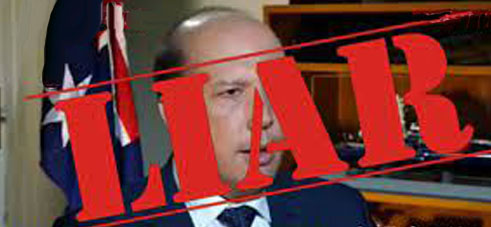
Minister off-target with claim Labor cut billions from defence
AAP.com, William Summers March 14, 2022,
WHAT WAS CLAIMED Labor cut billions of dollars from the defence budget when it was last in government.
OUR VERDICT Misleading. Labor cut defence spending in two years while in office, but overall real-term spending went up while in government.
Defence Minister Peter Dutton has questioned the opposition’s commitment to national security by claiming Labor cut “literally billions” from the Defence budget when the party was last in office.
The claim is misleading. Labor increased overall spending on Defence when in government between 2007 and 2013, both in nominal terms and real terms. However, Labor did cut $1.9 billion from the portfolio in 2012/13, its last full year in office.
Mr Dutton made the claim during an appearance on ABC’s Radio National on March 8 in response to comments made by Labor’s shadow defence minister Brendan O’Connor about the need to consider the future role of Australia’s military during natural disasters.
Mr Dutton said: “Defence has record funding. A bit ironic to hear that from Brendan (O’Connor) when (Labor) pulled literally billions out of defence when they were last in government.” (audio mark 6 min 45sec)
When contacted by AAP FactCheck about the basis of the claim, Mr Dutton’s office pointed to budget papers from Labor’s time in office without providing further information. By that measure, Mr Dutton’s claim does not stack up.
Historical Defence portfolio budget papers provide detailed figures on projected spending as well as actual spending that took place in the previous budget year.
The Australian Strategic Policy Institute (ASPI) – a think tank majority-funded by the Department of Defence and other federal government agencies – has collated these figures going back to 1997/98 (see here). Its figures include spending on the Australian Signals Directorate, which provides cyber intelligence and other capabilities and falls under the Defence portfolio.
The previous Labor government was elected on November 24, 2007, and lost office on September 7, 2013. Therefore, to judge Labor’s spending record, AAP FactCheck looked at spending from 2007/08 – the fiscal year Labor first came into office – to 2012/13, Labor’s final full year in office.
……………………… Misleading – The claim is accurate in parts but information has also been presented incorrectly, out of context or omitted. https://www.aap.com.au/factcheck/minister-off-target-with-claim-labor-cut-billions-from-defence/
What does a ‘once-in-100-year’ weather event actually mean?
What does a ‘once-in-100-year’ weather event actually mean?
After the recent floods in south-east Queensland were labelled a “one-in-100-year” event, another such natural disaster shouldn’t happen for another 99 years, right? Turns out, not so much.
Taylor offers carbon farmers tax cuts, as “dodgy” offsets put in the spotlight — RenewEconomy

Taylor offers carbon farmers a tax cut after slashing their potential income, as think tank targets dodgy carbon credits. The post Taylor offers carbon farmers tax cuts, as “dodgy” offsets put in the spotlight appeared first on RenewEconomy.
Taylor offers carbon farmers tax cuts, as “dodgy” offsets put in the spotlight — RenewEconomy
After the flood: Lismore’s future in doubt with 4000 homes uninhabitable
After the flood: Lismore’s future in doubt with 4000 homes uninhabitable
There are more than 4000 uninhabitable homes across NSW as people begin to wonder what to do amid the mammoth clean-up effort.
Zelensky bans 11 political parties, although no evidence linking any to Russian government
Zelensky Announces Ban on 11 Political Parties–At the onset of the Feb. 24 invasion, Zelensky signed a measure that established martial law and general mobilization. | 20 March 2022 | Ukraine President Volodymyr Zelensky announced a measure that bans 11 opposition political parties, alleging they have ties to Russia, he announced in a Telegram video posted on March 20. Zelensky also said “wartime exposes quite well the paucity of personal ambitions of those who try to put their own ambitions” or “their own party or career above the interests of the state,” according to a translation. The National Security Council agreed to suspend the parties, Ukrinform reported, citing Zelensky’s video address. The Ukrainian Ministry of Justice has been told to immediately take measures to ban those political parties, he said. Zelensky didn’t provide evidence that linked the 11 opposition parties to the Russian government.
‘Let them kill as many as possible’ The Roots of US Militarism in Russia and Around the World
“This time, is the primary goal of the paramilitary program to help Ukrainians liberate their country or to weaken Russia over the course of a long insurgency that will undoubtedly cost as many Ukrainian lives as Russian lives, if not more?”
What the people of Ukraine are suffering from Russian aggression is suffered daily by millions around the world from U.S. aggression.
Common Dreams, BRIAN TERRELL, March 4, 2022 In April 1941, four years before he was to become President and eight months before the United States entered World War II, Senator Harry Truman of Missouri reacted to the news that Germany had invaded the Soviet Union: “If we see that Germany is winning the war, we ought to help Russia; and if that Russia is winning, we ought to help Germany, and in that way let them kill as many as possible.” Truman was not called out as a cynic when he spoke these words from the floor of the Senate. On the contrary, when he died in 1972, Truman’s obituary in The New York Times cited this statement as establishing his “reputation for decisiveness and courage.”
“This basic attitude,” gushed The Times, “prepared him to adopt from the start of his Presidency, a firm policy,” an attitude that prepared him to order the atomic bombings of Hiroshima and Nagasaki with “no qualms.” Truman’s same basic “let them kill as many as possible” attitude also informed the postwar doctrine that bears his name, along with the establishment of NATO, the North Atlantic Treaty Organization and the CIA, the Central Intelligence Agency, both of which he is credited with founding.
A February 25 op-ed in The Los Angeles Times by Jeff Rogg, “The CIA has backed Ukrainian insurgents before- Let’s learn from those mistakes,” cites a CIA program to train Ukrainian nationalists as insurgents to fight the Russians that began in 2015 and compares it with a similar effort by Truman’s CIA in Ukraine that began in 1949. By 1950, one year in, “U.S. officers involved in the program knew they were fighting a losing battle…In the first U.S.-backed insurgency, according to top secret documents later declassified, American officials intended to use the Ukrainians as a proxy force to bleed the Soviet Union.” This op-ed cites John Ranelagh, a historian of the CIA, who argued that the program “demonstrated a cold ruthlessness” because the Ukrainian resistance had no hope of success, and so “America was in effect encouraging Ukrainians to go to their deaths.
The “Truman Doctrine” of arming and training insurgents as proxy forces to bleed Russia to the peril of the local populations that it was purporting to defend was used effectively in Afghanistan in the 1970s and ’80s, a program so effective, some of its authors have boasted, that it helped bring down the Soviet Union a decade later. In a 1998 interview, President Jimmy Carter’s National Security Advisor Zbigniew Brzezinski explained, “According to the official version of history, CIA aid to the Mujaheddin began during 1980, that is to say, after the Soviet army invaded Afghanistan on December 24, 1979. But the reality, closely guarded until now, is completely otherwise: Indeed, it was July 3, 1979 that President Carter signed the first directive for secret aid to the opponents of the pro-Soviet regime in Kabul. And that very day, I wrote a note to the president in which I explained to him that in my opinion this aid was going to induce a Soviet military intervention… We didn’t push the Russians to intervene, but we knowingly increased the probability that they would.”
“The day that the Soviets officially crossed the border,” Brzezinski recalled, “I wrote to President Carter, essentially: ‘We now have the opportunity of giving to the USSR its Vietnam war.’ Indeed, for almost 10 years, Moscow had to carry on a war that was unsustainable for the regime, a conflict that brought about the demoralization and finally the breakup of the Soviet empire.”
…………………….. In his LA Times op-ed, Rogg calls the 1949 CIA program in Ukraine a “mistake” and asks the question, “This time, is the primary goal of the paramilitary program to help Ukrainians liberate their country or to weaken Russia over the course of a long insurgency that will undoubtedly cost as many Ukrainian lives as Russian lives, if not more?” Viewed in light of United States foreign policy from Truman to Biden, the early cold war debacle in Ukraine might better be described as a crime than a mistake and Rogg’s question seems rhetorical.
………………… Globally, through its armed forces but even more through the CIA and the so-called National Endowment for Democracy, through NATO muscle masquerading as mutual “defense,” in Europe as in Asia, as in Africa, as in the Middle East, as in Latin America, the United States exploits and dishonors the very real aspirations of good people for peace and self-determination. At the same time, it feeds the swamp where violent extremisms like the Taliban in Afghanistan, ISIS in Syria and Iraq and neo-Nazi nationalism in Ukraine can only fester and flourish and spread. …………………………………………… https://www.commondreams.org/views/2022/03/04/let-them-kill-many-possible-roots-us-militarism-russia-and-around-world
Veterans warn against no-fly zone in UK -examine Western propaganda critically

………………………. you should question everything that you are being told by anyone and from any source. But you should still seek out alternative sources and stories to consider before thinking upon them and deciding what to believe. Only by using your critical thinking skills can you arrive at some general semblance of the truth while humbly accepting that you can never be too certain of the truth.
There are often more questions than answers. But corporate media in the United States and the West in general is not to be trusted. They generally deliver more propaganda than truth. So question what you are told. Think for yourself…………………
The Peace Press — Saturday, March 19, 2022 edition Major kudos to the organization to which I belong, Veterans for Peace, for issuing a press release warning against a No-Fly Zone over Ukraine. A no-fly-zone would be an act of war and it would represent a major escalation of hostilities by pitting U.S.-NATO planes directly against Russian military planes. This would be a major escalation that could considerably broaden the war and possibly lead to even nuclear war. The Establishment of a No-Fly-Zone must be avoided at all costs.
“VETERANS WARN AGAINST “NO-FLY ZONE” IN UKRAINE
Veterans of several U.S. wars are urging President Biden to hold fast against growing political pressure to implement a “no-fly zone.”
A No Fly Zone is an area established by a military power over which opposing aircraft are not permitted. No Fly Zones are enforced by military interception of aircraft and missiles using deadly force, and sometimes include preemptive strikes to prevent potential violations. In other words, a country that declares a no-fly zone must then be ready to enforce the protected space, putting the U.S. in direct military conflict with Russia, escalating war between two nuclear powers.”
~Veterans for Peace
………………………… let there be no mistake that the Russians bear the responsibility for invading and that is condemnable but let us also remember that the U.S.-American Empire navigated and manipulated the situation in such a manner that convinced the Russians that they had no alternative but to invade. So pinning all the blame on one side of this conflict without blaming or recognizing the actions of the other side is but an exercise in blatant propaganda by either one side or the other side. Both are culpable and both must be held to account through equal condemnations in the same breath. Good versus evil dichotomies typically only exist in fairy- tales and religion. The real world is full of nuance, gray areas, complexity and multi-layered histories working in tandem with each other. So is this case with Ukraine where to pin all the blame on only one actor is an example of propaganda.
Contrary to what is being blasted from all corners of corporate media in their attempt to paint an easy to understand narrative of good-vs-evil where we, of course, are good as is implied, this war has surprisingly little to do with Vladimir Putin. In fact, this is a Russian Establishment reactive war for which Putin himself was under massive internal political pressure to initiate. Contrary to what we are told by corporate media, Putin is not a dictator, he is an elected politician who must respond to internal pressures because his political power resides in the consent and approval of those constituencies inside Russia. The pressure to militarily intervene in Ukraine was strongly emanating from powerful quarters of the Russian political system primarily from the nationalist and military wings and also as expressed in the legislative actions of the Duma which recognized the breakaway Republics in Ukraine just prior to the invasion. Putin acquiesced to this massive political pressure.
Contrary to the madman Adolf Hitler effigy that corporate media rolls out for every new war, the reality is far more complex, convoluted, multi-layered and primarily rooted in Russian internal politics as so many wars often are rooted in internal politics. Furthermore, a lot of what we see now and saw before is baseless propaganda. To this day, there is a long list of allegations against President Putin but a vastly shorter list of actual evidence to support these many allegations. He could be guilty of such allegations but the lack of evidence does not support that view. More likely, this is all just part of a wider smear campaign designed to get everyone onboard with hating Putin and Russia. And more to the point, even if some of these allegations are true, how Russia treats its citizens and who Russia’s citizens elect to be their president is not the business of anyone but Russian citizens. We should keep our damn noses out of it. To those who propose regime change in Russia, may I remind you that there is no guarantee that what will come next will be any better than the current leadership and in fact could be far worse.
As an example of this I cite Saddam Hussein and Iraq. While Americans may think Iraq is better off now, that feeling does not square with the hundreds-of-thousands of Iraqi’s who perished in civil wars that were caused by deposing Saddam Hussein. In reality, our toppling of Saddam Hussein destabilized the Middle East, caused unimaginable suffering and massive death and destruction, so be careful what you wish for because you might just get it. But again, who or what government rules in Russia is no business of the United States of America. I say these things because I think it is very important to dispel myths and discern reality by separating fact from fiction especially now that the media is whipping people up into a frenzy of war fever.
Vladimir Putin, to his credit, exhausted nearly every diplomatic channel for the last 14 years dating back to the Munich Conference of 2008 to warn the West that both Georgia and Ukraine were red lines for Russian national security interests. These warnings were meant to avoid war and avoid what would be seen by the Russian Establishment as absolutely critical and necessary Russian military involvement if such red lines were crossed. We have long known this to be true but the U.S. Empire continued to cross those red lines, almost seemingly wanting the Russians to invade. Think about that for a moment. Who benefits from a new Cold War with Russia? Perhaps, those who reap vast profits, like weapons-makers for example? Yes, the economics of vast profits is yet another driver of war. At every turn, the U.S. rebuffed and ignored these warnings preferring instead to bask in American Exceptionalism which basically boils down to an American Empire imposed rules-based-world-order but one in which the United States Empire is conveniently exempt from obeying. In short, do as we say, not as we do otherwise known as hypocrisy.
Furthermore, ever since the U.S. American Empire got into bed with neo-Nazi elements in Ukraine and helped them overthrow a democratically-elected government in 2014, both the Russian Establishment and the ethnic Russian Ukranian population of Eastern Ukraine were completely freaked out and felt directly threatened, This fear was for good reason, as later events would clearly demonstrate namely the neo-Nazi slaugther of ethnic-Russian Eastern Ukrainians. This prompted a separtist movement that formed in response to this threat, since the separtists feared the oversized influence of neo-Nazi elements inside the Ukrainian government along with a understandable revulsion against the installed puppet regime by the United States in Ukraine. This created a major civil conflict inside Ukraine that ultimately prompted diplomatic efforts to resolve. As a result, in 2015 after many negotiations, the Minsk Accords were signed by France, Germany, Russia and Ukraine and this signaled a significant diplomatic breakthrough to resolving internal strife in Ukraine by recognizing the human rights of the ethnic Russian population of Eastern Ukraine by promoting political autonomy for them and by establishing specific guarantees to allay Russian national security concerns. This is another example of how the Russians attempted to use diplomacy to avert a war.
However, since 2015 the Ukrainian government, under heavy Imperialist pressure from the United States/American Empire, scuttled and ignored the Minsk Accords, thus essentially blocking their implementation. This action by the American Empire operating through its Ukrainian government puppet coupled with the NATO-ization of Ukraine (militarization of Ukraine) and by an array of other aggressive U.S. actions including aggressive military maneuvers and nuclear missile emplacements close to Russian borders virtually guaranteed a Russian military response. Remember that our military-industrial-complex benefits greatly reaping soaring profits from a new Cold War with Russia while the rest of us get financially screwed. That is also what this conflict is about, the wealthy want more money and war is how they intend to get it while the rest of us suffer greatly. Therefore, one cannot honestly criticize one side of this war without also laying equal blame upon the other side of this war. Meanwhile, Ukranians die at the hands of Russian guns but upon the altar of American Imperialist maneuverings that provoked this war. The American Empire is as much to blame as the Russians for this war. Every condemnation of this war should reflect that.
But how many Ukrainian civilians are actually dying in this war? One could say that even one death is too many and they would be right. But here again, civilian death totals are more prone to being twisted by propaganda from either one side or the other. While we are bombarded with an endless barrage of good-vs-evil reporting from mass media, where we are always good and the Russians are always evil, the truth is far more complex, difficult, unclear and unpleasant. While we are consistently fed the line that Russians are wantonly massacring civilians en masse, the numbers simply do not seem to support this allegation. So you should question this kind of reporting that is susceptible to propaganda. The relatively low numbers of civilian casualties 3 weeks into an invasion (less than 1000) along with the relatively slow advance of Russian forces along with the fact that Russian troops are mostly staying in areas of Eastern Ukraine along with the fact that Eastern Ukraine is primarily composed of an ethnic Russian and Russian speaking population, would all seem to suggest that the Russian military is taking great care to avoid civilian loss of life upon their ethnic Russian brethren in Eastern Ukraine, contrary to what we are being told on corporate media.
This would logically make sense since the population of Eastern Ukraine is largely comprised of ethnic-Russians who primarily speak Russian — — — -why would they want to kill their own brethren? That just doesn’t make sense (which is how I know it is likely Western propaganda — — — you just have to think for yourself just a little). So far it seems, Russian military actions are predominantly focused upon Ukrainian military targets and neo-Nazi strongholds as in Mariupol and foreign fighter bases near the Polish border and an assortment of weapons depots. There are also reports that neo-Nazi elements, particularly near their stronghold at Mariupol are blocking refugee escape corridors thus driving up civilian casualty counts unneccessarily.
………………………. you should question everything that you are being told by anyone and from any source. But you should still seek out alternative sources and stories to consider before thinking upon them and deciding what to believe. Only by using your critical thinking skills can you arrive at some general semblance of the truth while humbly accepting that you can never be too certain of the truth.
European countries make an exception for uranium from Russia – no sanctions on importing that!
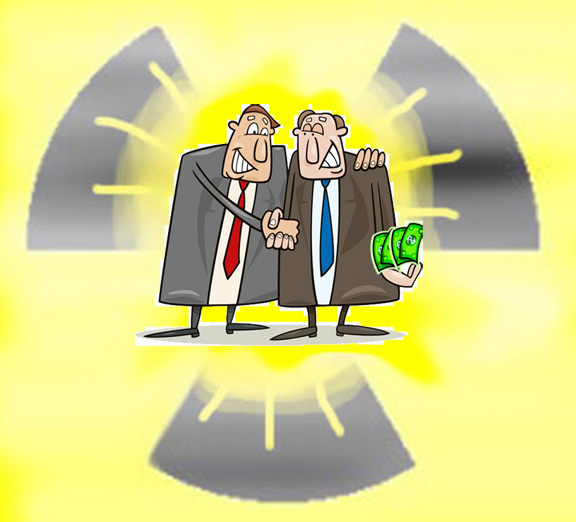
So far, the EU has not put uranium on any sanctions list. Because only Russia can supply suitable fuel rods for many Eastern European nuclear power plants. Without Russia, the technicians at the Bohunice nuclear power plant in western Slovakia have a problem.
Here it is easy to imagine what an immediate embargo on raw materials from Russia would mean. They need uranium to keep the electricity flowing. But there is only one supplier who can supply the reactors with fuel. And that is, of all things, a Russian state-owned company. Slovakia has put itself in an awkward position.
Now Putin is bombing Ukraine. And yet uranium imports must continue. Of course, even Germany has not yet been able to bring itself to impose an energy embargo – the fear of skyrocketing prices, unemployment and cold living rooms is too great. But other European states also have red lines.
It is no coincidence that uranium is not on any EU sanctions list so far.
Sueddeutsche Zeitung 17th March 2022
https://www.sueddeutsche.de/wirtschaft/energie-atomkraft-uran-russland-1.5549686
Hope, hard reality mix in Fukushima town wrecked by nuclear disaster
Hope, hard reality mix in Fukushima town wrecked by nuclear disaster, Japan Today Mar. 20 By Mari Yamaguchi, Yasushi Hosozawa returned on the first day possible after a small section of his hometown, Futaba, reopened in January — 11 years after the nuclear meltdown at the nearby Fukushima Daiichi plant.
It has not been easy.
Yasushi Hosozawa returned on the first day possible after a small section of his hometown, Futaba, reopened in January — 11 years after the nuclear meltdown at the nearby Fukushima Daiichi plant.
It has not been easy.
Futaba, which hosts part of the plant, saw the evacuation of all 7,000 residents because of radiation after the March 11, 2011, quake and subsequent tsunami that left more than 18,000 people dead or missing along Japan’s northeastern coast.
Only seven have permanently returned to live in the town.
“Futaba is my home … I’ve wanted to come back since the disaster happened. It was always in my mind,” Hosozawa, 77, said during an interview with The Associated Press at his house, which is built above a shed filled with handcrafted fishing equipment.
An abandoned ramen shop sits next door, and so many houses and buildings around him have been demolished, the neighborhood looks barren.
A retired plumber, Hosozawa had to relocate three times over the past decade. Returning to Futaba was his dream, and he patiently waited while other towns reopened earlier.
To his disappointment, the water supply was not reconnected the day he returned. He had to fill plastic containers with water from a friend’s house in a nearby town.
The town has no clinics, convenience stores or other commercial services for daily necessities. He has to leave Futaba to get groceries or to see his doctor for his diabetes medicine.
On a typical day, he makes a breakfast of rice, miso soup and natto. In the late morning, he drives about 10 minutes to Namie, a town just north of Futaba, to buy a packed lunch and to shop.
He takes a walk in the afternoon, but “I don’t see a soul except for patrolling police.” He drops by the train station once in a while to chat with town officials. After some evening sake at home, he goes to bed early while listening to old-fashioned Japanese “enka” songs.
He looks forward to the spring fishing season and likes to grow vegetables in his garden.
But Hosozawa wonders if this is the best way to spend his final years. “I won’t live much longer, and if I have three to four more years, I’d rather not be in a Futaba like this,” he says. “Coming back might have been a mistake.”
“Who would want to return to a town without a school or a doctor? I don’t think young people with children will want to come,” he said.
More than 160,000 residents evacuated
When massive amounts of radiation spewed from the plant, more than 160,000 residents evacuated from across Fukushima, including 33,000 who are still unable to return home.
Of the 12 nearby towns that are fully or partially designated as no-go zones, Futaba is the last one to allow some people to return to live. There are still no-go zones in seven towns where intensive decontamination is conducted only in areas set to reopen by 2023.
Many Futaba residents were forced to give up their land for the building of a storage area for radioactive waste, and Fukushima Daiichi’s uncertain outlook during its decades-long cleanup makes town planning difficult.
1 This month
17 October, Free Public Talk on Nuclear Issues in South Australia
David Noonan will speak on public interest concerns over the new Roxby Downs Indenture Act 2026 on BHP copper-uranium mining and ore processing in SA, and on how AUKUS may face SA with a High-Level nuclear waste agenda.
Dr Jim Green will discuss international developments in the field of nuclear power including ‘small modular reactors’ and Generation 4 ‘advanced’ nuclear reactor concepts.


Help Aunty Sue Protect Her Land and Sacred Sites From Destructive Rocket Testing.
.

Australians deserve the truth
about
AUKUS – https://aukuspublicinquiry.com/

PETITION – To: Prime Minister Anthony Albanese and the Australian Labor Government

of the week – Australians for War Powers Reform (AWPR)
To see nuclear-related stories in greater depth and intensity

