Not enough water available for Coalition’s nuclear proposal to run safely, report finds
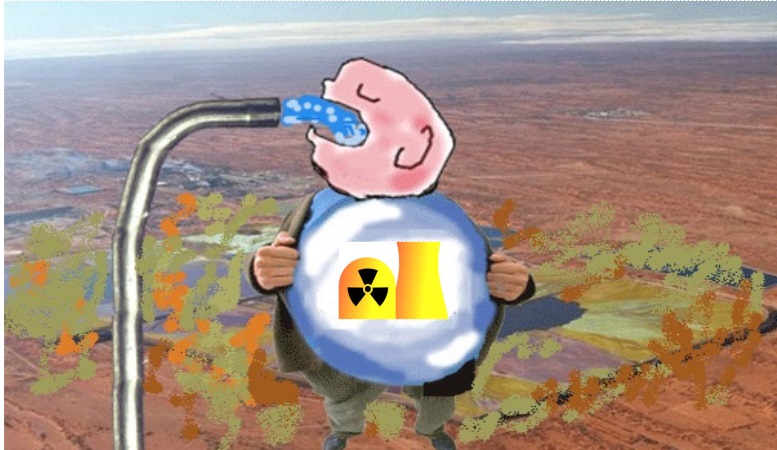
Analyst says nuclear is the ‘thirstiest’ energy source, as report commissioned by Liberal supporters throws doubt on plan’s feasibility.
Guardian, Petra Stock, 9 Apr 25
About 90% of the nuclear generation capacity the Coalition proposes to build would not have access to enough water to run safely, according to a report commissioned by Liberals Against Nuclear.
The report authored by Prof Andrew Campbell, a visiting fellow at the Australian National University, assessed nuclear energy’s water needs and the available supply across the seven sites where the Coalition has proposed new reactors.
Campbell found replacing coal generation with “off the shelf” nuclear technology as proposed by the Coalition would require 200 gigalitres of water annually.
He found half of the proposed nuclear capacity was already unfeasible given insufficient water, while a further 40% of the capacity would need to be curtailed during dry seasons.
“At Loy Yang in Victoria, Mt Piper in NSW and Muja in Western Australia, existing water availability is already so constrained that new nuclear power stations of the capacities proposed would lack sufficient cooling water to provide reliable power now, let alone for 80 years into the future, even if the majority of existing irrigation water entitlements were acquired,” the report said.
The volumes required at Callide in Queensland and Liddell in New South Wales would be so significant the demands could place pressure on other water users, including agriculture, industry, urban residents and the environment.
Dave Sweeney, a nuclear policy analyst at the Australian Conservation Foundation, described nuclear energy as the “thirstiest of the energy sources”, which required reliable access to large volumes of water for steam to drive a turbine as well as to cool the reactor core.
On a per-kilowatt hour basis, nuclear power used more water than coal, and “massively more than renewables”, he said……………………………………
Dr Mark Diesendorf, an expert in sustainable energy at the University of NSW, said nuclear power stations were typically larger than coal generators and used more water as a result. “In comparison, solar and wind don’t use any water during operation at all,” he said.
“Australia is the driest continent in the world, apart from Antarctica,” he noted. That meant water use was an important issue, alongside other concerns such as the proliferation of nuclear weapons, the difficulty and expense of managing radioactive waste and the danger of low-level radiation as well as accidents…………………………………………………………….
Andrew Gregson, the spokesperson for Liberals Against Nuclear and a former state director of the Liberal party in Tasmania, said the nuclear water grab threatened to “sever the trust between the Coalition and agricultural communities permanently”.
“We’ve spent decades building our reputation as champions of farmers’ rights – particularly water access. Why would we throw away that political capital for nuclear plants that most Australians don’t want?” https://www.theguardian.com/environment/2025/apr/09/not-enough-water-available-for-coalitions-nuclear-proposal-to-run-safely-report-finds?fbclid=IwY2xjawJj08VleHRuA2FlbQIxMQABHsr4gCWoCyIIPdf_Pd5L89YMaJnymCsNl3F3wcT-YgT7oP1C5Bl9U_fpxYsf_aem_RVvJw4Qzs8w3lNw7HHFP9g
Uranium stocks dumped as market ‘paralysis’ intensifies

The ASX’s beaten-up uranium sector is braced for a fresh blow from US President Donald Trump’s next round of tariffs, which threaten to dislocate physical markets and further delay a hotly anticipated bull run.
The sell-off is feeding into the hands of hedge funds, which are heavily shorting the industry in Australia, including about a quarter of the shares outstanding on Boss Energy.
Traders have been preparing for Trump’s 10 per cent tariff on Canadian energy exports to kick in tonight (Thursday AEDT) as part of his so-called Liberation Day. Despite the president initially threatening 25 per cent tariffs on Canadian uranium, the levies are still expected to rock the physical market, given the US is the world’s largest uranium buyer.
The anxiety accelerated a sell-off in ASX uranium stocks on Wednesday that sent Paladin Energy plunging 3.3 per cent to $4.66. Boss Energy fell 3.4 per cent to $2.30 and Peninsula Energy 5.9 per cent to 63.5¢.
Prices of the nuclear fuel have already collapsed 40 per cent from a 16-year-high above $US106 a pound last year to now sit at $US64.25 a pound.
And uncertainty about the scope and duration of Trump’s coming levies has intensified concerns about demand for the metal, given US nuclear power plants rely on Canada for more than a quarter of their uranium requirements – more than any other source, according to Bloomberg.
That has caused US utilities – nuclear power plant operators that are the primary buyers of uranium – to halt purchases of the nuclear fuel, sparking concerns that they will eventually run out of inventory……………………………………….
Uranium stocks have been under fire since January when reports emerged that Chinese artificial intelligence disruptor DeepSeek was developed at a fraction of the cost and computing power of OpenAI’s equivalent model.
Investors were concerned that if AI became more efficient, it would reduce overall power consumption and therefore demand for uranium – a key ingredient in nuclear reactors being developed by tech giants such as Google, Meta and Amazon.
That price weakness has attracted the attention of hedge funds, and the ASX’s largest uranium producers – Boss Energy and Paladin Energy – are the most shorted stocks in Australia.……………………………………
Uranium stocks went on a tear in late 2023 and early last year amid concerns about supply shortages and renewed demand from Western countries turning to the energy source to meet their net zero commitments.
That dynamic led to a flood of bets that the uranium sector would be stuck in a deficit for years to come, which would boost prices………………………………………https://www.afr.com/markets/commodities/uranium-stocks-dumped-as-trump-fears-intensify-market-paralysis-20250402-p5lofe
Nuclear news this week – not industry handouts

Some bits of good news.
Girl Goals: What Has Changed for Girls?Adolescent girls’ rights over 30 Years
Fighting malnutrition in Burundi: Mothers of Light are rays of hope .
A study found we underestimate how kind the world really is
TOP STORIES. Once seen as a symbolic protest, the nuclear ban treaty is growing teeth. Nuclear war threat: why Africa’s pushing for a complete ban.
Nuclear Threat Beneath The Seas.
Walt Zlotow – Why do so many leaders remain stupid about Ukraine war?
SMRs most expensive of all electricity technologies per kW generation.
PLANT VOGTLE The True Cost of Nuclear Power in the United States –Extract at
https://nuclear-news.net/2025/04/04/plant-vogtle-the-true-cost-of-nuclear-power-in-the-united-states/
Climate. Global warming is ‘exposing’ new coastlines and islands as Arctic glaciers shrink . Climate crisis on track to destroy capitalism, warns top insurer. Average person will be 40% poorer if world warms by 4C, new research shows.
AUSTRALIA. Trump tariffs spark questions over US alliance. This ain’t no April fools: Nuclear support melts down in proposed nuclear communities. More Australian nuclear news at https://antinuclear.net/2025/04/01/australian-nuclear-news-april-1st-7th/
NUCLEAR ITEMS.
ATROCITIES. International pressure forces Israel to change account of Gaza medics’ killing. What really happened in Bucha? The questions Western media won’t ask.
ECONOMICS.
- Cost of EPR2 : Reporterre publishes a censored alert. Mini nuclear reactor rush has a short half-life – ALSO AT https://nuclear-news.net/2025/04/06/2-b1-cost-of-epr2-reporterre-publishes-a-censored-alert/
- Buyer sought for nuclear energy developer as it collapses into administration.
- Miliband pours £2.7bn into Sizewell nuclear power projectafter EDF cuts stake. https://nuclear-news.net/2025/04/06/2-b1-cost-of-epr2-reporterre-publishes-a-censored-alert/ UK Treasury confident Sizewell C nuclear power investors will soon be ‘teed up’ – crunch time for Sizewell. ALSO AT https://nuclear-news.net/2025/04/03/1-b1-uk-treasury-confident-sizewell-c-nuclear-power-investors-will-soon-beteed-up-crunch-time-for-sizewell/
- UPDATE ON THE BANKRUPTCY OF USNC – Ultra Safe Nuclear.
- ‘Greedy landlords are cashing in and forcing us out of town’.
| EDUCATION. Hinkley C nuclear power station site teaches A Level students about “clean” energy !! |
| ENVIRONMENT. ‘They’re everywhere’: workers warn of rat infestation at Somerset nuclear plant. |
| EVENTS. Local Communities Say NO to Los Alamos National Laboratory (LANL Expansion); Public Comments Due on Thursday, April 10th. “Getting people to do what they can from where they are”: NFLAs support Democracy Day inspiring peace activists to make Councils anti-nuke allies-14-26 April – Lakenheath Peace Camp https://nuclearactive.org/ |
| HISTORY. ‘Bringing calm and hope’: President Carter’s role at Three Mile Island |
| LEGAL. Deloitte seeks to avoid liability over US nuclear fiasco – ALSO AT https://nuclear-news.net/2025/04/06/2-b1-deloitte-seeks-to-avoid-liability-over-us-nuclear-fiasco/ Atomic Safety and Licensing Board (ASLB) rejects intervenors’ Palisades “zombie” nuke reactor restart petition & hearing request. |
| MEDIA. Canada supplied uranium for atomic bombs in WWII — 80 years later, the cleanup continues – film Atomic Reaction. |
OPPOSITION to NUCLEAR . The great trek for justice.
Resistance to nuke dump grows in South Copeland.
POLITICS.
- Germany’s Conservative Christian Democratic Union (CDU) mulls reactivation of nuclear power plants.
- Democracy should not be an April Fools’ Day Joke! ‘Another significant show of confidence’ in Sizewell C, – making the total of taxpayers’ money going into the project a staggering £6.4bn).
- Federal regulator approves Canada’s first small modular reactor.
POLITICS INTERNATIONAL and DIPLOMACY. Iran rejects ‘meaningless’ direct talks with US. With US bombers at the ready, can Trump cut a deal with Iran and avoid a war? Trump’s bombing threat over Iran nuclear programme prompts backlash. Military confrontation ‘almost inevitable‘ if Iran nuclear talks fail: French FM. Iran rejects direct talks with the US over its nuclear programme. Trump Threatens Iran With ‘Bombing’ If Nuclear Deal Is Not Reached.
EUROPE’S DESPERATE GAMBIT. If the Europeans are serious about peace, they should invite Zelensky to fewer meetings. TRUMP’S PURSUIT OF A UKRAINIAN PEACE: Early Results and Future Prospects.
Why Ontario won’t consider the nuclear option in its fight over Trump’s tariffs.
China or America-Who is the warmonger?
The West has big plans for nuclear power: Will geopolitics play ball
SAFETY. Unsafe for Russia to restart Zaporizhzhia nuclear plant, says Ukraine energy chief.
Pearl Harbor update brings nuclear risk.
Nuclear site given more time to fix safety breach.
SECRETS and LIES.
- Britain sent over 500 spy flights to Gaza.
- Biden Lied About Everything, Including Nuclear Risk, During Ukraine Operation.
- Meltdown: the toxic culture that helped destroy the Nuclear Advanced Manufacturing Research Centre (AMRC).
- Russian sensors suspected of attempting to spy on the UK’s nuclear submarines have been found hidden in the seas around Britain – ALSO AT https://nuclear-news.net/2025/04/07/1-russian-sensors-suspected-of-attempting-to-spy-on-the-uks-nuclear-submarines-have-been-found-hidden-in-the-seas-around-britain/
SPACE. EXPLORATION, WEAPONS. Swarms of satellites are harming astronomy. Here’s how researchers are fighting back.
| TECHNOLOGY. Bavarian SMRs & Hydrogen Vans: What Could Possibly Go Wrong? |
| URANIUM. Uranium stocks dumped as market ‘paralysis’ intensifies. |
| WASTES Inside the bizarre race to secure Earth’s nuclear tombs. Cumbria could be only option for nuclear disposal. Millom nuclear waste plans ‘currently detrimental’ to locals-ALSO AT https://nuclear-news.net/2025/04/06/2-b1-millom-nuclear-waste-plans-currently-detrimental-to-locals/ Recycling Nuclear Waste: A Win-Win or a Dangerous Gamble? Plutonium The true story of the demon core – https://www.youtube.com/shorts/9FEFGlBZBwg |
| WAR and CONFLICT. It’s Official: Ukraine Conflict is British ‘Proxy War‘. Germany deploys troops to Russia’s doorstep for first time since the Nazis. Hegseth Orders Pentagon To Focus on Preparing for War With China Over Taiwan. Hegseth Circulated Secret Pentagon Memo On Preparing For War With China. |
| WEAPONS and WEAPONS SALES. The future of Europe won’t be shaped by mushroom clouds – why nuclear weapons don’t provide security – https://www.youtube.com/watch?v=M4Cx5O1yfoo Britain is aiding Israel’s nuclear force. UK nuclear deterrent: the mutual defense agreement is at risk in a Trumpian age. |
Dutton’s ‘nuclear thought bubble’ needs to be popped
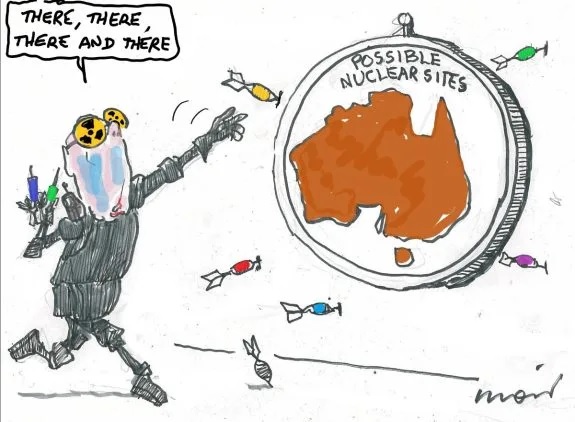
The Age, April 6, 2025
Nuclear disaster
Thank you, Peter Garrett, for telling it like it is in his take-down of the Coalition’s ill-conceived, expensive and dangerous nuclear energy policy (“I’ve spent my life fighting nuclear: Here’s what Dutton isn’t telling you about his reactors” March 30). Peter Dutton and his cronies have been allowed to get away with their ridiculous nuclear thought bubble for too long. The Labor Party has been relatively weak in its criticism of what is essentially a “smoke and mirrors” idea to present an alternative to developing renewable energy and to appease the fossil fuel lobby in the bargain. The anti-nuclear energy message needs to be hammered out to all Australians before the election. It is simply a backward and disastrous way to go.
Robert Hickey, Green Point
Thank you so much, Peter Garrett, for your insightful article. You have most eloquently summed up my thoughts and fear of Australia going down the rabbit hole of nuclear power. As a kid, I witnessed the psychological stress of the Cold War when it was thought that our world could end any day, with Russia and America in full conflict. It’s why Australians turned its back on nuclear all those years ago. For those of my era that have read Peter’s article, please share it with your children and get them to share among their friends. I’ve yet to see a mushroom cloud of destruction coming from a solar panel or pumped hydro. Ray Gilmour, Blaxland
Peter Garrett’s article makes very convincing points. Another negative aspect of these proposed nuclear reactors is the amount of cooling water which is required for them to function. These hypothetical nuclear reactors would require at least twice as much water as the existing coal-fired power stations use, and yet we live on the driest inhabited continent. These reactors sound like another thought bubble from Mr Dutton.
Evan Bailey, Glebe
Now in my late 80s, it seems that I must again join demonstrations against proposal for nuclear energy in Australia. Still, the crucial question is: where in Australia will the nuclear waste be stored for hundreds of years? Like Peter Garrett, I thought that we had won this argument decades ago. Else Gelling, Merimbula https://www.theage.com.au/national/nsw/dutton-s-nuclear-thought-bubble-needs-to-be-popped-20250330-p5lnlg.html
Nuclear Threat Beneath The Seas

this development will not enhance Hawai‘i’s security; instead, it will place residents, ecosystems, and future generations in direct danger by turning the islands into a priority target in any potential nuclear conflict.
Housing nuclear submarines does not enhance security—it increases risk. These vessels carry dozens of thermonuclear warheads, and their presence in densely populated areas like Faslane and Pearl Harbor makes those regions high-priority targets in any potential conflict. But that’s not the only danger. Accidents happen.
By Lynda Williams, Popular Resistance, April 3, 2025, https://popularresistance.org/nuclear-threat-beneath-the-seas/?fbclid=IwZXh0bgNhZW0CMTEAAR08tn1TsnqxjAIg6qVp8KCYV3x9pW42zmP8114Fxte0qPxU_54NVNPraYU_aem_U7nVrPbu5zG5fwkqLnioDA
The Rising Danger of the Global Submarine Nuclear Arms Race.
Right now, beneath the world’s oceans, approximately 30 nuclear-armed submarines patrol silently, virtually undetectable. These submarines represent humanity’s deadliest doomsday machines: stealthy, always on alert, and capable of launching thousands of nuclear warheads at a moment’s notice. At any given time, an estimated 10 to 15 of them are deployed, carrying roughly 500 to 900 warheads—enough to kill hundreds of millions and trigger a nuclear winter with potentially irreversible global consequences. With this capacity to destroy life on Earth many times over, the world’s nuclear states aren’t scaling back — they’re building more, pushing the Doomsday Clock ever closer to midnight.
The Current and Growing Nuclear Submarine Global Arsenal
Six nations currently operate nuclear-armed ballistic missile submarines (SSBNs), nuclear-powered vessels designed to launch ballistic missiles armed with nuclear warheads from beneath the sea, each with the kill power of thousands of Hiroshima bombs. The United States and Russia maintain the largest fleets, each fielding more than a dozen SSBNs capable of carrying hundreds of warheads, with several submarines on constant patrol. China, the United Kingdom, and France operate smaller fleets of four to six submarines, keeping at least one deployed at all times. India, a more recent entrant, has one operational nuclear-armed submarine with more in development. The cost of building and maintaining these underwater arsenals is estimated at $300–400 billion. Together, the current global fleet of about 40 SSBNs carries over 1,500 nuclear warheads—enough destructive power to kill hundreds of millions within hours and trigger a nuclear winter that could collapse the Earth’s biosphere.
All six nations are now developing next-generation nuclear-armed submarines: the Columbia-class in the U.S., the Dreadnought in the UK, the SNLE 3G in France, the Type 096 in China, successors to the Arihant in India, and the Borei-A in Russia—at a collective cost of hundreds of billions of dollars. The other three nuclear-armed states—Pakistan, Israel, and North Korea—do not currently operate nuclear-armed ballistic missile submarines, though all three are exploring submarine-based nuclear delivery systems to varying degrees.
New Nuclear Arms Race Under the Sea
On March 20, 2025, the United Kingdom formally began construction of its new Dreadnought-class nuclear submarine at BAE Systems in Barrow-in-Furness. Prime Minister Sir Keir Starmer presided over the ceremonial blessing, praising the program as essential for national security. Outside the shipyard, members of the Campaign for Nuclear Disarmament (CND) protested the event, condemning the Dreadnought program as a reckless escalation of the global nuclear arms race. The Dreadnought will replace the UK’s aging Vanguard-class submarines and carry Trident II D5 ballistic missiles, each capable of delivering multiple nuclear warheads with enormous destructive potential.
Although the submarines are built in England, they are based in Scotland, at HMNB Clyde (Faslane)—the home port of the UK’s entire nuclear-armed submarine fleet. Opposition to Trident is strongest in Scotland, where public opinion and the Scottish Parliament have consistently rejected nuclear weapons. Scottish CND, the country’s leading anti-nuclear organization, has organized decades of protests at Faslane, calling for disarmament and the removal of Trident from Scottish waters. For many Scots, the continued deployment of nuclear weapons on Scottish soil—against the will of its people—is not only a democratic violation but a threat to their safety and sovereignty. The issue remains a central point of tension in the ongoing debate over Scottish independence. For many Scots, the continued deployment of nuclear weapons on Scottish soil—against the will of its people—is not only a democratic violation but a threat to their safety and sovereignty.
Meanwhile in the Pacific, the United States is dramatically expanding its nuclear infrastructure at Pearl Harbor Naval Shipyard in Hawai‘i. A $3.4 billion construction project is underway to build Dry Dock 5, which for the first time will enable Hawai‘i to host and service the Navy’s nuclear-armed submarines. Specifically designed for the maintenance and deployment of the next-generation Columbia-class ballistic missile submarines—the largest and most heavily armed submarines ever built by the U.S.—this marks a dangerous turning point for the islands, transforming Hawai‘i into an active nuclear-weapons port. This escalation is part of the Pentagon’s increased focus on the Indo-Pacific region, aimed largely at countering China’s growing military presence. Critics warn this development will not enhance Hawai‘i’s security; instead, it will place residents, ecosystems, and future generations in direct danger by turning the islands into a priority target in any potential nuclear conflict.
Current Ports for US Nuclear-Armed Submarines, Expansions and Resistance
The U.S. Navy currently houses its nuclear-armed Ohio-class submarines at Naval Base Kitsap in Bremerton, Washington, and Naval Submarine Base Kings Bay in Georgia. In preparation for the arrival of the Columbia-class submarines, the Navy is expanding these facilities, including significant upgrades at Puget Sound Naval Shipyard to accommodate the larger submarines. Naval Submarine Base Kings Bay is also undergoing extensive modifications, set to be completed by 2028. These expansions are part of the ongoing effort to bolster the U.S. nuclear arsenal—an approach that increases global risk, while the argument for nuclear deterrence remains a dangerous, outdated belief that only exacerbates global instability.
The Environmental Cost of Stealth: Active Sonar Assault on Marine Life

Nuclear submarines are engineered to be nearly undetectable—silent, mobile, and invisible to satellites and radar. This stealth makes them the most prized assets of nuclear deterrence strategy, designed to guarantee a second-strike capability even if a country’s land-based forces are destroyed. But their very elusiveness has triggered a massive and expanding global network of submarine detection systems composed primarily of sonar—Sound Navigation and Ranging—which floods the oceans with high-intensity sound waves and has a devastating impact on marine life.
To track nuclear-armed submarines, nations have constructed vast undersea surveillance systems. The United States, Russia, China, and NATO allies operate continuous detection efforts across the Atlantic, Pacific, and Indian Oceans, relying on networks of fixed sonar arrays, underwater drones, mobile surveillance ships, and anti-submarine aircraft. These systems—particularly those using active sonar, which emits powerful blasts of sound—flood the oceans with intense noise. These pulses bounce off underwater objects and return to the detector, allowing operators to locate submarines through echolocation. But they also bounce marine mammals like whales and dolphins, potentially causing damage to their hearing, impairing their ability to navigate, and in some cases, leading to death. Scientific studies have linked active sonar to mass strandings, behavioral changes, and hearing loss. Environmental organizations, including the Center for Biological Diversity, warn that submarine detection efforts pose “a hidden but severe environmental threat to marine life.” The Natural Resources Defense Council has challenged military sonar in court, while Greenpeace’s Defending Our Oceans campaign has called for an end to sonar use in sensitive marine habitats.
The Nuclear Triad and the Arms Race
Nuclear-armed submarines represent one leg of the nuclear triad, alongside land-based intercontinental ballistic missiles (ICBMs) and strategic bombers like the B-52 and the new B-21 Raider. Together, these three delivery systems sustain a global arsenal of over 13,000 nuclear warheads owned by nine countries, including Russia (5,889), the U.S. (5,244), and China (410) (SIPRI). The global nuclear arsenal, with the combined destructive power of 417,067 Hiroshima bombs, could cause 58.4 billion deaths—more than seven times the current global population—demonstrating the staggering overkill potential of the triad. This estimate is based on the average number of casualties from the 15-kiloton Hiroshima bomb (approximately 140,000 deaths), assuming similar effects from modern nuclear warheads.
The United States alone is investing $1.7 trillion in its Nuclear Modernization Plan., which includes new Columbia-class submarines, Sentinel ICBMs, and the B-21 Raider bombers, along with new or upgraded warheads. The cost of maintaining and modernizing nuclear arsenals is astronomical. Since the Manhattan Project in 1942, the U.S. has spent over $10 trillion (adjusted for inflation) on nuclear weapons development, maintenance, and cleanup (Brookings Institution). Globally, estimates suggest that over $20 trillion has been spent on nuclear weapons programs in the last 80 years.
The return of Donald Trump to the presidency has intensified global tensions, particularly within NATO and in conflict zones like Ukraine and Gaza. His threats to withdraw U.S. support for NATO and end military aid to Ukraine have destabilized European security, prompting some leaders to consider expanding their own nuclear arsenals (The Guardian). The Doomsday Clock was moved to 89 seconds to midnight in January 2025—the closest it has ever been. As the Bulletin of the Atomic Scientists warns:
“Continuing on the current trajectory is nothing less than a form of madness.” Without urgent action through disarmament, diplomacy, and arms control, humanity risks slipping beyond the point of no return.
Rising Tide of Resistance
The resistance to these doomsday ships has been long and ongoing, with local groups such as Ground Zero Center for Nonviolent Action in Bremerton, Washington, and the Kings Bay Plowshares in St. Marys, Georgia, actively opposing the operations of nuclear-armed submarine bases. Ground Zero, established in 1977 adjacent to Naval Base Kitsap-Bangor, engages in peaceful protests and civil disobedience to challenge the presence of nuclear weapons in their community. Similarly, the Kings Bay Plowshares, a group of seven Catholic peace activists, gained attention for their 2018 action at Naval Submarine Base Kings Bay, where they symbolically disarmed nuclear weapons to protest their existence. In response to escalating dangers posed by the expanding submarine nuclear arms race, a growing global movement is demanding disarmament. Organizations like the Campaign for Nuclear Disarmament (CND) in the UK, Veterans For Peace in the U.S., the Australian Anti-AUKUS Coalition, and the International Campaign to Abolish Nuclear Weapons (ICAN) are mobilizing to oppose the new nuclear arms race and advocate for the Treaty on the Prohibition of Nuclear Weapons (TPNW). As Retired U.S. Army Colonel Ann Wright of Veterans For Peace recently stated:
“The bottom line on nuclear weapons is that it will take only one nuke to kill us all! If any nation fires just one nuclear weapon at any target, then the U.S. and Russia will respond thinking the next nuke might be coming toward them. And that one nuke will trigger a nuclear weapons exchange that will be the end of our planet as we now know it.”
In April 2025, the Lakenheath Alliance for Peace is organizing a Peace Camp at RAF Lakenheath. This camp aims to protest the proposed return of U.S. nuclear weapons, specifically the B61-12 bombs, to the base. Echoing sentiments from the historic Greenham Common protests, the camp will feature workshops, vigils, and nonviolent direct actions. Kate Hudson, General Secretary of CND, echoed this urgency during the protest at Barrow-in-Furness on March 20, 2025:
“Nuclear weapons do not make us safe. In fact, they are weapons of mass destruction that put us all at risk of annihilation. Britain should be leading the way towards disarmament, not escalating this deadly arms race.”
According to Laulani Teale, coordinator of Hoʻopae Pono Peace Project in Hawaii,
“The construction of a war dock for nuclear submarines in the very home of our sacred shark goddess, Ka’ahupahau, who is the protector of O’ahu and the keeper of peace itself, should not be acceptable to anyone. It is time to end colonialism everywhere, before we all die of it.”
As we mark the 80th anniversary of the U.S. atomic bombings of Hiroshima and Nagasaki, this is a pivotal moment for global action. These groups are calling for renewed international pressure, public education, and grassroots mobilization. The risks we face are immense, but so too is the potential for a unified global movement to prevent catastrophe.
Lynda Williams is a physicist, performance artist and activist based in Hilo, Hawaii. More of her reporting here. https://lyndalovon.blogspot.com/ Lynda is going on tour this summer in the UK with her one woman show ATOMIC CABARET commemorating the 80th Anniversary of the US Bombing of Hiroshima and Nagasaki.
Trump tariffs spark questions over US alliance

Andrew Tillett, AFR, Foreign affairs, defence correspondent, 3 Apr 25
The alliance with the United States is facing its toughest test in decades after Donald Trump imposed a 10 per cent tariff on Australian exports as part of his escalating trade war, which has sent shockwaves around the world and heightened the risk of a global recession.
Markets plunged on news of Trump’s Liberation Day tariffs, with Australian stocks shedding more than $21 billion, while traders bet the Reserve Bank could cut interest rates up to four times this year.
Australia escaped Trump’s tariffs relatively unscathed, with just the minimum baseline of 10 per cent applied to goods exported to the US, although the President singled out the longstanding ban on American beef as a grievance.
A government source, speaking on condition of anonymity because of the sensitivities, said there had been indications from the US that it was willing to negotiate to reduce or remove tariffs on Australian exports.
However, the government remains on alert for more tariff hikes after pharmaceuticals, copper and gold were among a select few commodities exempted from Trump’s “liberation day” executive order.
Prime Minister Anthony Albanese said the tariffs were totally unwarranted and would prompt some Australians to question the relationship with the US. Former prime minister Paul Keating suggested Trump’s tariff campaign cast doubt on the value of the ANZUS alliance, the cornerstone of Australian defence policy for more than 70 years.
“The administration’s tariffs have no basis in logic and they go against the basis of our two nations’ partnership. This is not the act of a friend,” Albanese said.
The Australian people have every right to view this action by the Trump administration as undermining our free and fair trading relationship and counter to the shared values that have always been at the heart of our two nations’ long-standing friendship. This will have consequences for how Australians see this relationship.”
Keating said the announcement was effectively the death knell of the North Atlantic Treaty Organisation, the US-led military alliance with Europe, a decision which would inform other allied relationships with the US.
“Australia’s clutch of Austral-Americans, that phalanx of American acolytes,
must have choked on their breakfasts, as Donald Trump laid out his blitzkrieg on globalisation, with all its implications for the rupture of cooperation and goodwill among nations,” he said.
“If NATO, America’s principal strategic alliance, is expendable, what credible rationale could underpin US fidelity to ANZUS and with it, to Australia?”
Former foreign minister Bob Carr said the alliance with the US “counts for nothing” and was reason to axe the AUKUS pact, Australia’s agreement to acquire nuclear-powered submarines from the US and UK…………………………………………………………………………………
a mining industry source, speaking anonymously, said the government could buy up critical minerals and stockpile them to use as leverage in future trade negotiations.
Opposition Leader Peter Dutton said if he won the May 3 election he would use access to Australia’s critical minerals and deeper defence cooperation, particularly in defence industry, as bargaining chips to get tariffs lifted…………………….https://www.afr.com/politics/federal/trump-tariffs-spark-questions-over-us-alliance-20250403-p5lox9
Responses to “Australia’s MUMS FOR NUCLEAR – propaganda wheels within wheels”
Heather Hoff says: March 31, 2025 (extract)
I am Heather Hoff, cofounder of Mothers For Nuclear, and nonprofit based in California, but with informal chapters or groups of mothers and mums around the country and around the world…………………….
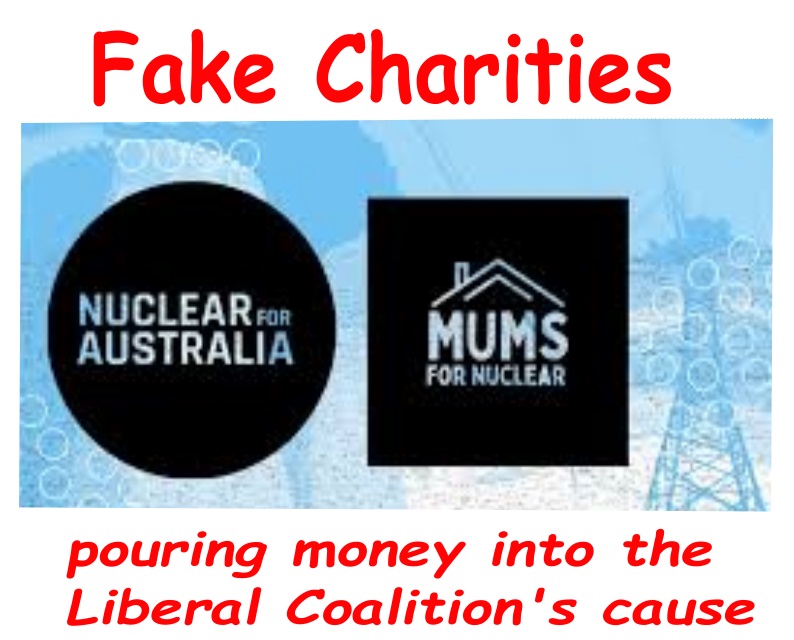
Heather Hoff continues (extract)
We are separate and different from the recent organizing Mums for Nuclear under the umbrella of Nuclear for Australia. …………….. As for the mums in Australia, we have already shared some of their stories on our website, and now the same mothers are also speaking up on behalf of Nuclear for Australia.
Terry Mills says: 31 Mar 25
Heather thank you for your contribution.
In Australia we want answers on several fundamental points ranging from where waste will be dumped/stored ?
Is the exemplar for the SMR the Westinghouse model or if not is it a Chinese or Russian alternative (very important)?
What is the delivery/installation/commissioning time frame from time an order is placed ?
What is the fixed cost for acquisition/assembly/installation/commissioning (within ten percent)?
What is the energy output of the small modular reactor (SMR) under consideration : i.e. how many conventional dwellings would be fully serviced and what could an average householder (four persons) expect to pay for that energy over a 12 month period ?
Answers to some of these fundamental questions would certainly assist us in Australia as our politicians have been less than forthcoming.
ThankYou
Bert Hetebry says: 31 Mar 25
Heather, the only question I have is WHY?
Why when we have an abundance of solar power
Why when we have an abundance of wind power
Why when we have battery technology to store energy when wind and sun are not providing that power
Why when nuclear is so hellishly expensive to build
Why when nuclear is not just expensive to build but seems to be too difficult to build in a timely manner
Why when the waste produced becomes a time bomb for future environmental problems.
So yes, Heather, Why?
Roswell says:
Thank you for your comment, Heather. Much appreciated.
Terry speaks for the most of us: we do have questions.
Bert Hetebry says:
Our contributor Roswell has a wonderfully understated sense of humour, an Australian sense of humour which at times is layered with soft, gentle sarcasm.
As he so clearly points out, the mums and mothers he cites have a vested interest in promoting nuclear power.
Kathryn says:
I wonder if these foolish pro-nuclear women and the RWNJs (like that short-sighted political psychopath, Peter Dutton) have STOPPED and given any thought about what the hell our government is going to do with the MASSIVE amount of NUCLEAR WASTE nuclear energy inevitably produces?
Do they realise that nuclear waste is, in fact, RADIOACTIVE for THOUSANDS OF YEARS posing a REAL, perpetual danger and deadly health risk for future GENERATIONS of future Australians? Have they STOPPED – even for a minute – to consider WHERE an inhumane, racist and self-serving LNP regime are likely to DUMP not only the nuclear waste of Australian-generated nuclear power but, likely, to import nuclear waste from other nations (such as America, the UK and/or other European nations) in order to make a “fast buck” at OUR expense?
No doubt, the likes of Dutton et al will consider it quite OK to dump toxic waste in what THEY consider to be “remote” areas of the outback trying to convince themselves (and anyone who will listen) that “nobody lives there” when, in fact, such areas are inhabited by communities of vulnerable indigenous aboriginals and remote farming communities!
Nuclear power = RADIOACTIVE NUCLEAR WASTE and, as such, will NEVER be a safe, acceptable alternative for our children, our grandchildren and our descendants! Australians live in the SUNNIEST continent on the planet. As such, the intensive further research and refinement of SOLAR POWER is the SENSIBLE choice because it can be accessed so easily, is inexpensive to process and, by far, the best, safest and cleanest form of energy available!
Canguro says: 30 Mar 2025
Unlikely to find any MUMS FOR NUCLEAR in Japan, in particular around such districts as Fukushima, Nagasaki, or Hiroshima, along with the Ukrainian mothers in proximity to Chernobyl, or moms close to the Three Mile Island in the USA, or indeed many other moms in the target areas of radiation fallout from a raft of similar incidents of varying severity and the associated human toll.
As Noel Wauchope’s essay implies, selling the sizzle is as equally important as the charred sausage; ironic doesn’t even begin to cover the potential horrors of human endeavour gone awry, as is so often the case and in particular in this instance of the allure of nuclear-fission based energy sources; tens of thousands of highly trained and knowledgeable engineers & technicians and still, things can and do go disastrously wrong.
Much to the distress of early implementers, Oppenheimer & Einstein for example, the lament was that the nuclear genie has well and truly been released and now mankind must find a way to manage this monstrous entity. The attraction persists, and the list of commercial nuclear reactors is extensive across many countries.
I guess the MUMS FOR NUCLEAR are acting out of self-interest as opposed to a detached rational assessment of the pros & cons of nuclear-derived energy for the general benefit of the wider population, given the range of non-potentially lethal options within the renewables sector. Do they hold hen’s parties, where they sit around fondling lumps of uranium or radium… lights out and enjoy the glow?
Average person will be 40% poorer if world warms by 4C, new research shows

Economic models have systematically underestimated how global heating will
affect people’s wealth, according to a new study that finds 4C warming
will make the average person 40% poorer – an almost four-fold increase on
some estimates.
The study by Australian scientists suggests average per
person GDP across the globe will be reduced by 16% even if warming is kept
to 2C above pre-industrial levels. This is a much greater reduction than
previous estimates, which found the reduction would be 1.4%. Scientists now
estimate global temperatures will rise by 2.1C even if countries hit
short-term and long-term climate targets.
Guardian 1st April 2025,
https://www.theguardian.com/environment/2025/apr/01/average-person-will-be-40-poorer-if-world-warms-by-4c-new-research-shows
China or America. Who is the warmonger?
by Richard Cullen | Mar 28, 2025, https://michaelwest.com.au/china-or-america-who-is-the-warmonger/
The US wants us to believe we should be scared of China, buy nuclear subs to help fight her, and increase our military spending to 3% of GDP. But who is the real warmonger, asks historian ,
One way to get a brisk fix on who is most scary is to look back over the last decade or so. And then consider what has unfolded over the last few months.
America, with its Gothic military budget greater than the next nine nations combined and with close to 800 worldwide military bases, has been involved in non-stop global warfare over the last decade in the Middle East and beyond. In Afghanistan, the US spent over $2 trillion to replace the Taliban with the Taliban.
Any doubt about this war-mongering obsession (notwithstanding recent White House attempts to wind back the Ukraine war) has been comprehensively erased by the continuing mass homicidal horror stories emerging, month after month, from the hellscape created by Israel in Gaza, backed with obscene fervour by the US.
Over the same period, the drum-beat mantra for China has been, “let’s go to work” rather than “let’s go to war.”
Littleproud’s great pretence on nuclear insurance, as sparkies attack Coalition nuke proposals
Ketan Joshi, Apr 2, 2025, https://reneweconomy.com.au/littleprouds-great-pretence-on-nuclear-insurance-as-sparkies-attack-coalition-nuke-proposals/
Just prior to the election being called, Nationals leader David Littleproud was pressed on ABC’s Radio National breakfast on whether insurance costs were included in the modelling exercise putting a dollar figure on the Coalition’s nuclear plans.
It has been tough for the Coalition: nuclear power is notoriously expensive, and so trying to present a narrative of it being cheap has been tricky. Littleproud had a confident answer in response to being challenged about insuring nukes:
“Well, as many countries around the world do that is actually factored in and in fact, self insurance is normally what they undertake. So it’s not a significant amount of anything that goes into the running cost”.
The majority of the Coalition’s claims regarding nuclear power come from a December 2024 report published by Frontier Economics, which itself has been widely criticised by experts.
It pulls off the trick of presenting an expensive approach to energy transition as cheap by a variety of accounting tricks, previously covered at RenewEconomy. But what it doesn’t seem to do is actually incorporate the costs of insurance, as claimed by Littleproud.
In fact, the Frontier Economics modelling does not mention insurance at all. Not in any context, or even in passing, or in footnotes (nor is it mentioned in the Coalition’s ‘blueprint‘). The Frontier report simply declares an assumption about the capital costs of nuclear power ($10,000 per kilowatt). RenewEconomy emailed Frontier asking for more details, but received no response.
The 2024-25 CSIRO GenCost consultation draft does contain an assumption around the insurance costs of nuclear, and ultimately concludes that “nuclear power does not currently provide the most cost competitive solution for low emission electricity in Australia”, and that “while nuclear technologies have a long operational life, this factor provides no unique cost advantage over shorter-lived technologies”. Notably, GenCost actually assumes a problematically low cost for nuclear power, as discussed here recently.
It is bad enough that Littleproud seems to be making a false claim about it being ‘factored in’ to the modelling, but insuring extremely risky technologies prone to massive cost blowouts and very vulnerable to worsening climate disasters is not going to be cheap.
This ain’t no April fools: Nuclear support melts down in proposed nuclear communities.

These communities weren’t asked if they want nuclear reactors in their backyard, and have been told it’s happening whether they like it or not.
“Proposed nuclear communities are asking key questions about nuclear reactors which have not been answered: Where is the water coming from? Where is the waste being stored? Where is the detail?“
These communities weren’t asked if they want nuclear reactors in their backyard, and have been told it’s happening whether they like it or not.
“Proposed nuclear communities are asking key questions about nuclear reactors which have not been answered: Where is the water coming from? Where is the waste being stored? Where is the detail?
https://www.re-alliance.org.au/nuclear_support_melting_down, 1 April 2025
Nuclear support has melted down in proposed nuclear communities, new polling released by a not-for-profit organisation working with regional communities for more than a decade, RE-Alliance, revealed today.
Energy attitudes polling by respected research firm 89 Degrees East and commissioned by the Renew Australia for All campaign has revealed support for building nuclear reactors at just:
- 27% in Gladstone
- 24% in the rest of Central Queensland
- 24% in Bunbury
- 22% in Central West NSW which includes Lithgow
- 32% in Hunter
- 31% Gippsland.
Further, the same polling showed just 13% of people polled thought nuclear reactors would bring down their bills the fastest (see table below on original ).
The sample size for the polling was 200 local residents in Gladstone, 151 in Central West NSW, 151 in Bunbury, 145 in Central Queensland excluding Gladstone, 301 in Hunter, 300 in Gippsland. Those polled were asked: How do you feel about developing large-scale nuclear energy infrastructure?
RE-Alliance National Director, Andrew Bray, said he was not surprised support for nuclear had bombed, because community engagement is key.
“RE-Alliance stands by the principle that all energy developments in regional Australia need broad community support – whether it’s for solar, wind, batteries, coal, coal seam gas or nuclear reactors,” Mr Bray said.
“Support for nuclear reactors seems to be melting down in the regions who’ve been told they are hosting them.”
These communities weren’t asked if they want nuclear reactors in their backyard, and have been told it’s happening whether they like it or not. Community engagement is by no means easy, but you’ve got to at least try. It’s no surprise support is so low.
“Proposed nuclear communities are asking key questions about nuclear reactors which have not been answered: Where is the water coming from? Where is the waste being stored? Where is the detail?
“Communities also don’t believe that nuclear power is capable of bringing down their energy bills anytime soon and see renewable energy solutions as a better bet. 72% of people said renewables would bring down bills faster, compared to just 13% who said nuclear.
“We see multiple polls from Porter Novelli, CSIRO, 89 Degrees East and more showing strong support for renewable energy on local farmland, between 66% and 71%. Now the polling shows us support for nuclear reactors in these regions is between 22% and 32%.
“Regional communities have enough uncertainty already. Let’s stop with the whiplash and stay the course on a shift to renewable energy which is already almost halfway done.”
Full results of the two poll questions can be found in the Appendix below (on original).
Note: The difference between a poll and a survey is survey respondents select themselves whereas respondents to a poll are selected by the pollster, weighted so the sample accurately represents the population being sampled, by gender, age group, occupation, and so on.
The Australian Press Council’s Advisory Guideline on Opinion Polls says:
“Editors and reporters should carefully evaluate whether to report online surveys, having regard to their scope and methodology. They should be cautious of open-access online polls where the sample size and the exact questions asked are unknown and the results have been generated by self-selecting respondents.”
Media contact: Kitty Walker 0438900117 kitty@re-alliance.org.au or media@re-alliance.org.au
Methodology
The polling was administered online with recruitment sourced from a consumer opt-in panel provided by Pure Profile, weighted to ensure a representative sample in line with ABS proportions for age, gender and location.
This study was conducted by the research firm 89 Degrees East as part of a larger poll with a total sample size of 5,952 Australians. The sample included a nationally representative poll of 2,014 Australians, with an additional boost sample of 1,900 Australians residing in Renewable Energy Zones (REZs). To ensure robust representation within each REZ, quotas and targeted postcode sampling boosts were applied.
The confidence level of the general population sample is +/- 2.14% at the 95% confidence level. Fieldwork was conducted by 89 Degrees East in March 2025. 89 Degrees East is a member of The Research Society of Australia and the Australian Polling Council.
Nuclear campaigners target mothers
CommsDeclare, March 26, 2025
If you’re a middle aged female with an interest in solar power, nuclear campaigners want you.
In the week 15th to the 21st of March, Nuclear for Australia and its offshoot astroturfing group, Mums For Nuclear, spent a combined $89,233 on Meta ads, according to online political database WhoTargets.Me.
Mums for Nuclear targets mothers with claims that nuclear power will reduce power bills and is essential to a “clean energy future for our children”. The ads claim “We’re not activists or lobbyists, but we know nuclear is our future”. Nuclear for Australia, which is backed by mogul Dick Smith, is the contact email address on the account.
Download the browser extension at WhoTargets.Me to see if you’re being targeted by political advertisers
While men and women saw the ad, around 18% of the budget was spent targeting women only. The group is also running print ads and issued a media release.………………..
Belinda Noble, founder of climate communications group, Comms Declare said, “Targeting mums with false promises of cheap power bills and climate solutions is as manipulative as it is cynical. The CSIRO has confirmed that only renewables can provide the cuts in climate pollution that we need this decade.”
People classified as being interested in renewables, sustainable energy or efficient energy were among the top contested audiences between climate and nuclear campaigners, Independent candidates and the Liberal Party. https://commsdeclare.org/2025/03/26/nuclear-campaigners-target-mothers/
Response to Submarine Construction Yard Environmental Impact Statement

Friends of the Earth Adelaide 31 Mar 2025
Our submission raised questions about assumptions made about the nuclear submarine agreements:
“The Environmental Impact Statement (EIS) is premised on the assumption that the proposed AUKUS nuclear submarines are in Australia’s strategic interest (pp. 9-10) and South Australia’s economic interests (pp. 12-13). Both these premises are false.
Many highly qualified defence experts argue that nuclear submarines are not in Australia’s strategic interest. [1]
Along with these experts, and retired senior politicians like Paul Keating, Gareth Evans and Malcolm Turnbull, we believe that Australia will be less safe if it acquires nuclear powered submarines. Although it is the federal government that has made this strategic blunder, the EIS should not lend it any credence (as in section 1.5.4).…
AUKUS submarines will also be prejudicial to our economic interest. Some of the abovementioned analysts don’t think Australia will actually ever get the promised nuclear submarines, certainly not in a reasonable time frame. This is a view not restricted to left-leaning people. Conservative commentator Greg Sheridan has criticised AUKUS for this reason.[2]”
[1] Hugh White, “From the submarine to the ridiculous”, The Saturday Paper, 18 September 2021 https://www.thesaturdaypaper.com.au/2021/09/18/the-submarine-the-ridiculous/163188720012499#mtr
Major General Michael G Smith AO (Ret’d), ‘How should Australia defend itself in the 21st century? Silencing the drums and dogs of war’, The New Daily, May 26, 2023 https://thenewdaily.com.au/news/world/2023/05/26/how-should-australia-defend-itself-in-the-21st-century-silencingthe-drums-and-dogs-of-war/
Sam Roggeveen, ‘Spiky questions remain for AUKUS proponents’, Inside Story, 19 March 2024 https://insidestory.org.au/spiky-questions-remain-for-aukus-proponents/[2] Greg Sheridan, ‘Our nuclear subs fantasy adds up to military net zero’, The Australian, 6 October 2021. https://www.theaustralian.com.au/commentary/our-nuclear-subs-fantasy-adds-up-to-military-net-zero/newsstory/cec3b5e94c5bacac405a5eb535b3a628
Read our full submission: 250314AUKUS EIS – FoEAdelaide
Response to Osborne Submarine Construction Yard Strategic Assessment
Friends of the Earth Adelaide 1 April 25
Our recommendations:
1. Correct the factual errors regarding the effects of radiation.
2. Include active commissioning in the assessment.
3. Include the disposal of radioactive waste in the assessment and publish plans for management, storage and disposal of all streams of radioactive waste, including intermediate and high-level waste and spent nuclear fuel.
4. Include a proper analysis of the risks and consequences of incidents and accidents that could lead to a release of radioactive material into the environment.
5. Inform the public about the potential for exposure to radiation and the levels of radiation they could be exposed to.
6. The Commonwealth Government should consult with other levels of government, the Australian Radiation Protection and Nuclear Safety Agency, emergency services and with the general public to develop a response plan for radiological emergencies.
7. Publish the Strategic Assessment Plan before finalizing the Strategic Impact Assessment Report.
Read our full submission: https://adelaidefoe.org/wp-content/uploads/2025/03/250314AUKUS-SIA-FoEAdelaide.pdf
Australian nuclear news April 1st – 7th.
Headlines as they come in:
- Uranium stocks dumped as market ‘paralysis’ intensifies.
- Dutton’s ‘nuclear thought bubble’ needs to be popped.
- Trump tariffs spark questions over US alliance.
- Littleproud’s great pretence on nuclear insurance, as sparkies attack Coalition nuke proposals.
- This ain’t no April fools: Nuclear support melts down in proposed nuclear communities.
- Secret AUKUS nuclear waste site docs in Cabinet lockdown.
- End AUKUS
- From the archives– Poison in the Heart – The Nuclear Wasting of South Australia,
- Electrical Trades Union goes nuclear against Dutton.
- Nuclear power has no place in Australia’s energy transition.
1 This month
7 April – WEBINAR – Australia and the Doomsday Clock – Preventing nuclear war through NoFirstUse and other policies
Online | Tuesday April 7, 4:00-5:30pm, Australian Eastern Time / 8:00-9:30am Central Europe Time
– Access the registration link
15 April – Zoom –Nuclear Power is Not the Solution
Apr 15, 2026 01:00 AM in Canberra, Melbourne, Sydney

Join the International Physicians for the Prevention of Nuclear War (IPPNW) on Tuesday, April 14th for a timely webinar exploring the risks associated with nuclear power and challenging the myth that it offers a simple, safe, carbon-free solution to the climate crisis

21 April Webinar: No Nuclear Weapons in Australia
Start: 2026-04-21 18:00:00 UTC Canberra, Melbourne, Sydney (GMT+10:00)
End: 2026-04-21 19:30:00 UTC Canberra, Melbourne, Sydney (GMT+10:00)
Event Type: Virtual
A virtual link will be communicated before the event.
Host Contact Info: australia@icanw.org

of the week – Australians for War Powers Reform (AWPR)
To see nuclear-related stories in greater depth and intensity
 Antinuclear